







![Global Capitalism: A Marxist Critique of Capitalism for 2024 [May 2024]](https://i.ytimg.com/vi/HBLJ7UAqXSo/maxresdefault.jpg)














Jurgen Habermas developed Critical Theory as a rational critique of advanced capitalism that synthesizes psychoanalysis, Hegelian Marxism, and modern linguistic philosophy to argue that coercive norms can be rationally legitimized only when they serve general interests rather than particular segments of society, using the 'ideal speech situation' as a framework for normative discourse that reconnects science and ethics without resorting to metaphysical constructs.
Habermas' Critical Theory & Rationality in Modern Society
Added:The Frankfurt School and Early Critical Theory: Understanding the foundational critique of Enlightenment rationality and instrumental reason posited by theorists like Max Horkheimer and Theodor Adorno.
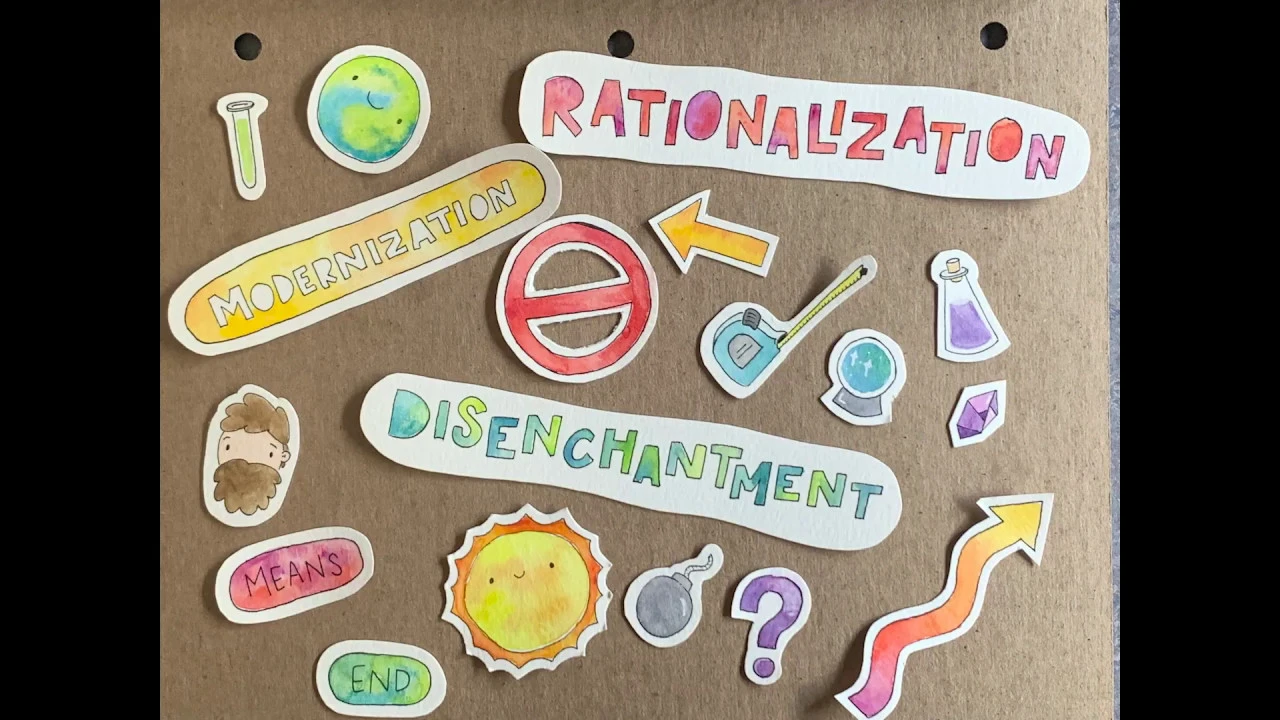
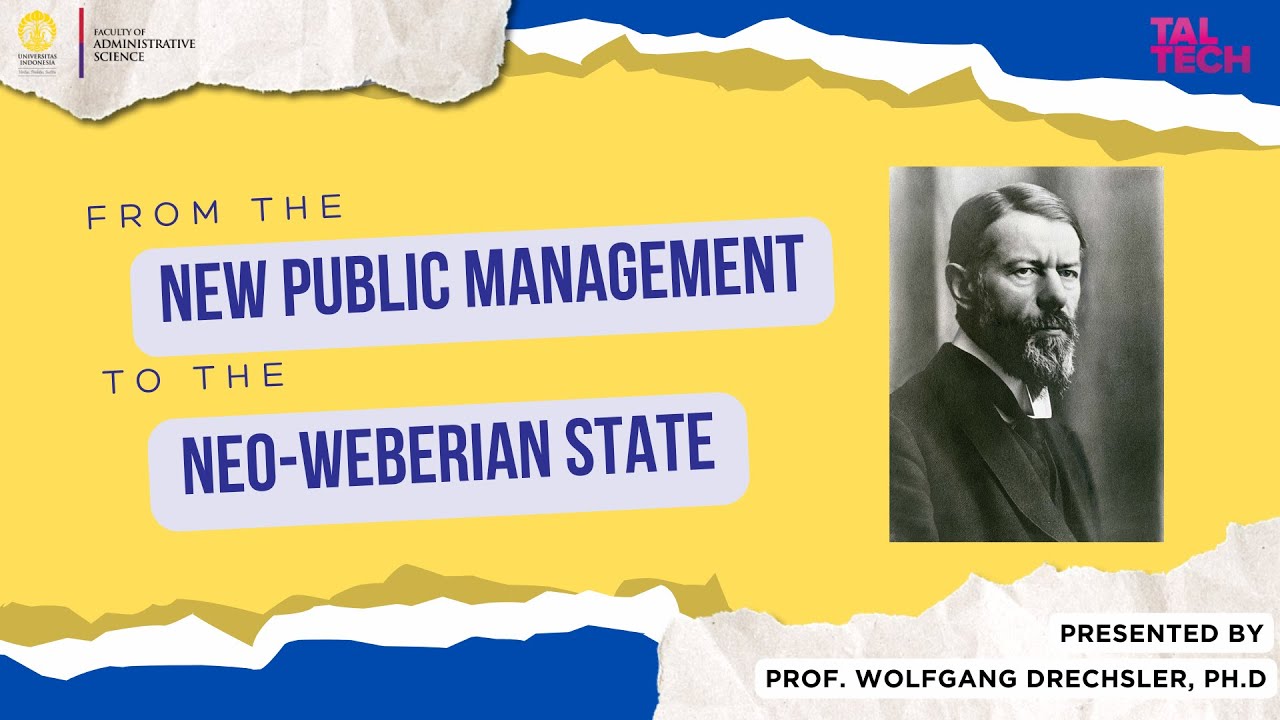
Max Weber’s Theory of Rationalization: Familiarity with Weber's concepts of formal rationality, bureaucracy, and the 'iron cage' of modern society, which Habermas seeks to redefine.
Marxist Critique of Capitalism: A fundamental grasp of Karl Marx's theories of political economy, alienation, and social class, as Habermas directly engages with the evolution of capitalism into its 'advanced' stage.
Basic Concepts of Political Legitimacy: Understanding how political systems and state authorities justify their right to rule and secure obedience from citizens.
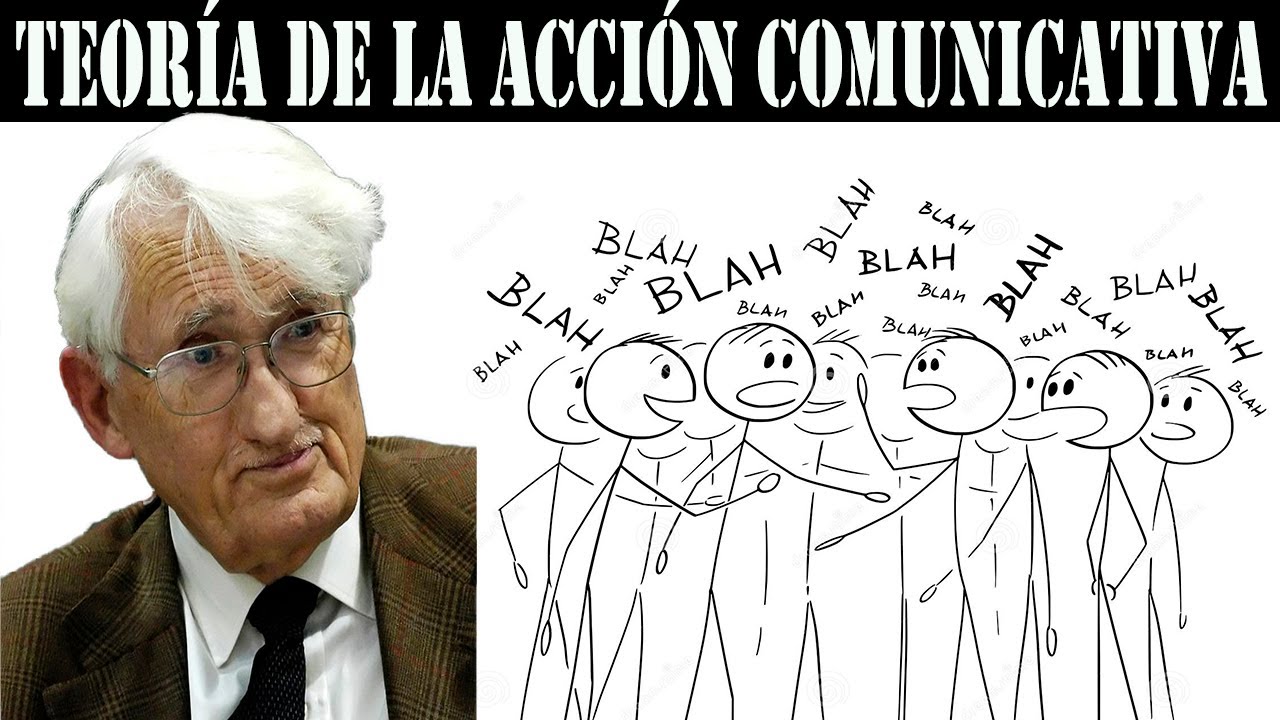
The Theory of Communicative Action: Exploring Habermas's major work detailing the distinction between 'system' (driven by instrumental rationality) and 'lifeworld' (driven by communicative rationality aimed at mutual understanding).
The Public Sphere and Deliberative Democracy: Investigating Habermas's concept of the public sphere and how rational-critical debate forms the basis of democratic legitimacy, including its modern challenges in the digital age.
Legitimation Crisis in Contemporary Politics: Applying Habermas’s framework to current global issues, such as economic recessions, the rise of political populism, and the erosion of trust in democratic institutions.
Poststructuralist and Feminist Critiques: Examining major counterarguments to Habermas, particularly Michel Foucault's theories on power/knowledge and Nancy Fraser's critiques regarding gender inequality within the public sphere.
78.2K views1.6Klikes44:06Original Release: 2020-07-19
[Music] one of the most interesting and important developments in contemporary philosophy has been the work of Jurgen Habermas he synthesizes many trends and themes in the history of Western thought and he I believe wishes to offer us an expanded conception of rationality allowing us to criticize in a reasonable way the society that we live in the direction that history is taking and the way in which the social world around us is organized Jurgen Habermas and the work of the funk foot school in general from which he of which he is a part has been attempting to create a rational critical analysis of advanced or contemporary capitalism now Hubbard losses intellectual genealogy goes back to his early days as a student of famous members of the front foot School for Social Research Herbert mikasa Theodor Adorno and what the front foot schools program is or what their project is is to offer a left-wing criticism essentially oriented around Marxism and other critical developments in German in German culture in particular and Western culture in general offer a criticism of society which allows us to redeem our normative claims so hard our loss is attempting to reconnect science and ethics harm us and the tendency in German or continental thought that he represents is a reaction against positivism against the attempt to subsume the science of society under natural science so in that respect hablamos is the legitimate heir or a critical theory that he's produced is the legitimate heir of Western rationalism but what it tries to do because it has to make its allowances for this century is to create a rational critique of society that involves no physics no hocus-pocus no appeal to mythological or imaginary entities and of course this is a very very tall order to get rational normative discourse without creating a second world without creating a platonic realm of the forms is what however mas is going to try and do he's going to appropriate the insights of psychoanalysis of hegelian Marxism the Marxism that's most oriented towards human freedom and the problems of alienation and in addition he's going to appropriate parts of modern linguistic philosophy he is very well-versed in Hamas Kuan arora D all of the modern American neo pragmatists and those philosophers that are primarily concerned with language have all been read and absorbed and digested by Hamas and what he attempts to do is to bring all these themes together in one general overview of the status of knowledge and the status of society it is in some respects a typically German project in the sense of looking for an architectonic overview for an entire range of problems connecting politics and ethics if you think of the German or continental intellectual tradition as being closely allied with the tradition of Greek rationalism you will see that for the same reason that Plato connected politics and ethics those that attempt to create a rational theory of ethics will by implication also be creating a rational theory of politics this is however Massa's target now perhaps the most important and accessible of his works for those who are interested in this kind of research in this kind of discourse it's called legitimation crisis and legitimation crisis is a short book roughly 140 pages and it's an outline its provisional it's a general attempt to at least organize and focuses thinking about the status of advanced capitalism the problems that it has encountered in the past and that it's likely to encounter in the future and in addition to that he offers us ways in which this the crises which may or may not be coming can be avoided or redirected or reinterpreted so that it is possible to offer a legitimate and rational justification for the norms that are characteristic of our society if you think back to professor style offs lecture on Max Weber Max Weber thought that legitimate domination was oppressive no matter what form it took whether it was charismatic or traditional or whatever kind of legitimate domination was being used in a given society it inevitably was a stalking horse for oppression there was always some sort of covert agenda behind it it served the interests of one particular stratum of society and in contrast to this hubber mas wants to say that are coercive norms those elements in our society which involve domination can be legitimized and can be legitimized on a rational basis on a universal basis without the construction of metaphysical norm or without the construction of metaphysical constructs and without the projection of a metaphysics onto a century that can't absorb and take seriously such a project now in breaking advanced capitalist society apart harbour mas looks at it as in a systematic way or he borrows from Systems Theory the theory of cybernetic systems and looks at also medical terminology particularly he's interested in the concept of crisis a crisis occurs when an organic system reaches some impasse where the various systems that make up an organism no longer integrate properly and there is some sort of malfunction that will result either in the death of the organism or a reestablishment of a kind of homeostatic equilibrium hyper mas breaks advanced capitalist society down into three parts in the center is the political system that can be thought of in shorthand as the state the government and on both sides of that there are two other systems that perform different functions and that are absolutely necessary on one side of the political system we have what we might call the economic system this is the set of activities seizures by which human societies particularly in this case advanced capitalist societies appropriate the products of nature through what is called labor or work in other words borrowing a page from Marx Papa muss assumes that human societies in this case advanced capitalist societies must confront nature must master nature and appropriate nature for their own purposes through work the economic system in other words provides the things that society needs to live on and it also in the process of doing that gives what's cut what he calls a fiscal skim off or in fact taxes to the political system which makes it able to run in other words a political system a government can't run unless it has money to do so and the money or the value that it uses in order to engage in social programs in order to doing to do the bureaucratic things that it needs to do comes from the economic system but this is sort of homeostatic relationship between the two because while the economic system gives to the political system what it needs in the case of in the in this case taxes the political system gives to the economic system things that it needs and the political performances that the that are performed for the economic system are called steering performances what the government does is it tinker's with the economy in order to optimize the productivity of the economy so the government will be concerned with doing things like determining the supply of money restricting the rate of inflation determining rules for for the regulation of industry for example Clean Air Act's clean water acts anti-pollution legislation across the board so one of the so there's a sort of homeostatic relationship between these two systems the political system gets its money gets essentially its its financial lifeblood from the economic system what it gives back to the economic system is steering performances and these exist in a sort of homeostatic equilibrium now on the other side our third system we have what's called the socio-cultural system and the socio-cultural system might be thought of as that part of advanced capitalist society which appropriates internal nature rather than external nature in other words the socio-cultural system is the system by which we we the politics and the economics characteristic of our society and it's also and the socio-cultural system is also the part of our society that is involved in the very important function of socializing our children and of educating our children and of performing those actions on our children which allow us to cultivate their inner nature which is to say which allow us to educate them and cultivate our minds this connects back to the Hegelian Marxist tradition with its particular concern with human consciousness so rather than a kind of linear deterministic Marxism the kind of Marxism characteristic of the early phases of say Bolshevism hubber mas offers us a very sophisticated critique of capitalist society based upon Marx's conception that the political system must interact with the economic system in order to make the economic system viable in order to optimize its performances and in addition the political system must also take charge of appropriating inner nature as well as external nature it must provide for the education and socialization of children now take the idea one step further we have here three systems that form a sort of organic whole there may be more systems than this in other words this is not intended to be exhaustive but rather the idea of these three systems is meant to be necessary if not sufficient in other words there is no advanced capitalist society that doesn't have a government there is no advanced capitalist society that doesn't have an economy and there's no advanced capitalist society that doesn't have a socio-economic system the point here is that in performing these necessary functions certain tensions emerge which are not immediately traceable to their point of origin let us make the analogy that Hamas does in comparing the body politic to the body individual and think back to Plato's Republic and the resonances of connecting the city and the man here just a and the on the analogical sense if in a physical body there's something wrong with your circulatory system when you go to the doctor you may go with a complaint that refers to your circulation but in fact you may also go with a complaint that refers to something else it may refer to your respiratory system you may be having problems breathing in other words the systems that make up the individual human body are interdependent and homeostatic and a problem in one system may not manifest itself in that system it may manifest itself somewhere else and this disguised manifestation may be traceable back to its original systemic difficulty what however mas wants to do is look at the problems that we have in our socio-cultural system offer us a critique of culture but his argument is that many of the cultural crises we face many of the difficulties that we have in legitimizing the society that we live in may not come from our cultural system they may actually be the product of a breakdown or a disequilibrium in some other part of the system particularly in the political or economic systems and we may be looking for the cause of these cultural difficulties in the wrong place so what however mas wants to do is to examine the problems in legitimizing advanced capitalist societies to see if it is possible to rationally legitimize and rational redeem our normative judgments and then to see what sort of crisis is likely to come in an advanced capitalist society and what might be done to prevent these crises from overwhelming the society he's a very non dogmatic Marxist and I think this is very much to his credit he's willing to borrow from many intellectual traditions and he's not interested in laying down final assertions about the ultimate trends in history he talks about potential and possibility the possibility that a crisis may reach an impasse which would bring a society down but he makes no guarantees and he does very little desk pounding so what harbor must says is that especially since the end of the Second World War a number of crises particularly socio-cultural crises crises of legitimation crises of normative justification have emerged an advanced capitalist society and he thinks that we have been looking in the wrong place to find the source of these problems let's think of a of an example of legitimation crisis let's try the 1960s the hippies who dropped out of society had not absorbed the normative structures that society had hoped that they would by deciding that they would not enter the job market or that they were going to engage in a kind of narcissistic movement towards up drugs and self-indulgence what that means is that the normative structures of society the usual collection of hopes anticipations aspirations had not been transferred to these people and that means there's some sort of problem in the process by which they are socialized any mass defection from the norms characteristic of a society means that there's something wrong in the socio-cultural system now according to harbor mas or at least this is a possible extrapolation from him the source of this enemy the source of this rejection of the normative structures of society may well have been found in the political system something like the Vietnam War it may have been found in the economic system in the sense that economic life or a job life for people's occupations no longer give them any sense of fulfillment or any sense of satisfaction they feel like cogs in a wheel they no longer have the desire to desire to work for corporate America so they drop out and as a consequence eventually the economic system begins to erode as well so these systems are interdependent in the same way that the systems of the body are interdependent and their interdependence II can mask the true source of these problems let us look at some of the legitimation problems that we have today we have an extremely effective economy and even if it isn't been in some short-term local trouble for the most part we're a very wealthy country yet at the same time every any place you walk up and down the street in any major American city there are people begging for quarters now here we have a number of problems first of all it seems that these people have not been appropriately socialized in many cases to take their place within the economic system they don't have the educational capacity to perform at the level of skill required of an advanced capitalist society problem lies not intrinsically in the economy it may well in this case be a socio-cultural problem which may come in fact from a political unwillingness to pay for education so this will avoid facile reductionism instead however mas offers us a very intriguing insight into the problems that are likely to emerge in society because eventually we are going to be forced to ask ourselves why is it in a society that has the amount of wealth that we do that there are so many people out of work begging for quarters that we have such a high rate for example of illiteracy all of these problems are problems which may or may not lead to a crisis but they certainly tend towards the DC equilibrium and if the society is not able to homeostatic ly re-establish that equilibrium that would in fact cause a crisis a complete collapse of the various systemic elements in society and that would cause the sort of crisis that Marx had anticipated would happen in 19th century England or in the invest industrial societies as a whole now Marx was wrong according to the Frankfurt School in his estimation that capitalism was about to collapse due to its own crises of production in fact the political system stepped in regulated economic production created the possibility of things like labor unions so that it mollified the socio-economic system made people view the society as more illegitimate and consequently managed to re-establish equilibrium and continues on through this may or may not continue to happen however Maas doesn't insist one way or another but he does point out that many of the problems that we encounter in advanced capitalist societies are problems of legitimation in other words many of our problems perhaps most of our problems are to be found in the socio-cultural system but their source may not be there consider the fact that an advanced capitalist economic system distributes wealth very unequally now the political system can decide to engage in transfer payments it can tax progressively take a larger percentage of the income from very wealthy people transfer that money to those that are not capable or somehow outside the economic system outside the capacity to provide from the themselves and thus increase their perceived legitimacy or the perceived legitimacy of the political system and the economic system all these things are interdependent now one of the problems is that if the political system does not engage in things like transfer payments fails to read to address the inequity in the way in advanced capitalist society distributes wealth you may find that there are a great number of people who call into question the legitimacy of such a political and economic system so the problem that Hamas wants us to address is the fact that legitimation crises are among the most important things we are going to have to try and deal with as in an advanced capitalist society and there are signs of progressively worsening legitimation crises have you ever wondered why after the hippies movement kind of stopped that young people in many cases decided that they wanted purple or orange hair or that they engaged in behavior which showed that they wanted to distance themselves from the norms of their society what we have here is a failure of these people to internalize the norms which society had hoped to impress upon them so that they could be integrated into the economic and political system once they came of age well this sort of this sort of behavior is symptomatic of a problem in the way in which we socialize our children and the question of men arises then what sort of society would it take to create a world to create to create a political and an economic and a socio-cultural system which could be rationally legitimized and here hubber mas looks for something that will allow us to make normative judgments and rationally approve of or disapprove of the coercive knit qualities of our society in other words every society must correspond Ossa saya t-that doesn't have laws and there's no society that doesn't have policemen only anarchists would approve of something like that and an advanced capitalist society would immediately collapse under such circumstances I mean think of what New York City is like during a blackout right Capital a capitalist societies demand a certain degree of coercion perhaps every society temp demands a certain degree of coercion the faculty is how will we know which coercion is rationally legitimate and which coercion is not and here however Maas wants to go for an idea that says that we can rationally legitimize a kind of coercion if it serves general interests in other words what how to Maas wishes to do is in some respects like the content project of finding universal moral rules and that apply to every rational person and that these moral rules can be defended and justified and redeemed on the basis of some canons of rationality which Hamas plans to establish so it's a very very ambitious project he's engaged in now we have some problems how will we know which rash at which coercion can be rationally justified Habermas says that the only coercion which can be rationally justified is that coercion that serves the general interests as opposed to the interests of some particular segment of society in other words in however Maas wants something approximating content autonomy without the metaphysics so we will allow the fact that if there's no metaphysics we can't have autonomy in the content sense but perhaps we can make intelligent distinctions between different kinds of heteronomy in other words there will be heteronomous behaviors that serve only an individual or a small segment of society and there are all their heteronomous behaviors that serve our interests that are in the interests of society as a whole let me give you an example of an interest which serves not just the interest of society as a whole but the interests of our species something like the ozone layer all human beings or all human beings that we might call rational or sane would prefer not to have skin cancer it does no one any good and we share as a species a common human interest in preventing things like deadly diseases that cause misery and pain what happy most wants to do is take universally generalizable interests which is alas heteronomous but a particularly important and universal kind of heteronomy and raised that to us to the status of a moral principle he says rationality demands that we engage in behaviors that serve all of our interests there is no rational argument against that consider another possible example something like the GATT agreements the agreements the international agreements on tariffs and trade it has been found as a matter of empirical fact that the closer we come to approximating a free trade between nations the greater the degree of the division of labor and the greater the degree of output the greater degree of productivity what that means is that as a species on a global level the whole entire species ends up wealthier and since there's enough poverty and misery in the world as it is rationality demands that we do our best to satisfy these Universal heteronomous demands now let's take an alternative view let's talk about coercive measures heteronomous measures which do not meet this Universal generalizable standard let's look at something like the government of South Africa if we were to rationally inquire into the government of South Africa we would find that it doesn't serve the interests of the people as a whole what it does is serve the interests of a very small narrow elite and that when called upon to justify this there is no common interest that can be pointed to which this satisfies so insofar as this apparatus of government imposes coercion and bloody and miserable coercion it is on people it has no rational warrant and simply to expose this to the light of rational scrutiny undermines it and what hubber maas is doing here is liberating us from moral skepticism based upon an attempt to universalize our rational needs are rational desires and our rational desires are the universally generalizable desires the desires of the white South African regime are not rational because they cannot be defended by reference to any universal human good so now we have in a way or perhaps at least the beginnings of a skeleton key which allows us to look into every kind of coercion in every kind of government which allows us to look at every political policy and ask ourselves benefits in whose interest is this kind of coercion and however Maas says the burden since freedom is an intrinsically good thing consider the residences back to Conte and philosophy since freedom is an intrinsically good thing the burden of proof rests with those who would impose coercion if they cannot legitimize it by referring to some universal human good or some generally or generalizable interest then in fact it is illegitimate and we should get rid of it so now we can go through all the coercive measures in our society and we have some rough-and-ready pragmatic standard of justification and once we have inquired into it and asked who benefits what good does it do why do we really need it if it can't be justified it should be gotten rid of so it's an extremely powerful far-reaching critique of the coercive structures of society and what it does is rescue us from the fact value distinction which is characteristic of most of the tradition of English and anglo-american philosophy in other words instead of saying in the human sense and like many of the grandsons of Hume that rationality only applies to descriptions of the world Hamas is reasserting the content tradition saying that reason is not merely instrumental it is also essentially teleological it cannot it can tell us not only means it can also tell us the ends we ought to achieve and the ends which we ought to achieve our universal human liberation again in some respects back to Khan's and he go the gradual extension of freedom is what progress is and to deny that there's any rational standard for distinguishing between between just societies and unjust societies between legitimate and illegitimate coercion is in fact to capitulate to this simple fact is of coercion so Hamas is going to lead us out of the labyrinth of modernity if his project is successful now we have some problems here first problem is how will we know when we efficiently legitimized a kind of coercion in other words who is it that's going to engage in the discussion of coercive activities the part of the government and how will we know when we've reached some resolution and here's where we get a borrowing from both Heidegger and I would say also Vick and Stein in the sense that there is no ultimate solution to this it's an ongoing rolling process as new approaches to society and law emerge we can incorporate these things in other words I would say that this is formal in the sense that Khan's moral theory is formal but I would call this an open forum as opposed to a closed form which is what the categorical imperative is it's totally closed and airtight here there's always the possibility of progress in addition it is not any final solution because it allows for the progressive change in the way in which we understand the necessities of society now what however most wants to do is use as a kind of paradigm for the normative justification of our coercion the what he calls the ideal speech situation and the ideal speech situation is never actually realized here in the world but it can be approximated and again being a good practical thinker in this respect which is so unusual in the in the metaphysical tradition of the West however Maas says that while we can't realize the ideal speech situation some speech situations are more or less approximating this and a speech situation is deformed and inferior if it is coerced in other words if in some way we are altering we are Mis shaping or deforming the speech of a group of people or a person by some heteronomous means which prevents them from saying what they really think and expressing their real views on on a problem of coercion think about it this way suppose you go into work and your boss asked you do you like my new tie and suppose it's a horror suppose you hate the time what do you say everyone laughs why because they understand well now I have to say something other than what I thought now harbormaster's point here is that this is not or this is the opposite of the ideal speech situation because a kind of coercion is being imposed on you which is deforming your and preventing you from saying what you really have on your mind and saying well look if you want my opinion it's really ugly you can't say that under certain circumstances that is one kind of coercion why because you are being forced to alter your speech patterns in order to satisfy some other need in this case the set the need to get along with your boss now we can extrapolate this from this to quite a great extent imagine for example you had something like the government of South Africa which systematically refused to a large percentage of the population access to higher education well it should come as no surprise later on that they are unable to engage in the speech patterns and the judge and the judgments of legitimate legitimacy that would be characteristic of people who had had access to such a thing in other words they are being coerced and speech is being deformed in other words what appears to be free speech is not what however must wishes us to do which is to do for us is to liberate us from those external constraints on our speech thus liberating us from external constraints on our thought thus allowing us to create a real rational critique of society here in this world on an ongoing basis so he seems to be a kind of modern Daedalus who perhaps can lead us out of the labyrinth of modernity into at least a provisional kind of rationality which allows for rational criticism and discussion in the public realm this is very much in keeping with the tradition of German idealism the tradition of German philosophy in general it is critical but it is also more than an instrumental conception of Reason it is a teleological conception of Reason and what makes it beautiful and moving and profound is the fact that it doesn't involve any entities that glow in the dark it doesn't involve anything that's metaphysical very few words that are translated into English where they keep the capital letter at the beginning of the noun it actually refers to everyday things like coercion that we experience every day when I asked you about the bosses tie imagine that this would allow us to take our criticism of society onward forever incorporating whatever we need it is an ongoing Hegelian approach to both philosophy and politics and ethics Habermas said in his inaugural lecture in 1965 I believe that I am concerned to question the separation of science and ethics in other words I am a concern to undo the fact value distinction I am concerned to reassert the German tradition of teleological rationality an amazing and extraordinary intellectual tour-de-force now he like Vidkun Stein moves from the earlier positivistic concentration on the logical canons of grammatical speech to the social context of speech acts think about the difference between saying yes boss I like your tie has just a sentence independent of context and now put in the context we're talking about your boss and his ugly tie it adds a new dimension within which no logician can offer us it's that historical dimension that concentration on the embeddedness of language in society which brings him back to the Marxist tradition and allows him to kind of give us an overview and a synopsis and a kind of synthesis of the disparate tendencies in both anglo-american and continental philosophy with a practical orientation which can liberate societies across the board apparently forever or apparently without any obvious boundaries now this has had actual practical influence on the world around us and here in the United States one of the most important of these movements which is Harbor masion or at least critical theoretic in its orientation is called critical legal studies it's one of the most important movements and the analysis of American law as I understand that it's centered at Harvard Law School and what critical legal studies wishes to do is to analyze the structures of American law and since law is inevitably backed up with some sort of coercive Hobbs says covenants without the sword are mere words since all of our laws are backed up by coercive force ha Tomas and his disciples at Harvard Law School Quentin analyzed the laws that were characteristic of our society and asked who benefits here is the interest that these coercion --zz serve is it generalizable to the society as a whole or does it benefit a small fraction of society if it benefits only a small fraction of society if we simply say so we D legitimize this and by D legitimizing this we can put ourselves on the road towards changing these modes of coercion to something that can be rationally justified what we are offered here then is a possibility of law that is not intrinsically conservative we do not want to get rid of the idea of law but we do not want our laws to unjustifiably serve the interests of only a small fraction of society think of what for example critical legal critical legal studies this sort of harbor major analysis would have done with the law in 19th century America regarding slavery well it would it would ask who benefits from this if we were to give an equal access to all human beings in our society to deploy speech acts without being afraid of the boss would everybody say yeah this is a good idea this is really rational this serves our all our interests no of course not it is therefore it irrational its therefore to be gotten rid of it offers us the possibility of reasoning out our problems rather than fighting them out and again that's the holy grail that's it that's the one of the main intellectual difficulties of our age if we can't reason our problems out we have to fight them out however mas is starting to Forge the tools by which we might start to reason out our problems again think about the criticism of the law which treats women differently from men well critical legal studies goes through the books of our law and asks who benefits from the legal oppression of women who benefits from preventing women from taking certain jobs or getting access to certain kinds of education well not the women apparently even though there is a veneer of concern for the health or status of women painted on these laws in fact they attempt to coerce women into a subordinate and inferior position in society and this position of subordination and coercion cannot be reasonably justified it cannot be rationally redeemed and what critical legal studies does is point the finger at that and say what sense does that make and if somebody can't come up with a reasonable argument which justifies and legitimizes this coercion on the basis of generalizable interests then it is what we mean by a bad law it is a law which arbitrarily coerces people for no good reason and since human freedom is a intra is an intrinsically good thing what that means is that we have to get rid of these laws or rather that reason demands that we get rid of these laws because what Hamas is kind of sneaking back in here is the idea that generalizable interests will serve the function that the categorical imperative used to serve instead of the possibility of autonomy in the content sense being created in our legal system what we are going to do is the next best thing which is make sure that all interests of everyone in society are represented and not all interests of everyone in society as an empirical fact because many people's speech patterns may have been deformed by their the insufficiency or irregularity of their education by various kinds of cultural trends which come from our political or economic system and the consequence of this is that we will gradually refine our government we will gradually refine our coercive systems to the point where we can create a truly just society and we will have a truly just society or we will be moving towards a purely just society when we have a society whose coercive measures are entirely legitimate in the eyes of all those that they cover or as many of those that they cover as can rationally engage in discourse about the coercive measures so Habermas wants to offer us a universal pragmatics that's what he calls it he says that universal pragmatics will investigate the social context of language and consequently the social context of thought and that if our government if our politics is consistent with this sort of universal pragmatics if in fact we can rationally justify it then and only then will we have a just society it goes back to the Platonic idea that the just society is one that will emerge out of the dialectic between rational speakers in other words in my estimation the ideal speech situation is the ghost of the Platonic dialectic returned and that shows the consistency across 25 centuries of the rationalist program for creating Universal canons of human rationality which applied to morals which applied to politics which apply to society as well as the things which everyone grants it applies to physics and logic what however mas wants to do is to create a system by which we can redeem our judgments of should and awed by which we can have reasonable rational normative discourse which does not succumb to the tendency or the possibility of simply acquiescing to the world as it is what he does is offers a far-reaching critique of our society and not just our society this will work for any society but it's particularly applicable and obviously apt for advanced capitalist societies it's very clear for example if you were to look at something like the suicide rate among teenagers in Japan that in fact there was some problem in the process by which these young people are socialized which would account for the very high rate of suicide there is some set of disappointed expectations perhaps a set of pressures imposed upon them which cannot be rationally legitimized perhaps the sources back in the socio-cultural system perhaps is in the economic system but not only does it apply to America it applies to Japan it applies to South Africa it is Universal and global in the same way that Kant and the entire tradition of German idealism wants univer chris'll global rationality wants cannons which apply to everyone under all circumstances in other words instead of the program characteristic of positivists characteristic of the scientifically or orient its philosophers who essentially adopt a position of physics uber alles what this is going to be as the logos uber alles rationality uber alles what this is is the high point of reviving the Greek tradition in Western culture that I think is why Habermas is the type of thinker which could only emerge from the Continental tradition it is not the kind of thing it's not the kind of project that would emerge from the tradition of human skepticism of moral relativism this is the sort of position and this is the sort of set of aspirations that could only be characteristic of someone who thought that the the marrow of human being what it means to be human is the same thing as what it means to be rational and that there's one set of moral rules connected to everyone which can be justified independent of religious myth and independent of moral skepticism and by trying to negotiate between these two unfortunate tendencies they drift into mythology and religious orientation or the drift to straight forward moral skepticism and then the onward rush into moral nihilism Habermas wants to take us right through that towards a new stage in our analysis of society and our analysis of the world which allows us to treat each other as if we were all part of the same project as if human beings had Universal moral value and again the echoes to contour unmistakable to finish up think about yellow harbor mosque this way in the writings of Immanuel Kant he says that it was Hume and Humes moral skepticism that aroused him from his dogmatic slumbers and in writing something like the foundations of the metaphysics of morals and his other moral works Kant want says that he wants to be the Newton of the moral world he wants to split the world in half and talk about questions of art rather than questions of is and create a new and radically rational universal system of moral judgment what how Tomas wants to do is in some way respects like that perhaps we could say that he's going to be the Einstein of the moral world but he's going to do this by not completely copying the content more he is not going to ontologically split the world into physics and metaphysics he'll split it into the world of objects and the world of the human world and this human world this world of conscious human rational subjects is the topic that he primarily wishes to address his concern is to find a way to get out of the deformations in our speech and consequently the deformations in our language and consequently the deformations in our society he wants to revive at least the possibility of the tradition of progress actually taking place and being a serious intellectual topic and what he wants to do is to make moral discourse legitimate again as a topic of serious intellectual activity rather than to succumb to the lure of the priests and the poets in that respect he is the great-grandson of Kant and he has offered us a Contin or quasi content solution to the problems of the modern world if it is not complete it is least suggestive and if it is not final it makes it that much more appropriate to our age of open rather than closed forms
Up Next

12:38
Merleau-Ponty: Phenomenology of Perception Explained
@OverthinkPodcastPhilosophy
204.2K views•2022-06-10

164:01
John of Damascus on Holy Images: A Theological Defense
@BannedBooks
139 views•2026-04-25

46:22
The Frankfurt School | Critical Theory, Marxism, & Social Critique
@dr.michaelsugrue
219.2K views•2021-01-22
4:57
The Myth of Sisyphus: A Greek Legend of Eternal Punishment
@TEDEd
8.6M views•2018-11-13
Related Study Plans & Knowledge Roadmaps
Structured learning paths in Philosophy
philosophy
Frankfurt School: Critical Theory & Culture
01Foundations of the Frankfurt School and Critical Theory
02Horkheimer & Adorno: The Critique of Instrumental Reason
03The Culture Industry and Mass Deception
+ 2 more learning modules
12h5 modules
Explore Roadmap
philosophy
Philosophy of Language: From Frege to Austin
01The Linguistic Turn: An Introduction to Language in Philosophy
02Gottlob Frege: Sense and Reference
03Early Wittgenstein: The Picture Theory of Meaning
+ 3 more learning modules
15h6 modules
Explore Roadmap
philosophy
Feminist Epistemology: Standpoint & Injustice
01Introduction to Epistemology and Feminist Critiques
02Sandra Harding and Standpoint Theory
03Donna Haraway and Situated Knowledges
+ 2 more learning modules
12h5 modules
Explore Roadmap
philosophy
Environmental Philosophy: Ethics & Deep Ecology
01Foundations of Environmental Ethics & Anthropocentrism
02Biocentric Individualism and Animal Liberation
03Ecocentric Holism and Deep Ecology
+ 1 more learning modules
10h4 modules
Explore Roadmap