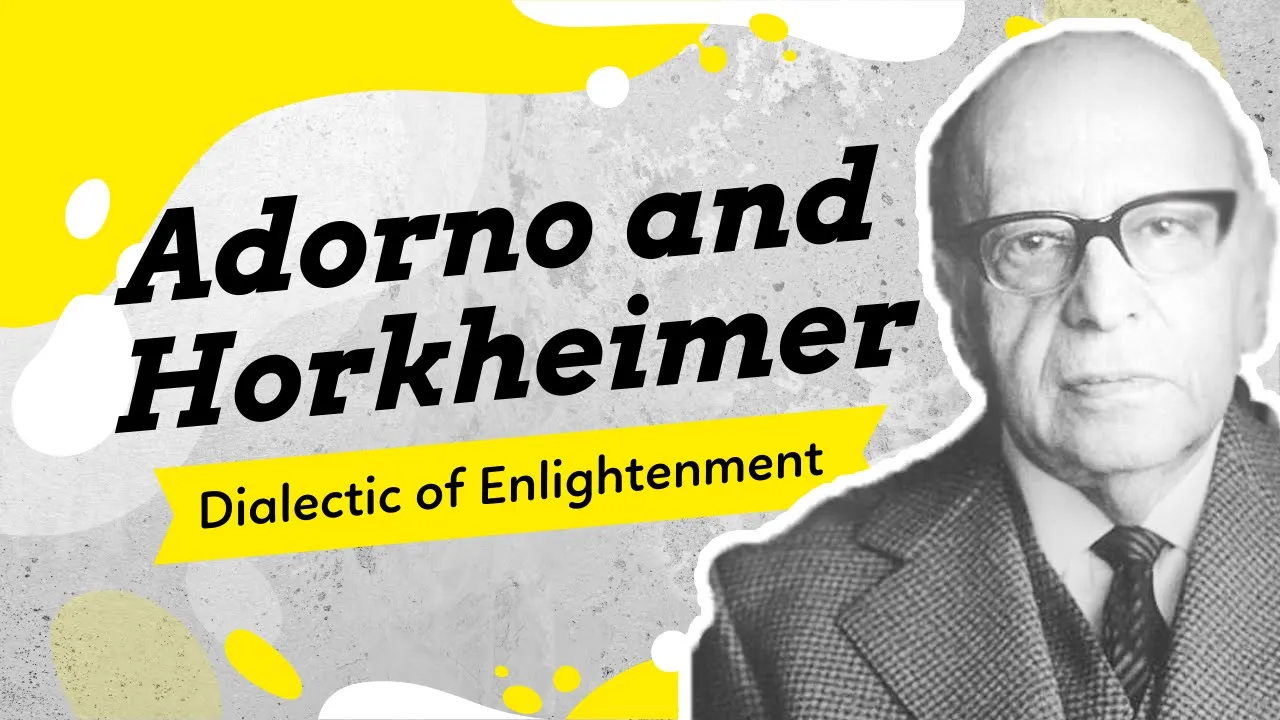


















The Frankfurt School, founded in 1929 in Frankfurt, Germany, was a group of intellectuals who migrated to Geneva (1933) and New York City (1935), later re-establishing themselves in West Germany after WWII; they developed Critical Theory by applying Freudian, Marxist, and Hegelian premises to analyze why capitalism and modernity lead to regressive ideologies rather than liberation, using concepts like bureaucratization, culture industry, and the critique of instrumental reason to understand how social structures produce consent and oppression.
Frankfurt School Explained: Critical Theory & Its Legacy
Added:Classical Marxist Theory: Understanding the concepts of historical materialism, class struggle, and the relationship between the economic base and the cultural superstructure.
The Rise of Fascism in 20th-Century Europe: Historical context of the Weimar Republic and the Nazi regime, which shaped the thinkers' perspective on authoritarianism and forced their exile.
Freudian Psychoanalysis: Core concepts of Sigmund Freud's theories regarding the unconscious mind, repression, and how individual psychology interacts with societal constraints.
Hegelian Dialectics: The philosophical framework of dialectical thinking (thesis-antithesis-synthesis) that underpins both Marxist analysis and Critical Theory.
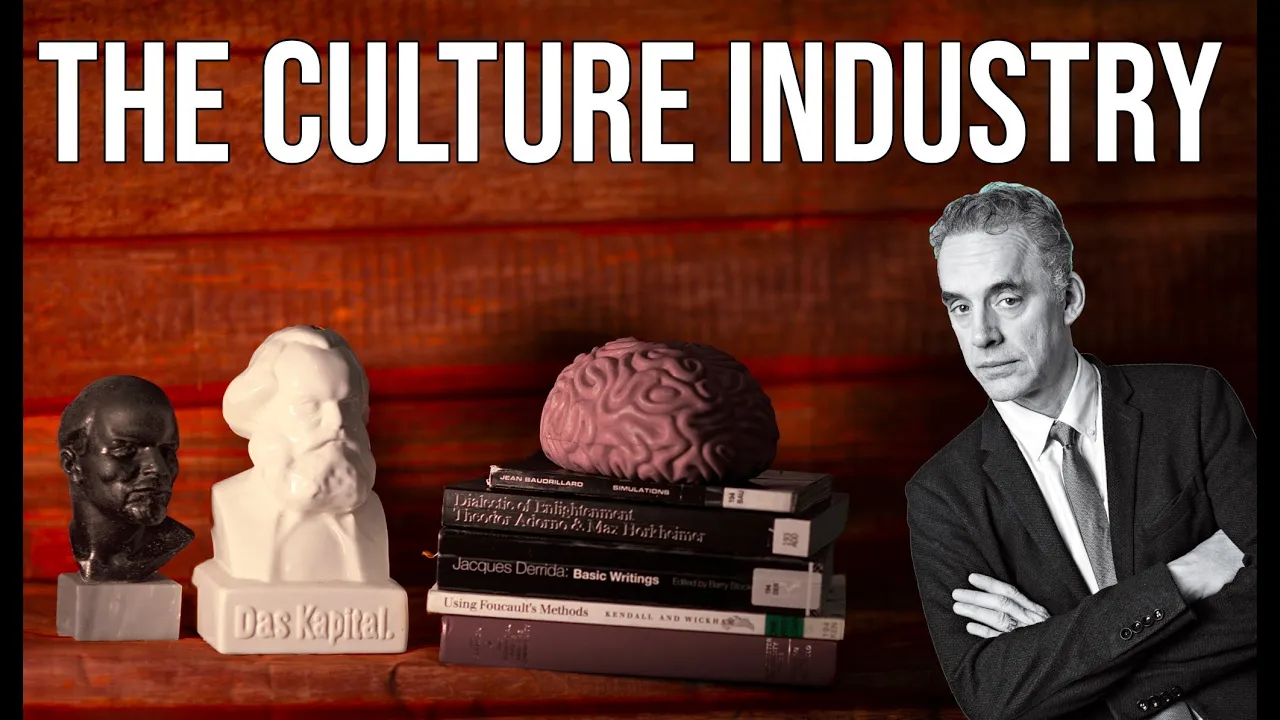
The Culture Industry: A deep dive into Max Horkheimer and Theodor Adorno's critique of mass media, entertainment, and how consumer capitalism pacifies the working class.
Herbert Marcuse and the New Left: Exploring how Marcuse's 'One-Dimensional Man' became a foundational text for the 1960s counterculture and social movements.
Jürgen Habermas and Communicative Action: Studying the 'second generation' of the Frankfurt School, focusing on the public sphere, deliberative democracy, and modern sociology.
Contemporary Critical Theories: Examining how the Frankfurt School's methodology influenced modern academic disciplines such as Critical Race Theory, post-colonialism, and third-wave feminism.
46.9K views814likes5:43Original Release: 2022-08-11
[Music] the frankfurt school is not the producer of a thin parabol sausage made of pure pork in a casing of sheep's intestine the frankfurt school was founded in 1929 in frankfurt germany in 1933 after hitler's rise to power the school migrated to geneva switzerland then to new york city in 1935 where it was affiliated to columbia university after world war ii in the 1950s part of its intellectuals went back to west germany and re-established the school in frankfurt the other part remained in usa where they inspired radicalism of the youth in the 60s and new social movements like anti-war anti-colonial and ecological movements and so on the frankfurt school perspective of critical investigation is open-minded and self-critical and is based upon freudian marxist and hegelian premises of idealist philosophy to fill the omissions of 19th century classical marxism which did not address 20th century social problems they applied the methods of anti-positivist sociology of psychoanalysis and of existentialism the question that intellectuals from frankfurt school struggled to answer was why the progress of capitalism and modernity leads not to liberation but regressive ideologies and repressive forms of power which can take an authoritarian turn similar to nazism fascism and stalinism their answers were rooted in marxism and weberian sociology 1.
bureaucratization of society or mass society this refers to notions such as marxist theory of commodity fetishism like buying nike air max shoes would make you a superstar athlete like michael jordan lukacs rarification which is in short the domination of things over people and max webber's bureaucratization political and economic institutions which structure daily life for the majority of people this is the bureaucratization of society in modern times the term has taken on more importance and broader scope with the advent of mass media and the internet two structures of production which contributes to the obedience of the proletariat and sympathizes for pro-capitalist or fascist ideologies it's characterized by top-down and instrumental structures of command and factories three culture is instrumental in producing consent and justifying hierarchies the rise of the culture industry presented by theodore adorno and max horkheimer they consider that culture is governed in a similar way to factories culture industry refers to commercial and state-owned organizations in the arts and media committed to the direct production sponsorship display and distribution of cultural goods and services such as exhibitions sports events books newspapers and films knowledge and technology became the sources for domination they serve class and state interests the organized structures of production entered even to the sphere of culture culture industry in this situation the masses became the object of tribalist ideologies for example anti-semitism 4.
political economic and cultural crisis creates the need for charismatic tribalist leaders five the lack of orientation in modern world gives second life to traditional authorities and justifications to define the methodological program of the frankfurt school there are six main points historical analysis totality ideology supra-disciplinarity critique of the everyday life and reason one historical analysis human subjects are considered as agents of history their beliefs and actions are dependent on historical circumstances but they always tend to transform these circumstances fight oppression and seek freedom in some cases they decide to turn away from freedom 2 totality every phenomenon needs to be analyzed not in its separateness but as a part of a totality of the system even if the system is unstable 3. ideology ideology is not just simply error or distortion of the truth it's not only individual manipulation it is rather systemic structural it is embodied in social structures it seems to be natural the role of social sciences is to denaturalize it four supra disciplinarity philosophy must hold social sciences as responsible for human faith and the overcoming of the idealist materialist division and the separateness of disciplines 5. critique of the everyday life if we want to understand the way in which ideology acts then we need to be more interested in everyday life and the ordinary practices of the masses the critique is possible through observation public participation and interviews 6. reason belief that we need to liberate reason from oppressive condition that it is possible to do that this is based on hegelian philosophy the rationalizing faculty had thereby become a tyrannical process according to the frankfurt philosophers through which all human experience of the world would be subjected to infinitely repetitive rational explanation a process in which reason had turned from being liberating to being the instrumental means of categorizing and classifying an infinitely various reality [Music]
Up Next
9:31
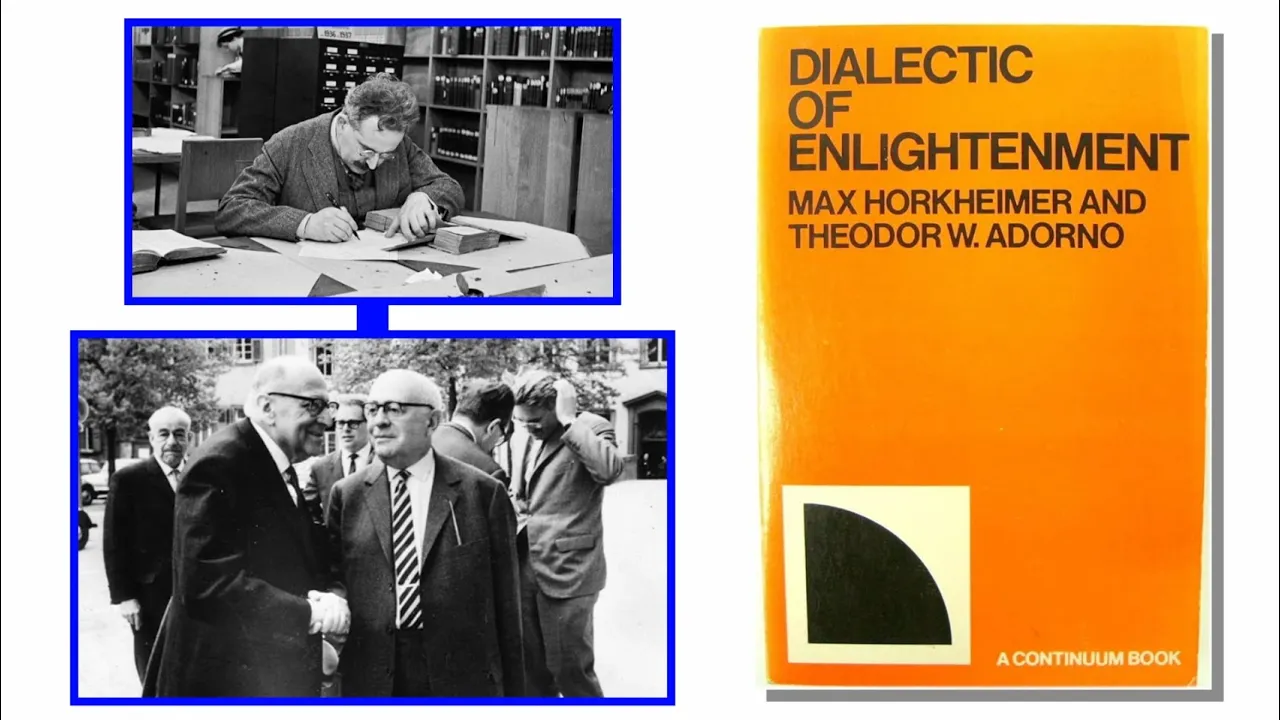
The Frankfurt School: Critical Theory Explained
@ProfessorDaveExplains
9.2K views•2024-05-20

164:01
John of Damascus on Holy Images: A Theological Defense
@BannedBooks
139 views•2026-04-25

68:32
Should We Destroy the Machines? Big Tech Surveillance Critique
@TheStoriesWeTell303
167.9K views•2025-11-30
4:57
The Myth of Sisyphus: A Greek Legend of Eternal Punishment
@TEDEd
8.6M views•2018-11-13
Related Study Plans & Knowledge Roadmaps
Structured learning paths in Philosophy
philosophy
Frankfurt School: Critical Theory & Culture
01Foundations of the Frankfurt School and Critical Theory
02Horkheimer & Adorno: The Critique of Instrumental Reason
03The Culture Industry and Mass Deception
+ 2 more learning modules
12h5 modules
Explore Roadmap
philosophy
Philosophy of Language: From Frege to Austin
01The Linguistic Turn: An Introduction to Language in Philosophy
02Gottlob Frege: Sense and Reference
03Early Wittgenstein: The Picture Theory of Meaning
+ 3 more learning modules
15h6 modules
Explore Roadmap
philosophy
Feminist Epistemology: Standpoint & Injustice
01Introduction to Epistemology and Feminist Critiques
02Sandra Harding and Standpoint Theory
03Donna Haraway and Situated Knowledges
+ 2 more learning modules
12h5 modules
Explore Roadmap
philosophy
Environmental Philosophy: Ethics & Deep Ecology
01Foundations of Environmental Ethics & Anthropocentrism
02Biocentric Individualism and Animal Liberation
03Ecocentric Holism and Deep Ecology
+ 1 more learning modules
10h4 modules
Explore Roadmap