







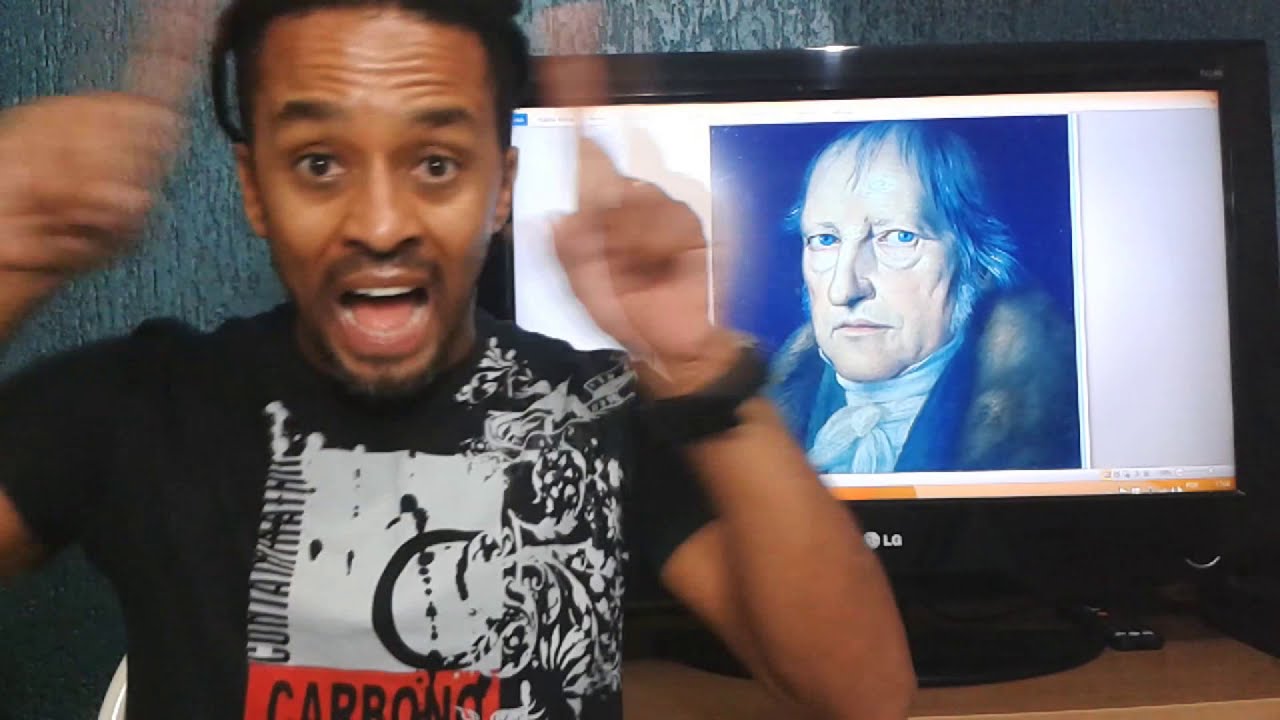



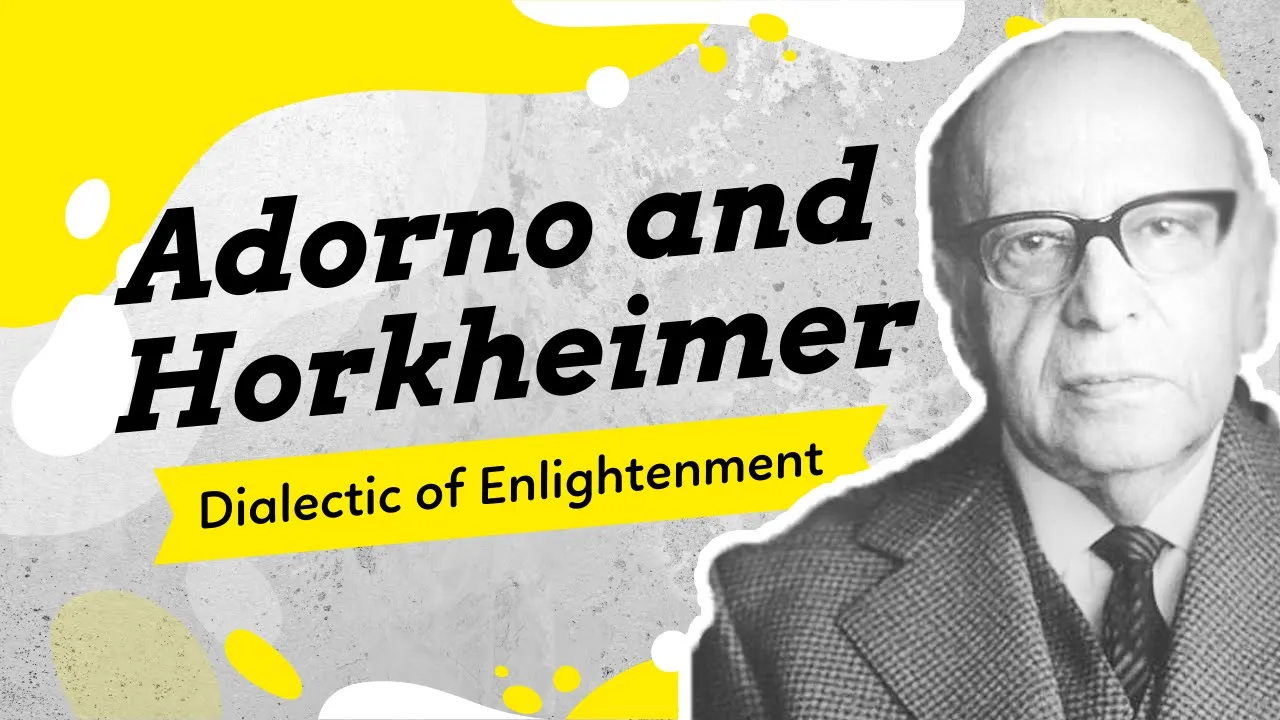






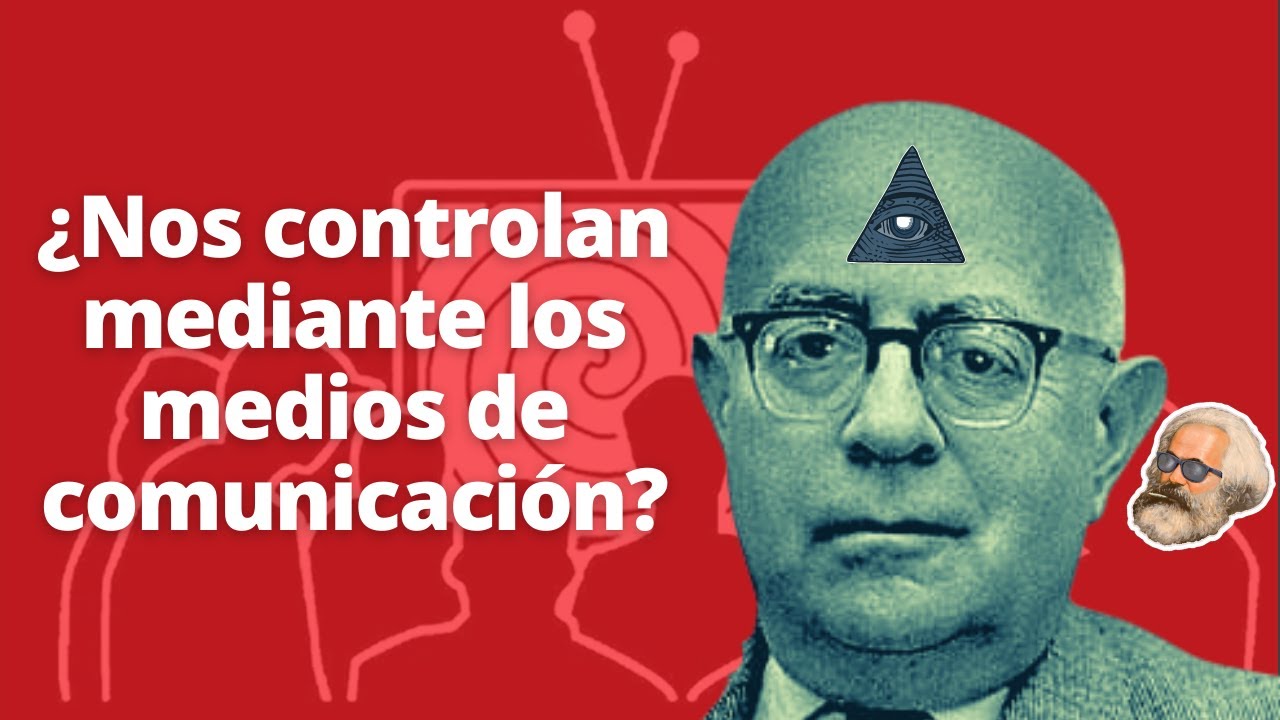



The Frankfurt School, founded in 1929 at the Institute for Social Research in Frankfurt, was an influential intellectual movement that combined Marxist social analysis with Freudian psychoanalysis to develop Critical Theory, which argues that Enlightenment rationality failed to liberate humanity by instead creating a technocratic society controlled by capitalist forces that alienates individuals and suppresses authentic human freedom; this critical perspective, articulated in works like Horkheimer and Adorno's 'Dialectic of Enlightenment,' emphasizes that true human emancipation requires understanding both material conditions and psychological dimensions of oppression.
The Frankfurt School: Critical Theory Explained
Added:Karl Marx's critique of capitalism, particularly the concepts of historical materialism, alienation, and base/superstructure.
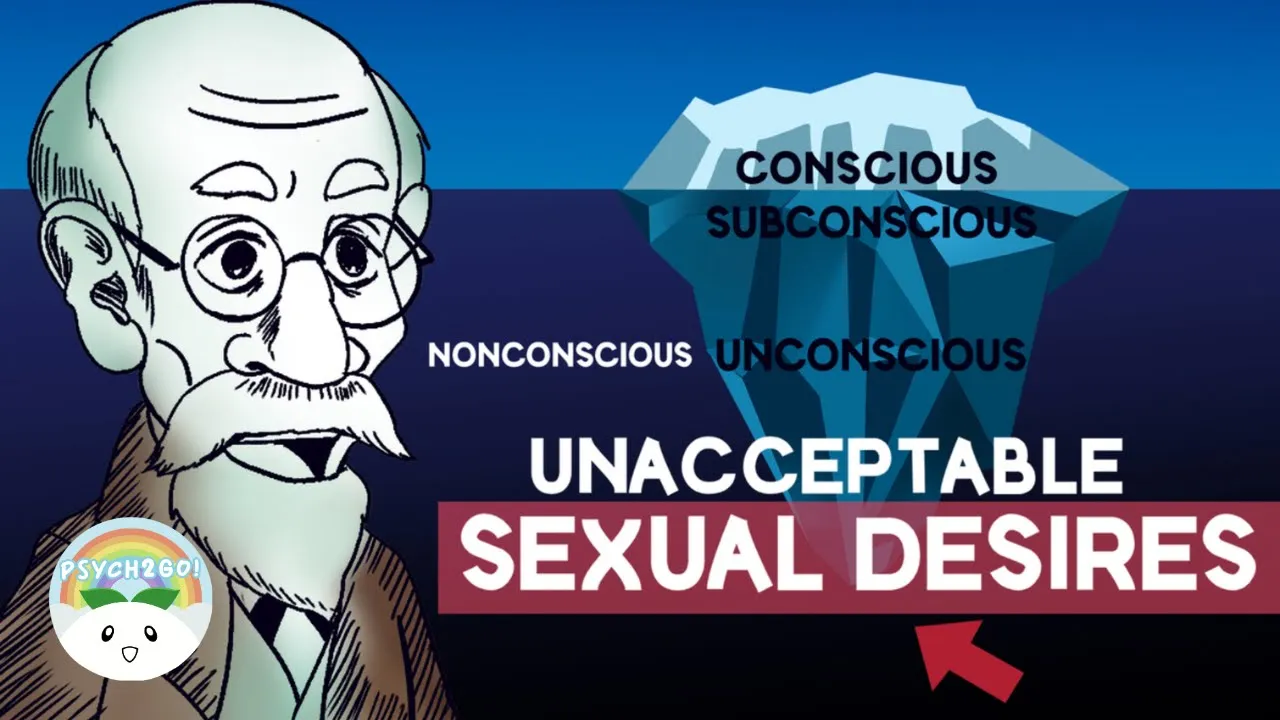
Sigmund Freud's core psychoanalytic theories, especially the unconscious mind, repression, and the tension between individual desire and civilization.
The fundamental promises and philosophical tenets of the Age of Enlightenment, emphasizing reason, scientific progress, and individual liberty.
The basics of Hegelian dialectics (thesis, antithesis, synthesis) as a framework for understanding historical development.
The 'Culture Industry' concept by Theodor Adorno and Max Horkheimer, exploring how mass culture pacifies the working class.
Herbert Marcuse's critique of advanced industrial society and consumerism in his seminal work, 'One-Dimensional Man'.
Jürgen Habermas's theories of communicative rationality, the public sphere, and the transition into the second generation of the Frankfurt School.
The philosophical shift from Critical Theory to French Post-Structuralism and Postmodernism (e.g., Foucault, Derrida).
Applying Critical Theory to modern digital landscapes, analyzing how algorithms, surveillance capitalism, and social media shape contemporary consciousness.
9.2K views393likes9:31Original Release: 2024-05-20
While the Continental movement was created and phenomenology established itself, the Frankfurt School rose to relevance, with the Institute for Social Research in Frankfurt in 1929. The Frankfurt School was an intellectual movement comprised of a wide range of thinkers, which held a perspective that was broader than phenomenology, embracing a Marxist standpoint of attempting to understand people dialectically within their cultural and overall social context.
Both of Marx’s main criticisms against Hegel noticeably manifested in this school of thought: first, that society is plagued with inequality and oppression which limit and manipulate the population, and second, that only through practical action informed by thorough understanding could human freedom be achieved. The Institute also enacted an odd marriage conjoining the ideas of Karl Marx with those of Sigmund Freud. The rationale was that while Marxist theories can be helpful to understand general historical and material conditions of society, they lack a psychological dimension that can’t be neglected if we want to have a better picture of modernity. Psychoanalysis, in this sense, can be used not only as a tool to understand how repressed sentiments and desires that the contemporary world imposes on people shape our social relations – a project partly pointed out by Freud in “Civilization and its Discontents” – but also as a practical means to achieve the aforementioned freedom by knowing the internal motives and aspects of our psychological lives. Like the analytic tradition, thinkers of the Frankfurt School identified a necessity to embrace interdisciplinary research, and to break from traditional philosophical methods, criticizing in particular Descartes and Kant. They disagreed with their philosophical predecessors in that, instead of having a merely hypothetical goal, their focus should be practical and morally engaged – thus also distancing themselves from strict scientific methodology. One of the main figures of the Frankfurt School, Max Horkheimer, pointed out a clear distinction between what he called Traditional Theory and the new branded Critical Theory. Traditional Theory would involve the manipulation of nature that requires theories, hypotheses, and scientific knowledge. However, Horkheimer recognizes that this type of theory craves impartiality and objectivity, which alienates the subject from historical and political factors, thus, becoming an instrument of the dominant ideology of his time. Contrary to that, Critical Theory plays to the subject’s critical thinking: he acknowledges that he is a being in relation with his epoch, culture, and people. In other words, the subjectivity of the subject, which was neglected and actively avoided in Traditional Theory, plays a key role in the construction of knowledge in critical theorizing. Differently from both Hegel and Marx, Horkheimer saw dialectics as a means to break from the traditional encumbrance of strict terminological categorization of intellectual discourse, and a central piece for abandoning the traditional way of theorizing. Critical Theory proposes that subject and theory cannot be separated from historical influences. German philosopher Walter Benjamin, though not a proper member of the Frankfurt School, frequently interacted with its members and received their funding for his research, influencing much of the discussion mentioned so far. A strong adopter of Marxism, he also dialogued frequently with Jewish theology and general continental values like German idealism and romanticism. He saw the development of culture and politics as a gateway for a “messianic” view of history, shifting its study to timelessness, an everlasting search for its perfect metaphysical representation – not as an end to be looked upon, but as a tangible understanding that may occur at any moment. He criticized theoretical structures as they could not properly represent the wholeness of facts, which can be in themselves already theory; a perspective reflected in his writing. He widely discoursed on art and its value, especially on photography and how it interconnects with reality and discourse in media, and attempted to write in a non-formal manner as the presentation of his texts and the images it conjured was more important to him than formality or logic. His linguistic theory followed suit in that he aimed for a semi-theological approach of attempting to go back to a “natural linguistic state” of sorts where given objects had only one name in one universal language, traceable to a biblical Adam – the first philosopher for him – when he named the first animals and such.
True art would be the only path toward identifying these true names of things and therefore their and our redemption, a goal severely alienated from us by the rise of modernity and the consumer culture which prioritized the commodification of aesthetic experience through formulaic objectification.
Benjamin’s perspective highly influenced Horkheimer and Theodor Adorno to write the “Dialectic of Enlightenment”, probably the magnum opus in terms of this school of thought. In this work, the authors criticized the allegedly failed project of the Enlightenment movement in modernity, which instead of introducing a more progressive era thanks to political movements and technology, ended up creating a technocratic society controlled by capitalists to perpetuate oligarchical structures. From the Marxist point of view, which Horkheimer and Adorno shared, it was strange that with all material conditions set, instead of moving towards its liberation, the proletariat was engaging with dangerous political views that were spreading rapidly around Europe.
For example, the recently widespread radio fad normalized a unilateral flow of information from a few to the masses, which were in turn unable to reply in any way, unlike other media such as letters or telephones. It then becomes a tyrannical tool which generates a culture industry to control the population into submission, favoring fascist inclinations instead of democratic support – a clear tendency for self-destruction and obliteration of freedom. Of course, this widespread pessimism was in response to the rise of Nazism and its fascist methods, a reflection of the publication date of the final version of their work, 1944. The project of Enlightenment, then, was failing miserably, because rather than freeing people from the system that was imprisoning them, the project was making the masses more alienated, causing them to stop thinking about their own oppression. For Adorno, only through aesthetical experiences can we preserve our own autonomy and thus happiness, something that heavily processed content from the culture industry could not provide.
German-American philosopher Herbert Marcuse proceeded in the same lines of this work, emphasizing the dehumanization resulting from the attempt made by the Enlightenment movement at controlling nature. Though studied by all of the Frankfurt School’s members, he embraced the psychoanalytic perspective of Sigmund Freud, the first attempt at a dedicated scientific and medical practice directly generated by studies in the philosophy of mind, which was spearheaded there by his colleague Erich Fromm. Even though psychoanalysis was seen as a manner to integrate Marxist theory with a phenomenological approach of the individual, it was not without its criticisms; especially from analytic Karl Popper, who later denounced it as pseudoscience. The Frankfurt School, though having several different stages, lasted in one way or another until today, and had several other members, with the latest being Adorno’s assistant Jurgen Habermas and Axel Honneth – but we will come back to them a bit later.
As a small side note: usually the expression “cultural marxism” is associated with the Frankfurt school and the Critical Theory movement; however, it refers to a conspiracy theory developed by the alt-right from the “Cultural Bolshevism” propaganda in Nazi Germany, an anti-semitic appropriation of its terminology, even going as far as identifying the Frankfurt School with postmodernism, a much different and posterior movement which denied most of their methodologies in the first place. In the next tutorial, we will circle back to the analytics to understand one of the groups most characteristically opposed to the Frankfurt School, the Logical Positivists of the Vienna Circle, which shunned subjectivity toward an objective, logically-centered language to deal with the world.
Up Next

49:28
Adorno & Horkheimer: Dialectic of Enlightenment, Part 1 Explained
@TheoryPhilosophy
17K views•2021-06-05

164:01
John of Damascus on Holy Images: A Theological Defense
@BannedBooks
139 views•2026-04-25

68:32
Should We Destroy the Machines? Big Tech Surveillance Critique
@TheStoriesWeTell303
167.9K views•2025-11-30
4:57
The Myth of Sisyphus: A Greek Legend of Eternal Punishment
@TEDEd
8.6M views•2018-11-13
Related Study Plans & Knowledge Roadmaps
Structured learning paths in Philosophy
philosophy
Frankfurt School: Critical Theory & Culture
01Foundations of the Frankfurt School and Critical Theory
02Horkheimer & Adorno: The Critique of Instrumental Reason
03The Culture Industry and Mass Deception
+ 2 more learning modules
12h5 modules
Explore Roadmap
philosophy
Philosophy of Language: From Frege to Austin
01The Linguistic Turn: An Introduction to Language in Philosophy
02Gottlob Frege: Sense and Reference
03Early Wittgenstein: The Picture Theory of Meaning
+ 3 more learning modules
15h6 modules
Explore Roadmap
philosophy
Feminist Epistemology: Standpoint & Injustice
01Introduction to Epistemology and Feminist Critiques
02Sandra Harding and Standpoint Theory
03Donna Haraway and Situated Knowledges
+ 2 more learning modules
12h5 modules
Explore Roadmap
philosophy
Environmental Philosophy: Ethics & Deep Ecology
01Foundations of Environmental Ethics & Anthropocentrism
02Biocentric Individualism and Animal Liberation
03Ecocentric Holism and Deep Ecology
+ 1 more learning modules
10h4 modules
Explore Roadmap