






![DIREITA vs ESQUERDA: O que significa de fato? [ÁLVARO MACHADO DIAS] - Ciência Sem Fim #309](https://i.ytimg.com/vi/DSBb7Ahp9yE/hqdefault.jpg)

















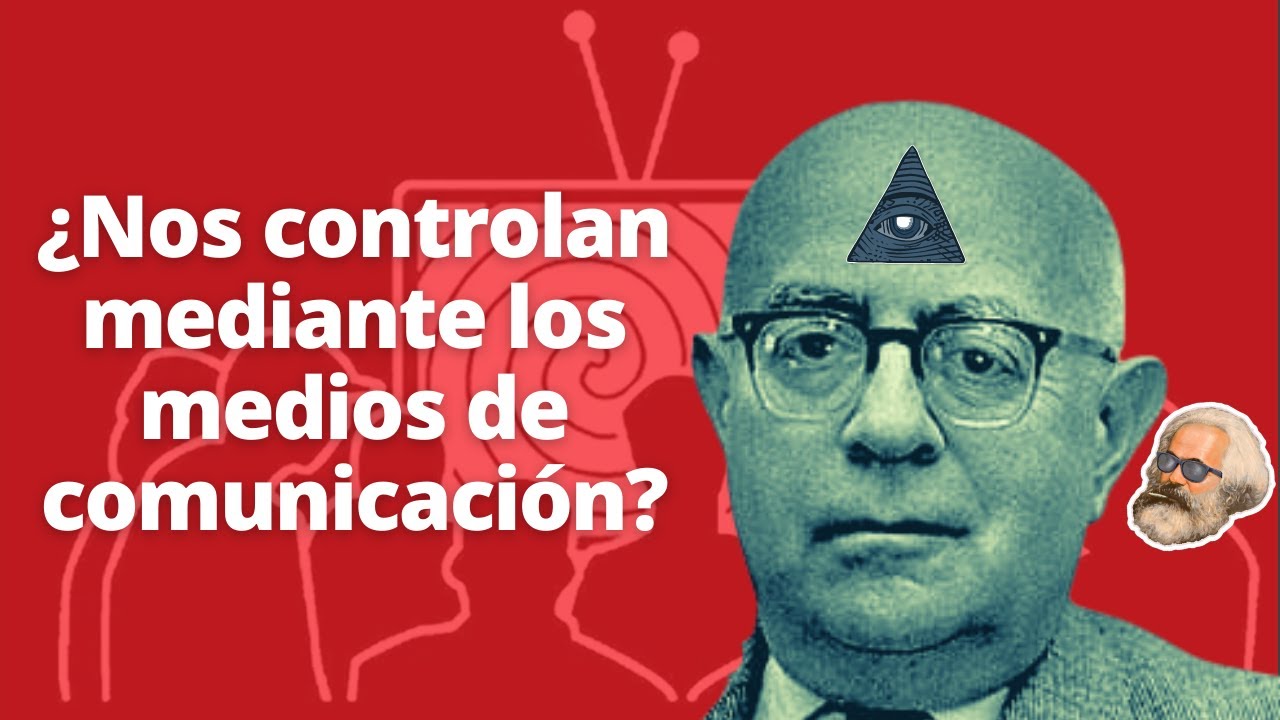
The Frankfurt School theorists Adorno and Horkheimer argued that the culture industry—a system of mass media production—serves as a mechanism of psychosocial control under capitalism, using repetitive, formulaic entertainment to pacify the public and prevent revolutionary consciousness by replacing authentic artistic expression with commercialized products designed to stimulate desire and maintain the status quo.
The Culture Industry: Adorno, Horkheimer, and Neomarxist Critique
Added:Classical Marxist Theory: A foundational understanding of Karl Marx's concepts of base and superstructure, commodity fetishism, and alienation.
The Historical Context of the Frankfurt School: Awareness of the rise of authoritarianism, fascism, and mass propaganda in Europe during the 1930s and 1940s.
The Concept of Ideology: Understanding how dominant ideas and belief systems serve to justify and maintain existing power structures in society.
Basic Psychoanalytic Concepts: An introductory grasp of Freudian theory regarding the unconscious, desires, and social repression, which Neomarxists integrated into sociological analysis.
Walter Benjamin's Media Theory: Exploring 'The Work of Art in the Age of Mechanical Reproduction' as a crucial, more optimistic counterpoint to Adorno and Horkheimer's critique.
Antonio Gramsci and Cultural Hegemony: Studying how the ruling class maintains control through cultural institutions and consensual submission rather than overt force.
Guy Debord and the Society of the Spectacle: Investigating how the culture industry evolved in late capitalism into a continuous stream of representations that replace real relationships.
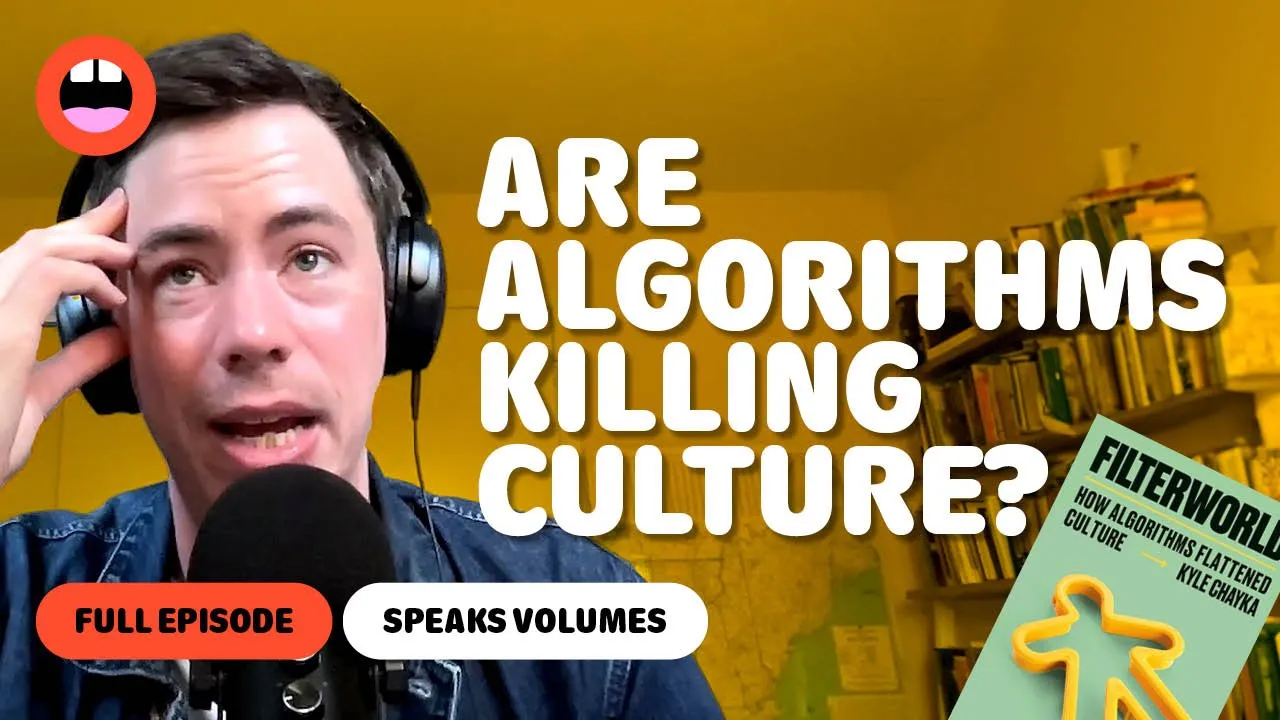
Algorithmic Culture and Social Media: Applying the critique of the culture industry to modern digital landscapes, target advertising, and the algorithmic curation of consumer attention.
228.7K views9.9Klikes18:39Original Release: 2020-03-02
Hello this is Plasticpills on the culture industry. I think this topic was the first ever request I received for a video, so I do listen. This video was co-written with Shalon Van Tine more of her work, excellent work, is in the description below. Roll intro! [Bernie Sanders] We cannot live in a vibrant democracy unless people get divergent sources of information and have the opportunity to hear a serious debate about the major issues facing our country.
Adorno and Horkheimer were Jewish intellectuals who fled Nazi Germany and moved to California, where they wrote this book. In it, they analyzed the culture industry of American capitalism--wait think about that two Jews fled the Holocaust only to dunk on how bleak American culture is. Damn.
Anyway, they co-authored this book discussing how media generates homogeneity: that is, the same bleak sameness in every product. Mass production stands in contrast with artisanship which is admittedly less efficient but goods created by artisans are unique and maintain a sort of "aura" of the designer or artist, a remnant of human touch. That lasted until art started to imitate the products of mass production. So now the consumers of these products are also blandly similar, passive, and unimaginative. What are they talking about eh? Reboot, sequel, sequel, crossover, spinoff. Anything new would be risky, too risky, so mass media is essentially stuck on loop. Not all, not all, but anything that breaks in here just gets looped through every other aspect of the culture industry.
Adorno and Horkheimer--Adork--diagnose the culture industry as a mechanism of psychosocial control, and in American capitalism it plays the role of dictator over taste and opinion. Remember they are talking about dictators when they just escaped this guy. They write "Real life is becoming indistinguishable from the movies" and Hollywood films are responsible for "the stunting of the mass media consumer's power of imagination"-- 1940s remember--"the culture industry as a whole has molded man as a type unfailingly reproduced in every product... not nuanced in any way." Again: 1940s.
That's what Disney was still this--not this. Hey we can wait... The culture industry stimulates the desire for pleasure, for entertainment, only to defer it to the next thing; to reboot, sequel, sequel, crossover, spin-off. Habituation and repetition that resigns subjects to the status quo, lulled to sleep, as it were, in a flow of products. And it's not just film. Adorno and Horkheimer started a tradition of studying mass culture as a mechanism for the maintenance of a status quo, one that continues later in Barthes, Baudrillard, Jameson and Plasticpills. As with many Marxists in the post-war period where we get the moniker neo-marxist, Adork were trying to get a handle on why, despite all the economic contradictions, particularly inequality and alienation, the public is actually opposed to revolution. They would rather be asleep as complacent consumers, and really they don't draw much of a distinction between this, and this. Both are basically technocratic regimes of instrumental rationality, according to Horkheimer, and oppose the idea that a better world is possible or worth fighting for. So are they just elitist culture snobs? Well no, the critique of the culture industry, this Walmart dreamworld, is not a critique of individuals per se, or even of the pop culture products themselves. The problem is rather with the industry that produces them and how their sole purpose is to mass-market mass-produce products for profit. There's no other human goal to which producers or even artists aspire. The products of pop culture are not created for the purpose of artistic or intellectual merit but for the least risky avenue for making more money--again that's no surprise to anybody. This movie for example totally redefined what was possible for animation at the time, and afterwards. See? Look at this. Plus, it almost bankrupted the studio. It's full of these effects never before even attempted. Some of their animators spent a full year animating waves and splashes, and anyway, this guy's character flaws, aside they didn't know if it would work! Compare this to the company who pumps this out, year after year. These days it's impossible to imagine them ever taking the risk of a loss, which is why pop culture is stuck on loop. Still, Adork wrote that all this was the case when this was on the screen. Just imagine what they'd say about this shlock.
They wanted to figure out how the culture industry stifles revolution. It's exactly because of the nightmare of fascism that Adorno sought to understand how people can become dominated by capitalism and what would be required to liberate them from it.
So let's go a bit deeper into Adork's arguments about the culture industry and pop culture. To clarify: when we say pop culture we don't simply mean the practices that have been popularized by ordinary people--that's called folk culture.
Rather pop culture is the collection of cultural products that have been marketed via the mass media, specifically the culture industry; that is, from the top down. In other words, the cultural products that are created, marketed, and distributed for mass consumption. The fact that all these products are produced, advertised and distributed means that ordinary people only share in the consumption--not in creation. Thus they're pacified by it.
Politics, news, entertainment all follow the same channels in the culture industry.
Though the Internet has disrupted that to a degree.
In the Dialectic of Enlightenment, Adork sought to explore why the inequality of capitalism does not spur revolution in America. Capitalist society pumps out repetitive, unsurprising forms of entertainment to stimulate desire and make money. It's not concerned with the creation of intellectual or revolutionary art. I don't know if you know this but art used to matter to some people.
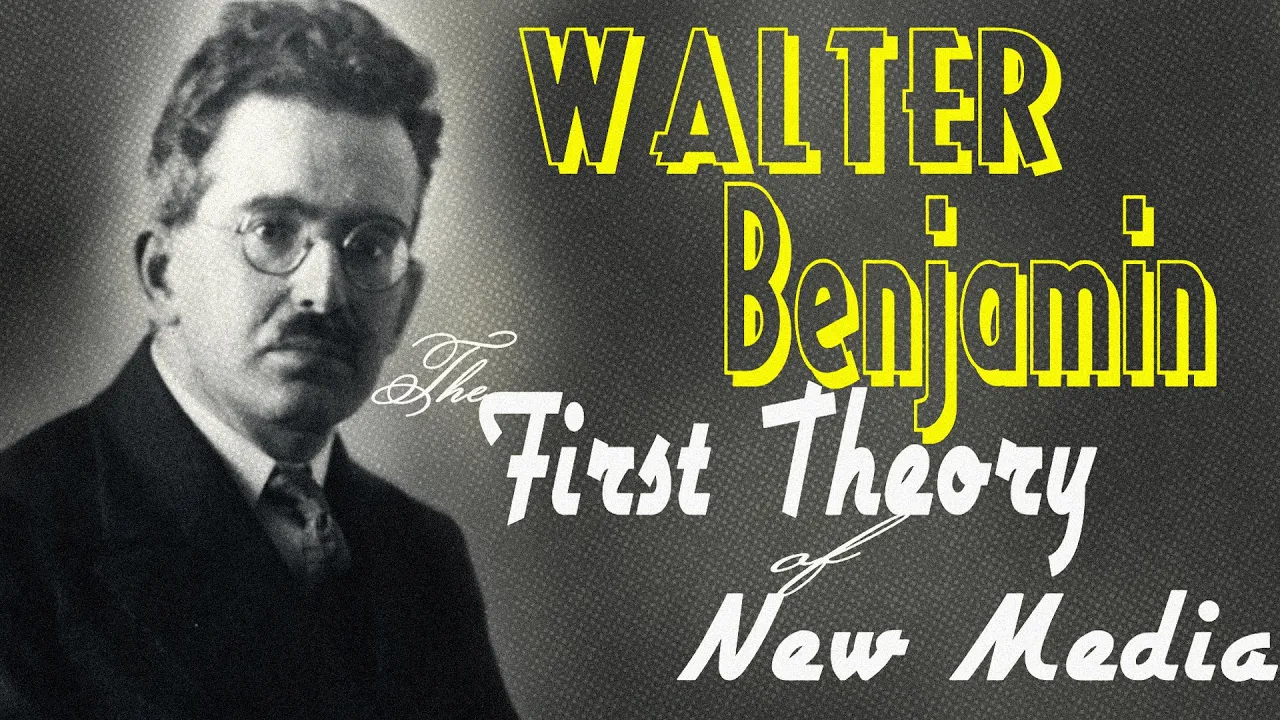
Walter Benjamin, Adorno's mentor, articulated this idea in the Work of Art in the Age of Mechanical Reproduction which argued that mechanical, factory-like reproduction of art objects reduces its perceived aesthetic intimacy with the artist, its "aura", that's what made it special. Advertising replaces the aura and tries to associate what we now call a brand with the product. The purpose of art is, or at least could be, according to Adorno is that it shakes you away from your Walmart dreamworld. If you know anything about art these days it has become its own cultural industry where the super-rich can park their money as an investment. Owning the present isn't enough for them so they buy the past as well. Well played. Everything produced by the culture industry takes on this polished veneer: bright colors, plastic, and costume, such that any trace of the real human is erased from art, from music, and from artificially constructed political personae. For these Marxist humanists you need something really human to inspire action and you could say that the entire purpose of the culture industry is to alienate the activity of consumption from every other part of life.
It becomes a frictionless process that then just endlessly reboots itself.
They held out for more when it came to art. In his book on aesthetics, or what he imagines art could be, Adorno writes: "Art respects the masses by confronting them as that which they could be rather than conforming to them in their degraded state.: So Benjamin was somewhat optimistic about pop culture. The death of the aura, he theorized, might mean that pop culture had the potential for stimulating real democratic action. However he committed suicide, rather than being captured by the Nazis, before he could get to the US, so he never got to see the American culture industry up close. Adorno and Horkheimer, on the other hand, came to see the culture industry as a powerful agent in perpetuating capitalism. They write: "Culture today is infecting everything with sameness. Film, radio, and magazines form a system. Each branch of culture is unanimous within itself and all are unanimous together. Even the aesthetic manifestations of political opposites proclaim the same inflexible rhythm... all mass culture under monopoly is identical.
Films and radio no longer need to present themselves as art. The truth is that they are no longer anything but business used as an ideology to legitimize the trash they intentionally produce." I mean damn, that's hard to argue with. It's hard to argue with that. So besides the obvious examples of advertising and product placement the culture industry has another function in the capitalist economy: psychological control. Picture this: after a long day of alienated wage labor you're tired; not looking for art to challenge you. Instead, you want to chill to the drone of sports or to the comfortable formulae of sitcoms or reality TV. These two realms of life, the active producer and the passive consumer, complement each other perfectly in the maintenance of this particular status quo. Way back when, bad Santa himself, Karl Marx, addressed this duality: "What then constitutes the alienation of Labor?
Just as in religion the spontaneous activity of the human imagination, of the human brain, and the human heart operates on the individual independently of him-- that is, operates as an alien divine or diabolical activity--so is the worker's activity not his spontaneous activity. It belongs to another; it is the loss of his self. As a result, therefore, man (the worker) only feels himself freely active in his animal functions--eating, drinking, procreating, or at most in his dwelling and in dressing-up etc.; and in his human functions he no longer feels himself to be anything but an animal." So for Marx, labour is essential to being human. That is creating, having pride in what you do in a day, and having agency over your own destiny, but since your labour is owned by someone else you have to act your freedom in your leisure time alone. But for most people leisure time is basically reduced to consuming, not creating, and "what is animal becomes human and what is human becomes animal." There's an argument for capitalism that you've likely heard: that you're free to consume as you wish--but not to create as you wish, because that requires the privilege of ownership.
Now the culture industry does its best to take that freedom from you too, by codifying your leisure time, by determining taste, and then only producing sanctioned forms of entertainment that will not upset or subvert the status quo. So what Marx called "spontaneous action" becomes increasingly difficult, if not impossible, so the canned formula of TV works in tandem with the repetitive drudgery of labour, capitalist labor, in order to prevent anything like spontaneous action, such as protest, from occurring and it seems to work! This is why, for the Frankfurt School, capitalism is not just an economic model but a whole psychology. A friend of Adork--Herbert Marcuse-- explores this psychology in his book Eros and Civilization, where he argues that freedom and creativity are stifled. He combines Marxist analysis of the alienation of Labor with a Freudian analysis of how institutional repression affects our psychology; particularly in which actions or goals we consider possible to undertake or accomplish. Now I may be repeating myself, fair enough, but there is a very important point here yet to make: every book I have referenced so far is over sixty years old, and since then everything about the culture industry has gotten much, much worse. I know these facts are endlessly trotted out but check out how amazingly perceptive these guys were, in the 40s, it's incredible. The culture industry today is monopolized by these few companies, that's it! 90% of it is owned by five companies!
Virtually all pop culture: TV, movies, advertising, and most importantly news and politics are filtered through the interests of these companies. So please, make no mistake, the culture industry is not some amorphous concept-blob invented by neo-marxists; It's just this! Right here! and you best believe that if you say you're gonna get money out of politics or break up a media monopoly you're gonna have this cabal to answer to. [Bernie Sanders] when you have a smaller and smaller number of large media conglomerates owning and controlling what the American people see, hear, and read you have a real threat to the kind of democracy that many of us want this country to be. Alright, let's talk about catharsis, because it gets worse. Owners don't think we're stupid--they know we're not happy and they know we're not blind, so the culture industry co-opts our dissatisfaction with the status quo by incorporating notions of rebellion or calls for social justice into their products. This is called catharsis and goes way back to Aristotle's aesthetics... Never mind. Catharsis gives us the sense that we're participating by feeling the emotions displayed to us in entertainment even though they aren't our own emotions. Advertising deploys the sentiments of social justice so that we can feel like consuming products is participating in those causes, when the roots of those causes are part of the system maintained by those same owners of production. And thus being entertained we never have to go so far as to act on them in any way. Hell, I'm not even immune to that criticism: this platform is owned by the second or third most valuable corporation to ever exist. So Mark Fisher explored this idea in Capitalist Realism, which argued that consumer capitalism has become so pervasive in modern society that even having explicitly anti-capitalist or pseudo-revolutionary themes in pop culture doesn't affect the ownership problem in any meaningful way. In fact, it actually reinforces it: obviously symbols of rebellion don't bother them in any way.
Joker came right out of here and made them a billion dollars. "Capitalist realism is more like a pervasive atmosphere, conditioning not only the production of culture but also the regulation of work in education, and acting as a kind of invisible barrier constraining thought and action." Okay so this is gross. In essence the culture industry takes legitimate sentiments regarding social justice causes or protest and inserts them into the pop culture products, then sells it back to us! In turn, we once more feel the cathartic release of having participated in spontaneous action all the way maintaining the domination of that exact same culture industry.
Calm down.
I did a video a while back on how advertising proffers spiritual or symbolic commodities like justice, to veil the injustice required to produce such a product in the first place. You cannot resolve the injustice inherent to a capitalist economy by consuming more. Film and advertising legitimate social justice issues as a way to stimulate an emotional connection in order to sell you movie tickets, shoes, and corn syrup. Wait, go back to Adorno: "the triumph of advertising in the culture industry is that consumers feel compelled to buy and use its products even though they see through them." [Zizek] I already did my duty to our society it's pure ideology and the culture industry is it engine. Anything human in us: the desire for change or social justice, our heroes, our villains, even our fears and anxieties are sold back to us. As Terry Eagleton put it: "Nothing is more generously inclusive than the commodity, which in its disdain for distinctions of rank, class, race, and gender will nestle up to anyone at all provided they have the wherewithal to pay for it."
Social justice is important. Causes are important. But if you buy this thesis than any cause, call for justice, or campaign that does not advocate for a change in ownership...it's just PR.
You can do something, or you can do nothing.
Most likely nothing will change either way.
But it could...
Up Next
5:43
Frankfurt School Explained: Critical Theory & Its Legacy
@PostPhilosophy
46.9K views•2022-08-11

164:01
John of Damascus on Holy Images: A Theological Defense
@BannedBooks
139 views•2026-04-25

68:32
Should We Destroy the Machines? Big Tech Surveillance Critique
@TheStoriesWeTell303
167.9K views•2025-11-30
4:57
The Myth of Sisyphus: A Greek Legend of Eternal Punishment
@TEDEd
8.6M views•2018-11-13
Related Study Plans & Knowledge Roadmaps
Structured learning paths in Philosophy
philosophy
Frankfurt School: Critical Theory & Culture
01Foundations of the Frankfurt School and Critical Theory
02Horkheimer & Adorno: The Critique of Instrumental Reason
03The Culture Industry and Mass Deception
+ 2 more learning modules
12h5 modules
Explore Roadmap
philosophy
Philosophy of Language: From Frege to Austin
01The Linguistic Turn: An Introduction to Language in Philosophy
02Gottlob Frege: Sense and Reference
03Early Wittgenstein: The Picture Theory of Meaning
+ 3 more learning modules
15h6 modules
Explore Roadmap
philosophy
Feminist Epistemology: Standpoint & Injustice
01Introduction to Epistemology and Feminist Critiques
02Sandra Harding and Standpoint Theory
03Donna Haraway and Situated Knowledges
+ 2 more learning modules
12h5 modules
Explore Roadmap
philosophy
Environmental Philosophy: Ethics & Deep Ecology
01Foundations of Environmental Ethics & Anthropocentrism
02Biocentric Individualism and Animal Liberation
03Ecocentric Holism and Deep Ecology
+ 1 more learning modules
10h4 modules
Explore Roadmap