









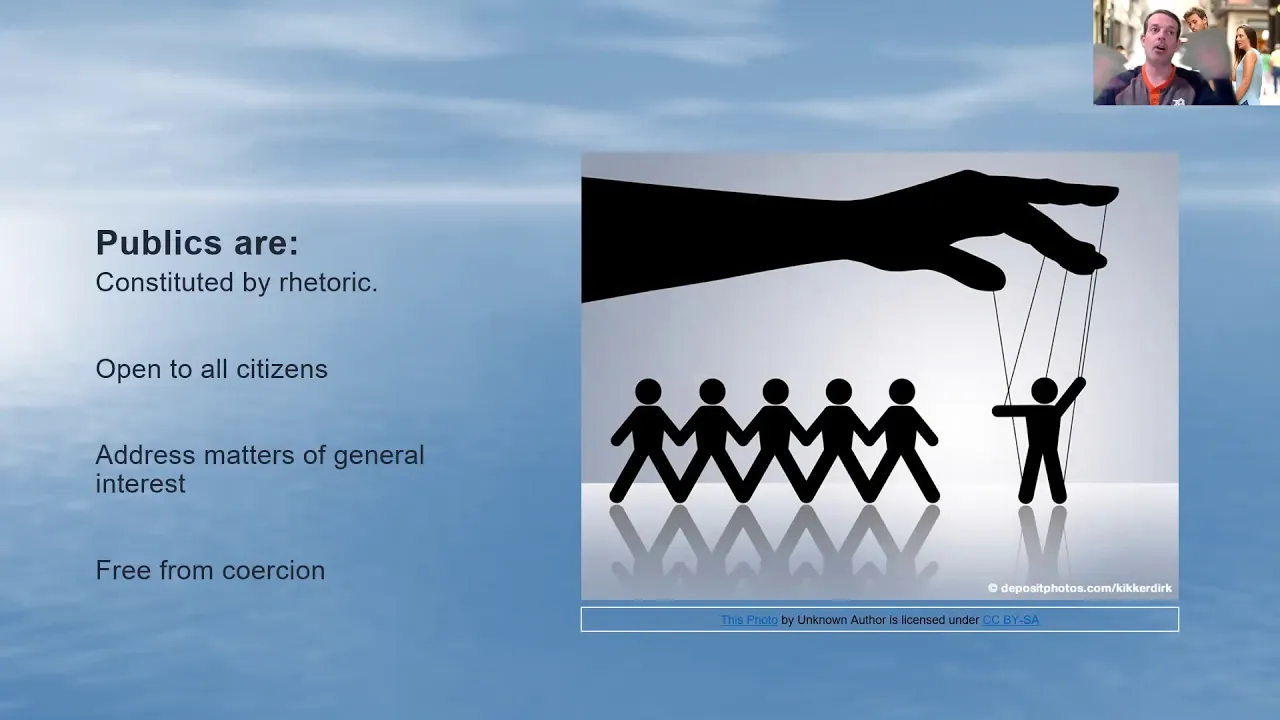



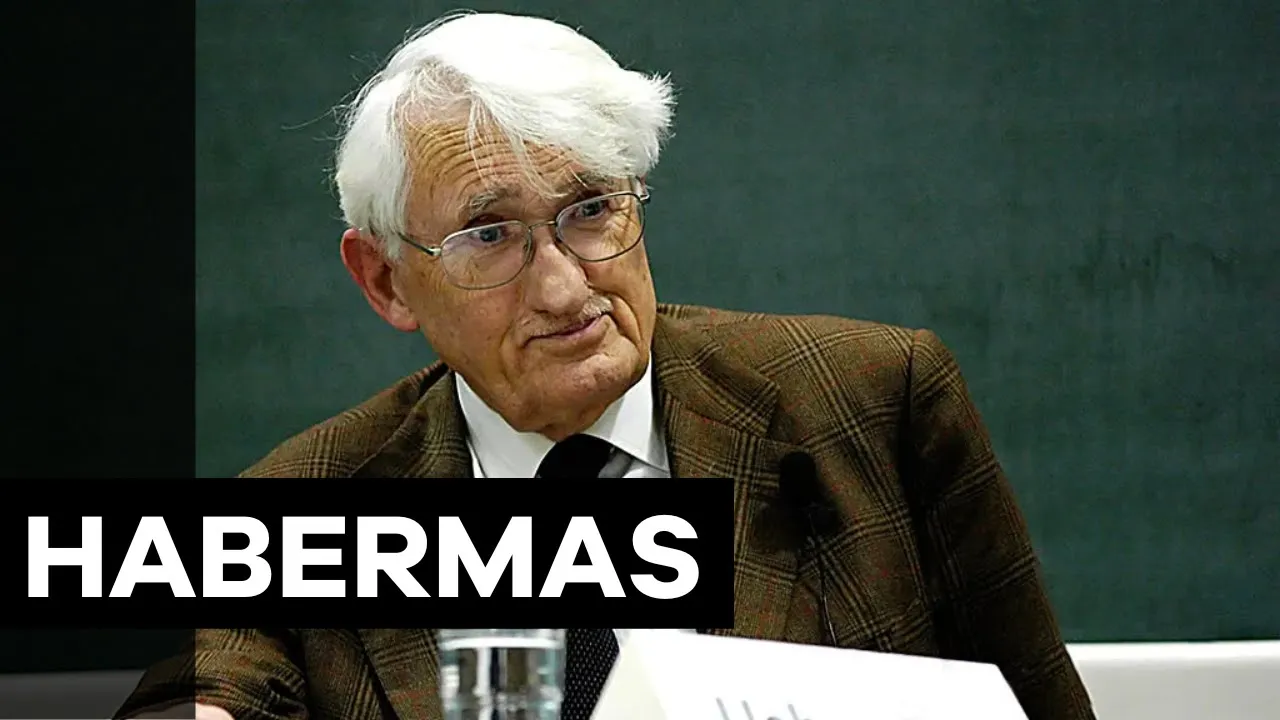



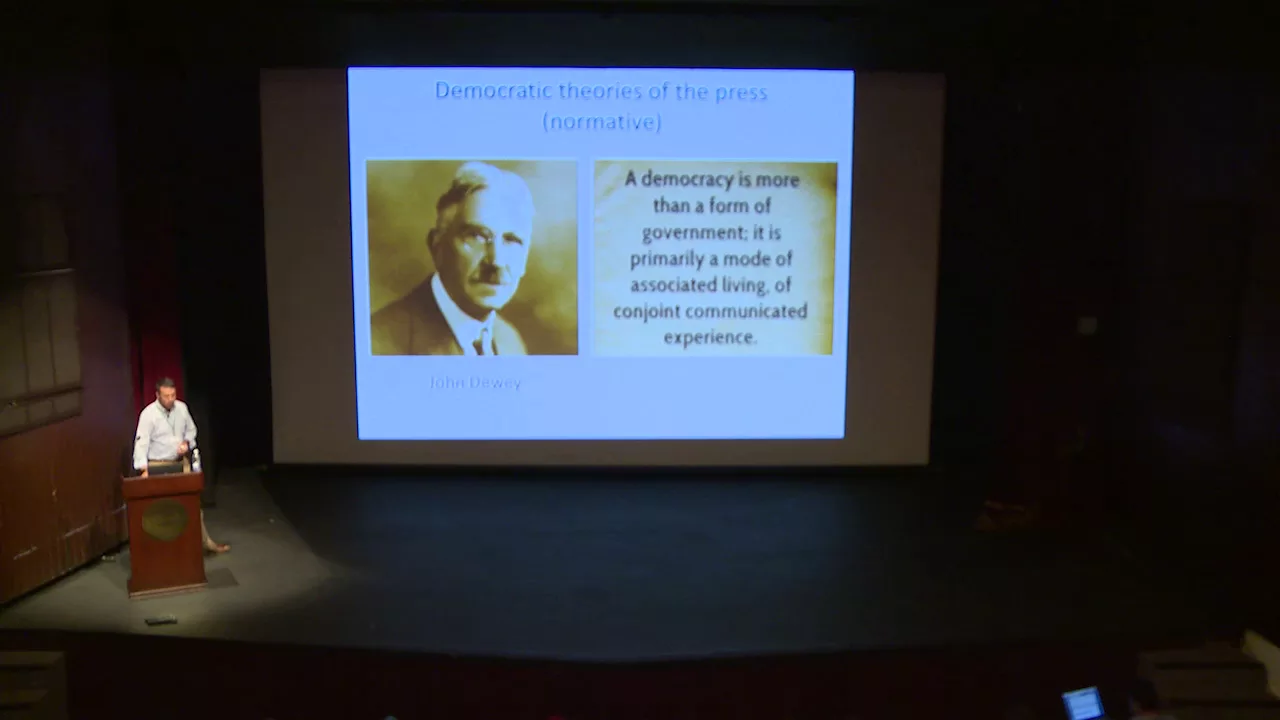


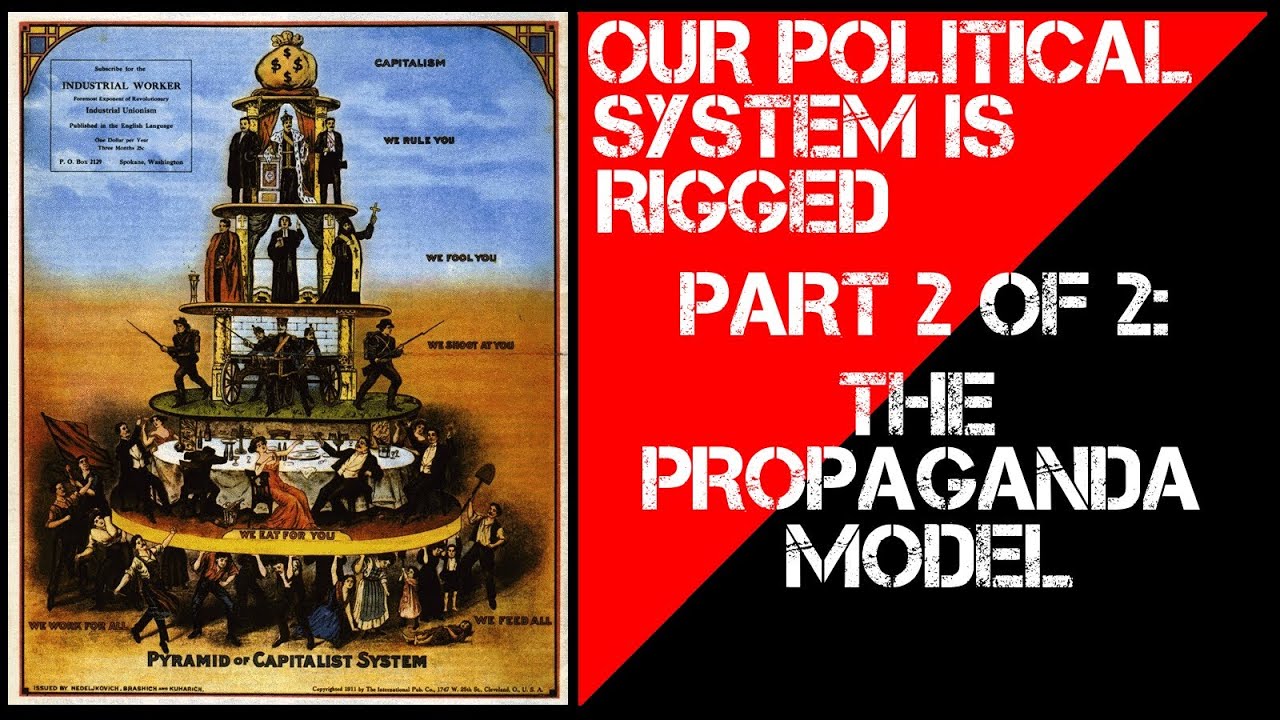
Jürgen Habermas conceptualized the public sphere as a neutral social space where private citizens engage in rational-critical debate about matters of public concern, functioning as a communicative infrastructure that enables the formation of public opinion to influence state decisions; however, he argued that this ideal public sphere has declined due to the 'reutilization of power' where powerful organizations and media corporations now dominate discourse, replacing individual citizens and undermining genuine democratic deliberation.
Habermas and the Public Sphere: Media, Democracy, and Decline
Added:Basic principles of democratic theory, including the significance of free speech, civic participation, and the formation of public opinion.
The historical context of the Enlightenment and the rise of the European bourgeoisie in the 18th and 19th centuries.
The fundamental distinction between the state (public authority) and the private realm (the market economy and domestic life).
An introductory understanding of the Frankfurt School of Critical Theory and its structural critique of modern capitalist society.
Nancy Fraser’s feminist and post-colonial critiques of Habermas, specifically her concept of 'subaltern counterpublics' representing marginalized groups.
The transition to the digital public sphere, analyzing how social media, algorithmic curation, and echo chambers fragment modern public discourse.
Habermas's broader theory of Communicative Action and its applications to contemporary models of deliberative democracy.
The political economy of mass media, studying how corporate ownership, advertising, and commercialization shape news production and influence democratic processes.
107.2K views1.6Klikes6:43Original Release: 2016-04-12
how does public opinion shape political power and policy what even is the public and what power does the public have to influence governance in Democratic states these are the sorts of questions that German sociologist and philosopher Yogen Havas considered when he first developed the idea of the public sphere the public sphere is a concept that is Central to the study of media because of the ideal that the media plays a role as a facilitator of democracy by providing members of the public with equal access to information and equal opportunities to participate in public debate in order to understand the current state of the media in relation to the ideals and objectives of the public sphere we first need to have a good grasp on what the public sphere actually is according to habas the public sphere is the Nexus between public life and Civil Society emerging as an ostensibly neutral social space in which private citizens can engage in debate about issues important in social life ideally the public sphere acts as a realm separate to the state and the economy where discussions can take place freely and democratically to generate public opinion and attitudes public opinion can either serve to support or to challenge the operations of the state but regardless of what position it holds public opinion ultimately Works to influence state decisions one way to think about the public sphere particularly in relation to the media is as a communicative infrastructure which allow allows the free exchange of information and ideas deliberation on issues of public concern the formation of public will and the transmission of public will to official authorities authorities then have to be accountable for their actions again through the communication channels of the public sphere have must locates the emergence of the public sphere in parts of 18th century Europe prior to this he argues the structure of social life in feudal times didn't allow for any clear distinction between the public and the private between the state and Society social life had undergone significant and Rapid transformation by the end of the 18th century feudal institutions were disappearing and the church's power was dissipating giving way to new forms of Public Power the first semblance of a public sphere appeared initially as the bis public sphere in reference to the emergence of a middle class with the time money and education to engage in political and social debate this period was also marked by growth of coffee houses salons literary societies and voluntary associations in which these debates would take place the press and other forms of media such as pamphlets were also an important element of the public sphere as it was through these that the communication of public debates would be transmitted despite the fact that the public sphere was historically dominated by the Bourgeois habas believes that the ideal public sphere is accessible to all regardless of their class positions he contends that it's not class that binds participants to the the public sphere and binds them together but a mutual will to discuss issues that are in the public interest indeed for habas the very success of the public sphere depends upon robust rational critical debate in which everyone is an equal participant and has equal opportunities to convince others of the strength of their arguments he notes a number of factors that are necessary for its success including the extent of access that people have to the public sphere the degree of autonomy that they hold the absence of hierarchy the equality of participation and the rule of law havas's theory of the public sphere is normative as well as objective which means that it works towards an ideal realm as well as the reality of liberal democracies accounts from the 18th century indicate that far from being accessible to all women ethnic minorities and members of the working class were by and large excluded from participating in the public sphere due to the Social and material conditions of the time throughout the 20th century limitations on access to the public sphere as a result of one's gender class position or ethnicity gradually declined however these barriers were then replaced by other structural challenges to the construction of habam Mass's ideal public sphere habas refers to these changes as the reutilization of power which attributes to the growth of the culture Industries and the evolution of large private interests he observes that the principles of the public sphere are in fact in Decline as the public is no longer made out of individuals but of organizations that institutionally exert their influence on the public sphere and on public debate this has led to a mixing of the private and public spheres and the weakening of bonds between members of the public in this scenario the illusion of the public sphere is maintained but only to give a veneer of legitimacy to public leaders not because public opinion actually influences them the changing structure and role of the media has also contributed to the decline of the public sphere as media is viewed as one of the organizations that now has a significant impact on discourse within the public sphere this is partly due to the fact that many forms of mass media operate across both the commercial and the political realm the media are thus decreasingly an Avenue for members of the public to become informed about public affairs and to communicate public opinion back to the state the pursuit of profit by media corporations has led to the commodification of news turning public discourse into a product to be sold back to Consumers rather than communicated back to members of the public the commercial power of media corporations allows them to exert significant influence on the public sphere and on public opinion one Corporation has far more leverage than most ordinary members of the public have individually or even collectively the media's role within the public sphere has changed dramatically and for habam Mas in a very problematic way which is why he talks about the decline of the public sphere in summary the public sphere is viewed by habas to be an integral part of democracy a social space in which private citizens engage in debates pertinent to the public interest without being influenced by the state second the success of the public sphere depends upon robust rational critical debate which is universally accessible by autonomous members of all of the public third habas considers the public sphere to be in Decline due to what he terms the reutilization of power whereby the public now includes powerful organizations that institutionally exert their influence on the public [Music] sphere
Up Next
44:06
Habermas' Critical Theory & Rationality in Modern Society
@dr.michaelsugrue
78.2K views•2020-07-19

164:01
John of Damascus on Holy Images: A Theological Defense
@BannedBooks
139 views•2026-04-25

68:32
Should We Destroy the Machines? Big Tech Surveillance Critique
@TheStoriesWeTell303
167.9K views•2025-11-30
4:57
The Myth of Sisyphus: A Greek Legend of Eternal Punishment
@TEDEd
8.6M views•2018-11-13
Related Study Plans & Knowledge Roadmaps
Structured learning paths in Philosophy
philosophy
Frankfurt School: Critical Theory & Culture
01Foundations of the Frankfurt School and Critical Theory
02Horkheimer & Adorno: The Critique of Instrumental Reason
03The Culture Industry and Mass Deception
+ 2 more learning modules
12h5 modules
Explore Roadmap
philosophy
Philosophy of Language: From Frege to Austin
01The Linguistic Turn: An Introduction to Language in Philosophy
02Gottlob Frege: Sense and Reference
03Early Wittgenstein: The Picture Theory of Meaning
+ 3 more learning modules
15h6 modules
Explore Roadmap
philosophy
Feminist Epistemology: Standpoint & Injustice
01Introduction to Epistemology and Feminist Critiques
02Sandra Harding and Standpoint Theory
03Donna Haraway and Situated Knowledges
+ 2 more learning modules
12h5 modules
Explore Roadmap
philosophy
Environmental Philosophy: Ethics & Deep Ecology
01Foundations of Environmental Ethics & Anthropocentrism
02Biocentric Individualism and Animal Liberation
03Ecocentric Holism and Deep Ecology
+ 1 more learning modules
10h4 modules
Explore Roadmap