


![[Day 17] Orthodox and Neo-Marxism TAMIL | UPSC PSIR in 150 Days FREE | Complete Course | Marxism](https://i.ytimg.com/vi_webp/7h56nDmCEtg/maxresdefault.webp)






















Critical theory, originating from the Frankfurt School's Institute for Social Research founded in 1923 by Felix Weil, represents a Marxist-inspired approach to social critique that differs fundamentally from traditional theory by emphasizing the dialectical relationship between theory and empirical social sciences, and by maintaining the unity of theory and praxis to understand and transform unjust social conditions.
Critical Theory Explained: Frankfurt School Key Concepts
Added:Classical Marxist theory, particularly historical materialism, the critique of capitalism, and the concepts of base and superstructure.
Hegelian philosophy, specifically the dialectical method and the concept of alienation, which served as the philosophical foundation for critical theory.
The historical context of the early 20th century, including the rise of authoritarianism, World War I, and the limitations of traditional Marxist predictions in Western Europe.
Basic principles of Freudian psychoanalysis, as the Frankfurt School synthesized Marx's sociology with Freud's theories of the subconscious and repression.
The concept of 'The Culture Industry' by Adorno and Horkheimer, exploring how mass media and consumerism shape public consciousness.
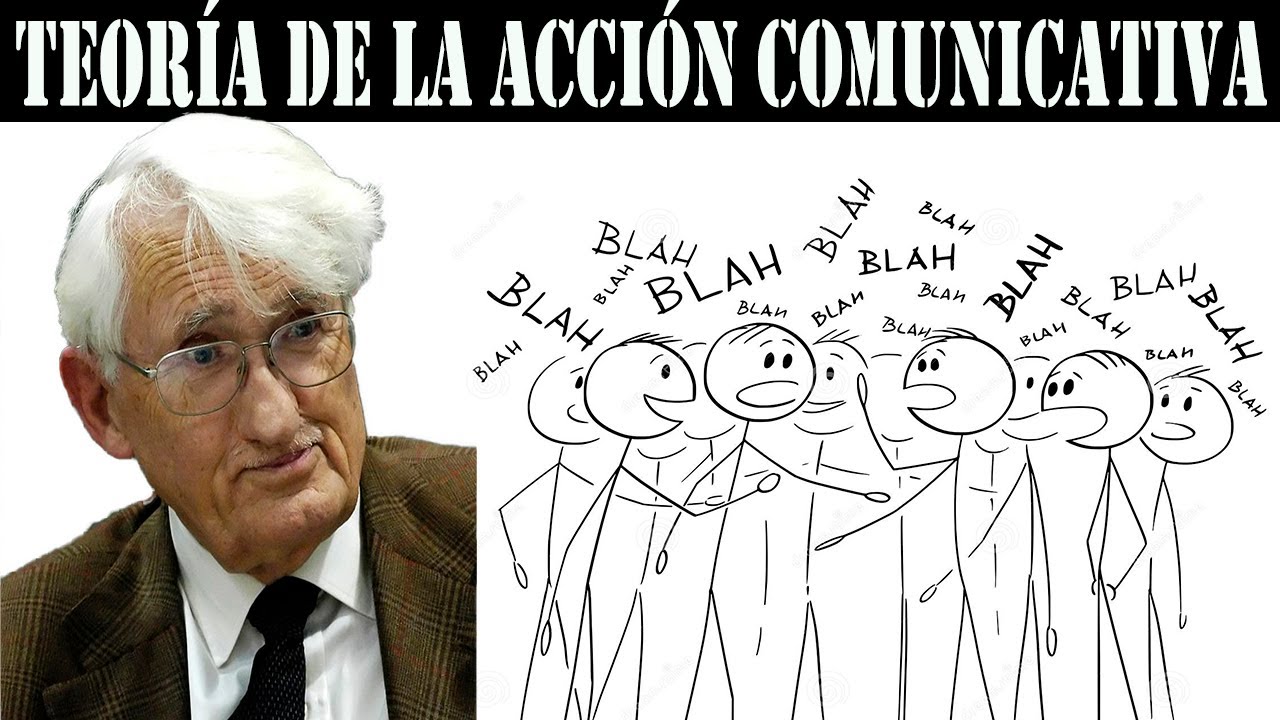
The 'Second Generation' of the Frankfurt School, particularly Jürgen Habermas's theories on communicative action and the public sphere.
The relationship and debates between Critical Theory and subsequent philosophical movements like Post-structuralism and Postmodernism.
Modern applications of Critical Theory in contemporary academic fields, such as Critical Race Theory, feminist philosophy, and media studies.
73.6K views1.2Klikes14:29Original Release: 2021-02-11
what is critical theory this video discussion briefly sketches the meaning origin development and key concepts in critical theory the frankfurt school tradition it begins with a brief discussion in the founding of the institute for social research in frankfurt germany as is well known critical theory the frankfurt school tradition can be traced its origin back to the institute for social research and then this will proceed to the discussion on the meaning and key concepts of critical theory field notes is to acknowledge the fact however that the concepts discussed here were taken mostly from professor jean-philippe durante's paper titled critical theory in fact at times filo notes borrowed durante's lines and this is because this lecture is intended primarily as notes that is as a learning material for those who study critical theory and the manuscript is not an academic paper intended for scholarly publication professor durante is a faculty member of the department of philosophy at macquarie university in sydney australia he is one of the leading figures in critical theory today now as already mentioned critical theory the frankfurt school tradition can be traced its origins back to the institute for social research because of its location which is also its current one the institute is also referred to as the frankfurt school founded by felix vail the institute was officially established on the 3rd of february 1923 but it was conceptualized by vile in 1922 by a decree of the education ministry felix vile's father hermann provided the initial annual funding of 120 000 marks or 30 000 u.s dollars the education ministry suggested to call the institute the felix vile institute for social research but vile declined this is because vile wanted the institute to become known and perhaps famous due to its contributions to marxism as a scientific discipline and not due to the founder's name speaking of contributions to marxism as a scientific discipline it's important to note that at the core of the institute's program is the revitalization of marxism through a re-examination of the very foundations of marxist theory with a dual purpose of explaining past errors in preparing for future action in fact the frankfurt school is a brainchild of the earthy marxist tusha arbeit suvaka or first marxist work week which met in the summer of 1922 in illinois turinja the purpose of this meeting according to vail was the hope that the different trends in marxism if afforded an opportunity of talking it out together could arrive at a true or pure marxism now it is important to note as we can already sense that the frankfurt school critical theorists especially the early members were devout marxists and because of the supposed failure of the marxist revolutionaries to overthrow the capitalist order during the first quarter of the 20th century as well as the rise of the soviet marxism which gradually developed into stalinism the frankfurt school critical theorists attempted to revitalize marxism or to speak very simply to purge marxism of the misconceptions and distortions that had shrouded marxist scholarship during this time needless to say the frankfurt school critical theorists believe that marx's philosophy remained the hope for the oppressed those who had been disenfranchised by the capitalist order a titan marxist t-shire by tsvaku or a second marxist work week was proposed but did not materialize because a more ambitious alternative took its place that is the founding of the institute it is interesting to note that vile refused to habibilitate himself and become a private descent or to consider the possibility of further academic advancement which will lead to the directorship of the institute because people may think that he bought the finial agenda or later the chair as we already know holding a chair or chair professor as a governmentally salaried full professor at the guthrie university frankfurt or frankfort university is a requirement for the directorship of the institute now here are the early leaders of the institute kurt albert gerlach was the first director of the institute he was described by his friend friedrich pollock as a non-party socialists carl gruenberg was the second director of the institute who was an avowed marxist gruenberg was an austrian and professor of law and political science at the university of vienna interestingly gruenberg was also the first avowed marxist to hold a chair professor at a german university max hurkheimer became the director of the institute in july 1930 but officially installed in january 1931.
with herkheimer the institute entered its period of great productivity and with the leadership of harkheimer the institute has assumed a new direction that is from an attempt to revitalize and re-examine marxism to an attempt to critique and change the pathological society as a whole with this critical theory was born and so what is critical theory the term critical theory first appeared in max horkheimer's famous article titled traditional and critical theory published in 1937 according to durante this article acts like a bible for critical theory in this article horkheimer identified the distinctive parameters that characterize the collaborative research program of the institute on the one hand according to horkheimer traditional theory refers to the positivistic and idealistic conception of theoretical inquiry in other words traditional theory treats theory as being independent of concrete social and historical realities it is important to note that in positivism especially logical positivism every rationally justifiable assertion can be scientifically verified or is capable of logical proof in fact the positivistic and idealistic conceptions of theory have the tendency to naturalize the phenomenon studied for example laws and facts thus in traditional theory according to rurkheimer laws and facts are interpreted as though they are not strongly influenced by the general social condition in which these laws and facts are found on the other hand critical theory is critical not in the kantian sense that is a critique of reason's power by reason alone but in the sense of marx's critique of the political economy in khan's transcendental idealism we learned that critique means examining and establishing the limits of the validity of knowledge khan's critique of reason involved the critique of dogmatic theology and metaphysics and is intertwined with the enhancement of ethical autonomy and the enlightenment's critique of superstition and irrational authority but critical theory stems from a marxist inspiration marx uses the term critical in his famous word capital or das capital subtitled a critique of political economy as a way to demonstrate why and in what sense capitalism is suspect in other words marx uses the term critical both to demonstrate the origins of political economy in order to expose its limitations and to supply a better explanation of the nature and dynamics of capitalism thus being critical necessarily implies being dialectic thus next to marx according to durante hegel is the second reference for critical theory given that the critical theory is founded on concrete social realities that is to say that the critical theorists need to understand the society in great details then the critical theorists of society must follow the examples of great sociologists like emil durkheim and max weber and study social facts and laws but they must do so in a dialectic fashion that is first critical theorists of society must highlight in what way these social facts and laws combined to form an unjust and inhumane society and in what way social life as it were contradicts itself and second critical theorists must pinpoint forces in the social world or agents of social transformation that can carry the promise of emancipation now according to durante we can derive two fundamental implications from this vision of the dialectic nature of a critical theory of society duranti believes that these two implications are the two features which when taken together demarcate critical theory from other forms of social and political theory in fact according to durante they serve as the litmus test in deciding whether a contemporary social theory can be called critical theory of course the frankfurt school tradition now the first implication according to durante concerns methodology critical theories methodology is dialectic because it envisages a substantial link between theory or philosophy for edordo and empirical social and human sciences especially sociology political science economics and psychology here theory provides the general conceptual grammar that can unite the diverse descriptions borrowed from the social sciences in fact throughout the generations of critical theory this relationship between philosophy and empirical science remains one of mutual correction and enrichment thus such a conceptual framework or theory is not constructed a priori but is informed by the most relevant human in social sciences reciprocally the empirical information or praxis receives a new systematic meaning by being integrated and unified in a framework that it cannot independently establish now the second implication concerns the unity of theory and praxis the historical self-awareness of critical theory means that it is conscious of participating in the very historical time it studies thus again the relation between social theory and social reality is a relation of reciprocal dependence on the one hand theory receives its fundamental impetus from extra theoretical interests this means that theoretical endeavors find leading clues about the reality they study in the experience of individual and collective dissatisfaction with existing social order as well as in the aspirations expressed most notably by social movements that struggle for emancipation on the other hand theory also aims to have practical relevance by clarifying the core concepts norms and values with which to describe the social experience in both its negative and positive aspects lastly the frankfurt school had already spanned three generations since its inception and some of the most notable members of the first generation are max hurkheimer theodora adorno herbert marcuse and walter biniman while jurgen habermas and axel honeth represented the second and third generations respectively and we also have post-modernism that involves michel foucault jacques dereda jean bodria and jean-francois utah it is important to note that postmodernism is not part of critical theory the frankfurt school tradition but this is included in the diagram just to show that almost at the same time when habermas was busy formulating his brand of critical theory there was another famous philosophical movement that was developing in france namely postmodernism
Up Next
46:22
The Frankfurt School | Critical Theory, Marxism, & Social Critique
@dr.michaelsugrue
219.2K views•2021-01-22

164:01
John of Damascus on Holy Images: A Theological Defense
@BannedBooks
139 views•2026-04-25
11:50
John Dewey's Philosophy of Education: Key Concepts
@PHILOnotes
96.5K views•2021-12-14
4:57
The Myth of Sisyphus: A Greek Legend of Eternal Punishment
@TEDEd
8.6M views•2018-11-13
Related Study Plans & Knowledge Roadmaps
Structured learning paths in Philosophy
philosophy
Frankfurt School: Critical Theory & Culture
01Foundations of the Frankfurt School and Critical Theory
02Horkheimer & Adorno: The Critique of Instrumental Reason
03The Culture Industry and Mass Deception
+ 2 more learning modules
12h5 modules
Explore Roadmap
philosophy
Philosophy of Language: From Frege to Austin
01The Linguistic Turn: An Introduction to Language in Philosophy
02Gottlob Frege: Sense and Reference
03Early Wittgenstein: The Picture Theory of Meaning
+ 3 more learning modules
15h6 modules
Explore Roadmap
philosophy
Feminist Epistemology: Standpoint & Injustice
01Introduction to Epistemology and Feminist Critiques
02Sandra Harding and Standpoint Theory
03Donna Haraway and Situated Knowledges
+ 2 more learning modules
12h5 modules
Explore Roadmap
philosophy
Environmental Philosophy: Ethics & Deep Ecology
01Foundations of Environmental Ethics & Anthropocentrism
02Biocentric Individualism and Animal Liberation
03Ecocentric Holism and Deep Ecology
+ 1 more learning modules
10h4 modules
Explore Roadmap