












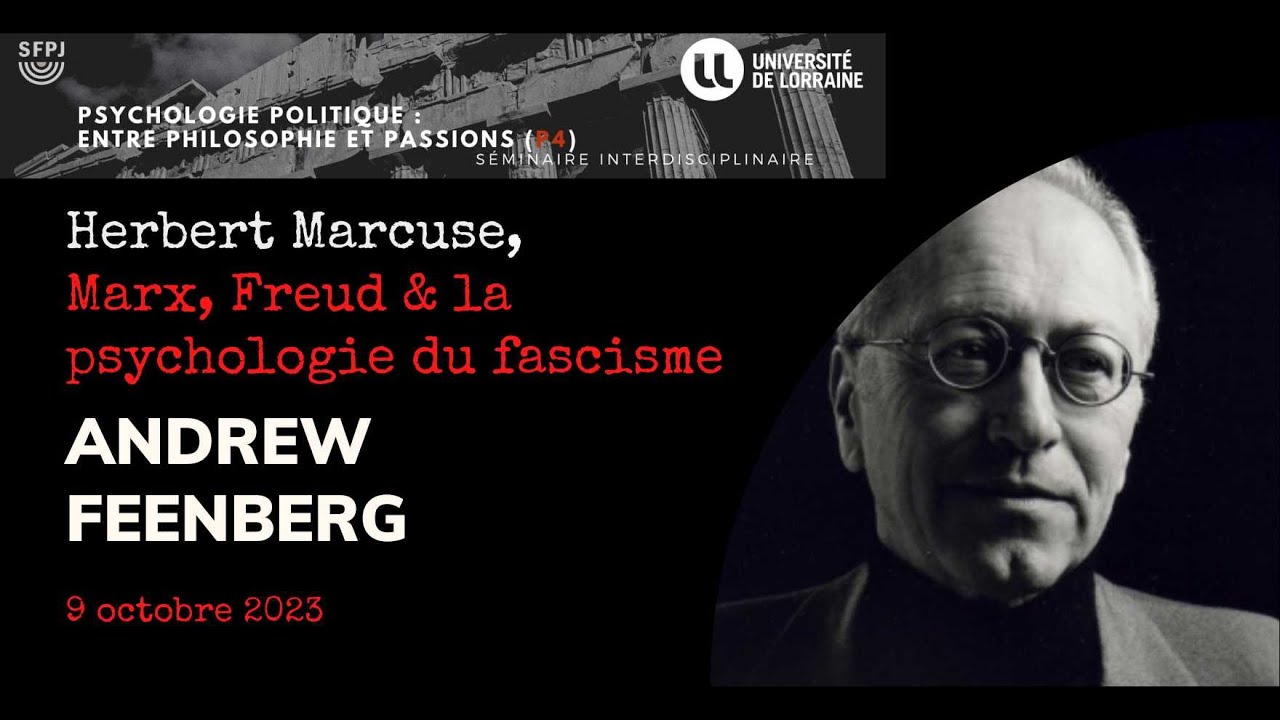




















Herbert Marcuse, a German philosopher who became a pop cultural figure in the 1960s, identified a fundamental contradiction in modernity where instrumental rationality—the application of reason as an instrument for changing nature and human beings—leads to irrational outcomes despite individual rational decisions; this occurs because the Enlightenment's attempt to demystify the world through science and technology paradoxically created new forms of mystification, producing a one-dimensional society characterized by inner pathologies (anxiety, despair, addiction), social alienation, and banalization that reduces human suffering and desire to trivia, ultimately requiring a more balanced approach to reason beyond pure instrumental rationality to avoid societal breakdown.
Marcuse's One-Dimensional Man | Philosophy Lecture 4
Added:[Music] okay this is the fourth lecture and we're going to pick things up a little bit here because we have a a philosopher that uh I came in contact with in college through pamphlets and so this is someone I really enjoy and I hope that uh that you'll uh get something out of this uh this lecture uh I'm going to talk about uh Herbert marisza uh again like SRA we're talking about an intellectual who becomes a a pop cultural figure I mean this is a very rare thing for German philosopher to have their picture on the cover of Life magazine but this happens with uh with Herbert marisza in the 60s the reason it does and and this time I will go into the theory in the case of SRA there's so many periods and stuff to follow out that's difficult but with Marisa there are a series of guiding themes that we can follow that I think will explain expl why marusa was the philosopher of the 1960s and I also want to explain that it's more than that that Marisa also caught a certain contradiction or crisis that was that was always in the heart of modernity if you like that phrase of Modern Life of the world after capitalism of the world after rationalization you know after bureaucratization after you have bureaucracies and rational decision procedures everywhere marisza catches a certain contradiction here that I think is is absolutely vital for us to understand if we go back to the traditional intellectuals way of looking at it uh you the familiar phrase for the rise of the modern world is The Enlightenment right the Enlightenment and the enlightenment wants to free the human mind from Superstition and from Dogma from from the adherence to Prejudice this is the goal of the Enlightenment beautifully stated by Kant in his essay what is Enlightenment when Kant says dare to use your own reason which already you know tells you that church fathers and things like that aren't you don't listen to them dare to use your own reason have the audacity to reason for yourself well the enlightenment's fueled as by the rise of capitalism it's fueled also by the the rise and the incredible increase in the power of Science and the ability of science to fuel technology which has been my overall story I've been telling in all these lectures about the self under siege one of the things were buried under oceans of Technologies and information systems and so on well the crisis that was always in the heart of the Enlightenment if you go back and look at it the crisis that was always working working on it was something like this the attempt to demystify the world the attempt to make the world as it were transparent to reason carried with it a strange Dark Side always and you may notice this when you watch television now the more we as it were cleared the fields of the traditional religious views the more that we became convinced that science and I and and one term for that marusa uses is instrumental reason reason used as an instrument for changing nature and human beings the more that the enlightenment project progressed it simply turned out not to be the case that we became less afraid in the face of the unknown no the unknown appeared more terrifying than ever and it wasn't the case that we became less dogmatic as a matter of fact The Sciences have now branched out into so many areas that the only way anyone could believe in any of them is dogmatically since none of us could study them because we don't have World enough for time so in the paradoxical way the enlightenment builds up a kind of intellect intelligent enough to see through mystification that's where I talk talked about Marx and Freud and other figures we build up an intellect hard enough as it were to see through these mystifications but any intellect that powerful has a tendency to become totalitarian this is the fundamental problem and nowhere would that be more evident than in this in the experience of the Germans who were you know great at their technology the Advan in science and so on a world as instrumentally rational you know the famous joke that the trains run on time but the flip side of Enlightenment has been to sort of give up before the overpowering forces of technology in a more abject surrender than any that was ever called for in religion I mean to abjectly just to surrender before the powers of technology and given the current state of the powers of technology they far surpass the characteristics that we associate with God I mean think of it in this simple way in the in the Bible in in the in the Book of Revelations the apocalypse is a magnificent myth but long ago it became what in our society a reality a technologically achievable reality what had been been a myth became a technologically achievable reality we no longer had to conjure up 10he headed beasts with three thing winged things to be afraid of now we had systems rational systems rational in quotes instrumentally rational that leads to a further Paradox Marisa locates in modern rationality and that's that instrumental rationality and I want to associate it with sort of a atomic bits of if what I've been calling information as opposed to knowledge and and instrumental singular decisions based upon them you put these together and the outcome isn't rational the outcome is irrational and dangerous let me give you an example this is a very clear one it's uh works over so it's time to go home it's rational to want go home after work on my view of of of the good reading of Marxism that's the most rational thing we want all day to get away from work it's very rational so each individual actor's decision to run after their car and get on the freeways rational how about the outcome well the outcome is that everybody's sitting on the freeway breathing each other's smog sitting on their butt the outcome is irrational the outcome of a whole see there was no reason because the enlightenment focused upon reason as individuated individual Atomic they didn't see that the overall effects of Reason working that way might themselves prove to be irrational another example I'll give you was the most recent stock market crash the first stock market crash in the history of the world in which human beings didn't make the foul-ups no they had their you you can't buy and sell on the Stock Exchange now because uh human beings don't make the decisions fast enough you have computers geared to make the rational decision programs work the stock market crashed because the computers making individually rational decisions based on their little bit of information all working together crashed the market and it would have crashed further except that we still are able to unplug them how much longer they will give us that privilege is part of the debate that we'll engage in in the next part of the ures we still have the privilege of unplugging them I think it w you know it's a it's a reasonable conjecture when the uh decision will work the other way they will say to heck with you will unplug you now this is this is why and I mean you need an answer to this question why did the enlightenment which began with the love for something that I too love human reason and with its use to demystify things how did it itself become a force of mystification well here's another way it did I've talked about how it debunked religion but it engaged in Overkill by debunking religion in the way in which it did it left us open and said science had nothing to do with whole fields of human experience which are now just given over to the wildest kind of insan theories for example uh if you look around now there's never been a period in the history of the world where more people believe more compl completely nutty things I mean just watch a current affair Elvis is still alive UFOs landed in Alabama which always freaks me out I mean how come if intelligent beings from another world are going to land somewhere they don't land in Chicago or Washington but always in Alabama next to Uncle Billy you know who's sitting there going I saw him right over there it's no land in damn Chicago if you're really a higher intelligence land somewhere where somebody can take a picture of you or something no always some Backwater in Alabama or Mississippi you anyway uh UFOs polter guys uh oh see you couldn't even list all the all the uh the myths in a in a year why well because science marked off this terrain of reason but outside it it pays no attention it gives no guidance why are there things outside of instrumental reason at all that's the theme of the whole course the self under siege could never find meaning in this denuded form of thinking and living where all that you're up to is making rational decisions one after another that's not a rich enough notion of experience or human life so what we have is on the one hand this sort of Enlightenment instrumental reason that is for sure necessary for the sciences and so on and on the other the ways in which people today try to get meaning are just incredibly bizarre incredibly bizarre I mean uh I'll be moving shortly out to California where I think they have a new religion a week a religion of the week Club drive-thru religions they worship crystals and I've talked about these other forms of pseudo Pagan body worship that America now engages in you know I mean uh there was nothing there's no concept to skin that that corresponds to the current concept of skinniness I mean you know I'm a little I'm a little fat and in this age that is a mortal sin worse than mortal sin I mean skinniness is a religion I mean we've got lots of of of Mythic religions the enlightenment in other words carried myth right along with it it did not kill it and it may be that this inti entwinement of Enlightenment and mythology is what is most important to understand about the situation that we're in now by that I mean in the late 20th century because now our Technologies are themselves quasi mythological virtual reality you know you you have a movie about virtual reality a guy gets in a suit and enters a world of neural networks and goes I am God here you know this is this is pretty Pagan stuff except for one small thing they can build these things you otherwise we would be laughing about it except they can build them and if you don't believe that they that the first replicant or cyborg they build will be Elvis Presley you're already wrong you know there'll be a lot of money in rebuild building an Elvis the first cyborg I I predict today on film I'll be captured for the ages the first successful cyborg will be Elvis because you just have him right back to King and probably there'll be a national vote on whether we want to build the young or the old Elvis I mean so that that's the funny part the unfunny part is that I I do believe this entwinement of myth and reason is very real a film That's a classic film that shows it is Dr Strange Love uh wonderful performance with Peter sers great movie if you haven't seen it please see it directed by Stanley kubric in which one of the most famous examples of rationality under this heading occurs and that's the arms race both sides keep building and building and building and building and building and every move by one side calls forth a rational move by the other the only problem is that if it continued the outcome would not have been right far from it far from it the outcome would not have been rational uh so that's uh sorry that movie captures that nicely and U let me see if I can come up with one other example because there there there are many many of these uh the economy is filled with them let's take trying to start a union let's say you want a union and and when American workers used to have them we had steadily raising wages we had them for years and years and years since we haven't had many unions we haven't had that may be a connection there I don't know but trying to start a union always suffers this problem you have to transcend instrumental reason to start a union but because it's not rational for the first three people to join you follow me the first three it's not rational you have to convince them there's a bigger rationality than theirs at stake something that transcends their selfhood or they're not or you haven't got a union so when if you don't do that the total outcome for all the workers is itself irrational namely they are then forced to negotiate against a power greater than themselves at a massive disadvantage rather than to have equals negotiate these things again this is a case where individual instrumental reason left to its own produces irrational results now let me give you a classic one that even analytic philosophers know about it's in Game Theory that's something that analytic philosophers Love Game Theory it's beautiful for them it's called the Paradox of the Downs here is the game you have two sheep herders and each of them have 100 sheep and there are Downs out there enough to feed a 100 sheep one sheep Hur her on this side of the game and the other on this side and they get to start simultaneously what is the maximally rational policy to follow well the maximally rational policy according to game theory is to drive your sheep onto the Downs as fast as possible and have them start grazing the trouble is that when you both do that you don't lose a hundred sheep you lose 200 it's a lose lose game that's the problem there you've got two mutually rational actors doing the mutually rational thing and the outcome is irrational now I've gone through this at some length because this is going to be the heart of a CR of a criticism of modern technological society that marusa will raise this is at the heart of his criticism it is not his criticism that our society should just throw away instrumental reason should just give up on thinking scientifically that's not it at all it's that if we don't find a more balanced approach to ourselves the world other people than instrumental rationality we are lost so let me run through just a little bit of his basic argument if you wanted to break it down into uh so-called worlds you'd start this way the inner World we've already discussed that Inner Space of the self that Dart thought he had knew all about well we've already discussed the pathologies that arise in the inner self through its contact with what you might call Modern Life uh and of course you do that when you study Mark Floy in N too but you also do it we also did it earlier uh when we discussed uh uh hi Digger and SRA the inner world is noted or at least it was because as we move on into the latter part of the 20th century and into the 21st it'll be a real question about whether these inner structures are still intact because they have a both a positive and a negative Vance or significance the inner structures are anxiety forlornness nausea dread despair anxiety and so on those are INF structures now again we have a massive psychology industry to deal with this and then we of course have a society that is massively soaked in drugs I mean I don't know how long American society would hold together if it was not a society of addicts when you think of Del leading drugs and all of them are like either valium or proac you know and and then the look at the drugs the kids take look at ghetto drugs look at the normal and official drugs which are very powerful like alcohol and cigarettes the truth of the matter is Marx was wrong religion is not the Opium of the people today opium is the Opium of the people it works better I mean opium works better as opium than religion did so that's that's that's the the inner world and while it cannot be the none of these sub substances can cure the sicknesses of the self under siege in the late 20th century that we know what all these things can do we know it from drinking they can dull it they can make you forget it for a while I mean my mother was a beautician for years and years and still is occasionally uh and she drank a lot and it was not she she really wasn't a drunk it's just that when you work 12 hours a day your inner self feels better numbed a bit so these are not accidental again these are not personal or accidental things they're quite widespread and social uh a writer about whom you might be interested who I think even though he's a little crazy is a good novelist about the society being a society of addicts is William burough naked launch is a very strange book but it has at least one thing going for it and that's that it shows us as a society of addicts which I think is is not entirely unfair I mean that that that's to me is what's silly about the War on Drugs the were on drugs must be just to we on a certain group of people doing it in the wrong way and with too many guns because I mean I look sit there and look at the pharmacy and what's going out of it and I don't know that many people that aren't Stoned on something a handful and they're they're what are they doing well they're out eating soybeans and jogging which I consider even sicker I mean if you're doing that you really need help I mean that's when you need to be put on drugs it's when you're out there on you know jogging and eating soybeans you need to damn drugs okay that's the inner world and I and and for the existentialists this was a this was what they focused on was some of these inner world problems in the so-called social world the problems are and I'll lay them out and I'll use some of the Marxist terms alienation now alienation in the Marxist sense is a kind a feeling of Separation that is not just a mere mood it's a structure it's a separation from your object that you're producing if it is an object and nowadays in our economy it's probably not an object you're probably not doing a damn thing so then you'd be alienated from nothing but let's say you're producing a product it's separation from that product lack of control over the process of making that product lack of meaning in making it and separation from other human beings that come along with that in short what Marx means by alienation is the way the relationship between work and money separates human beings from each other which to me is true and Jesus knew it and most people that know much about money know it it's true it's you know doesn't mean communism is true just means that that stuff about money is is Right rationalization this is a big word I'll try to demystify quickly for you rationalization there's a great social theorist you could read here that's Max vber tells a lot about how the more complex governmental and and private Enterprises get the more they need to bureaucratize and rationalize but if you really wanted to sense for it I would tell you don't read Max vber read fron kofka because when you read the trial or the castle you get a real sense for what a bureaucracy feels like for a world rationalized and the outcome being irrational see no one likes bureaucracy either I mean you know how it feels you go you know you you've your income tax would return didn't come so you've got to go get one they say well go to room 107 and you just left room 100 and you show up in room 107 and they say well you didn't pick up Form B in room 100 who did you talk to well you don't know them personally you know you're not asking them did you talk to me do you know who I am do you know who you talked to I mean you get that on the phone from it from you know the telephone company we go what operator did you speak with and I go ma'am I'm not personally acquainted with all of them I don't I don't know who the hell I talk to but no this is the cka as quality of life as we go merge into the 21st century you it's it's an adventure to get your you know your water hooked up is an adventure with Madness like this with utter Madness and we're here you know very close to Washington DC where I don't need to explain this at all there are agencies over there where people who have just come in with the new Administration haven't found the bathroom key yet and are still holding their water and it will be months before they find it Ross perau will be president before they find their bathrooms and by then it will be too late no I don't want I'm having fun I'm sorry I should we shouldn't have fun when we do this anyway there's there's rationalization and I want you to know both of these come along with Modern Life and again if you don't like these arguments that I'm drawing from marua look at Charlie Chaplain movies look at modern times and notice how when it was made people could still laugh at the way chaplain's motions matched the Motions of the times because people could remember they didn't always move like that now we'll rent modern times and we'll look at it and go boy I wish we move slow like that now cuz I mean now it looks real slow he's just going with the machine he's not having to run with all these flows of data or anything he got caught a he caught a break and didn't know it anyway that's rationalization and then the third and this is sort of one of my own if you'll forgive me is what I'll call banalization and it's always a danger when you do lectures like the ones I'm doing now and that's to take these fundamentally important things like what does my life mean and surely there must be a better way to organize the world than the way it's organized now surely my life could have more meaning in a in a different situation and maybe my life's meaning might be to change it or whatever but to take any one of these criticisms and treat them as banalities this is the great to me ideological function of television and the and the movies however extreme the situation TV can find a way to turn it into a banality let me give you an example uh and it's an old TV show you won't even have to go that far back lever and Shirley lever and Shirley work in Milwaukee in a beer factory now I would expect that to be a socialist realist film no no it's sitcom they've got two friends that are stupid and ugly they dress funny their life is feel pardon the expression and this is a comedy because all the troubles that sit your life involve are just reduced to banality just a common Rubble of little oneline jokes you follow me it's made binal by it it's banalized that way and I don't want to jump on my good friend Oliver Stone but he makes a film that claims and it may not be false to claim this that that John F Kennedy was killed in a cudar and our government's been run secretly ever since and that may be true but by the time we've had 10,000 books and 4,000 movies it's become banal we have rock groups called the single bullet theory you know just sort of making fun of how you can take matters of ultimate human importance and turn them into banality now again another example and I don't want to sound like Tipper Gore here because I've got nothing against rock and roll music of course not I mean I'm talking about a 60s riter and I'm not against that but I mean we've got all these lyrics about Satan well you know in heavy metal here we take the Prince of Darkness man I mean the Lord of evil I love this guy you know he's the guy the character from Paradise Lost and now he's just more banal Rubble for MTV he's aie Osborne you know and I'm sorry but Aussie Osborne just doesn't make it as Satan I cannot see one of those lead singers fighting the infinite being and creator of the world in dubious battle upon the Plaines of Heaven no they've banalized that in words there's no area of human experience that you couldn't find that they haven't reduced to some form of banality so that's a third uh thing and I think the banalization is important uh es especially if you think of a couple of the cases I've used the banalization is important let me give you another one where I think it's uh very important we have the problem of AIDS and changing sexual moras so uh the if my principle of banalization is right how would a rational apparatus react to that by talking about it so much about sex with your mom with your dad with your brothers with your sisters with your uncles aunts transexuals multisexual polysexual you'll just talk about it until the whole subject will become viny and what what used to be fascinating desires and interesting and Par strange hidden prohibited parts of the psyche what Freud called the unconscious now those are just topics for haraldo I mean haraldo could literally go through some of the sort of sick cases Freud refused to write up and he'd have his list of shows for a month so this is the process I call banalization and again it's not irrational if you ask them what are they doing they're journalist shedding the light on this problem like Phil Hugh always says I'm you know Society needs to know about these people who uh you know don't know whether they're men and women and dress and like gorillas and live in the Himalayas and come down once a year to have mating rituals with fur trees I mean they've got to know this needs to be you know have the the light of Enlightenment needs to be brought upon this problem well banalization okay so those are those are sort of uh what I'd call anomal of the sort of social world the real question I'm asking here is is the one Mara asked in the 60s how does a a way of life break down how does it break down and mariso doesn't give the pat Marxist answer which means economically and we ought to be glad that that Pat Mark Marxist answer is false because if a society could uh uh could be driven to ruin by debt the way we you know a lot of people said the Russians uh uh the Soviet Union fell because it was broke let's hope that's not true you know since we're broke let's hope that's false as a generalization we better hope it's false how does it who do they how do they break down well here there's analogy for me between the social and the self under siege in many ways way in many ways not in a few and uh some of the symptoms that we see around us that our own lives are breaking down in the life of our society is a generalized cynicism and skepticism about everything I don't know how to characterize this situation I find it no parallel to it in human history the skepticism and cynicism about everything is so General and I think it's partly due to this thing I've called banalization and it's partly due to the refusal and the fear of dealing with complexity much easier to be a cynic than to deal with complexity better to say everything is than to try to look into enough things to know where you are better to say everything is just silly are pointless than to try to look into to systems of this kind of complexity into situations of the kind of complexity and ambiguity that we have to deal with now so anyway that that's one way in which a society can break down my own view of the United States government is that it has no legitimacy now in the classical political sense that means it is not supported by a democratic majority of its people it has no classic political legitimacy I mean I take that to be an empirical fact I bet you could probably do a fact toid on CNN about it and banalize it go oh well big deal so what well so what you you don't have a damn democracy you've been lied to since you were born well that's no problem we're used to it that's cynical reason it worked I mean I mean it's just utterly the situation that I think we're finding ourselves in this skepticism includes the skepticism concerning history and this has not been a DI tribe up here against reason it's been a die tribe against instrumental reason clearly the uses of a more comprehensive reason to try to figure out where we are would be important and could be used but there's a general cynicism about it maruza is an oldfashioned guy from the 60s he still thinks and I I have no way to defend him now too much has happened too many things have gone wrong but marusa still thinks that human beings as a species have historically accumulated potential over history they've accumulated a potential to live a life with a good deal more freedom and a good deal more happiness and solidarity than the one they live now in fact Mara unlike philosophers is an unashamed advocate for this project philosophers don't enjoy being advocates for any positions that matter usually but marisza is in this case an advocate for a disposition his style of criticism and that's this is a not a method and it's one that I use myself frequently it is more like a style of criticism and here I've got to use a technical term is imminent critique in ter critique that word is imminent I with an i imminent critique what imminent critique does I'll give you an example but what it does is it takes historically accumulated Concepts and then measures the society against those Concepts that have been developed within it which is what I was just doing by saying these are the following maladies of our society and they shouldn't be we should be happier and so on and so on you this is a society with happiness Liberty and all that are supposed to be so iminent critique takes the the the historically accumulated concepts for example the Bill of Rights tradition and it confronts them with the historically existent reality to measure the gap between the practice and the promise you are all familiar with this style of critique because it's for example Martin Luther King's paradigmatic style of critique right I mean Martin Luther King was didn't say look I'm a maist that's why we should have civil rights no it wasn't because he was a maoist it was because that there was a a gap between the practices we engaged in in our promises now that's the method within which marusa cap uh criticizes even capitalist Society not with external Norms drawn from some utopian situation but by its own terms with its own terms I also think that that's not only a good strategy as a style of critique but it's utterly fair I mean in a way it's like demanding of yourself that you do what you say you know which you want to demand at least of your friends that they do most of the time what they say they'll do but it's certainly a good demand to place upon uh your Society its leaders and so on the trouble is is just as I've stated before we are blocked we're blocked in a way by an unprecedented structure of what I have called here sort of cynical skeptical reason that is just to me it's historically unmatched I've never read or heard of a period like this one and I've read about many historical periods but not one in which you can talk to young people the way you can at the college level today and find out that they believe nothing want nothing hope nothing expect nothing dream nothing desire nothing push them far enough and they'll say yeah I got to get a job spend a lot of money at Duke that's not what I'm talking about here they hope nothing expect nothing dream nothing desire nothing and it is a fair question to ask whether a society that produces this reaction in its young is worthy of existence at all it really is it's worth asking that whether it's worth being here at all and my criticism of this Society couldn't get more bitter than it is in that case it couldn't possibly be remember I'm talking about the young I've encountered at Duke these are privileged youth at an elite Southern school mostly white mostly upper to upper middle class to upper class now imagine what the attitudes are like in the streets of DC if you're from another race or another social class we have outlived in the 20th century the responses that Marisa would have given to this I still admire and I in his book The Argument concerning Enlightenment I still admire his vicious attack on a uh bureaucracy both here and in the Soviet Union and elsewhere and his attack on a world in which money comes before human beings that to me is the sort of oneline essence of the critique of Marx I mean of Marx's critique where money is placed ahead of human needs where just money is Place ahead of it marusa still tries to defend uh as I say freedom happiness creativity he still believes in the truth he still believes the human race has a happy Destiny I mean I think that we have to look back at marisza who at the time we looked at as a vicious radical I think we have to look back at him as a kind of Norman Vincent Peele of the 60s I mean marusa wasn't radical At All by the standards of this world into which we have slipped by the late 20th century No he really does sound like Norman Vincent Peele at times it's it's uh it's almost uh quaint if it wasn't so horrifying because his Med a and his I'm not meditation his theory his view is about the destiny of the human race on this planet about whether we will ever learn to make sense or whether we'll just keep making money and Madness it's a real big question he never was able to answer it but one of the reasons I wanted to raise it right in the middle of the lectures is I didn't want these lectures to turn into some kind of funky kind of Tony Roberts course in South development like now I know who I really am kind of crap because when we're through we won't know I don't know if I had known who I was I probably wouldn't have shown up now I mean you know this is not I mean it's an important part and it's not a cynical thing to say but it's an important part of our of of finding out about the self in this part of the in this part of history that we don't have all the answers that we have not even formulated all the questions correctly in fact Tony Roberts and people like him are a part of the problem themselves their banalization I love it when I hear someone say I've listened to Tony's tapes and now I used to be fat and unhappy and now I'm skinny and happy it just makes me want to cut someone up with a chainsaw I mean that's ridiculous I mean no you know that's not why humans think they think because they have to think it's it's it's a a it's a felt necessity it's the weight of the world the complexity of it and you can avoid it I admit with drugs but at some point in your life you have to come across the need to think marusa was comes from a period and it's back in style in fashion I have to admit it the 60s are back in style everyone they probably will be out of style by the time these types are out but people are back listening to Jimmy Hendricks wearing bell bottoms and tie dyes I suppose you've noticed that of course this would have nothing to do with banalization well of course it would because anything that's that's a threat to this system can be banalized I I I'll give you two examples in the sphere of Politics the way they turned Jesse Jackson from a serious social actor into sort of a biny characteriz caricature of himself in the media they've banalized a real threat to the system which was the Rainbow Coalition a real threat populous threat to the system banalized into a joke it's even sicker to realize this that if uh something tragic happened to Jesse Jackson there'd be a picture of him up next to Malcolm X and Martin Luther King in all our schools 10 years from now no one doubts it see but now while he's alive he has to be banalized this is a in it is obviously a form of control it's social control I'm talking about here it's not a conspiracy I mean it's just something that happens in the process of a society working out its own internal Logics in systems of incredible complexity banalization is a way to reduce complexity it's also a systematic way to be an idiot and I have to say this many of our complaints about the educational system fall under the critique of marusa as well where we produce student after student in this condition I've described which is not really despair because it's beneath that level in other words they'd have to be more excited to be in despair they'd have to be like more thrilled to be forlorn like they'd have to be in love with something before they could have their heart broken to make a more simple example out of it no it's it's beneath that level it's frighteningly beneath it it cannot be defended Herbert Marisa while he lived uh uh made these arguments and as I say looking back on on them from this point in history from this point in time it's hard not to feel a little nostalgic for them but I have a feeling that they'll come back along with tiey Jimmy Hendrick and who knows they may even have someone like me tour and denounce the system as the warm-up act for a rock and roll band I mean who the hell knows but uh that's all I have to say about Marisa and I've really enjoyed this little interlude with you and I I hope that we uh we got somewhere in this hour anyway thank you uh very much
Up Next

Herbert Marcuse: The Great Refusal and Critical Theory Explained
@epochphilosophy
43.2K views•2020-04-23

John of Damascus on Holy Images: A Theological Defense
@BannedBooks
139 views•2026-04-25

Frege's Philosophy of Language | Logic, Sense & Reference Explained
@ThePartiallyExaminedLife
10.2K views•2011-03-17

The Myth of Sisyphus: A Greek Legend of Eternal Punishment
@TEDEd
8.6M views•2018-11-13
Related Study Plans & Knowledge Roadmaps
Structured learning paths in Philosophy