



















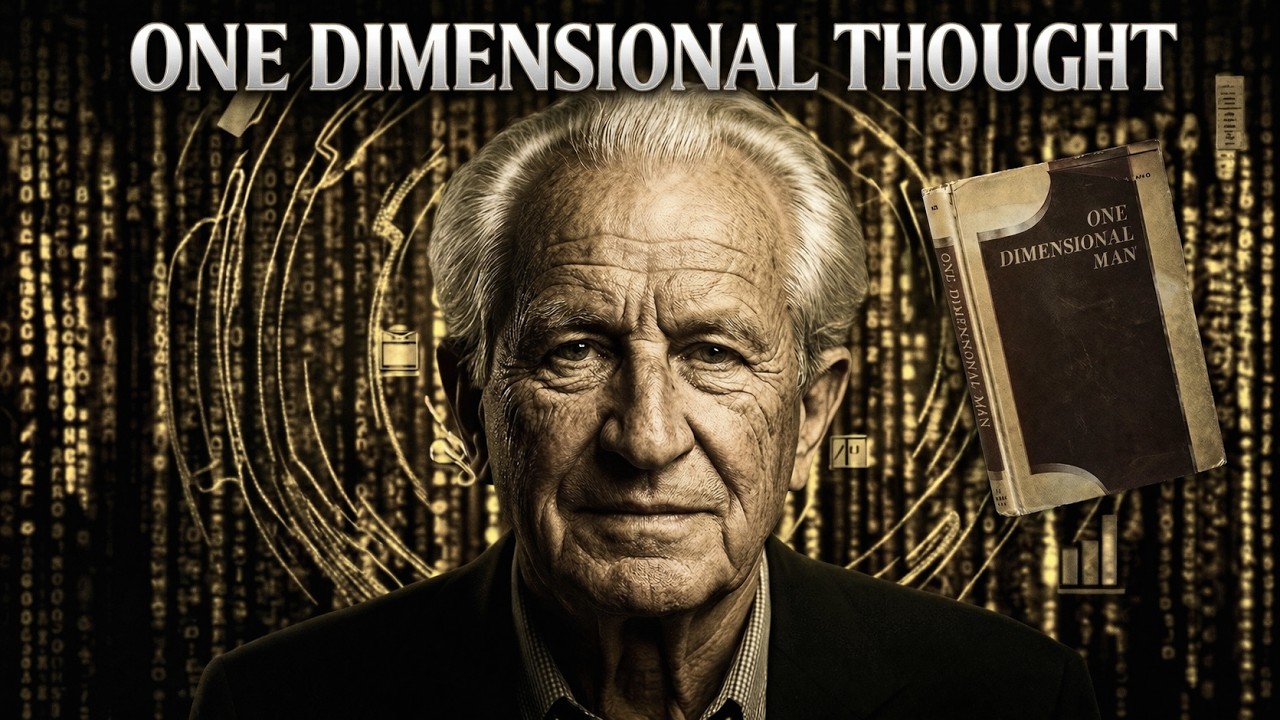

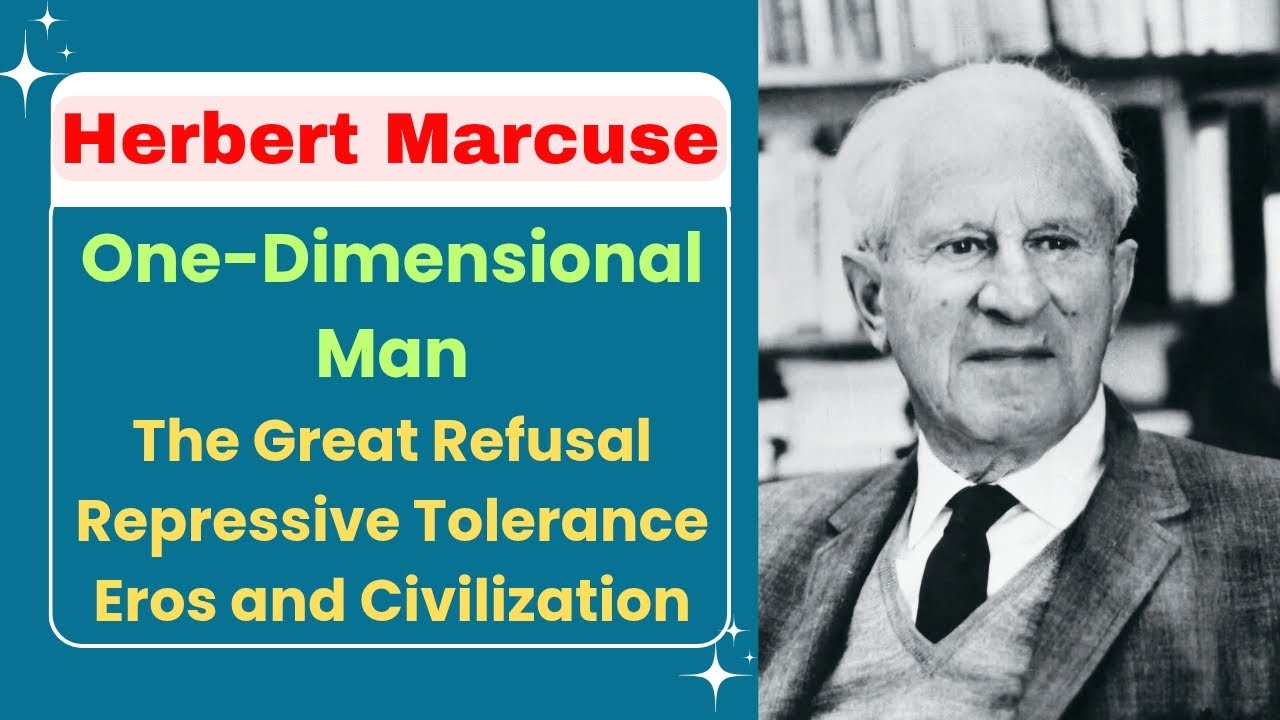



Herbert Marcuse, a key figure of the Frankfurt School of Critical Theory, argued that modern capitalist societies create new forms of repression through consumer products and media that control individual thought without brute force, leading to what he called 'the Great Refusal'—a call for individuals to develop a new sensibility that prioritizes life instincts and human flourishing over aggressive competition, domination, and unnecessary consumption, thereby transforming both personal subjectivity and social structures.
Herbert Marcuse: The Great Refusal and Critical Theory Explained
Added:Introduction to classical Marxist concepts, particularly alienation, commodity fetishism, and the critique of capitalist economies.
Foundational principles of Freudian psychoanalysis, specifically the concepts of psychological repression, the pleasure principle, and the reality principle.
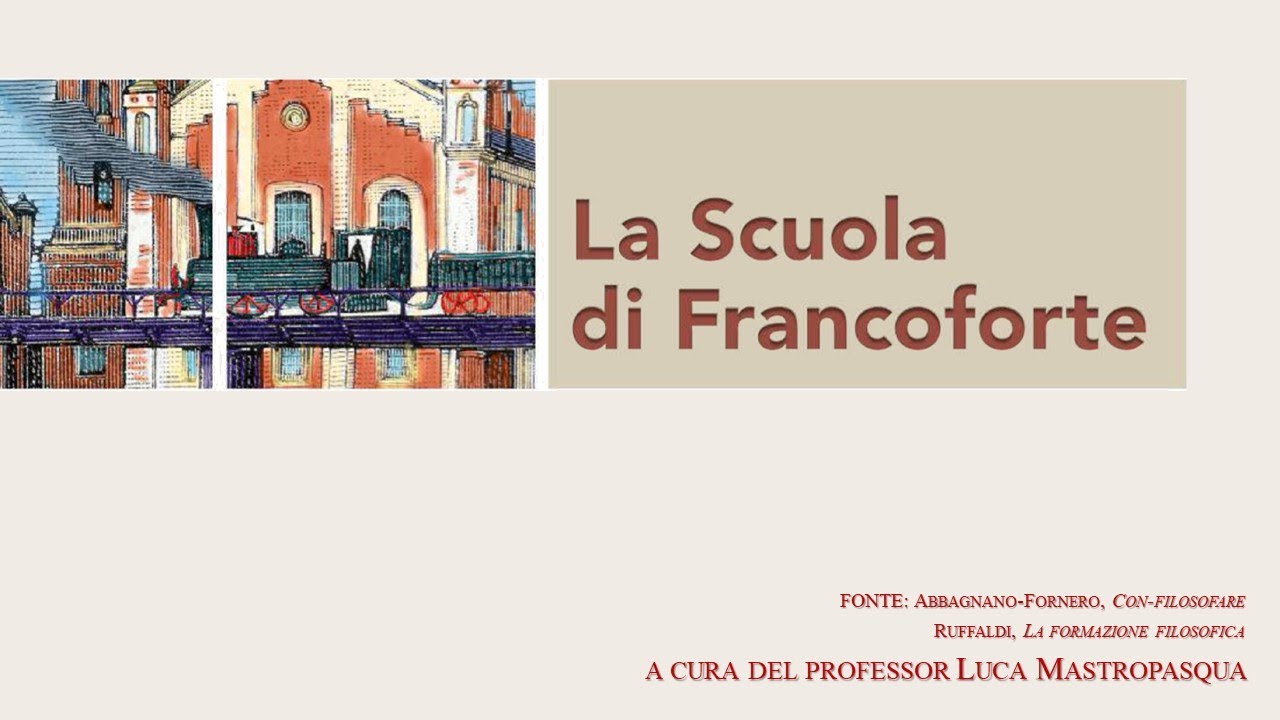
An overview of the Frankfurt School and the emergence of Critical Theory as a tool to analyze culture, power, and society.
The socio-historical context of the post-WWII era, including the rise of consumer culture, mass media, and industrial standardization.
An in-depth reading of Marcuse's seminal texts, specifically 'One-Dimensional Man' and 'Eros and Civilization', to explore concepts like 'surplus repression' and 'repressive tolerance'.
Examination of the 1960s counterculture and New Left movements to understand how Marcuse's ideas served as an intellectual catalyst for social activism.
A comparative study of Marcuse's views on societal control alongside Michel Foucault's theories on discipline, power, and discourse.
Application of the 'Great Refusal' framework to modern challenges, such as digital consumerism, surveillance capitalism, and contemporary environmental justice movements.
43.2K views2.1Klikes13:55Original Release: 2020-04-23
Herbert Marcuse was born July 19th of 1898. Hailing from Berlin, Germany, he is regarded as one of the most influential philosophers and political theorist of the 20th century. Most famously, he is associated with the Frankfurt School of Critical Theory. And depending on who you ask, he is the grand architect of the modern moral decay of America, stemming from his responsibility for the entire hippy movement in the 1960's. Oh, and for his wonderful contributions to the world of post-modernism.
Friedrich Nietzsche said that everybody is the unconscious exponent of a dead philosopher, and fortunately the postmodern Philosopher's; most of them are dead so that's a good thing. And while this video isn't necessarily about post-modernism, I find it important to say that the majority of what you hear about post-modernism inside the realm of the internet or YouTube, and generally outside of traditional academic environments seems to be well laughably bad at best or just completely dishonestly cynical. Seriously, if post-modernism is something new to you do not simply write it off because someone on YouTube said it was the absolutely most satanic thing in philosophical existence. There's plenty of incredibly smart and valid critiques of modernity that are incredibly useful even in the eyes of someone who wants to understand enlightenment-era philosophy better. Point is you can disagree with all kinds of conclusions and reactions within post-modernism, yet still explored as a category of philosophy. In 1964 Herbert Marcuse released a book called One-Dimensional Man. In a prior video I made on modern slavery in America, I went into detail about some of the tenets of One-Dimensional Man. Herbert Marcuse went into detail about the new forms of social repression that became present after the Industrial Revolution. Not only did the Industrial Revolution become a form of repression but the entire logic, and the entire constructs that preceded the Industrial Revolution such as modernity and rationality also became a prevailing force of social hegemony. That these ideas themselves have created a complete breeding ground for new forms of totalitarianism. We've seen critiques of capitalism from the likes of Marx where he talks directly about the alienation of man and the worker. Where the lack of control regarding your work gives a huge sense of being controlled and exploited.
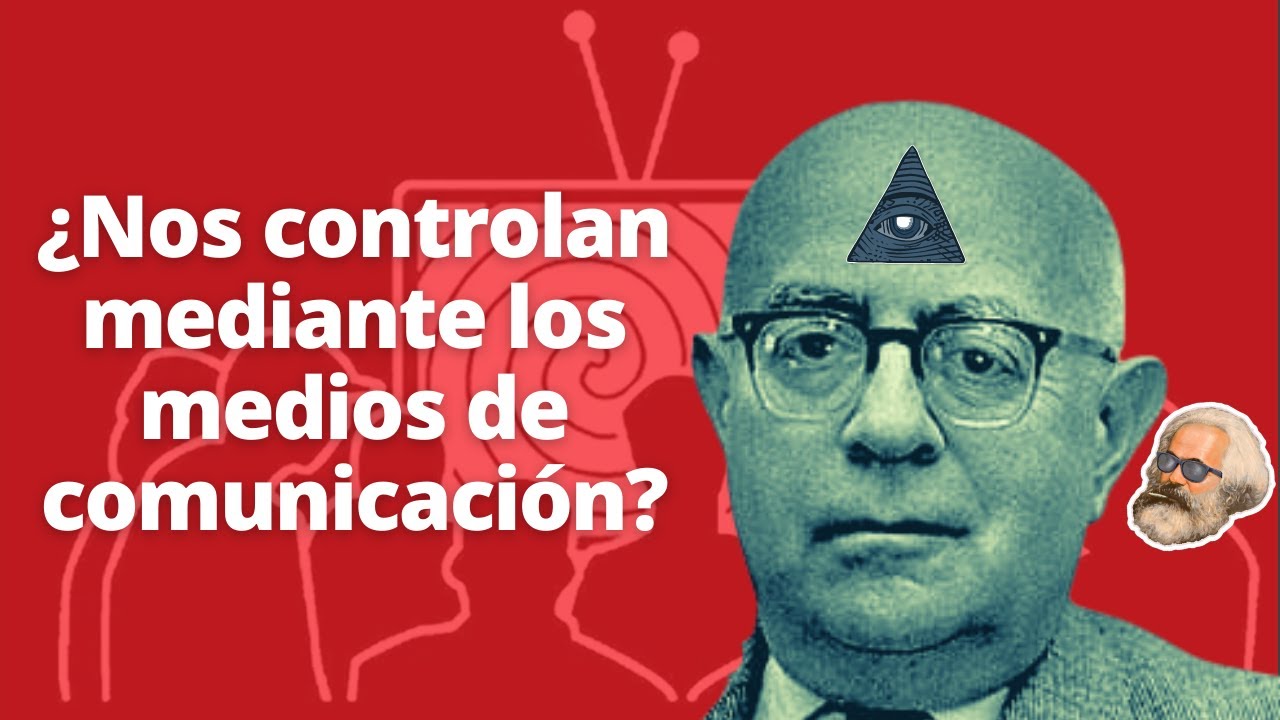
Further the lack of identity with the products that you create exacerbates this issue. But, rather than contending with the result of say a capitalist workforce Marcuse focused on the actual result of the society itself. How it worked not only on classes of people, but individuals themselves. As much as One-Dimensional Man is philosophy, I believe it to be also accurate to say that this is a work of psychology. You see, what happens in these new societies, these new post-industrial societies, is that there are very new forms of practical thought control that don't necessarily exist in the form of brute force, the form or threat of being invaded from another country, a necessarily new set of mythical beliefs, but rather products products. Products that you consume. Your favorite news station, that new book telling you how to live, how to order and structure your life, and even as far as people, because in a capitalist system people are products, you consume people, you consume their personalities.
This is something incredibly under looked, too. And a huge example of this is music.
Music today is often a complete personality cult. Modern politics as well, where the base support of a political candidate doesn't necessarily come from their policies. Instead, their support is often formed around an identity, an identity that requires donation, an identity that requires money, and ultimately people who want to abide by this newfound identity, they are the ones donating. And most people, when looking in on the outside, they recognize this. They see that there is something that you may believe so deeply, yet is so clearly wrong, so clearly diluted, and it's ultimately because you've outsourced your worldview, your understanding to a product. And when you do not consume this product it can be pretty easy to understand its flaws.
Yet, the scary thing about this is how do you know this is not you? How do you know that you are not a part of the problem? You simply do not know, what you don't know. This is the great irony of this problem, because ultimately this is the irony of rationalism, this is also the irony of modernity, we can take a rational thought, we can take a theoretically on-paper rational system such as capitalism, where we exchange things for goods, where people are technically free to pursue whatever endeavor they so please. Yet, the end result of this is often completely irrational, in many regards, the exact opposite has happened. During the Enlightenment era many people wanted to create a more equal system, a more egalitarian system than traditional monarchies, and the potential solution to this was free trade, it was capitalism.
But what we found is that inequality actually was exacerbated in many regards.
And this applies all the way down to the very micro level, here's a decent example of what I'm talking about. Rick Roderick: Again, this is a case for individual instrumental reason, left to its own, produces irrational results. Now let me give you a classic one that even analytic philosophers know about. It's in game theory. That's something that analytic philosophers love. Game theory.
It's beautiful for them. It's called the paradox of the downs. Here is the game: you have two sheep herders and each of them have 100 sheep. And there are downs out there enough to feed a hundred sheep. One sheep herder on this side of the game, and the other on this side, and they get to start simultaneously.
What is the maximally rational policy to follow? Well the maximally rational policy according to game theory is to drive your sheep own to the downs as fast as possible and have them start grazing. The trouble is that when you both do that you don't lose a hundred sheep, you lose 200. It's a lose/lose game. That's the problem, there you've got two mutually rational actors, doing the mutually rational thing, and the outcome is irrational. Further say you want to change this, how do you know that your worldview is correct as well? How do you know that your worldview isn't outsourced just like everyone else? Herbert Marcuse recognized this, yet he also did recognize we do have ways to mitigate this, we still do have reason, we do have science, and we still do have data, but even within reason, within data, within science, to be a hundred percent sure is very difficult.
Here are some real-world examples of this problem: take Hollywood. Take people who live within Beverly Hills. You create an echo chamber, you create a very area where you consume the exact same things, the exact same products, and you live the same lifestyle. On the flip side, you can say in rural America, they deal with the exact same problem. Their individual revolutionary effort to change the world.
To make the United States a better Christian nation, to create a new United States. That may be far less racist, far less bigoted, while also touting the very same economic systems that reinforce racist ideologies. Much of these echo chambers consist of extreme contradictions that you can't necessarily see it because your worldview is so partitioned away, it is such an abstraction, because monopoly capitalism has that big of a grasp on how you view the world. There is another huge example here, take the 1960's, take the entire baby boomer generation. While during this time period they made some crazy radical changes in many regards, they were lamented as hippies, and a complete catastrophe for America, something had to have happened. Something drastic had to have happened 50 years later. Because all of that revolutionary fervor died.
All of it. The baby boomer generation accounts for some of the most conservative voting records in the United States, and that doesn't matter which party, the Republican Party, the Democratic Party, typically the overwhelming majority of them vote for the most conservative candidate. Now in Herbert Marcuse's eyes, he would likely say that they partitioned away their entire worldview. That they are the products of products. That their worldview in the 1960's, was perhaps bought, perhaps it was from the consumption of media during that time period. And also, perhaps it was a part of abiding by a central identity brought upon the culture of the time. We can say the exact same thing during the Reagan Revolution, we can potentially say the exact same thing during satanic panic in the 90's. That this ebb and flow of history, that these newfound worldviews, they are simply products of the times. This presents us with an incredibly difficult situation and understanding the world.
According to Marcuse, when you take a step back, when you decide to truly evaluate yourself, the world and your society around you, what do you typically find? You find a world that is completely dominated by power.
That, that promotion over someone else; that my house is bigger than yours, that this entire aggressive competition is at the forefront of our society as a whole.
Further, this aggression reinforces the very systems at play. Our military putting control on nearly every single country on this Earth, newfound ways of exploiting labor in other countries, sucking up our resources, essentially in this post-industrial American society, the whole goal is aggression. To one-up the other man. And this doesn't just exist for our economic systems, it exists in our very domestic and cultural ways of life. Why do you think sports are so important in American entertainment? How about football?
How about seizing new fields of territory in a means to win the game?
How about boxing? By knocking them out, and rendering them completely incapable of control. Now the natural response to this, natural response to all of this is to simply ask the question: how do you fix this? How do you simply refuse the means of society, and the way they operate? Herbert Marcuse I went to some detail about this. While this can be incredibly difficult he did lay down some decent groundwork for this. As human beings we should be incredibly weary about consumerism. We should also be completely conscious as to why we are consuming some things. If you find yourself coming home at night, drinking alcohol, drinking all your pain away from alienation, from working all day, you need to become fully conscious of this. You need to completely understand why. You need to develop something that Marcuse calls the new sensibility. Which places life instincts and virtue over aggressive instincts, over control, over potential domination.
And ultimately over repression of others, and even yourself. We must be incredibly wary about placing products and consumption as a factor in our identity.
We must completely replace our forms of subjectivity, as our current immoral domineering subjectivity is the consequence of our current systems. That we shouldn't just go as so far as to completely replace these exterior systems at play. We should replace our subjectivity, we should replace our need for unnecessary consumption and domination. Marcuse placed much more emphasis on not just completely changing exterior systems, but changing ourselves, changing how we look at the world, changing how we treat human beings around us, how we treat our spouses, how we treat our children. Ultimately, if you are to completely refuse, if you are to partake in the great refusal, we would have to grow a new sensibility. A sensibility that mediates the practice of changing the world and also your drive for your own personal liberation.
Thanks so much for watching. Please consider liking and subscribing if you enjoyed.
Music: Alan Spiljak Video from Rick Roderick, an American philosophy professor.
you
Up Next
43:48
Herbert Marcuse Interview on Frankfurt School Marxism (1977) | Philosophy
@ManufacturingIntellect
63K views•2017-09-17

164:01
John of Damascus on Holy Images: A Theological Defense
@BannedBooks
139 views•2026-04-25

68:32
Should We Destroy the Machines? Big Tech Surveillance Critique
@TheStoriesWeTell303
167.9K views•2025-11-30
4:57
The Myth of Sisyphus: A Greek Legend of Eternal Punishment
@TEDEd
8.6M views•2018-11-13
Related Study Plans & Knowledge Roadmaps
Structured learning paths in Philosophy
philosophy
Frankfurt School: Critical Theory & Culture
01Foundations of the Frankfurt School and Critical Theory
02Horkheimer & Adorno: The Critique of Instrumental Reason
03The Culture Industry and Mass Deception
+ 2 more learning modules
12h5 modules
Explore Roadmap
philosophy
Philosophy of Language: From Frege to Austin
01The Linguistic Turn: An Introduction to Language in Philosophy
02Gottlob Frege: Sense and Reference
03Early Wittgenstein: The Picture Theory of Meaning
+ 3 more learning modules
15h6 modules
Explore Roadmap
philosophy
Feminist Epistemology: Standpoint & Injustice
01Introduction to Epistemology and Feminist Critiques
02Sandra Harding and Standpoint Theory
03Donna Haraway and Situated Knowledges
+ 2 more learning modules
12h5 modules
Explore Roadmap
philosophy
Environmental Philosophy: Ethics & Deep Ecology
01Foundations of Environmental Ethics & Anthropocentrism
02Biocentric Individualism and Animal Liberation
03Ecocentric Holism and Deep Ecology
+ 1 more learning modules
10h4 modules
Explore Roadmap