







![Psicoanálisis 🧠 Psicología [CICLO FREE]](https://i.ytimg.com/vi/X-MHLe1LPBE/maxresdefault.jpg)



















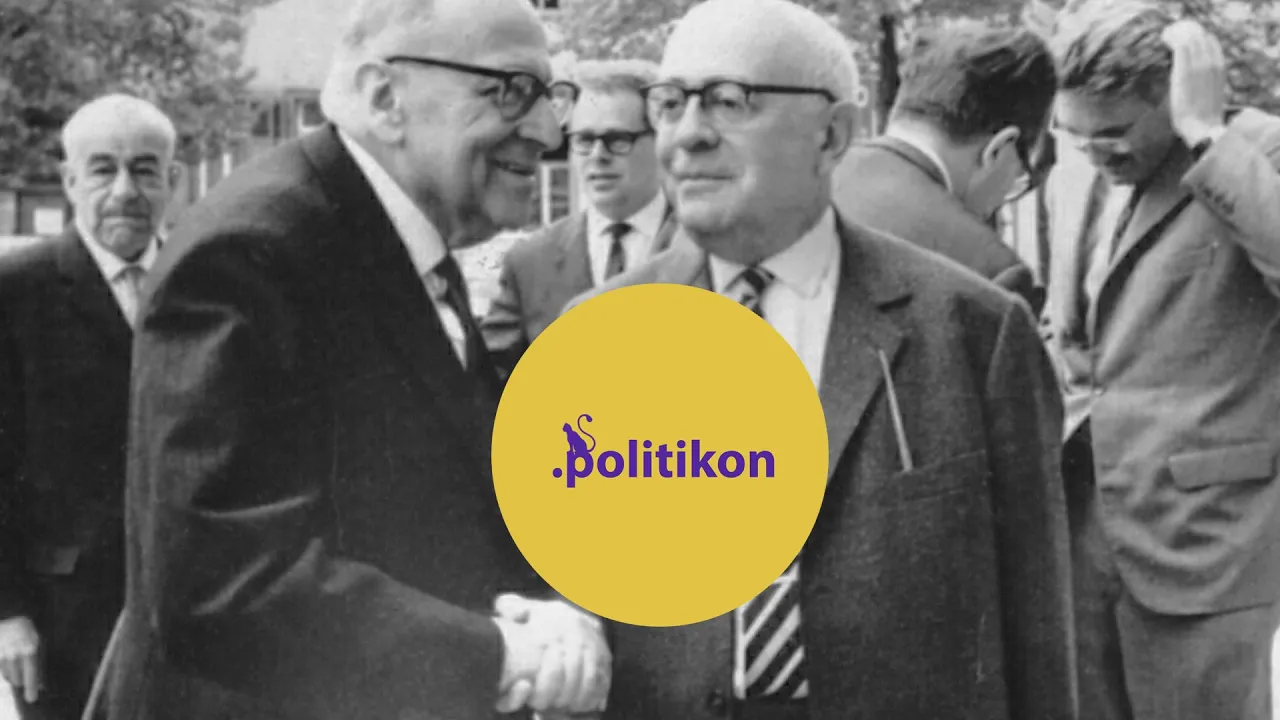

The Frankfurt School, founded in 1924 as the Institute for Social Research in Frankfurt, Germany, was established by Marxist intellectuals like Max Horkheimer, Theodor Adorno, and Herbert Marcuse to analyze why the German Revolution failed to produce socialism; they developed 'critical theory'—an interdisciplinary approach combining economics, sociology, political science, and psychology—to examine how capitalism maintains power through social and cultural conformity rather than just economic exploitation, producing influential works such as 'Dialectic of Enlightenment' and 'The Authoritarian Personality' that examined the culture industry and authoritarian personality traits.
The Frankfurt School: Failed Revolution to Critical Theory
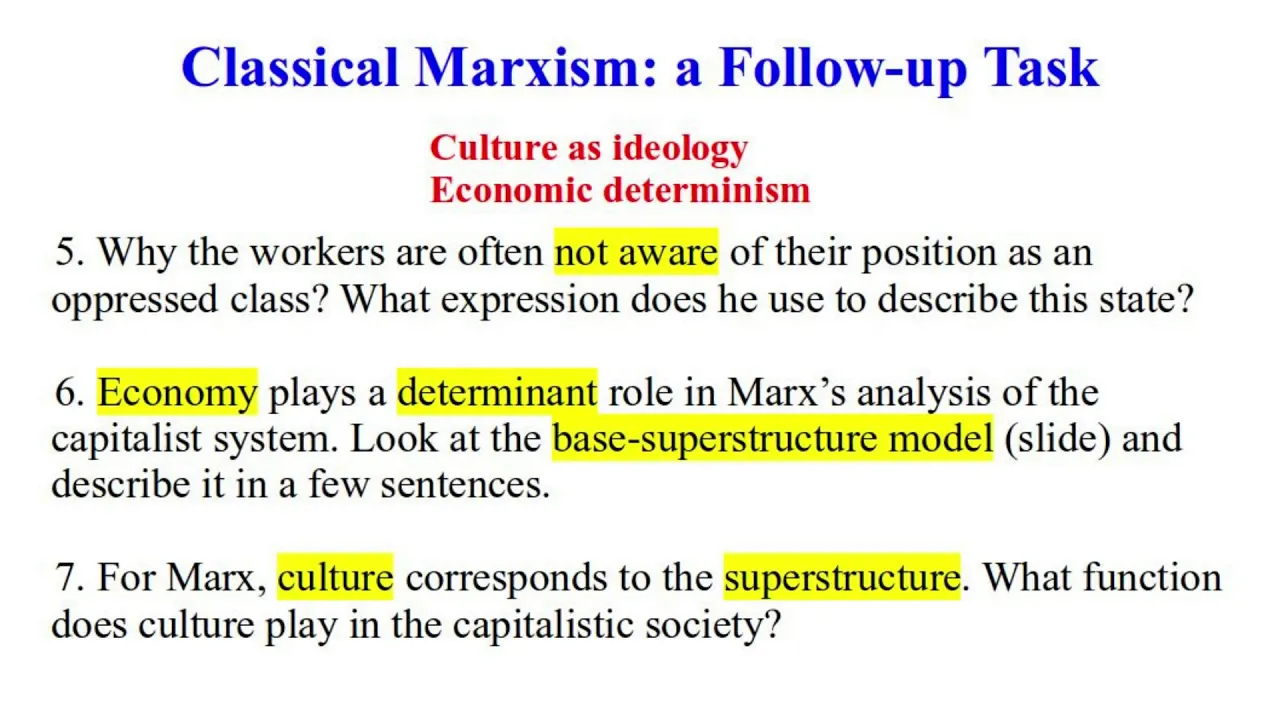
Added:Classical Marxism and Historical Materialism: Understanding Karl Marx's theories on class struggle, base and superstructure, and the prediction of a proletarian revolution.
Early 20th-Century European History: Awareness of the historical context, specifically the failed German Revolution of 1918-1919, the rise of the Weimar Republic, and the eventual ascent of National Socialism.
Hegelian Dialectics: Basic familiarity with Georg Wilhelm Friedrich Hegel's philosophy of history and the dialectical method, which heavily influenced Marxist thought.
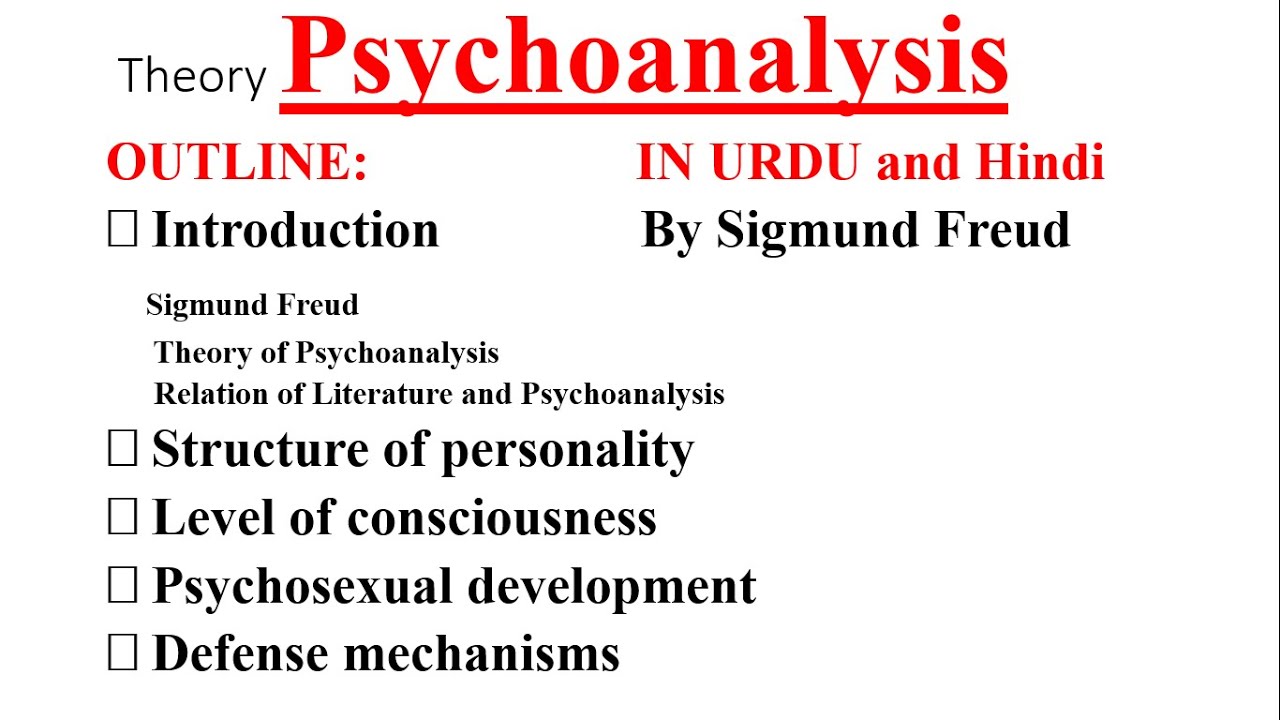
Introduction to Psychoanalysis: A foundational understanding of Sigmund Freud's concepts of the unconscious mind and repression, which Frankfurt School theorists integrated with sociology.
The Culture Industry: Exploring Max Horkheimer and Theodor Adorno's critique of mass culture, media, and consumerism in 'Dialectic of Enlightenment'.
Herbert Marcuse and the New Left: Analyzing 'One-Dimensional Man' and Marcuse's profound influence on the 1960s student counterculture and social movements.
Jürgen Habermas and the Public Sphere: Studying the second generation of Critical Theory, focusing on communicative rationality, deliberative democracy, and the structure of public discourse.
Postmodernism and Post-structuralism: Comparing and contrasting German Critical Theory with French post-structuralist thinkers like Michel Foucault and Jacques Derrida.
Contemporary Critical Theory: Applying these theoretical frameworks to modern issues, such as digital surveillance capitalism, algorithmic bias, and post-colonial studies.
415.6K views14.9Klikes26:35Original Release: 2020-02-07
the Frankfurt School has something of a reputation many of the scholars who worked for what was and still is officially called the Institute for Social Research such as Max Horkheimer Theodor Adorno and Herbert Marcuse er have had a huge influence on the study of society and culture and secured their places on undergraduate reading lists across numerous subjects it's necessary to note at the top of this video however that some of the frankfurt schools nota riot see outside of academia in the contemporary moment at least is due to the vitriol that has been leveled at them by their detractors figures on the political right from ben shapiro to jordan peterson to the times journalist melanie phillips regularly invoked the frankfurt school as a kind of intellectual group of supervillains hell-bent on undermining Western culture in today's video my goal is to shed a bit of light on what the Frankfurt School was and is I'm not gonna be directly tackling any of the conspiracy theory stuff yet it's worthwhile saying that unlike when one usually unpick so fanciful tale but usually concludes with finding a somewhat boring reality underneath the real story of the frankfurt school is quite remarkable it begins with a failed revolution moves through a global conflict involves exiled collaboration with the CIA and meetings with the Pope and it is very much the story of the Frankfurt School which I'll be focusing on today well we'll touch on a number of different aspects of the school's work and get a sense of how their interests changed over time my hope is that this overview might serve as an introduction to some more in-depth videos on individual scholars and texts of course if that's something you would like to see me cover then do let me know down in the comments below and if you'd like to see those future videos then subscribing and hitting that notification bell will mean you'll get a little buzz when they're released finally if you like what to do here and would like to support me to make more videos like this then I would be super grateful if you would check out my patreon page at patreon.com forward slash Tom Nicholas with that out of the way however let's crack on with the frankfurt school what the theory [Applause] [Music] before we come on to discussing the Frankfurt School itself it's worth grounding ourselves in little bits of historical context our scene then is Germany and by October 1918 it was evident that for Germany the first world war was going to end in defeat having already suffered through four hard years of conflict the German people now not only had to contend with the demoralizing feeling of having lost the war but also with the likelihood of financial hardship in order to pay reparations to the countries they had been defeated by these economic concerns along with a broader social tension between the nobility who had led the war effort and the working class who had done the actual fighting meant that things were tense now if you were a Marxist intellectual at the time and one thing the Frankfurt schools detractors do get right is that they were initially at least Marxists you would have been on the edge of your seats for most Marxist at the time signed up to what sometimes called the stage theory of history which argued that human society pads developed and would develop through a series of stages feudalism had given way to something called mercantilism which had given way to capitalism which would in turn give way to communism it was considered inevitable the capitalism would sow the seeds of its own destruction and that as soon as it's exploitative nature became clear to the working class they would rise up to overthrow it and many felt that the conditions in Germany in 1918 were ripe for such a revolution indeed in Russia the year prior exactly that had happened the February and October revolutions had led to the overthrowing of the Tsar and the establishment of Soviet rule in its place there was thus a sense among left-wing academics that all they had to do was sit back and wait for Germany the birthplace of Karl Marx himself to do the same and Germany did experience a revolution days before the end of the first world war a sailors revolt led to uprisings in cities across the country ultimately however the communist faction of the revolution led by Rosa Luxemburg and Karl Liebknecht were outmaneuvered by the less radical social democratic party while the revolution did lead to the abdication of the Kaiser and the introduction of a new constitution then after the dust had settled Germany remained a fundamentally capitalist nation it was with this supposed failure of the German people to throw off the yoke of capitalism in mind that in May 1923 Felix vile the son of a wealthy grain merchant with a keen interest in Marxism organized the erster Marxist assure our bites Fokker or first Marxist workweek one of the key goals of the week was to consider why it was the Germany's revolution had not yielded great economic reform certainly the perfidious nosov the Social Democratic Party had played a role but on being cheated in this way why didn't the people who had risen up in great number in support of a socialist revolution rise up again the initial plan was for this to be the first in a number of similar conferences for left-wing German intellectuals those gathered however felt that something more permanent was needed Felix vile dust turned to his wealthy father Herman and convinced him to provide an endowment to establish and maintain a permanent Institute for Marxist inform study on the 22nd of June 1924 then the Institute for Social Research opened its doors in Frankfurt and main located at 17:00 Victoria Ali vial appointed as the Institute's first director Karl Gruenberg an economic and social historian in his opening address at the Institute Gruenberg described himself as a proponent of scientific socialism stressing that when I speak here of Marxism I do not understand it in terms of party politics but rather in a purely scientific sense that is as an integral system of economics of a scientific worldview and a clearly circumscribed method of research what is clear from this is the Greenberg did not see the role of the Institute as being to write a new version of the Communist Manifesto but to instead engage in a more detached form of study informed by the theoretical economic approach of Marx's capital although initially seeing the failure of the German Revolution as a wake-up call to reconsider their analysis of society however the work produced by the Institute during this period was pretty similar to that which had gone on before studies published by scholars working at the Institute for Social Research during its first few years boasted such tantalizing titles as economy and society in China the law of accumulation and collapse in the capitalist system and experiments in economic planning in the Soviet Union 1917 to 1927 throughout the stage theory of history remained very much intact Robin in questioning the notion that a socialist revolution was inevitable the Institute seemed merely to have come to the conclusion that the time hadn't quite been right all of this was to change in 1930 however when grünberg fell ill and resigned his post as director the position was soon filled by Max Horkheimer who's not an economist nor a historian but instead had trained in psychology and philosophy this evidently gave Horkheimer a somewhat different perspective on society and his tenure as director saw the introduction of a new set of theoretical influences to the Institute in particular it led to a shift away from economics and an embrace of the social sciences instead or in other words it led to a shift away from the study of the economy and towards the study of people society and culture see Horkheimer was highly skeptical of the notion that capitalism would inevitably lead to a socialist revolution he saw the kind of empirical study which Gruenberg had encouraged to the Institute to be somewhat naive such an approach he argued assumed that people engage with the economy and society more broadly entirely logical it assumed that as soon as people recognized that they were being exploited they would instantly cast off the system that was exploiting them the Horkheimer however nice that the reality was somewhat more complex three years earlier for instance he'd written an essay titled the impotence of the German working class which argued that capitalism rather than inspiring insurrection had fairly successfully integrated the working class into its structure in particular he noted that a wedge had successfully been driven between those who were in long-term employment and those who are more sporadically or entirely unemployed which led to the form a group of them voting and acting to sustain capitalism and thus protects their jobs robbing the risk them in the turmoil have either violent or democratic revolution who climb his approach and that's the other scholars who he brought to work at the Institute such as Theodor Adorno Erich Fromm and Herbert mark who's a was thus far more holistic it encompassed the study of social and cultural forces as well as simply economic ones and rogdon theorizing the manner in which the working class would overthrow capitalism it primarily sought to shed light on the various ways in which they were discouraged from doing so in a 1936 paper Horkheimer would christen this mode of societal analysis critical theory the goal of critical theory was and is to draw upon diverse fields from economics to sociology to political science to psychology and geography say to foreground the ways in which capitalism encourages conformity as Steven Erich Branagh has written then the Frankfurt School were concerned less with what Marx called the economic base than the political and cultural superstructure of society they recognized the understanding how capitalism works required more than just an understanding of its economic aspects but also how it shapes social and cultural forces to and in turn how society and culture shape us and is perhaps already evident the Horkheimer and coast view of the world was somewhat bleak the optimism of the early institute for Social Research have been replaced with a view of the world or at least Germany the saw the overthrow of capitalism is becoming increasingly unlikely yet in 1933 matters became even worse when adult Hitler was made Chancellor of Germany as left-wing intellectuals those working at and associated with the Frankfurt School would have already been under threat on top of this however the majority of its number were also Jewish but the swastika flag raised over Frankfurt Town Hall then Horkheimer made the decision to close the Institute premises on Victoria alley and to lead the Frankfurt School into exile it would be sixteen years before the Frankfurt School would return to Germany yet in spite of the circumstances the years in exile were highly productive the Institute first moved to Geneva before in 1935 Erich Fromm on a visit to the United States persuaded Columbia University in New York to provide the group with a new home the Franklin school set up base at 428 West 117 Street in Morningside Heights but in truth they spent little time in New York in 1940 Horkheimer moved to California with Theodor Adorno following not far behind Herbert Marcuse er instead moved to Washington where he worked for the Office of Strategic Services the forerunner to the CIA both the rise of fascism in Europe and the slide of the USSR into authoritarianism would have a huge impact on the work of the Frankfurt School far from simply studying why people might fail to embrace socialism an ideology which many of the frankfurt school thinkers had an increasingly testing relationship with the schools work now also had to take into account why people had come to embrace various forms of totalitarianism this is the central concern of one of the Frankfurt schools key texts a book written collaboratively by Max Horkheimer and Theodor Adorno called dialectic of enlightenment in dialectic of enlightenment Horkheimer and Adorno locate the origin of the rise totalitarianism in the Enlightenment and this at first might seem strange the Enlightenment an intellectual movement which took place mostly during the 18th century argued for the supremacy of human reason above all else and what could be less reasonable than fascism well Horkheimer and Adorno did not see totalitarianism as irrational instead they saw it as reason and rationality taken to its ultimate extreme see enlightenment thinking saw to understand the world empirically it sought to do away with mysticism and mere belief in favor of quantification and the discovery of universal laws which explained how the world works and this is well and good when applied to physics and chemistry yet when we apply this same way of thinking to people it has a somewhat darker potential Horkheimer and Adorno saw totalitarianism as the application of an extreme conception of Objectivism uniformity and standardization to the whole of society with the consequence of the reduction of individuals to mere numbers solely parts of a machine Horkheimer and Adorno did not only see these traits as being present in Nazi Germany and Soviet Russia however they argued that the same kind of thinking had also come to permeate the capitalist nations perhaps inspired by their surroundings in Los Angeles they wrote acerbic Lee of what they called the culture industry they wrote that culture today is infecting everything with sameness film radio and magazines form a system each branch of culture is unanimous with itself and all are unanimous together Horkheimer and Adorno argued that the sole goal of the culture industry was to make money and thus that it come to rely on creating films music books and whatever else which pleased as many people as possible as much of the time as possible after creating a culture permeated by stainless they argued that what they referred to as mass culture robbed people of their imagination and their potential for individuality dialectic of enlightenment is a somewhat dense philosophical text earlier however I stated the Frankfort schools desire to combine methods from multiple academic disciplines in their studies later then Adorno along with a number of other scholars at the University of California Berkeley set about studying authoritarianism from a more clearly sociological and psychological standpoint the results of their studies were published in a 1950 book called the authoritarian personality which most famously derived an F scale which sought to identify how liable an individual might be to supporting a fascist political program through asking a set of questions to an individual it claimed to be able to place them on a spectrum from democratic personality to authoritarian personality though his findings would later come to be challenged the authoritarian personality came to be highly influential it is interesting to note here however the use of the term democratic in Adorno a tailed spectrum for the research carried out at Berkeley was heavily informed by similar research that the Frankfurt School had undertaken before leaving Germany in those earlier studies the spectrum had referred to an authoritarian personality and a revolutionary personality it was not as if much have been changed around the definition of the latter personality either the term revolutionary had mainly been swapped out for democratic there are a number of ways of reading this change firstly the Frankfurt School had never been afraid of altering their language for reasons of political expediency they had often avoided using recognizably Marxist terminology in describing their work in order not to put off less radically minded readers funders or other stakeholders many on the Left however increasingly began to wonder whether the Frankfurt School had lost its radical a year before the publication of the authoritarian personality in 1950 with the Second World War having ended in the defeat and dissolution of Nazi Germany Horkheimer made the decision to move the Frankfurt School back to its original home now part of the newly established Federal Republic of Germany or colloquially West Germany the Frankfurt School now found themselves at the forefront of German sociological thinking the critical theory that Horkheimer had envisaged in 1936 and developed along with Adorno and dialectic of enlightenment was now an established body of work which have begun to have a real influence on how scholars in multiple fields approached the study of human society politics and culture the following years saw the publication of a number of further works by Frankfurt School scholars in 1951 Theodor Adorno published minimum moralia reflections from a damaged life which argued that human life was now irrevocably damaged and that however hard one tried the inhumanity of contemporary society made living a good honest life as centuries of philosophers had sought to define EDS was now impossible in 1964 Herbert Marcuse er published a book called one dimensional man studies in the ideology of advanced industrial society which came to some not dissimilar conclusions a critique of both capitalist society and that of the Soviet Union the book argued that under both systems critical thinking was becoming a dying art in the capitalist nations mark heussner argued people have become so assimilated into the capitalist mode of production and the bureaucracy needed to maintain it that they failed to be able to thinking anything but a one-dimensional manner uncritical of the system around them the pessimism which had begun with Horkheimer declaration of the impotence of the German working class have been exacerbated by the Frankfurt schools wartime experience had thus seemingly come to permeate its work the only voice resistant this pessimism within the Frankfurt School was that of Jurgen Haber maps who had joined the school to study under Horkheimer and Adorno in 1956 but who increasingly was at odds with his mentors though he would later return to become the director of the Institute for Social Research he in fact transferred his PhD away from it to the University of Marburg in order to escape what he saw as the frankfurt schools unbearable defeatism the divisions within the frankfurt school over whether any hope remained for socialist revolution would come to a head in May 1968 when as I've discussed in my video on key de Bourgh's society of the spectacle civil unrest broke out in France students and workers took to the streets in a defiantly anti-capitalist uprising it's worth stressing these protests had a huge impact Frances economy was brought to a complete standstill the president Charles de Gaulle was evacuated to Germany and the government genuinely feared the outbreak of full-scale revolution though less pronounced than in France students in other nations also went out onto the streets in support of various causes what United all of them was in opposition to the authoritarian form of capitalism which had come to dominate the advanced capitalist Nations indeed their critique of contemporary society shed much with that of Horkheimer and Adorno in dialectic of enlightenment nevertheless it was Herbert Marcuse II who had the clearest influence on the striking students of may 1968 his essay repressive tolerance published in 1965 and a belief or grounded the manner in which capitalist society could feature totalitarian aspects and they spoke fairly directly to the protesters grievances more than this however where Horkheimer and Adorno remains skeptical of the likelihood that any meaningful change would come out of the so-called inventor mark user was quite glad that some of his more pessimistic pronouncements in one dimensional man seemed to have been proven wrong and the critical thinking and action were alive and well Horkheimer and Adorno refusal to find any hope in the strikes and protests did not go unnoticed either activists began to disrupt Adorno's lectures with the one-time Marxist shift in ideological position perhaps being exemplified by his decision to call the police this only made matters worse and later a group of students invaded his lecture theatre once again writing on the blackboard if a door no is left in peace capitalism will never cease Adorno was eventually forced to cancel the rest of his lectures which were to be some of his last before his death in 1969 Horkheimer who died just a few years later in 1973 with mark Uzi passing away in 1978 in 1983 Jurgen Habermas became director of the Institute for Social Research and his own work has been almost as influential of that as his forebears given his early work in which he introduced the concept of the public sphere to the world it is no surprise that he's been a truly public intellectual perhaps most notable given the fact that many of the Frankfurt School conspiracy theories revolve around some form of plot to undermine Western values in 2004 Haber mass took part in a debate with pope benedict xvi and the Catholic Academy of Bavaria in which he argued for the positive role that religion can play in holding society together though I would very much like to discuss the work of Haber Mass in a future video however it is very much the period between Horkheimer x' installation as director of the institute of social research and his an Adorno's death that most people are referring to when they speak of the Frankfurt School as such I'll take the opportunity to draw this video to a bit of a close the impacts that the Frankfurt School had on how we critically analysed the world around us is undeniable with regard to left-wing thought in the broadly Marxist tradition they were a key factor in discouraging a purely economic analysis which sure capitalism's collapse as inevitable and the development of a more holistic study of capitalism cognizant of the influence of social and cultural forces in its maintenance though the school may have had radical origins however in truth this revolutionary zeal faded over time towards the ends of their lives many of its most prominent members were more likely to be chided for their deeply ingrained pessimism than they were to be held up as examples of dangerous insurgents indeed far from presenting us with a unified doctrine of thought the work of the Frankfurt School is PI a diverse both in the aspects of society that it focuses on and the methods that it uses in its analysis it is partly this diversity and embrace of ideas from an array of different academic subjects that has allowed it to have such a wide-ranging influence across fields including sociology philosophy political science and many more if we were to pick out one key theme from the work of the Frankfurt School however it would be the potential that contemporary society has to foster conformity and to a road individuality the critical theory that Horkheimer Adorno maku czar and others developed asked us to be watchful for these tendencies and work to find ways of engaging with the world which enable individuality and empathy to flourish thank you very much for watching this video if you have a friend you think might be interested in the life and ideas of the Frankfurt School and then please do send it on to the fan that'd be great I thank you as always - ash - Jai frisée Cartwright - Michael B Brown - army of me and - syndra Nielsen all for being signed up to the top tier of my patreon if you would like to join them in supporting what I do here then you can check out how to do so and all the perks and stuff at patreon.com forward slash Tom Nicholas with that out of the way however thanks so much for watching once again and have a great week
Up Next
7:05
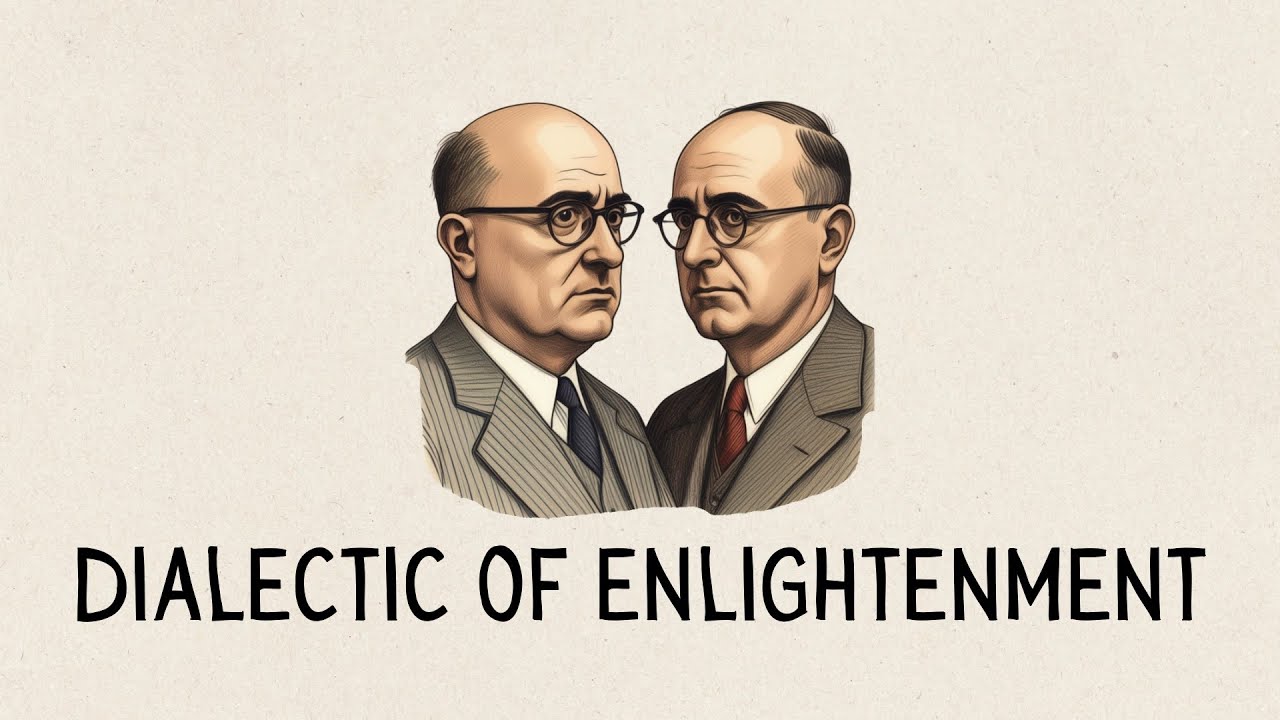
Adorno & Horkheimer's Dialectic of Enlightenment Explained
@autodidactstoolkit
3.5K views•2024-09-11

164:01
John of Damascus on Holy Images: A Theological Defense
@BannedBooks
139 views•2026-04-25

68:32
Should We Destroy the Machines? Big Tech Surveillance Critique
@TheStoriesWeTell303
167.9K views•2025-11-30
4:57
The Myth of Sisyphus: A Greek Legend of Eternal Punishment
@TEDEd
8.6M views•2018-11-13
Related Study Plans & Knowledge Roadmaps
Structured learning paths in Philosophy
philosophy
Frankfurt School: Critical Theory & Culture
01Foundations of the Frankfurt School and Critical Theory
02Horkheimer & Adorno: The Critique of Instrumental Reason
03The Culture Industry and Mass Deception
+ 2 more learning modules
12h5 modules
Explore Roadmap
philosophy
Philosophy of Language: From Frege to Austin
01The Linguistic Turn: An Introduction to Language in Philosophy
02Gottlob Frege: Sense and Reference
03Early Wittgenstein: The Picture Theory of Meaning
+ 3 more learning modules
15h6 modules
Explore Roadmap
philosophy
Feminist Epistemology: Standpoint & Injustice
01Introduction to Epistemology and Feminist Critiques
02Sandra Harding and Standpoint Theory
03Donna Haraway and Situated Knowledges
+ 2 more learning modules
12h5 modules
Explore Roadmap
philosophy
Environmental Philosophy: Ethics & Deep Ecology
01Foundations of Environmental Ethics & Anthropocentrism
02Biocentric Individualism and Animal Liberation
03Ecocentric Holism and Deep Ecology
+ 1 more learning modules
10h4 modules
Explore Roadmap