















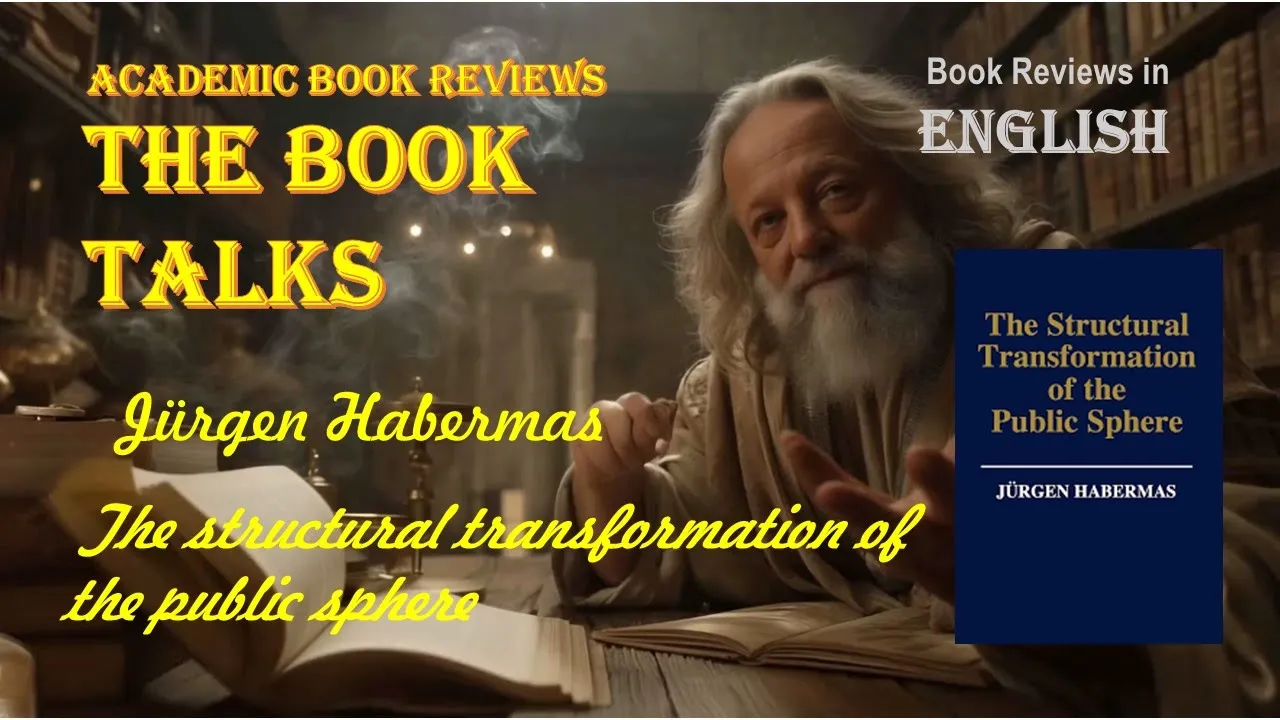





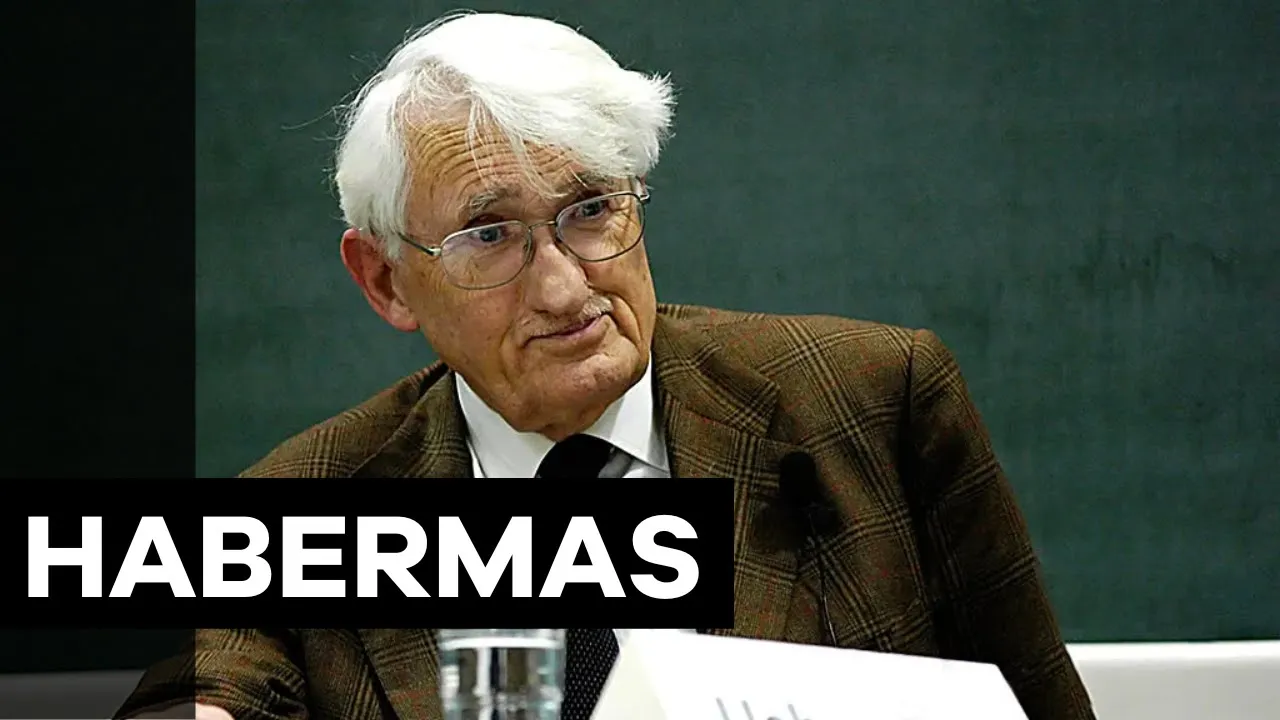

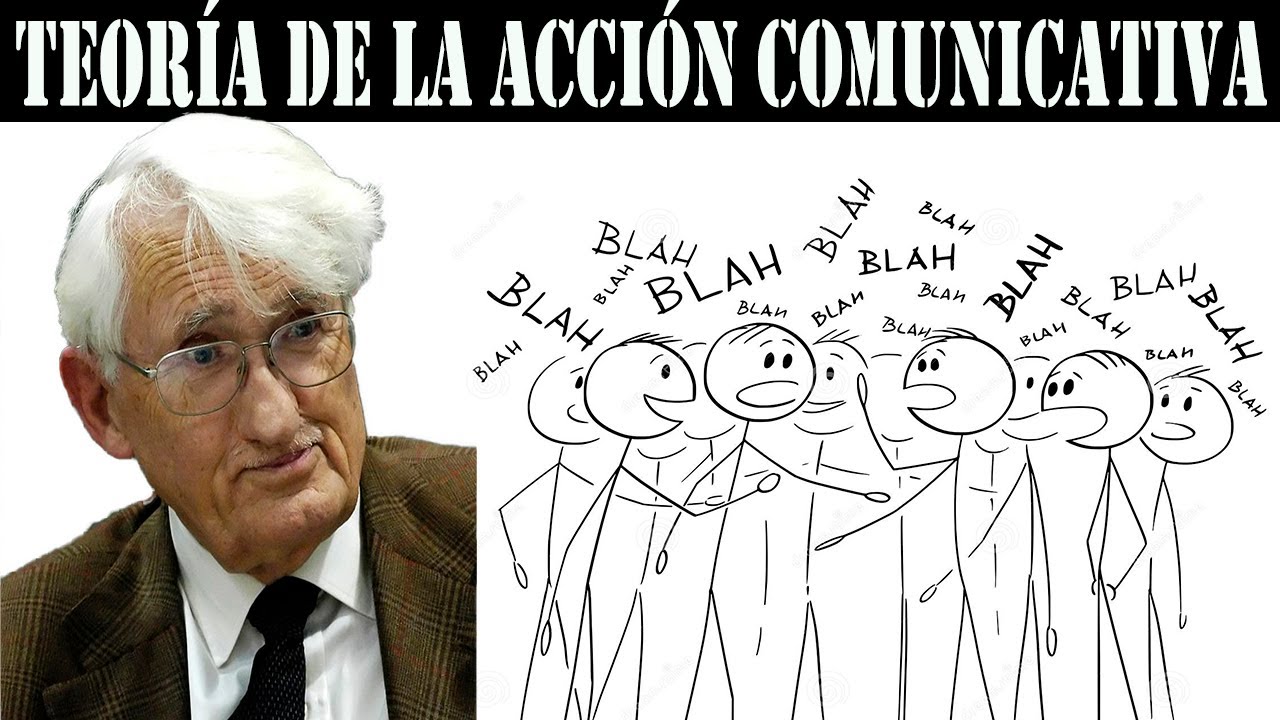

Jürgen Habermas defined the public sphere as a discursive space where private individuals come together as a public to openly discuss matters of general concern, separate from both state institutions and private life; this concept emerged in 18th-century Western Europe through bourgeois coffee houses, salons, and print media, enabling the formation of public opinion and establishing democratic principles of resolving political problems through rational-critical discussion, though it has been challenged by modern consumerist mass media that reduces public opinion to a marketable commodity managed by commercial interests rather than formed through genuine deliberation.
Habermas's Public Sphere: Theory Explained (1962)
Added:The historical context of the European Enlightenment, particularly the shift toward rational-critical debate and individual autonomy in the 18th century.
The socioeconomic rise of the bourgeoisie (middle class) in early modern Europe and their evolving relationship with aristocratic state power.
The fundamental distinction in political theory between the private realm (including the family and economic relations) and the sphere of public authority (the state).
Nancy Fraser’s critique of Habermas's idealized model, focusing on the exclusion of marginalized groups and the concept of 'subaltern counterpublics'.
The concept of 're-feudalization' of the public sphere, examining how modern mass media, public relations, and consumer culture can compromise democratic debate.
The emergence of the 'digital public sphere' and how social media, algorithmic sorting, and online echo chambers impact contemporary democratic deliberation.
Habermas’s later, mature philosophical works, specifically his theories of 'communicative action' and 'deliberative democracy'.
58.3K views539likes5:28Original Release: 2013-08-06
hello today I want to talk about the concept of the public sphere initially developed by the German sociologist and philosopher juren habas the concept has proved to be extremely influential and has generated a massive literature both explicating and critiquing hamas's original conception here I will merely outline the main elements of the basic Theory the concept received its first detailed description in a work Camas published in German in 1962 in fulfillment of the requirements for his professorship despite its later massive impact it was not published in English translation until 1989 under the title the structural transformation of the public sphere an inquiry into a category of bis Society habam Mas defined the public sphere as the sphere in which private people come together as a public that is a discursive space separate from both the sphere of Public Authority embodied in government and state institutions and the private sphere of people's private lives of family friends and daily life in the public sphere it is possible to openly discuss matters of public concern historically with rare exceptions such as the mass meetings of citizens in some of the ancient Greek city states and swiss cantons this was not possible possible in traditional societies matters of public concern were discussed and decided on by the governing Elite with no reference to the ideas of those outside of the elite these ideas were not publicly or significantly discussed by the general mass of the people in Western Europe this pattern began to be challenged with the rise of the bisi in the early modern period the Bourgeois were concerned to discuss matters of concern to them and if possible to influence the decision making of the political Elite habas I should say adopts a rather frankophone approach here and focuses his particular attention on the 18th century whereas it could be argued that this public sphere emerged earlier in England and Holland the emerging public sphere was an arena of public debate in which issues of General concern could be discussed and opinions formed the locals for such debates included London coffee houses and Paris salons as well as the burgeoning print media of news sheets newspapers and periodicals in such venues participants were able to freely discuss contemporary issues and Define and shape what they increasingly represented as public opinion separate from and potentially critical of the policies of of the government and other authorities these developments were linked to a certain democratization of society specifically limitations on the coercive powers of the state a minimization of censorship which allowed the development of critical literature and journalism and the concept of individual rights there was also the social inclusiveness of the public sphere with its disregard for traditional social exclusions amongst its participants and its internal openness to debate regardless of the participants different social backgrounds I should note here that critics of habam Mass have argued that the extent of this inclusiveness in practice was quite limited but I will leave such questions for another video moreover although only a small number of people might be involved as discussant public political debates were vital to the early development of democracy establish ing the idea of resolving political problems through public discussion again there was a growing belief that a government's legitimacy depended in part on its responsiveness to public opinion for habas the public sphere was a characteristic of the emerging liberal capitalist societies of the 18th and early 19th centuries but it was in turn challenged by the consumerist mass democracies that were developing from the late 19th century onwards these combined a mass media focused on consumerist Advertising interests and the mass entertainment manufactured by the culture industry rather than political principles and public opinion was reduced to a marketable commodity managed by public relations experts rather than formed through rational discussion under such conditions the political process itself was stag managed to the benefit of commercial interests pressure groups and vested interests and the public sphere as a forum for open reasoned debate contracted and became significantly less important habam mas' work remains formative and stimulating for a wide range of different thinkers I may discuss other aspects of this work and the response to these hypotheses in future videos thank you for listening
Up Next
98:09
High Seas Treaty: Marine Protected Areas & ABMTs
@IucnOrg
877 views•2020-06-30

24:30
BRICS Pay and de-dollarization: A New Financial Order Emerges? | 55 chars
@DannyHaiphongYT
164.6K views•2024-10-22

7:33
Government Surveillance Methods: 10 Ways You May Be Watched
@BeAmazed
1.6M views•2017-04-09
10:19
Explaining the Saudi-Iranian Proxy Conflict in the Middle East
@Vox
18.2M views•2017-07-17
Related Study Plans & Knowledge Roadmaps
Structured learning paths in Political Science
political-science
Economic Statecraft: Sanctions & Chokepoints
01Foundations of Geoeconomics and Economic Statecraft
02The Mechanics of Weaponized Interdependence
03International Sanctions: Types, Implementation, and Efficacy
+ 2 more learning modules
12h5 modules
Explore Roadmap
political-science
Central Bank Independence: Politics & Policy
01Foundations of Central Banking and Monetary Policy
02The Time Inconsistency Problem & Inflation Bias
03The Delegation Model and Designing Independence
+ 2 more learning modules
12h5 modules
Explore Roadmap
political-science
Consociationalism: Power-Sharing & Stability
01Democratic Dilemmas in Divided Societies
02Introduction to Consociational Democracy
03The Four Pillars of Consociational Design
+ 2 more learning modules
12h5 modules
Explore Roadmap
political-science
Rebel Governance: Legitimacy, Economy & State
01Foundations of Rebel Governance and Statehood
02Establishing Political Legitimacy and the Rebel Social Contract
03Wartime Economies and Rebel Resource Management
+ 2 more learning modules
14h5 modules
Explore Roadmap