




















Theodor Adorno and Max Horkheimer's 1944 work 'Dialectic of Enlightenment' argues that Enlightenment rationality, intended to liberate humanity from myth and superstition, paradoxically led to new forms of domination, fascism, and the culture industry; they critique instrumental reason which prioritizes efficiency and control over human values, and introduce the concept of the culture industry where mass media commodifies art to reinforce conformity and suppress critical thought, revealing how scientific progress can regress into new forms of control.
Adorno & Horkheimer's Dialectic of Enlightenment Explained
Added:The historical context and core values of the Enlightenment (Age of Reason), including its emphasis on human progress, scientific rationality, and liberation from religious dogma.
Basic tenets of Marxist theory, particularly commodity fetishism, alienation, and the critique of capitalist economic structures.
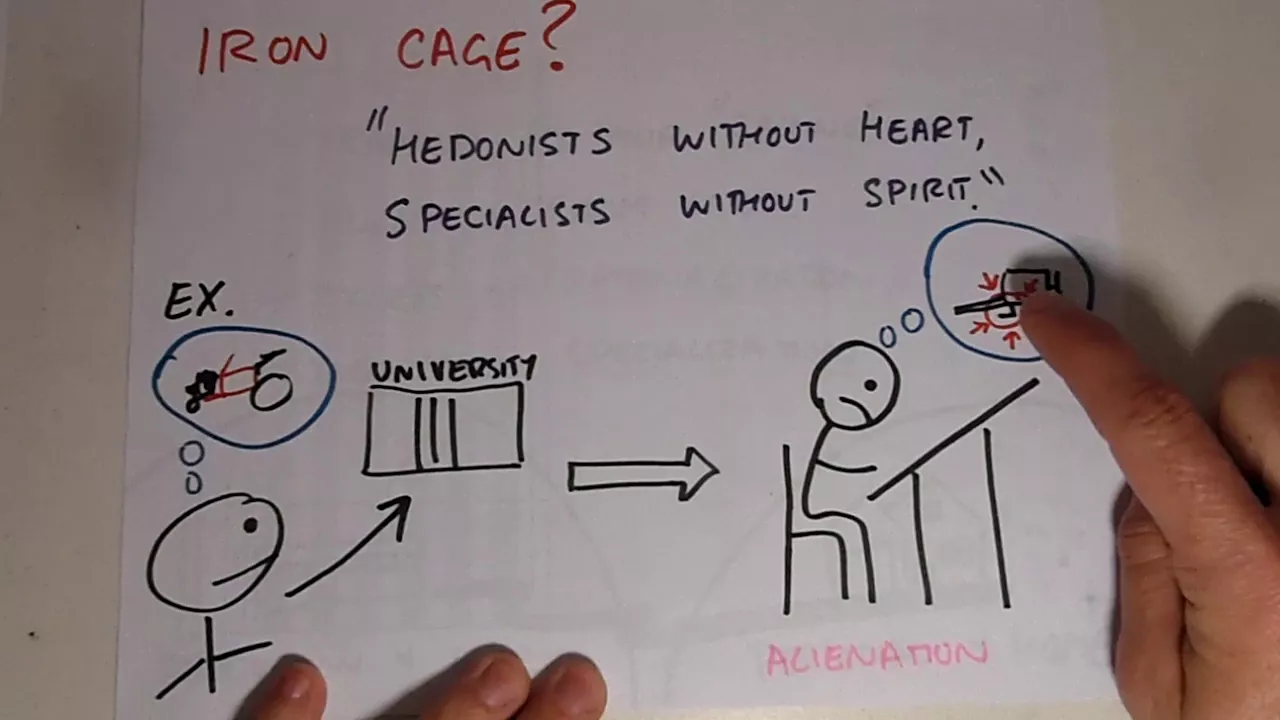
Max Weber's sociological concept of rationalization and the 'iron cage' of bureaucracy, which forms the background for understanding instrumental reason.
An introductory understanding of Critical Theory and the intellectual origins of the Frankfurt School.
Jürgen Habermas's response to the Dialectic of Enlightenment, specifically his development of the Theory of Communicative Action to salvage the project of modernity.
Application of 'The Culture Industry' concept to modern digital media ecosystems, including social media algorithms, streaming platforms, and the attention economy.
Comparative analysis of Adorno & Horkheimer's critique with Postmodern and Post-structuralist rejections of meta-narratives (e.g., Foucault, Lyotard).
Environmental philosophy and Eco-Marxism, exploring how the 'domination of nature' described in the text relates to current climate crises and the Anthropocene.
3.5K views96likes7:05Original Release: 2024-09-11
welcome to this video on dialectic of Enlightenment by teodor adorno and Max horkheimer I'm Andrew Chapman I'm a professor of philosophy and I'll be your guide our purpose in this video is to provide you with a detailed yet accessible summary of this significant work ensuring that you grasp its key Concepts understand its impact and are prepared to discuss it critically in your classes and Beyond we'll begin with an introduction to the text and its authors followed by a summary of the main ideas next we'll dive into a deeper analysis examining the significance and implications of these Concepts we'll also cover how the text has influenced its field and discuss any major criticisms finally we'll wrap up with a summary of the key points covered now let's get started with dialectic of Enlightenment dialectic of Enlightenment published in 1944 is a seminal work by German philosophers teodor adorno and Max horkheimer who were key figures in the Frankfurt School of critical theory the book is a Critical examination of the Enlightenment and its Legacy arguing that the rationality promoted by the enlightenment has paradoxically led to new forms of domination and barbarism particularly evident in the rise of fascism and the culture industry adorno and horkheimer's work combines insights from philosophy sociology and cultural criticism offering a profound critique of modernity and the instrumentalization of reason adorno and horkheimer argue that the enlightenment's emphasis on reason and scientific progress while initially aimed at liberating Humanity from myth and Superstition has led to new forms of domination this dialectical process reveals that Enlightenment rationality contains the seeds of its own destruction the author's critique the dominance of instrumental reason which prioritizes efficiency and control over human values and ethical considerations this form of rationality reduces individuals to Mere means to an end stripping them of their autonomy and humanity adorno and horkheimer introduced the concept of the culture industry to describe how mass culture is produced and manipulated to maintain social control they argue that the culture industry commodifies art and culture turning them into tools for reinforcing Conformity and suppressing critical thought the authors explore the relationship between myth and Enlightenment suggesting that the enlightenment attempt to eradicate myth has in fact created new myths these modern myths are embedded in the ideologies of capitalism and fascism which use rationality as a means of domination adorno and horkheimer provide a critique of modernity highlighting the ways in which technological and scientific advancements have been co-opted by systems of power to perpet uate inequality and oppression they argue that true emancipation requires a critical rethinking of the relationship between reason freedom and domination the analysis in dialectic of Enlightenment reveals the contradictions and dangers inherent in Enlightenment rationality adorno and horkheimer's critique of instrumental reason and the culture industry exposes the ways in which modern society undermines individual autonomy and critical thought leading to new forms of domination the book was written during World War II a time of immense political and social upheaval the authors were deeply influenced by the rise of fascism the horrors of the Holocaust and the spread of capitalist culture their work reflects the intellectual milu of the Frankfurt School which sought to understand the failures of Enlightenment ideals and the Persistence of authoritarianism in modern societies ictic of Enlightenment has had a profound impact on various Fields including critical theory sociology philosophy and cultural studies the author's critique of the culture industry has influenced subsequent analyses of media consumer culture and the commodification of art their work has also informed discussions about the limitations of rationality and the need for a more Humane and emancipatory form of reason adorno and horkheimer's insights provide valuable tools for critiquing contemporary issues related to Media culture and Technology their Concepts can be applied to analyze the ways in which mass culture is used to maintain social control and to suppress dissent their critique of instrumental reason also encourages a more ethical and reflective approach to the use of technology and scientific knowledge the ideas presented in dialectic of Enlightenment have been extended by numerous scholars in the fields of critical theory and cultural studies researchers have built on their analysis to explore the effects of digital media globalization and neoliberalism on culture and Society feminist and postcolonial theorists have also used adorno and horkheimer's framework to analyze the intersections of gender race and class in the production of cultural hemony despite its influence dialectic of Enlightenment has faced criticism from various perspectives some critics argue that adorno and horkheimer's Analysis is overly pessimistic and deterministic suggesting that they underestimate the potential for resistance and agency within mass culture others contend that their critique of the culture industry is elitist dismissing the value and diversity of popular culture additionally some Scholars question the feasibility of their vision for emancipation arguing that it lacks concrete strategies for social change in summary dialectic of Enlightenment by teodor adoro and Max horkheimer is a foundational text that offers a Critical examination of the Enlightenment and its Legacy the author's concepts of instrumental reason the culture industry and the dialectic of Enlightenment provide a comprehensive framework for understanding the contradictions and dangers of modernity despite criticisms regarding its pessimism and elitism adorno and Ker's analysis remains a crucial framework for examining contemporary issues related to culture media and Technology their insights challenge us to critically engage with the ways in which rationality and culture are used to maintain social control encouraging a more reflective and emancipatory approach to knowledge and Society through their influential work adorno and horkheimer offer valuable tools for analyzing the intersections of Reason power and domination in the modern world
Up Next
14:29
Critical Theory Explained: Frankfurt School Key Concepts
@PHILOnotes
73.6K views•2021-02-11

164:01
John of Damascus on Holy Images: A Theological Defense
@BannedBooks
139 views•2026-04-25

68:32
Should We Destroy the Machines? Big Tech Surveillance Critique
@TheStoriesWeTell303
167.9K views•2025-11-30
4:57
The Myth of Sisyphus: A Greek Legend of Eternal Punishment
@TEDEd
8.6M views•2018-11-13
Related Study Plans & Knowledge Roadmaps
Structured learning paths in Philosophy
philosophy
Frankfurt School: Critical Theory & Culture
01Foundations of the Frankfurt School and Critical Theory
02Horkheimer & Adorno: The Critique of Instrumental Reason
03The Culture Industry and Mass Deception
+ 2 more learning modules
12h5 modules
Explore Roadmap
philosophy
Philosophy of Language: From Frege to Austin
01The Linguistic Turn: An Introduction to Language in Philosophy
02Gottlob Frege: Sense and Reference
03Early Wittgenstein: The Picture Theory of Meaning
+ 3 more learning modules
15h6 modules
Explore Roadmap
philosophy
Feminist Epistemology: Standpoint & Injustice
01Introduction to Epistemology and Feminist Critiques
02Sandra Harding and Standpoint Theory
03Donna Haraway and Situated Knowledges
+ 2 more learning modules
12h5 modules
Explore Roadmap
philosophy
Environmental Philosophy: Ethics & Deep Ecology
01Foundations of Environmental Ethics & Anthropocentrism
02Biocentric Individualism and Animal Liberation
03Ecocentric Holism and Deep Ecology
+ 1 more learning modules
10h4 modules
Explore Roadmap