





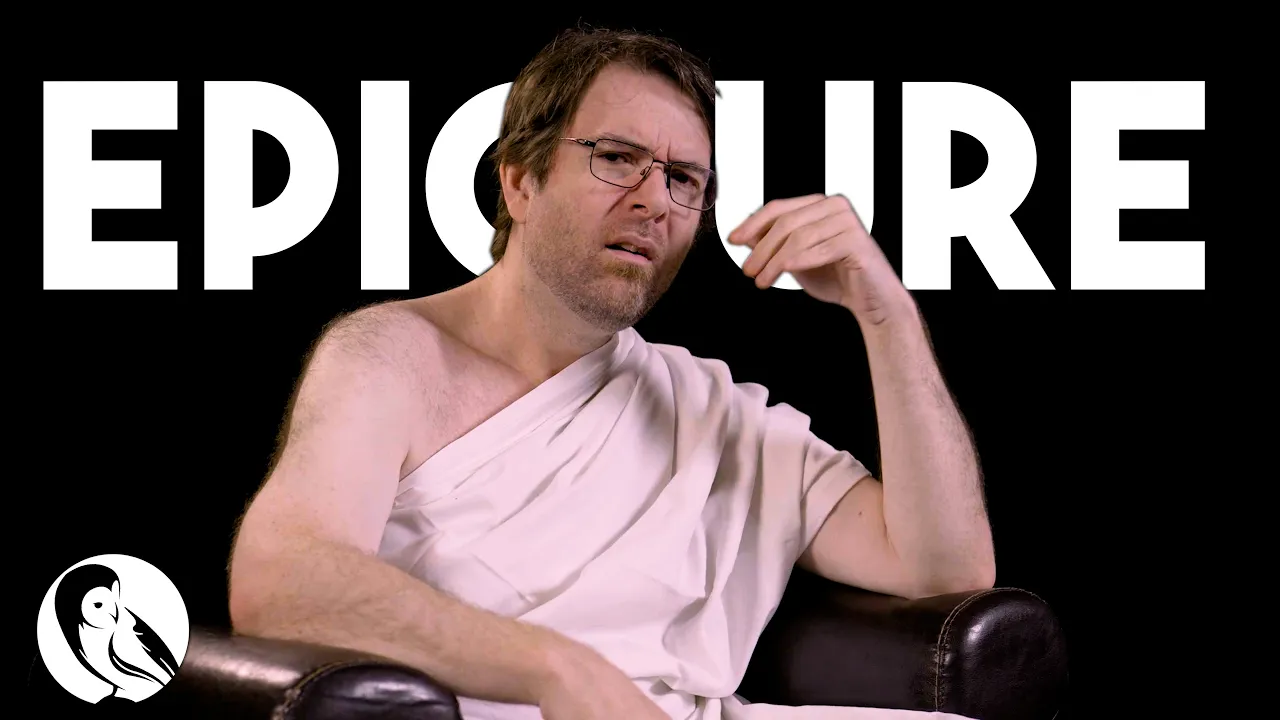


Lucretius's symmetry argument, an argument from analogy, holds that since we do not fear or regret our pre-birth non-existence, we should similarly not fear our post-death non-existence, because both states are relevantly similar as states of non-existence with no experience possible; however, critics like Thomas Nagel and Derek Parfit argue that pre-birth and post-death non-existence are not relevantly analogous because we lose nothing due to pre-birth non-existence but do lose something due to post-death non-existence, and because we have a bias toward the future that makes us think differently about past versus future non-existence.
The Symmetry Argument: Lucretius on Death's Harm
Added:Introduction to Epicureanism and its materialist metaphysics, particularly the view that the soul is mortal and made of physical atoms.
The conceptual distinction between existence and non-existence in ancient philosophical traditions.
The Deprivation Account of death, which argues that death is bad because it deprives a person of the goods of life.
Basic principles of philosophical arguments by analogy and how symmetry is used to establish logical consistency.
Thomas Nagel's critique of the symmetry argument, focusing on the asymmetry between pre-natal and post-humous non-existence.
Derek Parfit's work on temporal asymmetry and why humans psychologically bias future experiences over past ones.
Epicurus's 'No-Subject' argument, which asserts that death cannot harm us because we do not exist to experience it.
Contemporary existentialist perspectives on mortality and how reconciling with non-existence affects existential dread and grief.
2.5K views31likes31:02Original Release: 2016-04-14
welcome to the lecture on book three of Lucretia tsa's de rerum Natura I'm Andrew Chapman and in this lecture we'll be focusing on Lucretia tsa's argument that's been known as the symmetry argument against the claim that death is bad for us or that we should be fearful of death look back nothing to us was all for past elde of time the eternal air we had a birth and nature holds this like a mirror up of time to be when we are dead and gone and what is there so horrible appears now what is there so sad about it all it's not serene or far than any sleep Lucretius was an ancient Roman poet and philosopher who lived from about 99 to 55 BC he was an epicurean someone who was a follower of the philosophy of Epicurus and he was the first major or famous Roman epicurean he was an ad amidst that is Epicurus his physical philosophy and he was a religious skeptic or at least he had no need for religion in his writings he explains the world the way the world is not by reference to deities but instead by reference merely to the workings of the natural world itself in this lecture we'll be discussing an ethical issue that affects our practical lives and this discussion of practical ethical concerns occurs mainly in the philosophical sub-discipline known as practical ethics practical ethics also sometimes called applied ethics is the sub-discipline of philosophical ethics that concerns itself with the moral properties and moral reasons surrounding specific types of actions events and states of affairs the practical ethicist is primarily concerned with the moral properties possessed by specific types of actions events and states of affairs and is not primarily concerned with general ethical theories that might determine those moral properties so while another philosophical sub-discipline known as normative ethics is concerned with the general theories that might make certain actions right or wrong or certain states of affairs better or worse the practical ethicist instead is concerned just with the actions and the states of affairs and with whether those actions or states of affairs have particular ethical properties and why some although not all of the questions asked by the practical ethicist are what is the moral status of specific sorts of sexual activity what is the moral status of abortion how should we treat non-human animals what are right and wrong ways for a nation to conduct itself in war what is the moral status of specifically race related questions what is the moral status of specifically gender related questions and finally what makes specific sorts of lives go well or go badly it's this final sort of question that will be our primary concern in this lecture it's important to understand when getting a grasp on what practical ethics is how practical ethics is different from another philosophical sub-discipline known as existentialism existentialism is a philosophical and litter weary movement that began mainly in Germany and France in the late 19th century thinkers such as Kierkegaard Nietzsche Heidegger and Sartre are among existentialism z' most prominent figures existentialism requires a radically individualistic although not generally self-centered or egoistic methodology that's known as phenomenology existentialism is in many ways a philosophy of living we're living refers to the specific sort of thing that self conscious rational creatures like you and like I do now while practical ethics generally gives us guidelines for how to live in terms of being good human people and thus could be considered a philosophy of living practical ethics nearly always a shoes or just ignores a phenomenological methodology and is instead more concerned with moral principles than with individual experience so the central difference between practical ethics and existentialism comes in terms of methodology where existentialism is concerned with life and living from a first personal individual subjective perspective and practical ethics is concerned with life and living from a third personal Universal general third personal perspective since we'll be discussing death in this lecture it's important to get an initial handle on what it is that we mean when we're talking about death in this lecture we aren't concerned with metaphysical or religious questions concerning whether persons are more than merely their bodies or whether there's some part of a person that could possibly persist beyond bodily death while those are interesting questions in their own right we shouldn't confuse them with the central topic of this lecture which is whether death is bad or whether we should fear death death as we'll use the term here refers to a permanent annihilation of the subject if I die that I'm gone now note that this is a stipulative definition and no metaphysical questions will turn on using the term in this specific way this is just what we mean in this lecture by death so if someone thinks that after bodily death we still exist in some way then that person thinks that bodily death isn't death in the sense that we're using the term in this lecture if someone thinks that some part of us is immortal then that person thinks that we never die in the sense of death that we're using in this lecture thus when we talk about death we're referring to one and only one very specific thing and that's permanent annihilation of the subject the subject being no more even further in understanding death it's important to understand the differences between the concepts of being dead death and die these concepts can be used in precisely or equivocal ii when we're talking about death and so it's important to keep these concepts straight and separate from one another when we're investigating death and making arguments about the properties that death has here's how we'll use those terms in this lecture being dead is the state that one is in after one has died after ones death one is no longer around when they're dead death on the other hand is the instant when one dies when one passes from being alive to being dead however that term death is also used by many people to refer to the state of being dead in fact it's generally used in this second sense context can generally make clear how the concept is being used and finally dying is the process undergone by the living that is a lead up to death no dying person is dead now in a poetic sort of way we're all dying since we're all growing closer to death usually however the concept of dying is used to refer to the final bits of a person's life however we want to delimit the final bits the main topic of this lecture is whether death is bad or whether we should think that death is bad there are two different senses with which we might use that concept of the badness of death there's a philosophical sense and there's a psychological or emotional sense many probably most people think that there is something that's bad about death and it's not just that death makes survivors sad in fact it's the other way that the badness of death is what makes people sad about death but if death is actually bad then we should be able to find some reason why death is actually bad call this investigation the philosophical question of the badness of death it's the investigation into what it is that might make death bad one way that we might examine this question and the way that's been most influential in the practical philosophical study of death has been to look at the other sorts of things that make other human endeavors bad and then to see whether death possesses any of those things or at least things that are relevant ly similar to those things the things that people have pointed to that death might possess that other sorts of human endeavors possess when those endeavors go badly are the following human endeavors can go badly when people are harmed further human endeavors can go badly when there's a lack of some good thing that should be involved in the human endeavor and finally human endeavors can go badly when people are deprived of something that it would be better for them not to be deprived of the second way that we might talk about the badness of death is in terms of what we can call the psychological or the emotional question about the badness of death in addition to and maybe largely independent of the philosophical question concerning the badness of death there's also an emotional or psychological question many perhaps most people have negative emotions about death especially about their own death these emotions are generally related to the emotions of fear and anxiety the emotional or psychological question concerning the badness of death is whether our negative emotions concerning death are correct or apt or whether there's emotions are instead misplaced now of course emotion is less susceptible to reason and argumentation than is belief however we shouldn't think that good reasons can't offer us comfort concerning something that we thought might be bad or perhaps even show us the way to feel much less bad or even good about something that we previously had negative emotions with respect to so we can do philosophical investigation into both the philosophical and the emotional questions concerning the badness of death while perhaps the philosophical question might be more amenable to argumentation and reason than is the emotional question the answers that we get from doing philosophical investigation into the emotional question can still help us understand how we ought to feel how we ought to be involved emotionally and psychologically with death Lucretius is an epicurean so it's important for us to understand briefly what Epicurus says about death Epicurus --is argument about death is very famous it looks like this for any person call that person s s is death is the permanent end of sensory experience for s if something is the permanent end of sensory experience for some person s then s has no sensory experience at that time or after that time thus for any person s s has no sensory experience at or after death but for any person s some event E can only be good or bad for s if s has sensory experience of E thus for any person s at or after s is death s is death is not bad for s and for any person s if a door after s is death as his death is not bad for s then death is not bad and therefore death is not bad we can some Epicurus his argument up in a pithy statement that he gave us when I am death is not and when death I am NOT if there's nothing to be afraid of if you can't experience that thing then death is not something that's bad or that you should be afraid of since you can't possibly experience death Lucretia's argument on the other hand is a little different it's in the form of what's known as an argument from analogy an argument from analogy is a form of argument in which two things are compared and shown to be similar in some way and from the statement of the similarity it's concluded that some further similarity exists so arguments from analogy in a schematic form looks something like this two things a and B are similar in some way W since a and B are similar in way W a and B must also be similar in some further way X so here is a very simple example of an argument from analogy that follows that form cats and dogs are both mammals since cats and dogs are both mammals cats have fur and therefore dogs have fur so it's shown that cats and dogs are similar in this way one of them has one property and the conclusion is that the other must have that property as well in evaluating an argument from analogy we need to consider two things first is whether the two things that are claimed to be analogous are actually similar in the way that they've been claimed to be similar and second whether that similarity is relevant to the further claimed similarity here's Lucretia's argument from analogy one the state of non-existence that we will be in after death is similar to the state of non-existence that we were in before we were born there is and was no reason to be afraid of the state of non-existence we were in before we were born therefore there is no reason to be afraid of the state of non-existence that we will be in after death so notice the argument from analogy here pre-birth non-existence and post-death non-existence are relevantly similar the argument claims in that they're both states of non-existence and there was nothing bad nothing to be fearful about nothing do have anxiety over about the state of non-existence before birth therefore since pre-birth non-existence and post death non-existence are similar that means that there's nothing to be afraid of there's nothing to have anxiety over there's nothing bad about post death non-existence Lucretia's argument is known as the symmetry argument because it holds that the time before we were born and the time after we die are symmetrical in terms of how we ought to feel about them now it surely seems to you as though Epicurus argument and Lucretia's argument are very similar to one another and Lucretia says symmetry argument was of course influenced by Epicurus however it's important in understanding what Lucretia's is up to to notice a few of the disk similarities between their two arguments first Epicurus is argument seems to be both an argument against the philosophical badness of death that is a claim that death actually is not bad and against the emotional or psychological badness of death Lucretia says argument on the other hand doesn't seem to be telling us anything directly about whether death is bad instead he seems to be telling us about whether we should have a certain emotional or psychological state with respect to death second Epicurus his argument relies on claims about states of experiencers what we can experience when we're dead Lucretius on the other hand is wholly unconcerned with specific states of experience and finally Lucretia tsa's argument relies on a claim about the relevant similarity between being dead and some other thing namely before you were born at the Kuras on the other hand relies on no such analogy his argument is not an argument from analogy now there's much more that could be said about the similarities between and differences between these two arguments but I'll leave it here so let's evaluate Lucretia tsa's argument recall that in evaluating an argument from analogy we need to see whether one the two things really are similar in the claimed way and to whether that similarity is relevant to the further claimed similarity regarding one whether the two things really are similar the states of non-existence before and after life do seem very similar in an essential way namely they're both states of non-existence not only is there no experience to be had at all but even further there's no possible person around who could have this experience this sort of non-existence is not existing not being there so before birth and after death there is no one around our question is this similarity relevant to the further claim that since there is and was no good reason to fear pre life non-existence that there is no good reason to fear post life non-existence or being dead the most important strategy in evaluating Lucretia's argument has been to see whether pre-birth non-existence and post death non-existence actually are analogous in a way that supports the argument it does seem that they are similar in many ways however are they similar enough to make this argument run if there's some relevant difference between pre-birth non-existence and post death non-existence then Lucrecia tsa's specific argument won't run now of course just because an argument doesn't run that doesn't prove the opposite of the conclusion of the argument but it would show that we can't rely on reasoning like Lucretia tsa's in order to make ourselves feel better about the non-existence that will happen after our deaths two very famous arguments for the claim that pre-birth non-existence and post death non-existence are not relevantly analogous have been made respectively by Thomas Nagel and Derek Parfit both philosophers working during the second half of the 20th century we'll look at Nagle's and Parfitt arguments in turn Nagel makes the claim that there is an essential dis analogy between pre birth and post death non-existence says Nagel it is true that both the time before a man's birth and the time after his death are times when he does not exist but the time after his death is time of which his death deprives him it is time in which had he not died then he would be alive but we cannot say that the time prior to a man's birth is time in which he would have lived had he been born not then but earlier for aside from the brief margin permitted by premature labor he could not have been born earlier anyone born substantially earlier than he was would have been someone else therefore the time prior to his birth is not time in which his subsequent birth prevents him from living his birth when it occurs does not entail the loss to him of any life whatever so what does Nagle mean by this Nagel is claiming that we could not have been born appreciably sooner than we were but generally we could die appreciably later than we do thus we lose nothing or lack nothing due to pre-birth non-existence however we do lose something or lack something due to post death non-existence therefore says Nagel there is a difference between these two sorts of non-existence now if it's true that there is a difference in what we lose or lack between pre birth and post death non-existence then it does seem as though there's a relevant dis analogy between pre birth and post death non-existence and this dis analogy threatens Lucretia's symmetry argument now as we've stated it we haven't yet said anything about what this dis analogy might tell us but notice that we don't need to do that in order to critique Lucretia's argument Lucretia says argument relies on the state of pre death nan excuse me pre-birth non-existence and post death non-existence being relevantly similar so if someone can show that there is a difference between the two of them that's enough to call into question the argument Parfitt on the other hand has a different claim about why pre-birth and post death non-existence are dis analogous says Parfitt Lucretia's argument fails because we are biased towards the future because we have this bias the bare knowledge that we once suffered and may not now disturb us but our equanimity does not show that our past suffering was not bad the same could be true of our past non-existence the argument therefore has force only for those people who lack the bias towards the future and do not regret their past non-existence there are no such people so the argument has force for no one what is Parfitt saying here he's claiming that we have a bias toward the future such that the way we think about past things specifically past non-existence in this case and the way we think about future things specifically future non-existence are dissimilar therefore says Parfitt there is a relevant dis analogy between pre birth non-existence and post death non-existence however it's important to note that according to Parfitt the difference year isn't between pre birth and post desk death non-existence themselves but instead between how we think about pre birth and post death non-existence Parfitt in fact claims in another passage that it would be better for us if we didn't have this particular sort of bias because he thinks that we would be happier if we didn't have this particular sort of bias so we would need to evaluate whether a bias that makes us think about these two sorts of non-existent existence differently is actually a difference between these two non sorts of non-existence in this lecture we've taken a look at Lucretia tsa's argument that we shouldn't fear death this argument has come to be known as the symmetry argument because it draws an analogy between pre birth non-existence and post death non-existence and says that since we don't think that there's anything to fear about our pre birth non-existence it wasn't bad in a way that should cause us anxiety when we didn't yet exist and since there is some relevant similarity between pre birth and post death non-existence we should feel exactly the same way about our impending post death non-existence as we currently feel about our already past pre-birth non-existence as we saw Lucretia's argument on the face of it doesn't give us reason to think that death isn't bad we might be able to fix the argument up into an argument against what we call the philosophical question about the badness of death however it does give us at least some reason to think that we have answered the question of the emotional or psychological badness of death thank you
Up Next
57:47
Bernard Williams on Immortality: The Makropulos Case | Philosophy Lecture 9
@krladeroute
1.1K views•2020-05-20

131:21
The Arcades of Paris: Walter Benjamin on Urban Politics & Philosophy
@internationalcentreforcont7204
2.3K views•2013-06-19
39:08
Epicurus on Death: Is Death Bad? Philosophy of Mortality
@autodidactstoolkit
5.6K views•2016-04-06
4:57
The Myth of Sisyphus: A Greek Legend of Eternal Punishment
@TEDEd
8.6M views•2018-11-13
Related Study Plans & Knowledge Roadmaps
Structured learning paths in Philosophy
philosophy
Philosophy of Death (Metaphysics, Harm & Grief)
01Introduction to the Metaphysics of Death
02Is Death Bad? Epicureanism vs. The Deprivation Account
03Lucretius's Symmetry Puzzle
+ 2 more learning modules
15h5 modules
Explore Roadmap
philosophy
Frankfurt School: Critical Theory & Culture
01Foundations of the Frankfurt School and Critical Theory
02Horkheimer & Adorno: The Critique of Instrumental Reason
03The Culture Industry and Mass Deception
+ 2 more learning modules
12h5 modules
Explore Roadmap
philosophy
Philosophy of Language: From Frege to Austin
01The Linguistic Turn: An Introduction to Language in Philosophy
02Gottlob Frege: Sense and Reference
03Early Wittgenstein: The Picture Theory of Meaning
+ 3 more learning modules
15h6 modules
Explore Roadmap
philosophy
Feminist Epistemology: Standpoint & Injustice
01Introduction to Epistemology and Feminist Critiques
02Sandra Harding and Standpoint Theory
03Donna Haraway and Situated Knowledges
+ 2 more learning modules
12h5 modules
Explore Roadmap