





















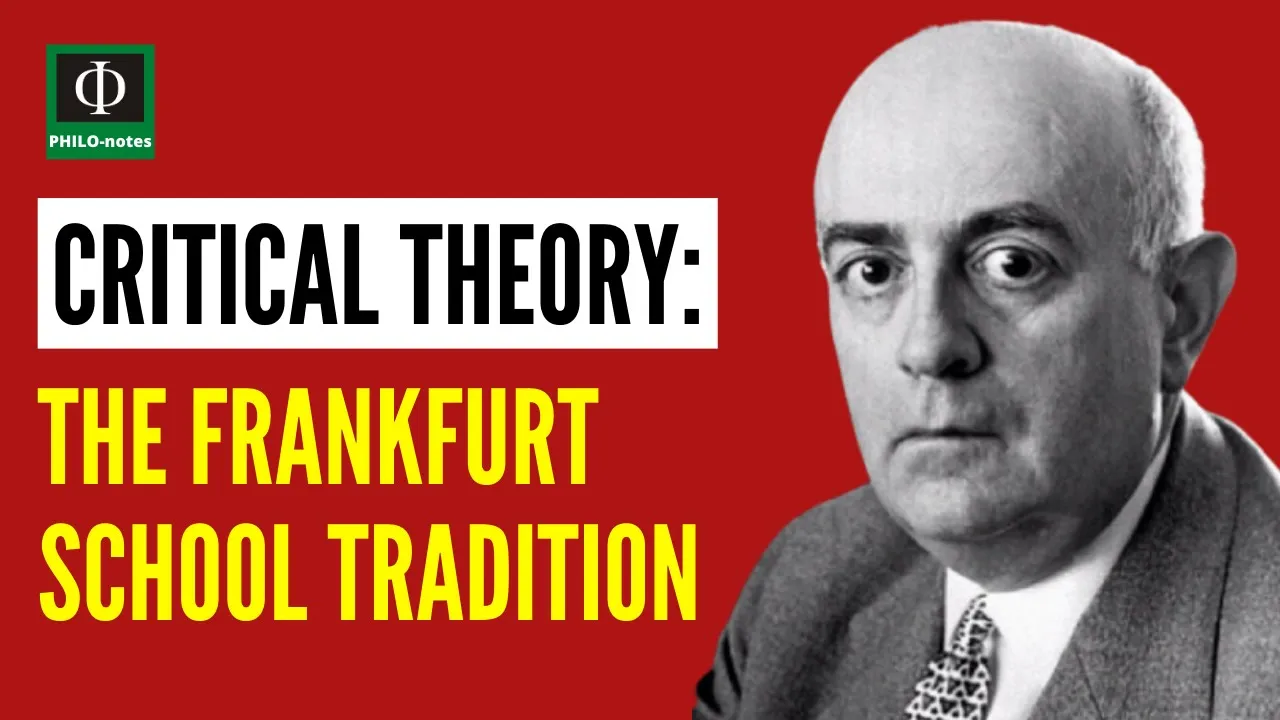



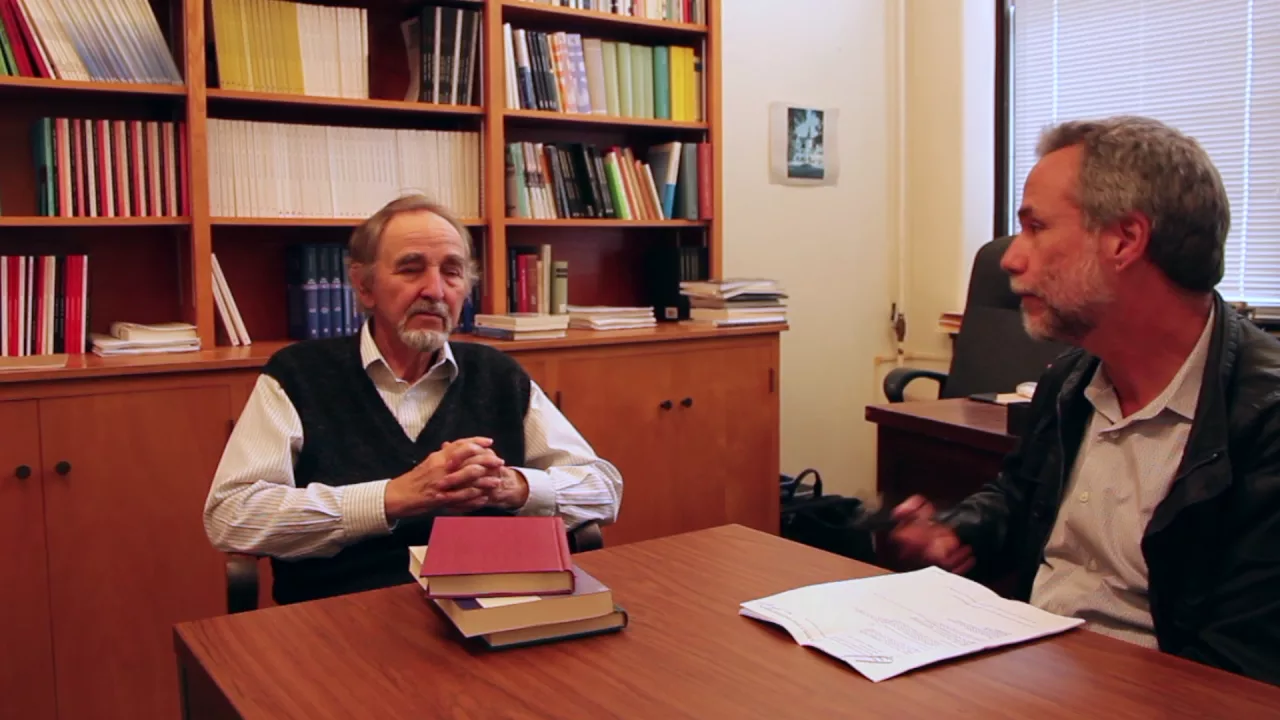


The Frankfurt School, founded by Herbert Marcuse, Max Horkheimer, and Theodor Adorno in the late 1920s, emerged as a critical response to Marxism's failure to predict the rise of fascism in Western societies during the interwar period. Rather than abandoning Marxism entirely, the Frankfurt School sought to reconstruct and re-examine Marxist theory by integrating it with Freudian psychology, emphasizing that genuine socialism should focus on qualitative improvements in human life and happiness rather than merely rationalizing productive forces. The school developed an interdisciplinary approach combining sociology, philosophy, and psychology to analyze how advanced capitalist societies manipulate consciousness and perpetuate domination through psychological mechanisms, ultimately arguing that authentic philosophy must engage with concrete social and political realities rather than abstract theorizing.
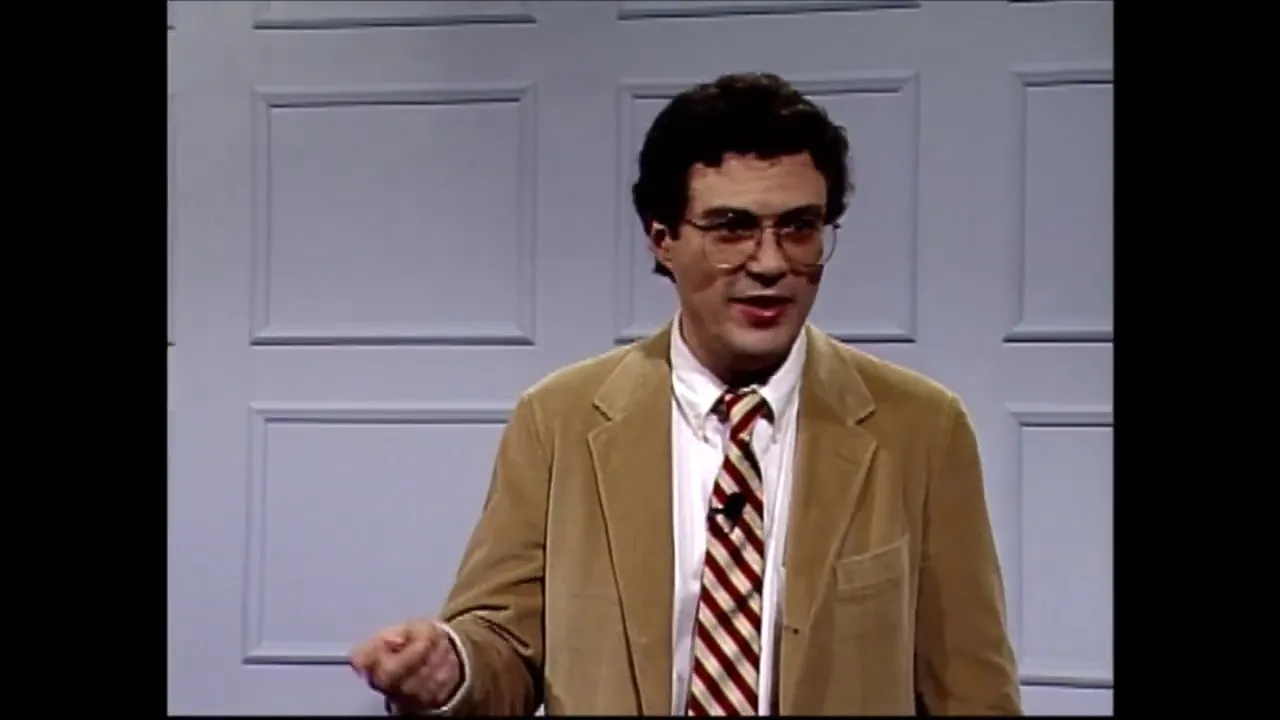
Herbert Marcuse Interview on Frankfurt School Marxism (1977) | Philosophy
Added:the economic convulsions that wracked Western societies between the two world wars were seen at the time by most Marxists as being the breakdown of the capitalist system which Marxist theory had always predicted however whereas according to the theory this was supposed to lead to communism in not one single such Western society did communist regimes emerge what did emerge in several of them was fascism some Marxists were disillusioned by this to the point of abandoning Marxism others refused to question Marxist theory regardless of what actually happened but there were many in-between people who remained or wanted to remain Marxists but who felt that Marxism would have to be seriously re-examined if it was to continue to remain credible one such group of people came together in Frankfurt in the late 1920s and have come to be known since as the Frankfurt School actually they didn't stay in Frankfurt long but the name was stuck they left Germany in the early 1930s in the period just before and after the Nazis came to power and by the mid thirties the key figures had all settled in the United States these two mentioned three were Adorno a man who seemed equally at home in philosophy sociology and music Horkheimer a philosopher sociologist less brilliant than Adorno but perhaps more solid and the one who has turned out in the end to be the most famous and influential of them all the political theorist Herbert Marcuse er their influence grew slowly but grew nevertheless over a long period and reached a spectacular peak in the 1960s many things contributed to this one was the powerful revisionist movement among Marxist in communist countries throughout Eastern Europe culminating in the prague spring of 1968 this put the Frankfurt School in line for the first time with real-life developments inside the Communist world another obviously related was the tremendous revival of interest in Marxism among people in the West especially educated young people this also common 80 in 1968 the year which saw the high point of student violence all over Europe in the United States and looked for a moment in Paris as if it might even come close to genuine revolution the would-be revolutionaries of that day proclaimed one man more than others as their political mentor and that was mark Cuza they painted the walls with phrases from his books in order to make it known to the world that they were going to turn his ideas into reality and although the revolution didn't materialize during the decade since then the ideas of Mark cuza and the Frankfurt School have come to dominate some of the social science departments in various countries in Europe and through them to have a continued and very important influence on the young professor Marcos why should it have been to your writings that the revolutionary student movements of the 1960s and early seventies termed where I was not cement or of C student activists of the 60s and early 70s what I did is formulate and articulate some ideas and some NGO works that we're in the air at that time that is about it the student generation that became active in these years did not need a father figure or a grandfather figure in order to lead them to protest against a society which reveal daily its inequality injustice cruelty and its general destructiveness they could experience at the sword before their own eyes as a features of the society I only mentioned the heritage of fascism fascism was militarily defeated the potential for a repetition was still there I would like to mention racism sexism the general insecurity the pollution of the environment the degradation of education the degradation of baroque and so and so on in other words what exploded in the 60s and early 70s was a blatant contrast between the tremendous available social belts and it's miserable destructive and wasteful Jews and I think one might add I mean whether one agrees with your view on any or all of these matters or not but the prevailing Orthodox is in philosophy and the colleges and universities throughout the West at this time simply didn't deal with these questions at all did there certainly analytic philosophy didn't positivism didn't they did not and we in Frankfurt and later in the United States could not cost could not conceive of any authentic philosophy which did not in one way or the other reflect the human condition in its concrete situations the social and political situation and so on and so on if for us philosophy has always been to a great extent social and political philosophy ever since Plato then of course philosophy has been of enormous importance to you throughout your life in fact you spent your life as a university teacher lecturer academic writer of books and so on but one of the conspicuous features of the new left movement that you have helped to Father is it anti-intellectualism from the way you've lived your life one didn't expect you actually to approve of that on the contrary I combated this anti-intellectualism from the beginning the reason forces anti-intellectualism are in my view the isolation of the student movement forms a working class anti a parent impossibility of any spectacular political action this led gradually to some kind of well let me say inferiority complex some kind of self-inflicted masochism which found expression among other things in this contempt for intellectuals because they are only intellectuals and don't achieve anything and our sense of unique interest to hear criticisms of the new left from you of all people while we're on this subject what other important defects do you think that the new left movement has developed as it has gone along well I would mention perhaps as a main defect the unrealistic language and in many cases he totally unrealistic strategy among the new left by no means general about very definitely among the new left the refusal to recognize that we are not any revolutionary situation and the advanced industrial countries that we are not even in the pre-revolutionary and that the strategy has to be adopted to this situation secondly the Morrison who left again that was by no means refer to all of the groups among the new left the refusal to re-examine and to develop marks and categories to make a fetish out of Marxist theory to treat the Marxian concepts as very fight objectified categories in order to instead of becoming conscious finally of the fact that these are historical and dialectical concepts which cannot simply be transmitted which has to be which have to be re-examined in accordance with the changes in the society itself I must say it's enormously refreshing to hear these words from your lips I mean it shows that that you are still thinking of fresh when people who regard themselves as followers of yours and are young enough to be your grandchildren I have enough father I've stopped thinking in some cases but now you've brought us to what was really the the guts of the Frankfurt School itself as it started when you started talking about the re-examination of Marxist concepts as I said in my introduction to the program it was the feeling that Marxism hat to be re-examined and reconstructed that gave rise to your movement particularly as a result of fascism but fascism wasn't the only thing that precipitated it was it I mean there were other political factors too can you comment on what some of them were mean you mean some of the factors which demanded a revaluation of Marx Union cutting yes to me one of the most important ones concerns the concept of socialism itself in the development of Marx and Theo in not in Marx himself but in the development of his theory socialism has become the concept has entirely almost entirely been focused on a more rational larger development of the productive forces on an ever higher productivity of Labor on a more rational distribution of supported instead of stressing that a socialist society as Marx and researched it at least say younger Marx and resistors was a society qualitatively different from all preceding societies now in what may qualitatively different the main point I would say is for Marx a genuine socialist society was a society in which the quality of life was decidedly different from the existing societies meaning in a generally in socialist society labor full-time alienated labor would no longer be the measure of wealth and value in a attentive socialist society men and women could live their life without fear without being compared to spend their entirely adult existence in alienated performance this image has been obscured ante resort was some kind of frightening continuity between the developed and advanced capitalist societies and the image of a socialist socialism began to become like its enemies so to speak exactly I know from your writings that you had other very central criticisms of Marxist theory to that I would like to mention partly because they're probably connected in your mind is that you regarded Marxism as anti libertarian or at least insufficiently libertarian as the Marxist tradition developed and you also thought that it didn't take sufficient account of the individual now didn't seem to hear you comment on those two points Marx did not concern himself very much with the individual and he didn't have to because at his time the very existence of the proletariat made this class a potentially revolutionary class now things have changed considerably since you know the question is to what extent can the present working class in the advanced industrial countries still be called a polar Theriault the Western European countries have abandoned this concept or a together now what has taken place is a large-scale integration of perhaps in majority of the population into the existing capitalist system the organized working class at least no longer has nothing to lose but its chains but a lot more and this in turn it took place not only on a material but also on a psychological basis the consciousness of the dependent population changed it was one of the more striking phenomena to see to what extent the ruling power structure structure could manipulate man and control not only the consciousness but also the subconscious and unconscious of the individuals therefore at my Francey the Frankfurt School considered psychology one of the main branches of knowledge that had to be integrated with Marxian theory by no means replacing Marxian theory but taking it into monks you yourself have done a lot in your writings to try to marry Freudianism and Marxism and I think that some people would say that this simply can't be done because the two patterns of explanation are incompatible with each other I mean to put it extremely briefly Marxist theory locates the ultimate level of explanation of human affairs in technique of the theory put very simply is that the level of development of the means of production in a society at any given time determine the formation of classes in that society and that in turn determines the relationships of individuals to each other and on that basis grow up what Marxists call the superstructure of ideologies religions philosophy art and so on now according to Freud something entirely different is the ultimate explanation of human behavior the ultimate explanation according to him lies in the repressed contents of the unconscious our unconscious wishes fantasies fears feelings and so on which are repressed as a result of of distortions in our earliest relationships above all with our parents and he explains and not only social behavior but also ideologies art religion and so on in terms of the externalization of the of the repressed contents of the psyche now these are two entirely different kinds of explanation of the same set of phenomena how can you possibly marry the two into a scene I think they can easily be married and it may well be a very happy marriage I think they are two extremely different interpretations of two different levels of the same whole is the same totality the primary drives the unconscious primary drives which for it stipulated namely erotic energy and destructive energy errors and Thanatos developed within a specific given social framework which in one way or the other regulates the manifestation of these primary drives now the social impact goes even further than that according to Freud the more intense the repression in a society the more what happened is a mobilization of surplus aggressiveness against this repression now since again according to Freud repression is bound to increase very progressive civilization at the same time and parallel to it aggressive energy surplus aggressiveness is going to be mobilized and is going to be released in other words with the progress of civilization we will have a progress in destructiveness and it seems to me no hypothesis can better explain what happens today than that one I think the thought will occur the following thought will occur to some people listening to our discussion up to this point you have catalogued a very formidable list of defects in Marxist theory and prediction a failure to predict the future success of capitalism the anti libertarian element in Marxism the absence of any theory or attitude to the individual you've also talked about other entirely new theories like Freudianism which came on the scene after Marx and therefore couldn't have been accommodating by Marx in his outlook a lot of people will say well since you were so conscious of this enormous range of defects in Marxism why did you want to remain Marxists I mean why why try to hang on to a discredited or or falsified theory why not try to liberate your thought categories from that altogether and actually look at reality of fresh easy answer because I do not believe that the theory as such has been falsified what has happened is that some of the concepts of Marx in theory as I said before will have to be reexamined but this is not something from outside bought into Marxist to you is that the swampthing Marxist theory itself as a historical theory demands now it is relatively easy for me to enumerate to give you a catalog of the decisive concepts of Marx which have been corroborated in the development of capitalism the concentration of economic power the fusion of economic and political power the increasing intervention of the state into the economy the increasing difficulties in stemming the tension the decline in the rate of profit the need for engaging in a neo imperialism in order to create markets and possibilities of an large accumulation of capital and so on I think this is a formidable quarter rope and it speaks a lot for boxing well I don't get into a political argument I'd love to do that right or attacked but well the purpose of this program is to elicit your views on on a further range of topics but I can't let what you've said just passed like that I mean to take only the first two of your list you said that there's been increasing concentration of economic power but surely through the invention of the joint stock company the ownership of capital has been more widely dispersed than ever before you talk about the convergence of economic and political power I would say yes but what has happened in the West at least is that the decisive control over the economy has passed into the hands of elected politicians who in the democracies are directly elected by the mass of the people and they take the basic economic decisions in the society but the you know that was your first statement about a joint stock companies you express one of the main concepts of Marxist television ISM introduced first by Angus himself they considered the joint stock companies with a dispersed ownership already as preforms of a socialist society now we know today that this is obviously wrong and you will not maintain that for example in the great multinational corporation see stockholders control the policy national and global of these corporation it is not the ownership alone that matters but the control of the poor doctor forces which is decisive as far as the state is concerned and the overall of the politicians do you believe that the politicians make their decisions entirely by themselves as free individuals or isn't there some kind of link between the policymakers and the great economic powers in the society well the politician certainly are dominated by the great economic powers but anyway I think I will have to let that pass reluctantly and get back to the the Frankfurt School we've talked in general terms and I about the Frankfurt School I and I mentioned two or three of the individuals in my opening remarks but I think it would be especially interesting to hear just a word from you about who the main individuals were and what they were like because after all they were your close friends and associates well a hawk I'm I was a director of the Institute he was not only a thoroughly trained and knowledgeable philosopher and sociologist but also in a strange sense a financial result who could take here very well of the material basis as mayor of the Institute not only in Germany but also afterwards in the United States a brilliant man and nothing that was written and the periodical ins of the Institute and afterwards for certain without previous discussion with him and with the other collaborators at the Institute Adorno a genius I have to call him a genius because I have never seen anyone who was as you already mentioned so equally well at home in philosophy sociology psychology music whatever it may be it was absolutely amazing he when he talked it could be printed without any change it was perfectly ready for print then are those who are unjustly neglected or forgotten leave alone time the literary critic of the Institute France Norman a brilliant legal philosopher or Tokushima equally well familiar and legal philosophy further like Pollock and especially a hand like Horseman the most Orthodox of all Marxist economists I have ever met he predicted the collapse of capitalism for a very specific year he gave in the meantime it turned out it wasn't quite quite like the medieval church Manfredi exactly and Pollock who after all what I think the first article in which he tried to argue that there are no compelling internal reasons why capitalism should collapse now one of the things that you all as a group pioneered in the perhaps late 20s at 70 early 30s was the shift of interest in Marxist studies back from the works of the mature Marx to the works of the earlier Marx the things he wrote when he was more directly under the influence of Hegel and one of the things one of the many things I think that came out of that which is been of continuing influence ever since is the an interest in the notion of alienation I think alienation in its modern sense was coined by Hegel taken up and given a new significance by Mars and then almost you can say fell out of Western thoughts in nearly a hundred years and you floral were instrumental in bringing it back weren't you it would be very interesting to hear your comments on the importance of this idea whether that's a very complicated story according to Marx alienation was a socio-economic concept and it meant basically this is a very booted monkey obligation that under capitalism men and women could not in their work fulfill they our own individual humane faculties and needs that this was due to the capitalist mode of production itself and could only be remedied by radically changing this mode of production now today as a concept of alienation has been expanded and extended to such an extent that this original content is almost entirely lost an extension all too easy which I consider not only ribbit you were about also home because for example not every kind of trouble or problem someone has because girlfriend or boyfriend is necessarily due to the capitalist mode of production you know what you think that the idea has been trivialized Kerviel i standed very needs to be restored yes and that it's in its original significance it is a fundamental importance fundamental yes we've talked up to this point in our discussion in rather negative terms we've talked about what the Frankfurt School was against we've talked about its critique of Marxism and at least by implication its its critique of the capitalist system what was its positive contribution well I would say to start with the easiest one one of its decisive positive contributions was a prediction of fascism long before it actually happened secondly what Horkheimer himself considered as a distinguishing characteristic the interdisciplinary approach to the great social and political problems of as a time cutting a course the academic division of labor applying sociology psychology philosophy to the understanding and developing of the problems of the time and in my view the most interesting contribution the attempt to answer the question what actually has gone wrong in Western civilization that at the very height of a technical progress we see at the same time the opposite as far as human progress is concerned dehumanization brutalization the torture again as normal means of interrogation the wasteful development of nuclear energy destructiveness everywhere and so on how as and he especially Herkimer but also the others went back into not only a social but also intellectual history and tried to define the interplay between progressive and repressive categories throughout the intellectual history of the West especially in the Enlightenment for example which is usually considered as one of the most progressive phrases in history and the Frankfurt School pointed out to what extent is this apparently perfectly clear progressiveness this liberating tendency was at the same time tied up with regressive and repressive tendencies this picture that you paint of a group of Marxists almost obsessed with the question what has gone wrong suggests to me politics of disillusionment I mean there seems to be an aura about it of disappointed hopes disappointment with a Marxist theory disappointment perhaps even with the working class itself for failing to be an effective instrument of revolution was there something disappointed or disillusioned or pessimistic at the center of your approaching lives well if a disappointment means as you were formulated disappointment with a working class I would decidedly reject it none of us has a right to blame the working class for what it is doing or what it is not doing so this kind of disappointment certainly not as there was indeed another disappointment and that seems to me a very objective attitude I mentioned it before namely that the incredible social wealth that had been assembled in Western civilization and mainly as the achievement of capitalism was increasingly used for destroying rather than constructing a more decent and humane society if you caused that disappointment yes but I think it's very justified and objective do and you saw your central task as being an investigation of the reasons as to why that exactly how had it come about so the essential Enterprise of the Frankfurt School was a critical one definitely there was a critical theory two days for the writings of Sephardic school one thing that the members of the Frankfurt School exhibited very considerable concern with from the beginning was these fittings and this I think differentiates it from most other philosophies certainly from most other political philosophies and you yourself have written a lot in recent years about aesthetic matters why did you and your colleagues always regard aesthetics are so important well I believe and it was Adorno who is to whom I'm closest in this respect I believe that in art literature and music insights and tools are expressed which cannot be communicated in ordinary language let's say impose for brevity's sake and that with these tools images the image often entirely new dimension is opened which is easily pressed or to boot in reality namely the image of a human existence and of nature no longer confined within the norms of a repressive reality principle but really striving for their fulfillment and gratification even at the price of death and catastrophe I tried to illustrate that by saying that as image and well let me use a terrible words a message of art and literature is that actually the world should be experienced so as the lovers of all times experienced it as King Lear experienced it as Anthony and Cleopatra experienced it in other words a rupture will see established reality principle at the same time the invocation of the images of liberation in other words what you're saying now ties up with what you were saying very near the beginning of our discussion about your insistence that socialism should be disconcerning with a different quality of nexif and not only with material injuries and that means that you at least see literature as a repository of new values and you don't just see it as a as a as a critique of existing society or a revolutionary instrument in the way that many Marxist critics materially I would say it is all authentic literature's both it does order one hand accusation of the existing society but on the other hand and internally linked to it always the images of liberation I certainly do not believe that you can give any adequate explanation of a literary work simply in terms of the class tour there or whatever it may be well this is a field in which thinkers in the tradition of the Frankfurt School like yourself are now doing fresh and original work what other areas do you think the this school of philosophy this tradition of philosophy is going to have to concern itself with in the immediate future well I can in this respect only talk of myself and I would say that far more attention should be paid to the women's liberation movement I see in the women's liberation movement today a very strong radical potential now I would have to give a lecture in order to explain and why I do that unfortunately I cannot let me at least try to say it in two sentences all domination and recorded history up to day was patriarchal domination so if we short indeed live to see not only a equality of the woman before the long one awareness but the deployment of what is called the specific feminine qualities who out the society for example non-violence receptivity tenderness this would indeed be or perhaps could be the beginning of a qualitatively different society the very antithesis to male domination with its violent and brutal character no I'm myself perfectly conscious of the fact that these so-called specific feminine qualities are socially conditioned and I say there are people who would regard it a sexist to say all right now I don't care there are socially conditioned but to a great extent they are available they are there so why not use them the way they are regardless of the question as to their origin I'd like to end our discussion professor Marcos by putting to you one or two of the main criticisms that are commonly made of your work I've really put the chief one to you already and that was a long way back in the discussion when I said to you given your awareness of so many things wrong with Marxism why do you remain a Marxist I won't put that you again because you've already indicated what you'll require I think it's correct yes but there are others too for example it's commonly said of the new left movement that has developed to such a large degree out of your work that that it is a latest that you have these these little groups of for the most part middle class and some would say self admiring intellectuals divorced from the working class as you yourself acknowledged earlier regarding themselves as the instruments of Rev and that the whole thing has become trendy has become fashionable and above all has become dissociated with the real working class that it was all spaced originally to be about well is it your elitist I would reject entirely I think it is another expression of the self-inflicted masochism among the Lu left it isn't an elitism what we have are simply groups which I would like to call catalyst groups which because of the privilege of their education and training indeed develop intelligence theory as remote from the material process of pathology that cannot be remedied by any dictum this can be remedied only in the process of change itself now I have never maintained that these catalyst groups could ever replace the broken class as subjects and agents of the revolution they are educational groups mainly political but not only political education their main task the development of consciousness trying to counteract the management and control of consciousness by the established power structure and so on but they are certainly not a substitute for the working class itself now as a second point you brought up the language to a great extent is really if I may may stop you here professor Marcos so this was something I said to you before we went on the air to take this program so let me say it again so that the viewers will know I am this was something that I was saying in criticism of you when we were talking earlier and what I said then and I'll repeat it now is that I think something that may sound like a trivial criticism but is not trivial is that so many of the writings of school are in fact very very difficult to read worse than that there turgid sometimes unintelligible I exempt and I do it Sincerely Yours from this you're right bad enough you're all right but you're right you add or no for example earlier in this discussion you described Adorno as ingenious now I find some Adorno literally unreadable now that seems to me to constitute an enormous barrier between the ideas you were trying to disseminate and the public you were trying to disseminate them to and this is a serious criticism and if anything it's in its made greater by the fact that other alternative philosophies are often expanded by writers who are very good writers for example in the analytic tradition there's almost there is almost a tradition of wit and Verve I mean Bertrand Russell won the Nobel Prize for Literature so incidentally did jean-paul sartre probably the leading exponent of existentialism so when one reads existentialism or analytic philosophy I they go well I didn't I deliberately did because he doesn't fit my exact nevertheless I think it is fair to say that the Frankfurt the writings of the Frankfurt School as a whole are extraordinarily turgid now why was that why is it well to a great extent to some extent I agree with you and I confess that there are many things in her door no I don't understand I want at least to save one world about his justification it was at ordinary language ordinary posed even a little sophisticated one has been so much permeated by the establishment by the expressed so much the controls and the manipulation of the individual by the power structure that already in the language you use you have to indicate the rupture with conformity therefore the attempt to convey this option all ready in the syntax in the grammar in the vocabulary and whatever it may be now whether or not that is acceptable I don't know the only thing I would say there is an equally great danger in premature popularization of the terribly complex problems we face today we have reached the end of our discussion now professor Marcos abut to close I would like to put a personal question to you and I do it because you've had an experience in life which must have happened to remarkably few human beings in history you spend almost a whole lifetime as an academic known to a comparatively small circle your pupils the readership of the rather specialized readership of your books and articles and then suddenly when you were literally nearly 70 you became almost overnight one is tempted to say a world figure now this is an astonishing thing to happen to anyone what was it like to have it happen to you well ones in one's hand I enjoyed it tremendously on the other hand I founded somehow not deserved and I may end of this icy end on a rather impertinent note I know it isn't so impertinent I always said when I was asked how is it possible I said I appear only as such a figure because he owes us are still more stupid than I am but no one could have expected it and I suppose you never expected it did you no I certainly didn't well thank you very much professor mark heussner
Up Next

Habermas and the Public Sphere: Media, Democracy, and Decline
@IntroductiontoSociologyChannel
107.2K views•2016-04-12

John of Damascus on Holy Images: A Theological Defense
@BannedBooks
139 views•2026-04-25
Wittgenstein's Twin Philosophies Explained by Bryan Magee & Anthony Quinton
@ManufacturingIntellect
31.9K views•2017-09-17
The Myth of Sisyphus: A Greek Legend of Eternal Punishment
@TEDEd
8.6M views•2018-11-13
Related Study Plans & Knowledge Roadmaps
Structured learning paths in Philosophy