




![مناقشة لأفكار فيتغنشتاين مع كريتيكال [291]](https://i.ytimg.com/vi/hUIx7pTyXnM/maxresdefault.jpg)














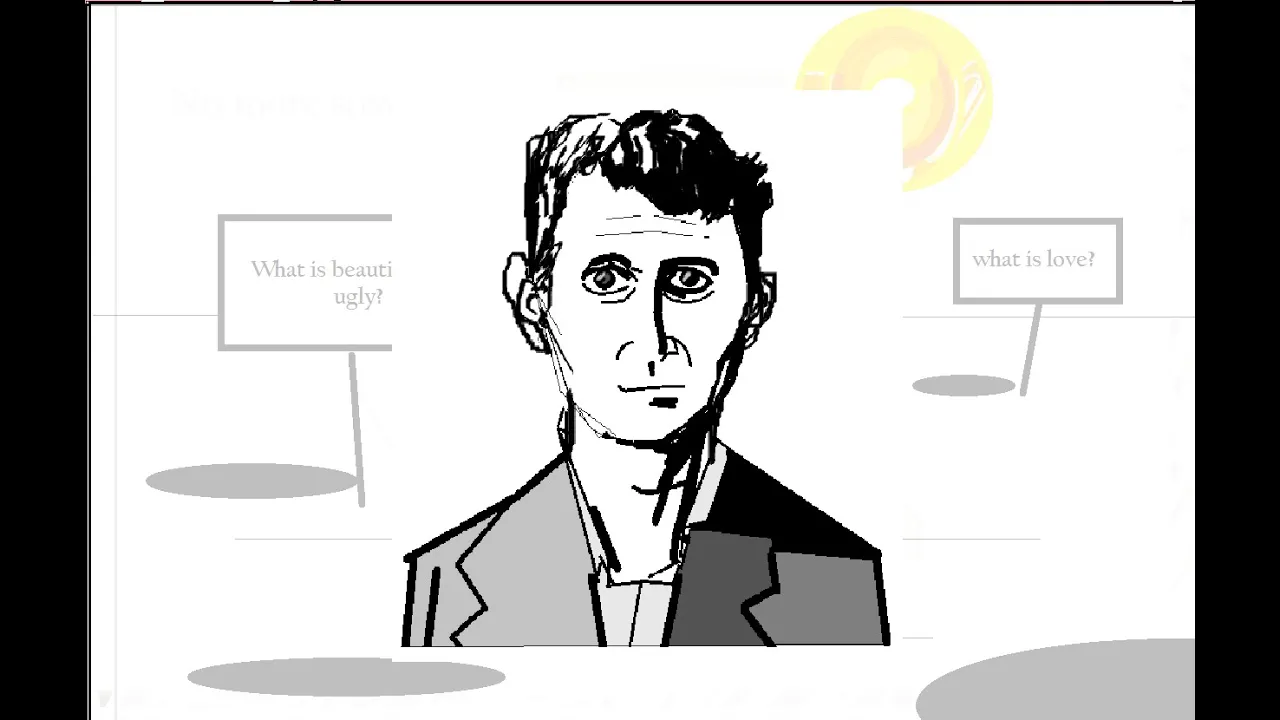
Ludwig Wittgenstein developed two fundamentally different linguistic philosophies: the early 'picture theory' (Tractatus Logico-Philosophicus) posits that language works by picturing the world through propositions that mirror arrangements of objects, thereby limiting language to describing factual states of affairs and excluding ethics and aesthetics; the later philosophy (Philosophical Investigations) rejects this abstract model, instead viewing language as a public, social phenomenon consisting of overlapping 'language games' with diverse purposes, where meaning emerges from use rather than correspondence to reality, and where philosophical clarity comes from examining how language actually functions in human life rather than constructing theoretical systems.
Wittgenstein's Twin Philosophies Explained by Bryan Magee & Anthony Quinton
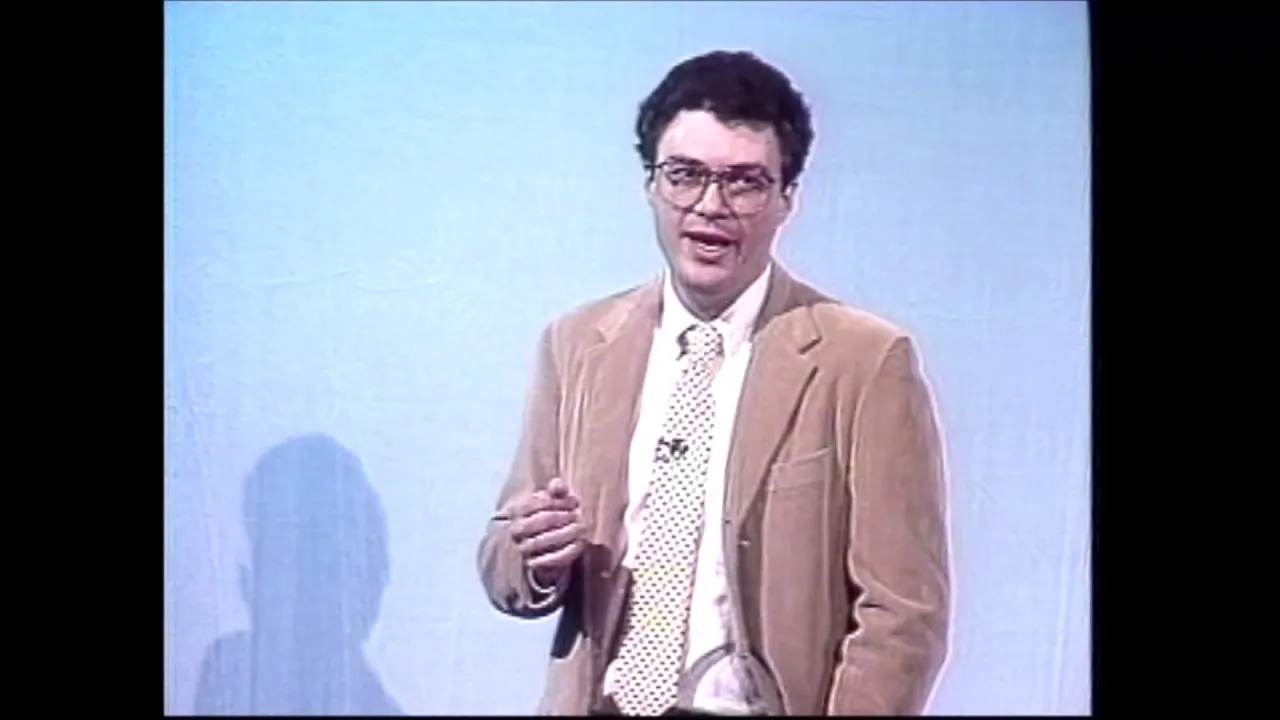
Added:I don't think anyone could quarrel with the assertion that in this century the two most influential philosophers in the english-speaking world have been Bertrand Russell and Ludwig Wittgenstein Russell besides being a great philosopher was a tremendous public figure immersed in political and social affairs nearly all his life he became exceedingly familiar to the general public as a broadcaster and journalist and social critic so people came to associate him quite rightly with certain general ideas and with a particular approach to social problems even if they didn't know much about his philosophy the best of which in any case was highly mathematical and technical and therefore not really accessible to the non specialist mid concern was quite different he was only a technical philosopher he took no part in public activity shunned exposure even within his own profession published very little the result of this is that for a long time his influence though immense was confined to full-time students of philosophy only comparatively recently as this influence began to seep out into surrounding areas of thought and affect people in other fields of activity so the situation now is that a very large number of people have heard of Vidkun stein who don't really have any idea at all of what he did or why it's important in this program we're going to try and rectify that a bit and as far as it's possible in the short space of a single program to bring out clearly the main lines of Vidkun Stein's thought and say something about what its influence has been outside as well as inside philosophy this not easy task is being taken on by Antony Quintin fellow of New College Oxford where he's been teaching philosophy now for over twenty years mr. Quinton is currently also writing a history of philosophy in which Vidkun Stein will be treated at some considerable length but before I invite Antony Quinton to start talking about Vidkun Stein's ideas I'd like myself if I may to say something about Vidkun Stein the man he was born in Vienna in 1889 and died in Cambridge in 1951 having incidentally become a British subject in his middle age his father was the richest and most powerful steel magnate in Austria and as a young child Wittgenstein developed a passionate interest in machinery which was to set the pattern for his whole education his parents sent him to a school that specialized in mathematics of the physical sciences and he went on from there to become a student in mechanical engineering at the age of 19 he came to Britain as a research student in engineering at Manchester University and it was while he was there that he became fascinated by what were in fact philosophical questions about the foundations of the mathematics he was using he read Bertrand Russell as great book the principles of mathematics and this seems to have been a kind of revelation to him he threw up engineering and went to Cambridge to study logic under Russell and within a very short time indeed he was producing original work of his own which many people have regarded from that day to this as work of genius it resulted in the only it resulted in the only book of his to be published during his lifetime a book would be somewhat off-putting title Tractatus logico-philosophicus usually referred to by philosophers simply as the Tractatus it was published in Austria in 1929 and in England in 1920 it was published in Austria in 1921 and in England in 1922 it's very short but certainly one of the most influential works of philosophy to be published in this century however why it was exerting this tremendous influence over the subsequent years met Kingston himself was becoming more and more discontented with it in fact he came to the view that it was fundamentally mistaken and he produced a whole new philosophy which repudiated his earlier one during his lifetime this second philosophy was disseminated only to and through his students at Cambridge but after his death the whole mass of writings came out which embodied it to the most important of these was a book called philosophical investigations which was published in 1953 and which then proceeded to have as great an influence as the Tractatus at had thirty years before this is a unique phenomenon in the whole history of philosophy a philosopher of genius producing two different and incompatible philosophies each of which decisively influenced a whole generation well now we must go back to the beginning and follow this story through in terms of the ideas involved first the Tractatus then produced during the second decade of this century Antony Quinton it's a very short book it's less than 80 pages in the standard edition what would you say are the central problems that Vidkun stein was trying to solve in it I think the shortest way of stating the central problem of the book is as follows how is language possible people had assumed made all sorts of assumptions about meaning previously how people attach meaning to words it can Stein immensely generalized the question and said how in general is it possible for human beings by producing marks on paper or making noises to represent something that was utterly different in character from the marks and noise is used to represent them I think many of the people watching this program might not see it once why that is a problem people are inclined to take language for granted why should the very existence of language present a philosophical problem well if I looks at the world in a more or less statistical way in a great deal of it things interact causally with each other rocks bang against rocks moon's influence tides and so on but just here and there in the world is this extraordinary phenomenon of some elements in the world intelligently reproducing other elements of it in themselves agree I agree of course it's that the texture of our whole inner lives the use of language the understanding of language our communication with our fellow men of course principally they're not exclusively takes place through it I think it's just one of those questions that seems so obvious that most people don't bother to ask it rather like Newton asking seriously why the planets didn't charge off in all directions why stones dropped when released from the hand it's got the same naive pristine fundamental miss in other words we have this ability to think about and therefore handle in a sentence things which are not present to us and this is made possible by language of race party made possible by language and this raises two sets of questions what is the relationship of language to the world and what is the relationship of language to thought and I take you to a degree that both of these questions are central to what the Tractatus is trying to do yes people had asked questions about these things as it were in a piecemeal way before the great fascination of the Tractatus is there asked with the utmost conceivable generality and to both of the things you mentioned he has answers to give there's this apparently not very helpful answer in the first at first glance that language represents the world by depicting it propositions of pictures he says of facts and equally propositions or expressions of thought they're the vehicles of thought they're what we think with now there's another side of this coin isn't there that he was also concerned with the very fact that he was concerned with the limits of what could be expressed in language and discovering what the limits were to what language could do meant that he was also concerned with what language can't do this was a very essential feature of the whole operation and perhaps in some ways one of those that's had the largest possible influence his insistence that the limits of language were clearly state able and all this followed from his idea that language is essentially and I have to insist literally pictorial in character there's a well-known anecdote about Vidkun Stein hearing of the use of some models in a French law court I think it was to represent the state of affairs in some Street accident and he had confronted with this the sort of experience that Archimedes cried you're weaker about this is it I've got it he said that is the essence of language and this put very serious constraints on language that language had exactly two mirror states of affairs in which objects were engaged and so this put limits to a very marked kind on what could be said in his view in particular he thought that the relation of language to the world itself couldn't be meaningfully represented in language or disgusted language let's I think we've got a pretty clear view now of what what the problems were that he was dressing himself too in this book we now have to start considering what the solutions were that he put forward what did he come round to saying the scope of language was and to saying the limits to its use were the fundamental thing I think here can be put in two points first of all that language has to fit the world very directly in that it has to be constituted of a meaningful assertion a meaningful proposition has to be constitutive of names that fit directly onto objects that are exactly correlated with the objects they're the names of and then a true proposition a genuine proposition will be an arrangement of names that mirrors the arrangement of the objects it treats all now this limits language in a sense to description of that which is outside language that's the limiting feature of that I'm sorry I had puzzled it I've lost this anything that's right you said there were you've mentioned you mentioned what's often referred to as the picture theory of language I think it's very difficult for people to see in what sense a sentence can be a picture of effect or a sentence can be a picture of any piece of reality can you explain that a bit better well I think his point is that the sentences of ordinary language don't look like pictures but his contention is if there are to have any meaning they must be capable of being analyzed or decomposed into a set of ultimate elementary sentences which really are pictures which consist purely of names directly correlated with the objects that are being taught have talked about and in which the arrangement of names mirrors the arrangement of the objects let me recapitulate this to see if if we've got it absolutely clear between us the Vidkun stein thought that if you analyzed any utterance about the world you could analyze it down into words which were names of things and the relationship between the words in the sentence correspond it to the relationship between things in the world and in this way the sentence was able to picture the world that's right and that was a purely argumentative assumption as it were he argued that from first principles he argued that he was necessitated by the requirement he laid down that every genuine proposition must have a definite sense and he thought no proposition could have a definite sense unless it was ultimately made up of these fundamental pictorial propositions well now sorry I wasn't give any examples of these pictorial propositions other philosophers he influenced came forward with examples of them but he abstains altogether from giving the examples he just says it can he thinks we prove that there must be propositions of this ultimate Viktoria kind but now one immediate query that accursed one is this the great many of the things that we say a false or untrue that means that I in those cases are to something to which there is nothing in the world that corresponds now how does he explain that well it emerges fairly simply from what's come out so far objects can be arranged in various different ways and the names we have for those objects he can also be arranged in various different ways a significant proposition assembles a set of names in one of the possible configurations that those names allow for and the possibilities of combination of the names is directly parallel to the possibility of the combinations of the objects so a meaningful proposition as such depicts a possible state of affairs if the arrangement of the objects referred to by the proposition is identical with the arrangement of the names of the objects in the proposition then the proposition is true so the counters can be moved around as it were in various configurations most of these will represent simply possible states of affairs when they're configured or arranged in the way the objects referred to or arranged then the proposition is true and one of the things that we say in ordinary life and indeed in philosophy - aren't about states of affairs at all we make moral judgments aesthetic evaluations and so forth how are these explained by this theory of language well as far as ethical and aesthetic judgments are concerned they're not in fact explained they're just said to be not part of language proper very eccentric thing for anyone to say isn't it ethics is transcendental ethics he maintains does not deal with fact and his he insists that the real function of language is the describing effect truly if possible mean falsely if meaningful but that is what language fundamentally is in other words when I utter a sentence about the world I am arranging names together in a way which corresponds to a set a possible arrangement in the world if that arrangement is actualized in the world then my statement is true if it's a possible statement of a state of affairs in the world which is not actualized then my statement is false if the state of affairs isn't possible in the world at all then my utterance is meaningless that's correct so we've got a three-fold analysis into true false and meaningless now this theory of language implies that the world must be of a certain kind that is to say that the world independently of assitive language must consist of ultimately simple objects which are related to each other in certain ways is that so that's precisely what he says and that is what he asserts right at the beginning of the book in an an argued way he says the world consists of facts facts or arrangement of objects objects must be simple to take up the word you used and these come at one as one reads the book simply as dogmatic affirmations but they receive their support later on from the thesis that language has to have an F definite sense and it can have a definite sense only if it is of a certain structure and therefore the world must be of that structure in order to be capable of being represented in language now what about the unsayable we were talking earlier about VidCon Stein's concern with what can't be said was the other side of the same coin with his as his concern with what can be said what does the language as we've now drawn it out have to say about what can't be said I suppose the central feature of the doctrine of what can't be said the one that's most philosophically important about it is that nothing can be said about the relation of language to the world this is the vital paradox of the Tractatus that right towards the end he says anyone who understands my propositions will recognize that they're senseless and then tries to mitigate the paradox by saying you must conceive them as a ladder on which he's mounted to a level of understanding which he then kicks away his thesis after all is that language and the world have to share a certain structure for it to be possible for language to represent the world and then says that this is not a fact about which discourse can proceed it's something that shows itself in language but language can't be used to report and so philosophy as it were undermines itself in this mode of argument would it be true to say that this is what he's doing then that that for a sentence to mirror the world there's not only got to be a one-to-one correlation between names in the sentence and objects in the world there's also got to be a structure internal to the sentence which relates the names in the sentence to each other in a way that corresponds to the way that objects in the world are related to each other and that this structure is exhibited by the proposition it's not something that's stated by it recite and therefore it's shown in the proposition that can't be expressed in language yes and in the light of that then he has to represent his own remarks in the Tractatus as drawing our attention to what is open to view what is there shown if we only look the right way but that the propositions themselves are literally senseless but of course much else is to be is said to be nonsensical by him you mentioned a few moments ago judgments of value B's he says are rather unhelpful word transcendental but it simply means they're not matters of describable fact and he gives no positive account in this book as to what they are then as an alternative and of course he's extremely hostile to past philosophy which purports to tell one all sorts of things about the world when what it is in fact doing is saying things in a hidden dialogue in a hidden dialect a code almost about the relation of language to the world which has to be shown and can't be described white people think that this doctrine was so marvelous I mean why why did this philosophy have the enormous impact that it did because it does seem to me to be a very strange one and it does seem to me to leave an awful lot out for example I would thought that the most expressive use of length uses of language that there are are those in creative art in poetry drama novels and so on both the most sophisticated uses of language and the profoundest and yet this theory of Vidkun Stein simply a lot seems to allow no place for an explanation of these uses of language at all it seems very limited very partial would you accept that criticism of it yes it is limited but I think if called upon to defend it he would perhaps say that all other uses of language insofar as they can be taken seriously and aren't some form of wordplay require the explanation of this fundamental descriptive employment world describing employment of language first of all but about why people thought it was important you mentioned as an argument against its being important that it was that it was strange but actually thought part of the fascination just was that it was so strange it's not one might say a terribly modestly expressed book in the preface he says I am convinced that the final solution to all philosophical problems is contained here and of course quite compatibly with that he there and then gave up philosophy once for a considerable period 10 years or so once he completed the Tractatus so it's strange this is part of its appeal but it's not only that it's it's it's literary quality is rather strike it's like a voice speaking out of a whirlwind these short pregnant aphoristic sentences have give you a couple of examples the first one the world is everything that is the case it's one of those baffling announcements that one doesn't quite know what to make of the last one where of one cannot speak thereof one must remain silent when the site that looks like a truism and then one realizes it isn't quite a truism he says it's the essential message of the whole book is to draw the limits of what can intelligently intelligibly be said I suppose the first thing that strikes anyone about the book when they pick it up for the first time is the way it's written because it's written in not in continuous prose at all but in very brief paragraphs numbered according to a very elaborate system of some divisions and some subdivisions and even subs up some divisions and some of these paragraphs are only one sentence long and as you've just indicated in what you said the connections between them are always very obvious nor is their meaning in itself very obvious either why did he write in this enigmatic occur almost hermetic way well he was an immensely fastidious man in all respects I presume but certainly there's evidence for any reader of what one might call his intellectual fastidiousness he detested model I suppose one I have to call bourgeois academic philosophy the idea of philosophy is a trade nine-to-five occupation which you do with a part of yourself and then you go off and lead the rest of your life in Independence of it he was a man of the utmost moral intensity of extreme passionate seriousness he took himself with very great seriousness he took his own work with very great seriousness when it wasn't going well he got into a desperate and agonized condition the result of this displays itself in his manner of right is displayed in his manner of writing that you feel that his whole idea of himself is behind everything that he says well this also means that he'd rather tends to disregard or to despise philosophy produced in a more easygoing relaxed businesslike occasional manner that he wishes to distance himself from that altogether and he doesn't want to make the thing too easy he doesn't want to express himself in a way that people can pick up by simply running their eyes over the pages if this is an instrument for changing the whole intellectual aspect of its readers lives and so the way to it is made difficult I think that could be a justification relative to his intentions of his way of proceeding I must say the prose does seem to me to have extraordinary quality I find the sentences supercharged they have this haunting capacity to stay in the mind that one finds oneself quoting them very easily after one's read the book I would regard Vidkun Stein as one of those few philosophers like Plato or Schopenhauer or Nietzsche who are also great literary artists great writers would you agree with that I think years certainly a very conscious artist he was a distinguished mind a cultivated man he didn't make a mess of it therefore there's nothing you couldn't say of his work as it was ever pretentious it pretends to great things it makes claims of itself but it seems to me the literary garment of his thought is worthy of the seriousness with which he presented those thoughts I think we must go back a bit now to what some of the doctrines were we talked about this central notion of language picturing the world and you explained how he distinguished between true utterances utterances and false utterances does he provide us with any way of seeing if a statement pictures the world of seeing if our utterances are true or false what kind of analysis of the utterance will show us whether it's true or false there's absolutely no explanation as I said earlier of what the simple objects are and therefore there's no account given of so to speak how we come to be aware of the simple objects all he talks about is what the relation between the basic propositions of discourse and the objects to which they relate must be what he does do is suggest various ways in which the sentences of ordinary discourse can be analyzed or composed into these ultimate basically pictorial sentences that his theory is that every genuine proposition that isn't itself one of these ultimate sentences and he doesn't give any examples of actual everyday propositions that are every such proposition must be decomposable into them and his thesis is to put it in a slightly technical way that every genuine proposition whatever is a truth function of elementary propositions which in effect means that it's just an abbreviation an abbreviated formula for a vast assemblage a conjunction of elementary propositions and the negations thereof well I think before we move away from the Tractatus and its doctrines which Vidkun stein himself did because he came to think that they were unsatisfactory it will probably be helpful if you would summarize if you now could what the central doctrines of that book are well the central doctrine I think is that language in it's fundamentally distinctive use as a means for describing the world can work only by picturing the world how it pictures the world is through configuring names of objects names of simple objects into arrangements that correspond where the proposition is true to an actual arrangement of objects which correspond where the proposition is false to a possible arrangement of objects from this of course it follows that the world is an array of some sort of simple objects exhibiting one of the possibilities of combination that are open to them connected with this is the view that although many genuine propositions we utter don't seem to be of this form they can be dismantled analyzed into propositions of this form there is one thing we haven't talked about which is of very great influence his view of Lodge the nature of logic and mathematics he insisted that this the propositions of logic and mathematics don't describe the world there so to speak a byproduct of the abbreviated nature of actual language what a logical truth does is state what should be evident namely that one proposition contains within itself another proposition that is some complex of pictures of the elementary pictures of the world contains in its content certain other that some of the printed words according to that theory all the truths of mathematics like all the truths of logic are tautology are tautology is unpacking what is already there in the proposition yes that they give no information about the world itself they're simply symbolic in character as it were they talked about the relation of symbolism and again he said that these propositions were senseless in that they had no factual content they didn't tell us anything about how things were when how things were was different from how they might have been they simply reflect the character of the language we use now what was the influence of this early philosophy and fit concern it was in fact that he great wasn't it very considerable but it was exercised through only a small part of the work he produced the greater part of the Tractatus is concerned with this theory of propositions as pictures words as names the things propositions related to as configurations of simple objects or facts that's the great bulk of the book the first say two-thirds of it or something like that and in that form I think it's fair say that nobody took it up at all people were baffled and astounded and puzzled by it but the group of philosophers who claimed to derive their main inspiration from their Finster I namely the positivist to the Vienna circle although they accepted the view that there must be some basic propositions which relate as it were directly to the world there must be a point in language where direct contact with the world is made they gave a much more straightforward and easily intelligible account of this relation in essence it was that these elementary propositions simply describe the sense experiences of individual observers so they report immediate occurrences of experience feeling perceptions by individual persons and then that everything else could be all the other beliefs we held could be analyzed out into propositions of this kind propositions about continuing material objects that exist unperceived propositions about minds other than our own propositions about social institutions that all of these could be analyzed in the end down to simple reports of private experience now when VidCon style began to become dissatisfied himself with this philosophy of his that he published in the Tractatus which way did his own dissatisfaction proceed I think peso might say a little bit here about what Wittgenstein was doing in the interim you spoke earlier in general terms about his career the engineering at Manchester the becoming interested in the nature of mathematics the studying of Russell are going to Cambridge to work with Russell and at this period he was an extremely isolated figure perhaps locked up mainly in his own thoughts talking to one or two people particularly Russell and the philosophy of the Tractatus reflects that in a way by being an immensely individualistic philosophy there's no suggestion of language in a way being a communicative instrument it's an instrument for reporting to oneself to for describing there's no emphasis on its being a needle exchange well as I said quite compatibly with the doctrines of the tractate is he thought he'd got all the answers and so that point he gave up the subject and in the for a number of years in the 1920s he was an elementary school teacher then he worked as a monastery gardener helped design a house for his sister and it wasn't until the end of the nineteen twenties and he took the subject up again he got into conversations with various leading figures of what was to become the Vienna circle and this interested him in philosophy again I mean one could reasonably suppose that philosophical thoughts were going through his mind in the interim but it clearly wasn't part of his plan of life to continue thinking about philosophy after the publication of the Tractatus then he was stimulated into thinking it about philosophy again and of course the very different second philosophy of it can Stein developed from that period onward now at first it seems that he was quite well disposed towards the particular interpretation that the vienna circle gave if his account of all the fundamental elements of lange which are namely their view of them as reports of experience not just configurated names of simple objects with no explanation of how those objects relate to our awareness but he moved away from that I think reasonably soon remember he returned to Cambridge in 1929 and stayed there in various capacities until getting involved in various sorts of war work and in this period he produces a completely different velocity which is no does not offer one clear definite abstract principles about the essential nature of language but approaches language is a natural human phenomenon something that we find going on around us is very complicated overlapping array of human practices like one another in some ways different from one another in other ways and an essential feature of this later-later philosophy is that language is essentially a public or social phenomenon that it can only function if there are rules that are accepted by more than one person so that any one person's use of the rules which guide him in speaking is open to correction and improvement by another person's adulation is I think probably the the easiest way into the later philosophy a bit concerned and into seeing how it differs from the earlier philosophy is to start with the two different theories of meaning in the two different philosophies we talked earlier about how the the central theory of meaning in the early philosophy was that a proposition is a picture of the world a picture of reality this central metaphor is changed in the later philosophy he no longer sees meaningless as being a picture of the world at all or anything like that he sees the meaning of a of an utterance as consisting in the use to which it can be put in other words he sees a sentence not a picture but a tool and the meaning of this sentence is so to speak the sum total of its possible uses and this of course as you were just saying relates it to human activity and ultimately indeed two different ways of life now this shift in what in an in the view of what me Mears is absolutely fundamental to the whole philosophy and how massive changes from the earlier philosophy then follow from that don't they can you can you said speak take the story up from yes what we've got here I think is in a way best expressed through the two metaphors that I think both cropped up in what you just said then first of all the reference constant reference from language to games which is incorporated in a crucial technical term of the later philosophy the notion of a language game incident accantus interrupts a I think that this metaphor has been extremely unfortunate because a lot of people have concluded from the fact that mid concern is always talking about language games of the use of language as a game that he somehow regarded all utterance as frivolous and that confirms a lot of the prejudices that some people have about linguistic philosophy that they were let's set lane with worth that was certainly not his intention it was just a draw notice to two features of games the first one simply that their rule governed practices and a lot follows from this in a way about how the rules of the game can change and the games can be resemble one another in all sorts of different ways that second point leads on to the second feature about games which is that there's no common characteristic to all games games as he says are related to one to one another by family resemblance and that applied back to language means the various kinds of activity we perform with language asking questions cursing greeting praying to give some examples he enumerates these are all different things we do with language now the game analogy I agree might seem to carry within the suggestion that therefore these are the things are just four thumb or pastimes or what have you but the other analogy that you mentioned was the analogy of language to a system of a set of tools which are used with a purpose I mean there's these two things about language it's a purpose of undertaking and yet it's carried out with items which are governed by conventional and alterable rules well now this notion of language had a lot of influence outside philosophy didn't it especially in anthropology and sociology can you say something about how they were affected by this new notion of meaning well I think one needs to precede that by one remark about his view of later view of the nature of philosophy itself there is a great continuity between his earlier and later general view of our philosophy namely that it's essentially an activity and not a theory to use the formula of the Tractatus it's something that you had due philosophy it's not something you arrive at and can there's not a body of doctors a state formula final body of doctrine he says that quite explicitly in the Tractatus it remains the case in the investigations he says one shouldn't put forward philosophical theories they simply augment confusion what one does as a philosopher is to assemble reminders about the way in which language is actually used in its various forms the various distinct but not utterly unrelated games language games in which it is employed one assembles remind us of these to prevent people from running away with misleading analogies the misleading analogy had perhaps most prominently in mind was the tendency to think because we say I felt a pain or I have a pain a pain is some kind of definite identifiable inner object private to us which we notice within ourselves and report to other people and he a very great deal of the investigations is concerned to break the hold of that picture of how we talk about our own mental life that was the reporting of private experience in that picture is precisely the sort of picture that his earlier theory of language has put out in the Tractatus would lead one to adopt do you think that there's any truth in the following that that when did can Stein published the Tractatus he was as it were bewitched by a single theory of language namely that the picture theory that he later came to realize that this was false and that being bewitched by a misleading theory of language had resulted in a whole wholly mistaken way of doing philosophy and therefore he came to think that before you could really philosophy you had to carry out an investigation of the different ways in which language can mislead us so as not to be misled in our thinking about the world and that this itself became a way of doing philosophy in other words and invest a multiple investigation into the different ways in which false assumptions about language can mislead us in our thinking about the world doing is any truth in that well it's undoubtedly true that a great deal of the investigations takes the form of a criticism of his earlier doctrine certainly the first quarter of it is largely directed towards attacking the notion that words are essentially names his view is that the use of names is one of these language games one element in language the teaching of names is a language game we have to understand a great deal of language he maintains in order to understand the active at the activities that someone's engaging in who's trying to tell us what the name of something is so he wants to argue there's no absolute or fundamental priority to the notion of naming it's just one of the things that language does from that he goes on to attacking this idea that there are ultimately simple objects and ultimately simple propositions he insists that simplicity is always relative to some particular investigation and so there's this enormous sense that is developed of language as a public available social reality not language is some kind of essence which you can work out in your head by pure reasoning in the later work one analogy that's been drawn a great deal is with psychoanalysis in the following sense that Lipton Stein is saying that that we first of all become as it were knotted up in our view of some particular aspect of reality by a false use of language and that the task of philosophy is to untie these knots and this set us big therapeutic aspect of philosophical activity is often been said to be very like what Freud thought the psychoanalyst was doing in another direction do you think that a similarity exists there yes I think the certainly is a similarity in that Vidkun Stein's abstention from theory in his later philosophy is just like the Freudian analysts abstention from saying what's wrong with you is you're madly in love with your mother which doesn't produce any effect or the procedure has to be much more circuitous in that the person has to be brought by Rican reliving a whole lot of past experiences by being reminded of all sorts of thoughts and feelings he's had that his emotions have a certain peculiar structure so that something is eventually brought up out of the unconscious Invicta Stein's case what is hidden isn't hidden in quite the same way what is what is has to be made evident to the philosophically confused or perplexed person is the way the rules of the language games that people actually use what has happened to him is he's on the basis of an analogy he's seen between the way words work in one game in the way they worked in and worked in another he applies the rules of the first game to the second one and gets into a fix thinks that because in a shop I say that's a bicycle that's a television set that's a so-and-so I'm doing something just analogous to that when I look within myself and say I have an acute pain in my left knee a pronounced desire for a cup of tea and I wish that it was Friday you won't say these are two utterly different operations listing off things that one finds within oneself in self description and the way to do this he maintains is to consider language in its natural setting to see all the circumstances in which people say things the behavior that characteristically accompanies their saying certain things can I now bring you back to the question of what the influence of this philosophy has been especially outside philosophy I fail to take up that question you're quite right the influence of it has been I suppose to encourage a certain kind of relativism because the abstention from theory means and is connected with the recognition so to speak of the equal rights of all language games provided that it passes the test of workability as a social instrument of communication then it constitutes what he calls a form of life and he doesn't think you can really understand some as it were unfamiliar language game without actually participating without playing it so to speak well now there you spoke of influence of this on anthropology and sociology all right a certain form of anthropology and Theology who like looks at social orders utterly different from those in which the student of the subject himself lives and he then proceeds to criticize what's going on there in the light of the accepted rules of his own society when the whole notion as it were of the savage where people say well presumably savage languages because their life is so technologically and advanced their language is presumably going to be a few grunts whereas of course this is not true at all the languages of technically primitive people are of an enormous degree of complexity and then one sees I had no rules of taboo or rules that we call taboo which is already a somewhat derogatory phrase because it suggests this is a rule which is based on false assumptions of what connects with what and he would say I think that it's just a misunderstanding bred by not actually being a party to not fully being within the form of life in which these taboo rules operate what speaking for yourself do you think is is wrong with this later philosophy unless of course you you buy at home now I certainly don't buy tell what I think is important about it I do think the philosophy of mind the account of our discourse about our own mental life and that of others has given very good reason for abandoning an assumption that was traditionally made that there was a kind of a huge cleavage between our thought and discourse about the physical world and our thought and discourse about the mind it did bring to light that the great deal of what we have to say about our own and other people's mental lives is essentially tied to behavior as it were being generous the test of whether a person is generous is what they give and when not whether they have generous impulses a person who claims to have endless generous impulses but actually always lets the plate pass by one supposes he's either being insincere or his best deceiving himself well the generous impulses were Vidkun Stein's point is that neither here nor there it's just for a person to be generous is for them to act in a certain way in certain circumstances that yet after all generosity is a character trait it sparked an aspect of an individual's mind the mind isn't a hidden private thing altogether and that I think is important in the later what I object to myself is the abstention from theory if you like that nothing ever seems to come to an end nothing ever gets settled the examples are heaped up and then as it where they're offered to you to take or to leave it seems to me an intellectually unsatisfactory practice the whole manner of exposition of the investigations is kind of cumulative and disorderly persuasion rather than definitely setting out something that is to be discussed and saying well in favor of it so and so as to be said against it so and so is to be said it's I don't say this isn't any sense of mannerism um that concerns part it represents a commitment a belief on his part that this is the way the subject should be done I just don't believe it can be done like that or that understanding of a lasting kind is achieved by this consciously inconclusive way of proceeding if one takes three paces back and looks up the two philosophies at vidcon star in the area and the later one there seemed to me to be at least three ways in which they are viewed by other philosophers who are themselves very distinguished I suppose a large number of philosophers perhaps most regard both the early and the late philosophy as being works of genius but some Bertrand Russell is an example regarded the first philosophy as being the product of genius but the later philosophy is being trivial and well really he kept saying he thought a worthless exercise there are other philosophers and Karl Popper is one for example who doesn't think at all highly of either of them how do you evaluate them in their relation to each other well I'm perhaps docile enough to be quite convinced that Vidkun Stein is a genius and that both stages of his work are works of genius but as so often in philosophical works this isn't because everything is said in them is true we who would deny after all the Plato is a genius yet who would believe Plato's view of the universe that what really exists is abstract timeless entities in the world of things in space and time is a sort of shadowy appearance one could recognize the genius of a philosopher without in fact excepting very much of what he says the genius might consist as if one might say very evidently in the case of Kant in asking questions of a more fundamental and powerful kind than people had asked before challenging assumptions that had gone either to unchallenged and I think in both parts of his work this is achieved thank you very much I think I must say that I think that you had succeeded in doing something that is very difficult that is making two philosophies intelligible in a space that in this series we are normally debating - well thank you very much Antony Quinton
Up Next

Ludwig Wittgenstein's Later Philosophy Explained: Key Ideas
@SimonCushing
16.5K views•2023-10-19

John of Damascus on Holy Images: A Theological Defense
@BannedBooks
139 views•2026-04-25
Herbert Marcuse Interview on Frankfurt School Marxism (1977) | Philosophy
@ManufacturingIntellect
63K views•2017-09-17
The Myth of Sisyphus: A Greek Legend of Eternal Punishment
@TEDEd
8.6M views•2018-11-13
Related Study Plans & Knowledge Roadmaps
Structured learning paths in Philosophy