State Authority: Social Contracts & Anarchism
Learning Goal: Deconstruct the justification of state authority, comparing the social contract theories of Thomas Hobbes, John Locke, and Jean-Jacques Rousseau with the critique of philosophical anarchism.
- Prerequisites: Introduction to basic ethical theory and conceptual analysis (recommended but not required).
- Estimated Total Study Time: 14 hours
Module 1: Foundations of Political Authority & the State of Nature
This module explores the foundational question of political philosophy: Why do states exist, and what makes their power legitimate? You will be introduced to the foundational thought experiment used by social contract theorists—the "State of Nature"—which imagines human existence without a governing body. By understanding this baseline, you will lay the groundwork to evaluate the competing political models of Hobbes, Locke, and Rousseau.
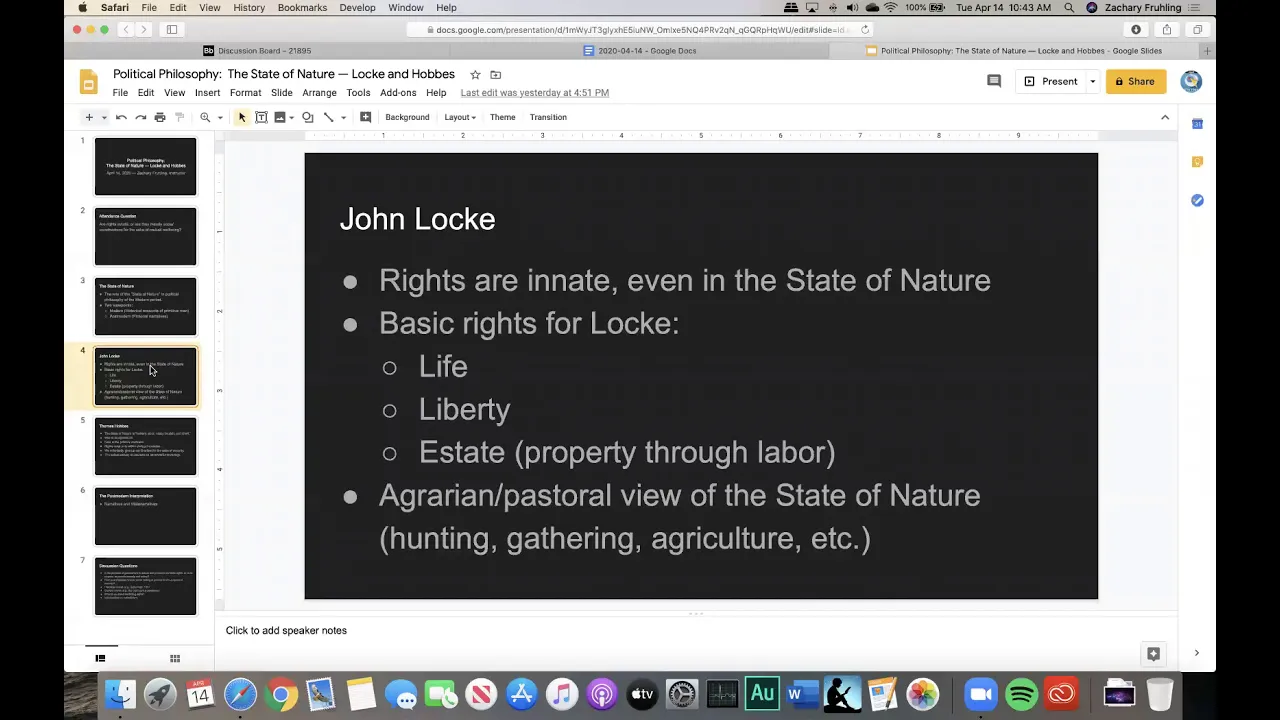
Why this video: This video provides a direct, concise introduction to the core questions of political philosophy. It outlines the purpose of government and introduces the "State of Nature" as a conceptual tool used to diagnose why humanity transitions into structured society.
Knowledge Checkpoint:
- Define what a "thought experiment" is in the context of political theory.
- Articulate the basic dilemma that political authority seeks to solve.
- Identify the core differences between descriptive questions (how a state behaves) and normative questions (how a state should justify its authority).

Why this video: A highly engaging video essay that deconstructs the unseen social rules we live under. It frames the social contract not merely as a dry historical document, but as an implicit, ongoing agreement that defines modern civil existence.
Knowledge Checkpoint:
- Describe how an implicit agreement differs from an explicit signed contract.
- Explain how a state of nature is characterized as "solitary, nasty, poor, brutish, and short."
- Reflect on what rights you are asked to surrender in exchange for security within a modern state.
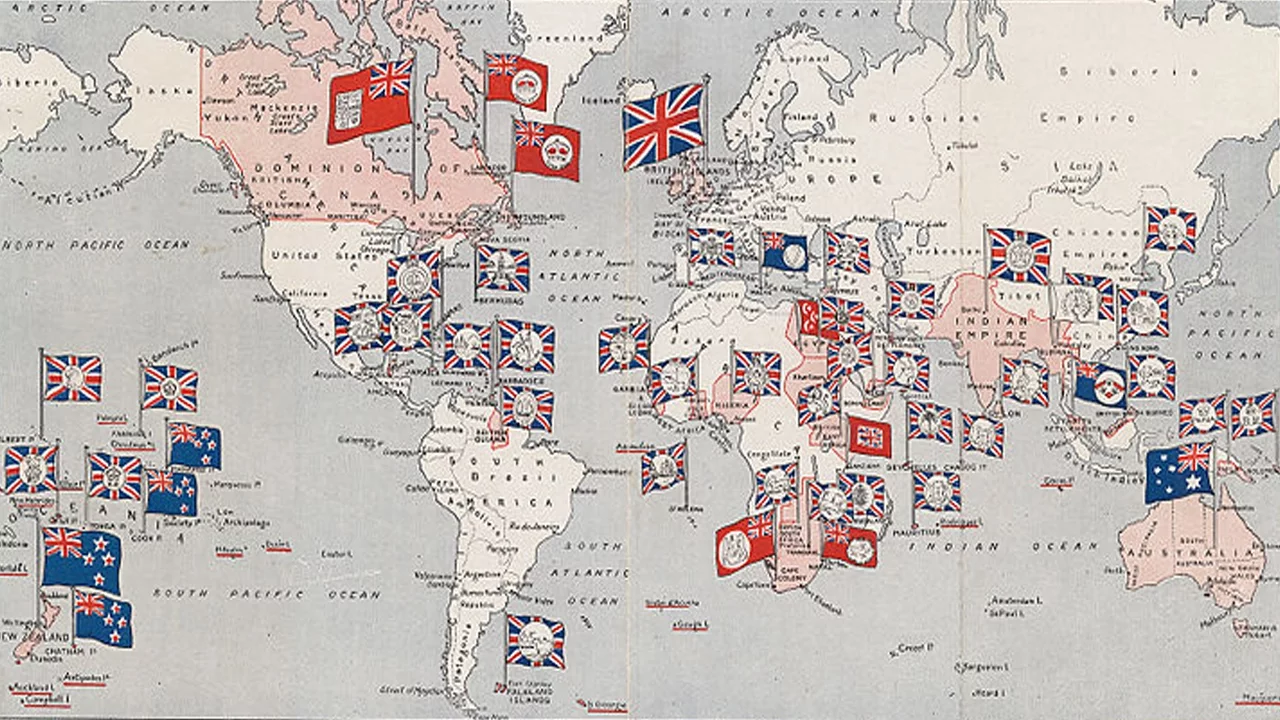
Why this video: This short video grounds the abstract theoretical concept of the "State of Nature" in historical context, highlighting how early modern philosophers looked at the "New World" (the Americas) to model their theories of natural human development.
Knowledge Checkpoint:
- Discuss the historical biases and limitations of how early social contract theorists viewed non-European cultures.
- Explain the difference between a purely hypothetical state of nature and a historical state of nature.
Module 2: Thomas Hobbes: Order, Security, and the Leviathan
Thomas Hobbes's political philosophy emerged from the chaos of the English Civil War. This module analyzes Hobbes’s mechanistic, materialist view of human nature. You will study his defense of absolute sovereignty as the only viable mechanism to escape a perpetual "war of all against all" and preserve human life.
Why this video: This video provides a comprehensive analysis of Hobbes's Leviathan. It details his materialist view of human behavior as mechanical processes driven entirely by appetites and aversions, which systematically lead to natural conflict.
Knowledge Checkpoint:
- Explain how Hobbes's mechanical view of human behavior informs his pessimistic political theory.
- Identify the three primary causes of quarrel in Hobbes’s State of Nature (competition, diffidence, and glory).
- Define the "Leviathan" and explain why Hobbes believes it must possess undivided, absolute power.
Why this video: A masterclass lecture from Yale University that unpacks the structural logic behind Hobbes’s social contract. It details how individuals transfer their natural rights to a sovereign entity through mutual pacts to establish physical security.
Knowledge Checkpoint:
- Distinguish between a "right of nature" (jus naturale) and a "law of nature" (lex naturalis) according to Hobbes.
- Explain why, under Hobbes's framework, the sovereign is not a party to the social contract itself, and therefore cannot violate it.
- Evaluate why Hobbes argues that tyranny is preferable to anarchy or civil war.
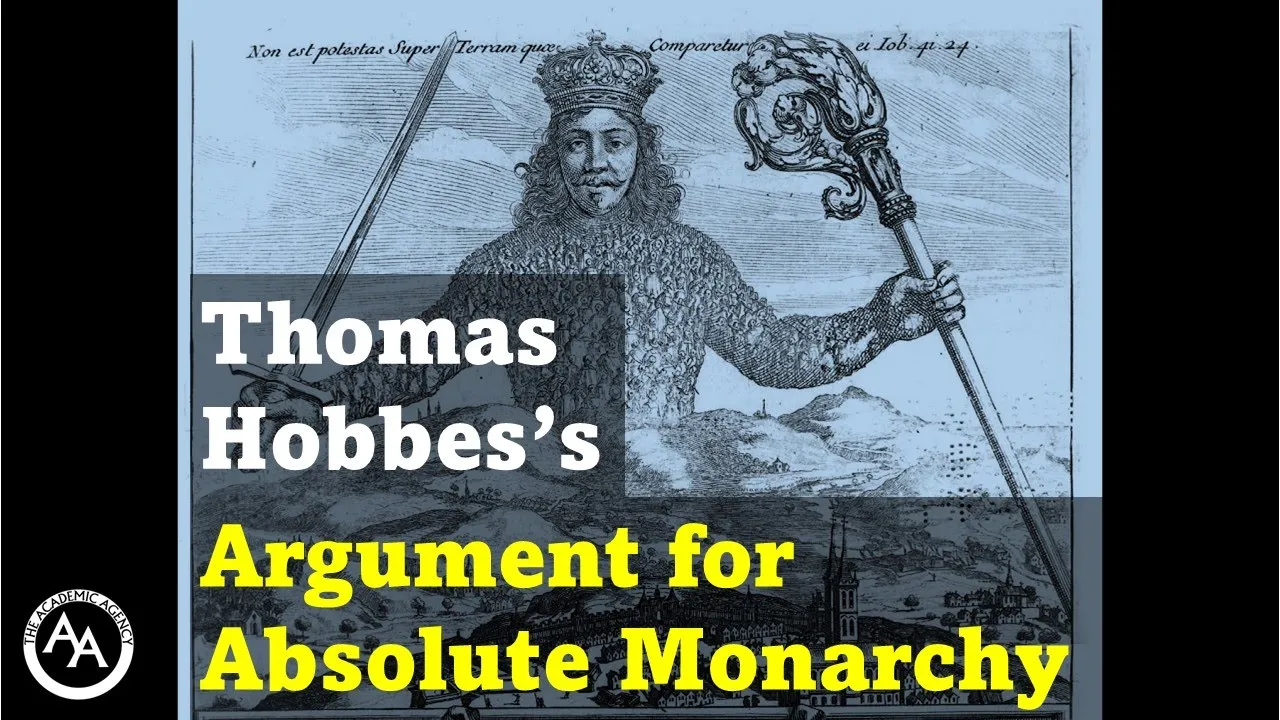
Why this video: This video breaks down the specific analytical arguments presented in Chapter 19 of Leviathan, exploring the structural advantages Hobbes claimed absolute monarchy had over aristocracy or democracy.
Knowledge Checkpoint:
- Outline the six key reasons Hobbes offers for the superiority of monarchy over other government forms.
- Discuss how Hobbes aligns the private interest of a monarch with the public interest of the state.
- Analyze why Hobbes rejects the separation of powers (e.g., legislative and executive branches).
Module 3: John Locke: Natural Rights and Consent of the Governed
In contrast to Hobbes, John Locke offered a far more optimistic view of human potential and the State of Nature. This module focuses on Locke's formulation of natural rights—life, liberty, and estate (property)—and explores how state authority is conditionally justified only through the consent of the governed. We will deeply analyze his controversial division of explicit and tacit consent.
Why this video: An exceptional, analytical walkthrough of Locke’s Second Treatise of Government. It explains why the Lockean State of Nature is pre-political but not pre-moral, governed by a "Law of Nature" accessible to human reason.
Knowledge Checkpoint:
- State Locke’s Law of Nature and explain how it differs from Hobbes's law of nature.
- Explain how property rights are established in the State of Nature by "mixing" one's labor with natural resources.
- Detail the "Lockean Proviso" regarding resource accumulation ("enough and as good left in common for others").
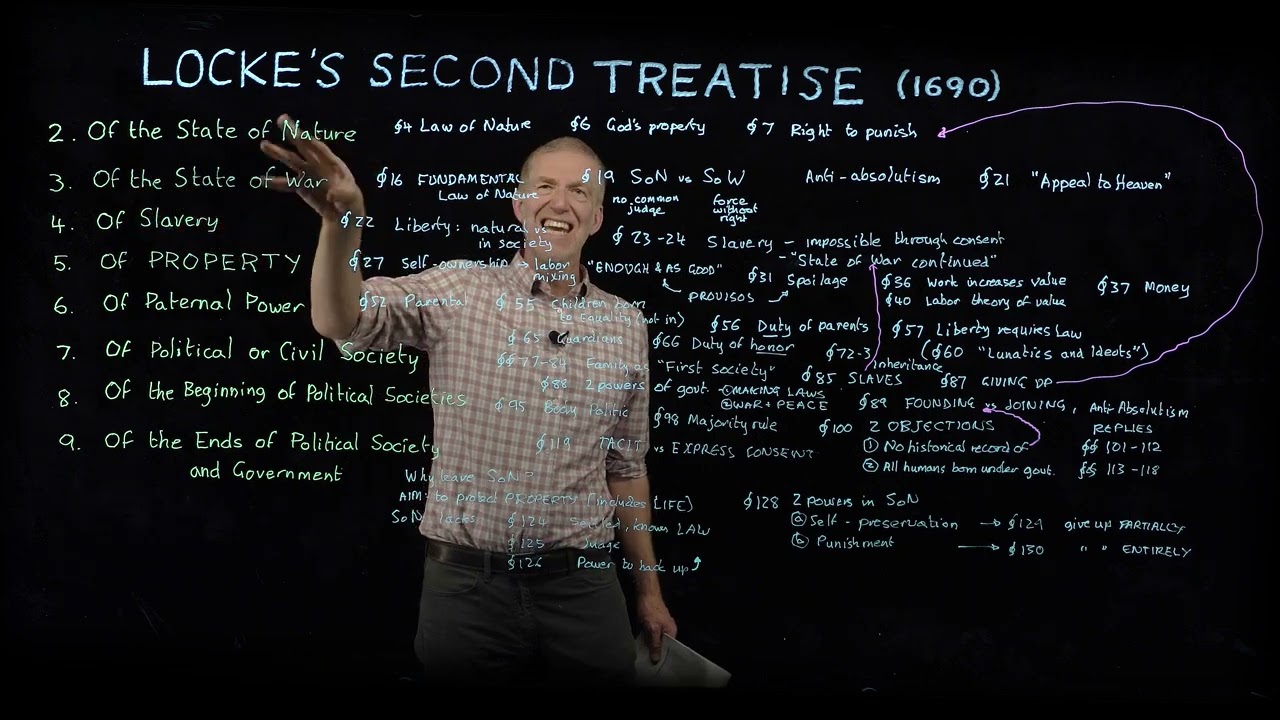
Why this video: This analytical video targets the central tension of Locke’s theory of political obligation: how a state can legitimately claim authority over individuals without their explicit, signed consent. It introduces the difference between coerced consent (which Locke rejects) and free consent.
Knowledge Checkpoint:
- Define the crucial difference between explicit consent (making an active, verbal, or written oath) and tacit consent (implying consent through actions like using state roads or owning property).
- Explain why Locke’s theory of tacit consent is highly criticized by modern philosophers.
- Under Locke's framework, what actions constitute a breach of the trust between the government and the citizens, justifying a right to revolution?
Why this video: An elegant biographical and philosophical summary of Locke’s wider contributions, highlighting how his views on education (tabula rasa) directly informed his democratic ideas on religious tolerance and limited state power.
Knowledge Checkpoint:
- Explain the concept of tabula rasa (the blank slate) and its connection to political equality.
- Describe Locke's arguments in favor of religious toleration and identify their structural limits.
Module 4: Jean-Jacques Rousseau: The General Will and Popular Sovereignty
Jean-Jacques Rousseau fundamentally rejected the premises of both Hobbes and Locke. He argued that the State of Nature was peaceful, and that civilization corrupted human goodness, creating artificial inequality. This module explores how Rousseau resolves this through the "General Will," proposing a model of popular sovereignty where citizens surrender their individual liberties to remain fully free.
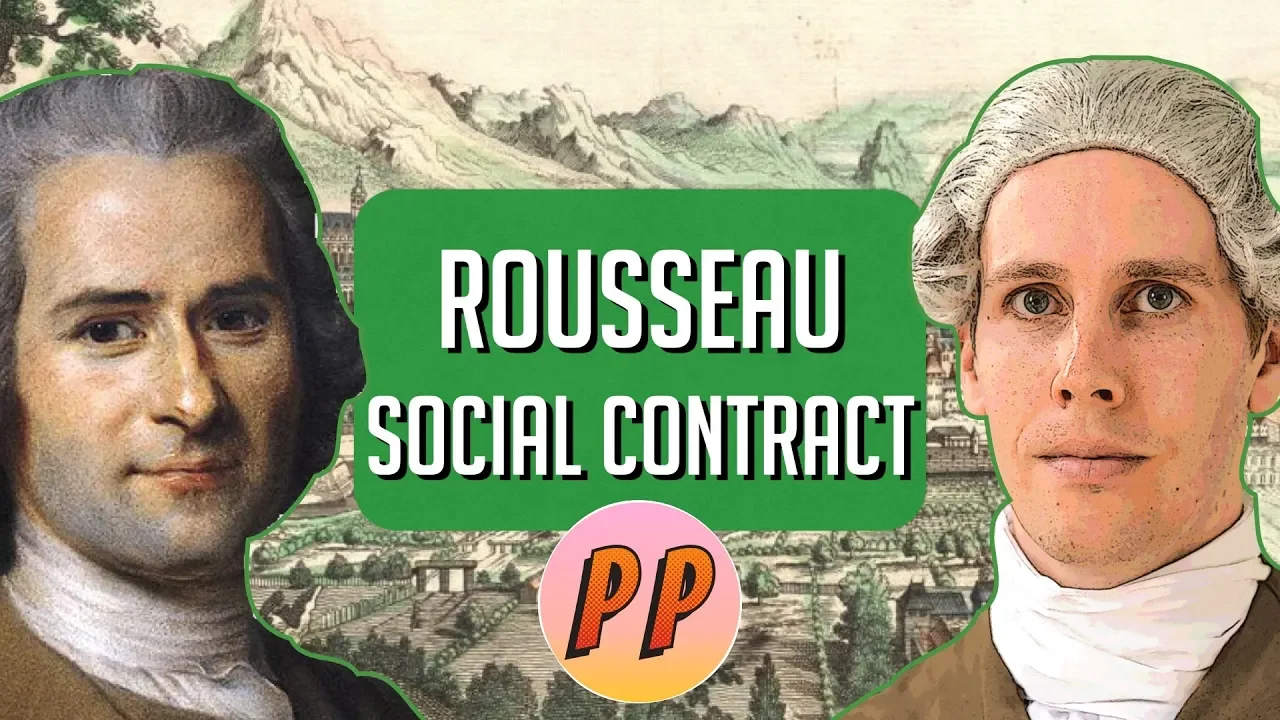
Why this video: This video unpacks the central paradox of Rousseau’s philosophy: "Man is born free, and everywhere he is in chains." It explores his attempt to find a form of political association that protects citizens while allowing them to obey only themselves.
Knowledge Checkpoint:
- Contrast Rousseau's "noble savage" model of the State of Nature with Hobbes's "war of all against all."
- Define the General Will and distinguish it from the "will of all" (the simple sum of private interests).
- Explain what Rousseau means by his famous, controversial phrase: citizens must be "forced to be free."
Why this video: A deep dive into Rousseau's Discourse on the Origin of Inequality. This lecture explains how the transition to civil society, private property, and social comparisons (amour-propre) led to the psychological corruption of humanity and economic exploitation.
Knowledge Checkpoint:
- Define and contrast amour de soi (innate self-preservation) with amour-propre (pride/social vanity born from comparison).
- Explain how Rousseau believes the establishment of private property cemented inequality and led to a flawed "social contract" designed by the rich to protect their wealth.

Why this video: This lecture snippet from Yale University highlights how Rousseau rejects representative democracy (like the British parliamentary model) in favor of direct civic participation as the only way to retain popular sovereignty.
Knowledge Checkpoint:
- Why does Rousseau believe that sovereignty cannot be represented, divided, or sold?
- Discuss the logistical difficulties of implementing Rousseau’s model of direct democracy in large, modern nation-states.
Module 5: Comparative & Modern Social Contract Theories
This module has been expanded to address critical feedback. First, it synthesizes the three classical contractarians (Hobbes, Locke, Rousseau). Second, it bridges classical philosophy to modern debates through John Rawls's 20th-century revival of the social contract framework using the "Original Position" and the "Veil of Ignorance."
Curriculum Note on Video Coverage: The video pool contains several short-form clips directly contrasting Hobbes, Locke, and Rousseau (such as Video #22), but lacks a single, long-form synthesis of all three. To compensate, use the comparative framework presented below to map their core divergences, and focus your video study on John Rawls's modern updates of the social contract model.
Comparative Summary Table
| Thinker | Human Nature | State of Nature | Source of Legitimacy | Right to Rebel? |
|---|---|---|---|---|
| Thomas Hobbes | Selfish, mechanical, driven by appetites. | War of all against all; brutal and short. | Absolute submission to an undivided Sovereign. | No; rebellion risks returning to the State of Nature. |
| John Locke | Rational, moral, cooperative but flawed. | Governed by Law of Nature; insecure property. | Conditional consent; protecting natural rights. | Yes; if the government breaches its trust. |
| Jean-Jacques Rousseau | Fundamentally good; corrupted by society. | Peaceful, simple, empathetic. | Direct alignment with the collective General Will. | Yes; if government serves private interests instead of the General Will. |

Why this video: This Yale University lecture outlines how John Rawls resurrected the social contract tradition in his seminal 1971 work A Theory of Justice. It explains how Rawls shifts the social contract from a justification of state authority to a tool for choosing principles of distributive justice.
Knowledge Checkpoint:
- Explain why Rawls returned to the social contract model in the late 20th century to challenge utilitarianism.
- Define the Original Position and how it functions as a modern equivalent to the State of Nature.

Why this video: A comprehensive introduction to Rawls's theory of justice. This video details how individuals behind a hypothetical "veil of ignorance" would rationally design a just and fair society.
Knowledge Checkpoint:
- Describe how the Veil of Ignorance strips away knowledge of your own social status, wealth, gender, ethnicity, and abilities.
- State Rawls's two fundamental principles of justice: the Equal Liberty Principle and the Difference Principle.
- Explain why rational actors behind the Veil of Ignorance would choose to protect the least advantaged members of society (Maximin rule).
Why this video: An interactive, world-class lecture by Michael Sandel at Harvard University. Sandel leads students through a deep philosophical debate over Rawls's theory, testing whether natural talents, effort, and social starting points are morally arbitrary.
Knowledge Checkpoint:
- Distinguish between meritocracy and Rawls's democratic equality.
- Critique the idea that individuals "deserve" the financial rewards generated by their natural, genetically inherited talents.
Module 6: Philosophical Anarchism: Challenging State Legitimacy
Having studied the strongest attempts to justify state authority through social contracts (Hobbes, Locke, Rousseau, Rawls), this final module introduces the radical critique of Philosophical Anarchism. Focus is placed on Robert Paul Wolff’s argument that state authority is fundamentally incompatible with individual moral autonomy, and on why the state's monopoly on force lacks a moral obligation to obey.

Why this video: This video provides a thorough analytical reading of Robert Paul Wolff's classic text, In Defense of Anarchism. It explores the core philosophical tension between authority (the right to command) and autonomy (the duty to make one's own moral decisions).
Knowledge Checkpoint:
- Define moral autonomy as the duty to take responsibility for one's actions by reasoning through what is right and wrong.
- Define political authority as the claimed right of a government to rule and be obeyed simply because it is the government.
- Reconstruct Wolff's argument showing why a citizen cannot submit to the authority of a state without forfeiting their moral autonomy.
Why this video: This video frames philosophical anarchism as a conceptual "puzzle of authority." It highlights that while political anarchists seek to actively overthrow the state, philosophical anarchists focus on a conceptual claim: no state has a legitimate moral right to rule, even if we choose to obey it for practical reasons.
Knowledge Checkpoint:
- Distinguish between philosophical anarchism (the denial of the state's moral legitimacy) and political/revolutionary anarchism (the active movement to abolish state institutions).
- Explain why a philosophical anarchist might still obey speed limits or pay taxes despite believing the state has no moral authority to demand them.
Why this video: Produced by Wireless Philosophy, this video analyzes whether a general moral obligation to obey the law exists. It reviews how traditional arguments (like gratitude, fair play, and consent) fail to establish a universal duty to obey state laws simply because they are laws.
Knowledge Checkpoint:
- Define content-independence: the idea that you should obey a law because of its source (the state), regardless of the content of the law itself.
- Explain the "Fair Play" argument for political obligation and why philosophical anarchists reject it.
- Synthesize how an anarchist responds to the traditional contractarian claim that "if you don't like the laws, you can leave."
Course Map
This map outlines the ideal path through the conceptual developments of state justification and critique:
Key People Index
- Thomas Hobbes (1588–1679): English philosopher. Witness to the English Civil War, he pioneered social contract theory in Leviathan, arguing that order can only be maintained under absolute sovereign power.
- John Locke (1632–1704): English physician and philosopher. Known as the "Father of Liberalism," his Second Treatise of Government argued that governments must protect natural rights (life, liberty, estate) and are legitimate only by the ongoing consent of the governed.
- Jean-Jacques Rousseau (1712–1778): Genevan philosopher. Critical of private property and civilization, his Social Contract conceptualized "popular sovereignty" through direct obedience to the collective "General Will."
- John Rawls (1921–2002): American moral and political philosopher. He modernized the social contract framework in A Theory of Justice, introducing the "Veil of Ignorance" to deduce fair rules for society.
- Robert Paul Wolff (1933–present): American political philosopher. Famous for In Defense of Anarchism, which argued that the state's claim to legitimate authority fundamentally conflicts with individual moral autonomy.
Final Self-Assessment
Review the questions below to evaluate your understanding of the concepts covered across all six modules:
- Can you contrast Hobbes's, Locke's, and Rousseau's views on human nature in the State of Nature?
- What is the "Leviathan," and why does Hobbes believe its power must be absolute, unified, and indivisible?
- Explain the distinction between explicit and tacit consent in John Locke’s Second Treatise. What is a major critique of tacit consent?
- How does Rousseau distinguish between the "General Will" and the "Will of All"?
- What does Rousseau mean when he claims citizens must be "forced to be free"?
- How does John Rawls's "Original Position" function as a modern, hypothetical update to the classical "State of Nature"?
- Define the "Veil of Ignorance" and explain how it prevents bias when choosing principles of justice.
- What is the core argument Robert Paul Wolff presents to show that moral autonomy and state authority are incompatible?
- How do philosophical anarchists distinguish themselves from revolutionary/political anarchists?
- Define the concept of "content-independent moral obligation" and explain why anarchists deny its existence.