





















Robert Paul Wolff argues that classical democracies fail to resolve the fundamental tension between political authority (the collective power of government) and individual autonomy (personal freedom and self-determination), proposing that only unanimous direct democracy can genuinely reconcile these competing values by ensuring that no citizen is compelled to follow laws they did not consent to.
Wolff's Anarchism: Authority vs. Autonomy | Political Philosophy
Added:The concept of Kantian moral autonomy, specifically the ethical duty of an individual to act on their own self-legislated moral judgments.
The fundamental distinction in political philosophy between 'de facto' power (the ability to coerce) and 'de jure' authority (the legitimate right to rule).
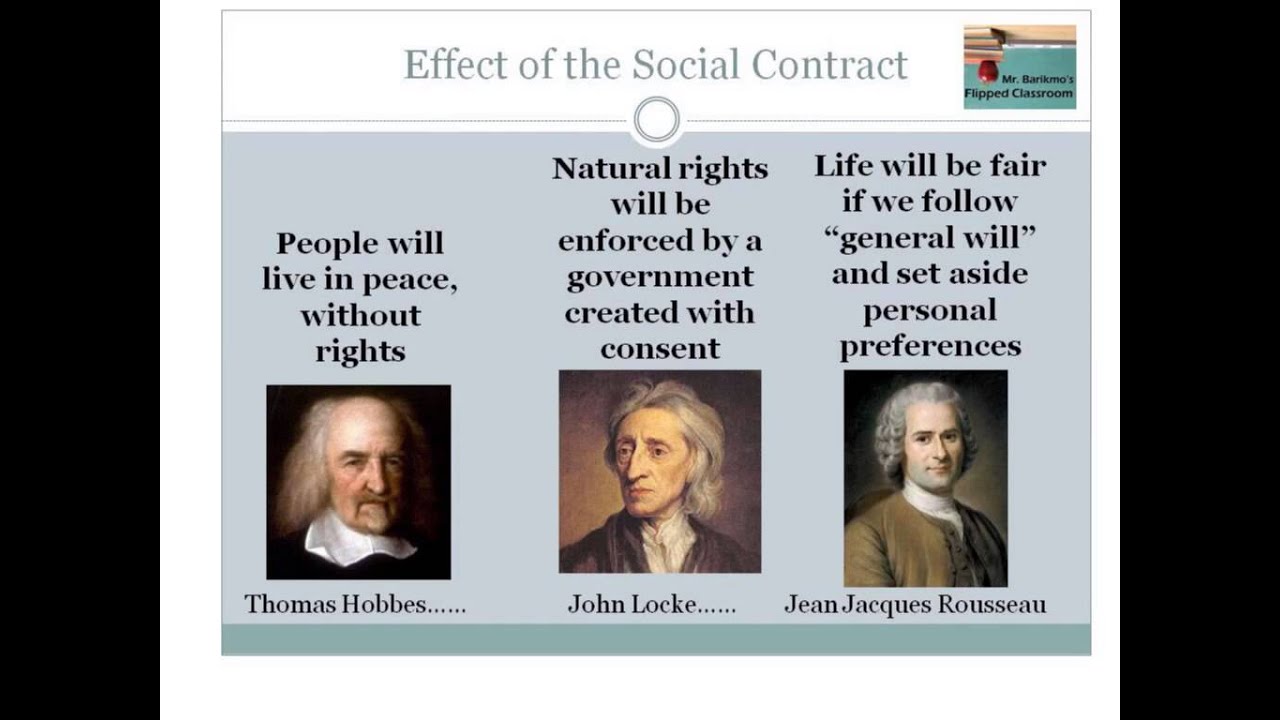
Traditional social contract theories (specifically those of Hobbes, Locke, and Rousseau) which seek to justify the existence and legitimacy of the state.
The 'problem of political obligation'—the core philosophical question of whether, and why, citizens owe obedience to the laws of their state.
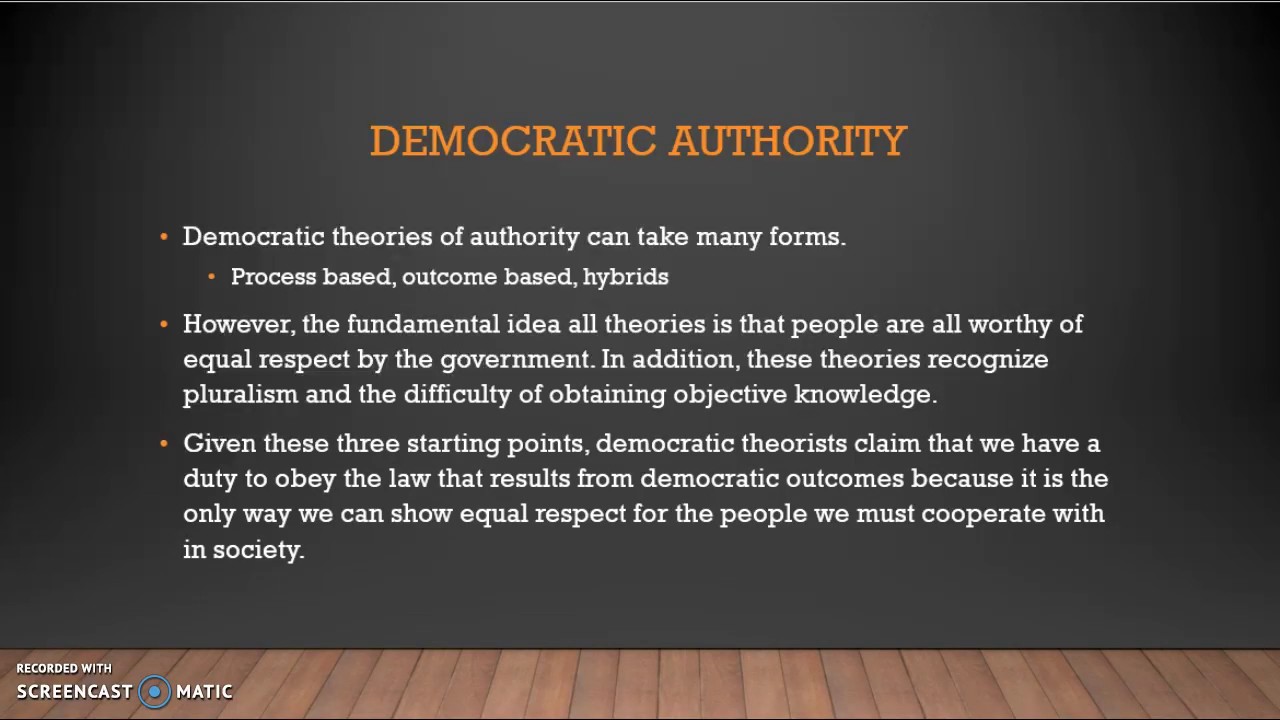
Prominent philosophical critiques of Wolff's arguments, such as theories of democratic authority that attempt to reconcile collective rule with individual autonomy.
The distinction between 'philosophical anarchism' (the theoretical denial of state legitimacy) and 'political anarchism' (the active, practical pursuit of dismantling state structures).
A. John Simmons' modern developments on voluntarism and consent theory in the context of political obligation.
Alternative models of social organization that operate without state authority, including anarcho-syndicalism, mutualism, and polycentric legal systems.
1.6K views50likes39:23Original Release: 2020-04-03
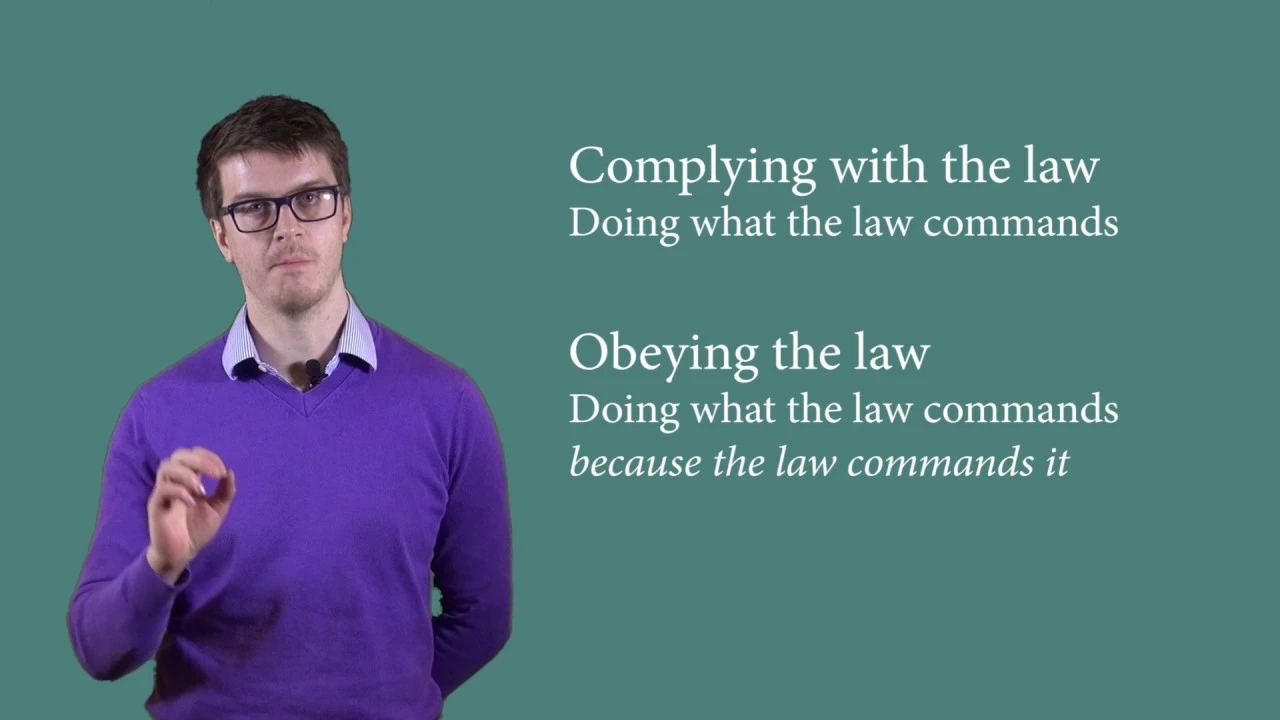
all right welcome everybody to a lecture video for philosophy of law and justice on Robert Paul Wolf's short book entitled in defense of anarchism so in this video at the top of the video I'll tell you about what the video will be consisting of and how I will explain things and I'll try to sum that up for you at the end so if you have the text handy open the to the table of contents and you'll see that this book is nicely sectioned into three different parts the first is called the conflict between Authority and autonomy the second the solution of classical democracy and the third beyond the legitimate state so we'll go over mainly the first and second part since the third part is really just a few pages so thus far in philosophy of law and justice we've gone over jean-jacques Rousseau we read discourse in the origin of the inequality and then the social contract and then we skipped from enlightenment-era political philosophy to contemporary political philosophy with John Rawls a theory of justice or justice as fairness so now we're kind of going back to some of the questions that Rousseau was looking at remember that the fundamental question of the social contract was in creating society we're going to create this new power this new structure the government or what we're so calls the sovereign and the sovereign is going to have the ability to pass laws under which we all live so remember that his first question was what makes his central question what makes that authority the authority of a sovereign the authority of the government a legitimate Authority and recall that he wondered if there was anything in nature that would justify or ground that political authority he determined that there wasn't he said really the only thing that can ground that political authority is not anything in nature but rather something by convention and that particular convention is the social contract so wolf is also interested in this question this question of political authority and what legitamate said and in this book he's contrasting authority which we can think of a collective power of the government with autonomy which is a capacity that all individuals individual citizens have so the authority is coming from the collective that is the government but the risk or concern is that it can limit our personal individual autonomy or what we want and choose so hmm remember that for Rousseau what creates legitimate political power is the social contract and the fundamental underlying idea - the social contract is the idea that everybody that decides to join society gives consent to the social contract and that idea was that you agree to become a citizen and to live under the law and to participate and the governmental structure that seeks to aim toward the common good the good that is then everybody is best interest but that the common good is determined by the general will in other words the way the people though so as we talked about you there could be a law that's up for vote and let's say 75 percent of the citizens want it and 25 percent don't and so the question that wolf is concern with is for the 25 percent of people who voted against a law but because of majority rule democracy have to follow the law because that's the way the majority voted that is the general will then aren't the people who voted in the 25 percent minority aren't they having their autonomy forwarded or blocked or restricted they're being compelled by force of law to do something that they didn't don't didn't choose and don't want to do so that's the fundamental conflict that he's looking at in this book the the tension between collective political authority and individual autonomy and remember that going back to Rousseau Rousseau said in the state of nature there actually is freedom and there is equality and he made sure to qualify what he meant by natural freedom and natural equality I'm not gonna rehash those now but also he said that in moving from the state of nature to the state of civil society and in moving from natural equality and natural freedom to civil equality and civil freedom what we hope to do is live under the law when we go from the natural conditions of the civil condition but the aim is that we want to remain as free as we were before in the state of nature so the question that Wolfe was looking at is how can we remain as free as we were before if we could do whatever we ought honestly wanted in the state of nature but in certain situations in the civil society we cannot just do what we want in cases in which we are in the minority position so the people that are in the minority position aren't they being coerced and compelled to do something that they don't want to do it seems like they are so the question is how can you have how can you you retain political authority of the collective on the one hand how can you have that and at the same time we retain individual autonomy I mean maybe you can only have one of the other maybe you're gonna have political authority but you have to sacrifice autonomy or maybe there is no such thing as legitimate political authority and all you have is individual autonomy okay so that's kind of the overview for the entire book which is only like 80 pages so if we open up to the first chapter the conflate between authority and autonomy it begins with a session called the concept of authority and in a lot of these early sections Wolfe is laying out a number of important distinctions that we ought to pay attention to so the first thing he says is that sort of a review for us having read Rousseau he says that the power the authority that we're creating when we create the government we can call that political authority supreme authority on page four he reminds us that a Rousseau called it sovereignty but he defines it on page four first full paragraph authority is the right to command and correlative Lee the right to be obeyed whereas a distinction power on the other hand is the ability to compel compliance either through the use of threat or force so here's a key distinction between authority and power with power if I'm the bigger person the stronger person I can make you do something let's say can make you pick some apples for me by threaten threatening and punch you in the face if you don't do it or by physically moving you and moving your arms like a puppet and make you do it so that's power I can certainly compel a person to do that but we wouldn't say that anyone that has the power to make you pick apples has the authority to make you pick apples having the authority to make you pick apples would mean that they have the justified power to tell you to do something and they are on justified grounds and being able to legitimately tell you to do something and at the same time because there are legitimate grounds that compels an obligation from you so you would be wrong if you didn't pick the apples if you were told to do so by someone who had proper authority over you so Authority and power is the first distinction that we'll go over that we just went over another important distinction that he brings up is the distinction between a de facto state and AD is your state so this is on page 10 and 11 so de facto as you can tell by the phrase means sort of by the fact that de jour which means of the day like maybe you've heard it what's what's the soup does you're the soup of the day that means more like a state that is official so if you had a group of people living together but never really articulated a social contract you could sort of call them a de facto state but they don't really have a constitution and they didn't really determine what the laws are anything like that on the other hand if we would actually form a society and legitimate it through our Constitution and express laws and procedures of how we would be ruled that would be a state de jure and so he drops that distinction in order to say that either kind of state the fact or de jure could have Authority but it's really only the de jure state that's gonna have any hope to have any kind of legitimate Authority all right so that's what authority is the the justified power of the sovereign to legitimately pass certain laws that generate obligation to obey those laws from citizens the second section is the concept of autonomy so autonomy is a long kind of running philosophical concept political autonomy is simply Liberty freedom so what we're not talking about is metaphysical freedom or what we call free will we're simply saying what what are we allowed to do in society what kind of Express freedoms do we have and what are we not allowed to do but then aside from political philosophy autonomy also comes up in moral philosophy so to say that you have a sponsibility to return the lost wallet to its rightful owner to have the responsibility or the obligation to do that means first that you have the freedom to do that because if you didn't have the freedom to think for yourself and to Anna render a decision how could you be responsible for it now in order to have the freedom of choice and therefore responsibility someone like Conte says that you must first be rational so a philosophical question that we're sort of laying out here is what do you think comes before the other freedom or reason do I need to be rational in order to be free or do I need to be free in order to be rational I have a chicken in the egg scenario and you could probably argue some legitimacy in either direction but here's what Khan says Khan says that the kind of normative freedom that we really want people may talk about freedom this and freedom that really loosely but the freedom that's really desirable is a freedom that is conditioned by reason in other words when we have a rational agent who's thinking through a number of different options who's properly informed by what's going on and renders a decision for herself that is the kind of free choice that as philosophers we want to see happen and that we value someone just arbitrarily picking something with no rhyme or reason they may be free to do that but that's not really the kind of normative freedom that we're going for so the point from Khan is that only by having the capacity to be rational do the conditions for freedom are the conditions for freedom met put more simply we need to be we need to be rational thinkers before we can truly be free and we need to have that kind of freedom before we have moral responsibility in short autonomy means thinking for yourself making your own decisions but before you you you express and manifest a decision in in embodied action you must first think of a decision in your mind you have an internal autonomy of thought before you have an external autonomy of action and so this is relevant to what we're talking about here is in the following way people have different choices they want to make they want to pursue their their own idea of the good whatever that might consists of and whatever might be required for it but we're also living in a society in which we are in interdependent relationships with other people and we've created this sovereign power that has this new authority to pass laws that govern us and so those laws which are if we go through says theory the result of the general will everybody voting but that can disenfranchise not disenfranchise but make a minority of people do something that they don't want to do that is the tension between political authority and individual autonomy so you know in in this section he talks a lot about the reasons why someone would do something you know like someone might tell you to do something they just happen to bring it up to you like oh you should eat this Apple and it turns out you were gonna eat that Apple anyway because it's a Honeycrisp and you like sweeter apples rather than a pink lady which is more like a tart apple so he told you that person told you to do something and you did it but you actually didn't do it but cuz he told you to do it he doesn't have any power to make you do it and he doesn't have any authority to tell you to do it it just happened to be the occasion that he suggested it to you and you did do it but the reason you did it is because you chose to do it out of your own preferences and tastes so just because you do something that someone tells you to do doesn't mean you get it because they told you to do it all right so section 3 which begins on 18 of the first chapter the conflict between authority and autonomy he says this the defining mark of the state is Authority the right to rule the primary obligation of human beings is autonomy the refusal to be ruled it would seem then that there can be no resolution to the conflict between autonomy and the individual and the putative authority of the stand the putative authority of the state so the way Woolf sees it we have a sort of obligation to ourselves a duty to ourselves and different philosophers talk about duties to sell so it's nothing really new it's kind of in it and not maybe a little stronger than a duty but we could call it an imperative something that you really have to do and the imperative is to think for yourself to not let yourself be lets say colonized by the thought of other people when they tell you to do something so we all grew up being in a sense colonized by our parents they gave us a morality they gave us a religion they told us what to eat they told us where to go to school but then we emerged as autonomous individuals somewhere in our teens probably we think for ourselves when we render our own decisions and so that's part of what philosophers say life is all about becoming an individual thinking for yourself standing on your own two intellectual feet so we have an obligation to be individuals we have an obligation to be autonomous we have an obligation to think for ourselves and to do what we want to do to do what we decide to do at least for ourselves it's a different question about whether or not what we do affects other people but insofar as it just affects us we have obligations to walk this earth and live this life according to our own values and principles and so on and so forth so how can we do that if we have to live in a political context in which we live under the rule of law and some laws get passed that not only that we might have you know got gotten the opportunity to vote on but the results were not what we wanted and nevertheless we are compelled to follow them so how does this not hinder or obstruct or constrain our autonomy in a very fundamental problematic way okay so that brings us to the end of chapter 1 and as I said before we got there is the concept of authority autonomy and why there is a fundamental conflict between the two okay the next section is the solution of classical democracy so in this the largest section of the book Wolfe is reviewing what other past mainly modern enlightenment that is 17th 18th maybe 19th century political philosophers how they talked about democracy as the solution to this problem the problem of the conflict between the authority and the state and before we get into it you know we can just sketch the overview which is that he's going to review different positions he's ultimately going to reject the arguments of other philosophers and say that democracy doesn't really do the trick doesn't really get us to where we want and what we want as the book would entail us we haven't even defined anarchism yet but we want to be able to do ultimately for most perspective is to live in some kind of community call it a state I guess we should call it a state live in a political community and yet not have our autonomy fundamentally obstructed or hindered so that's the that's the problem can classical democracies solve that problem he says no so what does classical democracy tell us well lucky for us in our philosophy of law and justice class that we read Rousseau's the two words from Rousseau that we did read because Rousseau is his number one kind of foil foil sometimes mean person that he argues against but it's not like he hates Rousseau he thinks Rousseau has got a lot of good ideas he just doesn't think they totally work so remember that Rousseau tells us that the social contract is what creates the legitimate political authority and remember that when everybody leaves the state of nature and join civil society that everybody needs to consent to the social contract give a mane the next section after this first section in Chapter two the first section is democracy is the only feasible solution the next section is unanimous direct democracy do you think unanimous direct democracy is we've talked about means for every law that is passed every citizen gets to vote on it so it's the very opposite of representative democracy the point I want to make now is that in terms of the initial decision to join civil society wolf talks about it I think I guess Rousseau uses this language but it's like he calls it the first promise or the initial promise the the the decision was to leave the state of nature and join civil society and to consent to being part of the social contract where you were going to agree to live under the rule of law and Rousseau tells us that we would want to do that because the social contract we understand it as having the capacity to allow us to be as free as before Chapter six of book one of the social contract for Rousseau so that was a little convoluted let me clear up what I just said the point I want to underscore is that everybody leaving the state of nature joining civil society that first decision to join civil society that has to be unanimous if someone doesn't want to consent to the social contract they can stay in the state of nature but everybody that wants to be part of civil society has to consent to it in other words you can't compel coerce or force can coerce or force anybody from the state of nature into civil society alright and then down the line Rousseau tells us that well so actually before I get there so we've got the the ideal of direct democracy namely that we do not want any representatives because as we got from her so when we have we alienate our sovereignty and alienate means to separate and if the goal and movement in the state of nature is to be as free as before we wouldn't be as free as before if we're alienating our sovereignty to Representatives so that's why we need direct democracy from Rousseau's position and you know wolf thinks that's a very good reason to want direct democracy but wolf is not satisfied with merely direct democracy he wants unanimous direct democracy and that's really the underlying principle in anarchism which I'll define in a second recall that despite the fact that Rousseau for the initial decision from the state of nature to civil society required unanimous direct democracy he and secondly that once we form civil society there's still direct democracy but it doesn't but and there's still direct democracy so no representatives second point but number three Rousseau doesn't require that for every law that gets passed it has to be unanimous meaning there are has to be total agreement so if there's a hundred people in the society all 100 of them have to render the same decision for it to be become a law so Rousseau does not require that but wolf wants to require that because why does wolf want to require that because only in with unanimous consent do we avoid the problem of someone being forced to do something that they don't want to do only unanimous direct democracy unanimous consent avoids the problem of people's autonomy being obstructed so you can imagine that you know we've used the example in class about let's say we're having a end in the semester pizza party doesn't look like that's gonna happen because of what's going on but if we did and we were trying to figure out what kind of pizza we should order and we have 30 people in the class you can imagine that we would all have different tastes different preferences different ethics that inform to different religions or traditions that inform our food choice so you can imagine that even with something like as simple as like what kind of pizza we should order it would be hard to render a decision in which we all agreed I mean it would be hard if we were all eating the exact same pizza like one pizza for everybody it wouldn't be that hard to agree that if the 30 of us we were to 30 pizzas and everybody gets what the pizza that they want but even that might be problematic for other reasons so the the thing he talks about is you know he acknowledges that unanimous direct democracy is extremely high bar so how do you get people to all agree he reviews a number of different positions he said well you can imagine a society where everyone is up the exact same religion and the religion gives very specific values and morals maybe that wouldn't really apply to the pizza case almost the religion like had rules about food but in a case like that where basically what informs everybody's decisions is basically the same kind of background social tradition then it wouldn't be that hard to get unanimous consent but in the kind of pluralistic society that we live in that's not really available and so the point here is that yeah unanimous direct democracy is an extremely high bar but although a high bar he thinks that it is actually on page two top 27 he says first it is a genuine solution to the problem of autonomy and authority and he says this is actually rare that it is a genuine solution whereas majority rule and representation which he's about to go over those are like sham solutions those aren't real solutions the reason they're not real solutions we'll go over them in a minute but like the headline is that they come they coerce people to do something that they don't want to do that is not a solution to the problem of authority and autonomy that's just a continuation of the problem so the next section section three he reviews representative democracy and he says a lot here the biggest problem is that representatives how can they really represent their constituents I mean when Pete when congressmen and Senators talk about the people of my district under the law they're typically talking about the people that actually voted for them or elected them so if it's a democratic a liberal kind of politician living in a California in New York or something like that they would say well my constituents believe that humans are doing actions that put carbon in the atmosphere and a warm climate and there's climate change because of that probably there are people in their districts that okay picking up where I left off I was talking about why wolf rejects a majority rule democracy and representative democracy as not being able to solve the conflict between political authority and individual autonomy so I was saying that someone in a liberal district might say that their constituents believe X Y & Z about climate change but there might be somebody people within their constituency that actually don't so when they say my constituents want this they're really talking about maybe a perceived want or maybe they were only talking about some maybe a majority but maybe only you know some of their constituents so he talked about for example how is a representative really gonna even be able to represent what every single individual and their constituency think certainly they're not going to go around and talk to everybody how you know how could they so of course how could they but what that shows is if they're not discovering what their constituents want they don't necessarily know what they want if they don't know what their constituents want how can they possibly be representatives of them so the critique of representation is that first of all as we've said you alienate some of your autonomy away by giving it to the representatives but be that they can't actually adequately represent you because it's hardly even a possibility that they typically only represent a majority and I found a majority a plurality of people within their constituency overall so representative Drucker simply does not solve this problem this problem of authority and autonomy majority rule doesn't solve it either even though somebody like Russo advocated for majority rule and thought it's probably as best as we're gonna be able to get the reason why I'm majority rule doesn't solve the problem is that even if the majority is let's say the society is a hundred people and 99 people vote for X and the one other person votes for Y that's almost unanimous direct democracy but our unit yeah unanimous direct democracy but even in cases where one person is left made to do something that they don't want to do if there is a even at least one case of that then we really haven't solved the problem of political authority and autonomy just just take a take a step back you know he talks about throughout this book a number of instances in which someone might have a good reason to vote a certain way or a good reason to accept upset something basically out of practicality or utility rather than recognizing that for example a representative has any real kind of legitimate Authority that's a little bit beside the point so the point is that majority rule doesn't work and represent the doesn't work did you enjoy on page 34 the first appendix in which he gives a suggestion about how direct democracy would work so this book was written nineties 1998 so just as the internet was coming around but he says on page 34 that he thinks that we could do in home voting through machines connected to our TVs it's it's almost like sort of proto internet knowing what we know now about internet technology and hackers and how susceptible government systems it probably doesn't sound quite as easy he didn't really make it sound easy but even if you could vote for home would we be able to actually get people to get full political participation it's hard alright so section 3 he goes over why he would Jackson majoritarian democracy I just went over that he talks about like on page 50 why we're so favorite it and what he liked about it so then he's gotten an appendix there for the so that almost brings us to the end and it about does so what he says is is that this fundamental conflict between the authority of the state an individual autonomy first of all is a legitimate problem is not resolved by democracy either majoritarian majority rule democracy or a representative democracy and the only thing that actually solves this problem is unanimous direct democracy and you know the name of this book is in defensive anarchism but I haven't even like exactly said what anarchism is so anarchism first of all to continue that last line I thought anarchism does solve this problem the problem it solves that in theory at least the problem of how do you resolve this tension Queen collective political authority and individual autonomy how does it resolve this problem it resolves this problem by being based on a system of unanimous direct democracy no one's autonomy is thwarted because the only laws that get passed are the laws that everybody consents to and everybody agrees to unanimously so we have that unanimity and we have that direct democracy that makes the political authority legitimate and it avoids the problem of people's autonomy being you know obstructed or unreasonably constrained so this book is you know this book is hardly really a book on anarchism it's more the kind of first step toward the legitimacy of anarchism there's lots of different types of anarchist theory that has various different emphases embassies so you have anarcho-syndicalism which is represented by a famous intellectual like Noam Chomsky their main task is to destroy the system of wage labor not destroy notions of work but destroy the idea of like working for other people creating wealth for other people and not getting a share and that wealth there's like Green anarchism that kind of focuses on you know the environment some forms of libertarianism there's a sort of like anarchist libertarianism so lots of different kind of flavours and types of anarchism and so he's not talking about any of that this is just the most fundamental idea running through all anarchist theory is unanimous direct democracy why is that a good thing because it solves this problem that he's outlined and how could it work I mean he hasn't necessarily given us a big book with various different contingencies about how everything could possibly work and how you would resolve conflict and etc etc but he points us in in a certain direction so we're kind of wrapping things up here so what this you know the reason why we're reading this book and what we're doing in terms of the class is we got state of nature and social contract theory from her so kind of then we skip to the 20th century with John Rawls and got a theory of justice that's kind of like a continuation of Rousseau's thought so if we were going to set up the society how would we want that society governed by a notion of political justice and how would we arrive at that notion of political justice that's what the original position and veil of ignorance is all about but then this book says well let's take a step back from that and ask why we would want any kind of democratic system that wasn't based on a unit on unanimous direct democracy and how we could retain these principles of autonomy and legitimate political authority if we did not have unanimous direct democracy so we could see then how wolf wolf is very much in conversation with Rousseau and he doesn't really mention Rawls but yeah if he's in conversation with Russo it's kind of in conversation with Rawls a little bit now I'm moving forward for next week for our next text we're going to be reading Murray Bookchin --zz social ecology and communalism book ssin is another sort of you know radical thinker where as people like Rousseau and Rawls they're good enlightenment-era I mean what Rawls is 20th century but they're very much of the modern enlightenment era but they're like reformists how do we reform the system whereas radical philosophy is like to hell with reforming it let's tear it down and get a new system going anarchism socialism communism something like that and other options as well so what we're gonna get then how this book is going to lead us into book shion's book is as follows toward the end you know I didn't even mention the third section beyond the legitimate state in which he you know the second section of that was utopian glimpses of a world without States he actually doesn't really do much to actually describe what those glimpses are but whoa but that's what Bookchin will do Bookchin will connect the kind of anarchist philosophy that were just getting the seeds up from this book to issues concerning the environment that's the ecology he's going to give us avert his version of it social ecology and communalism and communalism is a sort of I think it might be book shams own term but what he's envisioning is a bunch of kind of small-scale community as a federation not United States but United Federation of small-scale anarchist type communities that have the environment as a fundamental concern so that's what I just said is basically how this book bridges roots show and then where we're going next with book shin and then after that even more environmental justice Theory first with I forgot the guy's name because I haven't read his book yet but the book on environmental just saw spurred something like that and then finally to de Bourgh for the environmental sovereignty okay so normally I'll have these videos up earlier than I did this has been a crazy hectic week so complete the discussions respond to other people stay safe wash those hands and I'll catch y'all on the flip side with the next video on social ecology all right then
Up Next
4:48
Philosophical Anarchism and the Puzzle of State Authority
@CarneadesOfCyrene
15.9K views•2016-11-13

164:01
John of Damascus on Holy Images: A Theological Defense
@BannedBooks
139 views•2026-04-25

68:32
Should We Destroy the Machines? Big Tech Surveillance Critique
@TheStoriesWeTell303
167.9K views•2025-11-30
4:57
The Myth of Sisyphus: A Greek Legend of Eternal Punishment
@TEDEd
8.6M views•2018-11-13
Related Study Plans & Knowledge Roadmaps
Structured learning paths in Philosophy
philosophy
Frankfurt School: Critical Theory & Culture
01Foundations of the Frankfurt School and Critical Theory
02Horkheimer & Adorno: The Critique of Instrumental Reason
03The Culture Industry and Mass Deception
+ 2 more learning modules
12h5 modules
Explore Roadmap
philosophy
Philosophy of Language: From Frege to Austin
01The Linguistic Turn: An Introduction to Language in Philosophy
02Gottlob Frege: Sense and Reference
03Early Wittgenstein: The Picture Theory of Meaning
+ 3 more learning modules
15h6 modules
Explore Roadmap
philosophy
Feminist Epistemology: Standpoint & Injustice
01Introduction to Epistemology and Feminist Critiques
02Sandra Harding and Standpoint Theory
03Donna Haraway and Situated Knowledges
+ 2 more learning modules
12h5 modules
Explore Roadmap
philosophy
Environmental Philosophy: Ethics & Deep Ecology
01Foundations of Environmental Ethics & Anthropocentrism
02Biocentric Individualism and Animal Liberation
03Ecocentric Holism and Deep Ecology
+ 1 more learning modules
10h4 modules
Explore Roadmap