
























John Rawls argues that social and economic inequalities are only just if they work to the benefit of the least advantaged members of society, a principle derived from imagining we choose justice principles behind a 'veil of ignorance' where we don't know our own position in society; this approach rejects both utilitarianism (which ignores individual rights) and pure meritocracy (which fails to account for arbitrary factors like birth order and family background that shape our abilities and opportunities).
What's a Fair Start? Justice and Rawls' Theory | Harvard Ethics
Added:The concept of distributive justice, which addresses how a society should allocate resources, rights, and opportunities.
Social Contract Theory (such as the ideas of Locke, Rousseau, and Hobbes), as Rawls builds upon and modernizes this tradition.
Utilitarianism (Bentham and Mill), because Rawls' theory acts as a direct critique of maximizing collective utility at the expense of individual rights.
Kantian Ethics, particularly Immanuel Kant's emphasis on treating individuals as ends in themselves rather than mere means to an end.
Robert Nozick's libertarian critique of Rawls, focusing on self-ownership, historical entitlement, and minimal state intervention.
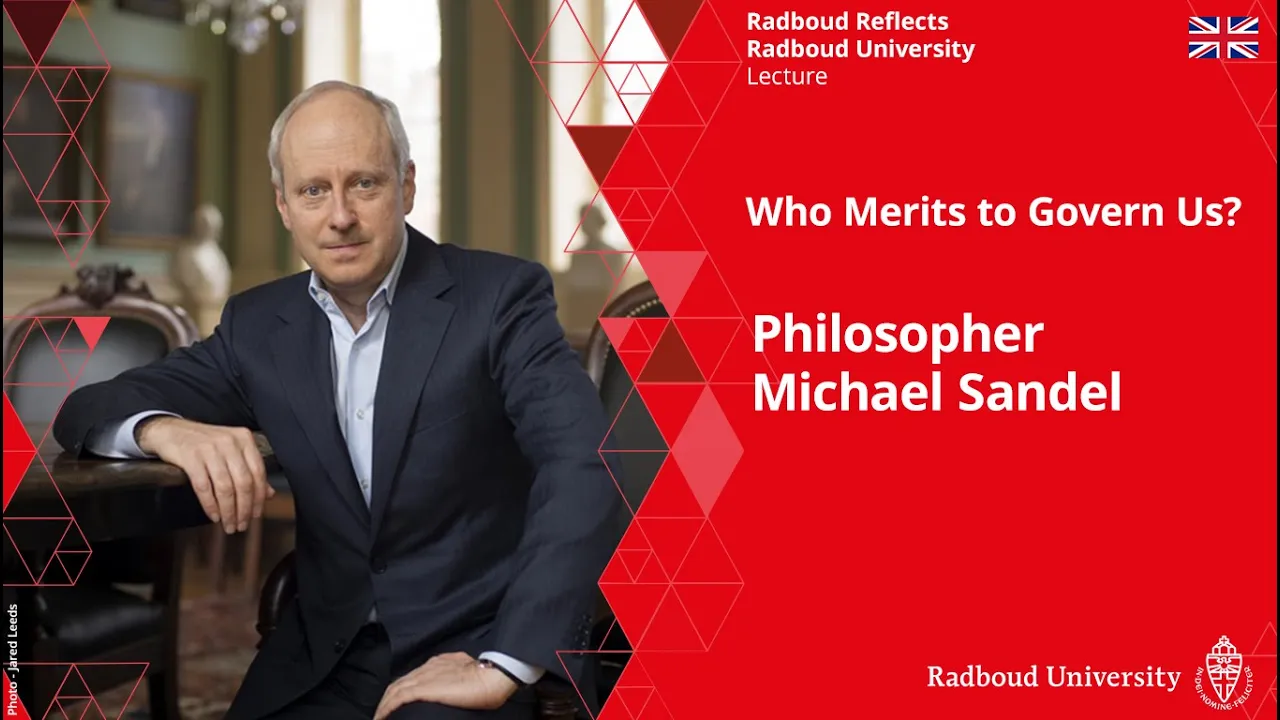
Communitarian critiques of Rawlsian liberalism, particularly Michael Sandel's arguments regarding the socially embedded nature of the self.
The Capabilities Approach formulated by Amartya Sen and Martha Nussbaum, which critiques Rawls' focus on primary goods.
The application of the 'Difference Principle' to modern public policy debates, such as universal healthcare, progressive taxation, and affirmative action.
1.5M views12.1Klikes55:07Original Release: 2009-09-09
funding for this program is provided by additional funding provided by today we turn to the question of distributive justice how should income and wealth and power and opportunities be distributed according to what principles John Rawls offers a detailed answer to that question and we're going to examine and assess his answer to that question today we put ourselves in a position to do so last time by trying to make sense of why he thinks that principles of justice our best derived from a hypothetical contract and what matters is that the hypothetical contract be carried out in an original position of equality behind what Rawls calls the veil of ignorance so that much is clear all right then let's turn to the principles that Rawls says would be chosen behind the veil of ignorance first you consider some of the major alternatives what about utilitarianism would the people in the original position choose to govern their collective lives utilitarian principles the greatest good for the greatest number no they wouldn't all sense and the reason is that behind the veil of ignorance everyone knows that once the veil goes up and real life begins we will each want to be respected with dignity even if we turn out to be a member of a minority we don't want to be oppressed and so we would agree to reject utilitarianism and instead to adopt as our first principle equal basic liberties fundamental rights to freedom of speech freedom of assembly religious liberty freedom of conscience and the like we wouldn't want to take the chance that we would wind up as members of an oppressed or despised minority with the majority tyrannize anova us and so it all says utilitarianism would be rejected utilitarianism makes the mistake of all its rights of forgetting or at least not taking seriously the distinction between persons and in the original position behind the veil of ignorance we would recognize that and reject utilitarianism we wouldn't trade off our fundamental rights and liberties for any economic advantages that's the first principle second principle has to do with social and economic inequalities what would we agree to remember we don't know whether we're going to wind up being rich or poor healthy or unhealthy we don't know what kind of family we're going to come from whether we're going to inherit millions or whether we will come from an impoverished family so we might at first thought say well let's require an equal distribution of income and wealth just to be on the safe side but then we would realize that we could do better than that even if we're unlucky and wind up at the bottom we could do better if we agree to a qualified principle of equality Rawls calls it the difference principle a principle that says only those social and economic inequalities will be permitted that work to the benefit of the least well-off so we wouldn't reject all inequality of income and wealth we would allow some but the test would be do they work to the benefit of everyone including those or as he specifies the principle especially those at the bottom only those inequalities would be accepted behind the veil of ignorance and so Rawls argues only those inequalities that work to the benefit of the least well-off are just we talked about the examples of Michael Jordan making 31 million dollars a year of Bill Gates having a fortune in the tens of billions with those inequalities be permitted under the difference principle only if they were part of a system those wage differentials that actually worked to the advantage of the least well-off well what would that system be maybe it turns out that as a practical matter you have to provide incentives to attract the right people to certain jobs and when you do having those people in those jobs will actually help those at the bottom strictly speaking Rawls is argument for the difference principle is that it would be chosen behind the veil of ignorance let me hear what you think about Rawls's claim that these two principles would be chosen behind the veil of ignorance is there anyone who disagrees that they would be chosen all right let's start up in the balcony if that's all right go ahead okay your argument depends upon us believing that we would argue and set policy or justice from a bottom that for the disadvantaged and I just don't see from a proof standpoint where where we've proven that why not the top right and what's your name Mike Mike all right good question put yourself behind the veil of ignorance enter into the thought experiment what principles would you choose how would you think it through well I would say things like even Harvard's existence is an example of preaching toward the top because Harvard takes the top academics and I didn't know when I was born how smart I would be but I worked my life to get to a place of this caliber now if you'd said Harvard's gonna randomly take 1600 people of absolutely no qualification we'd all be saying well there's nothing much not much to work for and so what principle would you choose in that situation I would say a merit-based one where one where I don't ously know what I have a brother have a system that rewards me based on my efforts so you but Mike behind the veil of ignorance would choose a merit-based system where people are rewarded according to their efforts alright fair enough what would you say go ahead my question is if the merit-based argument is based on um when everyone is at a level of equality where from that position you be you're rewarded to where you get or is it regardless of of what advantages you may have when you began your education to get where you are here I think what we do the question you're asking is saying it you know if you want to look at whatever utilitarianism policy is do we want to maximize world wealth and I think of system that rewards merit is the one that we've pretty much all established is what is best for all of us this by the fact that some of us may be in the second percentile and some may be in the 98th percentile and the end of the day it lifts that lowest that lowest base level a community that rewards effort as opposed to innate differences I don't understand how how you're rewarding someone's efforts who clearly has had not you but maybe myself advantages throughout to get where I am here I mean I can't say that that somebody else who maybe it worked as hard as I did would have had the same opportunity to come to a school like this alright let's let's look at that point what's your name Kate Kate you suspect that the ability to get into top schools may largely depend on coming from an affluent family having a favorable back family background social cultural economic advantages and so on I mean economic but your social cultural all of those advantages for sure someone did a study of the hundred and forty six selective colleges and universities in the United States and they looked at the students in those colleges and universities to try to find out what their background was their economic background what percentage do you think come from the bottom quarter of the income scale you know the figure is only three percent of students at the most selective colleges and universities come from poor backgrounds over 70 percent come from affluent families let's go one step further then and try to address Mike's challenge Rawls actually has two arguments not one in favor of his principles of justice and in particular of the difference principle one argument is the official argument what would be chosen behind the veil of ignorance some people challenge that argument saying maybe people would want to take their chances maybe people would be gamblers behind the veil of ignorance hoping that they would wind up on top that's one challenge that has been put to Rawls but backing up the argument from the original position is a second argument and that is a straightforwardly moral argument and it goes like this it says the distribution of income and wealth and opportunities should not be based on factors for which people can claim no credit it shouldn't be based on factors that are arbitrary from a moral point of view Rawls illustrates this by considering several rival theories of justice he begins with the theory of justice that most everyone these days would reject a feudal aristocracy what's wrong with the allocation of life prospects in a feudal aristocracy Rawls says well the thing that's obviously wrong about it is that people's life prospects are determined by the accident of birth are you born to a noble family or to the family of peasants and serfs and that's it you can't rise it's not your doing where you wind up or what opportunities you have but that's arbitrary from a moral point of view and so that objection to a feudal aristocracy leads and historically has led people to say careers should be open to talents there should be formal equality of opportunity regardless of the accident of birth every person should be free to strive to work to apply for any job in the society and then if you open up jobs and you allow people to apply and if we work as hard as they can then the results are just so it's more or less the libertarian system that we've discussed in earlier weeks what does Rawls think about this he says it's an improvement it's an improvement because it doesn't take as fixed the accident of birth but even with formal equality of opportunity the libertarian conception doesn't extend that doesn't extend its insight far enough because if you let everybody run the race everybody can enter the race but some people start at different starting points that race isn't going to be fair intuitively he says the most obvious injustice of this system is that it permits distributive shares to be improperly influenced by factors arbitrary from a moral point of view such as whether you've got a good education or not whether you grew up in a family that supported you and developed in you a work ethic and gave you the opportunities so that suggests moving to a system of fair equality of opportunity and that's really the system that mike was advocating earlier on what we might call a merit-based system a meritocratic system in a fair meritocracy the Society sets up institutions to bring everyone to the same starting point before the race begins equal educational opportunities Head Start programs for example support for schools in impoverished neighborhoods so that everyone regardless of their family background has a genuinely fair opportunity everyone starts from the same starting line well what does Rawls think about the meritocratic system even that he says doesn't go far enough in remedying or addressing the moral arbitrariness of the natural lottery because if you bring everyone to the same starting point and begin the race who's going to win the race who would win to use the runners example the fastest runners would win but but is it their doing that they happen to be blessed with the athletic prowess to run fast so role says even the principle of meritocracy where you bring everyone to the same starting point may eliminate the influence of social contingencies and upbringing but it still permits the distribution of wealth and income to be determined by the natural distribution of abilities and talents and so he thinks that the principle of eliminating morally arbitrary influences in the distribution of income and wealth requires going beyond what mike favours the meritocratic system now how do you go beyond if you bring everyone to the same starting point and you're still bothered by the fact that some are fast runners and some are not fast runners what can you do well some critics of a more egalitarian conception say the only thing you can do is handicap that's the fast runners make them wear lead shoes but who wants to do that that would defeat the whole point of running the race but wall says you don't have to have a kind of leveling equality if you want to go beyond a meritocratic conception you permit you even encourage those who may gifted to exercise their talents but what you do is you change the terms on which people are entitled to the fruits of the exercise of those talents and that really is what the difference principle is you establish a principle that says people may benefit from their good fortune from their luck in the genetic lottery but only on terms that work to the advantage of the least well-off and so for example Michael Jordan can make 31 million dollars but only under a system that taxes away a chunk of that to help those who lack the basketball skills that he's blessed with likewise Bill Gates he could make his billions but he can't think that he somehow morally deserves those billions those who have been favored by nature may gain from their good fortune but only on terms that improve the situation of those who have lost out that's the difference principle and it's an argument from moral arbitrariness Rawls claims that if you're bothered by basing distributive shares on factors arbitrary from a moral point of view you don't just reject a feudal aristocracy for a free market you don't even rest content with a meritocratic system that brings everyone to the same starting point you set up a system where everyone including those at the bottom benefit from the exercise of the talents held by those who happen to be lucky what do you think is that persuasive was who finds that argument unpersuasive the argument from moral arbitrariness yes I think that in the egalitarian proposition the more talented people I think it's very optimistic to think that they would would still work really hard even if they knew that part of what they made would be given away so I think that the only way for for the more talented people to exercise their talents to the best of their ability is in the meritocracy and in a meritocracy what's your name Kate Kate does it bother you and Mike does it bother you that in a meritocratic system even with fair equality of opportunity people get ahead people get rewards that they don't deserve simply because they happen to be naturally gifted what about that um I think that it is arbitrary um and obvious obviously is arbitrary but I think that there that correcting for it would be detrimental um and um because it would reduce incentives is that why this incentives yeah Mike what do you say they were all sitting in this room and we have undeserved we are undeserved glory of some sorts that you should not be satisfied with the perfect process of your life because you have not created any of this and I think from a standpoint of not just this room us being upset but from a societal standpoint we should have some kind of a gut reaction to that feeling that you know the guy who runs the race he doesn't he actually harms us as opposed to maybe makes me run that last ten yards faster and that makes the guy behind me run ten yards faster and the guy behind him ten yards faster all right so Mike let me ask you you talked about effort before effort do you think when people work hard to get ahead and succeed that they deserve the rewards that go with effort isn't that the idea behind your defensive you know of course bring Michael Jordan here I'm sure you can get him and have him come and defend himself about why he makes 31 million dollars I think what you're going to realize is his life was a very very tough one to get to the top and that we are basically being the the majority of pressing the minority in a different light it easy to pick on him their eyes effort you know what all right you've got youth this way you I've got a futile effort you know what Rawls answer to that is even the effort that some people expend conscientious driving the work ethic even effort depends a lot on fortunate family circumstances for which you we can claim no credit now let's hey we're going to let let's do the test let's do a test here never mind economic class those differences are very significant put those aside psychologists say that birth order makes a lot of difference in work ethic striving effort how many here raise your hand those of you here who are first in birth order I am too by the way Mike I noticed you raise your hand if the case for the meritocratic conception is that efforts should be rewarded doesn't Rawls have a point that even effort striving work ethic is largely shaped even by birth order is it your doing Mike is it your doing that you were first in birth order then why Rahl says of course not so why should income and wealth and opportunities in life be based on factors arbitrary from a moral point of view that's a challenge that he puts to market societies but also to those of us at places like this a question to think about for next time a Justice of the United States Supreme Court what do they make it's it's just under two hundred thousand dollars there's another judge who makes a lot more than Sandra Day O'Connor you know who it is Judge Judy how did you know that Judge Judy you know how much he makes 25 million dollars now is that just is it fair we ended last time with that remarkable pole you remember the poll about birth order what percentage of people in this room raised their hands was it to say that they were the firstborn 75 80 percent and what was the significance of that if you're thinking about these theories of distributive justice remember we were discussing three different theories of distributive justice three different ways of answering the question how should income and wealth and opportunities and the good things in life be distributed and so far we've looked at the libertarian answer that says the just system of distribution is a system of free exchange of free market economy against a background of formal equality which simply means that jobs and careers are open to anyone Rawls says this represents an improvement over aristocratic and caste systems because everyone can compete for every job careers opened talents and beyond that the just distribution is the one that results from free exchange voluntary transactions no more no less then Wells argues if all you have is formal equality jobs open to everyone the result is not going to be fair it will be biased in favor of those who happen to be born to affluent families who happen to have the benefit of good educational opportunities and that accident of birth is not a just basis for distributing life chances and so many people who notice this unfairness Rawls argues I led to embrace a system of fair equality of opportunity that leads to the meritocratic system stay or equality of opportunity but Wall says even if you bring everyone to the same starting point in the race what's going to happen who's going to win the fastest runners so once you're troubled by basing distributive shares on morally arbitrary contingencies you should if you reason it through be carried all the way to what Rawls calls the Democratic conception of more egalitarian conception of distributive justice that he defines by the difference principle now he doesn't say that the only way to remedy or to compensate for differences in natural talents and abilities is to have a kind of leveling equality a guaranteed equality of outcome but he does say there's another way to deal with these contingent these people may gain may benefit from their good fortune but only on terms that work to the advantage of the least well-off and so we can test how this theory actually works by thinking about some pay differentials that arise in our society what does the average school teacher make in the United States do you suppose roughly it's a little more 40 40 mm what about David Letterman how much do you think David Letterman makes more than a school teacher 31 million dollars David Letterman is that fair the David Letterman makes that much more than a school teacher well Rawls's answer would be it depends whether the basic structure of society is designed in such a way that Letterman's 31 million dollars is subject to taxation so that some of those earnings are taken to work for the advantage of the least well-off one other example of a pay differential a Justice of the United States Supreme Court what do they make it's it's just under two hundred thousand dollars here's Sandra Day O'Connor for example there she is but there's another judge who makes a lot more than Sandra Day O'Connor you know who it is Judge Judy how did you know that you watch no but you hurt your right Judge Judy you know how much she makes there she is 25 25 million dollars now is that just is it fair well the answer is it depends whether this is against a background system in line with the difference principle where those who come out on top in terms of income and wealth are taxed in a way that benefits the least well-off members of society now we're going to come back to these wage differentials pay differentials between a real judge and a TV judge the one Marcus watches all the time what I want to do now is return to these theories and to examine the objections to Rawls's more egalitarian theory the difference principle there are at least three objections to Rawls's difference principle one of them came up last time in the discussion and a number of you raised this worry what about incentives isn't there the risk if taxes reach 70 80 90 percent marginal rate that Michael Jordan won't play basketball that data David Letterman won't do late night comedy or that CEOs will go into some other line of work now who among those who are defenders of Rawls who has an answer to this objection about the need for incentives yes go ahead stand up Rawls's idea is that there should only be so much difference that it helps the least well-off the most so if there's too much equality then the least well-off might not be able to watch late-night TV or might not have a job because their CEO doesn't want to work so you need to find the correct balance where taxation still leaves enough incentive for the least well-off to benefit from the talents good and what's your name Tim Tim all right so Tim is saying in effect that Rawls's takes account of incentives and could allow for pay differentials and for some adjustment in the tax rate to take account of incentives but Tim points out the standpoint from which the question of incentives needs to be considered is not the effect on the total size of the economic pie but instead from the standpoint of the effect of incentives or disincentives on the well-being of those at the bottom right good thank you I think that is what Rawls would say in fact if you look in Section 17 where he describes the difference principle he allows for incentives the naturally advantaged are not to gain merely because they are more gifted but only to cover the costs of training and education and for using their endowments in ways that help the less fortunate as well so you can have incentives you can adjust the tax rate if taking too much from David Letterman or from Michael Jordan or from Bill Gates winds up actually hurting those at the bottom that's the test so incentives that's not a decisive objection against Rawls's difference principle but there are two weightier more difficult objections one of them comes from defenders of a meritocratic conception the argument that says what about effort what about people working hard having a right to what they earn because they've deserved it they've worked hard for it that's the objection from effort and moral desert then there's a another objection that comes from libertarians and this objection has to do with reasserting the idea of self-ownership doesn't the difference principle by treating our natural talents and endowments has common assets doesn't that violate the idea that we own ourselves now let me deal first with the objection that comes from the libertarian direction Milton Friedman writes in his book free to choose life is not fair and it's tempting to believe that government can rectify what nature has spawned but his answer is the only way to try to rectify that is to have a leveling equality of outcome everyone finishing the race at the same point and that would be a disaster this is an easy argument to answer and Rawls addresses it in one of the most powerful passages I think of a theory of justice it's in section 17 the natural distribution and here he is talking about the natural distribution of talents and endowment is neither just unjust nor is it unjust that persons are born into society at some particular position these are simply natural facts what is just and unjust is the way that institutions deal with these facts that's his answer to libertarian Less a fair economists like Milton Friedman who say life is unfair but get over it get over it and let's see if we can at least maximize the benefits that flow from it but the more powerful libertarian objection to Rawls is not libertarian from the libertarian economists like Milton Friedman it's from the argument about self ownership developed as we saw in Nozick and from that point of view yes it might be a good thing to create headstart programs and public schools so that everyone can go to a decent school and start the race at the same starting line that might be good but if you tax people to it to create public schools if you tax people against their will you coerce them it's a form of theft if you take some of Letterman's 31 million tax it away to support public schools against his will the state is really doing no better than stealing from him it's coercion and the reason is we have to think of ourselves as owning our talents and endowments because otherwise we're back to just using people and coercing people that's the libertarian reply which Rawls answer to that objection he doesn't address the idea of self-ownership directly but the effect the moral weight of this argument for the difference principle is maybe we don't own ourselves in that thoroughgoing sense after all now he says this doesn't mean that the state is an owner in me in the sense that it can simply commandeer my life because remember the first principle we would agree to behind the veil of ignorance is the principle of equal basic liberties freedom of speech religious liberty freedom of conscience and the like so the only respect in which the idea of self-ownership must give way comes when we're thinking about whether I own myself in the sense that I have a privileged claim on the benefits that come from the exercise of my talents in a market economy and Rawls says on reflection we don't we can defend rights we can respect the individual we can uphold human dignity without embracing the idea of self-possession that in effect is his reply to the libertarian I want to turn now to his reply to the defender of a meritocratic conception who invokes effort as the basis of moral desert people who work hard to develop their talents deserve the benefits that come from the exercise of their talents well we've already seen the beginning of Rawls's answer to that question and it goes back to that poll we took about birth order his first answer is even the work ethic even the willingness to strive conscientiously depends on all sorts of family circumstances and social and cultural contingencies for which we can claim no credit you can't claim credit for the fact that you most of you most of us happen to be first in birth order and that for some complex psychological and social reasons that seems to be associated with striving with achieving with effort that's one answer there's a second answer those of you who invoke effort you don't really believe that moral desert attaches to effort take two construction workers one is strong and can raise four walls in an hour without even breaking a sweat and another construction worker is small and scrawny and it has to spend three days to do the same amount of work no defender of meritocracy is going to look at the effort of that weak and scrawny construction worker and say therefore he deserves to make more so it isn't really effort this is the second reply to the meritocratic claim it isn't really effort that the defender of meritocracy believes is the moral basis of distributive shares its contribution how much do you contribute but contribution takes us right back to our natural talents and abilities not just effort and it's not our doing how we came into the possession of those talents in the first place all right suppose you accepted these arguments that effort isn't everything that contribution matters from the standpoint of the meritocratic conception that effort even isn't our own doing does that mean the objection continues does that mean that according to Rawls moral desert has nothing to do with distributive justice well yes distributive justice is not about moral desert now here Rawls introduces an important and a tricky distinction it's between moral desert on the one hand and entitlements to legitimate expectations on the other what is the difference between moral deserts and entitlements consider two different games a game of chance in a game of skill take a game of pure chance say I play the Massachusetts state lottery and my number comes up I'm entitled to my winnings but even though I'm entitled to my winnings there's no sense in which because it's just a game of luck no sense in which I morally deserve to win in the first place that's an entitlement now contrast the lottery with a different kind of game a game of skill now imagine the Boston Red Sox winning the World Series when they win they're entitled to the trophy but it can be always asked of a game of skill did they deserve to win it's always possible in principle to distinguish what someone's entitled to under the rules and whether they deserve to win in the first place that's an antecedent standard moral desert now Rahl says distributive justice is not a matter of moral desert though it is a matter of entitlements to legitimate expectations here's where he explains it a--just scheme answers to what men are entitled to it satisfies their legitimate expectations is founded upon social institutions but what they are entitled to is not proportional to nor dependent on their intrinsic worth the principles of justice that regulate the basic structure do not mention moral desert and there is no tendency for distributive shares to correspond to it why does Rawls make this distinction what morally is at stake one thing morally at stake is the whole question of effort that we've already discussed but there's a second contingency a second source of moral arbitrariness that goes beyond the question of whether it's to my credit that I have the talents that enable me to get ahead and that has to do with the contingency that I live in a society that happens to prize my talents the fact that David Letterman lives in a society that puts a great premium puts a great value on a certain type of smirky joke that's not his doing he's lucky that he happens to live in such a society but this is the second contingency this isn't something that we can claim credit for even if I had sole unproblematic claim to my talents and to my effort it would still be the case that the benefits I get from exercising those talents depend on factors that are arbitrary from a moral point of view what my talents will reap in a market economy what does that depend on what other people happen to one or like in this society it depends on the law of supply and demand that's not my doing certainly not the basis for moral desert what counts as contributing depends on the qualities that this or that society happens to prize most of us are fortunate to possess in large measure for whatever reason the qualities that our society happens to prize the qualities they need that enable us to provide what society wants in a capitalist society it helps to have entrepreneurial Drive in a bureaucratic society it helps to get on easily and smoothly with superiors in a mass democratic society it helps to look good on television and to speak in short superficial sound bites in a litigious society it helps to go to law school and to have the talents to do well on ell SATs but none of this is our doing suppose that we with our talents inhabited not our society technologically advanced highly litigious but a hunting society or a warrior society what would become of our talents then they wouldn't get us very far no doubt some of us would develop others but would we be less worthy would be be less virtuous would be would we be less meritorious if we live in that kind of society rather than in ours Rawls's answer is no we might make less money and properly so but while we would be entitled to less we would be no less worthy no less deserving than we are now and here's the point the same could be said of those in our society who happen to hold less prestigious positions who happen to have fewer of the talents that our society happens to reward so here's the moral import of the distinction between moral desert and entitlements to legitimate expectations we are entitled to the benefits that the rules of the game promised for the exercise of our talents but it's a mistake and a conceit to suppose that we deserve in the first place a society that values the qualities we happen to have in abundance now we've been talking here about income and wealth what about opportunities and honors what about the distribution of access of seats in elite colleges and universities it's true all of you most of you firstborn worked hard strived developed your talents to get here but Rawls asks in effect what is the moral status of your claim to the benefits that attach to the opportunities you have our seats in colleges and universities a matter a kind of reward and honor for those who deserve them because they've worked so hard or are those seats those opportunities and honors entitlements to legitimate expectations that depend for their justification and those of us who enjoy them doing so in a way that works to the benefit of those at the bottom of society that's the question that Rawls's difference principle poses it's a question that can be asked of the earnings of Michael Jordan and David Letterman and Judge Judy but it's also a question that can be asked of opportunities to go to the top colleges and universities and that's a debate that comes out when we turn to the question of affirmative action next time don't miss the chance to interact online with other viewers of Justice join the conversation take a pop quiz watch lectures you've missed and learn a lot more visit justiceharvard.org it's the right thing to do funding for this program is provided by additional funding provided by
Up Next

39:23
Wolff's Anarchism: Authority vs. Autonomy | Political Philosophy
@tonychackal
1.6K views•2020-04-03

164:01
John of Damascus on Holy Images: A Theological Defense
@BannedBooks
139 views•2026-04-25

103:28
Climate Crisis in Social Thought: Chakrabarty on Capital & Planetarity
@harvard
5.3K views•2014-02-13
4:57
The Myth of Sisyphus: A Greek Legend of Eternal Punishment
@TEDEd
8.6M views•2018-11-13
Related Study Plans & Knowledge Roadmaps
Structured learning paths in Philosophy
philosophy
Frankfurt School: Critical Theory & Culture
01Foundations of the Frankfurt School and Critical Theory
02Horkheimer & Adorno: The Critique of Instrumental Reason
03The Culture Industry and Mass Deception
+ 2 more learning modules
12h5 modules
Explore Roadmap
philosophy
Philosophy of Language: From Frege to Austin
01The Linguistic Turn: An Introduction to Language in Philosophy
02Gottlob Frege: Sense and Reference
03Early Wittgenstein: The Picture Theory of Meaning
+ 3 more learning modules
15h6 modules
Explore Roadmap
philosophy
Feminist Epistemology: Standpoint & Injustice
01Introduction to Epistemology and Feminist Critiques
02Sandra Harding and Standpoint Theory
03Donna Haraway and Situated Knowledges
+ 2 more learning modules
12h5 modules
Explore Roadmap
philosophy
Environmental Philosophy: Ethics & Deep Ecology
01Foundations of Environmental Ethics & Anthropocentrism
02Biocentric Individualism and Animal Liberation
03Ecocentric Holism and Deep Ecology
+ 1 more learning modules
10h4 modules
Explore Roadmap