




















Jean-Jacques Rousseau's concept of the general will proposes that legitimate political authority derives from the collective will of the entire community, where individuals achieve true moral freedom by obeying laws they themselves help create, distinguishing this from natural liberty; Rousseau argues that only through complete alienation of individual rights to the community can citizens remain truly free by becoming masters of themselves through self-imposed legal frameworks, a theory that profoundly influenced later political movements including the French Revolution, American transcendentalism, and various socialist experiments in communal living.
Rousseau's Social Contract and the General Will | Political Philosophy
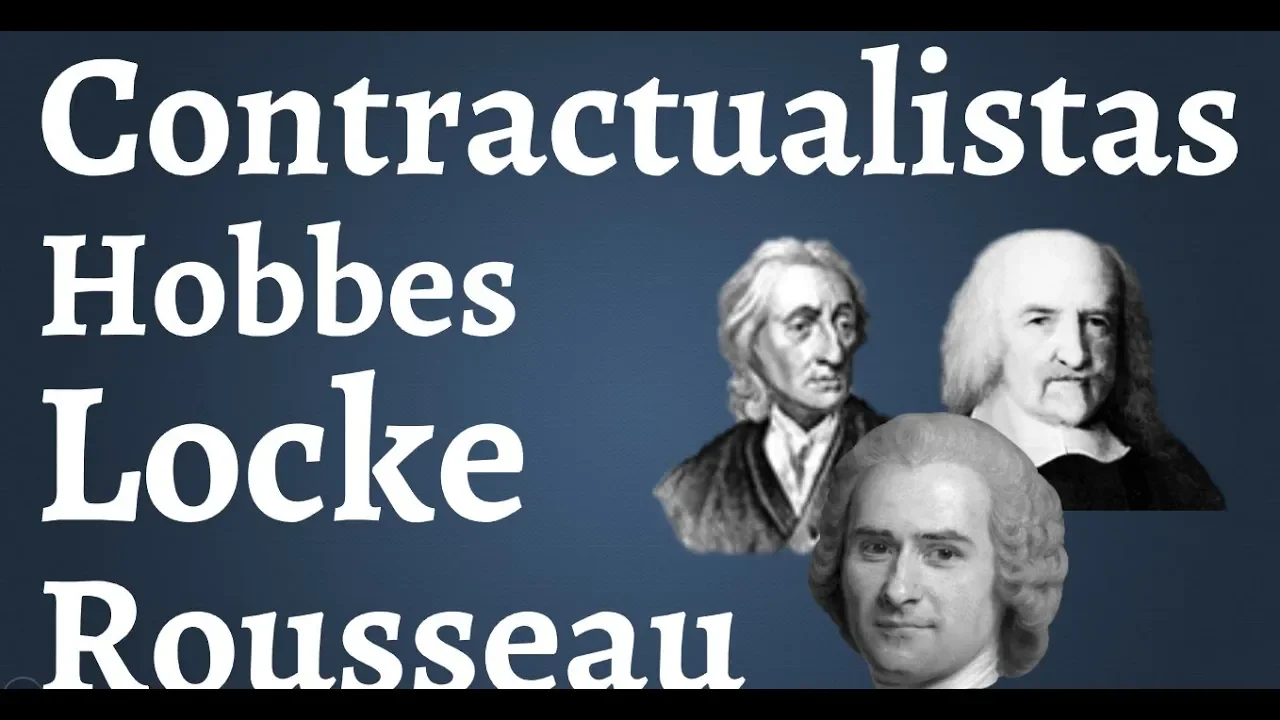
Added:The concept of the 'State of Nature' as defined by earlier political theorists like Thomas Hobbes and John Locke.
The foundational ideas of Social Contract Theory, specifically how individuals transition from a pre-political state to a governed society.
The historical context of the European Enlightenment, particularly the critique of absolute monarchy and divine right.
Basic distinctions between different types of freedom, such as natural liberty versus civil or moral liberty.
The intellectual impact of Rousseau's theories on the French Revolution, particularly the Jacobin implementation of popular sovereignty.
Critiques of the 'General Will' by later liberal philosophers (e.g., Benjamin Constant and Isaiah Berlin) regarding its potential transition into totalitarianism.
Immanuel Kant's ethical philosophy, specifically how Rousseau's concept of moral autonomy influenced Kant's categorical imperative.
Modern applications of Rousseau's ideas in theories of participatory and deliberative democracy.
106.6K views0likes40:38Original Release: 2008-09-22
Professor Steven Smith: There's so much to say and so little time.
Today, I want to talk about the general will, Rousseau's most important contribution to political science and I will also want to talk about the legacies of Rousseau and what he's meant for the world that he did so much to shape. But I want to start first with the general will which is his answer to the problems of civilization or the political problem of the Second Discourse that we talked about last week, the problems of inequality, the problem of amour-propre, the problem of our general discontent. Social contract is his answer to the problem of natural freedom.
This is so, in a way, because for Rousseau nature, he tells us, provides no standards or guidelines for determining who should rule.
Unlike Aristotle, man is not here a political animal, and notice that when Rousseau speaks of the social contract in the general will as the foundation of all legitimate authority, he means, literally, that all standards of justice and right have their origins in the will in this unique human property of the will or free agency. It is this liberation of the will from all transcendent sources or standards, whether those be found in nature, in custom, in revelation, in any other source.
The liberation of the will from all of these sources that is the true, as it were, center of gravity of Rousseau's philosophy. It is a world that begins to emphasize the primacy and the priority of the will, a moral point of view that I want to indicate a little later, finds its, in many ways, very powerful expression in the philosophy of Immanuel Kant. But given Rousseau's, let's call it libertarian conception of human nature, his description of the actual mechanism of the social contract may come as something of a surprise to us.
The problem, to which the formula of the general will is the answer, is stated succinctly by Rousseau in Book I, chapter 6 of the Social Contract. "Find a form of association," he writes, "which defends and protects with all the common force, the person and goods of each associate and by means of which each one while uniting with all obeys only himself and remains as free as before."
This, he calls, the fundamental problem for which the social contract is the solution.
That statement, a famous statement, Book I, chapter 6, really contains two parts that merit close attention. The first part says--the first part of that clause says that the aim of the contract is to protect and defend with the common force the goods and person of each member. So far, think of that, this is entirely consistent with Locke's claim or even Hobbes' claim that the purpose of society is to protect the security or the life, liberty, and estate of each of its members. Yet, Rousseau adds to this Lockean or liberal clause you might say, a second and more distinctly Rousseauian claim, namely, that the contract must ensure not only the conditions for mutual protection and the preservation of self and property, but rather also that in uniting with one another, he says, each person obeys only himself and then he says, "remains as free as they were before."
But how is this possible, we want to know.
Isn't the essence of the social contract that we give up some part of our natural freedom to guarantee mutual peace and security? How can we remain as free as we were before, and as he says, obey only our--that the participant obey only himself. That is the paradox, in many ways, or the fundamental problem, as he calls it, to which his contract is a solution. Rousseau provides an answer as follows; he says, "Properly understood these clauses are all reducible to one.
Namely," he says, "the total alienation of each associate together with all of his rights to the entire community." The total alienation of each associate with all of his rights to the entire community.
And those two phrases, "total alienation" and "entire community" are obviously central here.
In the first place, all persons must give themselves entirely over to the social contract to ensure that the terms of the agreement are equal for all.
The total alienation clause as it were, is Rousseau's manner of ensuring that the terms of the contract are the same for everyone. But secondly, when we alienate ourselves, it is crucial, he says, that this be done or given to the entire community, for only then he wants to argue, is the individual beholden not to any private will or any private association, or to some other person but to the general will, the will of the entire community.
The social contract is the foundation of the general will which is, for Rousseau, the only legitimate sovereign.
Not kings, not parliaments, not representative assemblies, not presidents, but the general will of the entire community is the only general sovereign, the doctrine of the famous doctrine of what we call the sovereignty of the people or popular sovereignty.
Since everyone combines to make up this will, when we give ourselves over to it entirely, he wants to argue, we do nothing more then obey ourselves.
The sovereign, in other words, is not some distinct third party that is created by the contract, but rather the sovereign is simply the people as a whole acting in its collective capacity, the people in their collective capacity. Now, you might suggest that there is something deeply amiss here.
That is to say, from a highly individualistic set of premises where each person is concerned only in the state of nature, or in the pre-contract tradition, only with the protection of their lives, persons and property, Rousseau seems to be leading us to a highly regimented and collectivized conclusion, where the individual has given over virtually his or her entire being to the will of the community.
In what way does this render us as free as we were before?
In what way do we remain free and obey only ourselves?
That seems to be the problem. Is Rousseau's formula for the general will, a recipe or a formula for freedom, or is it a recipe for the tyranny of the majority of the type later analyzed by Tocqueville that we'll be seeing after the break?
Rousseau wants to say, paradoxically, only through this total alienation do we remain free.
Why is this? Why is this?
Because he wants to argue no one is dependent upon the will of another. The people established through their act a new kind of sovereign, the general will, which he says is not strictly speaking the sum total, the additive total of the individual wills or the individual parts, but is more like the general interest or the rational will, if you want to use that kind of Kantian formulation, the rational will of a community. Since we all contribute to the shaping of this general will, when we obey its laws we do, he wants to say, no more than obey ourselves.
Rousseau describes this new kind of freedom that we achieve under the general will. He wants to say that this brings about, in some ways, a radical transformation of human nature in itself.
The freedom of the citizen under the general will is not the freedom of the state of nature, it's not the freedom to do anything we like, anything that our will and power allows us to do, but it is a new kind of freedom that he calls moral freedom, a freedom to do what the law commands.
The passage from the state of nature, he writes, to the civil state, the passage from the state of nature to the civil state produces a remarkable change in man. For it substitutes justice for instinct in his behavior and gives his actions a moral quality that they previously lacked.
And Rousseau continues that statement as follows.
"What man loses through the social contract is his natural liberty and unmitigated right to everything that tempts him and he can acquire. What he gains is civil liberty and proprietary ownership of all he possesses, but--and here I think is the crucial argument or the crucial clause, but he writes--to the preceding acquisitions," that is to say civil liberty, "could be added the acquisition of moral liberty which alone," he says, "makes man truly the master of himself. For it to be driven by appetite alone is slavery and obedience to the law one has prescribed for oneself is freedom." That is a remarkable statement.
"Obedience to the law that one prescribes for oneself is freedom." That is moral liberty, which is only created and possible through the social contract, and the implications of this, the moral and political implications of that statement are massive. It is here, in many ways, where Rousseau departs most powerfully, most dramatically from his early modern predecessors.
Consider the following. For Hobbes and Locke, liberty meant that sphere of human conduct which is unregulated by the law. Remember chapter 21 of Leviathan, where Hobbes says, "where the law is silent" praetermitted in his term, "where the law is silent, the citizen is free to do what ever he or she chooses to do." Freedom begins, so to speak, where the law is silent.
But for Rousseau, law is the very beginning of our freedom. Where the law is silent, we may have a kind of natural freedom, but our moral freedom, we are free to the extent that we are participants in the laws that we in turn obey. Freedom means acting in conformity with self-imposed law.
A radically different understanding of what freedom consists and it seems underlying the difference between, one could say Hobbes and Locke on the one side, and Rousseau on the other; it's a difference between two very different conceptions of liberty.
One might call them liberal and republican respectively, small "r" republican of course or democratic even, if you like. For liberals, following in the tradition of Hobbes and Locke, again, freedom has always meant a sphere of privacy where the law does not intrude or where other people do not intrude.
This is why the separation of the public and the private sphere has always been so sacred to liberals, because only in the private sphere, only in that area of civil society where the state does not intrude is the individual really and truly free.
But for the republican theory of liberty of which Rousseau is a most powerful modern exponent, this separation of public and private is only an exercise in what might be thought of as private selfishness. The task is rather to create a community where the individual and the public interest are not in conflict with one another, where the individual does not think of him or herself as a being apart from the social body. This is the freedom of the citizen, for Rousseau, who takes an active role in the determination of the laws of one's own community.
Rousseau's purpose in saying this and in writing this seems to be to bring back to life a concept that he believes has been dormant, had laid dormant for centuries and that concept is the citizen. The last people who really knew what a citizen meant, he says, were the Romans.
In a footnote, again to Book I, chapter 6, he indicates to what degree the true meaning of citizen has been lost on modern subjects.
"Most modern men," he writes, "mistake a town for a city, and a bourgeois for a citizen." Think of that.
Most mistake a bourgeois for a citizen.
The modern world furnishes almost no examples of what a citizen is, and this is why it is necessary for Rousseau to return to the histories of antiquity, especially Rome and Sparta to find models of citizenship.
Only in these societies can one find the spirit of self-sacrifice and devotion to the common good, a kind of patriotic devotion upon which citizenship is founded. If I could take perhaps Rousseau's most memorable example of the true citizen it comes from an example he lifts from the Roman writer, Plutarch that he uses in the opening pages of his book, The Émile, which I hope you will have a chance to read at some other time.
Here, he tells an unforgettable story for anybody who ever reads Émile. "A Spartan woman," he writes, "had five sons in the army and was awaiting news of the battle," had five sons in the army and was awaiting news of the battle. "A helot, slave arrives trembling she asks him for news. ‘Your five sons were killed,' the helot replies. ‘Base slave, did I ask you this?' ‘We won the victory,' he says.
The mother runs to the temple and gives thanks to the gods."
Here, for Rousseau, was the ancient citizen.
An example that is both terrible and sublime, which of course he wants it to be, he intends it to be.
There is the example of what the true citizen is.
The question, when you consider this possibility, is whether Rousseau's idea of the freedom of the citizen, freedom to live under self-imposed law, leads to a higher form of nobility, higher than the kind of low minded pursuit of one's self-interest as Rousseau wants.
He wants to dignify politics again by leading to a higher form of nobility or does it result in a new kind of despotism, the despotism of law, the despotism of obedience to the general will and of course underlying that sinister reading of Rousseau is the famous or maybe infamous statement that not only that the general will is the source of freedom, but that anyone who obeys, who refuses to obey, the general will may be in his famous formulation, may be forced to be free.
That anyone who disobeys it and being chastised or can be, as it were, forced to be free. Recall that this is a conception of freedom which, again, is almost the opposite of that of what we might again call the liberal tradition.
A view, which, and again in a slightly paradoxical way, was given, a very powerful formulation by Hobbes. I want to read a passage that I read a couple of weeks ago from Hobbes which I think stands as a striking contrast to that of Rousseau's.
Again, in chapter 21 of Leviathan Hobbes writes, "The Athenians and the Romans were free, that is, they were free commonwealths. Not that any particular men had liberty to resist their own representatives, but their representatives had the liberty to resist or invade other people." Hobbes clearly says that the ancient freedom was the freedom of the collective; it wasn't the freedom of the individual.
"The freedom of the authorities," as he says, "to resist or invade other people."
There is written, on the turrets of the city of Lucca, remember that, in the great characters at this day the word libertas and yet, he goes on to say, "no man can thence infer that a particular man has more liberty or immunity from service to the commonwealth there than in Constantinople."
That is to say, freedom for Hobbes consists of, as he puts it, immunity from service, immunity from service and for this reason there is no reason to believe that anyone is freer in the republican city of Lucca, which has libertas on the wall than in Constantinople.
That seems to, already a 100 or so years before Rousseau, suggest a powerful alternative to his view of freedom. Hobbes' point, like Rousseau's, is extreme and that in many ways is the power of these two views.
Hobbes' view of freedom is immunity from service, Rousseau's view is that freedom consists, you might say, only in service. Our freedom starts where the law begins. Again, at the basis of this are two radically different views of the role of political participation in lawmaking. For Rousseau, again, laws are legitimate only if everyone has a direct share in making them. It doesn't mean we all agree with the outcome but only if we have some kind of share or voice in making them. For Hobbes, for Locke, for the authors of the federalist papers, on the other hand, the direct involvement of the citizen in lawmaking is clearly a subordinate or a secondary good. Legislation is better handled by persons chosen from the electorate who are, so to speak, the agents or representatives of the people. This was what the federalist authors argued was the great advance of modern political science, the doctrine of representation.
What is far more important for the federalist authors, as well as for Locke, Hobbes and that tradition is that laws be generally known, that they be applied by impartial judges, rather than they be the direct expression of the general will. In many ways underlying the, again, liberal conception of law is a certain distrust of the collective wisdom or the collective sovereignty of the people. It is too cumbersome, in many ways, and also too dangerous a mechanism to call people together to decide on matters over public concern. This is better left according to this tradition to representatives.
Rousseau obviously could not disagree more.
One could say that Rousseau makes heroic and unreasonable assumptions about human nature. Why do we want to gather together constantly or often to decide, to deliberate, and to debate over questions of public concern?
Most people, it's hard enough just to get most people, as we know, to go out to vote, why do we want to engage in endless debate of something like a college council meeting trying to discuss what to do, whether to buy or not a new set of dumbbells for the weight room. This is a debate that will go on for hours and hours and maybe even weeks.
Don't people simply want to be left alone?
Rousseau, again, he seems in some way, to make unreasonable assumptions about human nature and our capacity to engage in debate.
But Rousseau will tell you he is not being idealistic at all.
He is starting from the assumption of men as they are, he says. Unless everyone he wants to say is engaged in the process of legislation, there is no way for you know that the laws will be an expression of your will rather than simply the private will or corporate will of some individual or intermediary body. You will find yourself in a condition of dependence and slavery on the will of others.
And what is really at issue for Rousseau is freedom from dependence on some faction, some interest, or some association that we have come to call today interest groups, in some way.
Rousseau's appeal is not to our altruism, but rather, to our selfishness, in some way.
Our desire, our private or selfish desire to preserve our freedom and resist the willful domination of others upon it.
So far, this all, in many ways, is very abstract and Rousseau deliberately sets out his plan for the general will in a highly abstract and semi-technical language. But he turns to questions particularly in Book III about how is the general will actually applied. How is it applied?
Here Rousseau is far more specific sociologically and so on about the conditions under which the general will, or a general will, can come about.
In the first place, the general will can only operate in small states, much like the size of an ancient republic. In one place, one particularly notable place in the social contract, he says, only the island country of Corsica is today a place where the general will might be established. The modern nation-state, as we have come to think of it, is far too large and diffuse to determine the general will. Such a state, such large states will necessarily entail considerable degrees of social inequality of wealth, of status and with such inequalities, there can be no general will. Finally, or in addition, such a state where the general will is operative would be one that would have to, in some sense, eschew the temptations of commerce and luxury for these bring with them, again, large scale inequalities.
His ideal city seems to be a kind of agrarian democracy, a small-scale agrarian society. Yet, at the same time, we might get the impression that only a direct democracy would satisfy Rousseau's requirements for the general will and yet we find out this is not quite the case.
In Book III, which I hope you will look at with some care, he shows surprising flexibility about the forms of government that may be appropriate to different physical and different climates and different topographies and so on. In the chapter on democracy, he remarks even, "were there a people of God's that would govern itself democratically," and then he adds, "so perfect a government is not suited to men." So he is skeptical about the possibility of a direct democracy and by that he means a democracy not only where the people legislate, bring, create law but where they are in charge also with the administration of law as well, the execution or enforcement of the law. He is very skeptical about that kind of democracy. Again, democracies are only possible under very, very special unique circumstances; otherwise, aristocracy, monarchy, some kind of even mixed government is possible or even desirable. He insists on the separation of powers for much the same reasons that one finds in Locke.
The people who make the law should not be charged with, responsible for executing and enforcing them, and throughout this part of the book Rousseau seems to be in dialogue with an unnamed rival whom he sometimes simply refers to as a famous author. That author is of course, Montesquieu, the author of The Spirit of the Laws. That came out in 1755 and Montesquieu was, of course, famous for arguing that different forms of government must be tailored to different climates, different geographies, different circumstances. In many ways, in Book III, Rousseau seems to indicate or to introduce a very, very almost un-Rousseauian emphasis on prudence, moderation, flexibility that seems at odds with the dogmatic claims of the first two books with its emphasis upon the absolute inviolability of sovereignty. But most important for Rousseau, it is important that legislative authority, in whatever kind of constitution and under whatever kind of government, that legislative authority is only, is always held by the people in their collective capacity. This is why, in a very powerful chapter, Book III, chapter 15, Rousseau rejects altogether the legitimacy of representative government. That passage or that chapter could be taken already as a kind of repudiation, not just of Locke, Locke's theory of the representative but also twenty years or so before the fact of the federalist argument for representation.
"Sovereignty," he says, "can never be delegated."
Sovereignty can never be represented, it can only be expressed. The general will can never be delegated to someone else. If you do that, if you delegate the authority for making law you are, he wants to say, on the first step down the road to tyranny because you give someone else, some partial body or association the power to make law over you. The lawmaking function can only legitimately be held by the people themselves.
I'm going to skip over a bunch of stuff that has to do, very interestingly, I hope you can discuss it in your sections perhaps, with Rousseau's account of the legislator, the extraordinary individual who was responsible at the beginnings of regimes, for shaping the general, for molding a people and for, as it were, giving the general will a kind of shape and distinctive direction, and I'm also going to skip, for our purposes, the very interesting discussion of civil theology, which occupies the theme, the very last chapter of the book, Book IV, chapter 8, where Rousseau talks about the way in which a civil religion must be tailored to bring about love and obedience to the general will. It was that chapter, I should say, that more than anything else led to the books being burned and banned in Geneva and other places and for its powerful attack on Christianity in that chapter. I'm going to pass over that for the time being to look at the legacies of Rousseau and to talk about what--and I just deliberately use that word in the plural--the legacies of Rousseau, because there is virtually no part of modern life, political, cultural, intellectual, moral that does not in some sense bear the stamp or fingerprints of Jean-Jacque Rousseau.
Rousseau's description of the legislator, the kind of political founder creating a people, was for many, in many ways, the closely connected with the French Revolution and particularly the claim of the revolutionaries to create a new nation, a new people, a new sovereign, a new popular sovereign in France. Consider the following words of the famous revolutionary Robespierre in his homage to Rousseau written in 1791. Divine man, this is Robespierre, "Divine man you taught me to know myself.
While I was still young, you made me appreciate the dignity of my nature and reflect upon the great principles of the social order. The old edifice is crumbling, the portico of the new edifice is rising up on its ruins and thanks to you I have brought my stone to it.
Receive my homage, as weak as it is, it must be please you. I wish to follow your venerable footsteps, happy if in the perilous career that an unprecedented revolution just opened up before us.
I remain constantly faithful to the inspirations that I found in your text." People might tell you that the writings of Rousseau had no influence on the French Revolution, that the French Revolution was brought about by bread crises and economic problems and so on; absolute baloney. The writings of Rousseau had this powerful influence on the idea of creating a new people and a new nation. Yet, despite what appears to be a utopian and impractical in his politics, again, Rousseau had a profound influence on the politics of his era. He was approached during his lifetime to write constitutions for Poland and for Corsica, and of course that was the island where a generation later a man named Napoleon Bonaparte was born who attempted to, you might say in some way, extend Rousseau's teaching, not just to France but to all of Europe at the point of a gun to bring democracy to all of Europe at the point of a gun.
Does that sound familiar at all in any way related to events going on now? Where we have a new kind of Bonapartism, perhaps.
In many ways, although Rousseau's attack on representative government would seem to put him strongly at odds with the American Constitution, his glorification of the rural republic based on equality, moral simplicity, skepticism of commerce and luxury, this was to be re-echoed in the writings of Jefferson, with his ideal of a nation of small Yeoman farmers and certainly any reader of Tocqueville's depiction in celebration of the independent townships of New England.
Tocqueville's account of this was directly dependent on his reading of Rousseau, the small-scale experiment in direct democracy that Tocqueville saw was a real world example of a kind of politics governed by the general will.
And when you read those early chapters from Tocqueville's democracy in America about the New England township you will very much see Tocqueville looking at America through the lenses that were in some ways crafted or shaped by Rousseau.
That influence was palpable on a whole host of later nineteenth-century writers. Like Tolstoy, for instance, whose celebration of Russian peasant life was inspired by Rousseau and through Tolstoy, Rousseau influenced the establishment of the Israeli kibbutz movement that was also founded by Russian Jews who had been influenced by Tolstoy, so you have a sort of self-reinforcing cycle of influence.
These, you might say, small rural socialistic experiments in communal living exhibit the same kind of equality, self-government devotion to the common good that Rousseau helped people imagine might be possible. Yet, Rousseau's influence was not limited to politics. If he was a divine man, as Robespierre called him, he was no less so to Immanuel Kant, who claimed that it was his reading of Rousseau that led him to learn respect for the dignity and the rights of man; that's what Kant said.
He called Rousseau "the Newton of the moral universal."
Kant's entire philosophy and I hope you also have a chance to read Kant's critique of practical reason in some later philosophy course, Kant's entire moral philosophy is a kind of deepened and radicalized Rousseauianism where what Rousseau called the general will is transmuted into what Kant calls the rational will and the categorical imperative.
It was not the least of Rousseau's legacies that after his death he became a hero both to the revolution and to the counter-revolution, both to a revival of Roman-style republicanism as well as to Romanticism, or if I can use the words of great Rousseauian, Jane Austin, he became both an advocate of sense and sensibility. Emerson, Thoreau, American transcendentalism with its worship of nature and its protests against the kind of deadening and corrupting influence of society, all of these people were the direct heirs of Rousseau. Rousseau's last work, a book called The Reveries of a Solitary Walker, set the stage for later American classics like Walden Pond and generations of nature writers that have come after it and imitated it. Only by turning away from the noise and business of society can one return to what precedes society, to the feeling of existence, to the feeling of or sweetness of mere existence, to the sentiment of existence, the le sentiment de soi, as Rousseau calls it, the sentiment of the self.
There is a kind of union that he celebrates with nature that puts the solitary, the solitary walker either above humanity or below it. That type of man foreshadowed by Rousseau, the solitary is no longer a philosopher in any sense that we would understand. It might be better understood as an artist or a visionary. He can claim a privileged place in society because such a person regards him or herself as the conscience of that society. His claim to privilege is based on a heightened moral sensitivity rather than his wisdom or his rationality, and it is this kind of radical individualism, the radical detachment of the solitary from the interests of society that is perhaps Rousseau's deepest and most enduring legacy for us today.
So, on that note I wish you a good break.
I hope you have a lot of turkey to eat and you come back well rested and most, most, most importantly we come back with a win over that evil empire to our north.
Thank you very much.
Up Next
20:55
The Politics of Food: Who Shapes What We Eat? | Phillip Baker
@TEDx
71.5K views•2016-11-22

24:30
BRICS Pay and de-dollarization: A New Financial Order Emerges? | 55 chars
@DannyHaiphongYT
164.6K views•2024-10-22

76:09
Populism's Political Sources: Incentives of Politicians | Yale Lecture
@YaleCourses
136.7K views•2019-12-06
10:19
Explaining the Saudi-Iranian Proxy Conflict in the Middle East
@Vox
18.2M views•2017-07-17
Related Study Plans & Knowledge Roadmaps
Structured learning paths in Political Science
political-science
Economic Statecraft: Sanctions & Chokepoints
01Foundations of Geoeconomics and Economic Statecraft
02The Mechanics of Weaponized Interdependence
03International Sanctions: Types, Implementation, and Efficacy
+ 2 more learning modules
12h5 modules
Explore Roadmap
political-science
Central Bank Independence: Politics & Policy
01Foundations of Central Banking and Monetary Policy
02The Time Inconsistency Problem & Inflation Bias
03The Delegation Model and Designing Independence
+ 2 more learning modules
12h5 modules
Explore Roadmap
political-science
Consociationalism: Power-Sharing & Stability
01Democratic Dilemmas in Divided Societies
02Introduction to Consociational Democracy
03The Four Pillars of Consociational Design
+ 2 more learning modules
12h5 modules
Explore Roadmap
political-science
Rebel Governance: Legitimacy, Economy & State
01Foundations of Rebel Governance and Statehood
02Establishing Political Legitimacy and the Rebel Social Contract
03Wartime Economies and Rebel Resource Management
+ 2 more learning modules
14h5 modules
Explore Roadmap