










![[모던 히스토리 인사이드아웃 3회] 현대적 강대국들의 등장 미국(United States of America) with. #대안연대](https://i.ytimg.com/vi/r1YWPpeIT_U/maxresdefault.jpg)



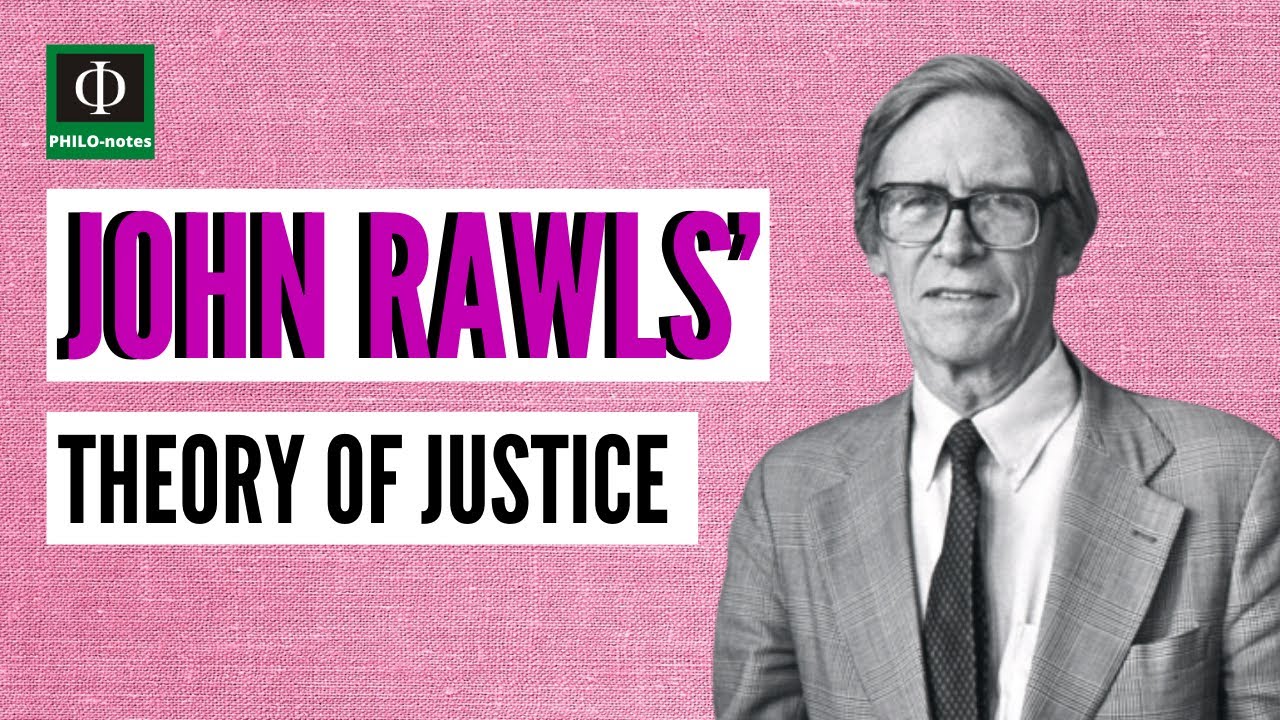


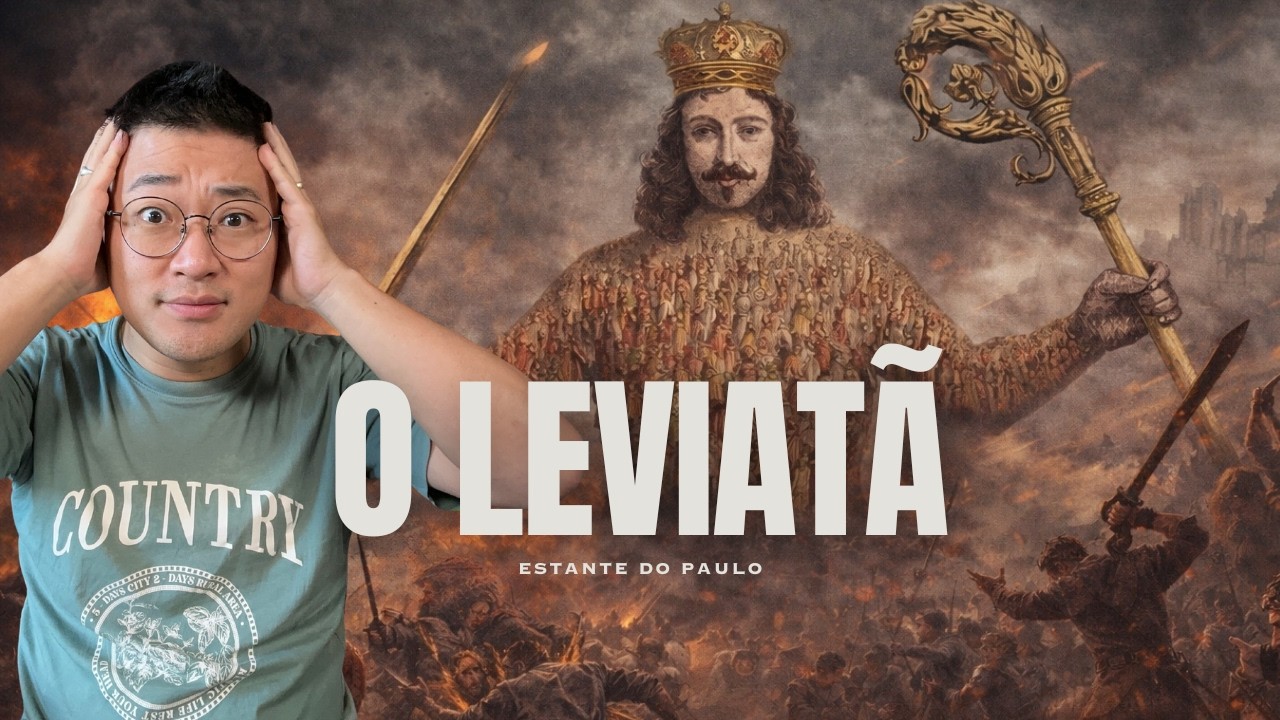


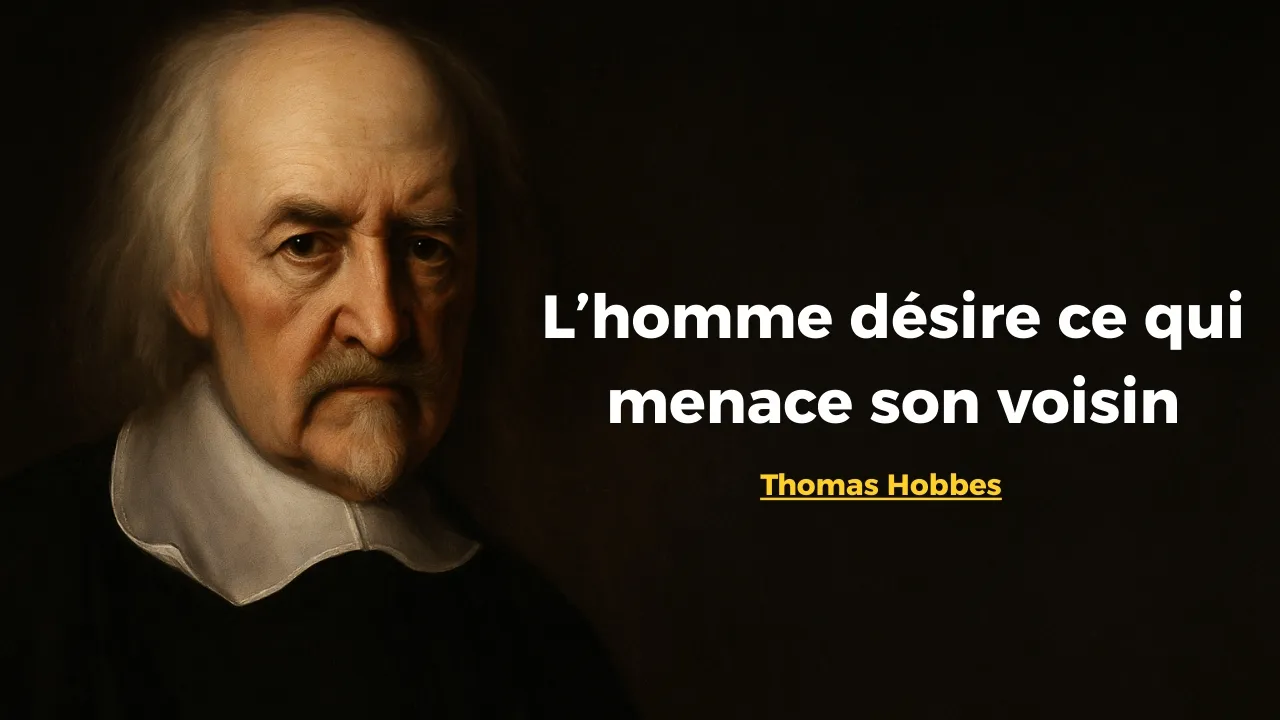
John Locke and Thomas Hobbes presented diametrically opposite views of the state of nature: Locke saw it as an idyllic pastoral state where individuals have innate rights to life, liberty, and property, and government's purpose is to preserve these rights; Hobbes viewed it as a 'war of all against all' where life is 'solitary, poor, nasty, brutish, and short,' and government's purpose is to eliminate fear through a social contract where individuals voluntarily surrender their liberties to an all-powerful sovereign for security. This fundamental tension between individual liberty and collective security remains central to political philosophy and the American constitutional system.
Political Philosophy: Locke, Hobbes & the State of Nature
Added:An introductory understanding of political philosophy as a discipline concerned with the legitimacy of government authority.
The historical context of 17th-century England, specifically the English Civil War and the Glorious Revolution, which heavily influenced both thinkers.
The basic concept of 'natural rights'—the idea that individuals possess inherent rights independent of any government or laws.
A foundational grasp of the term 'Social Contract' as an implicit agreement between the ruled and their rulers.
Jean-Jacques Rousseau’s alternative perspective on the State of Nature and the Social Contract, contrasting with Locke and Hobbes.
The direct influence of John Locke's theories on the American Revolution, the U.S. Declaration of Independence, and modern liberal democracy.
John Rawls's modern adaptation of the social contract theory, specifically his concept of the 'Original Position' and the 'Veil of Ignorance'.
Analysis of modern political debates (e.g., national security vs. individual privacy) through a Hobbesian versus Lockean framework.
425 views11likes1:16:58Original Release: 2020-04-14
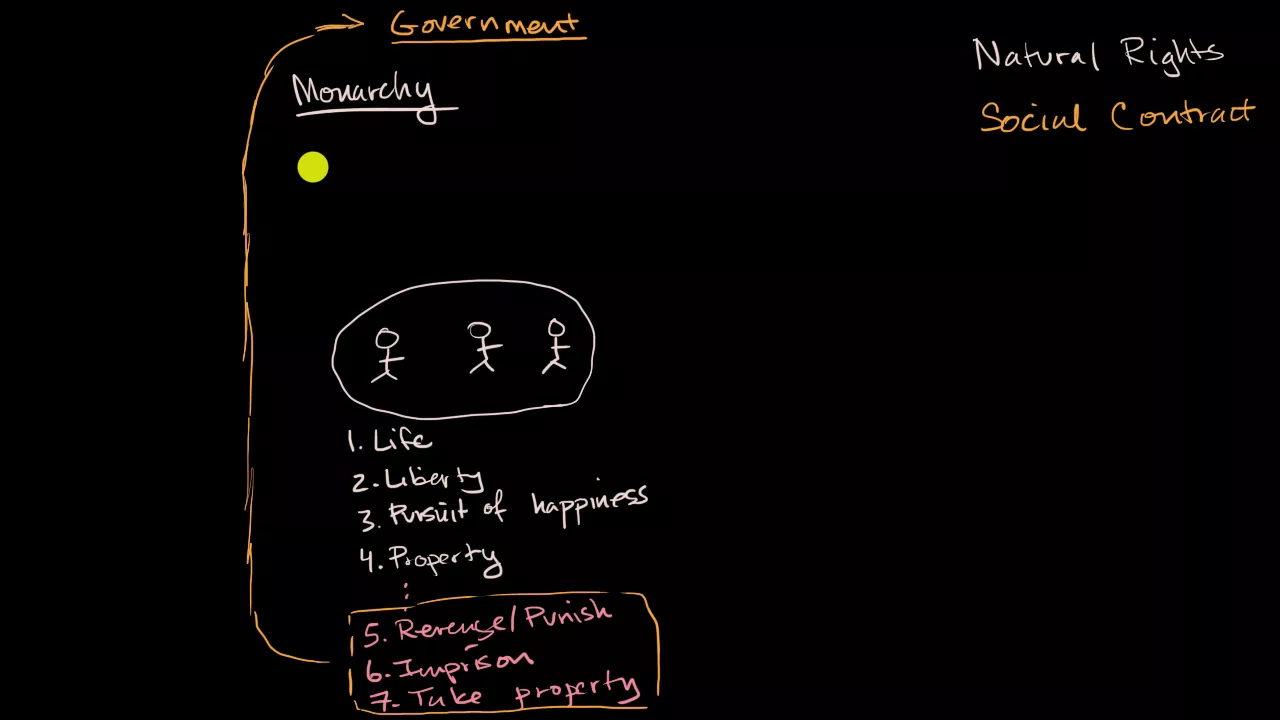
okay let's go ahead and get started so hi everyone let me minimize that to get my picture out of the way can everyone see my screen okay okay great so we probably won't go the full time today I don't have all that much for us to talk about but the topic of the day is political philosophy or the state of nature in particular about John Locke and Thomas Hobbes let's get started with the attendance question for the day the attendance question is this question hopefully the relevance to the reading will be clear our rights I mean like basic human rights that the kinds of things we champion as rights here in America are they innate or are they merely social constructions for the sake of our mutual well-being so go ahead and answer that in the class discussion board which is right here module 23 so try to do that sooner the better but by the end of the day would be great and let's dive into the to the topic so in the modern period in fact throughout all of human history for that matter the question of the purpose of government has been important what is sort of the proper purpose of government what should the ideal form of government be based on the kinds of creatures we are and in the modern period in particular the modern philosophers who were thinking about political philosophy they developed this sort of relied on this theory of the state of nature and the state of nature is kind of an interesting concept because it's supposed to be man's natural state man absent government man left to his own devices talking about basic features of human nature and their view about political philosophy is supposed to fall out of or be a consequence of their view of the state of nature and they're really two ways of looking at this in the modern time period philosophers who were writing about the state of nature Locke and Hobbes in particular but they were they were attempting to give historical accounts of primitive mankind as a way of justifying their political philosophy and it's not clear at all whether they are if they really believed that this was man's natural state historically and that their their view of political philosophy and the ideal government is a consequence of that historical natural state you can also look at the state of nature from a postmodern mindset you know we spent the last couple of class sessions talking about narratives and meta-narratives kind of narratives with it within a culture within a time period within a within a society and one way of looking at the these accounts of the state of nature is to read them as fictional narratives that are used to justify a political philosophy I think we know a lot more now about man's about the evolution and history of mankind historically and socially sociologically and politically and archaeologically it's an interesting question though not to what extent are these states of nature historically accurate or an accurate account of our of our natural state State outside of society primitive man outside of civilized society is as Hobbes called it and to what extent those states of nature those accounts of the state of nature are merely fictional narratives and if they're merely fictional narratives does that undercut the political philosophy that they are you that they that they are used to justify so as you as you encounter you know these these different political philosophies and these accounts of the state of nature have this in mind you know to what extent are they historical to what extent are these accounts merely fictional and doesn't even matter does are these accounts of man's natural state necessary for justifying the political philosophy that they're supposed to entail or can we kind of dispense with these notions of the state of nature as you know almost anachronism is at this point I think anyone writing in political philosophy these days is not going to try to give some fictional account of man's natural state and justify your political philosophy in terms of that they're gonna justify political philosophy in terms of something else and we can talk about later in later in the class so the two philosophers we're gonna look at today are John Locke and Thomas Hobbes two of the prominent philosophers of political philosophers of the modern period and they have really diametrically opposite views of the state of nature and of political philosophy and of the purpose of government let's start with with John Locke everyone's familiar with John Locke I mean John Locke is is where is to some extent where we get the phrase life liberty and the pursuit of happiness although for Locke it was life liberty and property or estate the basic idea behind John Locke and you can see why many people consider John Locke to be one of the founding philosophers of our American society you know Thomas Jefferson to some extent relied on John Locke's concepts in authoring the Declaration of Independence but the idea behind John Locke is that human rights are innate even in man's natural state man left to his own devices has innate inalienable rights and for Locke that includes things like life liberty and estate he says as much in the Second Treatise of government that I asked you guys to read for today he says it should be obvious to human reason that man left to his own devices has a right to life a life to Liberty and the right to property the things that he owns and he thinks of this as just a fundamental principle of reason and you can see why he would think then that rights are innate um I think an important thing for understanding John Locke as he has a fairly agrarian what I would call a pastoral view of the state of nature if you are a hunter or a gatherer or if you're a sort of primitive farmer tilling the land his basic idea is that through the work that you do the hunting or the gathering or the farming the raising of animals whatever it is you are entitled to the fruits of your own labor and you build property building the state for yourself essentially and you can imagine so you know in early I'm gonna kind Americanize this in early America and the colonies you know people are fairly spread out except if you're in one of the urban centers you know they're farming people are hunting and and when people are fairly spread out living relatively individual lives this makes a lot of sense right if you're hunting and you you know kill an animal and it's yours the you worked to produce that you did the hunting so you're entitled to the fruits of that if you're gathering food for yourself going out and gathering acorns whatever you might do you're entitled to the fruits of your own labor you're entitled with the acorns that you that you gather same thing with farming if you're the one working the land you become entitled to the fruits of your labor again as an individual left to your own devices outside of civilized society as an individual in the state of nature as he as he considers it so it's a fairly idyllic again what I would describe as an agrarian or pastoral view of the state of nature people left to their own devices working to survive and being entitled to the things that they produce in terms of ownership so for Locke even in the state of nature one person at a time out there left for their own devices people have basic rights the right to life the right to liberty and the right to property that you earn through the fruits of your own labor this should all sound really familiar I mean we're all Americans so this should be this should resonate with us to some some degree it's an interesting question what happens with civilized society from there you know if a farmer owns a planned or a plantation owner owns a plantation and hires people to till the land for them are the people who till the land entitled to the fruits of their labor it seems like no the owner of the fruits of that labor is the owner of the plantation right so as soon as you in you get multiple people in the equation in a society where a person isn't just owning the fruits of their immediate labor owning other things owning businesses owning property owning farms owning whatever it's you can see how an economy emerges from this right I own not just the fruits of my own labor but I own some big stretch of land that people are tilling and I pay them and they give me the fruits of their labor and Adam Smith talks a lot about this in in his work The Wealth of Nations which is part of our I would describes our founding documents for our American economy but it's and it's definitely related to John Locke's view that we own the fruits of our labor and if that's not the case if you're working for someone else there's an economic trade right you're paid and you work for someone else they pay you you give them the fruits of the labor of their labor and and an economy emerges out of that so for luck there's an intrinsic challenge to civilize Society once you add other people into the equation there's always the danger that you're going to bet your rights are going to be in question your life will be threatened your Liberty will be questioned your the the ownership of your property will be threatened people trying to undercut your rights to these things so for Locke the price this is a very important thing to understand about Locke the purpose of government is to preserve your innate rights your right to life your right to liberty and your right to property and your estate which for him our natural rights in the state of nature even outside of civilized society so civilized society for Locke is somewhat threatening to our basic innate rights and the role of government for him is to protect these in these basic rights that are in danger in civilized society I think it's a pretty easy view for us to understand as Americans we we largely hold this view that we have inalienable innate rights life liberty of course in the Declaration of Independence it was modified to be life liberty and the pursuit of happiness but the phrase the original phrase from Locke was life liberty and property but again these views should be really intuitive in contrast to that is the view of Thomas Hobbes Thomas Hobbes also gave a view of the state of nature but it was not as happy and pastoral pressed aural and idyllic and agrarian of a view as as John Locke's view for Thomas Hobbes the state of nature man left to his own devices and this is a direct quote from Thomas Hobbes it's like the quote under thomas hobbes the state of nature is solitary poor nasty brutish and short this is a very different view of man's natural state than john locke for john locke he's saying you know people left their own devices they're going to feed themselves they're gonna hunt they're gonna gather they're going to farm people are spread out it's individuals living out there on the frontier in some sense but it's very idyllic and calm and not very threatening for thomas hobbes our natural state is a dark place where you don't want to be its alone you're poor it's nasty and dirty it's brutish and short he describes it as a war of all against all a war of everyone against everyone and i want to i want you guys to do a thought experiment and it's funny we're doing this in the time of the corona virus pandemic because we can do kind of a funny spin on this but suppose that there were two people locked in a room and there's only so much food to go around here's a pile of food in the middle one person decides to sleep on one side of the of the of the room and another person decides to sleep on the other side of the room and again maybe there's a week worth of food inside the room and that's it you've got to survive what is that going to digress into very very quickly anyone hiding over the food fighting over the food exactly very quickly um it's not a place where you want to be you couldn't sleep well right if you tried to go to sleep you'd be worried about the other person taking your food maybe murdering you and your sleep and whatnot and this is Thomas Hobbes's view of the state of nature it's a state where even if you own some property even if you're sustaining yourself there's always someone to kill you take your property into your life and you're in a constant state of fear it's a war of everyone against everyone nowhere near is positive and optimistic and idyllic as John Locke's view of the state of nature and this is a very important thing to understand for for Hobbes that fear is the primary motivator and you can see why if you're in a constant state of fear if life is solitary poor nasty brutish and short and the state of nature that's a state of constantly being afraid being afraid of having your resources taken from you if not having enough to survive of someone else out to get you and if that's your view of humans natural state that's the primary motivator and that's the thing you need to get outside of so you know I want to draw attention to the contrast between Locke and Hobbes here for Locke the goal is to preserve the things that we have in the state of nature life liberty property ownership and this kind of idyllic state even in civilized society and the role of government is to preserve all of those aspects of our natural state that are threatened by civilized society Hobbes is saying something related but slightly different he's saying that our natural state is not very idyllic it's a place where people are constantly afraid of the the qualities that he just described like Locke he's saying that yeah we do want to preserve our property and you want to preserve our lives but the goal is not to return to the state of nature the goal is to get outside of the state of nature and eliminate the fear and so again kind of relying on this hypothetical example of two people in a room with not enough food what would you do what would be the in the best interest of everyone in that room and this this is not a difficult thought experiment if someone wants to just chime in an answer what would the what would be the best way to extend your life in that situation anyway and talk about rations and kind of put a plan in place instead of feeling like immediately like it's me against them I need to get as much as I can because I want to survive and that's the main goal that that's it exactly we the two people in that room in order to survive the smartest thing for them to do would be to sit down and hammer out an agreement I won't take you know let's partition the food I won't take yours you won't take mine we won't kill each other in our sleep and we'd start to form the basics the basis of a of a primitive society the fundamental rules that will govern that miniature society and this this is an interesting way to think about it it's almost it's it's kind of a hypothetical thought experiment this is like a proto society what people would do in that situation is start to form rules principles laws agreements all for the purpose of eliminating the fear of the state of nature to preserve their property preserve their lives and and get outside of that natural state there's a term that comes from from Hobbes called social contract and Hobbes's view of government is that it's a form of social contract we basically band together and form agreements for the purpose of making ourselves safer more secure and eliminating the fear of our natural state excuse me so this this form of this theory of government is called social contract theory as opposed to Locke Locke doesn't think that that government is a type of social contract the purpose of government is preserve our innate inalienable rights it's not merely a matter of forming these fairly arbitrary agreements to eliminate our fears to preserve something that's innate to all of us but for Hobbes any of the principles of government the rights the principles laws agreements any contracts any of those things are for the purpose of getting outside the state of nature this has a really interesting consequence that for Hobbes there's no such thing as morality inside the state of nature the state of nature again for him is solitary poor nasty brutish and short there is no such thing as morality in the state of nature it's a war of everyone against everyone and that sounds I think this it can be a little counterintuitive to some people you know if you if you have a Lockean view of morality and of government you're gonna think that there are there's morality and there are rights even in the state of nature so you're always entitled to your life you're always you should always try to preserve the lives of other people but what Hobbes is saying is no no no our natural state is everyone against everyone new versus you one person in the room versus another person in the room duking it out trying to survive it's like I'm trying to think of a good analogy it's like if you get attacked and it's and someone's trying to kill you Hobbes would say you're every bit justified in trying to preserve your own life and kill the other person if it's you versus them this is how we think of warfare if it's us versus them then we're justified in killing killing people for the sake of preserving our own Society morality doesn't apply in that natural state when it's everyone against everyone or your life versus someone else's life you're back into into trying to preserve your own life at all costs and morality doesn't apply so for Hobbes morality and all of these governmental concepts rights and laws and and all the things that Locke thought were innate far too some extent arbitrary constructions that only exist in civilized societies and by civilized societies he means when people start to group together and form agreements and laws for the purpose of building a safer more secure existence then that state of nature that they're desperately trying to get out of because because of the fear of that state of nature what this means for Hobbes and I want to drive home these fundamental contrast between Locke and Hobbes for for Locke the purpose of government is to preserve our Liberty preserve our life preserve our property not to give up those things giving up those things would be going against our natural state for Hobbes he's saying the exact opposite he's saying that we what we do when we band together to make societies when we form proto societies when we form social contracts he's saying we voluntarily give up our freedoms give up our liberties for the sake of security in man's natural state I think he agrees to some extent with Locke he's saying our natural state is somewhat free it's just not a very good place to be you know if you're out there on your own constantly afraid of having your property stolen having your food taken being killed by someone who's trying to gather the resources you've got that's a kind of freedom it's just not a very ideal freedom it's not a safe way of existing it's a constant state of fear he says so what we do then is we voluntarily give up some of our freedom that we do have in the state of nature for the sake of security and safety and building a more comfortable place to be than that state of nature this is where Hobbes gets a little strange and I've always kind of struggled with this intellectual leap that he makes in the Leviathan there's a reason that it's called Leviathan Leviathan meaning this kind of all-powerful sovereign he basically says I want you to follow his reasoning on this he says that if fear is the primary motivator he then asks what is the kind of ideal society what kind of society would would best allow us to eliminate the fear if you imagine a democratic society that you know the kind of society that we have based on on locks views Hobbs is gonna say no no that really isn't isn't adequate to to overcome the fear you know to keep think about this you know if you live in a world of nation-states our country versus all the other countries in the world there have been periods of time like this you know the periods of civil war are periods of world wars world war one world war ii vietnam war whatnot hobbes is gonna say that the the best way to to deal with that situation to keep the nation safe from the rest of the world is to have a very powerful government a sovereign power who can rally them there the resources necessary to wage war against other societies to keep invaders at bay in other words so for hobbes you want a government or a sovereign power that is somewhat all-powerful has the power to do whatever is necessary to keep that society safe you could immediately say then well if you have an all-powerful sovereign say a king or an emperor who's in charge of society invested with all of this power you know in some sense that creates a safe civilized society if you can keep all the invaders at bay you have a kind of security inside that society but what about the sovereign himself isn't the sovereign or the emperor the king constantly in fear of being usurped or murdered by by his subjects who wants to take take his place I mean that you've seen this happen like you know they're the like the murder of Julius Caesar on the Ides of March comes to mind right someone's always ready to take your place and people are constantly afraid of what the sovereign can do if the sovereign is genuinely all-powerful so this is kind of a trade-off that Hobbes thinks that we have to make he says that the safest kind of society is one in which the subjects of a society the average citizens with average members of the society voluntarily give up as much freedom necessary to invest the the king or the Emperor or the sovereign power with as much power as that sovereign can to keep everyone safe he thinks this is the only way to eliminate fear and if you gotta go down the list you can see why you might think this who is the sovereign afraid of in that situation well if people are always voluntarily giving up their own liberties and giving up their own freedoms to invest that sovereign with power and people are doing this not out not begrudgingly but voluntarily for the sake of their own safety in their own security in theory the sovereign should have nothing to fear because all of his his or her subjects have given up their freedom and given up their Liberty invested that sovereign with radical power in unlimited power the people in turn wouldn't have anything to fear that if the sovereign has no fear the sovereign would have no reason to be a harsh ruler to the people that he or she is ruling if the sovereign isn't afraid of being killed or being murdered or being usurped then the sovereign would have no reason to use that power in a top-down thumbs-down kind of way over over the subjects and of course the sovereign is what's necessary to keep foreign invaders at bay to basically wage war against other societies when necessary so for Hobbes this is the best possible Society it's not democratic like it was for for Locke it's he's basically talking about a monarchy a radical monarchy where the monarch is invested with complete and utter and total power both to wage war and over everyone in society subjects would have nothing to fear because the subjects don't have to worry about invaders because the sovereign is going to take care of waging war when necessary but we rely on this in our society even now you know we trust we trust the fact that our government our military will wage war as necessary against other societies to secure our own general well-being here in America every society with the military relies on this this concept to some extent but the idea is that what you want is a radical power a sovereign power with radical and total authority to wage war and also to take care of any unrest inside of society that means the general population won't have anything fear because the sovereign isn't afraid of anything sovereign isn't afraid of being killed the sovereign isn't afraid of being usurped sovereign can wage war against other societies and for Hubbs this is kind of the balance of power that eliminates fear you know keep the invaders at bay have an all-powerful ruler who can make whatever decisions are necessary to ensure the safety of the overall population and everyone else voluntarily giving up their liberties and investing basically transferring those liberties to the sovereign for the sake of creating a secure and safe society so so if you're looking for like strong contrasts in political philosophy the contrast between Locke and Hobbes is like this the strongest contrast you'll find Locke is saying we have innate inalienable rights and liberties the purpose of government therefore is to preserve those rights and liberties not to escape them not to get outside of them we don't voluntarily give up our liberties the purpose is to try to preserve those liberties that we have inside our natural state but Hobbes are saying the exact opposite he's saying the state of nature is not very ideal as he says it's solitary poor nasty brutish and short it's a war of everyone against everyone everyone is constantly afraid and the fundamental psychological motivator for Hobbes then is fear the purpose of government is to eliminate the fear of the state of nature but for Hobbes the only way to do that is not to try to preserve our liberties and preserve our our natural rights it's to voluntarily give up our rights and give up our liberties for the sake of having a civilized society again Hubbs takes it to an extreme he says the only way to do this is have an all-powerful sovereign who can wage war against any invaders to take care of any unrest inside society and he really takes it to to an extreme level and I think it's this extremity of Thomas Hobbes that makes him a little hard to swallow from our American standpoint when you first encounter Hobbes you go wait a minute this is crazy you know we're Americans we like rights and we don't want to give up our liberties so how can Hobbes be right but I think you could plausibly say that every time we pass a law for the general well-being of society this is really what's going on we're giving up some sort of freedom some sort of liberties for the sake of the general well-being or to to maximize the Liberty maximize the extent of other people's rights not just focusing on one person's rights so every time we pass a law you know you could I think you could plausibly say that this is what's going on we're giving up some sort of freedom some sort of Liberty for the overall quality of the society that we have and if you bring Hobbes down a notch if you if you abandon the notion of a monarch you know a radical totalitarian power a benevolent dictator I guess you could think of the sovereign for Hobbes as a kind of benevolent dictator a rat a person with radical power but who uses that power for good because they have nothing to fear from anyone else either from outside invaders or from people inside of society but if you bring that down a notch if you abandon the the totalitarianism of Thomas Hobbes I think you can really possibly say that this is what we do in society all the time every time Congress passes a law every time a society gets together and says let's form some rules for us all to agree by whatever really let's get back to that simple example of two people inside the state of nature you know two people in a room with a certain amount of food what those people are doing when they agree not to kill each other and not to take each other's food is giving up some of their Liberty there they're sacrificing some of their freedom to do whatever they want for their own for their own survival for the overall well-being for the well-being of everyone inside that society so I think for Hobbes this happens on at the micro level and he's sort of proto societies that he has in mind but it happens on the macro scale every society that has laws or rules where those rules are voluntarily agreed upon in the sense of the social contract that he has in mind that's a matter of giving up some individual liberty for the sake of overall well-being and I think since the beginning of time from you know from Plato and Aristotle and philosophy since the beginning of every society every has had to deal with this issue what's the relation between the individual and the end society as a whole individualism and collectivism what's the what's the tension between your individual rights and the rights of other people that live alongside you within your society the tension between your own rights and liberties and the overall well-being of society as a whole this is a fundamental tension and political philosophy that a will never go away but has manifested itself in countless ways in the course of human history I want to dive in and look at some specific examples and talk about some discussion points but I want to pause for a moment and see if any of you guys have any questions about what locker or Hobbes is saying that the difference between their view or what that means for them or what it means for us today are there any questions at this point before we move on sure are kind of like like not like almost similar to like the Darwin theory of like survival of the fittest I think Hobbes is definitely similar because Hobbes is saying I can kind of once again you have in proto Society in our state of nature there is no Society it's it's a matter of individuals waging war against each other so yeah whoever is able to get the food get the shelter and able to defend him or herself against whatever invaders are out there whether in the natural world or other other human beings those are the people that are gonna survive and so the state of nature for him is one of sheer brute survival which is not a very pleasant place to be and it's like being out you know imagine if I just took took you guys out to a Yellowstone and dropped you in the middle of the grizzly bears don't go survive I'll imagine those there aren't just grizzly bears there but there are other humans trying to kill you and take your food you know I think of it kind of like a good contemporary example that I encountered not too long ago was the Hunger Games yeah the book in the movie it's kind of the hunger games is the kind of situation that Hobbes has in mind or maybe a Lord of the Flies even you know a state where where you're constantly afraid of other people killing you and taking your resources and that you know on an individual level there's no such thing in society its sheer survival so in that sense I would say Hobbes is very close to that Darwinian mindset that Chris he's not talking about evolution he's talking about mere survival right but you can't rely on society protect to protect you you can't rely on your neighbor to protect you you can't rely on your family to protect you it's everyone against everyone mere survivals so again Lord of the Flies hunger games state of nature it's not a very good place to be it is Darwinian in that sense it's you know this survive it is the survival of the fittest whoever can get the best shelter and hoard the most food and protect themselves from whatever invaders there are other people or the natural world whatnot those are the people that are gonna survive so that's very similar to Darwin Locke not so much again I think of Locke as being a bit more idyllic and pastoral he thinks of man's natural state is one in which we can survive pretty well using our own rationality and using our own resources you know we can farm the land we can hunt we can gather we're more intelligent than all the beasts around us we're able to find food pretty adequately we're able to feed ourselves I if you're looking for an analogy uh we're gonna fact this we're gonna read this very shortly we're gonna read Thoreau's Walden imagine Henry David Thoreau building a cabin for himself next to Walden Pond fishing from the pond growing his own food maybe trading with his neighbors who live you know a mile away but he doesn't have to worry about them very much his neighbors basically leave in the loan that is to some extent Locke's picture of man's natural state it's not one where you have to worry very much we're able to farm the land and we're able to gather and hunt and we're able to trade with our neighbors so we don't have to worry very much because we're rational beings who are able to take care of ourselves pretty well left or our own devices but for Hobbes he's saying no no our natural state is one constant fear we're constantly being threatened by the natural we're constantly being threatened by our neighbors we're constantly afraid of her own demise were afraid of our resources being taken and stolen from us so just complete opposite views of the state of nature so excuse me I I don't think of Locke as being very similar to Darwin at all because Locke is saying that where man left to his own devices is able to survive pretty well on his own but Hobbes is saying no no no we're a pretty weak creature and you put us out there on our own life is gonna be as he describes I love the phrase it's really quotable quote of all solid Terry you means you're alone poor you don't have very much nasty you know constantly you're dirty and you're uncivilized and you're you know kind of scratch scraping by brutish so you know it's constant warfare and constant struggle and life is short you just don't live very long because of those things and so what we do is band together in form societies you know we try it we we basically form societies and social contracts as a way of escaping that that's a good way to put it it's a Darwinian state where it's a war of everyone against everyone trying to survive as well as possible so we form societies to survive but for Locke our natural state is fairly idyllic you want to preserve those qualities of our natural state and if anything societies threaten our natural state so it's a matter of returning to our natural state of returning to a state of nature from Locke that's a really good question I hadn't really considered that Hobbes is essentially giving a Darwinian view of human nature that it's a war of everyone against everyone mere survival and whoever is able to get resources food shelter and you know weaponry maybe or security and safety by being able to wage war when necessary those are the people and the societies that are going to survive does that does that answer your question yeah it does good any other questions before we move on okay so I want to consider just a minute a postmodern way of looking at this now I mentioned this at the beginning of class but it's if you're a modern philosophy you are a lock or you are Hobbes or you're a political philosopher inside the modern period and again the modern period meaning roughly from Descartes through Conte even though leotard when he talks about the modern mindset he thinks that really persists all the way into like the mid 20th century but really in philosophy the modern period means from from Descartes to Conte one way of looking at what's going on in the in this political philosophy of Locke and Hobbes is to read it as a type of narrative in fact that's really what they're doing Locke is telling you a certain story about the origin of mankind what mankind is like in his natural state and how societies formed and what the purpose of society is what leotard would call a meta-narrative it's a narrative that doesn't just doesn't just focus on the immediate aspects of that story but it frames all of society and the purpose of citing some broader grander narrative and of course in Locke and Hobbes are doing it in two different ways you know we as Americans read walk and we go oh well obviously if you have innate rights like life liberty and property or as we would say now life liberty and the pursuit of happiness the purpose of society is to preserve people's lives and their rights and that's that's why we have the democratic society we have or the Republican Society we have same thing with Hobbes he's telling you a story imagine man's natural state it's a war of everyone against everyone he's telling you a fairly it's not it's not history it's not archeology it's not sociology it's it's a narrative it's a story that's designed to draw you in and make you sympathetic to his overall political philosophy so within the modern period these aren't narratives these are mere stories they think they're doing history they think they're doing archaeology they think they're doing sort of pure political philosophy where those those accounts of the state of nature aren't fictional they aren't made-up Aaron they really think that is human nature and that's a man left of their own devices and Locke and Hobbes disagree about that of course and of course disciplines like archeology and and and history have made immense progress since Locke and Hobbes but I don't think you I don't think that's enough to settle it I think each one of them really has a fundamentally different view about human nature mankind left to his own devices outside of civilized society but if you're looking at this from the postmodern mindset what they're really doing is storytelling telling you a story of humanity telling you a story of human nature framing all of society in the trajectory of society toward some purpose or toward some goal for Locke it's the it's the preservation of our of our na-na liberties in all of society should be geared towards the preservation of these qualities of the state of nature for Hobbes it's this really dramatic it really is the Hunger Games it's it has the dramatic quality of a movie or a book like The Hunger Games a war of everyone against everyone struggling for survival but you mentioned Darwin if you if you read Darwin dramatically it's it has all the things you want from a good drama right it has struggle and catharsis and survival and you know all these things that define good drama but it's a story it's a narrative but it's a meta-narrative because it's not just a story it's a story that frames all of society tells us where society should be heading and Locke and Hobbes have fundamentally different views about the trajectory of an ideal society what form of government we should have based on these qualities of human nature but from a postmodern mindset when you read accounts of the state of nature a postmodern philosopher a thinker is not gonna read that as history or read it as fact or read it as sociology read it as an objective account of human nature they're gonna read it as a narrative that's used to justify to some extent what the endpoint has already been decided on Locke already has a certain kind of society in mind and Hobbes already has a certain kind of ideal Society in mind and what they're doing is telling you a story to justify what the endpoint is and course to promote that they hit their had their political ideas out there in the world by telling a compelling story that draws people in and I guess from from that point of view yeah viewing the state of nature as a kind of storytelling the question that I have for you guys and I'd love a couple of you would chime in maybe everyone but they might be asking a lot for this this online class which story do you find more compelling which one seems more historically accurate which one seems to be a better reflection of man's natural state again conceiving of our natural state as a human left to his or her own devices apart or outside of or before the emergence of civilized societies if there ever even was a time and I think I think this is the kind of specious part of Locke and Hobbes as reasoning you can possibly say that humans have always banded together we've always lived in tribes we've always lived in groups we've never had this fiction of a lone human out there on his or her own on the frontier very far apart from from civilized societies yes you can point to individuals like Thoreau or maybe like call of the wild you know a person out there just living on the frontier you can point to people like that but they're the exceptions they aren't the norm so you might even say just this this you know hypothetical consideration of a lone person in the state of nature and what human nature is apart from science society is already a kind of fiction that's never been historically accurate and so far as humans have always banded together in groups from what we can tell in the archaeological record from say physical anthropology even in cultural anthropology but again this is a question for you guys to go ahead and unmute and I just love the cuff a couple of you people which a couple of you guys would share your thoughts on this which which view you of human nature do you find more compelling either historically or as a view of human nature I think you're absolutely right that people would be solitary only in individual cases like many of them would do that but organized society is well at least some kind of organization some kind of rules that's probably been around the dawn of man because we're not the strongest we need a lot of us to take some bigger animals if only to get enough food to eat sometimes yeah so so which a sort of political philosophy do you find yourself more attracted to you know again this is this is a fundamentally different view of the nature of government is the purpose of government to preserve the things that are innate to our natural States or should we give up parts of our natural state for the purpose of of having a secure and safe society two very different ways of looking at government it's a really tough question in some ways it's part of the society and government is so that you don't have to do survival-type things but in the same way it sort of amplifies that your ability to work towards your survival instead of fight for it this is this is part of the reason that you know when when the founding fathers were were drafting a constitution they decided they discovered fairly quickly that wood had been left out was what we could now know is the Bill of Rights that we they had talked a lot about how laws reform the collective good of society the different branches of government whatnot what they had left out was the individual I mean individual liberty of the individual freedom so now you've got this fundamental tension how do we form a laws for the you know which are I get from from Hobbes standpoint a social contract what kinds of agreements do we make and how do we make them how do we get together and decide what what rules and standards we're all going to live by unlock Ian's view the purpose of that is to preserve our natural rights but what they had left out was what are those rights you know which which which parts of human nature do we find innate and inalienable and and are gonna be overriding factors and now you've got this fundamental tension between the collective good of society and individual rights and I this seems so obvious to I think any any student of government or politics but in anyone who's thought about about the nature of society for more than a wee this is a fundamental tension that will not go away right if you if you emphasize the collective good too much in the way that Hobbes suggests for example what you end up doing is sacrificing individual rights according to Hobbes we just give up our individual rights and give up our freedoms and give up our liberties for the collective good just like two people who want to survive a little longer inside the state of nature and are inside that room with not enough food but you know if we also hold that we have innate inalienable rights now you've got attention insofar as you pass laws for the common good you're violating someone's and Nate's innate liberties in someone's innate rights and innate freedoms and that is a fundamental tension that will not go away every time we pass a law for the common good we're giving up some of our natural freedoms and every time we emphasize someone's anyone's individual freedoms or individual liberties you run the risk of making that decision not in the common good for the sake of the individual versus the sake of overall society I think what's a little what's a little unfortunate is that in our political age where political parties are diametrically opposed where people have trouble seeing politics from the other side of the aisle so to speak you you I think people forget that this is a tension that won't go away like if you if you're a Republican and you emphasize individual liberty you're gonna have a hard time nowadays kind of understanding the need for collective good the need to sacrifice some of those freedoms for the collective good if you're a Democrat and you know and um if you have more of a socialist mindset where you think that the purpose of government is to provide safety and security and basic needs of society as a whole you're gonna have a hard time understanding how a single person's individual rights could override the the collective good of society as a whole and and I think each side wants to kind of take those two qualities individualism or collectivism to an extreme not recognizing that this is a fundamental tension in any society in any government that attention this is part of the reason that our Constitution is modified right because this is the tension that will not go away every time we pass a law you run the risk of sacrificing someone's rights every time you're focusing on someone's rights you run the risk of harming other people or of sacrificing another individuals rights by emphasizing one person's rights and this is a tension that will not go away and part of the you know I'm Americanizing this to kind of bring it down to earth for all of you guys this is part of the role of the Supreme Court for us here in the United States is to adjudicate to kind of look at the issues and say okay based on based on these laws and based on these historical precedents and based on these rights based on the common good what is that sweet middle ground between between between preserving people's individual liberties but also having the public and common good in mind for everyone as a whole knowing that that tension will never be perfect and that tension will never go away but I think the unfortunate thing is that insofar as our our politics have become so polarized each side has a little trouble understanding the perspective of the other side recognizing that that you know that part of the purpose of our government the purpose of our Constitution the purpose of the kind of the way we've set up our government here in the United States is to try to find a middle ground between the common good well that's why we have Congress and why we pass laws and why power has been spread out diversified among the different branches of government while also emphasizing the rights of the individual and unfortunately that means sometimes someone usually the Supreme Court has to say in this particular instance this is how we find the middle ground between liberty and common good and that's a tension that will just not not go away so again any other questions before we move on I want to talk about some specifics and some examples but if there any questions now is it now is a great time to pause and ask those questions okay nothing heard so let's go ahead and move on so I call these discussion questions but really these are just you know my own reflections on on how these concepts are relevant I mentioned this already but this is a fundamental difference in of opinion about the purpose of government I think we we sometimes take for granted that there should be a government and the sounds kind of obvious obviously in a civilized society there has to be a government but a really important question maybe not so much for us nowadays because we a lot of these decisions have been made for us right we were here what 200 and what close to two hundred and fifty years after after the Declaration of Independence our country has been around for almost two hundred and fifty years our governments largely in place there have been some minor modifications to it but the structure of our government we largely take for granted as Americans and I think we we forget how innovative the kind of government we have really was there had never been in the whole history of the world of government quite like ours before the founding fathers got together and made up the government that we have to try to find the balance between individual liberty and collective good to secure the freedoms that John Locke was talking about while also recognizing that we have to give up some of those freedoms to have a you know a safe secure society to protect ourselves from from our rights being violated by you know by a foreign power out there across the ocean and we forget that that's this fundamental tension so there have been periods of time where this question has been really important you know if put yourself in the position of the founding fathers I know we've declared independence from England we now have the burden of deciding how to set up our government we could form a new monarchy we could have a radical democracy like they had in ancient Greece we could have a republic like they had in ancient Rome what kinds of government do you have what are the different positions how does the government function how are laws made how are laws changed these are fundamental questions that in their viewpoint had never been answered historically correctly the way the way that they should be to preserve the balance that they they envisioned between individual liberty and the collective good but it forces you to ask the question what exactly is the purpose of government is the purpose of government to secure individual rights or is the purpose of government to provide security in safety and be willing to sacrifice and an individual's rights or Liberty for the purpose of that basic security this is the difference between Locke and Hobbes and I guess I want you guys to understand that the society we have now is a as a hybrid solution it's both right we do care about an individual rights we've spelled out what we think our innate rights are in the Constitution the Supreme Court has sometimes said well there are other naked rights that are implicit in the Constitution that aren't explicitly mentioned like the right to privacy is a great example the Supreme Court has said well we have a right to privacy it's not it's not mentioned explicitly in the Constitution but in order to provide some of the things that are listed in the Constitution you have to presume a right to privacy so that's again one of our basic rights even though it's not you know delineated explicitly in the Constitution so whatever those are one purpose of government is to preserve those that's why they're enumerated in the Constitution but we also voluntarily get together in a representative form because we're a representative government we're a republic not a pure democracy we basically elect representatives to go represent our interest to Congress members of Congress in the House of Representatives and in in the Senate pass laws for the common good but every single time that happens someone's individual Liberty is being sacrificed someone is losing their freedom to do whatever they want to do for the sake of the common good and so our founding fathers I think wisely said you can't just have a pure approach one way the other you can't have such a radical view of individual liberty that you don't take the common good into account and you take the can't take the common good and into account so much that you're stepping on everyone's individual liberty you can't have the kind of totalitarian government that Hobbes had in mind where people don't have any liberties or have any freedoms even for the sake of safety and security so we don't our government isn't the pure approach to this you know we're not we don't emphasize individual liberties to an extreme we don't emphasize the common good to an extreme really we're saying both are important and that's why we have practical politics that's why you know members of the House of Representatives and the Senate Duke it out intellectually to decide what laws to pass that's why we give the president power to veto bills that have that have been been passed by it by Congress that's why we give the supreme court the power to say no no no this law is unjust or this law is unconstitutional or this law violates our innate rights you know this kind of checks and balances system is the practical day-to-day work a day approach to finding the balance between individual liberty and the collective good but I think in our society we're kind of committed to the view that there is no pure solution to this despite whatever political parties you belong to you might tell you or what you might might believe we generally hold that a pure solution is not good you know if you if you emphasize everyone's individual liberty all the time you basically give every individual radical freedom to live his or her life however the heck they want you're gonna be sacrificing the common good in a lot of instances we need this social contract notion this ability that we get together and we form agreements what rules we're gonna live by for the sake of creating a secure safe happy civilized society for everyone but we also but we also don't want a society that emphasizes the common good so much that we're all of a sudden sacrificing the individual rights and liberties that we do think we hold these concepts that we've inherited from John Locke so I guess you know what do I want you to take away I just want you to take away that this is that the society we live in is you know the practical day-to-day politics that we have are designed to find a balance between these two opposing forces politically and you can see you know Locke and Hobbes if you take them to the logical extreme end up with two very different kinds of governments neither of which is really reflective of the kind of government that we have yeah it's interesting we settled on a republic you know you could you could imagine what would happen if we had a pure democracy if every single person had the ability to vote on every single issue that's a very different kind of society than the Republican society that we have that's a very different society than a monarch a monarchy where the monarch is invested with absolute authority to provide for the common good where where individual rights and liberties are under emphasized even in the constitutional monarchy there's this tension between between the inherent power of the monarchy and and the constitutional authority then invests the monarch with with power in the first place so in any kind of society you have this is attention and I think you know the American view has been that we've got the best balance between these two opposing forces that other forms of societies don't find a balance that's adequate I know for naught for our American mindset anyway excuse me a question that arises from this ah and this is a question that comes up again and again I've seen it come up a couple of times in the course of my lifetime in historical events but it's a question that comes up all the time another way of framing this issue is how much freedom should we be willing to give up for the purpose of our safety and security a lot of you guys are fairly young you know I'm 41 so I was an adult and in grad school when September 11th happened in 2001 some of you guys might not even be old enough to remember some might have happened before a couple of you were born I remember I'm gonna tell you a little story that I it's an anecdote but I think it's it's relevant I remember the day that September 11th occurred I was my first year of grad school at Syracuse University in New York and I would suppose I was a TA for an ethics class was my very first time as a teaching assistant it wasn't even teaching my own class I was a teaching teacher assistant for another professor professor in Lawrence Thomas from Syracuse and class was canceled once it became clear what was going on that a fairly large terrorist attack had occurred people didn't know what else was coming that day and I again just kind of set the scene I was in New York not in New York City but I was in upstate New York so I had students then that had say parents in the city or family members that lived in the city there was kind of an atmosphere of panic about it it wasn't some abstract event happening somewhere else I was in New York State or this event was it was happening class was cancelled but a few people showed up that the instructor was there I and a couple of other teacher teaching assistants were there a few students showed up to this enormous lecture hall and all of us kind of rather than having class we decided to kind of sit on the stage of this lecture hall and I remember very vividly the instructor Warren's Thomas saying then something to this effect I won't be able to quote him exactly but this was the gist of it he said make no mistake about it the fundamental question from here on out will be how much freedom are we willing to give up for the for the sake of our security and safety to make sure this kind of event doesn't happen again and certain things in society have changed like for example I think everyone kind of knows this but if you didn't grow up with it you may not appreciate the difference like one obvious thing that's changed is that before September 11th if you went to the airport you used to be able to walk right up to the gate if you were seeing someone off you could see them right up to the gate and get on the plane if someone is getting off a plane you can walk right up to the gate to the door of the gate and meet them when they got off the plane that's changed that's and that hasn't been true now for 19 years that's a huge change it's it's it's a it's a type of Liberty that we used to have that is no longer available for the sake of our security or safety most people I think think that's a pretty good trade-off if that means we don't have to worry about planes getting hijacked and another instance like September 11th happening again that's a trade-off we can generally live with but I'm thinking of like more recent events you know we're living right now it's it's fascinating this this is happening right now on the time of the will be known as the corona virus pandemic you know think of all the liberties that we're giving up right now governments are saying you know people don't get together in groups more than what is it 50 or ten in some places businesses only essential services are being allowed to function other businesses have to shut down and provide remote services you know in different states are approaching this in different ways some are legislating it and some are just kind of providing guidelines but we're living in a time when we're all giving voluntarily giving up some of our freedoms and some of our liberties for the sake of the overall good so the virus doesn't spread and somewhere people don't die and I guess the fundamental question is how much Liberty what kinds of liberties and how much are we willing to give up for the sake of the overall good for the saiga overall society when wind will we have taken it too far and will will have sacrificed too much of our individual liberty and too much freedom you know everyone is saying of course this is temporary right the fear and panic about the virus will go away we'll get the virus under control but I will bet money I'll put money right now that some of these social practices that we've had social liberties ways of interacting with each other will change that when we look back on this in 20 years we'll be able to point to this this time period right now as a time period where we realize we need to sacrifice some of our liberties for the sake of the common good but how how much is too far when do we when do when if we sacrifice too much liberty or too much freedom when will be over legislated to the point where we're sacrificing some of those innate inalienable basic human rights that we do believe in as Americans and how much of that is a is a perfectly valid way of providing safety and security for society just like not being able to go meet someone at the gate at the at the airport anymore it's not obvious at all I think you know in 20 of the years or 30 years or a hundred years we'll look back and we'll kind of know you know did we make good trade-offs for the sake of sake of the common good or did we sacrifice too much Liberty and too much freedom for the sake of the common good but again this in my mind this is just a fundamental tension this issue will not go away every time there's a major event where the common good is is is threatened every time you've got a case of one person's rights against another person's rights this issue will crop up and it's not something you can just legislate away and definitely not something you're put go party will answer for you this is a question that society has faced since the dawn of time and will continue to face every time there's a major historical event that affects the rights and liberties of the general population or the overall welfare of the population so I'm curious what will be seen historically in 10 years or 20 years or 50 years long after I'm down 100 years from now but you can point to these historical events like for example another good example might be the internment of japanese-americans in world war ii you know in world war ii after Pearl Harbor there was a scare that maybe America had been infiltrated by Japanese spies so Americans rounded up japanese-americans put them in what are essentially concentration camps you know we didn't murder them but basically isolated them for the sake of the overall safety and security to alleviate this threat of Japanese spies here in America after Pearl Harbor now we look back about and say Matt was that was sacrificing too much Liberty you know that was over emphasizing the common good and sacrificing the individual rights of japanese-americans it was too extreme but that's the same kind of thing that happens in not being able to go to go to the gate at the airport we're sacrificing individual liberty for the sake of the common good some ways of doing that seem natural and right and healthy and not too big of a sacrifice and some of those things seem unjust like entering japanese-americans after Pearl Harbor that seems like it's a too extreme approach to that but again every major historical event this issue seems to crop up I think if you naively say well I'm a Republican so I am emphasized in individual rights or I'm a Democrat so we emphasize the common good you know or any way of characterizing the differences between political parties in any extreme fashion you're not doing justice to the inherent tension that exists between individual the individual and the common good or one person and one person's rights and another person's rights or what I what I put on the screen here as individualism versus collectivism this is an irreducible tension in any society and you know as Americans I think we're trying to find the best balance between those two opposing forces in a way that the way it's characterized by individual political parties is to six to extreme to simplistic to naive and not nuanced enough and understanding that this is an inherent tension in any society that the whole purpose of our American society in the first place was to try to find the balance between those two competing factors another question I have yours what to do about conflicting rights you know uh this is an issue that comes up again and again every time you emphasize one person's rights you run the risk of stepping on the toes of another person who has a competing right and as you go down the the say the the Bill of Rights or any other right that we think we hold there's always the danger that those rights are going to conflict with each other that one every time you emphasize one of those rights for one person you're gonna conflict with it with a competing right a different right another person and again this is why we have certain mechanisms in our government this is why we have the ability to take things to the Supreme Court and have them adjudicated to decide whose rights get to get priority when there's a case of conflicting rights I guess my point is just that it's naive to think that all of these rights are coherent and unified and that I can have all the rights in the in in the Bill of Rights and in the Constitution and you can have all the rights in the Bill of Constitution and the Bill of Rights and in the Constitution and think that there will never be any conflict between between my rights and your rights if you think yes I've got all of those rights and you have all of those rights when it comes to practical matters sometimes you know someone - people have to get together and agree what to do or the government will have to pass a law or the court will have to adjudicate whose rights get priority in the case of conflicting rights so again it's a very kind of idyllic or I guess idyllic is the best word it's idyllic in the sense of John Locke to think that we have all these innate and alienable rights all of us as individuals and that there will never be cases of competing rights where those rights don't clash and conflict with each other again I think this is part of the reason that our government is wisely set up to provide mechanisms for adjudicating these case you know the entire judicial branch you know part of its purpose is to decide what to do in these cases of conflicting rights and it's it's naive to think of those cases won't exist and our government is wisely I think set up supposedly to handle those kinds of those kinds of cases but any kind there's any time there's a decision I think this is the frustrating thing about practical politics and about our form of government insofar as our form of government is designed to find the balance between the individual and a collective good to adjudicate between conflicting rights there's never going to be a solution that makes everyone happy every time the Supreme Court makes a decision it's basically saying here's what has to take priority in this situation for the sake of the common good while taking into account everyone's individual rights and that that inherently means that someone is going to end up on the short end of the stick every single time one of these decisions is made in in a case that's worthy of the Supreme Court's attention so guess what's the big take away you know have a slightly more nuanced view of what the purpose of government is think about these two competing purposes what that means historically what that means for our society what that means for government what that means for what your elected representatives should be doing when you elect them if you think about those things I think you'll have a more nuanced more sophisticated understanding of government maybe be a bit a bit calmer about the the passionate politics and and polar politics of our of our contemporary American government it's it's really a shame that this kind of practical practical problem-solving hybrid view of government isn't better appreciated by both sides because this is the best we can do I think we we look at other societies and say do we want an absolute dictatorship is that going to find the balance between individual liberty and collective good no so we don't have that in America is a pure democracy gonna do that no a Republican government can do that better do we have one branch of government no we spread power around amongst different branches of government but provide mechanisms for passing laws and reaching agreements and adjudicating between between competing rights and I think our point of view as Americans should probably be and that's the best we can do perfect absolutely not you know every time we there's a major historical vendor every time there's a question of safety of the common good or every time there's a question about conflicting rights or every time an individual's liberties are threatened this question comes up over and over and over again and it's naive to think that you can take one of these pure political philosophies like John Locke's view or Hobbes's view or any other pure political philosophy and and take it to its logical extreme and expect that to find the balance I think you know we you might I guess I would describe it as our society having the lesser of the evils that there is no good no absolutely good political society that that answers these questions adequately and we have a hybrid solution that's the less though the least of the evils we don't find the perfect balance there are individual liberties that are being sacrificed we don't always take the common good into account because we do emphasize the rights of the individual but we're desperately trying or should be trying to find the balance between these opposing political forces and these opposing views about what the purpose of government is and if you if you take one of those views to its logical extreme you're gonna run the risk of not finding finding the balance that we're trying to find in practical American politics and probably failing miserably at it these days but that's what our founding fathers had in mind in setting up the form of government that we have and the branches of government and separating powers out and focusing on the common good while also having a bill of rights that spells out what our rights are from an individual standpoint and that's just an irreconcilable tension that that will never quite get outside of so that's all I have for you guys do you guys have any any questions or comments or concerns or maybe insights about about how this applies to us you know contemporarily or as society going forward or in history or anything that happens to be of interest to you guys and we're in relation to politics and the purpose of government I don't have any specific but I like the idea of it and like kind of looking at how human nature sort of bleeds through society today I like the idea of well okay let's let's not say like the idea let's say I think it's interesting that some day we'll have remnants of coronavirus in our society and our mannerisms hopefully none of the virus maybe probably will probably have governmental remnants and what it means for what people are allowed to do it might change the way we relate to other people and one on one you know the way we greet them the way we socialize with them it might result in some legislation to protect people from this kind of situation again again but I think the fundamental question is going to be how much of your own Liberty and how much of the way you naturally relate to other people can and should be changed to provide for the common good to keep all of us generally safe and secure I think it's really naive to think that an event like this will pass without some lingering effects I'm just like there were some lingering effects of September 11th just like there were some lingering effects of Pearl Harbor or any or any major historical event where this issue comes up we did what's interesting historically is it's too early to tell right we don't know what those effects are going to be and it will be for future generations maybe you guys when you're older maybe in a hundred years or five hundred years for people don't look back and say did they make the right kinds of trade-offs did they find an adequate balance between providing for the common good you know preserving everyone's safety and security but without stepping on people's individual rights too much you know but every time we're asking about the common good what we're really talking about is sacrificing individual rights giving up some liberties what's what's interesting about the way we think of it we think of providing for the common good as a way of preserving individual rights that preserving everyone's individual rights is also in the in the interest of the common good so you could think of those as opposing forces and I think Locke and Hobbes think of this very differently Hobbes thinks those thinks of individual rights and a common good in opposition to each other I think as Americans we don't generally think that regenerating that it's in the common good to preserve as many of our individual liberties as possible we don't actually see that there's as much of a tension between those two factors as as as Hobbes thought there was for example but again I think that's actually a little naive I think that's a mischaracterization I think that the structure of the government that the founding fathers came up with and the the basically the structure of the government the mechanisms that are built into the government including the tension between how say Congress works and the Bill of Rights between you know the way in which the different branches of government are checks on each other all of that I think is in service of recognizing that there is a tension between the individual and and and collective society all while saying it is in the common good to have a society where people's you know individual liberties and rights are generally protected but that's an inherent tension you know again that's a slightly more nuanced way of having the discussion and I guess again we're gonna wrap it up here in just a moment but I want you guys to whatever your political views no matter you know what views you inherited what views you have you hold culturally what you know political parties you gravitate towards I want you to keep this in mind going forward that every time there's a political issue the the the question should be coming up how do we find the balance between individual liberty and the collective good if that's not the the focus of the discussion then I think politically the discussion is going awry and it's either naive or too simplistic or being taken to an extreme this is the the core of American political philosophy is to find the balance between the individual and the common good and you know pure Lockean philosophy or pure Hobbesian philosophy is not going to get you there this is why we made the kinds of trade-offs we made in the formation of our government and every time this question comes up what about my rights what about my liberties what about my safety what about my security the question should be well how do we find the balance between the individual liberty and the common good for all of us and and if and if we're veering too much toward one side we're not living you know sort of American political society to to it's in its best I think so you know American political philosophy in American politics in American society added best I think recognizing recognizes this is attention that will not go away both factors are important and the purpose of our government is to try to find the balance between those two factors so I guess that's the big takeaway I have for you guys if there are no questions feel free to ask a question now but if there are no questions I'll see you guys on Thursday make sure you do the next reading make sure you submit the attendance question by the end of the day I'll have your papers graded by by next week so not by Thursday but by next Tuesday I'll have your papers graded the paper instructions for paper number four are already posted in blackboard let me know if you're planning to do either an extra credit paper this probably doesn't apply to you guys but anyone who's selecting option number two for completing the class not doing the mindmap assignments not doing the attendance questions but writing an additional paper but we know and I'll provide a mechanism in blackboard for submitting that but I won't worry about that for the next for the next week or so until the end of class grows nearer if you have any questions or concerns about anything especially about the requirements for the class be sure to let me know you can get ahold of me in any of the ways that you already know about other than that you guys have a good day and I'll see you guys next Thursday on Thursday there's on Thursday take care you guys
Up Next
64:56
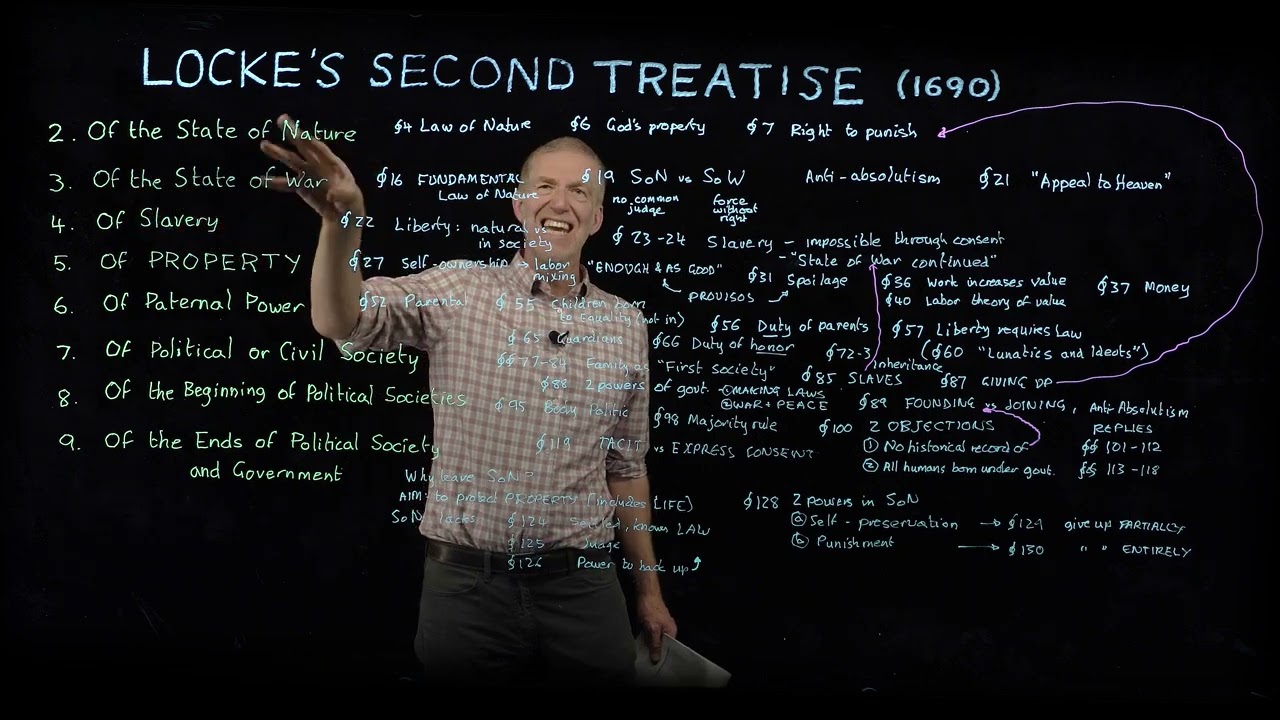
Locke's Second Treatise: Social Contract & Property
@SimonCushing
5.9K views•2024-09-18

24:30
BRICS Pay and de-dollarization: A New Financial Order Emerges? | 55 chars
@DannyHaiphongYT
164.6K views•2024-10-22
7:33
Government Surveillance Methods: 10 Ways You May Be Watched
@BeAmazed
1.6M views•2017-04-09
10:19
Explaining the Saudi-Iranian Proxy Conflict in the Middle East
@Vox
18.2M views•2017-07-17
Related Study Plans & Knowledge Roadmaps
Structured learning paths in Political Science
political-science
Economic Statecraft: Sanctions & Chokepoints
01Foundations of Geoeconomics and Economic Statecraft
02The Mechanics of Weaponized Interdependence
03International Sanctions: Types, Implementation, and Efficacy
+ 2 more learning modules
12h5 modules
Explore Roadmap
political-science
Central Bank Independence: Politics & Policy
01Foundations of Central Banking and Monetary Policy
02The Time Inconsistency Problem & Inflation Bias
03The Delegation Model and Designing Independence
+ 2 more learning modules
12h5 modules
Explore Roadmap
political-science
Consociationalism: Power-Sharing & Stability
01Democratic Dilemmas in Divided Societies
02Introduction to Consociational Democracy
03The Four Pillars of Consociational Design
+ 2 more learning modules
12h5 modules
Explore Roadmap
political-science
Rebel Governance: Legitimacy, Economy & State
01Foundations of Rebel Governance and Statehood
02Establishing Political Legitimacy and the Rebel Social Contract
03Wartime Economies and Rebel Resource Management
+ 2 more learning modules
14h5 modules
Explore Roadmap