




















![Modern Positivism: Hart, Exclusive Positivism and Inclusive Positivism [No. 86 LECTURE]](https://i.ytimg.com/vi/PTlFe7MrK6E/maxresdefault.jpg)


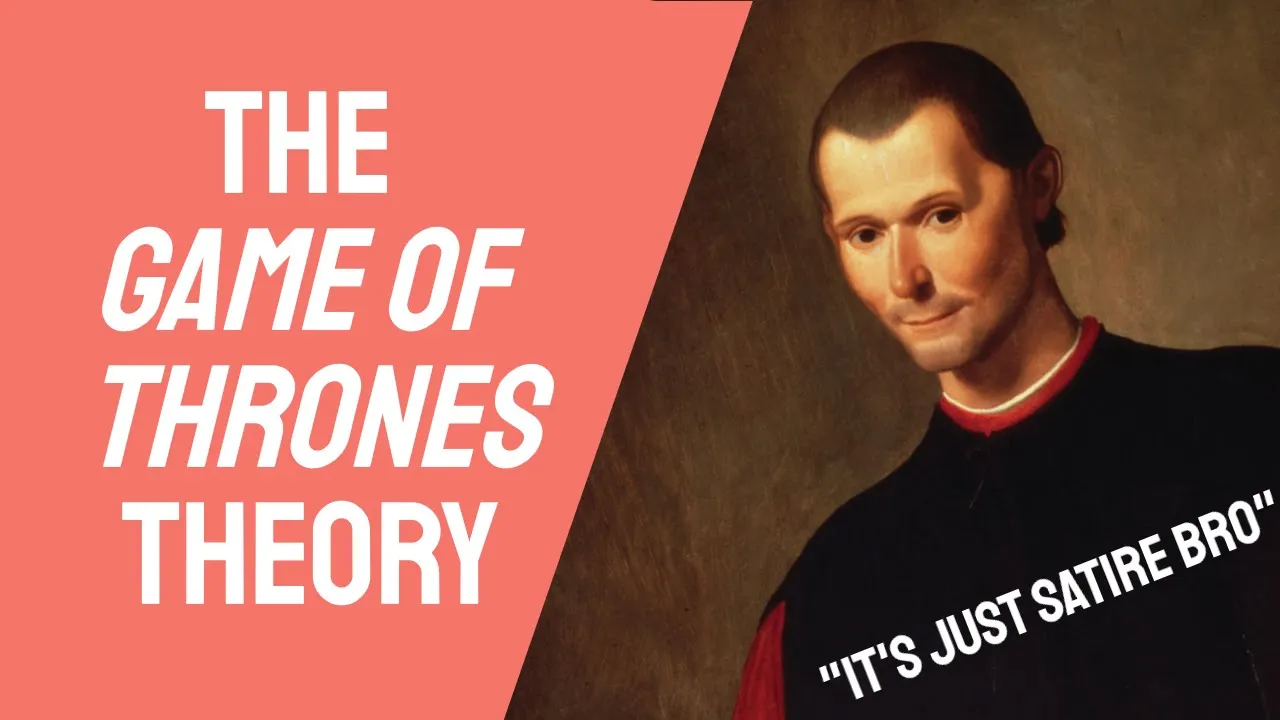


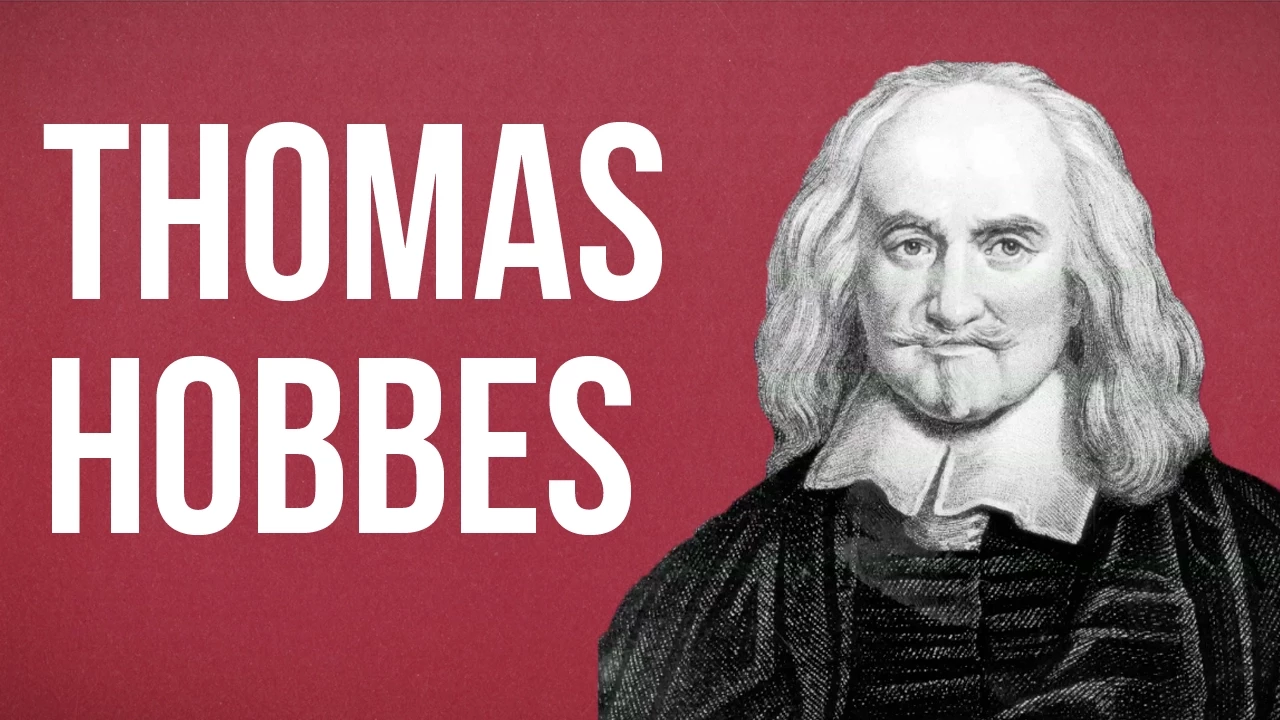
Thomas Hobbes' theory of sovereignty presents the sovereign as an artificial person created by the social contract to escape the state of nature, characterized by perpetual conflict and insecurity; the sovereign holds absolute power as the sole source of law, with all laws being just by definition but not necessarily good, and while Hobbes' sovereign can never act unjustly, the sovereign's purpose is to facilitate human agency and provide peace and security rather than merely control, reflecting elements of both secular absolutism and modern liberalism.
Sovereignty in Hobbes' Leviathan | Political Philosophy
Added:The concept of the 'State of Nature' as a hypothetical condition of humanity before the establishment of formal government.
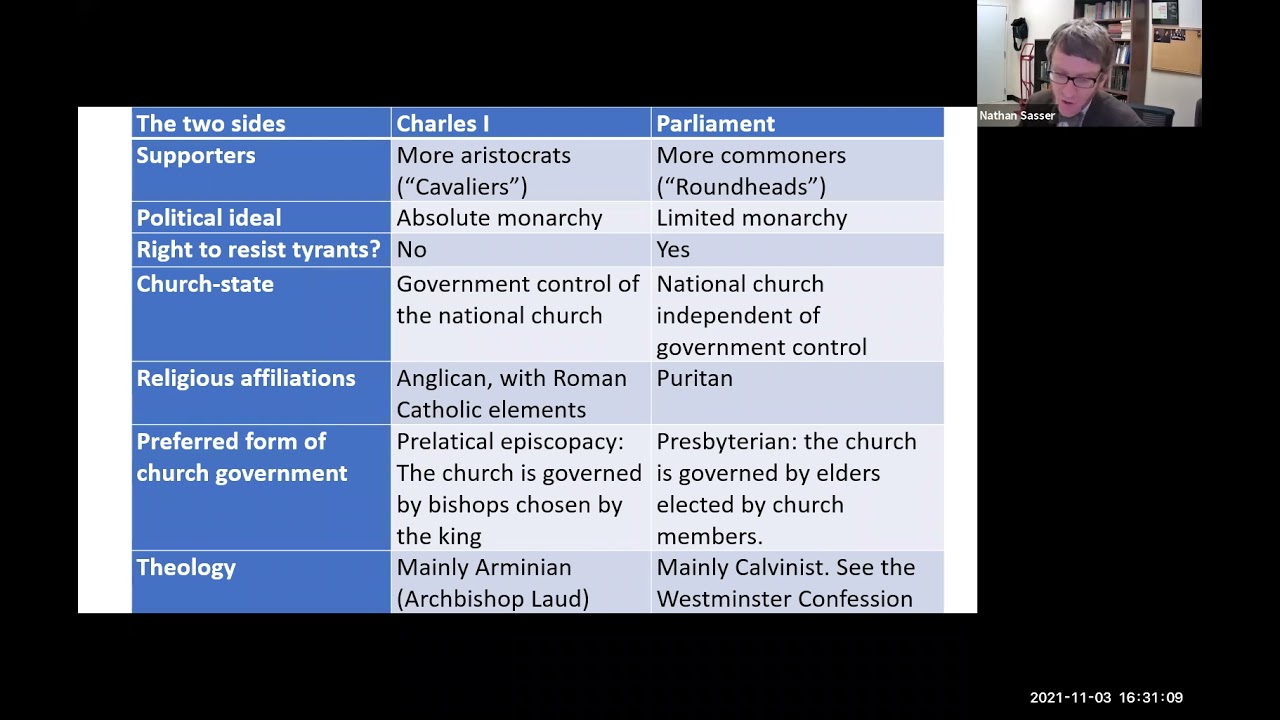
The historical context of the English Civil War (1642–1651), which deeply influenced Hobbes's desire for political stability and authority.
Basic understanding of Social Contract Theory and how political legitimacy can be derived from the consent of the governed.
An introductory grasp of classical views of natural law versus human-made (positive) law.
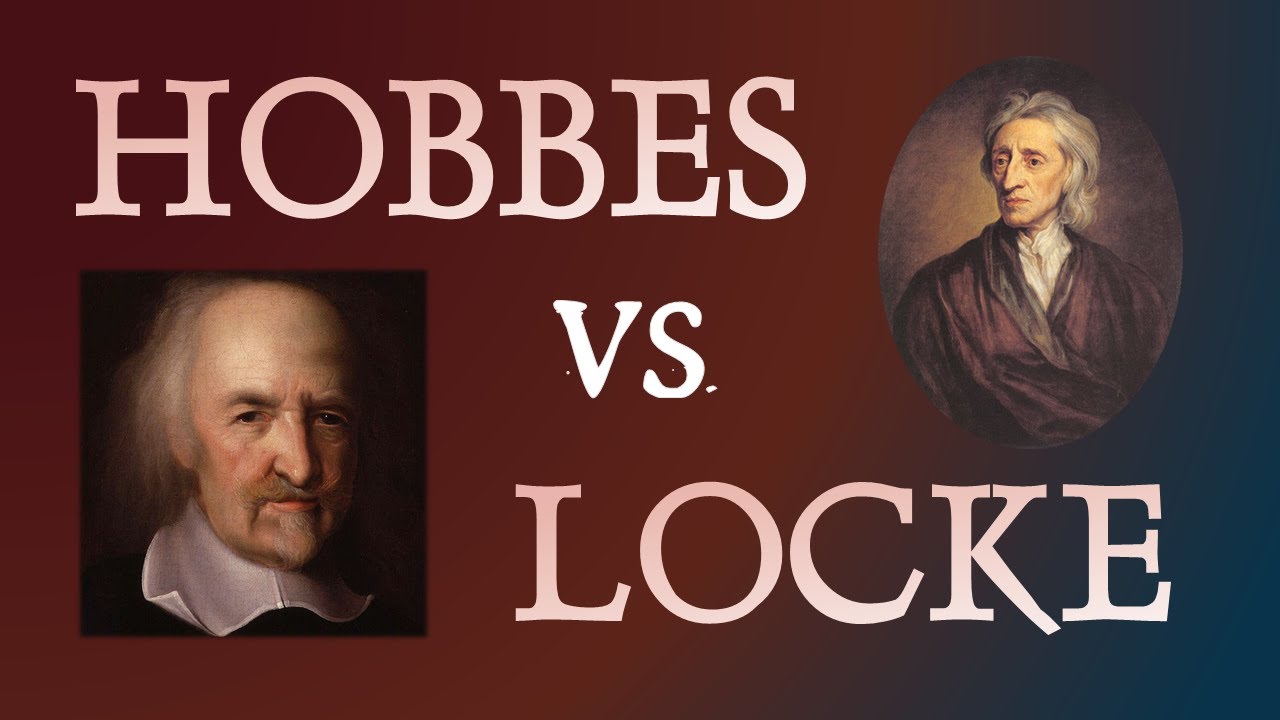
John Locke’s critique of Hobbesian absolutism and his defense of limited government and natural rights in 'Two Treatises of Government'.
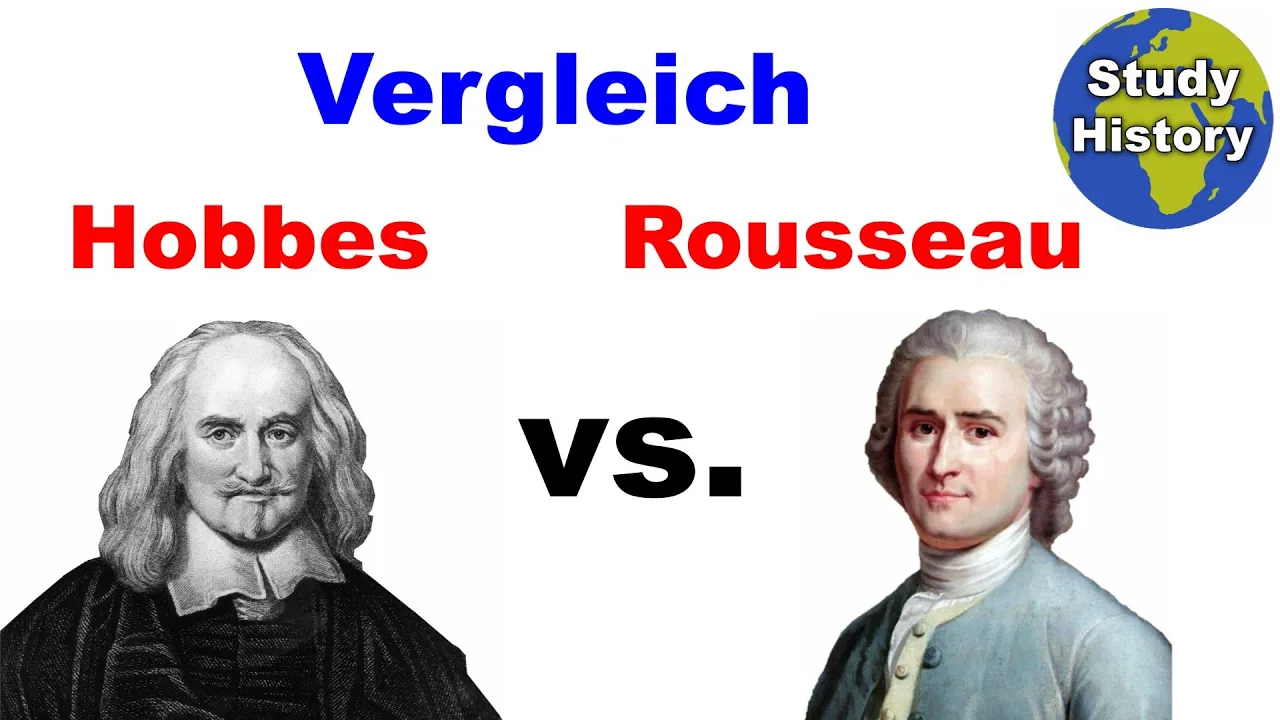
Jean-Jacques Rousseau's concept of the 'General Will' and popular sovereignty as an alternative to Hobbes's absolute ruler.
The development of modern Legal Positivism through later legal theorists like John Austin and H.L.A. Hart.
Applying the 'Hobbesian Trap' (or Security Dilemma) to international relations theory, where sovereign states exist in an anarchic system.
96.7K views0likes44:24Original Release: 2008-09-22
Professor Steven Smith: Okay, good morning.
I'm going to show another movie today but not until a little bit later in the class. We'll get it.
We'll get there. Don't worry!
It doesn't fit until the last part of the class.
But today, I want to talk about sovereignty.
There are two great concepts that come out of Hobbes that you have to remember. One is the state of nature and the other is sovereignty. I spoke a bit about the first one yesterday or Monday rather. Today, I want to talk about Hobbes' theory of the sovereign state, the creation of the sovereign. Hobbes refers to the sovereign as a mortal god, as his answer to the problems of the state of nature, the state, the condition of life being solitary, poor, nasty, brutish and short. And it is only the creation of the sovereign for Hobbes, endowed or possessed with absolute power, that is sufficient to put an end to the condition of perpetual uncertainty, anxiety and unrest that is the case of the natural condition.
Let me talk for a while about some of the formal features of Hobbes' sovereign power, of the Hobbesian state.
In the first place, what I want to impress upon you is that the sovereign is for Hobbes less a person than it is or he is an office. The sovereign is described by Hobbes as an artificial person by which he means the sovereign is the creation of the contract or the covenant that brought this office into being. The sovereign does not exist by nature but rather, Hobbes tells us again, the sovereignty is the product of art or science.
It is the product, the creation of the people or of what we might call, in Jeffersonian language, it is the product of the consent of the governed.
The sovereign and, again, this is crucial, is for Hobbes, the representative of the people. He is the sovereign representative. It is the people who endow the sovereign with the authority to represent them on their behalf.
And, in that respect, Hobbes' sovereign has many of the features or characteristics that we come to associate with what we call modern executive power or executive authority.
When Louis XIV of France famously said L'état c'est moi. "I am the state," he was expressing a peculiarly pre-modern in that way conception of the state; that is to say, he regarded the state as in some ways his personal property.
"I am the state. The state am I."
But this is very different from Hobbes' sovereign.
The state for Hobbes is not the possession of the sovereign.
Rather, the sovereign does not own the state.
He is appointed or authorized to secure for the people the, in many ways, limited ends of peace and security. He has much the same function and to some degree much of the same personality as what we would call a modern day CEO, that is to say there is a kind of anonymity and impersonality about the sovereign.
I mean, unless you're in the Yale entrepreneurial society who can name the CEOs of many companies?
And the answer is you probably can't.
They are for the most part relatively anonymous individuals unless, you know, they get into trouble like Ken Lay or someone like that or do something amazing like Bill Gates. For the most part, they are rather impersonal and anonymous and that is in many ways the characteristic of Hobbes' sovereign.
Hobbes' theory of the sovereign, interestingly, contains within itself elements of both secular absolutism and, in some ways, modern liberalism and it is the tension between these two that I want to bring out in my discussion here. The power of the sovereign, Hobbes continually insists, must be unlimited.
Yet, at the same time, he tells us that the sovereign is the creation of the people whom he represents or it represents. Although Hobbes is widely taken to be a defender of monarchical absolutism, you will note, in your readings, that he displays a kind of studied neutrality over actually what form the sovereign should take. He only insists that sovereign power remain absolute and undivided whether it belongs to a single person, a few, or the many.
And among the powers that the sovereign, he insists, must control are, for example, laws concerning property, the right of declaring war and peace, what we would call foreign policy, rules of justice concerning life and death, which is to say criminal law, and, of course, the right to determine what books and ideas are permissible, that is to say the right of censorship. In a sense, the core of Hobbes' theory of sovereignty can be boiled down to the statement that the sovereign and only the sovereign is the source of law.
The law is what the sovereign says it is.
Does that sound in any way familiar from what we have read this term?
Anyone? Sound familiar?
Thrasymachus? Do you remember that name, Book I of the Republic? Justice is what the stronger say it is. Hobbes tells us that the law is what the sovereign commands. This is sometimes known as the doctrine of legal positivism, which is to say that law is the command of the sovereign, a sort of command theory of law.
And, again, that seems to point back to Thrasymachus' point of view in the first book of the Republic.
There is for Hobbes, as for Thrasymachus, no higher court of appeal than the will or the word of the sovereign, no transcendent law, no divine law, no source of authority outside sovereign command. And sovereign is appointed for Hobbes to be much like an umpire in a baseball or a football game, to set the rules of the game.
But the Hobbesian sovereign, unlike umpires, are not just the enforcers of the rules or the interpreters of the rules, the sovereign is also the creator, the shaper and maker of the rules.
And Hobbes draws from this the startling conclusion, in many ways the infamous conclusion that the sovereign can never act unjustly. The sovereign can never act unjustly, why? Because the sovereign is the source of law and the sovereign is the source of the rules of justice. Therefore, Hobbes concludes, he can never act unjustly. And he supports this example by a deeply perverse and amusing, I have to say, reading from a biblical story, do you remember this?
He refers to the story of David and Uriah.
Everybody will remember that story from Sunday school or from Hebrew school or whatever. Does anyone remember that David was the king at that time? He was the king of Israel and he coveted Uriah's wife Bathsheba.
He wanted to sleep with Bathsheba, so what did he do?
He had Uriah killed so he could sleep with her.
And Hobbes reasons from this story that while David's action may have sinned against God, he did no injustice to Uriah, imagine that. I think Uriah might have had a different point of view about this.
He did no injustice to Uriah because, as the lawful sovereign, he could do any, not just anything he liked but whatever he did was set by the rules of the law.
And when Hobbes tells that story, which he mentions a couple of times in the book, one can only imagine he must have had a kind of wry grin on his face when he wrote that out.
In fact, next semester I'm teaching an entire course devoted to Hobbes' critique of religion in which this will, among other things, figure prominently.
But Hobbes' teaching about law is, in some ways, less Draconian than it might first appear.
He makes clear that law is what the sovereign says it is.
There can be no such thing as an unjust law, he infers, again, because the sovereign is the source of all justice. But he does distinguish, he tells us, between a just law and a good law. All laws are by definition just, he tells us, but it doesn't follow that all laws are by definition good. "A good law," he says in chapter 30, "is that which is needful for the good of the people." A good law is needful for the good of the people. But then one asks, what are the criteria by which we determine the good of the people? How is this determined?
And Hobbes makes clear that the sovereign is not invested with the authority to exercise a kind of absolute control over everything that people do. The purpose of law, Hobbes tell us, is not so much to control but to facilitate. Consider just the following passage from chapter 30, section 21.
Hobbes writes: "For the use of laws, which are but rules authorized," he says, "is not to bind the people from all voluntary actions.
It is not to bind them from voluntary actions but to direct and keep them in such motion as not to hurt themselves by their own impetuous desires, rashness or indiscretion as hedges are set not to stop travelers but to keep them on their way." This is the force or purpose of law to set rules, to keep people, as he puts it, on their way, a law that is intended simply to constrain and control for its own sake, Hobbes says, cannot be a good law. The purpose of a good law is to facilitate human agency in some ways.
And I think, again, that too is central to Hobbes' theory of the sovereign. Its purpose is to facilitate, not simply to control and inhibit.
But the power to control or the power of law for Hobbes also very much applies and here is one of his most controversial doctrines. It must certainly apply to matters of opinion to what we would call today First Amendment issues.
This is something that Hobbes insists upon.
"For the actions of men," he says, "proceed from their opinions. Actions proceed from opinions.
And in the well governing of opinions consisteth the well governing of men's actions." So, if we are going to govern or regulate human behavior, we have to begin by regulating opinion. And it follows from this, Hobbes believes, that the sovereign has the right to decide what opinions, what books, what ideas are conducive to peace and which ones aim simply to stir up war and discontent?
And these comments of Hobbes' about the sovereign's power to control opinions are directed at two principal institutions, the Church and, guess what the other one is, the university. Both of these for Hobbes he considers to be locus, the focus of or centers of seditious opinion that require to remain under sovereign control. By the churches, Hobbes is speaking of the reformed church but, in particular, he is concerned with those radical puritan sects of the type that later came and founded America, these radical sects that elevate matters of conscience and private belief over and above the law, that is to say arrogating to themselves, to the rights of conscience and the private belief, the powers to judge the sovereign. It was these dissenting Protestants, it was these dissenting sects, that formed the rank and file of Cromwell's armies during the Civil War in England. They formed the rank and file of the republican armies in England against the rule of the king. And, Hobbes tell us he would banish all doctrines that profess to make the individual or the sect, more importantly in some ways the sect, the judge of the sovereign.
It is only in the state of nature, he tells us, that individuals have the right to determine just and unjust, right and wrong for themselves. Once we enter society, once we engage or conclude the social compact, we transfer our power to do this to the sovereign to determine these matters for us. And just as important as the radical churches and the reformed sects is for Hobbes the university and its curriculum. In particular, Hobbes faults the universities for teaching what, for teaching the radical doctrines of Aristotleanism in the seventeenth century. Aristotle in this period was the source of modern republican ideas, ideas about self government, ideas about in some ways what we might call direct democracy or participatory democracy, people who believe that the only legitimate form of government is one where Aristotle says citizens take turns ruling and being ruled in turn.
It was, above all, the influence of the classics, Aristotle and Cicero in particular, that Hobbes regards as an important cause for the recent civil war and the regicide of Charles I.
Consider the following passage that he writes: "As to rebellion against monarchy, one of the most frequent causes is the reading of the books of policy and history of the ancient Greeks and Romans.
Reading of those books leads people to rebel against monarchy, for which young men like yourselves," he says, or young women too, "for which young men and all others that are unprovided by the antidote of solid reason," who are susceptible that is to reading these stories and reading these books, "receive a strong and delightful impression of the great exploits of war."
"From reading of such books," Hobbes continues, "men have undertaken to kill their kings because the Greek and Latin writers in their books and discourses of policy make it lawful and laudable for any man to do so provided before he do it he call him a tyrant." That's what you learn, Hobbes believes, from the reading of Aristotle and the Greeks and Romans, regicide, that the only legitimate form of government is a republic and that it is a lawful and even it's your duty to kill your king.
Of course, before doing so, he says, "you must call him first a tyrant." It's a wonderful passage.
And this is so interesting, I think, not only because of its humor and Hobbes' in many ways characteristic exaggerations, but because it shows how much emphasis Hobbes puts on the reform of opinion, the reform of ideas, in many ways like Machiavelli and like Plato too before him, Hobbes regards himself as an educator of princes, an educator and a transformer, a reformer of ideas. There is a kind of internal irony here I think because Hobbes sometimes writes as if, as we've seen, as if human beings are nothing more than complex machines that mechanically obey the laws of attraction and repulsion. But he also obviously writes that we are beings with will and purpose who are uniquely guided by opinions, ideas, and doctrines and it is in many ways the first business of the sovereign to act as a moral reformer of ideas. Hobbes realizes this is a difficult and uphill task that he has set for himself.
And, in a rare moment of sort of personal self-reflection or self-reference, he notes somewhat drolly that the novelty of his ideas will make it difficult for them to find an audience. "I am at the point of believing, he says, "that my labor will be as useless as the commonwealth of Plato," he says in a moment of sort of uncharacteristic despair, "will be as useless as the commonwealth of Plato."
"For Plato" he says "also is of the opinion that it is impossible for the disorders of the state ever to be taken away until sovereigns be philosophers."
And while, in many ways, initially despairing of the possibility of finding a sort of friendly reception or audience for his work, Hobbes then goes on in a more optimistic note to observe that his book is considerably simpler and easier to read than Plato's. Again, you might have a discussion about that over which is the easier one.
But, Hobbes believes it is simpler and easier and therefore more likely to catch the ear of a sympathetic prince.
"I recover some hope," he says. "I recover some hope that one time or other this writing of mine may fall into the hands of a sovereign who will consider it for himself, for it is short and I think clear."
Well, we might question that. He says it's a short book and "I think clear" he writes. Well, it's complex and long.
But nevertheless, perhaps hoping that his advertising it in this way will gain the ear of a sovereign and that "without the help" he continues, "of any interested or envious interpreter and by the exercise of entire sovereignty in protecting the public teaching of it convert this truth of speculation into the utility of practice," the very end of chapter 31, "will convert this truth of speculation into the utility of practice." So, Hobbes clearly believes or thinks that this will be a useful book for a sovereign to read and hoping it will gain the ear of a sympathetic sovereign or potential sovereign.
Hobbes may, I think, overestimate or maybe I really should say underestimate the difficulty of the book but he returns to this again at the very end of Leviathan.
"The universities" he says there, where he talks again a little bit about the audience for the book, "the universities," he says, " are the fountains of civil and moral doctrine. The universities are the fountains of civil and moral doctrine and have the obligation to teach the correct doctrine of rights and duties."
And this means for Hobbes, first of all, adopting his book as the authoritative teaching on moral and political doctrine in the universities.
This should be the required textbook of political science of political teaching in the universities to replace the older textbook, i.e. Aristotle's Politics. "Therefore," he says, "I think it may be profitably printed and more profitably taught in the universities," he confidently asserts.
"The ideal audience for the book," he says "should be the preachers, the gentry, the lawyers, men of affairs, who drawing such water as they find from the book can use it," he says, "to sprinkle the same both from the pulpit and from their conversation upon the people." This is how he sees it, that it should be taught from the pulpit.
It should be taught from the universities and from this conversation will be sprinkled upon the people.
Hobbes' hope, like that of all the great political philosophers, was to be a kind of legislator for mankind. This again is a book with epic, epic ambition.
Let me mention, I've emphasized in many ways the absolutist and authoritarian side of Hobbes' teaching.
Let me talk about something that might sound oxymoronic.
Let me call it for the moment Hobbesian liberalism.
Hobbes enjoys describing the sovereign in the most absolute and extreme terms. Sovereign is to have supreme command over life and death, war and peace, what is to be taught and heard. And yet, in many ways, this Hobbesian sovereign aims to allow for ample room for individual liberty. And he even sets some limits on the legitimate use of sovereign power.
For all of his tough talk, Hobbes takes justice and the rule of law very seriously, far more seriously than, for example, does Machiavelli.
At one time in the book or at one point he maintains that a person cannot be made to accuse themselves without the assurance of pardon. You can't be forced to accuse yourself, what we could call the Fifth Amendment.
You cannot be forced to accuse yourself.
Similarly, he says, a wife or a parent cannot be coerced to accuse a loved one. And, in a similar point, he maintains that punishment can never be used as an instrument of revenge but only for what he calls the correction or what we would call the rehabilitation of the offender.
Add to the above Hobbes' repeated insistence that law serve as an instrument for achieving social equality.
In a chapter called, "Of the Office of the Sovereign Representative," Hobbes argues that justice be equally administered to all classes of people, rich, as well as poor, equal application of justice.
He maintains further the titles of nobility are of value only for the benefits they confer on those of lesser rank or they're not useful at all. Equal justice, he tells us, requires equal taxation policy and he seems to be proposing a kind of consumption tax so that the rich, who consume more will have to pay their fair share. And he argues that indigent citizens, who are unable to provide for themselves, should not be forced to rely simply upon the private charity of individuals but should be maintained at public expense.
He seems, in this way, to anticipate what we might think of as the modern welfare state that public assistance be provided, and the poor, not simply depend on the private goodwill of the others.
But most importantly, I think, is to go back to the importance given to the individual in Hobbes' philosophy. Hobbes derives the very power of the sovereign from the natural right of each individual to do as they like in the state of nature.
And it follows, I think, that the purpose of the sovereign is really to safeguard the natural right of each individual but to regulate this right so that it becomes consistent with the right of others and not simply again a kind of open war against all. What is significant about this, I think, is the priority that Hobbes gives to rights over duties. This, in many ways arguably, makes him the founding father or maybe we should say godfather of modern liberalism, the importance given to rights over duties, of the individual over in many ways the collective or common good. And I think this is expressed in Hobbes' novel and in many ways altogether unprecedented teaching about liberty in chapter 21, a very famous and important chapter.
And here he distinguishes the liberty of, what he calls the liberty of the ancients, or what he doesn't exactly call but I'll call the liberty of the ancients and the liberty of the moderns. The ancients, he believes, operated with a defective understanding of human freedom. For the ancients, liberty meant living in a self-governing republic, living in a republic in which everyone again took some share in the ruling offices. Liberty, in other words, for the ancients was not just a property of the individual.
It was an attribute of the regime of which one was a member. "The Athenians and the Romans," he says, "were free, that is they were free commonwealths, not that any particular man had the liberty to resist his own representative but that his representative had the liberty to resist or invade other people." In other words, liberty for the ancients was a collective good, the liberty, as he says, to resist or invade other people. It was a property of the commonwealth not of the individuals who inhabited it.
But that sense of collective liberty, the freedom to resist or invade is, in fact, even opposed to the modern idea of liberty that Hobbes proposes.
And by liberty Hobbes means something that sounds very familiar to us. Liberty means the absence of constraints or impediments to action.
We are free to the extent that we can act in an unimpeded manner. And, it follows from him that political liberty means the freedom to act where the law is silent, as he says. Think of that, that where the law is silent, we have the freedom to do or not to do as we choose, very important to the way we think of liberty today in a modern and you might say liberal democracy. Hobbes' sovereign is more likely to allow citizens a zone of private liberty where they are free to act as they choose than in the classical republic where there is a kind of coerced participation in collective affairs or in political deliberation.
And Hobbes here takes a dig at the defenders of the view, in his own day, that only the citizens of a republic can be free. "There is written," he says, "on the turrets of the city of Lucca…" and let me just ask before I continue this passage, anybody here in Pearson College?
So, you will know the Dean Mr. Amerigo, yeah, your dean? Your dean is from the city of Lucca. Ask him if this is true when you see him. "There is written on the turrets of the city of Lucca in great characters, meaning great letters, that this day the word libertas, libertas is written on the walls of the turrets of the city of Lucca."
Let's find out if that's still true.
"Yet, no man," Hobbes continues, "can thence infer that a particular man has more liberty or immunity from the service of the commonwealth there than in Constantinople, the city of the Caliphs, the Caliphate.
Living in a republic alone doesn't guarantee you more freedom. He says, freedom in that interesting passage, freedom here requires, as he puts it, immunity, "immunity from service." A regime is to be judged for Hobbes on how much private liberty, how much immunity it grants each of its citizens, an idea of individual liberty in many ways unknown and unprecedented in the modern world. And, in this respect, one can say that Hobbes has some connection to the creation of what we think of as the modern liberal state with its conception of private freedom as immunity from forced participation or forced participation in politics, very different from the ancients.
So what does this all mean?
Let me talk about what Hobbes has to say for us today, we who have in many ways become Hobbes' children.
Hobbes gives us the definitive language of the modern state.
Yet, he remains in many ways as contested for us as he was in his own time. For many today, Hobbes' conception of the Leviathan state is synonymous with anti-liberal absolutism.
And yet for others, he opened the door to John Locke and the liberal theory of government.
He taught the priority of rights over duties and he argued that the sovereign should serve the lowly interest or the lowly ends of providing peace and security, leaving it to individuals to determine for themselves how best to live their lives. Nonetheless, the liberty that subjects enjoy in Hobbes' plan falls in that area that he says the sovereign omits to regulate.
Hobbes does not praise vigilance in defense of liberty and he denounces all efforts to resist the government.
At best, one could say Hobbes is a kind of part-time liberal at best.
But Hobbes is best when he is providing us with, in many ways, the moral and psychological language in which we think about government and the state.
The state is a product of a psychological struggle between the contending passions of pride and fear.
Fear, you will remember is associated with the desire for security, order, rationality, and peace. Pride is connected with the love of glory, honor, recognition and ambition. All the goods of civilization, Hobbes tells us, stem from our ability to control pride. The very title of the book comes from this wonderful biblical passage from Job where Leviathan is described as king of the children of pride.
And the 19 laws of nature that Hobbes develops in his book really are there simply to enumerate or instruct us about the virtues of sociability and civility, especially directed against the sin of pride or hubris.
So, the modern state, as we know it and still have it, in many ways grew out of the Hobbesian desire for security and the fear of death that can only be achieved at the expense of the desire for honor and glory.
The Hobbesian state was intended to secure the conditions of life, even a highly civilized and cultivated life but one calculated in terms of self-interest and risk avoidance.
Hobbes wants us to be fearful and to avoid dangerous courses of action that are inflamed by beliefs in honor, ambition, and the like. The Hobbesian fearful man is not likely to become someone who risks life for liberty, for honor, or for a cause. He's more likely to be someone who plays by the rules, avoids dangers, and bets on the sure thing. The Hobbesian citizen is not likely to be a risk taker, like a George Washington or an Andrew Carnegie. He is more likely to think like an actuary or a CPA or an insurance agent, always calculating the odds and finding ways to cover the damages. Later political theorists, like Jean-Jacques Rousseau and Nietzsche would even develop a word for Hobbesian man. They would call him somewhat contemptuously the bourgeois. But nevertheless, Hobbes was remarkably successful in converting us to his point of view. The type of individual he tried to create, careful, self-interested, risk averse, this has become the dominant ethos of our civilization, has it not? We even have entire disciplines like economics and psychology and I dare even say modern political science that reinforced this view of human nature. We have all become, whether we choose to admit it or not, Hobbesians.
And yet at the same time, and here is the paradox I think, even a Hobbesian society cannot entirely exist without some individuals who are willing to risk life and limb either for the sake of honor, for self-respect or even just from the sheer joy that comes from risk itself.
Remember my example on Monday of Ralph Esposito.
Why do people become firemen, policemen, soldiers, freedom fighters, all activities that cannot be explained in terms of self-interest alone?
Will not even a Hobbesian society again require fire departments? And where will people come from that, if they all follow the psychology of fear and self-interest that Hobbes wants to instill in us?
Hobbes regards these passions, what Plato called by the word thumos. Hobbes regarded these passions in many ways as barbaric, as uncivilized and warlike and to some degree he was right. But even the Hobbesian state, Hobbes admits himself, the Hobbesian state lives in the midst of a Hobbesian world; that is to say, the world of international relations is for Hobbes simply the state of nature at large. The Hobbesian state will always exist in a world of hostile other states, unregulated by some kind of higher law.
States stand to one another on the world stage as individuals do in the condition of nature; that is to say, potential enemies with no higher authority by which to adjudicate their conflicts. And in such a world, even a sovereign state will be endangered either from other states or from groups and individuals devoted to terror and destruction. Think of September 11,2001.
This is a problem that a profound political scientist by the name of Pierre Hassner, a French student of international politics, has described as the dialectic of the bourgeois and the barbarian, a struggle that is to say between the modern Hobbesian state with its largely pacified and satisfied citizen bodies and those pre-modern states or maybe in some ways even post-modern states that are prepared to use the instruments of violence, terror and suicide bombings to achieve their goals.
A Hobbesian state, paradoxically, still requires from its citizens, men and women prepared to fight to risk everything in the defense of their way of life. But the Hobbesian point, the paradox being that the Hobbesian bourgeois cannot entirely dispense with the barbarian, even in its own midst. Can Hobbes explain this paradox?
He seems to avoid it. This problem has been brought out I think brilliantly in a recent book by a man named James Bowman, a book called Honor: a History.
He wrote a history of honor.
And here he points out that while affairs of honor, as they are quaintly called, have largely disappeared from advanced societies but honor still remains a consuming passion in many parts of the world today including for him most importantly the Middle East.
Honor, in most societies, is thought to be not merely a personal quality, something like medieval chivalry but is above all group honor, the honor that surrounds the family, the extended clan, or the religious sect. An assault on one is an assault on all. This helps us to explain, for instance, why in so many cultures the concept of saving face is so important, even if to most modern Americans it seems relatively trivial. And one reason Bowman believes this is that we have such a difficult time in understanding other peoples and other cultures is that the very idea of defending one's honor has largely been devalued in the modern west. We tend to look at human behavior as a matter of providing rational incentives for human action while most people, in fact, are driven by a need for esteem and a desire to avoid humiliation. I remember, for example, during the Vietnam War when Richard Nixon spoke about achieving peace with honor, and this was largely mocked as a kind of ludicrous idea. Honor to so many of us sounds quaint, like an honor code or the Boy Scouts' code or something like that or something primitive, some kind of primitive ethic which we therefore don't really understand. We don't often see that it was in large parts Hobbes' efforts to discredit this kind of warrior virtue, this kind of virtue of honor that is so much a part of cultures that is also responsible for our current blindness.
And that brings me to my final point about our Hobbesian civilization that conceals from us a very uncomfortable truth.
Peace, the peace, security, and safety, what we might call our bourgeois freedoms that we enjoy, rest on the fact, on the uncomfortable fact, that there are still people who are willing to risk their lives for the sake of higher goals like honor or duty. Is that irrational for them to do so? Hobbes would believe it is.
I think he would say yes. It doesn't make sense from a purely Hobbesian point of view that encourages us to think like rational actors interested mainly in safety and beating the odds. Hobbes, in many ways, finds himself in the position of the young military lawyer played in the following movie clip I'm going to show you.
Professor Steven Smith: Okay, is the point made?
The point is made. Then I will not even provide any further commentary. I only apologize that for some reason I couldn't get the picture.
Up Next
20:47
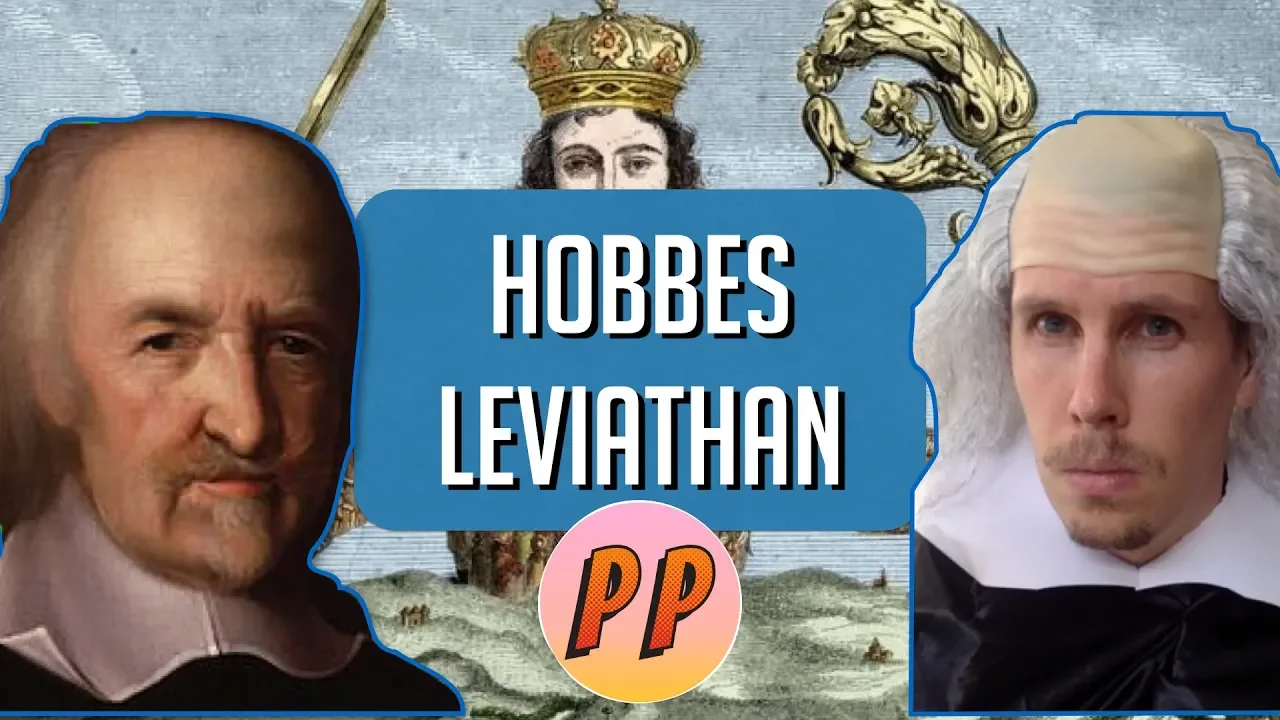
Hobbes Leviathan Explained: Political Philosophy & Social Contract
@James_Muldoon
186.6K views•2019-07-01

164:01
John of Damascus on Holy Images: A Theological Defense
@BannedBooks
139 views•2026-04-25

48:59
John Rawls' Theory of Justice: The Rawlsian Social Contract
@YaleCourses
184.8K views•2011-04-06
4:57
The Myth of Sisyphus: A Greek Legend of Eternal Punishment
@TEDEd
8.6M views•2018-11-13
Related Study Plans & Knowledge Roadmaps
Structured learning paths in Philosophy
philosophy
Frankfurt School: Critical Theory & Culture
01Foundations of the Frankfurt School and Critical Theory
02Horkheimer & Adorno: The Critique of Instrumental Reason
03The Culture Industry and Mass Deception
+ 2 more learning modules
12h5 modules
Explore Roadmap
philosophy
Philosophy of Language: From Frege to Austin
01The Linguistic Turn: An Introduction to Language in Philosophy
02Gottlob Frege: Sense and Reference
03Early Wittgenstein: The Picture Theory of Meaning
+ 3 more learning modules
15h6 modules
Explore Roadmap
philosophy
Feminist Epistemology: Standpoint & Injustice
01Introduction to Epistemology and Feminist Critiques
02Sandra Harding and Standpoint Theory
03Donna Haraway and Situated Knowledges
+ 2 more learning modules
12h5 modules
Explore Roadmap
philosophy
Environmental Philosophy: Ethics & Deep Ecology
01Foundations of Environmental Ethics & Anthropocentrism
02Biocentric Individualism and Animal Liberation
03Ecocentric Holism and Deep Ecology
+ 1 more learning modules
10h4 modules
Explore Roadmap