


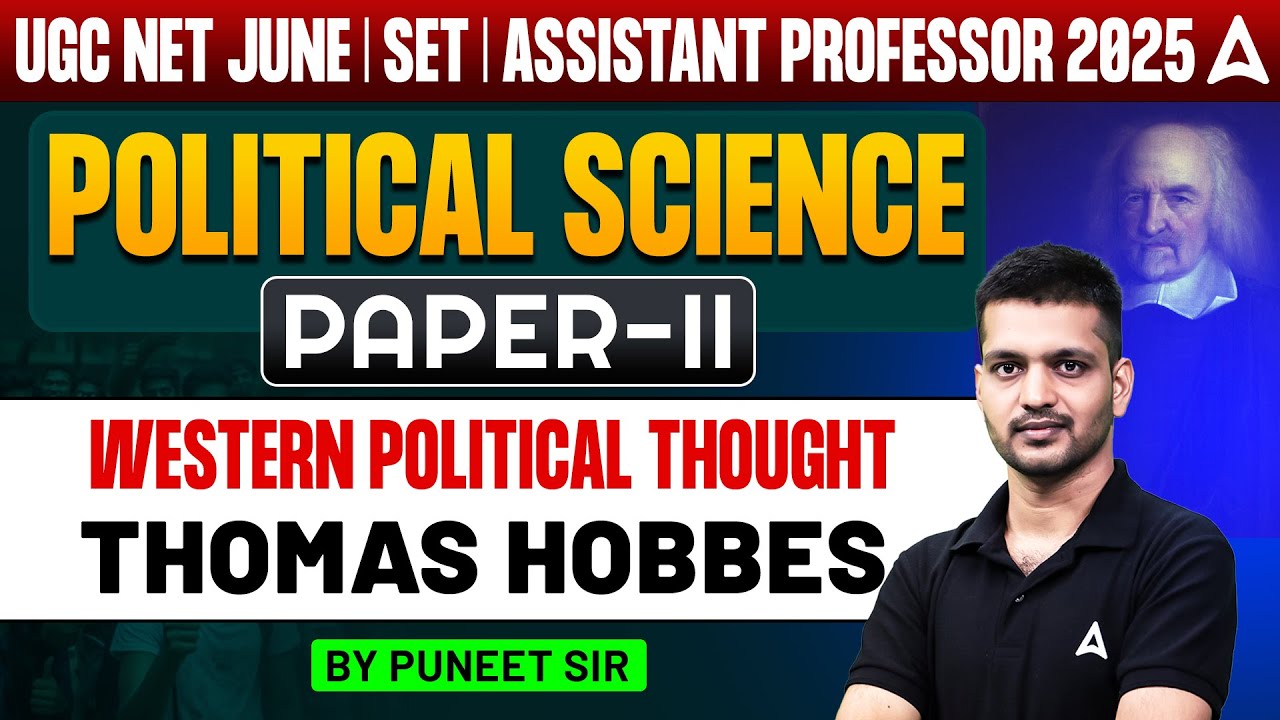













Thomas Hobbes, in Chapter 19 of his 1651 work Leviathan, argues that absolute monarchy is superior to democracy and aristocracy based on six key reasons: (1) the monarch's private interests align with public interests since the monarch's wealth depends on his subjects' prosperity, whereas elected officials may enrich themselves at others' expense; (2) monarchs can receive rational, secret counsel while assemblies are prone to emotional arguments and leaks; (3) monarchs can maintain consistent long-term policies while assemblies are inherently fickle and prone to reversing decisions; (4) monarchs cannot disagree with themselves, reducing the risk of civil war; (5) assemblies have exponentially more flatterers enabling corruption; and (6) assemblies create a permanent state of court intrigue similar to having an infant king, with everyone competing to become Lord Protector.
Hobbes's Defense of Absolute Monarchy in Leviathan
Added:recently we've been starting to see more and more of the inherent problems with democracy in the West in internet comments I see increasing amounts of people saying that they believe in absolute monarchy books such as hands herman hoppers democracy that god that failed and brian Kaplan's myth of the rational voter have started to see this most sacred of cows seriously questioned I thought it might be interesting to go back to the arguments of the ultimate theorist of absolute monarchy Thomas Hobbes who wrote Leviathan during the English Civil War it was published in 1651 Hobbes is widely regarded as one of the most important political thinkers in history and almost certainly the most important English political thinker Leviathan is not simply a defense of monarchy it is a book-length treatment of human nature itself and why governance in the form of the state is necessary Hobbes like Machiavelli has a very dim view of human nature men are self-interested in self-seeking prone to cowardice and treachery and without a strong state so he argues we would devolve into a state of war of all against all the state of nature therefore many of the arguments in Leviathan are our justification for government per se that is regardless of the form Hobbes maintained that subjects should respect and defend the sovereign no matter the form that is whether it is a democracy and aristocracy or a monarchy in his own life he refused to support charles ii when he was in exile because he didn't have serenity ironically that meant he was actually unpopular with the Royalists of his own time nonetheless he argues specifically in chapter 19 of Leviathan that of the three forms of government absolute monarchy is superior to both democracy and aristocracy he didn't want any separation of powers the monarch should wheel both supreme executive control and legislative control that is he shall have the power to write laws before continuing I think it's worth noting that you should not confuse absolute monarchy with modern totalitarian dictatorships Hobbes would not call Hitler Stalin or Robert Mugabe absolute monarchs he'd say that properly speaking those one-party states were a form of aristocracy so why did he support absolute monarchy he gives six reasons let's go through them first he says and I quote now in monarchy private interest is the same with the public the riches power and humour of a monarch arise only from the riches strength and reputation of his subjects for no king can be rich nor glorious nor secure whose subjects are poor or contemptible or too weak through want or dissension to maintain a war against their enemies whereas in democracy or aristocracy the public propensity confers not so much to the private fortune of one that is corrupt or ambitious as doth many times a perfidious advice a treacherous action or civil war here he's saying that the fortunes of the people and the monarch rise together but under democracy or aristocracy there's a disconnect between the ruling class and the people the king can't really be corrupt because he'd only be cheating himself the people are a part of his estate over which he is the self-interested monitor by contrast a member of a ruling assembly might easily enrich themselves at the expense of everyone else and such practices might be widespread because the interests of nobles or elected representatives do not necessarily align with those of the people a king cannot easily abdicate or fall without there being a significant effect on the rest of the country whereas individual nobles or elected leaders can come and go relatively easily but far from being a strength the is a weakness because those leaders who come and go might use their time in office to enrich themselves before they get out again in other words their incentives are such to make out like bandits while in power so they can live in luxury once they are out of it I should mention that Hans Hermann Hopper also makes this point in democracy the God that failed second he argues that a monarch can receive why is counseled with secrecy but an assembly cannot advisers to the assembly tend to be well-versed more in the acquisition of their own wealth than of knowledge and are likely to give their advices in wrong discourses which may and do commonly excite men to action but but not govern the minute for the understanding is by the flame of the passions never enlightened but dazzled nor is there any place or time where in an assembly can receive counsel with secrecy because of their own multitude there are two separate points here first that the very nature of the assembly ensures that rhetoric and emotion will triumph over reason in making decisions so the advice as to what to do will necessarily be worse as a result second that regardless of the advice given because there are many people in an assembly it's hard to keep the advice secret instead of one person keeping quiet you need to keep 600 people quiet one might think of the brexit negotiations or the number of leaks from Washington since Trump took office third the resolution of a monarch are subject to no other inconsistency than that of human nature but in assemblies besides that of nature there arise earth an inconsistency from the number 4 the absence of a few that would have the resolution once taken continue firm which may happen by security negligence or private impediments or the diligent appearance of a few of the contrary opinion undoes today what was concluded yesterday here Hobbs is saying that a monic can choose a course of action and then stick to it in the long run where as an assembly by its nature is liable to change its mind and therefore keeps going back on the sins they've already made this makes the nature of decision-making in the assembly prone to short termism again this is a point that hopper makes in democracy that God that failed specifically that elected representatives have a short time horizon and therefore make high time preference decisions Hobbes is not saying that you couldn't have a fickle mark but rather that Assembly's by their very nature will always be fickle forth a moderate can not disagree with himself out of envy or interest but an assembly may and to such a height as may produce a civil war this is quite self-explanatory and again my mind wanders to brexit fifth in monarchy there is this inconvenience that any subject by the power of one man for the enriching of a favorites or flatterer may be deprived of all he possesses which I confess is a great and inevitable inconvenience but in an assembly their power is the same and they are a subject to evil counsel and to be seduced by auditors as a monarch by flatterers and becoming one another's flatterers serve one another's covetousness and ambition by turns whereas the favourites of a monarch are few the favourites of an assembly are many now this is a very interesting point from Hobbes who is responding to a common complaint that monarchs are particularly vulnerable to flatterers he doesn't try to deny it but rather owns it and acknowledges the weakness but then he says at the situation under the assembly is even worse because now rather than one person having a few flatterers you've got six hundred people with several thousand flatterers again it's difficult not to think of Westminster or Washington and he's surely on this 1/6 and finally there is the problem of the infant king who must have a Lord Protector appointed increasing the risk of ambitious individuals jockeying for power is he says this is not caused by the form of government but by the nature of men who are ambitious and unjust in an assembly the problem is actually compounded in fact the Assembly is like having a permanent infant king the number of would-be Lord protectors is multiplied this again is Hobbes taking a common criticism of monarchy and turning it back on aristocracy and democracy he argues that all the weaknesses that come from having an infant as a king are compounded by the Assembly and made worse because no actual king is ever finally crowned so you have a permanent situation of court intrigue among would-be Lord protectors and I don't know why but the image of Michael Gove just popped into my head must be a coincidence so anyway there you have it let me list the six reasons again number one the incentives of the monarch and the people are aligned whereas those of individual members of the assembly and the people are not number two advice to monarchs can be rational and kept secret whereas advice to assemblies are prone to emotional arguments and are more difficult to keep secret number three monarchs can more easily stick to their decisions in the long term whereas Assemblies are inherently prone to change both their minds and their course of action number four monarchs can't disagree with themselves or have conflicts of interests so the chance of disagreements escalating into civil war is reduced number five the number of flatterers under an assembly is greatly increased number six the assembly produces a permanent state of court entry whereby everyone is a would-be law protector replicating the conditions under an infant King permanently now I will leave it to you dear viewer to address these arguments for yourself should debate in the comment section become particularly spicy I may well host a stream on this topic my own view is that the political system matters much less than the economic system so I am somewhat neutral on this I have come to believe however that democracy is a Trojan horse for socialism and if there was ever a time to revisit core arguments about political systems it is now now get out and a very special thanks to Stetson F Lionel the ambivalent onion Christopher Shalom the Crimson satire Chris Karen Haywood mister am Swenson radical liberation the binary surfer tragic vision Bailey and Aurora Toyotomi Amy holy spatula Alexander froggy splice buck huge 't society Michael Muir J Green River Michael Tainan peroneus may pond v vincenzo raffio and edward Dara
Up Next
John Locke's Second Treatise on Government | Political Philosophy
@James_Muldoon
115.2K views•2019-08-05

John of Damascus on Holy Images: A Theological Defense
@BannedBooks
139 views•2026-04-25

Should We Destroy the Machines? Big Tech Surveillance Critique
@TheStoriesWeTell303
167.9K views•2025-11-30
The Myth of Sisyphus: A Greek Legend of Eternal Punishment
@TEDEd
8.6M views•2018-11-13
Related Study Plans & Knowledge Roadmaps
Structured learning paths in Philosophy