Free Will: Determinism, Compatibilism & Neuro
Learning Goal: Evaluate the metaphysical debate over free will, contrasting determinism, libertarianism, and compatibilism, and exploring the implications of neuroscience on moral responsibility.
- Prerequisites: None (an open mind and basic analytical thinking skills are highly recommended).
- Estimated Total Study Time: 12 Hours (includes video instruction, recommended reflective pauses, and self-assessment).
Module 1: Foundations of the Free Will Debate
This module establishes the foundational vocabulary and central tension of the free will debate. Before diving into specialized philosophical frameworks, you will examine why the conflict between our everyday experiences of choosing and our scientific models of causality presents one of the most enduring problems in metaphysics.
Why this video: This classic overview acts as the ideal starting point. It clearly illustrates the direct clash between libertarian free will (the intuitive view that we can make uncaused choices) and hard determinism (the view that every event has a prior physical cause). It sets the stage for the rest of this curriculum by introducing the stakes of the debate.
Why this video: This clip provides a broader metaphysical and existential framing of the problem. It highlights the profound clash between human intuition—where we feel completely authorship-oriented—and the mechanistic rules of physical systems, presenting why this metaphysical issue is crucial to our self-understanding.
Why this video: Philosopher John Searle breaks down the core paradox of the debate into two distinct, irreconcilable impulses: the absolute conviction that every natural event is causally determined, and the persistent psychological experience of conscious decision-making during voluntary actions.
Knowledge Checkpoint
- Differentiate between the experiential "feeling" of making a choice and the metaphysical assertion of possessing libertarian free will.
- Define the central dilemma of incompatibilism: why determinism and genuine alternative possibilities are historically thought to be mutually exclusive.
- Explain Searle's "two powerful but conflicting impulses" and why neither can be easily discarded.
Module 2: Determinism and the Causal Universe
In this module, you will explore the philosophical position of hard determinism. By examining classical causality, modern physics, and the concept of an unbroken chain of physical causes, you will evaluate the argument that human agency is a complex illusion.
Why this video: This straightforward explainer breaks down hard determinism into its essential logical components. It clarifies how a deterministic worldview leaves zero logical room for a person to have acted otherwise under identical historical conditions.
Why this video: Physicist Sabine Hossenfelder delivers a rigorous modern defense of physical determinism. She explains how the fundamental laws of nature—governed by deterministic differential equations—and even the random quantum measurement probabilities rule out a traditional metaphysical model of free will.
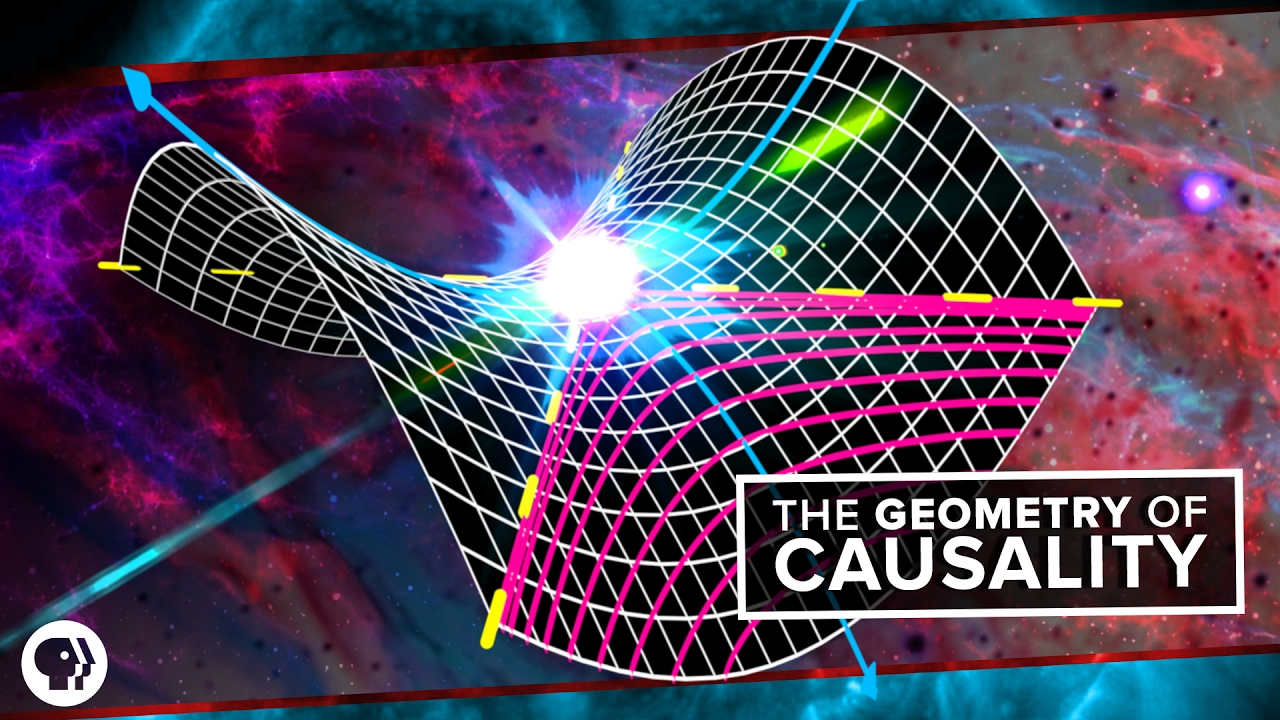
Why this video: To appreciate the rigidity of physical determinism, one must understand how modern physics defines causal structures. This video from PBS Space Time maps out causality through the geometric lens of Einstein's relativity, showing how world lines and light cones constrain the causal flow of events.
Knowledge Checkpoint
- Define hard determinism and identify its key premises regarding cause-and-effect chains.
- Explain how physical laws (specifically differential equations) challenge the idea that a human agent can initiate a new, uncaused line of action.
- Outline how the relativistic model of spacetime and light cones mathematically encodes the strict boundaries of physical causality.
Module 3: Metaphysical Libertarianism
Moving away from the popular, highly speculative debates about quantum mechanics, this module analyzes the traditional philosophical formulations of libertarianism. You will contrast event-causal models with agent-causation models to understand how a philosopher can argue that a human actor can genuinely select among alternative futures.
Why this video: This discussion provides a vital counter-argument to neurobiological determinism by presenting philosopher Robert Kane's model of "self-forming actions" (SFAs). Kane shows how "torn decisions" (situations where an agent must choose between competing moral or practical desires) introduce an indirection that allows for genuine, self-determined options.
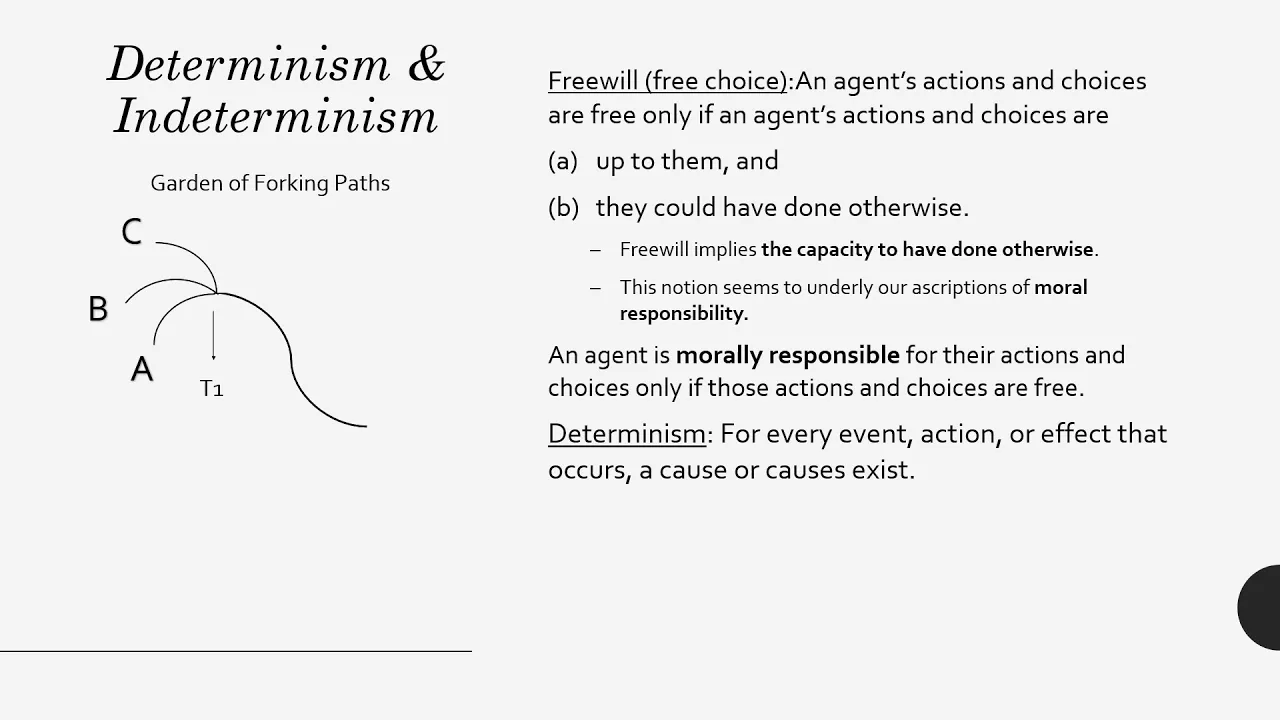
Why this video: This academic segment unpacks Roderick Chisholm's classic distinction between two kinds of causation: event-causation (where physical occurrences trigger subsequent physical occurrences) and agent-causation (where an enduring agent, as an entity, acts as a self-determining origin of a brand-new causal path).
Why this video: This lecture dives deep into Timothy O’Connor's defense of agent-causation. O'Connor argues that our direct experience of acting is not a deceptive illusion, but a reflection of a real property where substances (rational agents) possess the unique power to yield intentional effects.

Why this video: This high-level response critique analyzes the limitations of basic materialist dismissals of free will. It introduces the mechanics of event-causal libertarianism, demonstrating how non-determined choices can still be fully rational, intentional, and philosophically justifiable rather than merely arbitrary.
Knowledge Checkpoint
- Contrast event-causation (immanent) with agent-causation (transient) using philosophical terms.
- Explain Robert Kane’s concept of a "Self-Forming Action" (SFA) and how a "torn decision" can generate non-arbitrary, free outcomes.
- Address the common critique that libertarianism relies on "magic" by detailing how Timothy O'Connor and other modern libertarians frame the causal powers of human agents.
Module 4: Compatibilism: Reconciling Freedom and Determinism
Can we still be free and morally responsible if every single action we take was already determined? Compatibilism (or "soft determinism") argues yes. This module looks at how modern compatibilists shift the focus from mysterious uncaused choices to the actual capacities for internal reflection, self-regulation, and intentional action.
Why this video: This video functions as an excellent primer on the compatibilist perspective, showing how actions can be understood as "free" when they are caused by internal, authentic desires rather than external forces, even in a fully determined universe.
Why this video: Harry Frankfurt revolutionized compatibilism with his hierarchical model of human desire. This video clearly explains the difference between first-order desires (e.g., wanting food or drugs) and second-order volitions (e.g., wishing you did not want those things). It argues that acting in accordance with our second-order volitions is the hallmark of human freedom.

Why this video: Daniel Dennett, one of compatibilism's most famous modern champions, argues that the fear of determinism is built on a misunderstanding of "inevitability." This video tracks his view that free will is not a spooky metaphysical exception to physics, but an evolved biological capacity to avoid harmful outcomes.
Knowledge Checkpoint
- Explain the core thesis of compatibilism: how an action can be simultaneously determined and "free."
- Detail Harry Frankfurt's distinction between first-order desires and second-order volitions, explaining how this distinction defines personal autonomy.
- Summarize Daniel Dennett's argument for why biological complexity and predictive avoidance make the traditional, hard-libertarian definition of "free will" obsolete and unnecessary.
Module 5: Neuroscience and the Brain's Decisions
Here, we pivot from philosophy to cognitive science. You will investigate empirical challenges to free will, centering on Benjamin Libet's classical experiments on the "readiness potential" and exploring contemporary neurobiological models of pre-conscious decision making.
![Libet Experiment \[Neuroscience and Free Will\]](https://i.ytimg.com/vi_webp/6VZqho-8iJY/maxresdefault.webp)
Why this video: This clear, short animation walks you through Benjamin Libet's 1980s EEG experiment, showing the timeline of the "readiness potential" (RP) that builds in the motor cortex well before a participant reports a conscious choice to act.
Why this video: This PBS segment expands the scientific critique beyond Libet’s early studies. It introduces modern, high-tech fMRI and direct-recording paradigms that show researchers predicting simple choices seconds before the participant claims to have consciously made them.
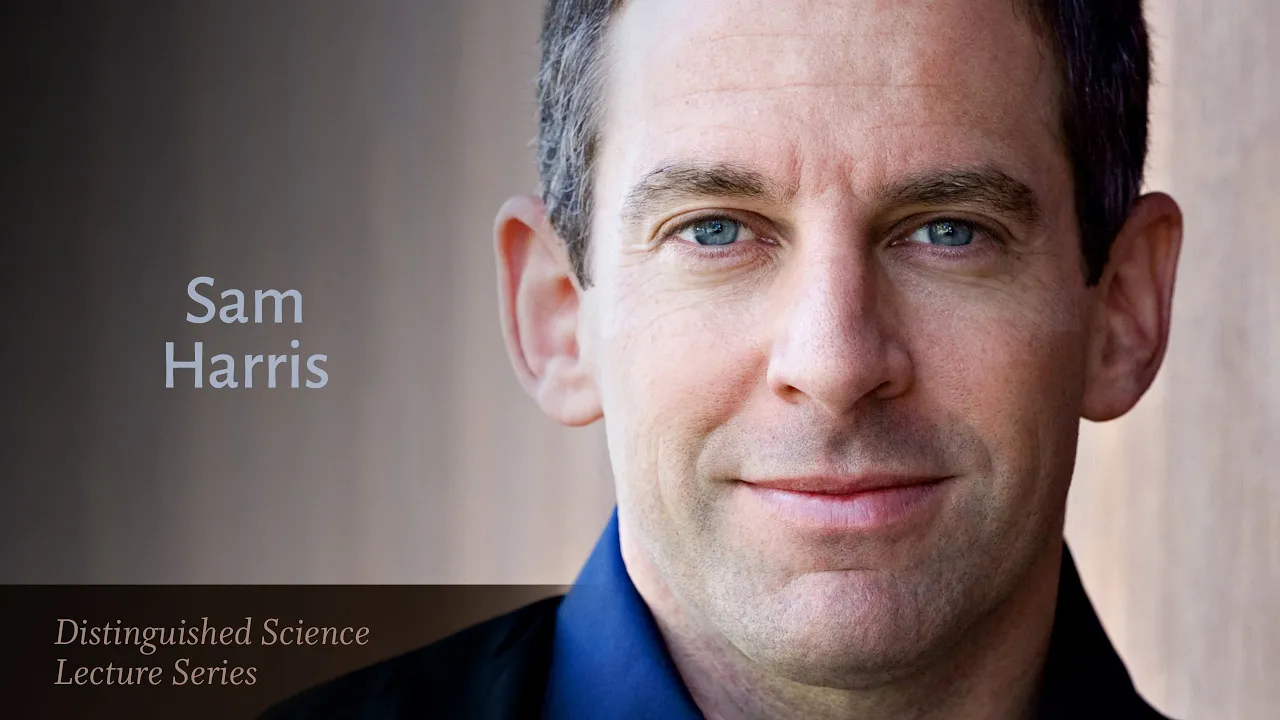
Why this video: In this comprehensive lecture, neuroscientist and author Sam Harris makes a bold case against free will. Harris synthesizes neuroscientific data with immediate, first-person subjective experience to show that thoughts simply "appear" in consciousness, completely driven by prior neural mechanisms we did not select.
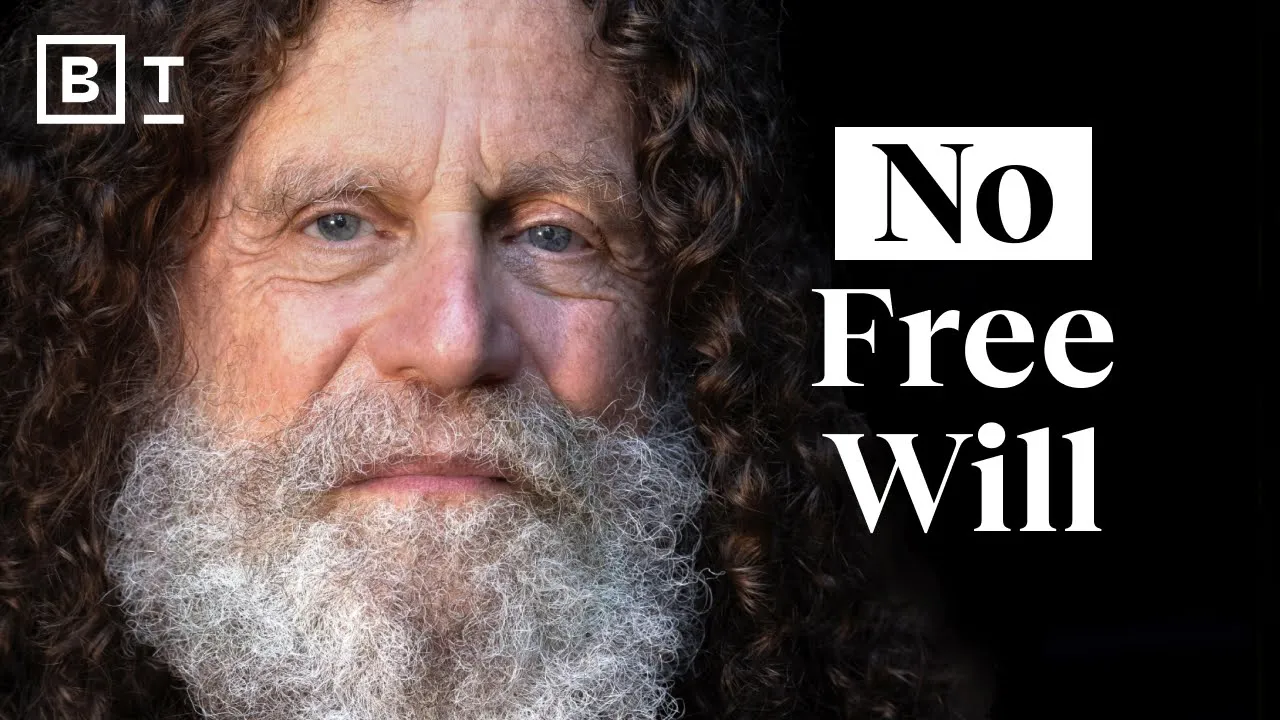
Why this video: Stanford neurobiologist Robert Sapolsky argues that free will cannot survive a deep look at "distributed causality." Over this lecture, he demonstrates how behavior is determined by a complex mix of genetics, early neurodevelopment, prenatal environments, acute stress hormones, and evolutionary biology.
Knowledge Checkpoint
- Describe the temporal sequence of the Libet Experiment, defining the "readiness potential" (RP) and its relationship to conscious awareness ().
- Detail how modern pre-conscious prediction studies using fMRI challenge the model of the conscious mind as the primary author of choices.
- Explain Sapolsky's model of "distributed causality" and its impact on the belief that humans can make isolated, independent choices.
Module 6: Moral Responsibility and Justice
If free will is an illusion, or if compatibilism is the only viable model, how do we justify holding people accountable for their actions? This final module examines how these philosophical debates apply to real-world ethics, re-evaluating the concepts of praise and blame, moral luck, and the transition from retributive justice to consequentialist, forward-looking legal frameworks.
Why this video: Thomas Nagel and Bernard Williams' concept of "moral luck" exposes a deep vulnerability in standard theories of blame. This Crash Course episode explores how factors beyond our control—including our temperament (constitutive luck) and our situation (circumstantial luck)—deeply complicate the practice of moral assessment.

Why this video: This academic lecture provides a deep analysis of how our theories of free will shape our models of justice. It contrasts the traditional "desert-based" retributive model (which demands suffering as payment for a free moral violation) with "forward-looking" utilitarian or consequentialist models of reform, deterrence, and rehabilitation.
![Robert Sapolsky: Justice and morality in the absence of free will \| Full \[Vert Dider\] 2020](https://i.ytimg.com/vi/nhvAAvwS-UA/maxresdefault.jpg)
Why this video: Robert Sapolsky argues that acknowledging our lack of free will demands a total overhaul of our criminal justice systems. He makes a passionate case for moving away from moralistic blame and instead adopting a public health-style "quarantine model" designed for rehabilitation and societal protection.
Knowledge Checkpoint
- Define the four types of moral luck (constitutive, circumstantial, causal, and resultant) and analyze how they threaten traditional concepts of blame.
- Contrast desert-based (retributive) punishment with forward-looking (consequentialist) punishment.
- Describe the practical features of a "quarantine model" of justice, and explain how a society can protect itself without relying on retributive blame.
Course Map
This flowchart maps the logical progression of the curriculum. Mastery of foundational metaphysics (M1) is required before exploring the competing camps of determinism (M2) and libertarianism (M3). Both views are reconciled in compatibilism (M4). Scientific evidence from neuroscience (M5) is introduced alongside compatibilism to build a complete view before taking on the deep ethical questions of moral responsibility and justice (M6).
Key People Index
- Benjamin Libet (1916–2007): A pioneering neurophysiologist whose work on pre-conscious brain processes (specifically the "readiness potential") provided the first empirical challenges to the traditional timeline of conscious choice.
- Robert Kane (1938–present): One of the world's leading contemporary defenders of libertarian free will, known for developing an event-causal theory centering on "self-forming actions" (SFAs).
- Harry Frankfurt (1929–2023): An influential philosopher whose hierarchical model of desires (first-order vs. second-order volitions) reshaped modern compatibilism and theories of agency.
- Daniel Dennett (1942–2024): A major American philosopher and cognitive scientist who championed a evolutionary, functionalist defense of compatibilism, arguing that free will is a biological adaptation.
- Sam Harris (1967–present): A prominent neuroscientist and author who uses a blend of empirical science and mindfulness-based phenomenology to argue that conscious authorship is an illusion.
- Robert Sapolsky (1957–present): A Stanford neurobiologist and primatologist who argues against free will from a perspective of distributed causality, spanning genetics, endocrinology, and evolution.
- Timothy O'Connor (1965–present): A contemporary philosopher who has written extensively on agent-causation, defending the view that human agents possess unique, irreducibly basic causal capacities.
Final Self-Assessment
To verify your mastery of the curriculum, ensure you can comfortably check off each of the following tasks:
- I can articulate the difference between hard determinism, metaphysical libertarianism, and compatibilism without using confusing or circular logic.
- I can explain the distinction between event-causation and agent-causation, and outline how a libertarian philosopher uses the latter to defend human freedom.
- I can explain Robert Kane's concept of Self-Forming Actions (SFAs) and clarify how a "torn decision" can preserve human agency in a non-deterministic framework.
- I can outline Harry Frankfurt’s hierarchical model of desires and use a concrete example to show how second-order volitions define compatibilist freedom.
- I can explain Daniel Dennett’s argument for why a deterministic universe does not imply that our choices are "inevitable" in a biological sense.
- I can detail the timeline of the Libet Experiment, illustrating the gap between the onset of the readiness potential and the subject's conscious awareness of their decision.
- I can explain how modern fMRI prediction studies challenge the classical "top-down" model of conscious decision-making.
- I can explain Robert Sapolsky's model of distributed causality and trace how biological and environmental events can determine an individual's behavior.
- I can identify the four types of moral luck and explain how they complicate our traditional practices of praise and blame.
- I can contrast desert-based (retributive) justice with forward-looking (consequentialist) justice, and explain how our views on free will affect which model we support.