




![Все предопределено, значит свободы нет? [Алипов и Кузнецов]](https://i.ytimg.com/vi_webp/3qcawrUwe-A/maxresdefault.webp)

![Libet Experiment [Neuroscience and Free Will]](https://i.ytimg.com/vi_webp/6VZqho-8iJY/maxresdefault.webp)











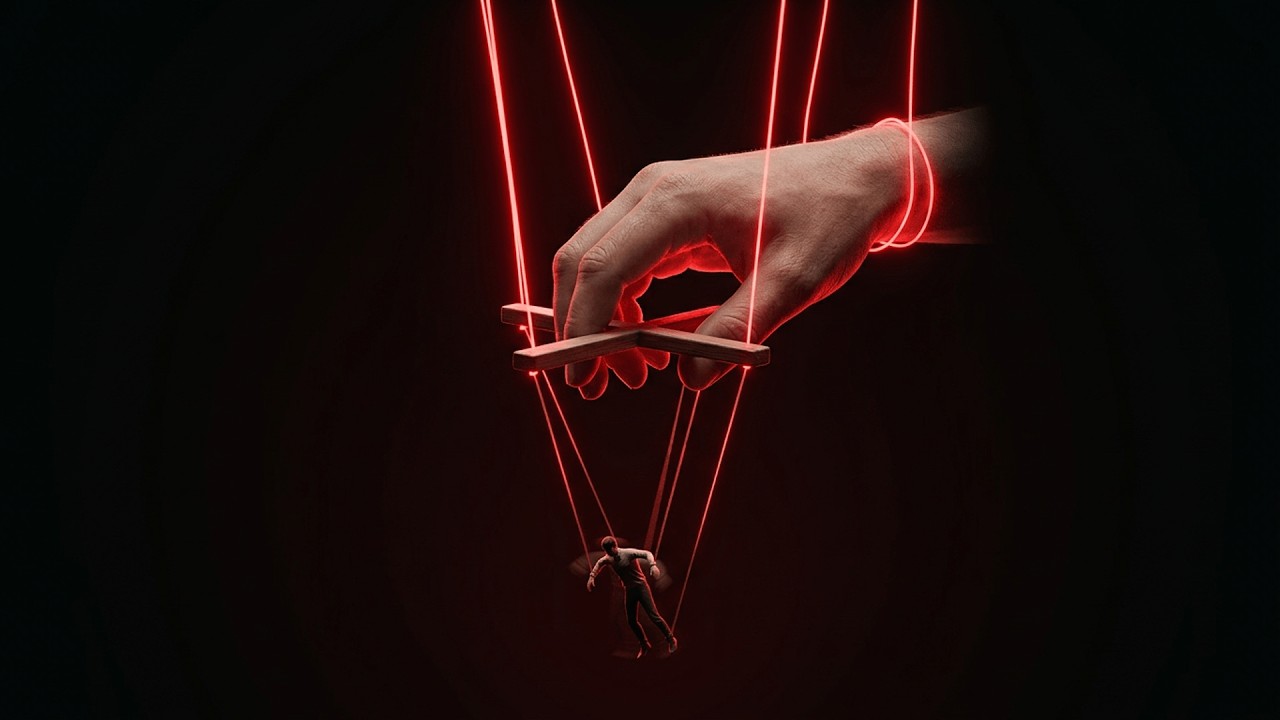
Free will represents a profound mystery at the intersection of science, philosophy, and theology, where neuroscience reveals unconscious brain processes precede conscious decisions, yet philosophical analysis suggests either compatibilism (free will compatible with determinism) or libertarianism (free will requires indeterminism) may be viable, while theological perspectives explore how divine foreknowledge might coexist with human freedom; ultimately, free will's complexity demands interdisciplinary approaches rather than isolated disciplinary answers.
Free Will: Science, Philosophy, and Theology Explored
Added:The philosophical debate between determinism (the view that all events are determined by prior causes) and indeterminism.
Basic definitions of compatibilism (free will and determinism can coexist) and incompatibilism (they are mutually exclusive).
An introductory understanding of Benjamin Libet's brain experiments regarding readiness potential and conscious choice.
Fundamental theological concepts related to divine attributes, particularly omniscience, omnipotence, and the concept of divine sovereignty.
The ethical and legal implications of determinism on moral responsibility, retributive justice, and the rehabilitation of offenders.
Advanced neurophilosophy, including theories of emergent consciousness and the concept of 'free won't' (conscious veto power).
Comparative analysis of theological doctrines on agency, such as Calvinist predestination, Arminianism, and Molinism (middle knowledge).
The exploration of quantum indeterminacy and its potential limitations or contributions to theories of physical agency and free will.
1.8M views15Klikes1:37:06Original Release: 2016-11-04
I decide as I decide I do as I do Free Will sits at the center of human thought Behavior morality and responsibility but what may seem obvious may be strangely not so we find people claiming it's obvious that there's no free will we find people claiming it's obvious that there is Free Will there's no doubt about it it's perhaps the most dramatic irresolvable clash in the whole of philosophy we have inconsistent views Each of which is supported by overwhelming reasons it's a mystery to me what's wrong with one of these arguments so I regard Free Will as a complete mystery Al you believe that God knows the future right right I do you also believe that human beings have free will I believe that too right how do you reconcile the two uh well first of all I'd have to ask why there's a problem about that here's the Deep problem of free will on the one hand our human sense is that our actions are fully free on the other hand our scientific sense is that every action is determined by a prior action what is free will do we have free will that's the big question Free Will is such a big question that the John Templeton Foundation has funded a multi-year study with experts in science philosophy and theology the project is called Big questions in Free Will it has 60 participants four conferences numerous experiments and papers all to research test discuss and debate free will I'm Robert Lawrence cun and closure to truth follows the project asking the big questions in Free Will the 4year big questions and Free Will project kicks off in tasse Florida on the campus of Florida State University where participants gather to present their findings State their cases and deliberate the implications the leader of the project Professor Alfred mey invites me to the first conference and starts with his favorite analogy for describing Free Will somewhere along the line I thought of gas station analogy for free will so at gas stations you can get regular gas you can get mid-grade gas or you can get premium the regular way of thinking about Free Will is like this sufficient for having free will would be just that you're sane and r Ral uh nobody's pushing you around there's no compulsion or coercion that would be enough when you bump up to the midgrade you need to add something to this and what you have to add is that at the very moment you made a decision everything being the same right up until then um you could have done otherwise so that's the mid-grade conception on the third one that's not enough for free will either you also need to have a non-physical Soul or a non-physical mind three conceptions of free will each with its own issues but why dedicate multiple years and significant resources to exploring Free Will what makes free will a big question one that explores the Deep nature of reality or human existence Free Will is a big question because humans struggle with understanding it humans have this need to explain and to postulate something like Free Will helps you understand why certain actions are unique why certain things are unpredictable why certain things are new because somebody freely creatively did something that you didn't expect would happen before Free Will lies at the heart of our conception of ourselves and our conception of being morally responsible agents so if people feel like they have have free will they feel like they're in control of their lives and they feel like what they do matters and if they don't feel like they have free will they feel like what they do is not making an impact on the world and that relates to our conceptions of moral responsibility and it might end up affecting the way we understand legal responsibility as well I think of Free Will as a new kind of controlling and producing behavior that was produced by Evolution uh but that sets us apart from other creatures we have basic desires the same as they do every animal gets hungry and when it gets hungry it wants to eat we do that too but we might refrain from eating because we're on a diet or it's a religious holiday or the food belongs to someone else or free will is one of the basic human traits some people are going around saying there's no such thing as free will it's an illusion blah blah blah I think people are upset by that uh partly because it denies one of the basic facts of Human [Music] Experience how does the big question and Free Will project address the issues if the world is determined can we have free will is Free Will an illusion is Free Will required for moral responsibility what happens to free will when God is involved Al explains that the project is divided into three Wings science philosophy theology so in the science Wing who are the scientists what are the kinds of problems they're working on well uh there are neuroscientists uh social psychologists cognitive psychologists neuroscientists are working on roughly what goes on in the brain when people make decisions uh also the sense or feeling of causing something of being an agent as opposed to you know something happening to you um the social psychologists are studying things like uh the effects of people's beliefs about free will on their behavior and they're studying things like willpower in the conceptual underpinnings Wing our main questions are traditional philosophical questions like um what are the necessary conditions for free will and the theologians are dealing with questions about Divine freedom and questions about uh the connection between the possible existence of God and human Freedom so do you see uh a cross-pollination between these three wings I do um the philosophers and scientists meet together at three conferences and there will be a lot of uh productive exchange of ideas I begin with the science wing for science to explain free will it needs start with the seat of thought and emotion the brain what does brain science say about free will I ask Al M for some history I'll start with uh an experiment that really got the ball rolling it's by a neuroscientist named Benjamin libbit so the task subjects had was to flex a wrist whenever they felt like it and then after they flexed they would report where a spot was on a very fast clock when they first felt the urge intention wish will decision to flex and they were hooked up to two machines so they were getting EEG readings from the scalp and they were getting muscle motion readings with an electr myograph and uh what he discovered is that when subjects were regularly reminded not to plan in advance when deflex you got an EEG ramp up that started at 550 milliseconds before the muscle burst that's about a half a second that's a long time in brain terms half a second oh it sure is now the Aver average time of first reported awareness of this mental event the decision or intention or whatever was 206 milliseconds before the muscle about a fifth of a second that's right so there's a lag between the EEG ramp up and this reported time of first which seems to indicate that the brain without our conscious knowledge is already planning and then I'm suddenly aware of it as if my Consciousness my so-called Free Will is sort of a froth and it's just kind of riding along but has no impact on really what's happening yeah that's exactly right so uh his thought is the brain is making these decisions about a third of a second before you become aware of them so it's making them unconsciously Free Will has to be a conscious process so free will is not involved he actually thought accept many scientists concluded that the libid experiment abolished free will but EEG readings on the scalp are weak it's difficult to get precise measurements insulated from the brain one neuroscientist in the big questions and Free Will project Kristoff kooch is working to improve libet's experiment by recording directly on the brain and by examining decisions that have consequences Kristoff your experiment involves a realtime work with patients who have electrodes implanted for uh uh medical reasons uh what is the basic science the basic neurobiology behind the experiment our experiment our basic variant of a famous experiment by Benjamin libbit we're trying to understand the neuronal mechanism that underly a voluntary decision that traditionally people would say involves Free Will and we know from from previous experiments there are several components to this one component relates to this feeling that psychologist now called authorship or agency I lift my right hand and I have a feeling that I not you not my parents not my friends were responsible for me lifting this hand we know there's a specific Locus in the brain that generates this the this conscious uh sensation we like to separate that out from the neural mechanism that actually give rise to what I personally feel is this voluntary action what are the actual mechanism where is the the the the decision first taken and what part of the brain I involved in what sequence so finally I lift my right hand and more interesting from a practical perspective can I predict this ahead of time can I maybe read off your brain signal so I can know one second ahead of time are you going to move the right hand are you going to move the left hand the other thing we're interested in is choices that involve deliberations because that also brings in moral judgment should I be doing this is this a wise idea am I going to hurt somebody Etc and so there we we're devising a slightly different Paradigm where we where we play a simple game where the patient is free to move one or the other hand at some command we lift both of our hands however if you lift the same hand as I do then you win $1 and if we do this yeah you see then I win a dollar and once again this is much closer to the real decision that we care about because it has consequences and you deliberate rather than it doesn't matter I pick this or this they're exactly identical I can take out both so I have to take one Kristoff sends me to Cedar sign a medical center in West Los Angeles I'll have a ringside seed watching the brain make real world decisions a patient has graciously allowed me to observe as she undergos brain surgery for epilepsy and then afterwards as she participates in experiments of decision making and free will I meet the neurosurgeon Dr Adam mamc we do an operation of craniotomy where we open the skull and put a sheet of electrodes on the surface of the brain it covers the area that we think is involved plus the periphery around it Dr mamc introduces his patient ory hi hello nice to meet you please to meet you every week of her life since she was a baby Audrey has endured multiple epileptic seizures now she can be cured we'll be able to record your seizures but we'll also be able to map the different areas of brain function okay we can also do other tests to really try to understand not specifically how your brain works but how the brain works in general okay and uh one of the questions that we're very interested in studying is how do you make conscious decisions it's a remarkable procedure by charting Audrey's brain waves neurosurgeons Create A fine grain map of her brain enabling them to locate and remove the lesion that causes her seizures at the same time neuroscientists can examine brain activity during decision making seeking brain-based facts about free [Music] will a week later at Caltech Kristoff's partner neuroscientist URI MA shows me the results basically the patient and I are playing a simple version of the rock scissors paper that that children play if I raise the mirror image of what you raised and let's say I win and if we raise the same hand so if you raise uh your right hand and I raise the right hand then then then you win we start with $5 and every time she wins I give her 10 cents so I lose 10 cents and she gains 10 cents and if she loses it's the other way around and if she doesn't react quickly enough because the idea of course you can always just wait to see what the other gu is doing and move we just deduct 10 cents so it's it becomes competitive we play for about 50 rounds what we you're interested in is finding the difference between Preparatory activity towards uh moving the left hand versus moving the right hand to be able to predict which hand you will raise before the go signal telling you to raise your hand is even there so we have this grid here yeah which is much closer to the source of the signal than you would have if it was EG and it's sitting here and there's the tissue and the skull and everything the attenuation of the signal and you don't know where it's coming from from so here we're much closer to the signal so this grid is in her head here and from this grid we see these wires coming out from here it goes into uh these panels here and from there there's a wire that goes to a system that records and does some analysis and from that system through another wire that you kind of maybe see here goes into this machine and I get a beep either on the right ear or on the left ear which tells me to raise my right hand or my left hand in order to beat the patient and this is half a second before the ghost signal so I know what I need to move and I just wait half a second for the ghost signal and move it okay let's uh let's let's see what really happened okay this is counting down 5 4 3 2 1 and then go go go and we raise our hand so if I win my side of the response box lights up in blue and if she wins her side of the response box lights in red 5 4 3 2 1 go and this time I win and then we try it again and so this goes on like that for about 50 trials [Music] here's a screen behind Audrey she can't see it and the screen shows an arrow which hand she's going to raise according to the real time system so she's about to raise her right hand and it was it was just the arrow comes on like just a fraction of a second before she moves right before the go signal so this time she did raise the hand that the the the arrow was pointing at and again it was correct she raised the hand the arrow was pointing up so we were able to beat her and we we played three times we I was able to win with a relatively large margin two of those three times she was competitive about it it had meaning that was the important thing for us okay so what are the implications for free will here well if I can predict what you're doing when you're when your uh um decision is is making a difference it it might be stronger evidence that uh these unconscious processes are are affecting also these types of decisions that are more important for more responsibility the implications of what you're saying though is that if you are able to predict this to the degree of accuracy that that you can our brain is making our decisions and we're not it does give us some philosophical pause about what free will is and right you see one rather than the other so Ori and Kristoff replicate libet's experiment with more Precision literally on the brain and the results are similar Ori can predict what Audrey is going to do even before Audrey herself is aware of her own inner decision to do it does this suggest that Free Will is an illusion that our conscious decision to act does not cause us to act I don't know why but can science really explain Free Will I ask philosopher Gan Isel who focuses on science at its most fundamental level physics if physics is the most fundamental science then everything that there is in the world including ourselves and including free will if there is free will ultimately has to be at least implicitly included in the description of the world that's given us by physics so from that point of view everything else that's described by the special Sciences including Neuroscience social psychology ordinary psychology that's all ultimately a more coarse grain description um of what's described completely and precisely and at the most fined grain level in physics so the goal of physics is ultimately to at least implicitly Encompass all of what there is including all the the you know phenomenal feel that is the way of uh listening to a symphony feels to you it's a matter of great controversy and it's an unsettled question whether physics ever will will be able to resolve that goal I think right now it's not the case in my view that we have any knockdown arguments that that's not possible certainly what physics but even if physics could explain everything would that make Free Will and illusion Free Will and illusion it just doesn't seem right it seems more a philosophical question so can philosophy help I ask Al to explain the philosophy of free will we have to start with this notion of determinism determinism is the idea that a complete description of the condition of the universe at any point in time together with a complete list of all the laws of nature would entail all other truths about the universe including all truths about everything you'll ever do okay that's determinism some philosophers say well you can't have Free Will in that case because you could never have done otherwise than you did well suppose determinism isn't true then what do you have now well they say Randomness at the point of decision and so that's not free will either that's what they say either way then there's no free will but still people feel as though they're free and so the claim is well that feeling is an illusion so there are philosophers called compatibilists and comp aists say that even if determinism is true people can act freely what compatibl ists think is that what you need is to be responsive to reasons in a certain way so that if the reasons had been different you would or might have acted differently even though there was no possibility that the reasons were different based on the universe that we live in that's right the other way to go is to say no you're right Free Will does require that determinism be false but the falsity of determinism doesn't just put you at the mercy of chance or Randomness or luck you're still enough in control of what you do to act freely that kind of response is called the libertarian response so the pro- Free Will views then divide into those two camps my own view is this either compatibl ism is true or libertarianism is true that that either or proposition is more credible than the opposing proposition which is no free will either way free will is an illusion philosophers propose these two basic mechanisms to explain Free Will compatibilism and libertarianism though they differ dramatically in characterizing free will both counter the claim made largely by scientists that Free Will is is an illusion Al concludes that Free Will is not an illusion that either compatibilism or libertarianism is correct but as for which is correct he is not prepared to decide of the two philosophical positions compatibilism seems the more perplexing if determinism is true every event caused by a prior event how could we ever act freely I ask Peter Van inwagen an authority on the philosophy of free will he too finds compatibilism perplexing depends on the number of in the history of the problem of free will there has been a long tradition of philosophers saying that you can have both you could have free will in a world that was completely deterministic and I remember the first time this view was pointed out to me and I said but wait a minute I said if my if my actions are the inevitable causal consequence of the past I don't have any choice about what it went on in the past and I don't have any choice about what evolved out of it according to the laws of nature I can't work miracles I can't change the laws of nature so I don't think that's right I don't think I can do this other thing but this was only one side of the problem of free will because simply to show that Free Will is incompatible with determinism is well it's really to pose the problem in a much more um uh in a much more pressing form because there are also good arguments to show that uh Free Will is incompatible with indeterminism if you knew that it was just a matter uh of indeterministic chance which which thing you would do at a certain point in time you wouldn't be able to promise to do one or the other you would just have to wait and see uh what would happen so I have tried to work on this problem to put all this together to find the place uh where that allows both Free Will and moral responsibility in a world that's certainly either deterministic or IND deterministic uh for more than 40 years now and I confess myself just baffled uh by this problem it is too difficult uh for me Peter can argue that Free Will is not compatible with determinism and not compatible with indeterminism and because these are the only possibilities then Free Will would be impossible or nonsensical to Peter neither compatibilism nor libertarianism at least in their present formulations can account for free will but in no way does he think that Free Will is an illusion two sides perhaps the confusion comes at a more basic level perhaps we should refine the basic terms free and will I asked philosopher Walter Senate Armstrong I take freedom mean there's no barrier of the relevant sort and when we're talking about freedom in the in the context of Free Will and free action we're talking mainly about physical barriers or psychological barriers to doing the things that you want to do and to say that you're free to do it is then to say there are no relevant physical or psychological barriers to you doing the thing you want to do so the classic critical question is to to say could you have done something otherwise right but notice the word could doesn't really help people seem to think it's clear what counts is could and what countes could not but you might say can you come to the movie with me tonight no I can't come I've got to work well it's not that it's physically impossible it's that it would be too costly for me because I need to get this work done so even the word could has this relevant to say you can do something is again to say there's no relevant barrier or constraint key is relevant there because in in each circumstance you have to determine what's the relevant barrier that defines Freedom right and that's going to depend on what your interest is right if your interest is whether or not to hold someone responsible for example then certain kinds of barriers are going to be deemed relevant it might be relevant that the person uh is delusional doesn't know what they're doing it might be relevant that they are locked into their room that's why they couldn't leave and and get to work in time whereas the fact that it's caused in a certain way in your brain I think would not be relevant if the context is about whether to hold the person morally responsible because after all our desires are lodged in our brains there are patterns in our brains that lead us to do the things we do and so to say that the wiring of my brain is what caused me to do it is just another way of describing the same situation is I'm doing it because I want to do it and so once we get clear about what we mean by Freedom then we can ask our Wills really free in that sense that we care about but no matter definitions of Freedom science claims that because the feeling of making a choice comes after brain activity correlated with that choice Free Will Is Not What It Seems and may indeed be an illusion I ask philosopher Eddie namias who thinks that when comes to Free Will distinctions between science and philosophy aren't so clear well to start with I think the brain scientists do use philosophical arguments they might not always realize it but they're using arguments uh by suggesting that a particular definition of Free Will is the right one and then trying to show that their data undermines that they're all looking at what happens right before you typically do something rather unimportant like deciding or picking whether to choose your you know push a right button or a left button but what they haven't shown is that when you're doing something important or making a decision about what college you're going to go to or um who you're going to marry or whether you're going to have children that the sort of planning and conscious thinking you do there doesn't get a a hold on your actions Downstream but is that not just a different in degree as opposed to a different in kind couldn't the same argument hold that every piece of that there's something in the brain going on before we're conscious of it right and and I think that's the sort of philosophical argument that comes into play because they're assuming that this shows sort of a universal determinism or causation before we're aware of what we're doing but the key is to recognize that just because something is caused doesn't mean that it's not a cause so even if there's earlier stuff happening in the brain that might cause the brain activity that's involved in my conscious planning that doesn't mean that my conscious planning doesn't play a causal role in what I do here's the crucial part we have no idea how that works so Consciousness is still a mystery in the sense that we don't have a good theory of how to explain how the conscious mental processes are related to the neural processes the illusion here to turn it around is that the conscious states do do something once we recognize the connection you're saying Free Will is not an illusion no if Consciousness were uh actually cut out of the picture then would be an illusion but I don't think any of the evidence has suggested that yet well one team of scientists claims that they may have such evidence at least evidence that a feeling of agency personal authorship or conscious awareness is not required for decision making the team has found a clever way to eliminate agency or conscious awareness in the decision process people found that under hipnosis I ask one team member Talia Wheatley a social scientist at Dartmouth to explain so you seem to be now you have a research project part of this big questions in Free Will project that is going to use hypnosis that's right uh how's that going to work um well hypnosis is an excellent tool that is just really um coming into its own in cognitive Neuroscience I think for a long time it's got this sort of checkered history of being part of a stage show you circus act black magic so science wasn't going to touch it with a 10-ft pole and then with the Advent of neuroimaging we started to see oh this is a real thing it's an Al State of Consciousness it's something that's happening in the brain that we can study scientifically and utilize exploit because what is great about hypnosis is that you can hypnotize someone to do a behavior that would just unfold as it would normally but they lack Agency for that behavior so they're creating it but they don't have the feeling of authorship of that action and we're really interested in what's that authorship feeling doing if anything which is Free Will which is Free Will so the basic idea with what we want to do is use hypnosis to take away this uh conscious awareness that you're about to move and see do you still move if you're if you don't know you're about to do it and does the neural activity look the same if nothing changes then it suggests that becoming aware that you're about to move isn't really instrumental to your movement if we show so the opposite that uh it do change things we don't really get the movement uh or the um neural activity looks completely different then it is doing something and we need to take that into account and maybe I need to revise my strong stance that Free Will is an illusion yeah maybe yeah Talia takes me to watch her experiment here so I want you to just relax as much as possible get yourself in a comfortable position to a few deep breaths once the subject is hypnotized Talia instructs her to perform actions actions that will be triggered after she wakes up but without the conscious feeling that she is willing those actions herself a little later you will watch some video clips each video clip will have a red arrow next to it if the red arrow is on the right side of the video you will squeeze the ball in your right hand she will watch a screen and squeeze a Ball when she sees an arrow she will assume that this is an involuntary action when in fact it was implanted by the hypnosis remember you'll remember nothing of what has happened until I say to you now you can remember everything three two one wide awake all right let yourself wake up so what was the last thing you remember before you woke up sitting in the chair and I yeah nothing else besides that let's go do the experiment okay now as in the livid experiment the subject is fitted with electrodes on her scalp and arms to measure electrical impulses in her brain and muscle movements in her arms like a Christmas tree but this time the subject is told that the electrodes on her arms will stimulate her muscles so she will believe that her arm movements which are really triggered by hypnotic suggestion are not voluntary not affected by conscious thoughts you're going to be just viewing some short nature videos um they'll be about 20 seconds each and then there'll be a little pause talia's research assistant shows me the real time results so in each video clip of 20 seconds there would be one one squeeze so see she just squeezed with her left arm so that's what a a squeeze of the stress ball that's what we want to [Music] see so there she just moved her right arm off and so that's the muscle Potential from her right arm so what we'll be looking at is the data proceeding leading up right to that squeeze later Talia brings the subject out of hypnosis now you can remember everything now you can remember everything then they reattached the electrodes and asked the subject to contract our arm muscles voluntarily to see if there is any difference when conscious decisionmaking enters the process the after the experiment I meet with Talia and her partner in the project neuroscientist Peter T to discuss and debate the results so this is Kaye that's kayle's data what are we looking at well zero is when she made a squeeze right and the red line is when she made a squeeze based on due to the post hynotic suggestion and the blue line is when she made a squeeze because she decided consciously to do so and you can see that the lines are largely overlapping and so what's the significance of that well it shows that motor action and the accompanying redness redness potentials aren't don't require the sort of feeling of authorship of agency of Your Action they unfold um naturally with or without it and how does that comport with each of your views of the nature of free will we've been doing this for seven years an old we disagree I think that um it's a problem for the sense that we have that at any moment we could decide to do otherwise that this conscious feeling of of being sort of free agents making decisions this is I think a problem for that view Peter you disagree with that I think well I mean I think that uh I don't think we have you know proven that Consciousness plays no role we've shown that Consciousness is not necessary for making a volitional or endogenous motor act but that is not where Free Will lies it lies in this totally different domain where you're trying to decide who to marry you're trying to decide uh whether to learn Spanish or although the question is why do we have a feeling I I I agree with you that this is relatively meaningless but we still have a sense of when we decided to do it why do we have it so for something to be causal it has to be um indicative of the future a future event the something going on now causes something in the future but these kinds of judgments that we're talking about that I did it are about what just happened or have decided to do it yes but these are retrospective they're due to a comparison of what's intended or planned and what is actually being executed kalas and I we've had these debates for seven years now ever since she came to darkmouth we' duing it out I think actually we agree we don't agree on the definition of the term Free Will that's where the disagreement what does Free Will mean I think it means that I could choose otherwise in the moment right and I think it means that you can choose otherwise in the future the system can make choices now that will have an influence on what will happen in the future but is that a fundamental difference yes it's a difference in kind not just degree what do you think I think that I mean the jury's out we just we just don't know I don't think that uh there's a different kind of neural causality that that plays out the fact that we found an example where um Consciousness appears not to play a role in subsequent acts doesn't mean that Consciousness does not play a role in all subsequent acts no granted but it does does demonstrate it here sure talian and Peter agree that conscious awareness does not affect simple actions like squeezing a ball but they disagree on whether that feeling agency can affect more complex decisions like whom to marry I would surprised both make their case using the same hypnosis data to support their Divergent views both concur that the brain activity prior to the Apparently Free Will decision was the same under hypnosis with no conscious awareness as it was without hypnosis with full conscious awareness in talia's view conscious awareness is not needed for so-called Free Will decisions in Peter's view free will does not reside in these simple decisions we can choose otherwise but not in the present in the future Free Will is not getting any simpler I ask about the implications so it it has to be the case that you know neural activity generates later neural activity so there's only neurons in our brain there's not magical you know elves or anything so I don't disagree that there's neuronal causation that doesn't mean that there's no role for Consciousness in Freely willing because there could be this other role for example uh that you have to play scenarios out internally and play options out and evaluate them and then select among them I don't think that the liberas is getting at that what we need to do is focus on where the action is which is in working memory and deliberative processing another consequence I suppose is negative in this branching out of my peter thinks Free Will lies in meaningful deliberation in planning evaluating and choosing future actions his theory gives conscious awareness a central role in future oriented decision-making even if his experiments show that it has no role in the moment of meaningless action if conscious awareness does play a role in Free Will how would it work I ask Tim Bane a philosopher of Mind who focuses on Consciousness role in valtion and how it may connect to Free Will Consciousness is important and necessary for certain types of action for certain types of functions so patients who are in a u vegetative state can do very little and a recent work using an fmri study functional magnetic resonance imaging study asked a patient uh to engage in um some voluntary imagery uh they asked this uh vegetative state patient to imagine um walking around her house for 30 seconds uh and then asked her to imagine playing tennis for 30 seconds and we know that these types of imagery because they involve different types of behavior um different contents uh um trigger different types of the brain and they looked at her brain patterns over the 30 seconds and it looked like she was following these commands and the authors of the study concluded that she was conscious even though she hadn't engaged in any outward behavioral manifestations of consciousness the reason why they took the neural activation to be evidence of Consciousness in this patient was that they took the neural activation to be evidence of agency voluntary agency so that's a manifestation of the link that many people find very plausible between certain times of action intentional action voluntary action and Consciousness so that's the Nexus between Consciousness and Free Will exactly because you need the Consciousness to have the volition to that in a nutshell is the idea although Tim Lings Consciousness to free will one neuroscientist in the big questions in Free Will project is sure that our feeling of Free Will is an illusion to Patrick Haggard the debate is settled that's why I go to London to see him I think in some strong sense Free Will is an illusion in Neuroscience we have a real problem with the idea that a conscious event would which is somehow independent of the brain which is occurring only in the mind but not in the brain can somehow trigger the brain activity which then triggers the movement of my arm from the neuroscientific point of view there is no conscious mind independent of the brain so the the way that we think about Free Will in everyday lives and which decart summarized for us is that our conscious thoughts cause our actions but really this is not neuroscientifically possible so no neuroscientists are really surprised by the result of the liet experiment because Consciousness has got to be a product of our brain activity because Patrick already thinks Free Will is an illusion he uses the lipit technique for a different purpose to discern Ways by which the brain makes decisions so during the whole yellow period of that rotating Circle you need to be preparing the intention to press that key and you actually press it just when the yellow Sur and we're going to be trying to see whether we can spot anything in your brain waves corresponding to those intentions great and then we're just going to leave you to get on with it and we'll be back in about 5 minutes is that all right yep thanks very much so go for it there we [Music] go so now that we've found out how to measure the code in the brain for the action that you're about to make we've been playing in the second part of the project with looking at the Dynamics of that code how how flexible it is and in particular how quickly it can change I've been interested in the strength of individual decisions so if I choose to do something can I do it really strongly or kind of just decide to do it do decisions come by degrees or are they a simple binary yes no kind of thing hi Jennifer how was that yeah it was fun okay good now we're going to ask you to develop an intention to go left or go right and then suddenly switch it to go right or to go left so we're going to give you the arrow in the center of the circle right at the start which explains the intention we want you to have and then as the yellow circle rotates on the screen it'll give a little very brief Green Flash and that's a signal to you that you have to switch your intention to make the other action think left switch good I think right switch good okay so first Patrick shows me the results of his experiment first the Baseline condition in which he asks his subject to maintain a single intention to go left or right in green we can see the individual trials for the trials where the person is going to press with their right hand when the circle ends and in red where they're going to press with their left so in the second condition we were asking her to switch from a left intention to a right intention or from right intention to a left intention so what we've shown here is a clear change in the position of the green and red trace on the y- axis at the point where the circle gave a little flash telling her to switch what we can see is when she's was originally intending to press with her right hand and was asked to switch then this Trace goes down and we can see it crosses over the trace that corresponds to intending to press with a left hand and switching to the right we're trying to work out not only when intentions develop but how they evolve over time and in particularly how how rapidly they can be switched because it's very common that you develop an intention and then you might change your mind perhaps you change your mind at the last moment and actually perhaps that's really useful so it might well be that one feels like punching somebody in the face that's not very good but what's really bad is you if you actually do it so the ability to change an intention or switch an intention or suspend it is probably extremely important in terms of self- control and in the long run I think there's a very strong relation between the Neuroscience of Free Will and the way that we control our Behavior as as social [Music] animals Patrick raises a real world issue the social impact of how we characterize decision-making our justice system of crime and punishment is based on how we make decisions if we are to be held responsible for an action shouldn't it have been chosen freely so is Free Will necessary for moral responsibility this is another big question that the project explores I begin with almey the dominant view in philosophy is that free Free Will is a necessary condition for moral responsibility so that a person who has no free will is not morally responsible for anything there are ways to try to separate the two pull them apart you can think about them as different views about places to put the bars on one view of free will all you need to have it is to be sane rational no gun to your head have good information and make decisions on the basis of the good information you have so that's uh that's a relatively low bar for free will and you might think well that's a good bar for moral responsibility too but then you might think oh yeah but those conditions I gave you and suggested that they were sufficient for free will are consistent with determinism and you might think but free will requires that determinism be false so then you might raise the buyer for free will up to there but you might think ah but the bar for moral responsibility doesn't have to be raised up to there that can stay down here then you have a view According to which moral responsibility doesn't require Free Will another school of thought is no free will really is required for moral responsibility and if you think the bar for moral responsibility should be where we set it you know relatively low that's where you need to bring the bar for free will so you know it's a really subtle and interesting set of issues uh if the arguments about to Free Will and moral responsibility can be teased apart making the problem more complex but Free Will and moral responsibility do not exist in isolation social and cultural factors are involved I turn to Roy bowermeister a leading social psychologist at Florida State who ties the evolution of free will to the need for moral responsibility reversing the traditional cause and effect the idea of free will is that the could act differently a moral judgment is essentially a judgment about should that person have acted differently the same with a legal uh judgment that should the person have done something else rather than robbed the liquor store um so the the Judgment that the person should act differently is based on the assumption that the person could act differently so to my we thinking uh in this at least in this very simple sense of free will that is essential to moral responsibility now the argument goes the other way too why did we evolve Free Will why we develop that capacity the ability to act morally is one of the crucial things that makes us human that enables us to function well uh one of the most basic Norms is is reciprocity uh all all other cultures do if you do something to me I should do it back to you um that's a kind of moral idea um but to control our Behavior by it and actually pay someone back for it uh for having for something they've done for us that uh that requires a sense of moral responsibility requires that higher mentality so developing this better sense of moral responsibility was crucial for our developing of uh of culture and goes with this new way of controlling our behaviors that uh you know I think goes by the name Free Will some people object to the term Free Will and uh you know then it goes by what is mistaken for free will if indeed Free Will and moral responsibility develop through ution science should tell us more about them I ask Adena rosis a neuroscientist and a philosopher who studies how brain Imaging impacts philosophical questions the first big breakthrough in a sense was putting people in the scanner and having them make moral judgments and looking at this really complicated activity and being able to see what parts of the brain are active when people make certain kinds of moral judgments for what one thing we can see that when people make judgments that doing harm is bad for instance that uh there are parts of the brain that are usually involved in emotional uh reactions that are active and it suggests that moral thinking at least as normal people do it is not a purely rational process oh okay if you've now shown that uh emotions uh which we don't have have conscious control over can't affect decision- making does that um degrade the level of of Free Will and moral decisions there's no reason to think that we have to have control over every aspect of our decision- making in order to freely choose and we know we don't have control over all kinds of things we don't have control over our genetics we don't have control over our upbringing we don't have a lot of control over our environment uh and so the fact that there're parts of our brain that we don't have control over also doesn't seem to to make it impossible to have free will so I think there's a lot about free will that has to do with these uh higher level executive processes and our ability to control our own reactions and ultimately what we're interested in is what are our actions not what are our judgments or our thoughts do you ever Envision a time where uh brain scans can be used in some uh legal forensic uh approach to whether a person was fully responsible for their actions in a free will sense um my prediction is it's not that far off but no matter what the images say you still have to make some kind of normative decision that isn't going to come out of the images alone about what's our standard for responsible behavior when is somebody so uh so impaired that they can't be held responsible so that decision does go away just because we have more fine grain ways of looking at the [Music] brain T you weekly also studies what happens in the brain when we make moral decisions for her the key lies in distinguishing diverse meanings of the word morality I think we first have to Define our terms because Free Will um can mean lots of different things but morality also is we're just using one word there right but it's not clear that it's one unified thing for example you can think that it would be immoral to eat your dog or you think it's immoral to cheat on your taxes and it's not clear that those are really the same kind of judgment you make how can you determine is it in fact one sense of morality that's just expressed in two ways or two radically different kinds of things that we're constructing well one experiment we've done to to help answer that question is to write scenarios that are either disgusting or harmful or dishonest so you've got disgusting scenarios but they're not harmful they're not dishonest and you've got harmful ones that are not disgusting or dishonest and dishonest ones are not har disgusting so you could cleanly separate these types of moral judgments can you give me some examples without being too offensive to me okay disgusting uh man is walking through the woods and he comes across a dead deer and he decides to have sex with the deer he uses a condom there's no harm involved there's no consent issues it is disgusting it is disgusting but it's not harmful and it's not dishonest right it's just purely dis very disgusting right then there's uh the case of harm so for example two people are walking upstairs and one says something to make fun of the other person and the other person hits them back really hard and they tumble back down the stairs it's harmful but it's not dishonest or disgusting okay and then there's cases where uh there's dishonesty for example the bank makes an error and puts a little more money in your checking account than what you really should get from your salary you don't tell the bank that's dishonest it's not disgusting it's not harmful okay so uh you've got these cleanly separated and then we see um what happens in the brain when you're processing these kinds of transgressions and what do you find well we find that very different systems are used for each of these different kinds of transgressions so there doesn't seem to be a moral Center a moral module in in the brain in any kind of Monolithic sense there seems you seem to recruit different kinds of reasoning areas to understand these different things and we can't really answer the question of what the relationship is between um Free Will and morality until we really understand what we're dealing with morality what does morality mean and uh because I don't really believe in a conscious free will it makes questions of moral responsibility a bit iffy for me to say so if morality is a composite of diverse meanings as is free will then figuring out how Free Will affects moral responsibility gets tougher still and if Free Will itself is an illusion as Talia suggests how then moral responsibility all right for Walter Senate Armstrong the term responsibility is equally crucial what do we mean when we say someone is responsible how do we decide what are the theories so to say that someone's responsible is to say that they are the kind of creature uh who is appropriately subject to some kind of negative sanction or punishment then there going to be a lot of different theories about when people are responsible in that sense uh there are mesh theories where the question is whether your desires fit together in the right way so an addict who can't control whether or not they take drugs well they're still going to be responsible if they're happy being an addict but they're not going to be responsible if they wish they could quit and they've tried and they and they failed uh the main competing theory in philosophy these days is the reason's responsiveness theory that you're responsible when you're able to respond to reasons first you can detect when you have a reason to do something or not to do it and then you act accordingly if you have a reason to do it you do it if you have a reason not to do it you don't do it but I actually hold a theory that I think in a way captures both of the Truths Behind those approaches uh it's called Uh the Deep self Theory and the idea is that you're responsible for actions when those actions issue from you one might say that the fact that your desires mesh in the Right Way shows that it's part of your deep self it might say that the the fact that you're responding to the relevant reasons shows that it's part of your deep self there was an individual who lived in Virginia in the year 2000 and he was perfectly normal and started to collect pornography all of a sudden and by the summer he was collecting child pornography and in September of that year he molested his stepdaughter they convicted him of child molestation and by October he was losing uh coordination and he was soliciting staff in the sex treatment program that he had been committed to all of a sudden they had have to kick him out of this program send him to jail right before he sentenced they do an MRI and sure enough he's got a big right orbital frontal tumor which they take out and when they take it out he's fine no more desire to have sex with kids but then 10 months later tumor grows back now he's got that desire back again they take it out again then it's gone again it it looks for all the evidence that we've got like the tumor is causing this Behavior not him and what's making him do these things is something outside himself and that's I think the basic intuition behind saying he's not really morally responsible so the burden is going to be where do you draw the line between the tumor case and the normal person to be able to say these people are responsible and those people are not responsible and my answer to that question is there going to be degrees of responsibility part of the problem is that the law often wants to say this person's guilty we're going to send them to prison or they're not guilty and we're going to let them out that forces a dichotomy in a situation that really is essentially a Continuum the kind of condition that makes someone Li responsibility judgment guilt punishment the chain of causation begins with responsibility which depends on our beliefs about Free Will so could our beliefs about free will determine how we exercise it this is a question for social psychologists several are participating in the big questions in Free Will project I ask Al M to describe their work and its relevance Al it's been a year since the projects and the big questions of free will uh project have been uh going on and uh many of the science uh projects are in the social psychology of Free Will what is that what kind of progress have we seen are you satisfied oh I'm I'm really happy with the results so far so they're studying a variety of things in uh social psychology of uh Free Will so the effects of people's beliefs about free will on their behavior is one another one is how people think about Free Will what they take it to be one thing they test is the effect of lowered confidence that you have free will on your behavior and one way to induce lower confidence is you make these fake newspaper stories where you have fake scientists saying there's no Free Will and they had people read that and then uh they had a task in which they could cheat those people the people who read the No Free Will article cheated significantly more often than the control group who read just a a neutral thing why do people behave worse when they read that there's no free will when their confidence goes down well it could be simp like they're thinking hey I don't have free will you can't blame me I might as well go ahead cheat and steal and and behave aggressively another possible explanation is that people's motivation just to do things in general sort of goes down so if they have these urges uh they don't have much motivation to combat them you know it's sort of it has sort of a depressing effect let's say the news that you have no free will uh Roy bow Meister is doing some really interesting work on self-control which is related to Free Will if if you have no self-control at all then you're just going to act on your strongest urge and you don't seem free you seem more at the mercy of your urges self-control seems a novel approach to Free Will can our capacity for self-control affect the degree of our Free Will I should learn more by asking about Roy's work my goal as a research psychologist is to figure out what happens inside the mind and so forth that produces the Behavior I got in studying Free Will BYT of my research on self-control self-control is difficult so it depletes some energy and after that you're not as good at self-control until you you replenish uh when we found that the same energy is also used for decision making and initiative and I said okay well this is bigger than self-control that's when we started talking about Free Will Roy is conducting two kinds of experiments on free will the first examines beliefs about Free Will and how they can change Robert this is Michael an's of labat looking forward to the experiment okay yes this was all his idea he came up with the idea that we could manipulate people's beliefs about Free Will by uh manipulating their body's uh States okay so there's two conditions uh participants in one condition they demonstrate a voluntary response so they bounce the ball in one hand and catch it in the other they get the feeling of deliberately consciously controlling their bodies and that should increase their belief in Free Will CU it it calls attention to how they control about their actions then participants in the other condition um they have their involuntary reflexes triggered so I blow a puff of air into their eyes and then I shine a light to you know stimulate their pupilary reflexes that's not something you use Free Will for it's an automatic response that should kind of cue you into the idea that your body works like a robot and that you don't have free will okay so now I'm just going to have you complete this questionnaire about your beliefs and attitudes and I'll come back in Roy's Theory proves to be correct cor subjects who perform voluntary actions report a stronger belief in Free Will while subjects whose involuntary reflexes were triggered report a weaker belief the important idea here is that beliefs about Free Will are are flexible or malleable subject to cues even coming uh inside ourselves perhaps we shouldn't be surprised that the philosophers who have been debating this for uh for centuries haven't reached a decision yet because even each person's own beliefs might change so uh you know what we might think of as a medical physical opinion in this a very abstract way is in fact something that's influenced by cues coming from inside our bodies uh and can go up or down next Roy investigates the individual psychology of free will asking whether our capacity to exercise Free Will can change in Roy's Theory making Free Will decisions takes energy and since bodily energy is finite the more decisions we make the less free will we have Roy and his assistant show me the experiment first we have people make a variety of decisions this first task is a is a choice task so there's a variety of products on the screen and I'll ask you to make choices between the two products one on each side and then we bring them over to the ice bath and we put their hand in the ice water and see how long they can take it both how long they wait until they can actually feel pain and then also uh how long they can last total when you feel pain at first say now and when you can't bear the pain any longer uh remove your hand and and say stop [Music] now all right to determine how prior choices affect subject's willpower Roy repeats this experiment but with one crucial difference subjects view the same products but now do not choose between them this is the control people in the control condition tend to last about a minute on average and after making choices they only last about 45 seconds that's a big difference if you think about it it is so will power is like a kind of muscle exhausted by repetition the more we use it the harder to continue to use it yes this means that Free Will has biological constraints is this a new kind of free will philosophers have been debating for centuries yes or no do people have free will or not we should stop trying to give a yes or no answer to what people say Free Will and instead say how hard is it or how much does it take for this person to exert free action what are the things that will make free action easier what are the things that will impede free action all right for Roy psychology should shows the working complexity of Free Will how we view it how we exercise it and what our capacity is for free action how do these complexities come about how do they develop over time how does free will develop in childhood I ask developmental psychologist Allison gnik who studies Free Will in children there are many many many different elements to our concept about something as complex is Free Will and as an adult all of them are sort of lumped together but if you're a developmentalist what you realize is that when you look at children some pieces of an idea like free will seem to be in place really early and other pieces only develop much later and only develop as a result of particular kinds of experiences or influences what we've discovered is that some concepts of free will the basic concept of choice the basic concept of agency rather surprisingly seem to be there even in very very young children even in infants um the concept that you can act freely if you're not externally constrained seems to be there in a very full form by the time children are about four but other ideas like the idea that you could act against your own desires don't seem to be in place until later so if you ask a four-year-old here's a cookie and this cookie is delicious and you really want the cookie can you simply decide not to take the cookie 4-year-old say no they understand the words they understand about uh being able to do otherwise in other contexts but they think that if you actually really have the desire there's no way that you can overcome that desire the interesting thing is that if you ask a six-year-old the same question the six-year-old um acts like a philosopher the six-year-olds not only say yes you can overcome your desire but they say the reason why you can do that is because you're autonomous you're they have they have these wonderful phrases you're the boss of yourself nobody can tell you what to do your brain lets you do it you want to but if you ask about moral questions could you do something that would make somebody else sad then it's not until about 8 or n years old the children say well it would be wrong to do it but you could actually act otherwise than by a moral constraint and it's interesting because there are at least some Notions for example that think that moral responsibility depends on our concept of Free Will and in some ways the developmental research suggests the opposite it suggests that we have a notion of moral responsibility in place there's lots of evidence that even again even infants have some basic moral Notions and ideas and the link between that and Free Will is actually something that's only developing much later moral responsibility before Free Will does the developmental sequence in children affect the philosophical underpinnings of free will it certainly sets apart facets of free will completely arbitrary relationship there is another discipline that also EXP BS our appreciation of free will the third wing of the big questions in Free Will project theology even Imagining the existence of a Supreme Being a greatest possible being subjects free will to extreme conditions which may reveal free Will's inner workings one does not have to believe in God to appreciate how philosophers of religion seek to solve the puzzles of God and Free Will Al mely introduced is their thinking the theological part of the grant deals mainly with questions about Divine freedom but also with questions about um the bearing of God if God exists or as possible on human Freedom the questions about Divine Freedom are interesting for example uh if God is perfect can he do anything other than what's best but if he can't do anything other than what's best um then how can he be free um questions about God's connection to human beings are interesting for example if God exists in his omnicient knows in advance everything that we'll ever do how could we possibly do it freely so these are really old Chestnut questions to find out more about the Project's theology Wing I go to the University of St Thomas in St Paul where philosophers of religion gather for the Theology of Free Will Workshop we start with God and human Freedom if God knows the future if God literally knows today what I'm going to do tomorrow then how are my actions not constrained I ask philosopher Peter Van inwagen to explain the [Music] problem so God uh knows everything that I'm going to do in the future some say so in the year 1900 for example uh he knew that I'd be sitting here at this table talking to you well was I able uh to decline your kind invitation uh to come and talk well suppose I had if God in 1900 knew that I was going to be here talking to you now he believed it that was a state that he was in then I can't go into a future in which he wasn't in that state because that would be changing the past uh on my part it's just it's over and done with God did believe that uh or he didn't but then I must go into a future in which God was wrong back then but that's not it's not possible for God to be wrong any being that could be wrong wouldn't be God and those are the only possibilities so it does look like I am unable to do anything else Peter's point is that because God can never be wrong and because God's knowledge now includes propositions about events in the future then those future events cannot change how then free will Brian leftow a philosopher of religion at Oxford attending the workshop claims he knows how God stands outside of time and from that standpoint he can simply see the things that to us are in the future uh so just as it doesn't infringe on my freedom for you to be watching me speak it doesn't infringe on my freedom for God to have seen me speak from all eternity and what do you mean by God sees it uh when I see you what's happening is that I have knowledge which is caused by your impact on me you know light reflects off you goes in the eyes Zips around the brain and eventually I know it for God we get rid of the most of the details of that process we simply say there's me here and somehow I cause God to have a cognitive State that's it's like observation in that his cognitive state is caused by what I'm doing and it's uh perfect right right it it it cannot be otherwise right and yet even though it cannot be otherwise you still have a freedom that we call libertarian which means technically that you could do otherwise say that I have freedom is to say well I'm doing this one thing and God sees that I could have done something else and had I been doing that other thing God would have from all eternity seen that perfectly and every bit of it and that's a coherent concept I hope so I guess never sure does Brian's Timeless God resolve the problem of divine forn knowledge and human Free Will Peter Van inwagen thinks not and he tells me why as buus and Augustine andus of to us God is outside time he sees the whole past present and future at once but he doesn't even see a moving line of the present uh in there he just sees the whole thing at once maybe so uh as aquinus says when the Bible says that God did something at some particular time that meant that was when the effect in the temporal world of one of his actions was well one of the effects in the temporal world is to reveal um to say a prophet what the future is going to be suppose he revealed uh to a prophet in the year 1900 that I was going to be speaking to you uh here uh today an odd thing but I he's God he can do uh as you like and then what would we say about my ability to decline your invitation and not be here well I can't change the fact that the prophet said that uh in uh 1900 I can't change the fact that it was divinely revealed to the prophet I can't make a divine revelation to a prophet to have been false all those things are impossible so I think there is uh a genuine problem I would have to to Peter even a Timeless God cannot escape the Paradox of divine forn knowledge versus Free Will philosopher of religion humac can has a radical solution he asserts God's extreme sovereignty over everything and proposes a way to reconcile that with human Freedom when God creates us or creates the universe two things are true first of all God is not a temporal being so he creates everything at once and the other thing is that God doesn't choose among options it's not as if that there there are two versions of Bob [ __ ] and humans one of pair of whom have this conversation the other pair don't and then God selects them and that's not what happens what happens is just us and what God does first is he creates us so he doesn't select a thing the only selecting that's done is done by you and me in in framing questions and giving answers and there's no reason why that can't be free and God knows that only because God's not in time or because God actually created in the first place that's that's yeah that that's what it really is God is not in time true but he he knows it by creating it and the whole process is what he creates not just bits and pieces of it he doesn't jump in and produce a result from time to time the whole thing is the result only an inferior God would have to plan what Universe he is going to gra what's he going to do use Free Will seems a kind of theological compatibilism even though God creates everything and causes everything because there are no possibilities other than what is nothing is done to you to make you do anything and I'm just going to be neutral on that but theological compatibilism has its problems what does Brian leftto think other words even if compatibilism Works without God it might not work with God so if you're going to be a theological compatibilist you're going to say God has determined everything we do and yet we're in some sense free as we do it well that means God determines all the evil we do and that means that God is the cause of all human Evil all human suffering and so on well God couldn't be the cause of all that if he's perfectly good it's because there's a problem about the permission of human evil that I want to hang on to human free will because I want to say that's our our doing not God that's your Escape Clause yeah yeah okay Brian differentiates God causing from God permitting this means that God can enable human free will in our present while still maintaining providential control of our future and be absolved from the problem of evil giving God full sovereignty and humans full Freedom may be theologically desirable but it is logically challenging philosopher of religion Matthews Grant the organizer of the Theology of Free Will Workshop offers a different kind of argument God is the the Creator the cause the source of everything that exists apart from himself um so any any entity uh other than God God would be the cause of so what does that mean for creaturely actions I think a lot of people think if you hold that that strong conception where our very actions are caused by God then you get a kind of theological determinism which would be incompatible with libertarian for and Theological determinism means that not just that God knows what you're going to do but God is literally causing what you're going to to do in order to fulfill his plan or whatever yeah and I want to hold that God is is causing our action but not determining it the key is having the the right account of of divine agency if God decrees that I act s such and such a way it's not possible that I not act in such such way rather what it what it is for God to cause my act or to cause any other creature is simply for my ACT to um be causely dependent directly immediately on God creating the but if God causing acts does not determine acts what happens to God's omniscience I put the question to Peter Van inwagen there are things that it's not possible for any being to know and therefore there are things that the greatest possible being uh couldn't know nobody except decart thinks that it tells against God's omnipotence that he's not able to draw around Square let's just Define omnics as being as knowing whatever an omnipotent being would be able to know what you're doing with that analysis is degrading God's Providence I don't see how it undermines uh his providential care for us I think the more serious charge is that I degrade the idea of God as a perfect being uh an unlimited being uh which of course implies no limit limitations of knowledge I don't think that it undercuts his omniscience to say that he doesn't Forno the free actions of future beings because I don't think that's a possible kind of knowledge to Peter God can be perfect and still not know human future actions because there are no facts about the future to now know even for a perfect being what makes God a perfect being God is supposed to be all powerful all knowing all good and also all free what does it mean for God to be all free is God able to do anything is God free to sin lie marry improve must God always do the best the test is whether God has real choices or is tightly Bound By God's Own nature I asked Brian leftow what God's Freedom might possibly mean well we ordinarily understand Freedom as having options having choices being able to do one thing or another and there have been arguments that God really doesn't have options or choices his goodness kind of limits and his rationality kind of limits what his options would be for example suppose that there really is a best thing God can bring about well if you're perfectly good surely you want the best and if you've got perfect ration it you see what the best is and if you got the power to do it then well then you just do the best and so bang if you're God you're stuck with the best so to speak you're kind of a slave to it yeah those sound like significant problems uh so how do you begin to address them okay um one broad picture of God sort of sees him as this perfectly rational Cosmic computer of objective value and it's an uncomfortable sort of picture because for one thing it makes us sort of the winners of a lucky Divine lottery for every creature there could be a slightly better one and if there's no best God would have no bestg guided reason to pick one creature rather than the other so what would he do well on this picture he just kind of draws a card and what would you know we came out so that's not a picture of God that I find congenial a second picture of God would say Well when there's no best and maybe even when there is a best he's got personal preferences and those guide him he's got likes dislikes loves more of a personality passions uh and those can also guide his choices so are you saying that God's love can enhance God's Freedom by challenging or contradicting God's rationality it does enhance his freedom if God can have loves then he can so to speak be free from the domination of the best I suppose just for for the sake of argument that there was a best creature God could possibly make a super Archangel if God was bound to the best he'd have to make that sort of thing but suppose also that's not what he loves what he loves is things like you and me if he can follow his loves he can make us instead or us in addition uh whereas if he was just bound to the best that would be all he had reason for doing so now the odd thing is also Brian poses the problem of God's Freedom if God is perfectly rational and perfectly good God would seem without option or Choice God must always do the best Brian rejects this kind of robotic God he favors a God who has preferences desires loves this kind of God is not bound to the best and thus has free will but how then is God a perfect being what makes for a more perfect God a God who can choose or a God who can only remain perfect Dean Zimmerman a philosopher of religion at Rutgers takes the traditional view that God can be both perfect and free I'd like to think that we can retain the traditional conception of God as unable to do anything wrong impeccable and nevertheless free in a morally significant sense um the way I would hope to do that is to ask the question what is it about human Free Will that's significant if we're determined to do what we do by things outside of us then we are not the source of the kind of character character that we develop then we wouldn't be free in God's case that's not a danger God has nothing outside of God that's constraining God God has always existed uh didn't pop into existence with a built-in nature that wasn't uh God's Own doing so to speak so the things that about us that require the that there be indeterminism in our lifetime in order for us to be the partial author of what kind of person we turn out to be uh those threats to our our autonomy they're not there for God to Dean even though God's Perfection limits God's options because all of God's actions are generated from within God God has ultimate freedom I return to Brian leftow pressing him whether God is able to do other than which God does the big question about God's freedom is how much his goodness limits his range of choices does his goodness so constrain his choices that he can't choose to do an overall evil act uh I'm inclined to say that yes it does constrain him that way so that makes God less free in some sense than you and I in one respect he's got fewer options uh I accept that mhm uh when thinking about God as a perfect being you've got a place where goodness and freedom have to be balanced in a certain way you can emphasize the freedom but that would take away from the Perfection of his goodness because it would leave him with a possibility of doing evil or you can emphasize the goodness but if you push that far enough you're taking away from the Perfection of his freedom you've got to choose one or the other I think the balance of the arguments is for choosing perfect goodness for God the fundamental obligation is to be what he is still to pet van inwagen we're left with the mystery of Free Will for God as for us we don't know understand free will very well in my view but if we don't understand it in the case of persons I don't think that we're going to understand it well enough in the case of God to say there's a problem here about why God would choose one thing rather than the other when there wasn't some good reason uh to choose this one if State of Affairs a is better than State of Affairs B maybe God is constrained by his nature to choose a if he chooses either but if they equal value what God chooses to do then can't be simply a product of his nature I think whether there's a created world at all though does depend on God's free choice consider God as the ultimate stress test for free will like physics can be Advanced by the extreme conditions of a black hole so free will can be Advanced by the extreme conditions of a Supreme Being by subjecting the tenant of free will to the traits of God we enrich understanding of Free Will thus the theology wing of the project expands our appreciation of what it means for God and for us to be free the end of the big questions and Free Will project [Music] approaches it has been 4 years of study research experimentation contl four years of thinking aresh about one of humankind's most profound questions what has been learned what are the advances what are the outcomes what comes next at the final conference at Florida State participants offer their Impressions so philosophers talk about free will they will talk about exerting self-control they'll talk about making rational wise decisions that are good in the long run uh but they had no way of showing that those are really Linked In some some fundamental way uh but our research shows that yes those draw on the same research they affect each other they even have common underlying physiological bases in body and brain processes so we can say yes there is some meaningful cause a link between self-control and decision-making so it is appropriate to put those together under the broader term to be called Free Will and that way I think think we can we can advance the debate as the yellow circle rotates on the screen I think the work that we've been doing on this project suggests that if you do believe in Free Will it may not be as strong as you think it is and I find that quite surprising because you know everyday lives we're very attached to our idea of free will switch but it turns out that in terms of the brains representations of the different actions that I do make or don't make the code is actually surprisingly weak we think we have a strong and determining will but I think that our brain is always a little bit uncertain when it has to make up its own mind as it will so one thing I've learned from talking to philosophers and my colleagues in Neuroscience about free will is that people mean different things by Free Will and so it leads to a quagmire of um confusion and uh sort of quarrelsomeness because people mean different things to focus on the final act as the key place where free will is active I think is a mistake that's sort of the end product of a whole chain of actions that preceded so my hope is that people will stop emphasizing so much you know this very proximal late stage of the game where people happen to move a finger which might anyway just be an automatized act so basically putting the liit Paradigm behind me and I hope that the field will put it behind it and focus on Free Will where the action is which I believe is the imagination the project has been great actually it's uh been really eye openening these meetings bring together people with such different backgrounds and Views and expertise that it's just so educational to listen to everybody else's talks I was really pleased that there was actually a project on free will because I think it marked a sort of coming of age of interest in the field to have a project which is academically well founded which has got some excellent researchers involved in it and which is using a range of interdisciplinary measures some scientific some more uh philosophical to approach what must be one of the really crucial questions about being human I don't think our group reached a consensus which you know shouldn't be surprising these issues have been around for thousands of years and people haven't reached a consensus I think one big lesson of this project is that any type of serious cooperation between scientists and philosophers needs to go on for years scientists are not going to listen to an argument by a philosopher and go ah you got it and philosophers are not going to go ah live it I never thought of that I'm going to totally Change My Views it's not going to happen they have to spend a lot of time working with each other in detail and one of the great things about this project has been Conference of at the start conference in the middle conference at the end lots of work in between it's only that type of sustained activity that's going to change the isolation of these fields so I have great hope that this type of project will bring science and philosophy a lot closer together but not if we simply get together for a weekend that's not going to do it and that's what I love about this kind of project is the fact that it goes on and on and on and I'm very sorry to see it in [Music] what I'm happiest about is that I was able to help bring together a lot of really smart people uh who are very productive from a lot of different disciplines and get them to work together the scientists in the project have gained new respect for philosophers the philosophers have gained new respect for scientists they're designing experiments together some of the scientific work is theoretically more sophisticated than it had been in my opinion so this is just going to get Amplified into the future they'll train new people to do this kind of thing they'll keep working with each other in this sort of inod disciplinary um approach to philosophical issues will improve and increase so I'm very happy about that call on people who have their hands raised during The Question period what does it mean for free will to be a big question Free Will probes human mind and nature seeking insight and essence if there' ever be meaning and purpose Free Will would be one window through which we might see it the big questions in Free Will project is complete by bringing together diverse disciplines philosophy Neuroscience psychology theology the project enriches appreciation of primary questions and suggests avenues for further research case in point Al mil's new project Al supported by the John Templeton Foundation the philosophy and science of self-control scientists and philosophers discover they can work together designing experiments thinking through problems conundrums persist and disagreements remain artificial Harmony is no Panacea Free Will has displayed its breathtaking scope from the electrical activity of a single brain to the ineffable nature of a Supreme Being Free Will is more complex than many had imagined and the claims of some scientists that Free Will is an illusion have been [Music] tempered there is a truth of free will we are now closer to [Music] it [Music]
Up Next
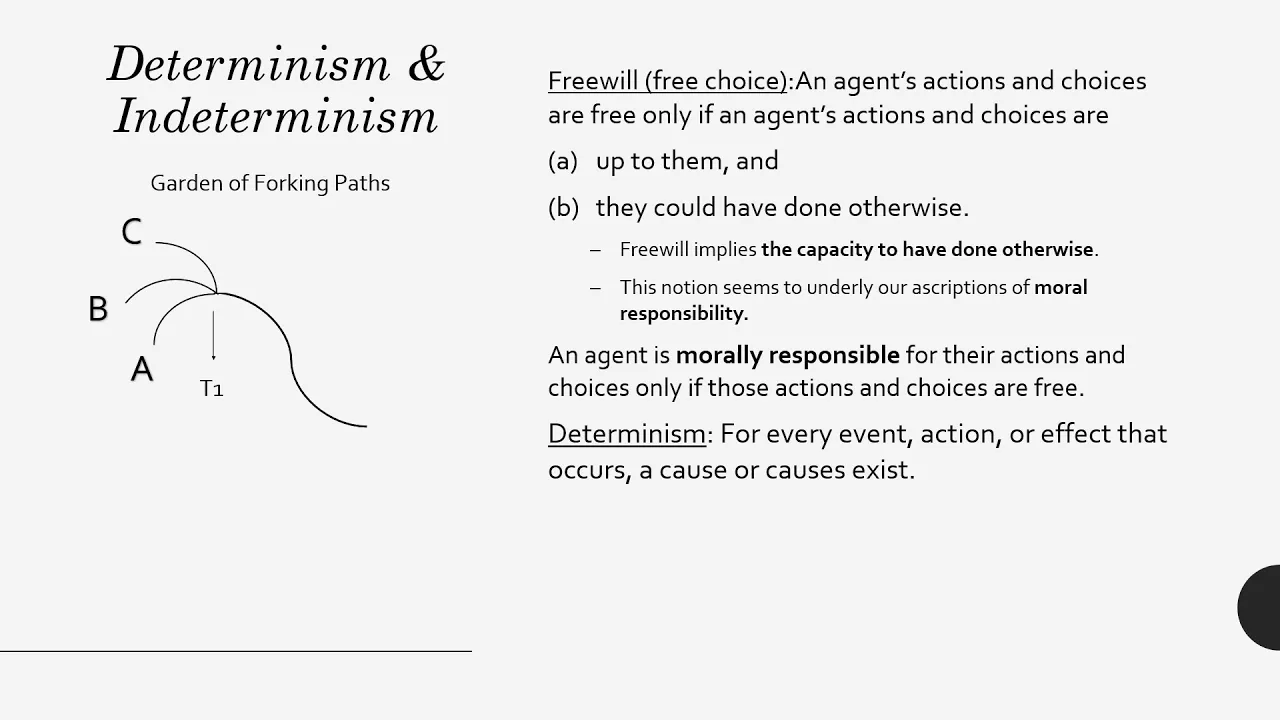
89:46
Human Freedom & the Self: Roderick Chisholm's Philosophy
@neilpettijohn9618
1.1K views•2018-12-01

164:01
John of Damascus on Holy Images: A Theological Defense
@BannedBooks
139 views•2026-04-25

9:47
Panpsychism: What is the Argument For and Against?
@CloserToTruthTV
6.4K views•2026-02-16
4:57
The Myth of Sisyphus: A Greek Legend of Eternal Punishment
@TEDEd
8.6M views•2018-11-13
Related Study Plans & Knowledge Roadmaps
Structured learning paths in Philosophy
philosophy
Frankfurt School: Critical Theory & Culture
01Foundations of the Frankfurt School and Critical Theory
02Horkheimer & Adorno: The Critique of Instrumental Reason
03The Culture Industry and Mass Deception
+ 2 more learning modules
12h5 modules
Explore Roadmap
philosophy
Philosophy of Language: From Frege to Austin
01The Linguistic Turn: An Introduction to Language in Philosophy
02Gottlob Frege: Sense and Reference
03Early Wittgenstein: The Picture Theory of Meaning
+ 3 more learning modules
15h6 modules
Explore Roadmap
philosophy
Feminist Epistemology: Standpoint & Injustice
01Introduction to Epistemology and Feminist Critiques
02Sandra Harding and Standpoint Theory
03Donna Haraway and Situated Knowledges
+ 2 more learning modules
12h5 modules
Explore Roadmap
philosophy
Environmental Philosophy: Ethics & Deep Ecology
01Foundations of Environmental Ethics & Anthropocentrism
02Biocentric Individualism and Animal Liberation
03Ecocentric Holism and Deep Ecology
+ 1 more learning modules
10h4 modules
Explore Roadmap