

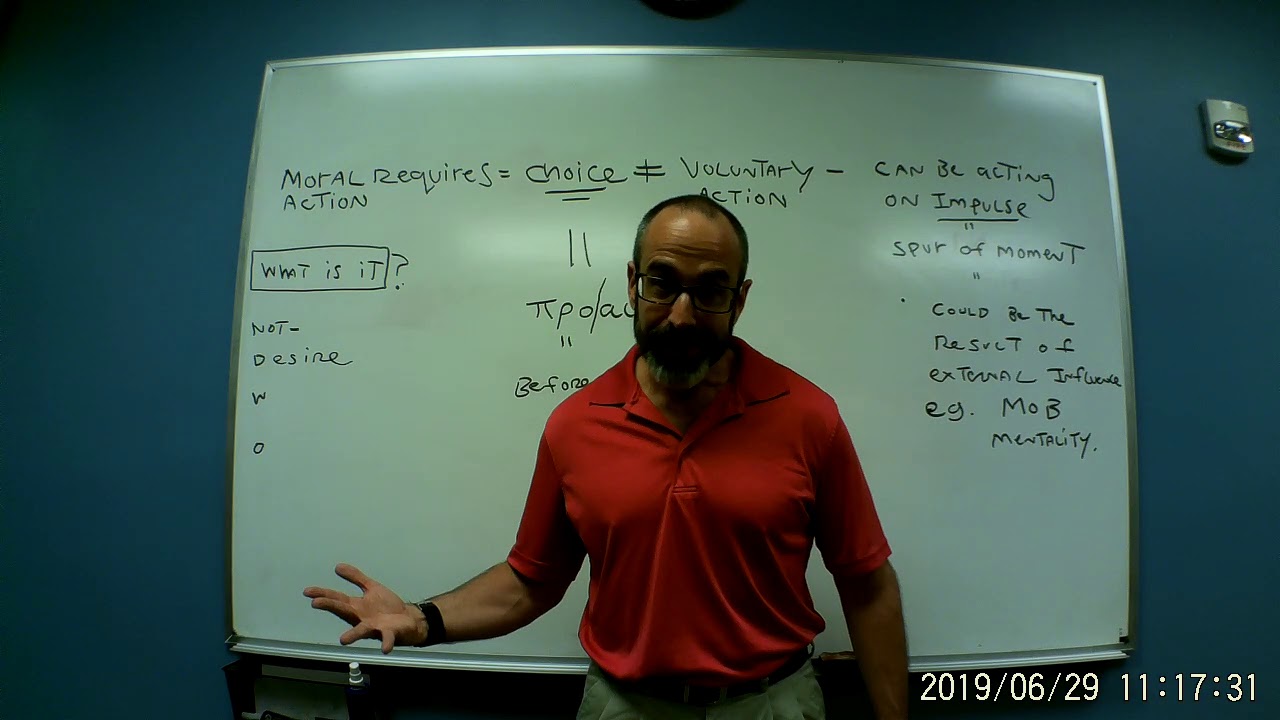
![Free will and determinism - Issues and debates [A-Level Psychology]](https://i.ytimg.com/vi_webp/MMcI-yoqsP8/maxresdefault.webp)




![Все предопределено, значит свободы нет? [Алипов и Кузнецов]](https://i.ytimg.com/vi_webp/3qcawrUwe-A/maxresdefault.webp)


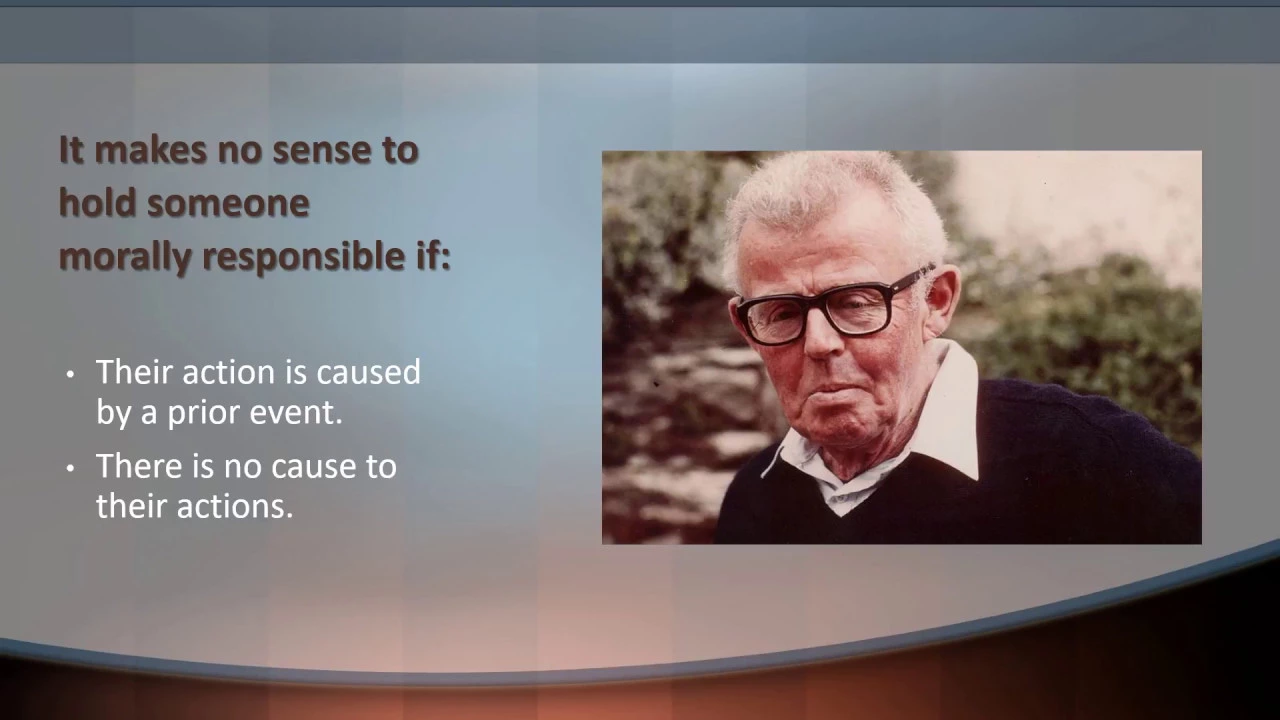


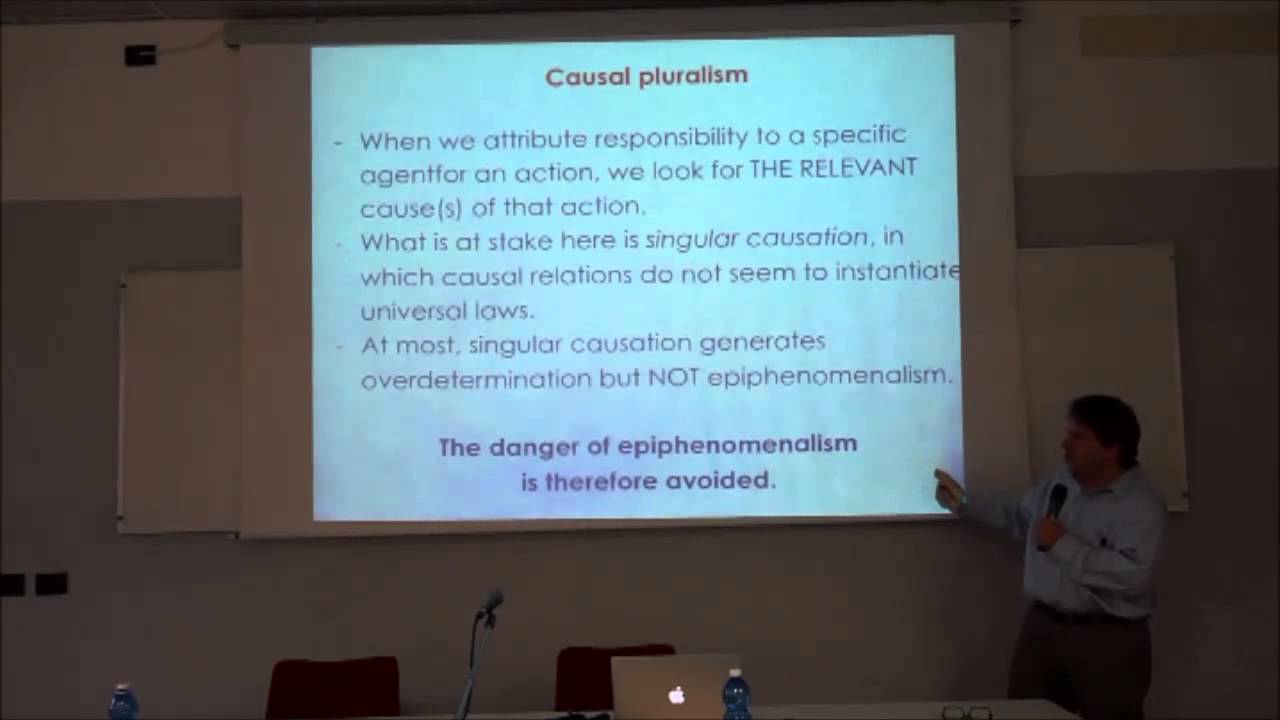


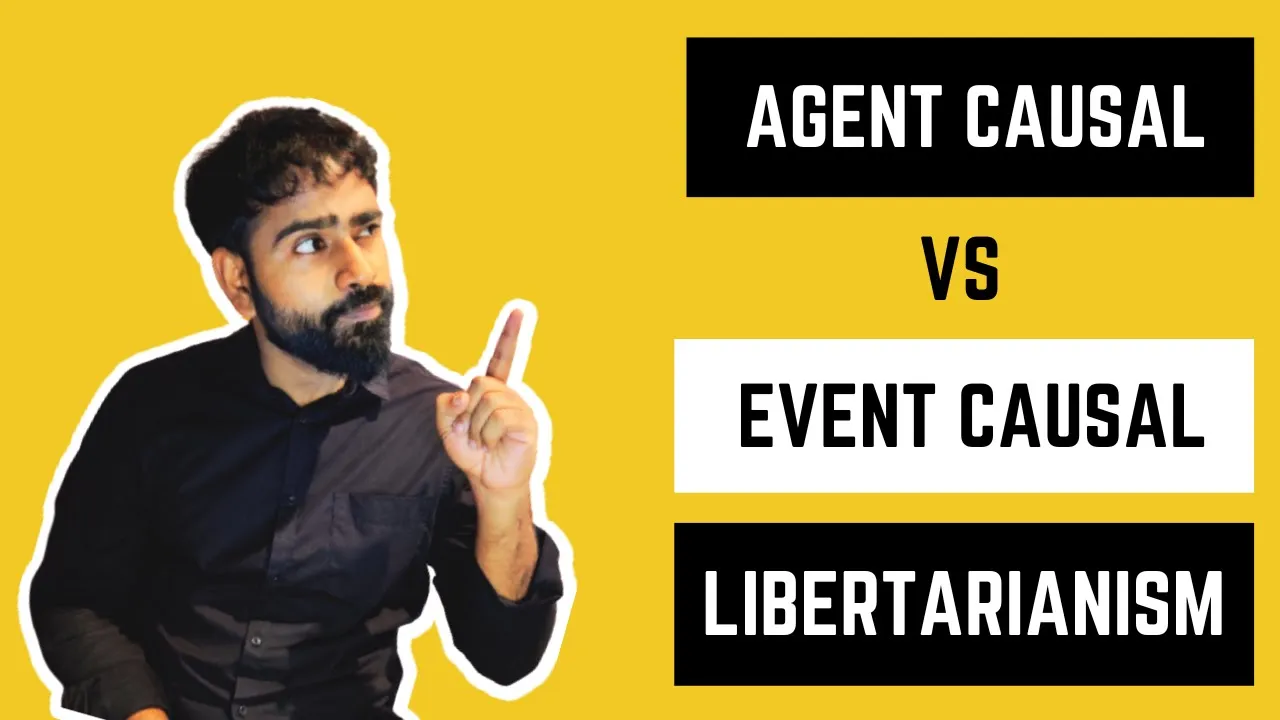



The problem of human freedom, as articulated by philosopher Roderick Chisholm, is that moral responsibility appears incompatible with both determinism (where every event is caused by prior events) and indeterminism (where some events occur randomly without cause). Chisholm proposes solving this by distinguishing between event causation (where one event causes another) and agent causation (where agents themselves cause events without being caused by other events). According to this view, human agents are 'prime movers unmoved'—they can initiate actions without being determined by prior causes, thereby preserving both free will and moral responsibility.
Human Freedom & the Self: Roderick Chisholm's Philosophy
Added:An understanding of the basic debate between Determinism (the thesis that all events, including human actions, are ultimately determined by causes external to the will) and Free Will.
The philosophical definition of Moral Responsibility and why it traditionally requires some form of choice or agency.
The core distinctions between Compatibilism (the belief that free will and determinism are compatible) and Incompatibilism (the belief that they are mutually exclusive).
Familiarity with standard event-event causation (transeunt causation), where one physical event causes another, which serves as the contrast to Chisholm's theories.
A deep dive into Chisholm's specific distinction between 'transeunt causation' (event-to-event) and 'immanent causation' (agent-to-event).
Analysis of major criticisms of agent causation, including the 'mystery objection' (how an immaterial self physically initiates a causal chain) and the challenge of physical closure.
A comparative study of alternative libertarian models of free will, such as Robert Kane's event-causal libertarianism.
Exploration of the implications of Chisholm's agent-causation on modern neuroscience and the contemporary debate over physicalism versus dualism.
1.1K views29likes1:29:46Original Release: 2018-12-01
all right so welcome to our fancy online lecture on human freedom and the self by Roderick Chi's home so as you're listening to this you can just follow follow along I recommend having your textbook open I will be reading from some passages from the textbook like I normally do in class and so feel free to read along with me and of course you can pause the video at any point and take things at your own pace you might even consider writing up your reading response as you're working through this lecture the prompt for the reading response is on canvas now and I've pushed the due date back on that to December 5th so the fourth reading response will be due on Wednesday December 5th as opposed to Monday December 3rd and at the usual time so the start of class you'll need to have a digital copy uploaded to canvas and a hard copy brought with you to class ok so with that being said let's dig in to material so before we begin to look at which his Holmes argument is human freedom in the self we should get a couple of concepts and definitions out on the table so we can begin to think about these issues in a more sophisticated way now the concept of free will is one that is notoriously problematic and what I've done here is giving you a general definition of freedom of the will we can think of free will as being synonymous with free choice or free action and the definition that I have for you here is one that most philosophers would agree upon in some general way various philosophers might quibble quibble over some of the technical distinctions and defining the term but generally this is a definition that most philosophers would get on board with and this is to say that what we're speaking of when we're speaking of free will is an agent's actions and choices in particular that an agent's actions and choices are free only if an agent's actions and choices are a up to them and be they could have done otherwise now it's the second part of the definition here Part B they could have done otherwise which is really the crux of the issue of freedom of the will now what we mean when an individual acts freely is that the action proceeds from them I the agent wasn't being coerced to do something against their will and scare quotes that the action flows from the agent themselves that the agent is the source of the action so this is usually only mean we're talking about free will but a bit more technically what we mean when we're talking about free will is that an agent couldn't have done otherwise other than what it was that they did do so for instance normally we think that an action is free because we could have made some other choice than what it was that we did choose so I decide to get up and go to work for instance and we think of that as a volitional action because we could have done differently right we could have stayed in bed hit the snooze button a few more times maybe just turned off the alarm and stayed under our warm covers and not gotten up and gone to school or gone to work but let's say we do choose to go to school or go to work we think of ourselves as engaging in a meaningful action instead instance because we could have done otherwise than what it was that we did do now if we were in a situation where what we did do wasn't up to us and we couldn't have done otherwise than what it was that we did do then it would seem that we really have no say in how that particular state of affairs unfolds it looks like we have a genuine choice when we make a decision when we can do something other than what it is that we decide to do so this is crucial for understanding the free will freedom of choice and freedom of action and agents actions and choices are free only if an agent's actions and choices are a up to debt up to them and be they could have done otherwise now a concept of free will implies this capacity to have done otherwise and this capacity to have done otherwise having a number of options at one's disposable when making the decision seems to underlie our ascriptions of moral responsibility so for instance when someone does something wrong I say you do something to me and I'm upset with you for doing it oftentimes I will either praise you or blame you for what it is you have done because I think that you could have done otherwise than what it was that you did do so if you come up and slap me in the face I'm gonna be pretty upset by that I'm not gonna be happy and I'm gonna blame you for slapping me in the face and the reason why I'm going to blame you is because I think that it's within your power in that instance to have not slept me in the face right and you're being able to not slap me in the face is what makes me think that it's really wrong when you do in fact slap me in the face so the capacity to have done otherwise underlies our ascriptions of moral responsibility now you might think well we still blame people even if they couldn't have done otherwise than what it was they did do right so maybe some somebody commits a crime and we find out that they committed the crime under duress or that they were suffering from some neurological or physiological impairment which made them behave in a way that they normal normally wouldn't behave and we do have special categories for that in the law and it's true that we still do punish people for engaging in behavior that we don't like but our ascriptions of moral responsibility are significantly dampened and lessened if we know that a person doesn't have the capacity to do otherwise than what it was that they did do so the capacity to have done otherwise is really the backbone of our ascriptions of moral responsibility this is what many philosophers um think and have thought so an agent is morally responsible for their actions and choices only if those actions and choices are free right it would be weird for me to hold you morally responsible for something that you had no choice about alright so if you were determined to do a particular action you had no choice other than to do what it was that you did do now you have to think about this right most of us have a subjective feeling of freedom of choice but if it turned out that in a particular instance say somebody made you do something with a gun to your head and you just had no choice but to do it the level of moral responsibility that we assigned to you in that particular instance is going to be very different than if we knew that you were undertaking that action upon your own deliberation right that you add some other options available to you if all those other options are taken away then it seems that your moral responsibility you be morally responsible for the action is taken away as well okay so we've got a couple of concepts out on the table now free will or free choice and agents actions and choices are free only if an agent's actions and choices are a up to them and be they could have done otherwise and this capacity to have done otherwise underlies our descriptions of moral praise and blame okay so here's a metaphor to start thinking about this problem of free will and determinism so in the literature this metaphor has been used to help clarify some of the issues that are at stake and what we are asked to do is to imagine a Garden of forking paths so here's our Garden of forking paths and you're walking down this long road here and you reach this fork in the road or you've got three different options here but you reach a point in the road where it seems to you that there are a number of different options that you can take you can go down road a you can go down wrote B or you can go down Road C and most of the time when we make choices we think of ourselves as making choices in this way that when we make a choice there are a number of different possibilities open to us and this is why we think some of our choices are genuinely important because things could go one way or the other depending upon the type of choice that we make so normally we think about making choices in this way we have these various alternate possibilities open to us and let's say we're walking down the garden path here and we reach the fork in the road and we decide to go down path B now when we decide go down path be what we might say is that you're responsible for making the choice of going down path B because you could have made the choice of going down either path a or going down Patsy and most of our choices seem to be like this we make a choice to go down a particular path or to engage in the particular behavior or action but we could have done otherwise we could have chose a or we could have chose C we happen to have chosen B but other possibilities were genuinely open to us at that particular moment when we made that decision and we'll call the moment in which we make that decision time 1 right so there's a particular moment in time where we make the decision to go down path B and when we make that decision our common everyday intuition suggests to us that although we chose to go down path B we could have chosen to go down either path a or Patsy okay so here is where things start to get a little complicated determinism is the view that for every event action or effect that occurs a cause or causes exist so determinism is a metaphysical position on the nature of the cosmos and what the states is that for any event which occurs there is some previous cause or some previous set of causes which brought about that event all right so any for anything which occurs any event which occurs you sitting at your computer now listening to this lecture there is some previous causal chain which has led up to the particular moment in which you find yourself now this suggests something odd if ever event action or effect that occurs has a cause or causes then there's really only one continuation of the state of things at a given moment which is consistent with the laws of nature ok so there's only one continuation of the state of things at a given moment which is consistent with the laws of nature ok so this starts to get a little abstract here but this is the way to think about it for any given moment that you find yourselves in you sitting at your computer listening to this lecture there's some prior causal chain which has led up to that particular moment right so there was something that caused you to sit down at the computer there was something that caused you to click at the link and now you find yourself in the moment where you're watching the lecture and there's this long causal chain which has led up to this particular moment and what determinism states is that given that causal chain which has led up to this particular moment in conjunction with the laws of nature there is really only one way in which things will unfold at a given time so if you take that antecedent causal chain in conjunction with the laws of nature what that suggests is that there's really only one way in which will in which things will unfold at that moment so what determinism states is that the way in which events unfold at a given time is determined by natural laws and this is this jest that there is really only one physically possible future at any given moment now this seems counterintuitive to because it seems like in a given moment especially you when we make a choice that there are a number of different physically possible futures which could unfold at that moment but what determinism states is that given the causal antecedents which have led up to the present moment in conjunction with the laws of nature there is really only one way in which things will unfold this is the doctrine of determinism it states that all events in the universe are predetermined that there's really only one way in which things will unfold given how things were you can push it as far back as you like to let's say the beginning of the universe and the beginning of the universe the way in which things unfold then in conjunction with the laws of nature determines that things will happen exactly the way that they're going to happen so really when we're looking at our garden of forking paths' well normally it seems to us at t1 at time 1 that we have a number of different options available to us we could go down paths a we could go down path B or we could go down pat C we decide to go down path B but when we make that decision we recognize that we're making a genuine decision because we could have gone down path a or gone down pat C we just happen to choose to go down path B now if determinism is true that for every event action or effect that occurs a cause or causes exists and that this entails that at any given moment there is only one physically possible future which can come about then our garden of forking paths doesn't really look like this if we just zoom in a little bit closer we'll see that the path looks more like this it seemed to us at first as if we had a genuine choice to go down path a Pat B or Patsy and we happen to choose B but we could have chosen a a or C if determinism is true then what the situation looks like is really like this our body Garden of forking paths here when we choose to go down path be pat that choice to go down path be was really the only way in which things could have unfolded at t1 it looks to us as if we could have gone down pat a or down path c but really that is just an illusion because at t1 at that moment in time there is a long causal chain which has led up to that particular moment and that long causal chain which has led up to that particular moment in conjunction with the laws of nature makes it that there is really only one physically possible future that can unfold at that moment and that is us choosing to go down path B and we'd have to say choosing in scare quotes there because now we mean something very different when we're talking about choice because it looks as if if determinism is true then our our conception of free will more particularly och particularly our subjective feeling of free will is illusory if everything has a cause and if natural laws hold then there's really only one physically possible continuation of things at any given particular moment okay so this is scary for a lot of people right does most of us have a feeling a subjective feeling of being free and maybe if we don't think we're free in all instances we can at least all agree that there are moments in our everyday lives where it seems to us like we are making free choices however if determinism is true then the universe is causally determined in all of its parts and since our choices are a part of that causally determined funeral then our choices are determined as well and although it may seem to us as if we are exercising free will or freedom of choice in any particular given instance given the truth of determinism than those choices wear themselves determined and we really had no say in the matter so determinism is a view which is widely accepted as an intellectual position it's probably the most agreed-upon understanding of how the universe is constituted as a kind of causal mechanism and what this does is poses a very big problem for any satisfactory notion of freedom of the will and then that also since our our free will seems to underlie our ascriptions moral responsibility makes our ascriptions of moral praise and blame very problematic okay so here's another way to begin thinking about this particular problem so here's you playing a game of pool and you pick up the cue stick and you hit the cue ball and the cue ball hits the eight ball and the eight ball goes into the corner pocket pretty simple state of affairs here now what most of us think or at least what it seems like is that when we move the cue stick and it hits the cue ball and the cue ball is heading towards the eight ball it seems to us like a number of things could happen at that particular moment in time that the eight ball could go into the corner pocket it could hit one of the rails miss the pocket etc but there are a number of different outcomes at that particular moment in time before the cue ball strikes the eight ball however what determinism states will call this time - right here is that when you strike the cue ball there is a causal chain which has led up to that particular moment and that causal chain leading up to that particular moment in conjunction with the laws of nature means that there's really only one future at that instance which is a physically possible future and you might say and I think this is a normal intuition to have aren't other futures physically possible at that given instant so you see the cue ball heading towards the eight ball and you're hoping the eight ball goes into the corner pocket but it seems like it could behave differently right you could hit one of the rails well what determinism states is that at that moment when you hit the cue ball the causal chain which has led up to that in conjunction with the laws of nature makes it so that there's really only one physically possible future which can unfold at that given moment in time all right so you might think they they bulk go off and do a number of different things but if determinism is true then only one future is physically possible given the conditions at t2 right so the events which led up to the striking of the cue ball determines that that cue ball is going to go on to do exactly what it is that it is going to do and that causal chain will kick off further events and those events will become causes down the line and so forth but all of that is determined by prior causal states of affairs so in this instance you are one of those prior causal states of affairs right - let's say at t1 you decide to pick up the cue stick and hit the cue ball while you picking up the cue stick has a causal chain which led up to that particular moment right you decided to walk in to the room you're gonna play the game of pool to pick up the cue stick and there are all these events which have led up to that particular moment and those events in conjunction with the laws of nature suggest that you are determined to do precisely what it is that you are going to do in that given instance and we can push this as far back as we want theoretically we could push it back to the very beginnings of the universe so now we can see why determinism is a bit of a problem for the conception of freewill that we have laid out and for the conception of moral responsibility which rests upon this notion of free will if determinism is true then we can't ever be said to exercise a free choice in the sense that we could have done otherwise if at any given moment in time the causal antecedents which have led up to that moment in conjunction with the laws of nature suggest that there is only one physically possible future at that given moment and since what we mean by free will is the capacity to have done otherwise if determinism is true then we really never have a capacity to do otherwise and our ascriptions of moral praise and blame are essentially meaningless so you can begin to see why people worry about this particular problem if the universe is causally determined in the way that a causal determinist thinks and if that shows that we never actually exercise genuine choice or free choice then our actions start to become a bit meaningless or at least it seems that way for some right if we really never have a say in what we do then all of the turmoil and and deliberation and emotional anxiety and the emotional stakes that we have in our choices and our decisions are ultimately futile so some people have wanted to get out of this particular issue to try and find a way out and some people have proposed that one way of doing this is by making the case that the universe is an entirely deterministic that there are some events or states Affairs which are not caused at all and this is a view known as in determinism and indeterminism states that at least some events that occurred have no deterministic cause but occur randomly so an indeterminate doesn't think that there are no events which are caused they just think that at least some of the events which occur in the universe have no deterministic cause they just occur randomly or spontaneously some things just happen out of the blue and they have no prior deterministic cause this is the view of in determinism now if in determinism were true that there are some events which have no deterministic cause then at a given moment many or some futures are physically possible futures all right so if there's no deterministic cause which leads up to t1 where we have to make the choice to go down route a B or C if that were for instance an event which happened randomly or spontaneously then it wasn't predetermined that we would go down paths B we might go down paths C or down paths a but the event would just happen spontaneously or randomly there would be no prior to terminus t'k cause if that were the sort of an event which was undetermined now it's unclear exactly what in determinism means and I think it's a difficult idea to grasp some people have pointed to quantum mechanics as a possible way of making the case for an indeterminate ik universe but we don't need to get into the nitty-gritty of in determinism in order to understand the concept the concept just suggests that there are some events which are not causally determined and some people who have wanted to defend freedom of the will have suggested that while if determinism is true then this might open up a wedge for us to insert freedom of will it will take a look at the argument for in determinism and strong objection to it in just a couple of moments as we turn towards Rodriquez homes sa human freedom in the south okay so for thinking about in determinism then when the cue ball is heading towards the 8-ball if that is a type of event which has no prior causal determination then there would be genuinely other or many physically possible futures at t2 right and so that's what the in determinist wants to hold on to to try and preserve a conception of freewill that there are at least some events which are not causally determined and thus many or some futures are physically possible futures at a given moment in time okay so we have our conception of freedom of the will and essentially what we mean when we're talking about freewill is the capacity to have done otherwise we mean that an action is up to an agent if that agent could have done otherwise than what it was that they did do if they're walking down the Garden of forking paths and they choose to go down path B they have chosen freely or exercised freedom of will if other options were genuinely open to them if they could have gone down path a or down path C however if determinism is true then there is really only one physically possible future at any given moment in time and while it seems to us like we could have done otherwise then choose path B determinism suggests that when we make the choice to go down path B that is precisely what we were determined to do although it seems to us like we have a genuine choice we feel this subjective sensation of freedom that is ultimately an illusion and the in determinist tries to get out of this problem by posing that there are some events which occur which have no prior deterministic cause and which just occur randomly and we'll see why in determinism is an unsatisfactory answer to the problem of free will in in just a moment okay so in the SI human freedom and the self Roderick choose home lays out what he calls the problem of human freedom and for choose home the problem of human freedom is the conflict between the view that what people are responsible for their actions and both deterministic and in deterministic views of human action in other words what Chisolm is saying is that moral responsibility in hence freewill is incompatible with both a deterministic conception of the universe and an in deterministic one both of these views conflict with moral responsibility and freedom of will so I'm going to read from the text now again this is page 387 and I'm beginning at the beginning here it starts with a short quote from Aristotle's physics which reads a staff moves a stone and is moved by a hand which is moved by a man and this will become important birches home later up here's the first paragraph a metaphysical problem of human freedom might be summarized in the following way human beings are responsible agents but this fact appears to conflict with a deterministic view of human action the view that every event that is involved in an act is caused by some other event and it also appears to conflict with an in deterministic view of human action the view that the act or some events that is essential to the act is not caused at all to solve the problem I believe we must make somewhat far-reaching assumptions about the self or the agent about the man who performs the act okay so that's a very clear exposition of what chisels calling the problem of human freedom it's the problem that moral responsibility seems to be incompatible with both determinism and indeterminism now Chazz Houma is going to spend some time fleshing out why this is a problem going over some of the issues that we are just speaking about and then ultimately which his home is going to do is propose a solution for getting out of this particular problem that moral responsibility seems to be incompatible with both determinism and indeterminism now it's his homes response to this problem which is really interesting here his home is going to suggest that there is a way out all right so we'll want to be following along making sure we understand what the problem of human freedom is and how to's home proposes that we escape the problem now I'll just direct you back down to that last sentence of the paragraph that we just read choose home says to solve the problem I believe we must make somewhat far-reaching assumptions about the self or the agent about the man who performs the act right so what choose home is suggesting here is that he is going to make far-reaching assumptions about the self in order to solve the problem in other words his home thinks that if we get our conception of the self right it's going to solve the problem of human freedom so that's a first indication of the strategy that his home is going to take to solve this particular problem okay so in order to wrap our heads around this let's look at a particular case we have some agent and let's call this agent agent X an agent x4 or whatever reason decides to shoot agent Y maybe agent X is just a cold-blooded murder and decides to shoot agent Y for whatever reason what would the conditions be for assigning free choice to agent X well if we take our prior definition of free will and moral responsibility then we can say that agent X is responsible for shooting agent why when what happened was entirely up to agent X and if agent X could have done otherwise than what he did so we're going to say that agent X is responsible for shooting the agent Y when agent X is shooting of agent y was in fact entirely up to agent X and agent X could have done otherwise that is he could have decided not to shoot agent Y now remember that's the whole thrust behind assigning moral praise and blame is that ability to have done otherwise so if agent X could have done otherwise and he is responsible for shooting agent why he could have decided not to do it and that is the key issue when it comes to free will according to Chisholm so let's look at section 2 here on 387 right it's just number 2 let us consider some deed or misdeed that may be attributed to a responsible agent one man say shot another if the man was responsible for what he did then I would urge what was to happen at the time of the shooting was something that was entirely up to the man himself there was a moment at which it was true both that he could have fired the shot and also that he could ever frame from firing the shot right so that he could have done otherwise at that moment he could have either fired the shot or not and that's what leads us to saying he's responsible and if this is so then even though he did fire it he could have done something else instead he didn't find himself firing the shot against his will as we say right so if somebody made agent X to shoot agent wine that would be a different story so this event then was within agent X's power to either bring about or not bring about and when we asked should agent X be held responsible for shooting agent Y the answer appears to be a clear yes faith continued with the text here I think we can say more generally than that if a man is responsible for a certain event or a certain state of affairs in our example the shooting of another man and that event or state of affairs was brought about by some act of his and the act was something that was in his power either to perform or not to perform but if agent X was a Manchurian Candidate that is what if the event was not really within agent X's power to either bring about or not bring about right so we're talking about a maturing a Manchurian Candidate it's somebody who's essentially brainwashed and programmed to commit a political assassination right and just imagining this hypothetical scenario where somebody finds themselves in a condition they've been brainwashed to perform an assassination then what they do agent acts shooting agent wha-hey wasn't really with an agent X's control because what happened wasn't entirely up to agent X and agent x couldn't have done otherwise than what it was that he did do due to the brainwashing so that makes it seem like agent X isn't really responsible for shoe why and that's because we take away this capacity to have done otherwise when we insert this coercive force from the outside on somebody's action this is often why we don't hold people responsible for their actions when they are coerced to do something against their will okay so the view that his home is laying out here he's given us a particular case to begin thinking about what's going on with assignments of moral responsibility and and free will there is a position in the philosophical literature known as hard determinism and what this position states is that free will and moral responsibility is incompatible with determinism so if determinism is true then no action is genuinely free and we're gonna look at the argument for this particular case right now so this is at the top of the 388 first full paragraph but now if the Act which he did perform was an act that was also in his power not to perform then it could not have been caused or determined by any event that was not itself within his power either to bring about or not to bring about for example if what we say he did was really something that was brought about by a second man one who forced his hand upon the trigger say or who by means of hypnosis compelled him to perform the act then since the act was caused by the second man it was nothing that was within the power of the first man to prevent so this is our Manchurian Candidate example when there is for instance a second agent causing agent X to shoot agent Y for scene agent X to shoot agent Y then we say that 18 X isn't responsible for what he's done because his capacity to have done otherwise is gone he is determined to do exactly what it is that he is going to do okay so we continue here with Chism in the text and precisely the same thing is true I think if instead of referring to a second man who compelled the first one we speak instead of the desires and beliefs which the first man happens to have had okay and read that again and precisely the same thing is true I think if instead of referring to a second man who compelled the first one we speak instead of the desires and beliefs which the first man happens to have had so Chisolm is making an at and analogy here between the examples when we have the example of agent X being coerced by somebody from the outside save room brainwashing or hypnosis we want to say that agent X is not free agent X was coerced couldn't have done otherwise and therefore cannot be held morally responsible for his actions now Chism is saying that the hard determinist is committed to saying that we mean the same thing when instead of referring to a second agent coercing agent eggs to shoot agent why we refer instead to agent X's beliefs and desires so agent X's beliefs and desires stand in the same relation to the shooting of agent Y as does the second agent who coerced agent x industry ting agent Y so Y which is home say that this is the case well what is the cause of the beliefs and the desires that lead to agent x shooting agent Y surely if at some point agent x acquired those beliefs and desires and if determinism is true that for every event which occurs from cause or causes exist then agent X was caused to have the beliefs and desires which led to the shooting of agent Y that is the beliefs and desires which led to the shooting of agent Y were determined prior to agent X having those beliefs and those desires so back to the text here for if what we say he did was really something that was brought about by his own beliefs and desires if these beliefs and desires in the particular situation in which he happened to have found himself caused him to do just what it was that we say he did do then since they caused it he was unable to do anything other than just what it was that he did do so if agent X's beliefs and desires were the cause of him shooting agent Y and if agent X was determined to have those beliefs and those desires then agent X had no say in whether he was going to shoot agent Y agent X was determined to shoot agent Y this is the position of the hard determinist that our beliefs and our desires are causally determined by causal antecedents in conjunction with the laws of nature outside of our control and so whatever it is that we do we are determined to do given the causal state of the universe so agent X did not cause his beliefs and desires the beliefs and the desires however caused the firing of the gun and then we asked what caused 18 X to have the beliefs and desires he did in fact have well if determinism is true then they must have been caused by some previous event right so there was some other event which led to agent X having those beliefs and those desires maybe it was a bad childhood which then led to the firing of the gun and then there we can trace the causal chain even further back so what were the causes of leading to agent X having the bot bad childhood what were the causes of those causes so on and so forth and we can trace that causal chain right back to the beginning so if X is beliefs and desires were caused by an event which was not up to him then he cannot be said to have caused the event he cannot be said to have done otherwise again this is the position of hard determinism that free will is an illusion if determinism is true then there is no room for free will in this picture of things I'm gonna continue with the text here it makes no difference whether the cause of the deed was internal or external if the cause was something state or event for which the man himself was not responsible then he was not responsible for what we have been mistakenly calling his act right so that's key there if the cause was some state or even for which the man himself was not responsible then he was not responsible for what we have been mistakenly calling his act if a flood throw this up here if a flood caused the poorly constructed dam to break then given the flood and the constitution of the dam the break we may say had to occur and nothing could have happened in its place and if the flood of a desire caused the weak willed man to give in then he too had to do just what it was that he did do and he was no more responsible than was the dam for the results that followed I think it's a very nice description of the position of hard determinism right so this picture of a dam and then a flood causing the dam to give way and given the constitution of the dam the particular time when the flood occurs given that the dam is constituted poorly that dam is determined to break there is nothing which will stop the dam from breaking given the way in which it's constructed it has to happen and then his home is making the analogy here with agent X shooting what agent Y and if the flood of desire caused the weak-willed man to give in then he too had to do just what it was that he did do and he was no more responsible than was the dam for the result that followed ok so here we have our picture of hard determinism which our free will skepticism and this is the first part of the of human freedom where it's as home says memorial responsability is incompatible with determinism this is the view that freewill is incompatible with determinism determinism is true then freewill must be an illusion ok so that's part of it the next part of it is that choose home states that in determinism is also incompatible with freewill ok so let's move to that branch the argument real quick it's a bit shorter and we can take care of this piece pretty quickly so again in determinism is the view that at least some events that occur have no deterministic cause but occur randomly so agent X's firing of the gun was not caused at all or just came about by chance there was no prior causal determinant which led to the firing of the gun it just happened randomly or spontaneously now the question is if X's firing of the gun was not caused at all can X be held accountable for the act some people have suggested that if the universe is in deterministic then maybe that makes room for freedom of the will right because then we have some events which are not causally determined and if agent X is firing the gun was not causally determined do we think that that will allow us to say that agent X was responsible for bringing about the if X can be held accountable we should be able to say he brought the event about the problem within determinism giving room for free will however is that if he didn't cause the event then he can't be said to have brought it about all right so if the firing of the gun just happens randomly or spontaneously if there was no prior cause which led up to that moment of Agent X firing the gun if it just happened spontaneously or randomly by chance then agent X can't be said to be held accountable for it because if it happened by chance then he didn't decide to do it it just happened randomly or spontaneously and it doesn't seem like we want to assign responsibility to events which occur just by chance or randomly out of the blue seems like in order to assign responsibility we need to say that there was some cause there and that the cause was the agent but if it just happens randomly or spontaneously then nobody was there to be responsible for the action so that fills out our problem of human freedom neither determinism nor ended turn in determinism can adequately account for human freedom ok so you might want to take just a moment here and make sure that you understand what the problem of human freedom is and again just to summarize it really quick the problem of human freedom according to choose home is that human freedom seems to be incompatible with both determinism and indeterminism human freedom is incompatible with both determinism and indeterminism then there is no human freedom that's the problem right if either of these choices are true which seem to be our two choices for taking a view on the universe things are either causally determined or they're not then if both of those are incompatible with human freedom and human freedom seems to be out the window now it's a troubling problem if you think that there's something to our subjective feelings of freedom and those aren't completely illusory I happen to think for instance that they are not completely illusory and that there is something very significant and meaningful about our subjective feelings of freedom that we need to give a philosophical account for and so you know I would suggest that we need to propose a prop to the problem of human freedom and we're gonna take a look now at one attempt to do that and then inches homes attempt to solve the problem okay so one way that philosophers have gone about trying to solve this problem is by developing a position which is known as compatibilism and compatibilism is the view that freewill moral responsibility is compatible with determinism right so this is the view which digits which says something like this yes determinism is true there's only one physically possible teacher at any given moment however we can still make sense a free will within a cause we've determined cosmos so the freak about compatibilist thinks that free will and determinism are compatible that's why they're called combative lists the question is is what kind of argument that can the compatibilist give in order to respond to this problem another name for compatibilism is soft determinism contrasted with the view of hard determinism that we just looked at which says that free will and determinism are incompatible compatibilism or soft determinism says that determinism is is compatible with freewill okay tell me walk that back just a second so let's look at section three on page 388 that's on the right hand column of the page near the bottom and we'll look at the Simpsons right before that and go from there there is one standard objection to all of this and we should consider it briefly the objection takes the form of a stratagem one design to show that determinism and divine providence is consistent with human responsibility the stratagem is one that was used Jonathan Edwards and by many philosophers the present century most notably GE more one proceeds as follows the expression a he could have done otherwise it is argued means no more nor less than B if he had chosen to do otherwise then he would have done otherwise in place of chosen one might say tried set out decided undertaken or willed the truth of statement B it is then pointed out is consistent with determinism and with divine providence for even if all of the man's actions were causally determined the man could still be such that if he had chosen otherwise then he would have done otherwise what the murderer saw let us suppose along with his beliefs and desires caused him to fire the shot yet he was such that if just then he had chosen or decided not to fire the shot then he would not have fired it all of this is certainly possible ok so let's try and break this down and see what the compatibilist is arguing here so what the compatible is argues is we go back to our example of agent exiting agent why is that what we mean when we say when we utter the phrase agent X could have done otherwise is the same thing that we mean when we other if agent X had chosen to do otherwise then he would have done otherwise and so if agent X had chosen to do otherwise then he would have done otherwise may means the same thing according to the compatibilist as agent X could have done otherwise okay so what is the same the claim is that and be mean the same thing and since we have already decided and we decided this early on in our defining of freewill that agent X could have done otherwise is compatible with moral responsibility that that's what we mean when we say somebody is morally responsible for their actions and therefore free if a is compatible with freewill and a means the same thing as B then then B if agent X had chosen to do otherwise then he would have done otherwise is compatible with the view of causal determinism right so a agent X could have done otherwise just means B if agent X had chosen to do otherwise then he would have done otherwise so what we need to wrap our heads around here is why his home is saying the compatibilist thinks that B is compatible with determinism and why B means the same thing as a so on the face of it these two statements say different things a says agent X could have done otherwise and B states that if agent X had chosen to do otherwise then he would have done otherwise so we've got to figure out why those mean the same thing so B if agent X had chosen to do otherwise then he would have done otherwise this is an easy claim to understand all that this states is that if things had been different for agent X if for instance the conditions of agent X's childhood had been slightly different than in the moment when agent X is deciding whether to shoot agent Y it could have come about that agent X refrained from pulling the trigger so if we just changed the causal antecedents which lead up to that particular moment a little bit we can say that if agent had chosen to do otherwise than he would have done otherwise all right so that's a view which is completely compatible with determinism right in this universe agent X's beliefs and desires were such that those beliefs and desires were going to cause him to fission why but if things had been slightly different then agent X would have had a different set of beliefs and desires which would have led him to not shooting agent Y so if things had been slightly different then agent X would have behaved differently now what the compatibilist wants to argue is that so since that that claim in be if agent X had chosen to do otherwise that he would have done otherwise is compatible with determinism and since B means the aid same thing as a agent X could have done otherwise then a itself agent X could have done otherwise is compatible with determinism right so here's a quick way of breaking it down let's say in a parallel universe agent X does not have the murderous beliefs and desires it would then be the case that he would have done otherwise than what it was that he did do thus determinism is compatible with freewill what we mean when we say agent X could have done otherwise is that if agent X had chosen to do otherwise then he would have done otherwise so if you're feeling dissatisfied with this argument that is a good thing because it is a terrible argument because it does a huge injustice to what we mean when we say agent X could have done otherwise so the quick way of showing that this argument is is false there is some semantic appeal to it and a number of philosophers have tried to put forward some version or another of this argument but I think it's it's ultimately flawed because it saying that if agent X had chosen to do otherwise then he would have done otherwise doesn't mean that agent X really could have done otherwise in the situation that he found himself when agent egg shot agent y he was determined to do so by the events which led up to that particular moment it may be that in some alternate universe some closely paralleled universe agent X had a different set of beliefs and desires which would have led him to behave differently it's still the case that in this universe in which agent X finds himself he couldn't have done otherwise than what it was that he did do so ultimately in order to object the compatibilist argument and it's the objection that she's home raises is that a and B don't really mean the same thing the compatibilist is trying to force these two conceptions together and it really doesn't work and I think that's right it does a lot of damage to the semantic content of statement a here that agent X could have done otherwise when we try to say that it means the same thing to be right so here's his homes objection if Ageing X had chosen to do otherwise then he would have done otherwise doesn't entail he could have chosen to do otherwise right because that's really the key element that we're trying to get a grip on here is that when agent X is in that intense moment as he's about to pull the trigger we want to know if he could do otherwise in that moment and if determinism is true with an agent X is determined to do exactly what it is he is going to do in that moment there's nothing he can do to change that right if things had been different he would behave differently but given the causal state of the universe things are going to unfold in exactly the way that they're going to unfold so he couldn't really have chosen to have done otherwise even if things were slightly different in a parallel universe so what we would need to be able to say is that agent X could have chosen to do otherwise and that seems to be exactly what causal determinism throws off the table so so choose home ends up just saying he could have chosen to do otherwise right he could have made that choice there were genuine options open to him that view that view of freewill is in Hannibal with determinism and so we're still back in the mud of the problem of human freedom and we've got to find a way out of it okay so let's begin to look at what choose homes response is to the problem of human freedom okay so in this stage in the game you should have a grasp on what the problem of human freedom is right and now what's the compatible is response to the problem of human freedom I just want to make sure that you're aware that there is this position in response to the problem of human freedom so what's the problem uniform what's the compatible US response to the problem of human freedom and now what is his home's response to the problem of human freedom given that we've seen that the compatibles argument doesn't really hold sway let's take a look at what another attempt to solve the problem looks like and this is the problem this is the solution which is proposed this one proposes that we can solve the problem of human freedom by making a distinction between two types of causation the two types of causation that choose home wants to make a distinction between is what he calls event causation or the fancy term that he uses for his transient causation and he's going to distinguish that from what he calls aging causation or the more fancy term he uses for that is immanent causation we're gonna want to see why choose home things that making this decision helps us get out of the problem of human freedom okay so let's look at section 6 here this is on page 389 second column the page down on the near the bottom section 6 if we consider only inanimate natural objects we may say that causation if it occurs is a relation between events or states of affairs the dams breaking was an event that was caused by a set of other Vence the dam being weak the flood being strong and so on but if the man is responsible for a particular deed then if what I have said is true there is some event or set of events that is not caused not by sorry if what I have said is true there is some event or state of affairs that is caused not by other events or states of affairs but by the agent whatever he may be I shall borrow a pair of medieval terms using them perhaps in a way that is slightly different from that for which they were originally intended I shall say that when one event or state of affairs or set of events or states of affairs causes some other event or state of affairs then we have an instance of transient causation right that's event causation and I shall say that when an agent as distinguished from an event causes an event or state of affairs then we have an instance of imminent causation okay so what's the distinction here so how does his own proposed we get out of the problem of human freedom what we need to make this distinction between these different types of causation so on the one hand we have the event causation he's calling transient causation and what we mean by event causation is simply the conception of causation that most of us work with all the time this is when we talk about an event being caused by another event so if we go back to our billiard ball table we have the cue ball which is causing the eight-ball to go into the corner pocket and we have one event which causes another event which causes another event and so on and so forth down the line and these are these long causal chains that we've been speaking about leading up to any particular event in conjunction with the laws of nature so this is a pretty standard and straightforward way of understanding cause-and-effect it's a relationship between events one event causes another event which causes another and so forth so in the case of agent extruding agent why if we think about this from the perspective of event causation and this is way the way a hard determinist and even most compatible as think about the event well there is a relationship between events right so presumably there is a neurological event which occurs in the brain which causes the muscle contractions in the arm and the hand which causes the man to pull the trigger which causes the shooting of the gun which causes agent Y to be shot and all of this can be understood in terms of the relationship between the various events when event causes another event which causes another event and this is pretty straightforward now what his Holmes suggestion here is that what we ought to do is make a distinction between this normal way of thinking causation and another type of causation which exists in the universe which is distinguished from event causation and he calls this agent causation or an imminent causation so what agent causation states is that as so an agent cause is an event which is not caused by other events but by the agent him or herself right so so what CH is home is saying here is look we have event causation in the universe one event causes another event which causes another event but there is another type of causal power which exists in the universe and another type of causally even and this is the type of causation which arises from an agent him or herself and he calls an imminent causation because he thinks that causal power resides within agents but it's a different type of causal power than that which exists between events so an agent can cause events causes flow from age but the agent is not him or herself caused so this is not a relationship between an event and an event as in the case of event causation it's a relation between an agent and an event and to some things that there's a very important difference here so when we're looking at event causation in the situation where agent x shoots agent Y and we're just looking at in terms of event causation there's some neurological event which causes the contraction of the muscles which causes the shooting of the gun but when we're looking at the situation from the perspective of agent causation we can say yes there is this long chain of transient causes or event causes but there is also another sort of cause which exists in this relationship which is different from a mere event caused and that is an ageing cause so it is an agent which brings about which causes the event in the brain which then leads to the relationship between the brain event the muscle contractions in the shooting of the gun so the agent kicks off this causal chain the agent is the source of this causal chain but the agent is not him or herself caused by another event okay so essentially what Chisolm is suggesting is that look we have this causally determined universe right there are all these events which occur and we can understand these events in principle in principle if we can look at the causal chains which led up to them but there are some events which exist in the universe which choose home things stand outside of this causal order so the agent is able to make changes to this causal order kick off new causal chains new events but the agent is not him or herself caused by other events and Chisholm argues that this distinction gets us out of the problem if you've been freedom so let's look back at the text here this is the first full paragraph on page 390 the nature of what is intended by the expression imminent causation right that's aging causation may be illustrated by the sentence from Aristotle's physics thus a staff moves a stone and is moved by a hand which is moved by a man if the man was responsible then we have in this illustration a number of instances of causation most of them transient but at least one of them imminent so most of the most of the causes which are occurring in this instance of staff moves a stone is moved by a hand which is moved by a man most of these causes are event causes transient causes relationships between events but at least one of them shows home says is an imminent cause an agent cause what the staff did to the stone was an instance of transient causation and thus we may describe it as a relation between events the motion of the staff caused the motion of the stone and similarly for what the handed to the staff the motion of the hand caused the motion of the staff and as we know from physiology there are still other events which caused the motion of the hand hence we need not introduce the agent at this particular point as Aristotle does we need not though we may we may say that the hand was moved by the man but we may also say that the motion of the hand was caused by the motion of certain muscles and we may say that the motion of the muscles was caused by certain events that took place within the brain but some event and presumably one of those that took place within the brain was caused by the agent and not by any other events right so that's the key his home thinks that there are certain events which caused other events but which are not themselves caused so this might seem a little bit weird because then the question is well what kind of event is this but you know it just home tells us at the very beginning of the paper to solve the problem I believe we must make somewhat far-reaching assumptions about the self or the agent so now you can see the type of assumption that CH is home is making about the self or the agent he's saying that the agent is capable of bringing about changes to the causal order of things but is not him or herself caused now just some things that this is the way in which we get out of the problem of human freedom and it rests on this pretty large assumption about the nature of the agent the agent according to his home is metaphysically free metaphysically the agent is able to cause change to the causal order but is not him or herself caused and this means that we can say that agent X caused the shooting of agent Y right so if agent X shooting agent Y in that description agent X is the agent cause that it makes perfect sense to say that agent X was the cause of shooting agent Y and if she's home is right and this type of agent causation or imminent causation is correct then agent X was not himself caused to shoot agent Y however he was the Cod agent X did caused the shooting of agent wine but agent X was not himself caused to shoot agent Y right so if agent X caused the shooting of agent Y then that could gets us out of the problem of indeterminism because the event doesn't just happen randomly or by chance agent X really was the cause of agent Y being shot and an agent causation is correct then it's also the case that agent X was not himself caused to shoot agent Y and that gets us out of the problem of determinism because of agent causation is a thing then there are certain types of the events which occur in the world agent causations which are not themselves selves caused by other events that means that the agent wasn't determined to do what it was that he was going to do that the action really flowed from agent X and that agent X was the cause of shooting the agent Y so this view is known as libertarianism and libertarianism is a position that can be taken in the freewill debate and it's not the same same thing as political libertarianism so you need to make sure that you distinguish this from political libertarianism because this doesn't mean the same thing libertarianism in in philosophy in the position as a position to to the problem of free will states that some human actions are freely chosen but not all of these events are caused some human actions are freely chosen but not all of them are caused le some events that occur have no deterministic cause but are themselves the causes of other events and agents are just such events they have no deterministic cause there is nothing which determines that an agent is going to behave in the way the agent does behave the the behavior of the agent is imminent to the agent him or herself it flows out from the agent the agent isn't determined to do what he is going to do determination comes from the agent so the agent is not caused but is him or herself the cause of other events so now of course the question here is this is a pretty weird view all right it's a pretty weird metaphysical view because it it suggests that there is something very special about the agent and that this specialness of the agent leads to the the problem of human freedom so if the agent cause the brain event what kind of cause is it are any of us really clear about what this agent causation is I myself am a bit unsure exactly what his home means by agent causation it's not entirely clear I think it's a very interesting solution to the problem but it's not totally clear what kind of cause it is but his home things that we need to pause an agent causation in order to get out of the problem all right and he thinks that logically we ought to accept that there are these types of agent causes in the universe okay so so if this agent cause were a transient cause or an event cause then it would have been brought about by some previous event right and that would throw us right back into the problem of determinism and not lead us out of the problem of human freedom so so the agent can't be like these other types of causes like the brain event like the muscles contracting like the movement of the hand etc the agent must be a different type of cause and Chisholm suggests that the agent must be a prime mover unmoved okay so the agent must be a prime mover unmoved so again Chisolm says that he's going to make some far-reaching assumptions about the self and indeed this is a far-reaching assumption about the self the agent is a prime mover unmoved now usually this is a description of a deity right of a deity which creates the universe a being which itself can cause the creation of the universe but which is not its self cost and Chisum seems to suggest that agents are like this they're not themselves gods right because they're not creating the entire universe but they have this type of power their prime movers on they can cause things to happen they can make events happen in the world but they are not themselves cost they are prime movers unmoved okay so turn to page 392 and section 11 here and this is where I just home states this if we are responsible and if what I have been trying to say is true then we have a prerogative which some would attribute only to God each of us when we act is a prime mover unmoved in doing what we do we cause certain events to happen and nothing or no one causes us to cause those events to happen alright so if we are responsible and if what I have been trying to say is true then we have a prerogative which some would attribute only to God we are prime movers unmoved and such as on things that if we adopt this assumption about the solids selfs our prime movers are moved if we think about our actions in this way and what we are and how we are metaphysically constituted as prime movers unmoved then this solves the problem this solves the problem of human freedom now of course this runs into all sorts of problems you can clearly see that this is a problematic view to take I'm sure you've immediately thought of a number of different objections to to this position but one reason to maybe slow down and give it some more consideration is to really try and understand what his home is doing here alright so we all have this feeling that we make free choices and that we can be held responsible for our actions and that other people can be held responsible for our actions we might feel this to different degrees but I doubt that anyone does not feel this at all right so so there is a strong reason for one to preserve a conception of free will and what Chisholm is saying here is that if we're going to do that if we're gonna hold on to an to a robust conception of freedom the type of freedom that most of us feel that we have then we need to be able to give an account of it and this is the account that she's home thinks we are logically led to if we are going to hold on to a conception of free will okay so his home is led here by his reasoning and he's led to this position as a consequence of the problem of human freedom and he thinks that this is this is the position that our subjective feelings of freedom really recommend to us as the account which can make sense of that feeling of freedom okay so so that's just Holmes argument right it's a little weird it's a metaphysical argument about the nature of human freedom human agents are prime movers unmoved and like I said there should be a number of different objections which are are occurring to you as as you go over this and what this piece does a really good job at doing is laying up the terrain of the debate and as we move to the next paper Harry Frankford moral alternate possibilities and moral responsibility she's sorry Frankfort proposes a response to the problem but he does it in a different way so Frankfort for instance is a compatible list he gives a different version of the compatibilist argument which i think is much stronger than the one we looked at in this lecture but at Frankfort is going to try and resolve the issue and this is essentially what the debate does different people have different responses to this problem and essentially you need to try to start to article to yourself what you think the best solution to this problem is the best solution given the materials that you have here to work with okay so so that's just one's argument just a possible objection here that can be raised to his home like I said there's a number of different objections but here's I suppose it's sort of an obvious objection that you could raise and the objection runs like this if agent X is the agent cause of his decision to shoot agent Y and so if agent X is the agent cause of his decision to shoot agent Y then agent X becoming the aging cause of his decision to shoot agent Y is itself an event right so if you say that agent X is the agent cause of shooting agent Y then that process of agent x becoming the agent cause of his decision to shoot agent Y is itself an event and if it's an event then it must be either determined or in determined it must be determined or not determined at all in other words if it's an event which occurs in the world agent x becoming the agent cause of shooting agent Y then that is an event which must be either deterministic or in deterministic and so it's unclear if his home has really gotten out of the problem of human freedom here because it seems like if this is an event which occurs and will even say that agent X is becoming the aging cause of shooting agent Y well that itself must be an event and it must exist within the structure of the cosmos and if it exists within the structure of the cosmos then it must be determined or either indeterminate and so we're back into the problem of human freedom if this objection holds now this is an objection that needs to be developed further but it is strong way to begin objecting to choose home and to be thinking about why his homes positioned to the problem of human freedom might be not so satisfactory so I'll leave things here for you with this and when we meet again on Monday December 3rd we'll start talking about Harry Frankfort spiesse alternate possibilities and moral responsibility alright see you then
Up Next
12:52
Timothy O'Connor on Libertarian Free Will & Agent Causation
@GordonPettit
1.6K views•2021-01-15

164:01
John of Damascus on Holy Images: A Theological Defense
@BannedBooks
139 views•2026-04-25

68:32
Should We Destroy the Machines? Big Tech Surveillance Critique
@TheStoriesWeTell303
167.9K views•2025-11-30
4:57
The Myth of Sisyphus: A Greek Legend of Eternal Punishment
@TEDEd
8.6M views•2018-11-13
Related Study Plans & Knowledge Roadmaps
Structured learning paths in Philosophy
philosophy
Frankfurt School: Critical Theory & Culture
01Foundations of the Frankfurt School and Critical Theory
02Horkheimer & Adorno: The Critique of Instrumental Reason
03The Culture Industry and Mass Deception
+ 2 more learning modules
12h5 modules
Explore Roadmap
philosophy
Philosophy of Language: From Frege to Austin
01The Linguistic Turn: An Introduction to Language in Philosophy
02Gottlob Frege: Sense and Reference
03Early Wittgenstein: The Picture Theory of Meaning
+ 3 more learning modules
15h6 modules
Explore Roadmap
philosophy
Feminist Epistemology: Standpoint & Injustice
01Introduction to Epistemology and Feminist Critiques
02Sandra Harding and Standpoint Theory
03Donna Haraway and Situated Knowledges
+ 2 more learning modules
12h5 modules
Explore Roadmap
philosophy
Environmental Philosophy: Ethics & Deep Ecology
01Foundations of Environmental Ethics & Anthropocentrism
02Biocentric Individualism and Animal Liberation
03Ecocentric Holism and Deep Ecology
+ 1 more learning modules
10h4 modules
Explore Roadmap