Benjamin Libet's 1980s neuroscience experiment revealed that brain activity (readiness potential) begins approximately 500 milliseconds before a person consciously decides to make a voluntary movement, challenging traditional notions of free will by demonstrating that unconscious neural processes initiate decisions before conscious awareness.
The Libet Experiment: Neuroscience and the Illusion of Free Will
Added:Deep Dive
The philosophical debate surrounding free will, determinism, and compatibilism.

Скрытые идеи и философский подтекст Довода. Что хотел сказать Кристофер Нолан?
197.8K
The Fixed Timeline Theory raises the philosophical question of whether free will exists. If all events are predetermined, then free will cannot exist. However, the film suggests free will does exist in a different form. Compatibilism proposes that free will and determinism can coexist. According to this theory, all events including human actions can be predetermined, but this does not eliminate our capacity to make decisions. Free will consists not in the ability to change predetermined outcomes, but in acting according to our desires and aspirations, which themselves are part of the predetermined chain of events. Despite the feeling of predetermined events, our actions have meaning because we actively participate in events while being aware of our place within them.
Click to watch →
We control nothing, but we influence everything | Brian Klaas: Full Interview
842.5K
This section presents three philosophical positions on free will. Libertarian free will claims independent ability to determine what the brain decides, separate from physical matter—if true, most science would be wrong. Compatibilism accepts determinism (unbroken chain of causes and effects) but argues free will exists because we can pursue desires without coercion—we choose what we want, even if our wants are determined by brain structure. Hard determinism accepts determinism but rejects free will entirely. The speaker identifies as a hard determinist, arguing that if you throw a Frisbee for your dog, it was directly caused by events 13.8 billion years ago. Quantum mechanics introduces potential randomness at atomic levels, complicating determinism. The speaker interprets evidence to believe no free will exists, concluding that the difference between compatibilists and hard determinists is whether a puppet likes its strings.
Click to watch →
Ted Chiang on Free Will, Time Travel, Many Worlds, Genetic Engineering, and Hard Science Fiction
72.1K
This extended discussion examines the philosophical debate about free will in light of scientific discoveries. Libet's experiments showed neural activity precedes conscious decisions by about one second, challenging but not definitively proving free will is illusory. The core debate centers on compatibilism—the view that free will exists even in a deterministic universe. Rather than requiring decisions to depend on nothing prior (which would make them arbitrary), compatibilists define meaningful free will as decisions resulting from one's life experiences and deliberation process. This allows for moral responsibility within a materialist framework, where our sense of making choices reflects genuine psychological processes even if physically determined.
Click to watch →
Destiny Debates: Post-'Blaire White vs Contrapoints Debate' Discussion
192.1K
Determinism is the philosophical position that every event is caused by preceding events, and there is no true free will. Compatibilism is the position that free will and determinism can coexist. Compatibilists argue that the part of free will that matters is not incompatible with determinism—they distinguish between external causes (like someone holding a gun to your head) and internal causes (your own desires and motivations). As long as your actions are uncoerced and come from your own motivations, you have freedom in a meaningful sense. Compatibilism can be understood through a religious analogy: just as religious people need purpose and meaning in life regardless of whether God exists, compatibilists need some form of free will for ethics and morality to work.
Click to watch →

The Freewill Delusion | Freedom, Determinism, and Compatibilism
102.7K
Compatibilism offers a middle path by accepting determinism while preserving meaningful freedom. Compatibilists define free actions as those caused by our internal wills rather than external forces, even if those wills themselves are predetermined. Using the Ben Nevis thought experiment: Walker freely ascends the mountain because his action aligns with his predetermined will, while Sleeper is unfree because he was carried there against his will. This suggests our intuitive use of 'free' already incorporates this compatibilist definition. Critics argue this redefines freedom too radically, but compatibilists respond that traditional definitions involving uncaused causes fail to capture genuine freedom. When choices are probabilistic, we're still constrained; when choices are entirely random, they lack rationality. A rational choice based on clear probabilities (betting on a horse with a 70% chance of winning) seems predetermined yet intuitively free.
Click to watch →
Deep Dive
Basic understanding of Electroencephalography (EEG) and how neural electrical activity is recorded.

Intro to EEG
370.9K
EEG (Electroencephalography) is the continuous recording of electrical brain activity. The brain contains hundreds of billions of neurons, which have axons that release neurotransmitters and dendrites that receive them. When dendrites receive neurotransmitters from other neurons' axons, it causes an electrical polarity change inside the neuron. This post-synaptic dendritic current from cortical pyramidal cells is what EEG records. However, the activity from a single neuron is too small to detect; only when thousands or tens of thousands of neurons work together in concert can their combined signal be detected as a Local Field Potential (LFP).
Click to watch →

Electroencephalography (EEG) | How EEG test works? | What conditions can an EEG diagnose? | Animated
278.6K
Electroencephalography (EEG) is a non-invasive method to record macroscopic electrical activity from the brain's cortical layer by placing electrodes on the scalp. The technique involves placing small sensors across the scalp to detect electrical signals generated by active neurons beneath the skull. EEG recordings represent population-level neuronal activity rather than individual neuron behavior, with signal intensities measured in microvolts. The recorded traces show voltage fluctuations over time, typically spanning several minutes to hours. This fundamental understanding forms the basis for interpreting all subsequent EEG data and clinical applications.
Click to watch →

Смешарики. Пинкод. Самые жуткие серии
7.1M
Electroencephalography (EEG) is a method for recording brain electrical activity. Since there are billions of neurons in the brain, it's impossible to insert electrodes into all of them. Instead, about ten electrodes are attached to the scalp to measure voltage differences between points. This technique was first successfully registered by Russian scientist Vladimir Vvedensky in 1913. EEG helps identify which brain areas are responsible for specific skills and functions.
Click to watch →

Understanding EEG Part3: Electrical activity of the Brain, brain waves and main parts of the brain,
12.5K
The electrical activity of the brain is recorded by electroencephalography (EEG). EEG does not record the activity of single neurons but records the gross electrical activity between two electrodes placed on the scalp of a participant. For example, when electrodes are connected to a patient, the EEG machine calculates the potential difference between electrodes (such as FP1 and F3) to measure brain electrical activity.
Click to watch →

Electroencephalogram (EEG) by SB Deshpande
697
EEG records brain electrical activity using surface electrodes on the skull, similar to ECG for heart. Brain activity is less synchronous than heart activity, requiring careful pattern evaluation. Electroencephalogram (EEG) records from scalp, while electrocorticogram (ECoG) records directly from cortex (only in experimental animals or neurosurgery). The electrical activity is generated by current sinks from moving dipoles in the brain's volume conductor. Dendritic depolarization in the six-layered cortex produces these signals, which are asynchronous and sum algebraically, resulting in very small voltages measured in microvolts.
Click to watch →
Deep Dive
The role of the motor cortex and preparatory brain activity (specifically the 'readiness potential') in voluntary movement.
Nuo Li: Neural mechanisms of volitional movement
871
Volitional movements are preceded by preparatory activity or readiness potentials—a pattern of brain activity that predicts upcoming actions. This phenomenon is highly conserved across species from humans to flies. In motor cortex, preparatory activity shows selective firing patterns: neurons fire strongly before specific movements (like pushing) but remain quiet for alternative movements (like pulling). This anticipatory firing has causal relationships with subsequent movements, meaning it actively contributes to movement generation rather than merely correlating with it. Understanding how this activity dynamics works is key to understanding how voluntary movements are produced.
Click to watch →
Voluntary Action — Patrick Haggard / Serious Science
5.8K
In 1965, Kornhuber and Deecke discovered the readiness potential—a gradual increase in electrical brain activity originating from frontal motor regions approximately one second before voluntary actions. This biomarker represents preparation in the brain as the person gets ready to act. Crucially, research reveals that before voluntary actions, brain activity doesn't just show an average pattern but actually stabilizes and converges toward a specific readiness potential pattern as the action approaches. This convergence suggests the brain actively works to achieve this stable pattern before acting, indicating a distinctive precursor process rather than random neural noise. This finding provides scientific evidence that voluntary actions have identifiable neural signatures and are not merely unpredictable random events.
Click to watch →

Wir haben keinen freien Willen!
46.2K
The readiness potential is a brain signal that can be measured up to one to 1.5 seconds before a voluntary movement occurs. In Libet's experiments, participants were asked to make spontaneous hand movements and report when they decided to act. The brain showed this preparatory signal long before participants were consciously aware of their decision, indicating that the brain prepares actions before the conscious mind is aware of the intention to act.
Click to watch →
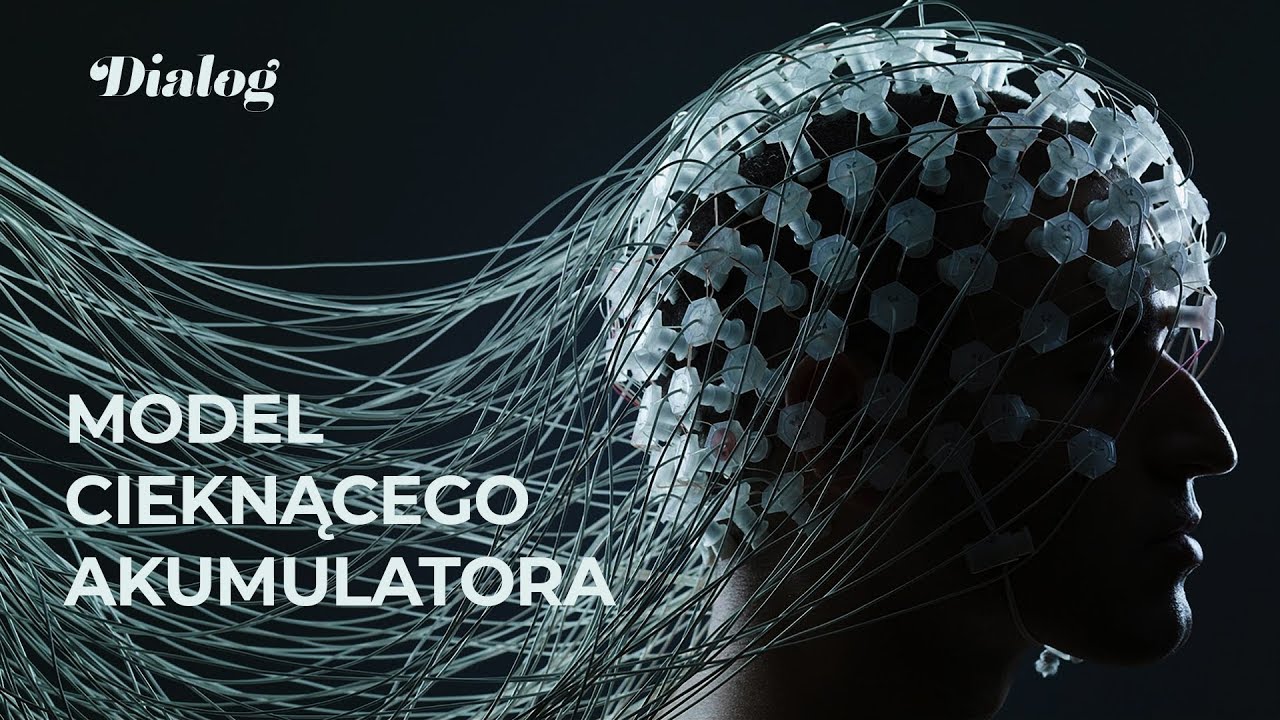
Model cieknącego akumulatora | Łukasz Lamża
23.6K
A 2012 study by Schurger et al. challenged the traditional interpretation of readiness potential as evidence of decision preparation. Using Libet's paradigm with a modification (Libertus interruptus), they tested whether neural activity reflects genuine decision preparation or general movement tendency. The study found that high neural activity predicted both voluntary decisions and rapid responses to signals, suggesting the motor cortex represents a general state of readiness rather than specific decision-making processes.
Click to watch →

UC Merced MTS Talk Series Spring 2015
119
In 1965, Libet, Kornhuber, and Deeck discovered the Readiness Potential (RP), an EEG signal that begins 2-3 seconds before voluntary finger movements. The Lateralized Readiness Potential (LRP) measures the difference between C3 and C4 electrodes over the motor strip, showing greater activation over the contralateral motor strip when preparing to move a specific finger. These findings suggested that the brain prepares for voluntary actions before conscious awareness of the intention to act.
Click to watch →
Deep Dive
The distinction between conscious awareness of an intention and the physical execution of an action.

2 nghiệp nặng nhất nghe để tránh vấn đáp hay"thầy thích pháp hòa
3.7K
There is a fundamental difference between merely having a thought or intention (khởi tâm) and actually performing an action (thực hiện). When someone has a thought but does not act on it, they have only committed a 'mental fault' (tánh tội) rather than a 'physical fault' (tướng tội). This distinction is crucial because external observers can only judge what is visible, not what occurs internally.
Click to watch →
What is consciousness? (Stanislav Dehaene)
340
Decoding experiments show that conscious intention can be decoded independently of actual motor responses. On error trials, the brain can decode what the subject intended to do (from prefrontal cortex) while the actual motor response is different. This dissociation confirms that conscious intention is a separate computational process from motor execution, and that consciousness allows comparison between intention and action for error detection.
Click to watch →

Você pensa uma coisa, sente outra e faz outra? Assista e entenda o que acontece
103
Conscious intention is not equal to executed behavior. The prefrontal cortex (responsible for planning, anticipation, conscious decisions, reflection, and impulse inhibition) conflicts with the limbic system (which stores emotional memories, threat responses, affective states, and experiential learning). This conflict explains why people can make decisions but fail to execute them.
Click to watch →
Searle: Philosophy of Mind, lecture 16
11.2K
There is a distinction between two kinds of intention: prior intention and intention in action. A prior intention is a plan of action, typically the result of a decision you make about what you're going to do. An intention in action is the intention you have when you are actually performing the action. Often you do something intentionally where you had no prior intention to do it—you just call off and do it. Simple actions have two components: a certain conscious effort of trying (intention in action) and a bodily movement. In the William James case, a subject was told to raise his arm in a dark room with his arm anesthetized. He did something that felt like raising his arm but his arm didn't move. In the Penfield case, neurosurgeon Wilder Penfield stimulated the motor cortex with a microelectrode and caused the patient's arm to raise. The patient was fully conscious and said 'I didn't do that, you did it.' The total action consists of these two where the bodily movement has to be caused by the intention in action.
Click to watch →

๐๑ (๐๔/๐๖/๖๕) โอวาทเปิดโครงการ โดย พระครูบวรวีรวงศ์ (ครรชิต อกิญจโน)
525
Intention has the power to transform life by replacing habituation with conscious choice. When we make intention our guiding principle rather than habituation, we can break free from automatic patterns of suffering. Intention serves as a mental reminder (anussati) that helps us stay present and aware in our actions. By consciously stating 'I intend to...' before performing actions, we create a mental checkpoint that brings us back to awareness. A key distinction in intentional action is between awareness (knowing what we are doing) and visibility (being able to see what we are doing). We can be aware of our actions even when we cannot see them, because awareness is a function of the mind that operates independently of visual perception. The mind (citta) is the faculty that provides awareness of all experiences, whether they are external or internal.
Click to watch →
Prerequisite Knowledge
- Concept 01The philosophical debate surrounding free will, determinism, and compatibilism.
- Concept 02Basic understanding of Electroencephalography (EEG) and how neural electrical activity is recorded.
- Concept 03The role of the motor cortex and preparatory brain activity (specifically the 'readiness potential') in voluntary movement.
- Concept 04The distinction between conscious awareness of an intention and the physical execution of an action.
Subsequent Learning
- Step 01The concept of 'Free Won't'—the conscious veto power that Libet hypothesized could override unconscious neural initiation.
- Step 02Methodological and philosophical critiques of Libet's experimental setup, including timing measurement biases.
- Step 03Modern neuroimaging advancements, such as fMRI studies predicting decisions seconds in advance.
- Step 04The ethical and legal implications of neurodeterminism on concepts of criminal responsibility and moral culpability.
Libet's Study
Experiment Setup
Key Finding
Data Analysis
Philosophical Debate
Libet's View
Implications
Libet's Study
0:03Playing Section
- 1
1980s experiment probes consciousness and action timing.
- 2
Tests if brain activity precedes conscious decision.
- 3
Found neural signals before participants felt urge.
The Stochastic Accumulator Model and Methodological Critiques
While Benjamin Libet’s experiment is often cited as evidence that free will is an illusion, it faces significant scientific and philosophical counterarguments. A major scientific challenge comes from Aaron Schurger and colleagues (2012), who proposed the Stochastic Accumulator Model. They argue that the 'readiness potential' (RP) detected before a decision is not a subconscious decision already made, but rather the gradual buildup of background neural noise crossing a threshold to trigger movement. When participants are instructed to act spontaneously, the brain capitalizes on these random fluctuations. Furthermore, philosophers and cognitive scientists point out that the simple, arbitrary act of pressing a button without reason does not represent genuine human free will, which involves conscious deliberation, planning, and value-based choices. Additionally, Libet himself proposed the concept of 'free won't,' suggesting that conscious volition can veto an action in the final milliseconds before it occurs, preserving a veto-based model of free will.
Deep Dive
The concept of 'Free Won't'—the conscious veto power that Libet hypothesized could override unconscious neural initiation.
Only 1% Know Their Brain Decides Before They Do (And It Changes Everything)
1.7K
Beyond free will lies 'free won't'—the capacity to veto automatic processes even after they've initiated. Benjamin Libet found a narrow window of 100-200 milliseconds after conscious awareness arises where a person can consciously decline to let an action complete. This reveals that automatic and conscious systems interact rather than operate independently. Initially, the veto capacity is small and inconsistent, but as metacognitive pathways strengthen through practice, this window expands. The gap between automatic initiation and conscious witnessing narrows, allowing more frequent presence in the moment of possible refusal. This is the mechanism behind every genuine behavioral change—expanding the window of aware presence so we can be in the room where decisions are actually being made.
Click to watch →

2025 TSC C 10 Philosophy 2
526
Benjamin Libet's experiments demonstrated that unconscious neural activity (readiness potential) precedes conscious intention to act by several hundred milliseconds. There is a 300-millisecond gap between unconscious decision and conscious awareness, and a 200-millisecond gap between conscious awareness and action initiation. Libet interpreted these findings as evidence that consciousness is not the initiator of voluntary action, but proposed a nondeterministic hypothesis that consciousness has veto power, allowing the conscious self to withhold or permit actions initiated unconsciously. This means involuntary actions necessarily involve awareness of the decision, which is initially made unconsciously. Libet considered that in principle there is free will since once the subject is aware of the decision, they can carry it out or veto it.
Click to watch →
Mind Over Masters: The Question of Free Will
465K
Libet proposed that even if free will doesn't initiate actions, it might have veto power—canceling unconscious decisions once conscious awareness arises. In his veto experiment, subjects prepared to flex wrists at specific times but didn't actually do it. EEG data showed brain activity started and then 'petered out' before the designated time, suggesting conscious cancellation. However, subsequent research questions this effectiveness. The broader implication is that if our brains prepare actions unconsciously, and consciousness only later becomes aware of decisions, then the traditional conception of free will as conscious initiation is fundamentally flawed.
Click to watch →

A Neurosurgeon’s Proof of an Immortal Soul | Dr. Michael Egnor
197.9K
Benjamin Libet's experiments measured brain waves at the moment of conscious decision-making. He found brain waves preceding conscious awareness by about half a second, suggesting no free will. However, when subjects were asked to veto their intended actions, no corresponding brain wave changes occurred. Libet concluded we have 'free won't'—the brain presents temptations, but we retain free choice to accept or reject them. This demonstrates that while the brain initiates impulses, the final decision rests with the immaterial soul.
Click to watch →

Why It's IMPOSSIBLE for Free Will to Actually Exist | Brian Greene
642
Benjamin Libet's experiments showed that brain activity (readiness potential) begins approximately 550 milliseconds before voluntary movement, while conscious awareness of the intention to move occurs only about 200 milliseconds before movement. This means unconscious neural preparation starts before conscious awareness of deciding to act. Libet proposed 'free won't'—the ability to veto an already-initiated action—as a form of attenuated freedom, though this itself may be causally determined.
Click to watch →
Deep Dive
Methodological and philosophical critiques of Libet's experimental setup, including timing measurement biases.
Υπάρχει ΕΛΕΥΘΕΡΗ ΒΟΥΛΗΣΗ; Το πιο διάσημο πείραμα που τη σκότωσε;! | soc science tube
24.8K
This section presents comprehensive criticisms of Libet's findings. Libet himself was cautious about claiming free will doesn't exist, proposing 'free non-will' - the idea that individuals might exercise some veto over brain impulses. Research showed participants could veto movements up to 200 milliseconds before movement, but after that point, no reversal was possible. However, critics argue Libet made an unwarranted assumption that there is no qualitative difference between simple movements and significant life decisions. A later experiment tested this by having participants vote for non-profit donations (meaningful action) versus pressing buttons with no consequence (meaningless action). The readiness potential appeared only before meaningless actions, not meaningful ones, suggesting it may not be causally related to conscious decisions. Methodological criticisms include: equating free will with simple hand movements is superficial; experimental conditions were artificial with participants following instructions; and Libet asked participants to report when they made decisions, but significant decisions unfold over time and involve complex deliberation that wasn't captured.
Click to watch →

Эксперимент Либета: критика и опровержение выводов. Развенчание мифа «мозг опережает сознание»
151.2K
The video argues that the interpretation of Benjamin Libet's experiments, which claimed that brain activity precedes conscious decision-making and therefore proves free will doesn't exist, contains a fundamental conceptual error: the experiments actually measure freedom of choice (selecting specific actions within a predetermined framework) rather than freedom of will (the ability to set one's own goals). The speaker explains that participants freely chose to participate in the experiments, and their actual will was expressed in that initial decision, not in the subsequent button-pressing actions. The brain merely executes pre-determined commands from consciousness, and the observed neural activity preceding conscious awareness is simply the brain's preparation for executing a decision that consciousness has already made. Therefore, the experiments do not prove that the mind lacks free will, but rather demonstrate how the brain implements decisions that originate from conscious intention.
Click to watch →

A demontat știința liberul arbitru? O discuție cu Dragoș Cîrneci și Cristian Presură
19.2K
Libet's experiments showed the brain begins preparing for action unconsciously long before conscious awareness of making a decision. The entire process of integrating information and preparing motor commands occurs automatically. Conscious awareness emerges only when motor commands are sent to effectors. This leads to confabulation—people invent explanations for decisions they don't consciously access. A philosophical critique argues science cannot demonstrate the non-existence of something—absence can only be argued, not proven. Free will can be defined as the capacity to make conscious decisions and choose differently under identical conditions. Philosophers who affirm free will don't deny unconscious processes but argue there's a qualitative difference between routine automatic behaviors and situations requiring conscious decision-making.
Click to watch →

You Decided To Watch This Video 7 Seconds Ago
23.6K
Benjamin Libet's experiments revealed that the brain prepares to move before we consciously decide to do so. Using EEG, Libet detected signals in the motor cortex a full half second before volunteers reported deciding to move. In 2008, John Dylan Haynes used fMRI technology to show that decisions form in the brain up to 7 seconds before we report making them, with about 60% prediction accuracy. This challenges the traditional view that conscious decisions precede actions, suggesting instead that the unconscious mind makes decisions first and the conscious mind merely experiences and explains them afterward.
Click to watch →

Ex-ateu reage: O Livre Arbítrio não EXISTE?
27.4K
This section presents the scientific argument against free will using Benjamin Libet's 1983 experiment. Participants watched a clock-like display and made spontaneous finger movements while electrodes recorded brain activity. The results showed neural signals indicating decisions appeared 0.2-0.5 seconds before participants became consciously aware of their intentions. This suggested that the brain prepares actions unconsciously before conscious awareness. The section also discusses Libet's follow-up experiments showing participants could veto decisions their brains had unconsciously prepared, which Libet called 'free won't.' The speaker argues that free will is fundamentally a philosophical question about the immaterial aspect of human nature, not a scientific one, and that discussions of free will require philosophical reasoning rather than empirical scientific methods.
Click to watch →
Deep Dive
Modern neuroimaging advancements, such as fMRI studies predicting decisions seconds in advance.
NeuroScientist:Free Will is an illusion | Neil deGrasse Tyson & Brian Greene
21.7K
Modern fMRI studies can predict a person's decisions up to 10 seconds before they have the conscious inclination to make them. Functional magnetic resonance imaging measures blood flow to different brain parts as a proxy for neural activity. These experiments show that the brain makes decisions unconsciously long before we become aware of our intentions, supporting the view that free will may be an illusion.
Click to watch →
WSU: Free Will and Neuroscience with Alfred Mele | World Science Festival
22K
A 2008 fMRI study claimed that researchers could predict with high accuracy which button a person would press next, 7-10 seconds before they were aware they had made a choice. The study used fMRI to measure changes in blood flow in the brain, which is a slower process than EEG (taking blood oxygen about 3-4 seconds to reach its destination). The claim was that the brain had already made the choice unconsciously, making free will an illusory afterthought.
Click to watch →

Buku DETERMINED - Mewariskan Kerusakan Otak, Realitas Kejam Kemiskinan dlm Kacamata Neurosains Part1
259
Modern fMRI technology has revealed even more dramatic findings. Scientists can now predict a person's choices with high accuracy up to 10 seconds before the person becomes consciously aware of their intention. This 10-second window is long enough to demonstrate that the cognitive deliberation process in the mind is merely a post-hoc narrative, while the actual decision-making has already been determined by biological processes.
Click to watch →
El experimento que demostró que tu cerebro decide antes que tú
142
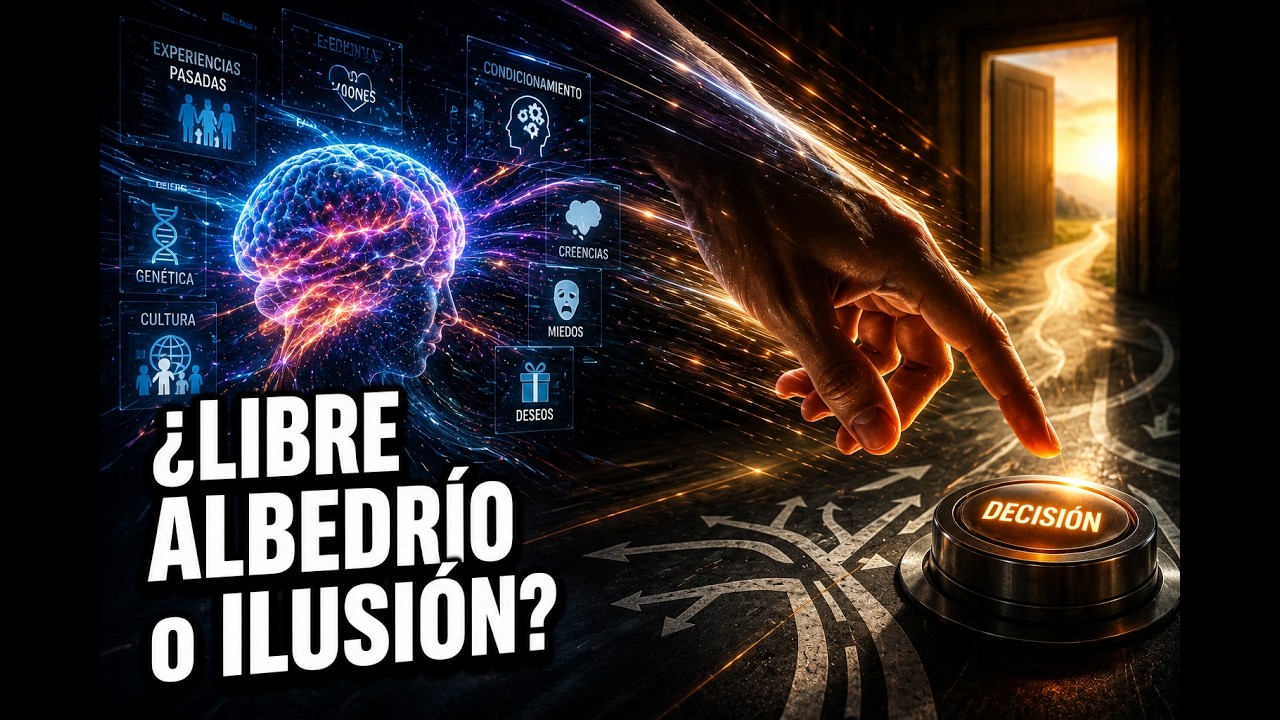
Decades after Libet, advanced technologies like fMRI and magnetoencephalography enabled scientists to observe brain activity with greater precision. Studies led by John Sun used fMRI to record activity in prefrontal and parietal cortex while participants chose between buttons. Remarkably, decoding algorithms could predict choices up to 7 seconds before participants reported making decisions. Intracranial electrode studies in epilepsy patients showed even complex decisions generate neural patterns before conscious awareness. Animal research revealed neural circuits can initiate actions before behavioral signals appear, suggesting this phenomenon is fundamental to the nervous system.
Click to watch →
You Decided To Watch This Video 7 Seconds Ago
23.6K
John Dylan Haynes used fMRI technology to revisit Libet's experiment. He gave volunteers two different buttons to press and asked them to choose at a time of their choosing. Haynes was able to see the decision forming in the brain up to 7 seconds before the test subject reported deciding to act. He could predict which button they would press at about 60% accuracy, which is significantly better than the 50% chance expected if decisions were truly made at the conscious moment.
Click to watch →
Deep Dive
The ethical and legal implications of neurodeterminism on concepts of criminal responsibility and moral culpability.

The Thinking Heart of Man
1.6K
Neurodeterminism suggests that behaviors are determined not by the autonomous self but by inherited neurobiology, rendering us blameless for our actions. If there is no single inner self, then almost everything we take for granted about ourselves is potentially bogus. Ethics, conscience, responsibility, and conviction become problematic if there are only mechanical processes held together by a trick called memory. If subjectivity is illusion, the whole thing is illusion. This raises profound questions about crime, punishment, and moral responsibility.
Click to watch →

The Neuroscientific Challenge to Criminal Responsibility
11K
Neuroscience poses two challenges to criminal responsibility: neurodeterminism (if determinism is true, no one can be truly responsible) and the disappearing person challenge (mental states are mere rationalizations that don't cause behavior). Free will is often thought necessary for responsibility at two levels: criterial (part of legal rules) and foundational (underlying why rules make sense). However, free will is not a legal criterion - prosecution never proves it, and defense never establishes its absence. The real basis for responsibility is rationality and conscious intentionality, not contra-causal freedom. The law presupposes three key assumptions: humans act consciously and intentionally, intentions are causally explanatory, and humans possess common-sense rationality. The law is entirely folk psychological - all legal doctrines use practical reason language. Neuroscience faces 'neuro-arrogance' by overclaiming about brain-mind relationships. We don't know how the brain enables the mind - this is considered one of science's hardest problems. Inter-theoretic reduction is largely dead in philosophy of science, with an explanatory gap between levels. The hard problem of consciousness remains unsolved. Folk psychology isn't primitive; it's consistent with best philosophy of science. The lure of mechanism encourages forgetting we're people who act for reasons, not pure mechanisms.
Click to watch →

Free Will, Responsibility, and Brain Function (Morse)
1.6K
Neuroscience does not undermine traditional notions of criminal and civil responsibility because the law's criteria for responsibility rest on rationality and folk psychological concepts (intentions, beliefs, desires) rather than free will; even if determinism is true, we can still hold people responsible as long as they are capable of acting according to their mental states and rational capacities, making free will unnecessary as a criterion or foundation for responsibility judgments.
Click to watch →
![Vitor Andrade: O que é e o que não é ciência? [Ep. 053]](https://i.ytimg.com/vi/sC8vDkc3Mh4/maxresdefault.jpg)
Vitor Andrade: O que é e o que não é ciência? [Ep. 053]
14.6K
Ethics studies how we should act, distinguishing actions affecting only oneself from those affecting others. Moral responsibility distinguishes wrong actions from blameworthy ones—an action can be wrong without the actor being blameworthy if they lacked control. Neurobiological evidence suggests many behaviors are influenced by factors beyond conscious control, including brain development and childhood experiences. This raises questions about moral responsibility while maintaining appropriate responses to harmful actions through treatment and prevention rather than punishment.
Click to watch →

Gerhard Roth: Wer trifft unsere Entscheidungen? | Sternstunde Philosophie | SRF Kultur
1M
Neuroscientific evidence challenges traditional legal and ethical frameworks assuming free will. Research on juvenile offenders demonstrates that criminal behavior correlates strongly with identifiable neurobiological factors including genetics, prenatal influences, and early developmental conditions. This suggests many individuals who commit crimes may have been predisposed through no fault of their own, raising profound questions about moral blame, desert, and the foundations of justice.
Click to watch →
Libet's Study
Experiment Setup
Key Finding
Data Analysis
Philosophical Debate
Libet's View
Implications
Libet's Study
0:03- 1
1980s experiment probes consciousness and action timing.
- 2
Tests if brain activity precedes conscious decision.
- 3
Found neural signals before participants felt urge.
The Stochastic Accumulator Model and Methodological Critiques
While Benjamin Libet’s experiment is often cited as evidence that free will is an illusion, it faces significant scientific and philosophical counterarguments. A major scientific challenge comes from Aaron Schurger and colleagues (2012), who proposed the Stochastic Accumulator Model. They argue that the 'readiness potential' (RP) detected before a decision is not a subconscious decision already made, but rather the gradual buildup of background neural noise crossing a threshold to trigger movement. When participants are instructed to act spontaneously, the brain capitalizes on these random fluctuations. Furthermore, philosophers and cognitive scientists point out that the simple, arbitrary act of pressing a button without reason does not represent genuine human free will, which involves conscious deliberation, planning, and value-based choices. Additionally, Libet himself proposed the concept of 'free won't,' suggesting that conscious volition can veto an action in the final milliseconds before it occurs, preserving a veto-based model of free will.
The philosophical debate surrounding free will, determinism, and compatibilism.
Basic understanding of Electroencephalography (EEG) and how neural electrical activity is recorded.
The role of the motor cortex and preparatory brain activity (specifically the 'readiness potential') in voluntary movement.
The distinction between conscious awareness of an intention and the physical execution of an action.
The concept of 'Free Won't'—the conscious veto power that Libet hypothesized could override unconscious neural initiation.
Methodological and philosophical critiques of Libet's experimental setup, including timing measurement biases.
Modern neuroimaging advancements, such as fMRI studies predicting decisions seconds in advance.
The ethical and legal implications of neurodeterminism on concepts of criminal responsibility and moral culpability.
39.6K views1.6Klikes2:32@sproutsOriginal Release: 2024-02-26
In the 1980s, the neuroscientist Benjamin Libet conducted a study that shook the very foundations of what we understand about free will.
Libet wanted to find out whether our mind prepares for a movement before we are consciously aware of it — and so he and his team set up an experiment.
Participants in the study were asked to flex their wrists whenever they felt the urge to do so. While doing so, Libet monitored their brain activity [EEG] through electrodes placed on their heads and found activity before the people decided to move their hands.
In other words, the brain started the process, way before the person decided to do it.
When we plot a graph measuring time and brain activity, known as readiness potential, the movement started at time 0, participants reported being aware of their decision 150 milliseconds earlier, but the brain actually began to act 500ms before the move.
It didn’t take long before psychologists and philosophers from all over the world discussed Libet’s research and wondered: If our brain initiates a decision before we're consciously aware of it, then how "free" are our decisions, really?
And ever since, teams of scientists have tried to replicate Libet’s findings, with mixed conclusions.
Libet himself did not interpret his experiment as evidence that our decisions are predetermined.
He said: “The tendency to press a button may be building up for 500 milliseconds, but the conscious mind retains the right to veto any action at the last moment.” What are your thoughts? And if our brain has already started the process of making a decision before we're consciously aware of it, to what extent are we truly in control? And if we are not, how would this influence our understanding of personal responsibility for our actions?
If you like this video and want us to make more, subscribe to our channel or support us on Patreon.
Up Next
8:50
The Libet Experiment: Brain Activity, Decision-Making, and Free Will Explained
@pbsbrainsontrial
46.1K views•2013-09-09
21:55
Deciphering Neural Circuits Controlling Anorexia in Mice | Richard Palmiter
@AllenInstitute
2.3K views•2011-10-10

4:10
Vagus Nerve (CN X): Anatomy, Nuclei & Functions Explained
@Alilamedicalmedia
305.2K views•2022-10-31
13:03
How Exercise Benefits Your Brain: Science Explained
@TED
11.4M views•2018-03-21
Related Study Plans & Knowledge Roadmaps
Structured learning paths in Neuroscience
neuroscience
Appetite Regulation: Brain Circuits & Hormones
01Foundations of Endocrinology and Brain Anatomy
02Introduction to Energy Homeostasis
03Peripheral Signals: Leptin, Ghrelin, and Insulin
+ 2 more learning modules
14h5 modules
Explore Roadmap
neuroscience
Neuroeconomics: Value, Risk & Brain Mechanisms
01Foundations of Neuroscience and Brain Anatomy
02Introduction to Neuroeconomics and Subjective Value
03Dopaminergic Prediction Errors & Reinforcement Learning
+ 3 more learning modules
18h6 modules
Explore Roadmap
neuroscience
Spatial Navigation: Cells, Grids & Brain Maps
01Foundations of Brain Anatomy and Memory
02Place Cells and Head-Direction Cells
03Grid Cells: The Brain's Coordinate System
+ 2 more learning modules
12h5 modules
Explore Roadmap
neuroscience
BCIs: Neural Decoding & Prosthetic Control
01Neuroscience Foundations: How the Brain Signals Intent
02Signal Acquisition: Recording the Brain's Activity
03Neural Decoding: Translating Brain Waves into Data
+ 2 more learning modules
25h5 modules
Explore Roadmap