Appetite Regulation: Brain Circuits & Hormones
Learning Goal: Analyze the neural and endocrine mechanisms of appetite regulation and energy homeostasis, detailing how hypothalamic circuits, specifically POMC and AgRP/NPY neurons in the arcuate nucleus, integrate peripheral metabolic signals like leptin, ghrelin, and insulin to modulate homeostatic and hedonic feeding behaviors.
Prerequisites
- Basic understanding of cellular biology (receptors, ligands, cell signaling).
- Introductory knowledge of human anatomy and physiology.
Estimated Total Study Time
- 14 Hours (including video lectures, supplementary review, and self-assessment).
Module 1: Foundations of Endocrinology and Brain Anatomy
This module establishes the foundational knowledge necessary to understand how the brain and endocrine systems communicate. You will master the anatomy of the hypothalamus, the master regulator of homeostasis, and explore the biochemical signaling pathways that allow hormones to alter cellular behavior.
Recommended Videos
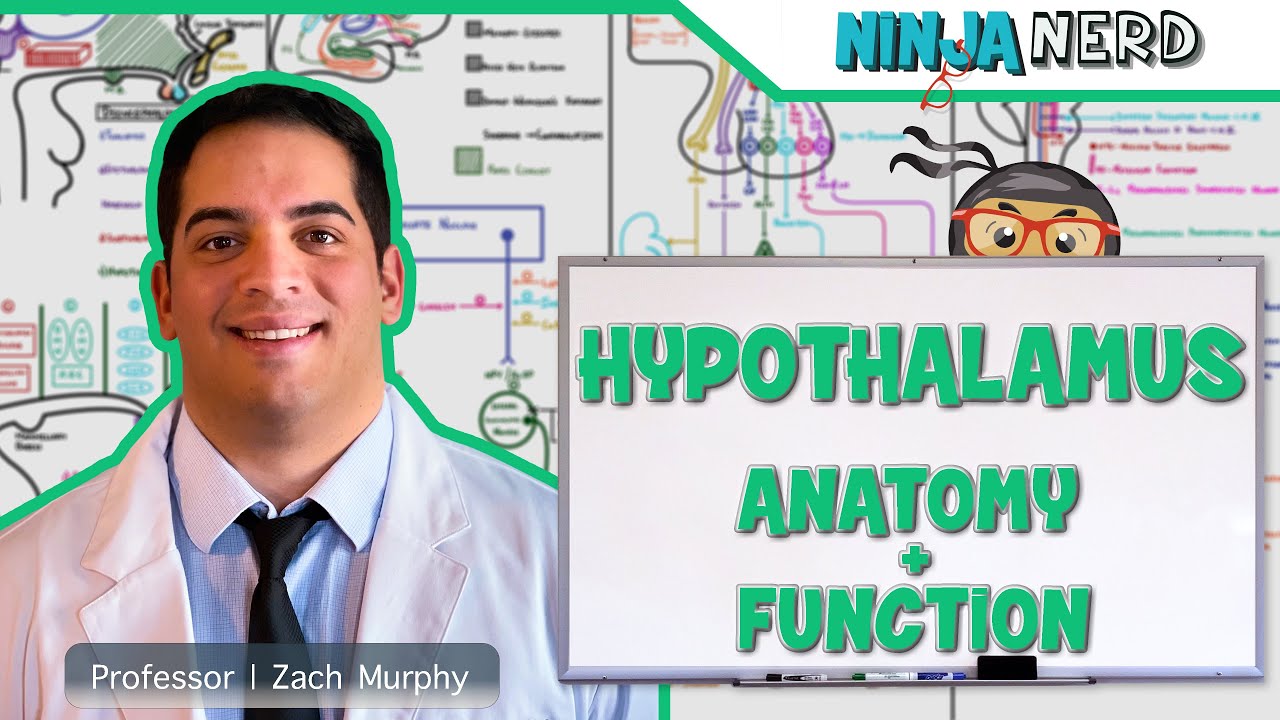
- Why this video: This highly detailed clinical-level anatomy lecture covers the exact boundaries, inputs, outputs, and nuclei of the hypothalamus. It provides the crucial anatomical foundation needed to understand where appetite circuits reside.
- Why this video: A fast-paced, highly visual introduction to endocrinology. It helps bridge the gap between general hormone signaling and neural integration via the hypothalamus-pituitary axis.
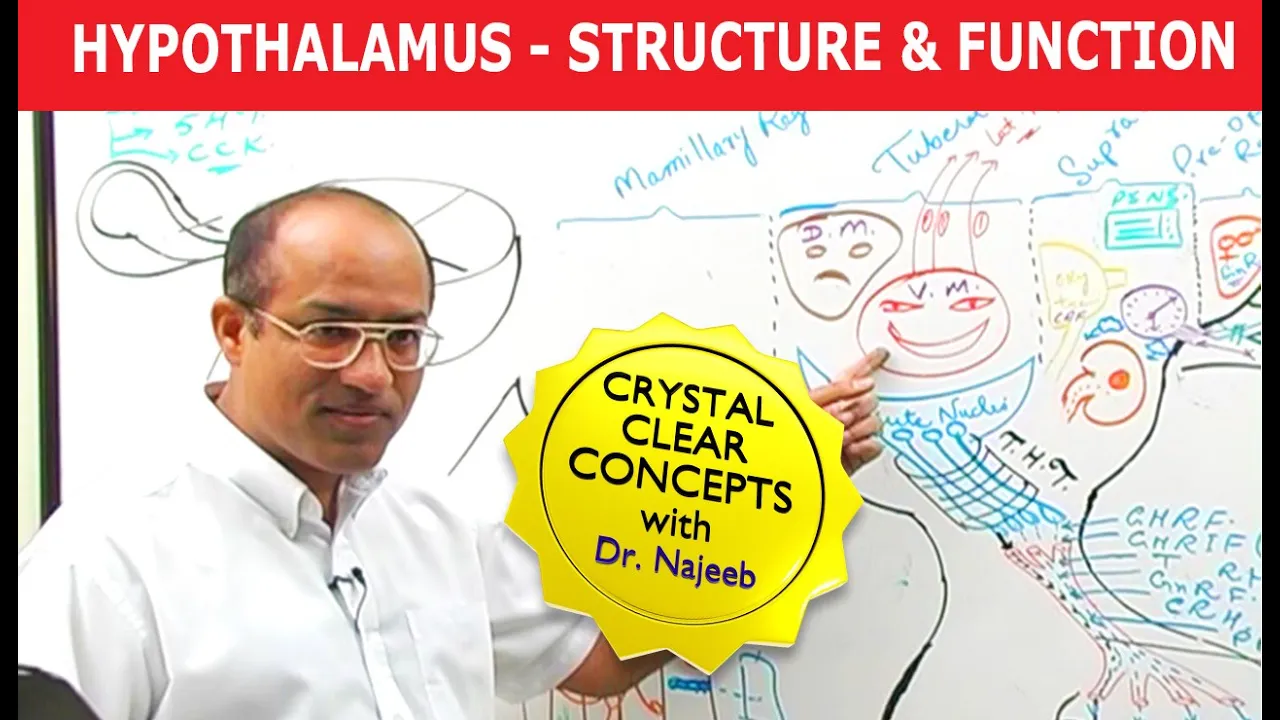
- Why this video: Dr. Najeeb provides a brilliant hand-drawn breakdown of the anatomical structures of the diencephalon, localizing the hypothalamus with respect to the third ventricle and the pituitary gland.
Knowledge Checkpoint
- Locate the hypothalamus relative to the thalamus, the third ventricle, and the optic chiasm.
- Differentiate between water-soluble (amino acid-based) and lipid-soluble (steroid) hormone signaling mechanisms.
- Understand the portal vascular connection between the hypothalamus and the anterior pituitary gland.
Module 2: Introduction to Energy Homeostasis
This module covers the core concepts of energy homeostasis, defining how the body monitors and balances energy input (food intake) against energy output (metabolic rate and physical activity). You will learn how the brain monitors internal state variables via feedback loops to defend a biological "set point."
Recommended Videos
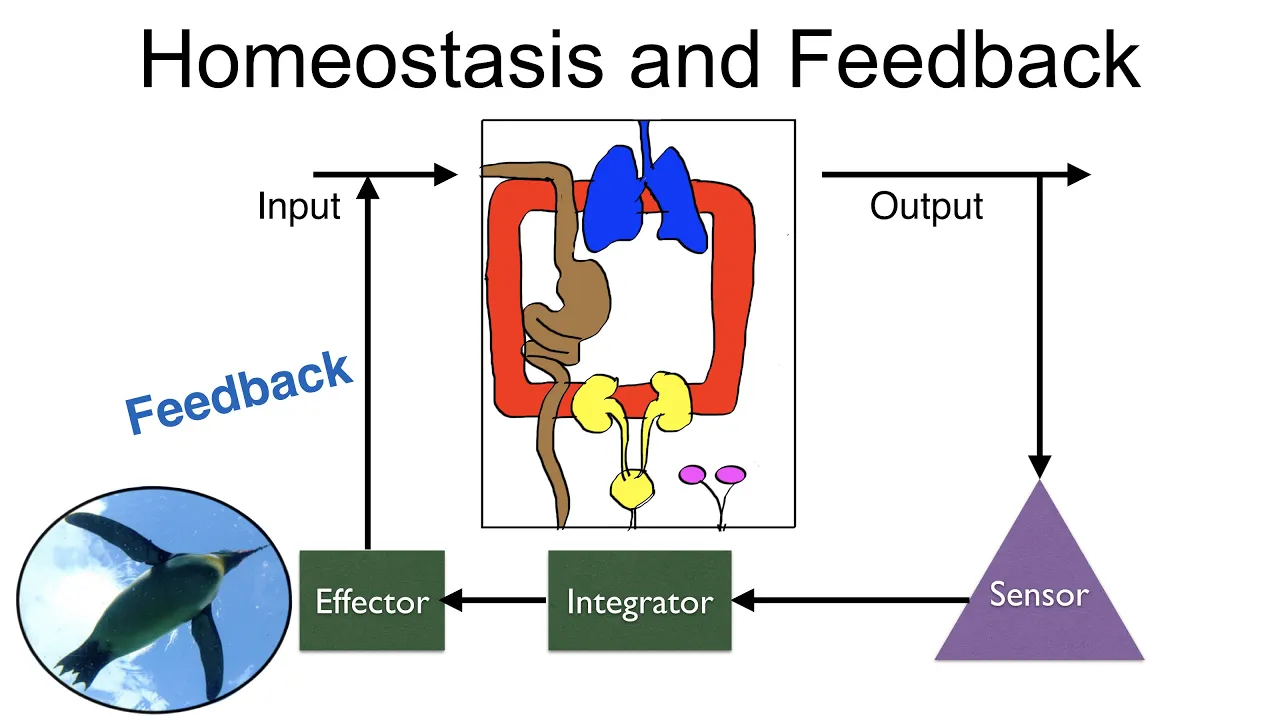
- Why this video: This video establishes the mathematical and physical logic of homeostatic feedback loops, distinguishing negative feedback (which stabilizes a variable) from positive feedback (which accelerates a process).

- Why this video: Dr. Andrew Huberman explains the neurobiology of hunger and satiety in an accessible way, introducing the hypothalamic nuclei and pathways involved in determining how and when we eat.

- Why this video: A deep, academic dive into general physiological concepts. It provides a formal definition of the "internal environment" (milieu intérieur) and the quantitative mechanics behind systemic control loops.
Knowledge Checkpoint
- Define "homeostasis" and describe the components of a typical biological control loop (sensor, integrator, effector).
- Explain how a biological "set point" is defended during periods of forced calorie restriction or surplus.
- Understand the role of hypothalamic glucose sensors in triggering counter-regulatory responses to hypoglycemia.
Module 3: Peripheral Signals: Leptin, Ghrelin, and Insulin
This module details how peripheral organs communicate long-term and short-term energy availability to the brain. We will focus on leptin (adiposity signal), insulin (pancreatic metabolic signal), and ghrelin (gastric orexigenic signal).
Recommended Videos

- Why this video: This video provides a clear, conceptual animation of how ghrelin (the hunger hormone secreted by stomach X-cells) and leptin (the satiety hormone secreted by adipocytes) work in opposition to regulate the brain's feeding nodes.
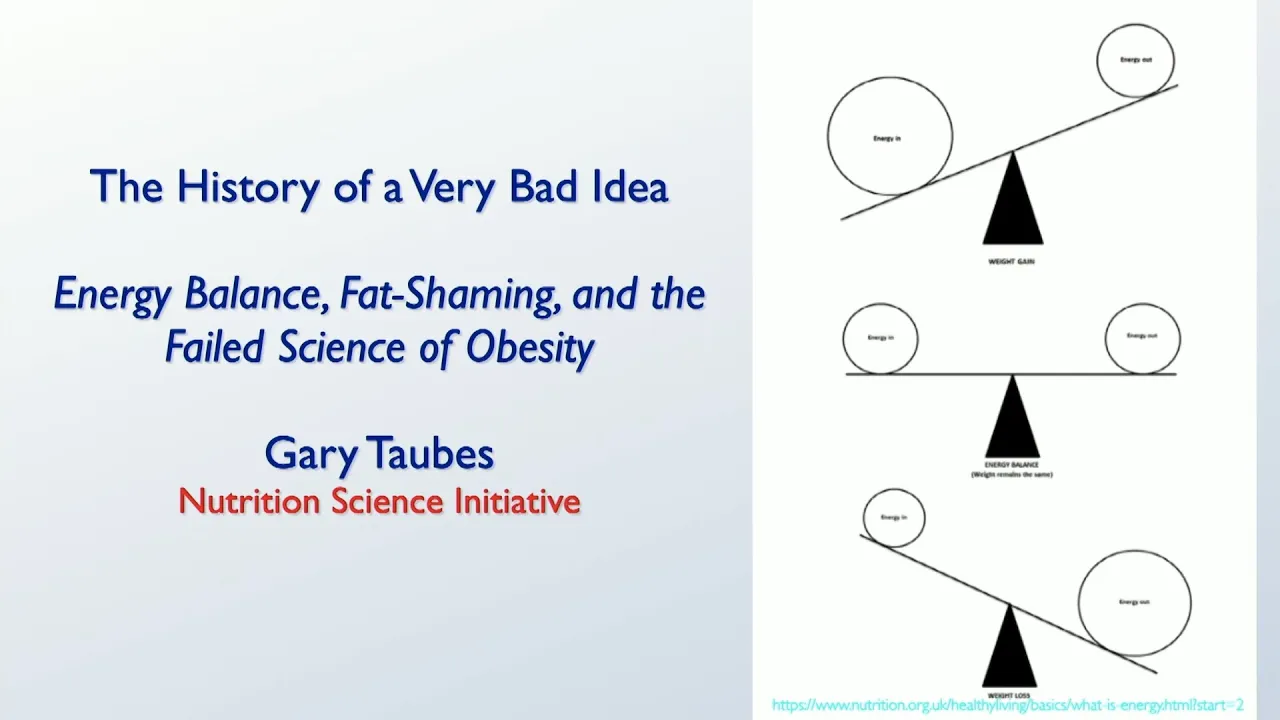
- Why this video: While insulin is traditionally studied in peripheral tissues, this clinical overview focuses specifically on the role of insulin signaling within the brain, showing how it coordinates global metabolism and glucose uptake.
- Why this video: This video covers the historical scientific context of obesity research, specifically highlighting Jeffrey Friedman's landmark 1994 discovery of leptin via the study of genetically obese () mice.
Knowledge Checkpoint
- Identify the primary secretory source and physiological trigger for leptin, insulin, and ghrelin.
- Contrast how leptin and ghrelin levels change during fasting versus acute overfeeding.
- Explain how peripheral signals access the central nervous system (e.g., crossing the blood-brain barrier or acting directly at the median eminence, a circumventricular organ with a fenestrated, leaky barrier).
Module 4: The Arcuate Nucleus: POMC and AgRP/NPY Neuronal Circuits
This module explores the core hypothalamic computer: the Arcuate Nucleus (ARC). You will investigate the cellular mechanics of two intermingled, opposing neuronal populations: the anorexigenic (appetite-suppressing) POMC neurons and the orexigenic (appetite-stimulating) AgRP/NPY neurons.
Recommended Videos
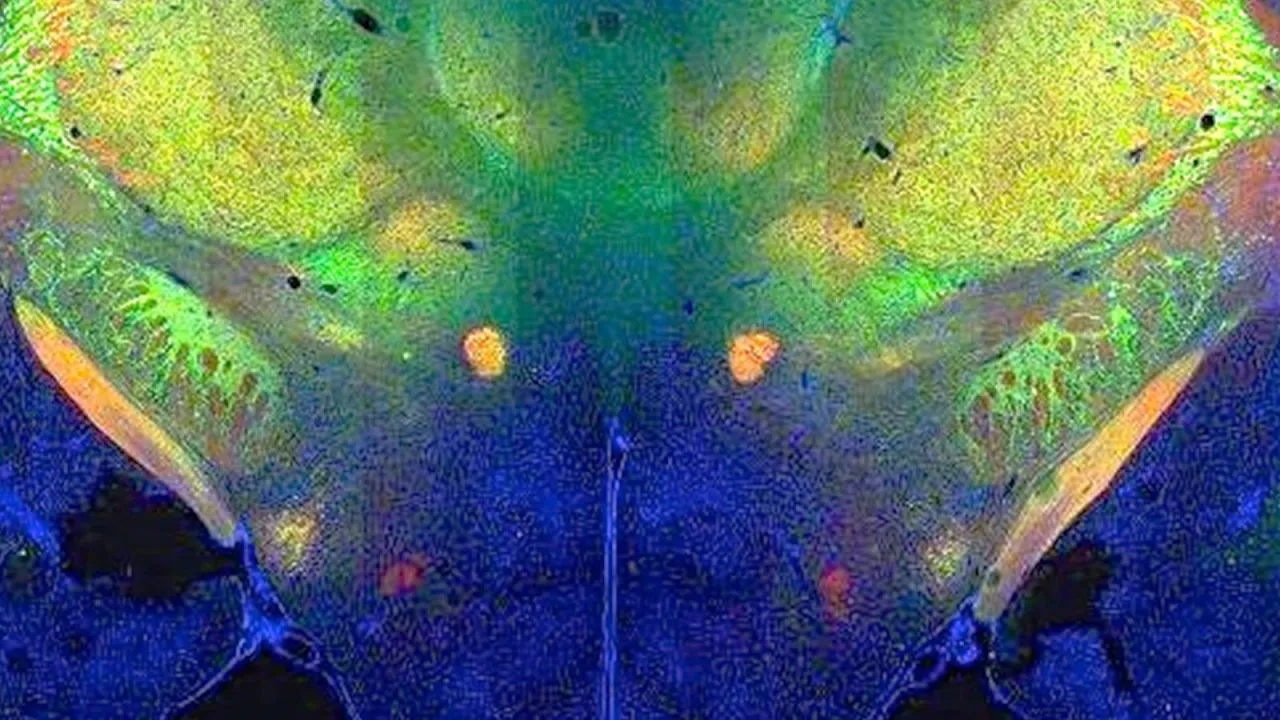
- Why this video: A focused scientific overview detailing how Proopiomelanocortin (POMC) is cleaved to produce melanocortin peptides, and how these peptides compete directly with Agouti-Related Peptide (AgRP) at downstream melanocortin receptors.
- Why this video: Dr. Palmiter presents high-level genetic and optogenetic data on the ablation and stimulation of AgRP and POMC neurons, detailing their fast-acting control over feeding behavior.
- Why this video: This video provides solid biochemical context regarding how the POMC prohormone undergoes cell-specific enzymatic cleavage to yield active hormonal products like alpha-melanocyte-stimulating hormone (-MSH).
⚠️ Curricular Gap Note: The video pool contains limited high-definition animations of the secondary projection pathways from the ARC (e.g., to the Paraventricular Nucleus (PVN) and Lateral Hypothalamus (LH)) and MC3/MC4 receptor signaling cascades.
To master these highly tested molecular mechanisms, we strongly recommend searching for:
"melanocortin receptor MC4R signaling pathway biochemistry""arcuate nucleus PVN projections AgRP POMC optogenetics"
Molecular Pathway Reference Table
Use this high-level summary to guide your study of the competition at the second-order targets:
| Neuronal Population | Main Neuropeptides Co-released | Target Receptors | Physiological Effect |
|---|---|---|---|
| POMC Neurons (Anorexigenic) | -MSH, CART | MC4R & MC3R (Agonist) | Decreases food intake, increases energy expenditure |
| AgRP/NPY Neurons (Orexigenic) | AgRP, NPY, GABA | MC4R (Inverse Agonist), Y1/Y5 Receptors | Increases food intake, decreases energy expenditure |
Knowledge Checkpoint
- Diagram how leptin acts simultaneously on the ARC: exciting POMC neurons while inhibiting AgRP/NPY neurons.
- Explain how ghrelin activates the GHS-R (ghrelin receptor) on AgRP/NPY neurons to drive robust, immediate foraging.
- Describe the molecular competition at the downstream MC4 receptor: how does -MSH act as an agonist, and how does AgRP act as an inverse agonist/antagonist?
Module 5: Homeostatic vs. Hedonic Feeding: The Reward Pathway
Why do we eat when we do not need calories? This module explores the interface between the homeostatic systems of the hypothalamus and the mesolimbic dopamine reward pathway, explaining how highly palatable food can bypass systemic energy needs.
Recommended Videos
- Why this video: This clip clearly and concisely defines the fundamental difference between homeostatic eating (eating for metabolic survival) and hedonic eating (eating for pleasure or sensory reward).
- Why this video: Renowned neurobiologist Dr. Robert Sapolsky details the mechanics of the mesolimbic dopamine pathway (projecting from the Ventral Tegmental Area to the Nucleus Accumbens), explaining how dopamine drives anticipation and reward.

- Why this video: A precise, conceptual breakdown of the primary structures in the reward system, including the Ventral Tegmental Area (VTA), Nucleus Accumbens (NAc), amygdala, and prefrontal cortex.
⚠️ Curricular Gap Note: While the selected videos explain the reward pathway beautifully, they do not exhaustively detail how the hypothalamus directly connects to the mesolimbic circuit.
To master this interface, search independently for:
"lateral hypothalamic orexin projection to VTA""leptin receptor expression on dopamine neurons in ventral tegmental area"
Knowledge Checkpoint
- Define the primary anatomical trajectory of the mesolimbic dopamine pathway (Ventral Tegmental Area Nucleus Accumbens).
- Explain how modern hyper-palatable foods (engineered combinations of high-fat and high-sugar) create a dopamine surge that overrides homeostatic satiety signals.
- Contrast "wanting" (incentive salience, mediated by dopamine) with "liking" (hedonic impact, mediated by localized opioid hotspots in the nucleus accumbens).
Course Map
Below is the recommended learning flow. Ensure you master each prerequisite module before advancing to the next, as the biological systems build sequentially from structural anatomy to complex integrated behaviors.
Key People Index
| Researcher / Educator | Context & Key Contributions |
|---|---|
| Dr. Robert Sapolsky | Stanford University Professor. Globally recognized neurobiologist who provides crucial insights into the dopamine anticipation and reward pathways. |
| Dr. Richard Palmiter | Renowned geneticist whose work using optogenetics and selective ablation isolated the exact behavioral roles of AgRP and POMC neurons in living models. |
| Dr. Jeffrey Friedman | Rockefeller University scientist who discovered leptin in 1994, fundamentally shifting the scientific paradigm of weight regulation and obesity. |
| Dr. Andrew Huberman | Neurobiologist at Stanford University School of Medicine. Synthesizes complex literature on sensory integration, satiety, and autonomic control. |
Final Self-Assessment
Test your mastery of the complete appetite regulation curriculum by ensuring you can thoroughly explain every item below:
- Draw the basic anatomical boundaries of the hypothalamus and locate the Arcuate Nucleus (ARC) and Paraventricular Nucleus (PVN).
- Formulate the exact cellular steps of a negative feedback system using leptin as the homeostatic signal monitoring adiposity.
- Explain why a loss-of-function mutation in the leptin gene () or leptin receptor () leads to severe, early-onset hyperphagia and morbid obesity.
- List the primary targets of -MSH and AgRP at the MC4R receptor within the PVN, and state the behavioral outcome of activating each.
- Describe how ghrelin acts as an acute, meal-initiating orexigenic signal, and explain where it is synthesized in the periphery.
- Explain how insulin acts in the CNS to regulate global glucose metabolism and complement leptin's long-term satiety signaling.
- Contrast homeostatic feeding (survival-driven calorie maintenance) with hedonic feeding (sensory and pleasure-driven food intake).
- Trace the path of a dopamine projection from the Ventral Tegmental Area (VTA) to the Nucleus Accumbens (NAc), and explain how leptin or insulin signaling in the VTA can modulate food-seeking behavior.