Social Cognition: Empathy, MNS & ToM
Learning Goal: Examine the neurobiology of social cognition and empathy, focusing on the role of the mirror neuron system (MNS), the default mode network (DMN), and the temporoparietal junction (TPJ) in theory of mind (ToM).
- Prerequisites: Introductory biology or psychology (recommended but not required)
- Estimated Total Study Time: 12 hours
Module 1: Foundations of Brain Anatomy and Neuroimaging
This module establishes a baseline understanding of the human brain's anatomical layout and the functional neuroimaging technology used to map social behavior. You will explore the basic structural lobes and investigate how functional Magnetic Resonance Imaging (fMRI) tracks neural blood oxygenation to isolate real-time processing networks.
Recommended Videos
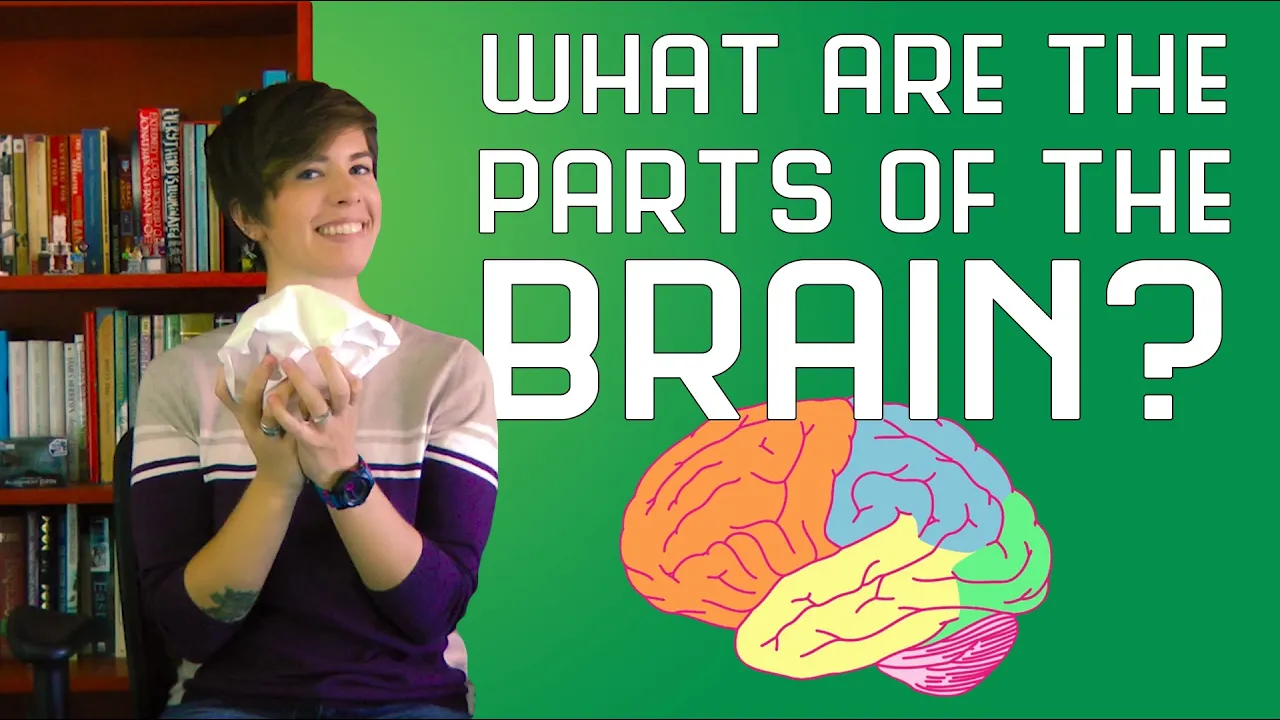
- Why this video: This video provides an indispensable primer on gross brain anatomy. It explains the physical layout of the cerebral cortex and introduces the four major lobes (frontal, parietal, temporal, and occipital) as well as subcortical structures. Understanding this layout is essential before you map complex network pathways like the MNS and the TPJ.
- Knowledge Checkpoint:
- Identify the boundaries of the frontal, parietal, temporal, and occipital lobes.
- Describe the primary function of the cerebral cortex versus subcortical structures.
- Explain how sensory integration occurs across distinct cortical regions.

- Why this video: Social neuroscience relies heavily on fMRI to observe the living brain during social tasks. This video breaks down the physics of fMRI, explaining how magnetic fields measure Blood Oxygen Level-Dependent (BOLD) signals. It bridges the gap between raw neural activity and the computational mapping of active neural pathways.
- Knowledge Checkpoint:
- Define the BOLD signal and explain how it relates to underlying neural activity.
- Differentiate between functional neuroimaging (fMRI) and structural neuroimaging (standard MRI).
- Understand the spatial and temporal limitations of analyzing brain activation through blood flow changes.
Independent Study Note on Social Mapping Gaps: While the basic fMRI model measures regional oxygen demand, modern social neuroscience often utilizes hyperscanning—imaging two or more interacting individuals simultaneously. Students are highly encouraged to independently search scientific literature for "fMRI hyperscanning in social interactions" to understand how researchers map active, dynamic communication loops.
Module 2: Introduction to Social Cognition and Empathy
This module introduces "social cognition"—the mental processes involved in perceiving, remembering, and responding to others. It focuses on the neurobiological and conceptual differences between affective empathy (directly feeling what another feels) and cognitive empathy (intellectually understanding another's internal mental state).
Recommended Videos

- Why this video: This video introduces the core conceptual split in empathy research. It clearly defines cognitive empathy (also called perspective-taking or mentalizing) alongside affective empathy (emotional resonance), showing how these two systems operate independently despite working together in typical social scenarios.
- Knowledge Checkpoint:
- Differentiate between perspective-taking (cognitive empathy) and vicarious emotional response (affective empathy).
- Describe a social scenario where cognitive empathy is functional but affective empathy is absent.
- Articulate why clinical psychopathy and autism present distinct empathy profiles based on this model.

- Why this video: This video links the psychological concepts of empathy directly to their distinct neural anatomy. It explains that cognitive empathy activates higher-order mentalizing networks (like the mPFC and TPJ), while affective empathy relies on sensory-motor and limbic regions, including the anterior insula and the amygdala.
- Knowledge Checkpoint:
- Identify the key brain structures that activate during affective empathy tasks (e.g., observing someone in pain).
- Name the neural structures responsible for cognitive perspective-taking.
- Explain how sensory-motor loops allow for the visceral experience of another's physical state.
Module 3: The Mirror Neuron System (MNS)
This module examines the discovery and function of the Mirror Neuron System (MNS). Discovered in premotor regions, these specialized cells fire both when performing a motor action and when observing someone else perform that same action, suggesting a biological foundation for instinctual understanding and imitation.
Recommended Videos

- Why this video: In this comprehensive TEDx Talk, developmental psychologist Gustaf Gredebäck discusses how the mirror neuron system helps infants understand other people's actions as if they were performing those actions themselves. This talk shows how the MNS forms a foundation for social development, motor simulation, and early interaction.
- Knowledge Checkpoint:
- Explain how infant motor development relates to the maturation of the mirror neuron system.
- Define motor simulation and explain how the brain converts visual stimuli into motor programs.
- Discuss the role of the MNS in early developmental milestones like gaze-following and goal anticipation.

- Why this video: This video introduces crucial scientific skepticism regarding mirror neurons, referencing Gregory Hickok's The Myth of Mirror Neurons. It challenges the popular idea that mirror neurons are a unique, standalone system for complex social understanding, arguing instead that mirroring is a byproduct of broader motor-sensory networks. This perspective is vital for a balanced, scientific view of the MNS.
- Knowledge Checkpoint:
- Summarize Gregory Hickok's core scientific arguments against the traditional view of mirror neurons.
- Explain why some researchers question whether mirror neurons exist as a distinct, specialized cell type.
- Differentiate between a direct causal system for empathy and a sensory-motor mapping byproduct.
Module 4: The Temporoparietal Junction (TPJ) and Theory of Mind
This module focuses on Theory of Mind (ToM)—the cognitive ability to attribute mental states (beliefs, intents, desires, emotions, and knowledge) to oneself and others. You will investigate the Right Temporoparietal Junction (RTPJ) as the primary hub for this process, using false-belief tasks to understand how the brain distinguishes its own beliefs from those of others.
Recommended Videos
- Why this video: MIT neuroscientist Rebecca Saxe delivers a foundational lecture on the RTPJ and its specific role in Theory of Mind. Through fMRI data and non-invasive brain stimulation (TMS) experiments, Saxe demonstrates how the RTPJ allows us to judge other people's intentions and make moral assessments based on their beliefs.
- Knowledge Checkpoint:
- Locate the Right Temporoparietal Junction (RTPJ) on a structural brain diagram.
- Explain how a "false-belief task" (e.g., the Sally-Anne test) is used to measure Theory of Mind activity in the brain.
- Describe what happens to moral judgments when RTPJ activity is disrupted by Transcranial Magnetic Stimulation (TMS).

- Why this video: This video focuses on the cognitive neuroscience of theory of mind, detailing how the TPJ distinguishes between physical descriptions and mental states. It contrasts TPJ activation during social reasoning with its role in basic attention, highlighting its specialization for human mentalization.
- Knowledge Checkpoint:
- Contrast TPJ activation when reading about a person's physical state versus their mental state.
- Discuss how researchers isolate Theory of Mind processing from other cognitive demands during experiments.
- Define the developmental timeline for stable Theory of Mind activation in childhood.

- Why this video: Dr. Baland Jalal explains how the TPJ serves as a sensory integration hub, combining visual, auditory, and somatosensory inputs to maintain a coherent sense of self versus other. This video provides critical anatomical context for why the TPJ is uniquely suited to represent another person's physical and mental perspective.
- Knowledge Checkpoint:
- Explain how the TPJ integrates information from multiple sensory modalities.
- Define the "self-other distinction" and how the TPJ prevents us from confusing our own perspective with someone else's.
- Describe the anatomical location of the TPJ relative to sensory integration areas.
Module 5: The Default Mode Network and Mentalizing
(Module renamed from "The Default Mode Network (DMN) in Social Processing" per standard neuroimaging terminology and search alignment.)
This module explores the Default Mode Network (DMN)—a collection of interacting brain regions that are active when we are not focused on the outside world. You will examine how the DMN supports internal tasks like daydreaming, thinking about the future, self-reflection, and social simulation.
Recommended Videos

- Why this video: This video introduces Matthew Lieberman’s landmark research on the DMN. It explains that when the brain goes "idle," it does not power down; instead, it defaults to the DMN to process social relationships and social cognition. This shows that the brain's default state is fundamentally social.
- Knowledge Checkpoint:
- Name the primary brain structures that make up the Default Mode Network (DMN).
- Explain Matthew Lieberman's findings regarding the brain's "resting state" and social cognition.
- Discuss the evolutionary advantage of a brain that defaults to analyzing social dynamics during downtime.

- Why this video: This advanced university lecture offers a deep dive into social neuroscience, focusing on the overlap between the DMN (specifically the dorsomedial prefrontal cortex and precuneus) and the mentalizing network. It provides a detailed look at how these systems process social narratives and predict human behavior.
- Knowledge Checkpoint:
- Identify the anatomical areas where the DMN and the Theory of Mind (mentalizing) network overlap.
- Describe how the precuneus and dorsomedial prefrontal cortex (dmPFC) support social narratives.
- Explain how resting-state functional connectivity (rs-fcMRI) is used to map social network communication.
Module 6: Integrated Social Networks & Clinical Perspectives
This final module synthesizes the Mirror Neuron System (MNS), the Temporoparietal Junction (TPJ), and the Default Mode Network (DMN). It explores how these networks interact during real-time social processing, and looks at how these systems function differently in clinical conditions like psychopathy and autism.
Recommended Videos

- Why this video: Dr. Chantel Prat explains how the mirror neuron system and Theory of Mind networks collaborate. She contrasts the automatic, fast, motor-based simulation of the MNS with the high-level, deliberate mentalizing of the ToM network. This is a key resource for understanding how these systems work together in typical brains.
- Knowledge Checkpoint:
- Compare the processing speeds and cognitive effort of the MNS versus the ToM network.
- Explain how an instinctual motor reaction (MNS) is integrated with high-level cognitive perspective-taking (ToM).
- Describe how individual differences in network wiring affect social behavior.

- Why this video: This episode featuring neuroscientist Abigail Marsh examines empathy extremes. Marsh shares her research on the amygdala and empathy networks in both highly altruistic individuals (such as altruistic kidney donors) and highly psychopathic individuals, showing how variations in these social networks influence behavior.
- Knowledge Checkpoint:
- Contrast the structure and reactivity of the amygdala in psychopathic individuals versus extreme altruists.
- Explain how a person can have functioning cognitive perspective-taking but a severe deficit in affective empathy.
- Discuss the relationship between facial expression recognition and empathy network activity.

- Why this video: This clinical analysis provides a clear real-world example of cognitive empathy operating without affective empathy. Dr. Grande breaks down a case study of psychopathic behavior, showing how a person can mimic social cues and read others' feelings without any emotional resonance or distress.
- Knowledge Checkpoint:
- Explain how the selective use of cognitive empathy allows individuals with psychopathic traits to manipulate social situations.
- Describe the neurological separation between understanding pain and feeling distress in response to it.
- Differentiate between the social deficits seen in psychopathy and those seen in autism.
Course Map
Key People Index
- Dr. Rebecca Saxe (MIT): A pioneer in social cognitive neuroscience. Her research isolated the role of the Right Temporoparietal Junction (RTPJ) in Theory of Mind and moral reasoning.
- Dr. Matthew Lieberman (UCLA): A founder of social cognitive neuroscience. His work showed that the Default Mode Network (DMN) acts as a default system for social processing.
- Dr. Abigail Marsh (Georgetown University): A leading researcher on the neuroscience of empathy, altruism, and psychopathy.
- Dr. Simon Baron-Cohen (University of Cambridge): Known for his work on the differences between cognitive and affective empathy, particularly in relation to autism.
- Dr. Gregory Hickok (UC Irvine): Author of The Myth of Mirror Neurons, known for his critical perspective on the Mirror Neuron System (MNS).
Final Self-Assessment
Complete this comprehensive self-assessment to verify your understanding of the course material:
- Functional Neuroimaging: Can you explain how fMRI measures the BOLD signal, including its spatial and temporal limitations?
- Anatomical Mapping: Can you identify the anatomical locations of the TPJ, mPFC, precuneus, and premotor mirror areas?
- Empathy Distinction: Can you define the differences between affective empathy and cognitive empathy (mentalizing)?
- MNS Mechanism: Can you explain how mirror neurons translate observed actions into motor simulations, and summarize the key criticisms of this theory?
- Theory of Mind: Can you describe how the RTPJ processes false beliefs and how it supports moral judgments?
- DMN Social Processing: Can you explain why the Default Mode Network activates during rest, and how its anatomy overlaps with the mentalizing network?
- Network Cooperation: Can you describe how the fast simulation of the MNS and the slower, more deliberate processing of the ToM network work together?
- Clinical Profiles: Can you explain the differences in empathy network function between psychopathy (high cognitive empathy, low affective empathy) and autism (often lower cognitive empathy, preserved affective empathy)?