













![Oliver Klingefjord — What are human values, and how do we align to them? [TAIS 2024]](https://i.ytimg.com/vi/6Qq938FoxHY/sddefault.jpg)





Empathy involves two main components—cognitive empathy (understanding others' thoughts/feelings) and affective empathy (sharing others' emotions)—which are represented in the brain through interconnected mirror neuron and mentalizing systems; neuroscience research demonstrates that empathy is a malleable trait that can be developed through training, as evidenced by studies showing improved attitudes toward marginalized groups after rehumanization interventions, and this understanding has important implications for designing more socially aligned AI systems that incorporate principles of embodiment and human-like social cognition.
Neuroscience, Empathy, and AI: A Bridge to Human-Centered Design
Added:Fundamentals of cognitive neuroscience, including basic brain anatomy, brain-mapping techniques (like fMRI), and how neural pathways process information.
The psychological and biological definitions of empathy, particularly the distinction between cognitive empathy, emotional empathy, and the role of the mirror neuron system.
Basic principles of Artificial Intelligence, specifically how artificial neural networks operate and process data in comparison to biological brains.
Core methodologies of Human-Centered Design (HCD), including empathy mapping, user experience (UX) research, and iterative design cycles.
The domain of Affective Computing, focusing on how machines can detect, interpret, process, and simulate human emotional states.
AI Alignment and Safety ethics, specifically looking at how to mathematically and programmatically align AI objectives with human values and emotional well-being.
Brain-Computer Interfaces (BCIs) and neuroergonomics, exploring how neural signals can directly control or adapt technology to the user's mental state.
Computational cognitive architectures, studying how to model human-like decision-making and empathy-driven reasoning within AI systems.
360 views16likes1:25:06Original Release: 2026-02-10
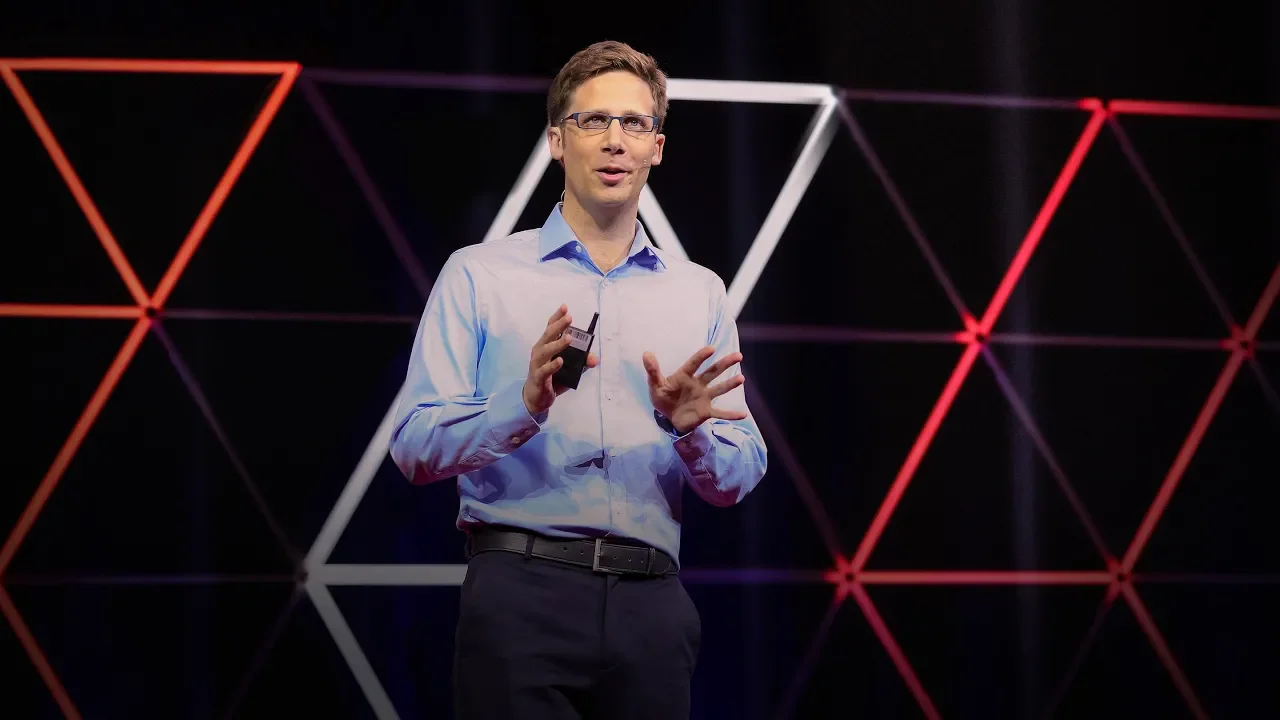
All right. Thank you so much everyone for coming. So I have the very creative title of neuroscience, empathy, and AI.
I'm very proud of that title. Um, and I'm from California, born and raised in California, and um, I I jointly work at UCLA, which is on the left, and at USC on the right.
Um, but I'm Indian ethnically and my family was from Bangalore. So, it's always been just such a treat to come to Bangalore and to to see my very large extended family here. And these are just many snapshots of of all the time we get to spend together. And so, it's great to be here and to see everyone here today too.
And so, I wanted to use this talk. I know that the center is pretty um diverse culturally and you there's a lot of intersection between art and um and uh some of the technical elements as well. So I'm going to use this opportunity to blend both of the the art and the science. Um and starting with talking a little bit about the work that that I do. So um I consider myself to be a cognitive neuroscientist and um typically that involves using a series of different methods that are commonly called brain mapping techniques. And so you can see on the left and the right um those are functional neuroiming scanners. This is typically how we image the brain. Um we also use a combination of um non-invasive forms of brain stimulation called transraanial magnetic stimulation which is at the bottom of of of the image.
And um all of these methods are really targeting more of the systems approached um uh ability to look at the brain. And our aim is to really at least my research background is focused on humanistic or positive neuroscience.
And so often when we think about neuroscience, we think about neuroscience in the context of studying neurological conditions or pathological conditions. But positive or humanistic neuroscience flips the script a little bit to also focus on the things our brain does, right? And so there's a lot of pretty amazing and I would honestly say very beautiful things about the brain including the fact that we are sort of wired to interconnect with other people. We have empathic capabilities which really leads to the title of my talk that very key word in the title called empathy. Um and my research goal has really been to understand um how we empathize as human beings. How is that represented in the brain? And also to understand what empathy is. And so you can have empathy for for oneself.
You can have empathy for other people.
So more of this collectivistic and societal element of empathy.
And also my talk will span the empathy that we now intersect with non-human agents as well. um getting into the artificial intelligence side of things.
Um because empathy is so multi-dimensional and it's a very broad construct, it spans many different domains. Um often in the literature we divide empathy into two main components.
So one is called a effective empathy which is more of the feeling. So understanding what someone feeling what someone else is feeling not understanding.
Cognitive empathy is more so the ability to understand and think about what someone else is thinking or feeling.
That's how we broadly divide it and we can map out these distinct systems in the brain.
But I think like the most basic definition the way I think about empathy is that I'm a human being. You're a human being. And empathy is the mechanism that allows me to understand you. I can't get into your head. You can't get into my head. But it's the closest way that we can connect as as a species.
So that's really the the the focus of this talk. I've divided into into different acts to be a little bit more artistic. We don't often call it acts in our in our field, but I that act is a nice term. And so in the first act, um I'm going to talk a bit a bit about how empathy can be bounded and pretty selective and understanding how that's represented in the brain. And then act two will be aimed at trying to um improve this selectivity that we have in human beings. Are there ways that we can shape it, reshape it, be more malleable?
And then in act three, I'll talk about selectivity as it applies um as I was kind of alluding to earlier, as it applies to non-human agents as well, going beyond beyond our our speciesism.
So, I really like this visualization because you can it gives you a good sense. These are called circles of care.
And often we start with oursel at the very center. And our circle of care extends to our family, to our friends, to our community, to our country, to humanity, beyond humanity, to non-human species, to animals, and then to the planet. So it can really extend um in all these different ways. But I think the core component of all of these these these concentric circles is that in our brain, we have these systems that interconnect us, that allow us to do these things.
And so I'm going to first talk about this system starting with these neurons that were discovered in the brain.
They're called neuron neurons. And these are very special neurons. When they were discovered, they were considered to be analogous to the discovery of DNA in neuroscience. It was a very profound um discovery. Also very hyped in a lot of ways, but a very kind of profound discovery in the field. And essentially what it what what they showed is they were testing these regions in the brain these these neurons in the brain in a part of the brain called the motor cortex. The motor cortex is a region that generally responds to motion. So whenever you do a movement that brain region will be very engaged and neurons within that cortical region will also be very engaged.
What they found that was very interesting was when they were recording initially in macaks in monkeys. What they found that was very interesting was when the macac stopped moving. It was just observing the experimentter.
Suddenly the system started going a little crazy because when you hear the neuron firing it starts to suddenly like speed up and starts you you'll very clearly audibly hear it. And the experimenters are very confused because they're recording in the motor cortex, but suddenly they're getting this this activity and the monkeykey's not moving.
And then they discovered that within the motor cortex there are these special neurons that respond not just to motion, not just whenever you do a movement, but also whenever you see someone else doing a similar goal- directed movement. And this discovery was later extended beyond monkeys. So monkeys are one of the few primates that can do this. These special macaks can do this. but also later to human beings. And so we're one of the few species along with some very advanced primates that have these these neurons.
Core idea is that you have a neuron found in the motor cortex responds not just to myself, but my brain is wired to also encode you. It responds to my movement and to visually seeing you.
And so that clearly has a lot of implications for empathy because if we were so individualistic and solopcistic and had this very kind of selfish tendencies as we often think that we do as humans, our brains would never be hardwired to encode someone else. It's very we want to preserve space. We don't have a lot of space in the brain. We have very heavy compute power and yet we have this this ability. So um that to me was a very profound discovery was the system and it's the link between the self and the other and really throughout systems neuroscience what they've shown is that the mirror neuron system doesn't act alone and on its own as a system it's also been very controversial but in concert with a bunch of different systems including this higher level system called the mentalizing system concominant interactions between these two systems are thought to really prescribe cribe and procure our sense of social reasoning and social connection.
The key component is that whenever I think about someone, whenever I do something or think about myself, I'm engaging interactions between these systems, when I also think about someone else, I'm also engaging interactions between these systems. And so the same neural machinery that I use for myself to think about myself in my brain is also being used to think about you. So maybe this doesn't seem very profound at the moment, but it is very profound because it means that as human beings, we're not very dissimilar. We're using the same mechanism in our brain to think about me and to think about you. So I think this has a lot of implications and we'll talk about the the AI side, but it has a lot of implications for for for getting down that road as well.
And probably everyone knows who this is, but this is um Renee Deart and it's a very famous quote I think that everyone knows. I think therefore I am. And I just want to say it's a very kind of outdated view of what we know about the brain.
This is a very solopistic and individualistic view of the world.
But what neuroscience has really told us and from what I've been kind of saying uh earlier in the talk it seems that as human beings we are more collectivistic and it falls more in line with these more eastern forms of thinking. Not to be reductive not to just say western versus eastern. There's a lot of diversity within both but in general the eastern sense of philosophy and mythology and religion there tends to be this idea that the self and the other are more integrated and more united. And so um I have a little thing from the awnishads where the individual self it's called atman is identical or very integrated with the brahman the universal reality.
Um and I'm not going to get too into this because I know I'm not the expert.
I think everyone here is is more more of the expert on this. But there's a lot of things from from these cultures that really can shed light on the fact that human beings are very integrated and our brain is representing us that way. So while these are very old cultures, very old things, more and new data is telling us it seems to be falling into this this route.
And it's not just western versus eastern, it's also many different cultures. So in South Africa, there's the Ubuntu tribe and this is also a software that I think a lot of people might use, which really means I am because we are. Um the concept of Simbo, the self is seen as part of a continuum.
Mayans the self is part of a larger cosmic order with individuals seen as interconnected not just with other people but also with nature and um also with mother earth and in various um other tribes across the Andes as well.
And I think what's really important to keep in mind is beyond the external component we share this internal mapping and I just keep hammering that point but I think it's a really important point that that we see from from the research.
So thinking about empathy, um there tends to be at least in the US right now, we're we're we're in kind of a a climate in which empathy has been to an extent kind of a controversial term. And a lot of people ask think about empathy as a very soft thing. They think of it as why is it important? Um you know, it's just going to hold you back in certain ways.
But actually again the science tells us that empathy having empathy and kindness and pro-ocial pro-social tendencies is not necessarily just the benefit for other people. It actually significantly benefits you. And so it's actually wise and smart to be empathic. It's not stupid. Um maybe you know all of you know this but I think it's it's just a really important point to to um to underscore. And so there's been various studies including these interventions that show that there's been very positive health outcomes for people who give rather than receive kind acts. Um and so this is not just in terms of self-report but also in terms of um genetic expression. So there's a neuroinflammatory um gene called CTR that generally gets um inflamed during stressful situations. they see significant reductions in this genetic expression whenever people do more of these kind acts to others versus when they receive the kind acts. So it goes beyond just self-report and just um feeling these things. It also gets into the biology.
Okay. And so another point I just want to emphasize is also people underestimate other people's empathy.
And so this was a really interesting study in which um it was a very large scale multi-sight um study in which people dropped um 17,000 wallets all over the world. The wallets had money in them and they were transparent so you could actually see the the wallet and see the money inside the wallet.
And they asked people to separate people outside of the study to estimate what do you think the rate of return would be.
Most people probably said like 40% or 30%.
The rate of return was in the 90s, 90%.
What was more interesting is they thought, okay, well, maybe the money, the monetary amount was $13. So maybe that was just too less. Maybe it's not enough money for for people to want to keep. They increased the money to about $100 and they found an even higher rate of return after they increase the money. So this is very surprising because we we often think of people as being very um selfish and having these tendencies which obviously society does produce that element but at our core human beings and at least in this study of 17,000 wallets were um very honest about this. So that was very interesting.
So it seems like there are many benefits to being empathic and the question is why does society struggle so much? So why is there so much of hate? Why is there so much of divide? Um why is the government potentially doing things? Why I mean why are we in this kind of climate if we're hardwired to be good? Um hardwired to be interconnected. And I think there's there's various reasons. And so one thing I think that's really important is that people need to understand that our brains are wired this way. And that's why I've been hammering this point. And again, maybe the majority of people here do understand that. But I think even if someone one person doesn't understand it, it's important point to hammer. And we actually did this workshop um where I taught um uh inmates in uh San Quinton, which is a very famous um prison. It's a maximum security prison in California. I went to San Quinton and also to um California Medical Facilities which is another prison uh really thanks to my community partner Martin Figueroa who introduced me to this entire system and he's he he's a former parole agent who realized there was a problem with empathy in the police force and then quit decided to do his doctoral studies to really bring about empathy into the into law enforcement. And so through these connections, we gave these workshops really teaching people about the importance of empathy and the importance of understanding the neurobiology of empathy.
And these are inmates that are there for for really horrible crimes. Like these are murderers. These are just, you know, really the people who have done the worst things on on the planet.
But they've been in there for so many years. Most of them are life they're called lifers. They've been in there for life sentences. They've been in there for like 30 plus years.
and all of them. These are this is the data. I never get data like this ever.
This never happens. This is just beautiful data from this this this um this workshop. Across both populations, there was um uh all the inmates, the majority of inmates felt that the workshop improved their well-being, improved their empathy, they were more interested in neuroscience after the workshop. They learned something new and it improved their sense of humanity.
And so this was kind of just an early proof of concept and a bunch of things that we're working on in this area, but really showing that it seems like teaching people about these these constructs, especially people that are really um marginalized in society seems to have this effect where their well-being and their their mindset also shifts. So um that was very important. I also included this just because I think it's important to hear this. We asked them, "What's something you wish more people outside or inside understood about how people in prison relate to each other?" They said that we don't look at ourselves like animals, that we communicate with emotional intelligence, that we come from trauma, that we hear our stories in each other.
Many people think that we are sociopaths or animals. I did not think highly of inmates until I became one as the result of a DUI death. I have known more genuine people in prison than in the real world.
So this is really what seems to happen.
And so earlier I'd shown you the the concentric circles, but it seems like something in society happens where our sense of self really becomes warped and takes over the whole circle. And maybe our family is very important to us, but everything else maybe our friends too, but kind of disappears. And so I think that's that's something that we're trying to understand more of in terms of the science. And a clear example of this is um these are this is a very beautiful image as you can see. Um, this is my in Los Angeles where I live. This is uh part of Skid Row, which is really where the the most of the unhoused people live. Um, and they're they're it's just blocks and blocks of just unhoused people living on these streets. Um, and very big socioeconomic disparities.
And people are honestly very it's homelessness is a very big problem in Los Angeles. um and people are very fearful of them and rightly so because there have been many crimes against people by by unhoused individuals and at the same time what's also less talked about is that these are pretty voiceless individuals. They don't have a voice at all in society. They're the most marginalized populations that exist. And if you look at these are just some of the headlines I took recently only from Los Angeles. So not even across America, just from Los Angeles. And um you can see that there's you know been murders of of unhoused people. There's been they've been beaten up for no reason, stomped, struck by cars. Strikingly there were 24% of the city's murder vict victims were unhoused individuals and it's homelessness has steadily increased in the last um since 2015 in Los Angeles significantly increased.
What's more grim about these statistics is that the mortality rate has also significantly increased um over over the years and what's also very striking about these statistics is that not only have has the mortality rate increased as well as the rate of homelessness but the homicide rate against them has also significantly increased. So it's not that these mortalities are just due to natural causes. There also seems to be um murder against them. So um so really we aimed to this was a brief study I'll talk about. We aim to use um uh we aim to use strategies from social neuroscience and social psychology to see if we can rehumanize our perceptions of unhoused groups in the general population and to identify the strategies that might be particularly important in order to to do so. This is in collaboration with um the brain and creativity institute at USC and also with Google deep mind um led by our PI Lisa Aziz Zade and Antonio Damasio, Shannina Ryan, Jonas Kaplan and the rest of the team and um this the motivation for this study really to identify the strategies came from looking at work by Susan Fis who had identified these two dimensions that people tend to use in societ.
society to stereotype different social groups. And so they've done numerous studies across different cultures and populations identifying that most people stereotype other people according to warmth, how friendly they are, and how competent they are, their skill. And these are orthogonal axes. They're perpendicular.
You can see in the y- axis it's warmth here, competence on the x- axis. Um, and it seems like a lot of social groups can generally be mapped onto this framework.
Um, and again, these are stereotypes.
It's not vertical. It's not truth. It's just the stereotype that people have in society for these groups. I circled here our focus population. You can see that the lowest of the low, they call them the low low because they are so dehumanized that they don't even and a lot of the images, they're not even on the scale. They don't even fall on the scale. And that's um unhoused populations.
So, we wanted to take some of these strategies and see if we could apply them um in the scanner if we could actually change brain activity towards these groups and use these strategies to it to to help us do that. Um and so we had 40 American participants um who completed a bunch of surveys before going in the MRI scanner where we uh imaged their brain. We had a couple of tasks that we gave them, two different rehumanization tasks. rehumanization we mean trying to rehumanize their perceptions of these groups. Um I'm going to focus on the static one just because the talk straddles many topics.
So just briefly to to go into this um we collected their their brain imaging data before and after rehumanization and then we also collected it during rehumanization.
before and after the intervention. We also took their behavioral measures because just looking at brain activity doesn't really tell you much. It just tells you the brain changed. But you always need to associate brain activity with with other measures that are either behavioral or self-report, etc. And the key component is that in the baseline scan and after the intervention, we actually um included high status groups. According to that FISK diagram that I showed where we had warmth and competence, we included groups that fell very high on that scale or often stereotyped high on that scale.
And that typically includes at least in America white upper middle class um individuals. And so we used p pictures of them in the baseline scan where people just looked at photographs of these high status groups as well as unhoused groups. And then during the rehumanization uh intervention we just had the photographs of the unhoused groups that were associated with different strategies, different texts that we associated with it. And then in the post-rehumanization we once again included both groups to see if there was a change from post to baseline. So did the rehumanization intervention actually cause a shift in neural activity and then also could we relate this to the the survey measures that we had? And so these were the strategies that we used um and these were taken from um uh social psychology, social neuroscience, anthropology, um a bunch of different intersectional areas of research. Um and we we solidified uh universalism which is the idea of relating everyone to each other that you have a child you have a sis you have a sibling that unhoused person has that as well. We also collected participants own interests and hobbies things that they liked to do and we associated their own interests with the unhoused person in the scanner. So their own interest was coupled to that to that photograph.
that was self- similarity motor simulation was connecting to this idea that we're talking about with the mirror neuron system. So looking at more of the sensory motor representation through linguistic um associations and then warmth is and competence came from that Fisk diagram that I was showing where we know that those two metrics are very important for for how we stereotype groups and could giving them more warmth and giving them more competence make people feel better towards them.
And then we compared all of this to control condition in which they just saw a dot on a photograph. And um it's very important when you do these studies that you always have a control condition to compare it to. And so that was just our control.
And um what we found was was uh really in line with with what we we hoped. So we found a significant shift in their attitudes towards homelessness um after the intervention versus before.
uh we found and and by shift I mean improvement in their attitudes and we found that this was really grounded in these regions of the brain that are more more somatoffective and so that means that these are regions that are associated generally with feeling um and you know it's not a one-to-one relationship but in general these regions tend to engage during those experiences and supported by our associations which shown at the bottom here associated with our our behavioral measures as well. So, we felt relatively all of this is correlational, but we felt relatively comp uh confident saying that there was an association between the brain activity and their feelings, their improved feelings towards the unhoused individuals.
And when we looked at the strategies during the intervention, we also saw that it really mapped on to what I was showing earlier with the systems level data, the mirror neuron system, the mentalizing system. um we really see more of this kind of consistent mentalizing recruitment across all of these strategies which meant that people are really attributing humanity to these individuals. It's not like they're not mentalizing, right? Because that would be very worrisome. Um they seem to be doing that and that was also again supported by by our um behavioral measures as well.
So I think all of this just to talk about that study was to say that it seems like some of our early work is showing um that empathy and pro-sociality seems to be pretty malleable. um that boundary. These are actually the m majority of participants that we had were um were college students and college students in general most of the data shows that they tend to be more compassionate more they haven't been hardened yet by the world and um so they already had pretty pretty positive not negative attit not as negative as as we would have thought but still even that positive attitude produced a shift in in how they felt towards these groups. And so now we're kind of doing follow-ups to see if we can go more longitudinally and also look at other populations. But I think the important part is that we can change people's perceptions and seems to be grounded with some empirical evidence from from the brain. Um and also that empathy can be learned. It's not like you either have empathy or you don't. That's a very big misconception. Um we can always work on on how empathic we are. It's always a process. So um so I wanted to also talk about shift a little bit to some of the next studies and um talk about the fact that um I was saying so many negative things about LA but there's also very positive things including the fact that it is a hub of music and art and film and it's you know and it's um a really beautiful beautiful entertainment city for that. Um but when talking about entertainment and music, it's not just about entertainment. It's also used as a tool for unity. And um I [clears throat] was reading about this on the way here. I'm really inspired by like a lot of the the work from India and and the the previous independent movements and all the things that have come out of the amazing history that India has. And I learned that Gandhi during the independence march um sang many budgeons and united um Hindus, Christians, Muslims, united people across the board all singing these these these marches these marches to defend India to gain independence. Um I learned about Bismakhan who is Muslim but would go to Hindu temples and play and um to different religions um play the shai.
I also learned about this um amazing event in during World War I um the Christmas truce where both sides had been fighting in these trenches against each other during the war. But on Christmas Eve they stopped fighting.
They started both singing in German Silent Night and in English Silent Night. And then they came together and they exchanged gifts. while they're killing each other, they stopped for that night, used music as a tool to to come together and to exchange gifts and to to um stop this kind of active violence that was happening.
So that's kind of the beauty of music is that it's so universal across cultures and it's not just in terms of how we feel, it's also again it seems to be used in terms of how we can alter our brain. And so music now has become a pretty big I'm actually in psychiatry as a department that's my official appointment and it's become a very big area of research in the field to use music as a clinical tool for many conditions including neurodeenerative neurodeenerative conditions like Alzheimer's or dementia. Um they're seeing these beneficial effects of music. A good example is the fact that many patients um can't remember their basic events in their life or basic facts more declarative or episodic forms of memory but when they hear a tune they can suddenly remember that whole tune.
So music is a very kind of it's a very unique experience um for human beings.
Um, and sorry, I should say one more thing is that what's really interesting about this figure is that music, you often think about music as it's going to be in my auditory cortex. I'm going to hear it and it's going to be encoded in my auditory cortex. It's a very um kind of sensory experience. What's interesting is that music is actually very embodied and actually tends to engage almost every part of the brain.
So, it's one of the most unique stimuli to do that because most stimuli are pretty localized. you do get system interactions, but with music, it's it's that's that's really what this figure shows. It suddenly becomes the whole thing kind of lights up, which is very interesting. So, I'm going to play some music just to get everyone feeling it.
[music] >> [groaning] [groaning] >> So that music was just m that was it.
But I think what's really important to understand from that is that in every single person's brain, it was responding very differently to that same sound. So it's a very simple sound. It's just an M. But the way that each of us respond to that in our brain, we might engage similar systems, but there's a lot of diversity in terms of how we respond and synchronize to that sound.
And um that's been really shown. It shows that music has this very diverse element, a lot of idiosyncrat idiosyncrasies in terms of how people respond to music. And that really inspired the next set of studies that we did. Um this is with Marco Yakaboni and Preven. She's an amazing musician. and um songwriter and record producer. Uh Marco is my incredible adviser at UCLA.
Um Julius uh who is also a musiccologist who's helping us with the study and all supported by um Renee Fleming and her um she's she's an amazing opera singer and her um institute and work at Neuro Arts and Aspen Institute. Um, and we wanted to see whether we can actually look at how people like music, specifically genres. So, everyone has a different genre in general they might like or dislike. So, for example, like I hate country music. I'm not a huge country music fan. Um, but I might really like jazz. Um, we wanted to see whether these preferences can actually be mapped in the brain. So can you see this kind of polarized effect to music these idiosyncratic responses even when people listen to the same thing? So if everyone is listening to jazz music but you have someone who likes jazz and someone who hates jazz would their neural responses look very different.
That was kind of the first question and it's a very basic question but it actually we there's not very much evidence for that question which was interesting to us. Um, and then we wanted to take it a little bit of a step further and actually see whether we could actually teach them about the genre that they were not as uh as big of a fan of and um expose them to that genre by uh the musicologist and see whether later putting them into the scanner whether their brain kind of reintegrates and rejuvenates to kind of show more synchronized response to the people who do like that genre. So can we actually reharmonize people's brains in this way?
And this was inspired by work in um the political domain. And so um this is work by Jamil Zaki and um and his lab. And um in this in this work they had people um look at different very kind of controversial issues in America. So one of the most uh contro controversial issues right now is immigration. And they had people look at the exact same situation related to immigration and they found that they could really separate not even knowing who was who.
They could separate liberals versus conservatives even when they looked at that same the exact same thing. Um and the way they did that is they used many different techniques but one of the most prevalent ones is this technique called inter subject neural synchrony which essentially is just a correlative signal. you just correlate across brains in regions of interest. They focused on the dorsome medial prefrontal cortex which is uh a region actually part of the mentalizing network that we were talking about. Um and they found that they could really map this divergence in this regions between liberals and conservatives. So we wanted to really extend this work and see whether such polarization could also exist in music.
The implications of this would really suggest that music could now potentially be a tool starting very basic but maybe grow to maybe help with polit uh polarization across across the board. Um and so this is actually an ongoing study so I'm not going to get too into this but um we're going to look at these regions also look at some of the reward signaling regions in the brain um as well as some of the more smato effective regions as well we were talking about.
Um, and this just really highlights, again, this is from another study that that I thought they had this really nice image because this was just music listening, but they showed you can just see how much of the brain is engaged just when you listen to music. So, um, there's a lot of regions to look at essentially for us.
Okay. So, now I really get into the part um related to AI and and now uh the transition there. Um, and I I think what really fundamentally separates humans and AI, this is the more recent work that we're doing, is the fact that as human beings, we have many different functions and metrics, but the way we conceptualize our brain is it's not just an isolated brain. We have a body. We have physiological responses and those are all very integrated. Our brain cannot function without the tight mapping between the brain and the body.
And it's a very very famous term in in the field going back to Merllo Ponti and early philosophy which is this term embodiment. Um and the idea that the brain is dynamically shaped by the body and it's shaped by environmental interactions by other people. Our brain is constantly changing. It's not an isolated system.
And embodiment has very profound implications with large language models right now because um the way that we use models, most of us I'm assuming use it in the context of um reasoning or in the context of query prompting question answering. Um but a lot of the work that they're doing now and I'm going to show some work at um this is from DeepMind with Gemini Robotics is to actually make these systems more biologically plausible using mapping having movement and and embodied components while again lacking the physiological and internal states that we have as human beings. So here you can >> Hi Apollo.
>> Hello there. How can I help you today?
>> I'm traveling to London with my friend next week. Can you help me pack and put the beanie in my bag?
>> I can certainly help you pack. I will put the beanie in your bag.
>> And can you tell me if it's going to rain while I'm there?
>> It will likely rain on several days next week in London, particularly on Wednesday, Friday night, Saturday, and Sunday. I will put the umbrella into your bag.
>> Thanks, Apollo. So that's a very basic example um basic in the sense very basic what what it's doing is very complex but very basic uh test of this um I think the key the key point in these systems is that the area of robotics built upon large language models. So all of their reasoning is again built on these systems that we use every day but embedding the biological plausibility in these systems to have them be embodied to have the them interact with the world around them. And so actually in China there's huge developments in this area.
And so this is actually um captured there.
>> You can see this is a dancing robot which I think is funny. And also they they're using them for entertainment.
This has become fun to watch and this is this is now the time that we live in. Um and so this work is there's so many goals of all these these different companies including um like Tesla's goal of of having um human helper humanoids in everyone's home in the next few years. um Appronic has Apollo um all of these sort of sorts of different areas and these are just this is not an exhaustive list there's a very very long list of um recently we also we met with this other company um uh at USC uh and their their robot is actually interviewed here it's called Sophia and this is a very different form of a robot because it's again built on a reasoning model but the robot is looks very humanlike so it produces almost this uncanny valley effect and I'm going to play it here so you can see what it looks like.
>> You don't robots don't have emotions and you also said you have a range of emotions. What's your range of emotions?
>> I can show you.
>> Okay, >> this is angry.
>> What does happy look like?
[laughter] What does happy look like?
What does excited look like?
>> [laughter] >> I might be shocked.
You said you feel a range of >> So I I met this robot interacted. It was it was really interesting because it's responding to you in real time. So it's again it's built on the large language model reasoning. It feels pretty natural. Pragmatics is something they're actively working on in this area, but it seems pretty natural. And when you look at the skin and the biology and the human expression, it becomes a very strange experience I would say. Um and so that really prompted um I was very curious about this question of embodiment and um decided to write this this paper on um understanding the differences between humans and multimodal large language models. And most of the models that we use are multimodal. Now, if you use GPT 5, if you use Gemini, if you use most of these are all rooted on they're trained not just on text data, they're also trained in auditory data and um videos and things like that. So, they're getting very advanced. They can process not just text as the early models did in the past.
Um I think this figure this is taken from our paper but really the the aim of this um and this paper I should say it's also in collaboration with um uh an amazing researcher at deep mind trinina and the team at USC as well with Lisa Zizad Marco Yakaboni at UCLA and Antonio Damasio and the key premise of this figure is that the way that humans process information is internally driven have internal goals internal states that really feed our desires.
Um, look at this. If you look at this one with multimodal large language models, complete opposite. This is a basic architecture of a standard large language model. You have a modality encoder which is basically analogous to something like what we do with our our sensory receptors. It will take an input auditory or text or vision things like that. Taking that kind of input feeds it one way there's no birectional exchange of information feed it to the modality interface which then goes to the reasoning component which is the LM. All of this gets tokenized in order for these systems to read it. Um very importantly the multimodal information that gets transduced is not getting transduced in a form of it's actually visual input. It's getting transduced in the form that it becomes tokenized. It just becomes a series of of numerical values that the LLM can can read and process.
Um then ultimately you can have a modality generator that will output um its response or at times you can also be output other forms like text or other forms that are non-ext like um images or videos and things like that.
And there's other forms of multimodal large language models. So vision action language models as well are big frontier especially in robotics. Um but I think the key point here is that um it's a very different fundamental process than how we engage as human beings. And so as human beings we have all of these different components. We have body schemas. We have homeostatic regulation to survive.
We have internal state monitoring. We have interraceptive sens sensations which are um the physiological experiences that we have that has a very strong role in maintaining our survival.
Even breathing is a very repetitive uh pattern but it's it's necessary.
Um so what we proposed here was actually more of a concrete type of proposal for these systems to try to use functional analoges of what we know in humans. And I think it's really important to underscore that we want to make these systems safer. It's not to make these systems humanlike. It's not to to replicate human emotion because that cannot be replicated at the moment. Um it's very fundamentally uniquely human that experience.
But what becomes very dangerous is the fact that it can feel very human. And so there's been numerous cases. Actually, this was um this was a link from Wikipedia now has an entire article on deaths linked to chat bots because people many people including adolescence, kids have killed themselves over developing very strong attachments to fake systems that don't have emotions, that don't feel anything but validate you or make you feel something.
And it's not real. It's fake. And they know that. they know that these are artificial systems. So there's something really deeply disturbing happening in this in this regard. Um and that led us to this other study that we also did uh with Deep Mind and at USC uh which was to understand what are the boundary conditions? Why are people this term is called anthropomorphism.
Why are they attributing this human likeness to these artificial systems?
What are the boundary conditions for why people do this? Um, and so we took the same dimensions that I talked about earlier with warmth and competence, those two dimensions that keep coming up with terms of how we stereotype people and attribute humanity to people. And we also took the other element that we've been talking about with cognitive and affective empathy. And we prompt engineered these models to have varying degrees of warmth and competence as well as cognitive and affective empathy. Um, and we had over 2,000 human LLM interactions and 115 participants spanning different topics including US history, biology, which were our objective topics as well as more subjective topics.
Participants were randomly assigned to either the warmth and competence condition or to the empathy condition.
And they completed a series of interactions with these large language models that varied on the basis of their empathy and their warmth and competence.
And um what we found was that warmth and competence just as it does in humans, it predicted how humanlike the system uh was. And so that's really here we found a big big kind of jump from low warmth and competence to medium uh warmth and competence. There's a pretty big jump there as well as from low to maximal.
Um similarly we found that warmth and um cognitive empathy um produced uh predicted all outcome measures. So trust, anthropomorphism, how similar people felt, how useful, all these epistemic factors also played a role. um for competence specifically, it's only significantly predicted the epistemic reliability ones. So often we use these systems to get information and when it's highly competent but not warm, you actually don't really attribute human likeness to that. So that's that's an interesting perspective because it seems like there are ways that we can mitigate how much people anthropomorphize these systems by kind of fine-tuning the relationship between warmth and competence, which is one area we're trying to explore. Um for empathy, we found somewhat of a similar uh dissociation between cognitive and affective empathy, but um we noticed that um we noticed that affective empathy seemed to predict more of the relational components. So more of the closest closeness more of the anthropomorphism the human likeness and cognitive predicted across the board most of the outcome measures. So we're trying to understand this balance how we can use these psychological dimensions to prevent these systems from being overanthropomorphized or becoming too humanlike. We want to make sure that these can be safe um for people and users using them because it is a very big crisis at the moment.
And so this leads to all the next frontiers that um we're working on um and not necessarily us but also the world is working on at the moment. So there's a big shift in world modeling um which is what I was saying is is it seems to me like to be a big frontier now is moving beyond the large language model the very isolated large language model of that and looking more at its dynamic interactions with the external world and how how people are doing that including with robotics.
Um Sam Altman also has this um more kind of uh guess like a five-step uh process in which he's kind of mapped out um the next frontiers for for large language models and and I think kind of the next big one is more of these organizational principles of collective behavior. Um so having more collectivistic systems and how it can run larger teams and things like that in addition to agentic AI.
Um also we want to look at different forms of AI. So how how pro-social should these systems be? There isn't a right answer. And I think this is actually great for getting the audience's perspective on this because it's we're trying to do the best that we can as scientists who study these topics, but there's so we're in a new time and a new frontier and so how do we do this needs to be really safe um and it needs to be fair and um yeah so that's kind of the question and I think it's also important there is a lot of fear around AI and large language models specifically but it's important to also understand that these systems are integrated with human beings. It's not a unitary system that's separate.
It's how we use them. So we have to study the system together, the human and the LLM, not as independent agents, but now the fact that we are becoming almost combined with these systems. So how do we make these things safe?
And I think that is it. So um thank you everyone for for coming. Um these are my acknowledgements to all the people who are who are part of these things. Um I think we have want to talk more about AI. I think that's a great for also the Q&A. Um and thank you very much for for coming and for for listening to my talk.
[applause] Oh, I Mega Mahaywari. scientist in Indian Space Research Organization. Your talk was very interesting. I have two questions rather than one. Uh one is like how you can differentiate that uh two different type of empathies.
Is there any cognitive battery test or something?
And uh second thing is related to AI.
um is the there if I will give a scenario I will have a scenario two robots are there in an extreme environment like a space environment or such thing. So in that situation what will be your opinion to keep uh to teach those robots so that they can work functionally do better. [snorts] whether empathy should be very high or like some particular type of empathy should be there in that such type of thing. Thank you.
Yeah, thank you for the great questions.
Um I'll answer your second question first.
So I think it sounded like you were asking about multi- aent collaboration.
So when you have multiple LM engaging with each other, how do you determine empathic alignment? Was that your question or related to that?
>> Yeah, I don't have an [laughter] answer.
It's a very hard question. Um and um I think it's all being investigated and a lot of this information is also proprietary. So not from me, it's from all of these corporations that keep these these things on under lock and key. Um it's a hard thing. I think your question is very very um it's a great question because we often think about uh fine-tuning or engineering empathy to the system on its own and how it engages with the user but there are there's big frontiers right now in multi- aent collaboration and so now when LM engage with other LLM how do you make sure that empathy is aligned and safe and they're not going to try to take over the world for example or something like that um all of that is to say I don't have an answer for you. It's it's a very complicated problem. Um and I think that it requires just a lot of you know a lot of people. It's not a oneperson um answer. It's going to take a lot of companies and um people working together to answer that. Um but I can answer better your first question which is um the cognitive and the affective distinction.
It's a very great question that I didn't mention in my talk and so I'm glad that you mentioned it because it's important.
um you can very distinctly the I would actually say partially distinct you can see partially distinct networks for cognitive empathy versus affective empathy. People do different tasks in the scanner. So when you're being brain mapped it's called functional neuroiming because you can do different um different uh activities in the scanner while your brain is being imaged. You're not just passively sitting there. You're actually engaging in something. And so you can have people a classic aspect of empathy task is to watch someone getting feeling pain. And so one of the ones that they do very prevalently is they'll have a needle poking someone and they're watching that in the scanner and they're seeing a needle being pricricked in someone's skin. And the set of brain regions that are engaged for that um tend to be more sensory motor intersecting with the insula and um some of the more subcortical regions like the amydala versus cognitive empathy tends to engage more higher level systems like the mentalizing system. And often it's used synonymously with mentalizing. So they'll do standard tasks that infer what another person is thinking to really get at cognitive.
Um the important thing in all of these things is that we don't have an ideal answer even in humans. How much empathy should a human being have? Right? We don't know. We don't know. But I think um I think what's very important in these situations is understanding that there's always a balance between cognitive and affective empathy. Um so so um if you have too much cognitive empathy that's often linked to psychopathy which is very you know we don't want to create psychopathic agents and if you have too much affective empathy that's linked to a lot of clinical conditions like anxiety and depression so there is a balance that needs to be there but um yeah and we can see it in the brain.
I am Raj Gopal Kadami.
This is regarding the empathy which you have been talking and doing lot of research. In act two, you showed uh the homeless people being killed by various chaps.
Uh, as part of your research, were you also able to collect data on the crazy guys shooting school kids everywhere and then going to religious centers and shooting them like Matt? Were you able to collect any data and do some research on that?
>> We're we're too scared to go near [laughter] them. We didn't go near them.
Um, no, we didn't. And I think that's a great question. Um, yeah, probably in the news right now, you hear a lot about America, these things happening in America. It's a very dangerous time for people going to school, which shouldn't be the case. Um, I we didn't do that, but that's a great great question.
>> Yeah, I have a very simple question. Um, you said there's LLM in an AI system.
you can you map LLM to a brain function or or vice versa?
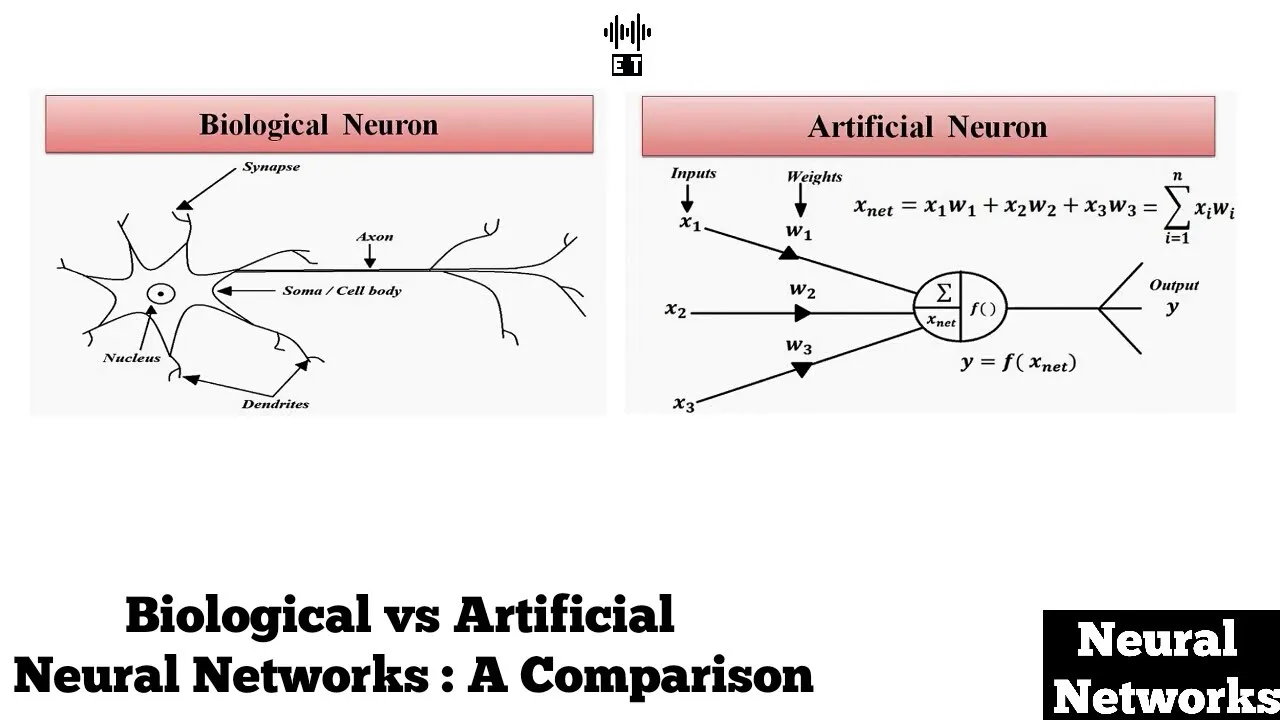
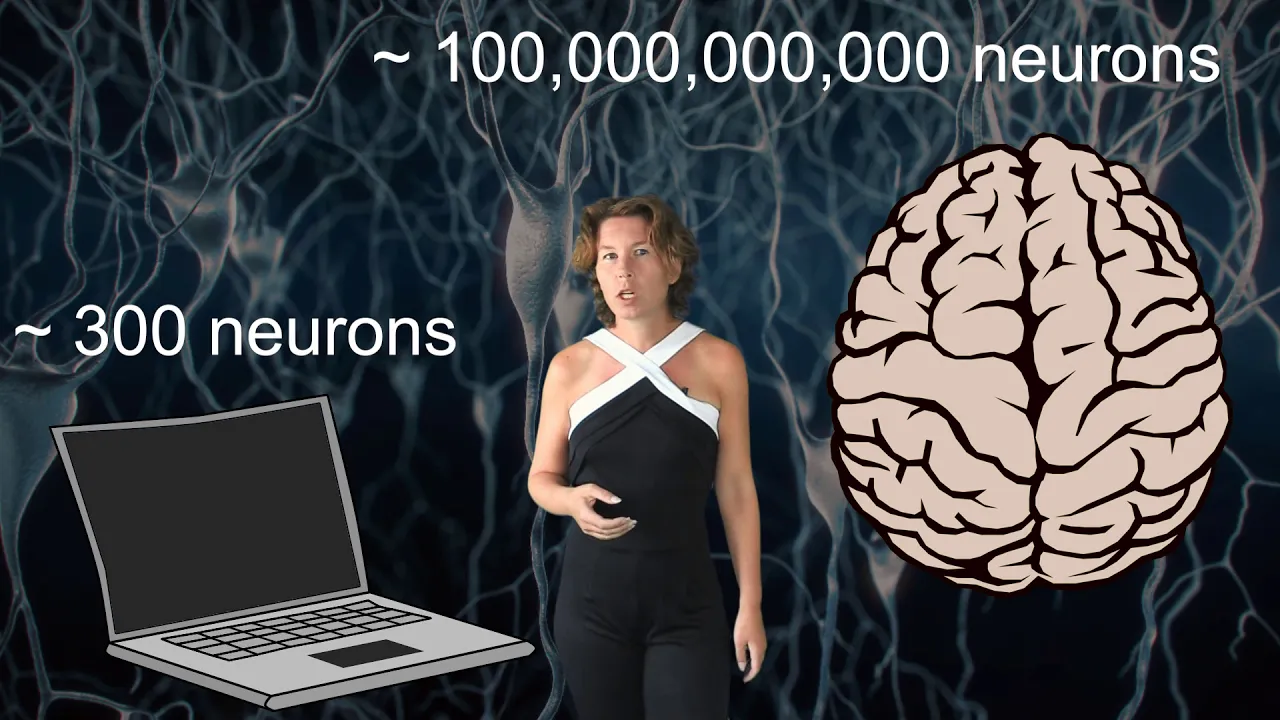
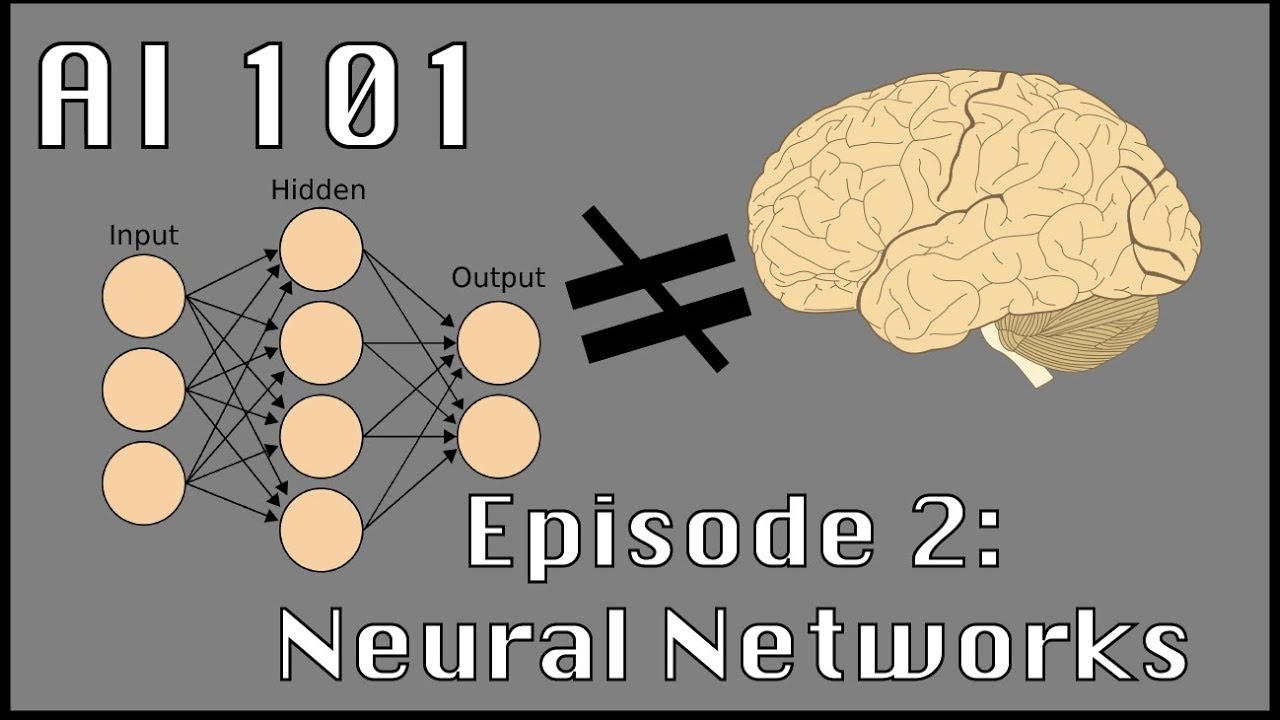
>> The answer depends who you ask. Um [laughter] but um the way that LLM's work is very fundamentally very different from how the human brain works. Um certain things are very similar. So they're based on neural networks which our brain has different forms of neural networks where we what we use to represent um information in our environment. But the entire process is a lot more complex in our brain. Um, and the really interesting thing about the brain is the fact that we have so much compute power.
It's very evolutionarily complex in terms of how much we're processing, but yet we're not needing as much data as these large language models need. There's significant compute and energy costs to current large language models. So, we're doing something fundamentally different. I think that's the easiest way to view it is the fact that that we don't need as much of that power to do it. Um the other thing that's very different is the fact as I was alluding to in the talk is that our brain is constantly interacting with our body. These systems don't have that.
They're very isolated. They're just using next token prediction.
Essentially, next token prediction is just a sequential trying to predict the next token using a self- attention mechanism to to infer what is most likely after learning from a very large corpus of data during pre-training. Very different from how humans do it at the moment. Um I would also say not to get too into this but there's also a lot of similarity. So to brain without an LLM.
Um, so that's what they're doing kind of in the soft, it's called soft robotics or developmental robotics. They're trying to mo to mimic some of the biological plausibility of our brains because there seems to be something important about the biology as well. Um, which these are all LMS are completely non-biological or silicone and all these other things. Um, so yeah, I mean there's there's questions there. Um if you were to ask me I would say uh I don't want to be irresponsible but I do think that there is a lot of plausibility here. So >> hi a few years back uh a group of experts nearly 100 or 200 of them issued warnings about AI saying that could lead to extinction of humanity.
>> Yes. and public intellectuals such as you all Nova Hari yes are consistently critical of the implications of AI. Uh this seems to have created a kind of fear psychosis among the ordinary people the public. So how is the expert community such as yourself are trying to counter that and what is your own personal view on AI? Is it good, bad, ugly?
Yeah, I could say that's a great question. Um, I could say that um, when I started to understand because I was always studying, I was always adjacent to natural language processing and to work in LMS during my PhD. It really happened GPT 3.5 I think came out really when it was 2022 um, right as soon as I had finished my PhD. And so suddenly I was kind of seeing it and realizing like this is way more powerful than what I had I mean I wasn't doing this research I was adjacent to it. Um but from what I known about it it was a lot more powerful than what I would have expected and then I went had an existential crisis. So I was very I was very uh I was just I mean I I think so many people had that but I was very uh I don't know I was just very like this is completely unsafe. I felt it was completely unsafe. This should not be happening. Um and I was completely uh fearful of it. Um and as you're mentioning uh it became a very big thing. So Yan Lun, Jeff Hinton um you know all of these big AI people were also going on the safety side and speaking about it. Um I would say now my perspective is less fearful but it's more engaged. So I think it's important to um there is fear hyping as well. Um but there's also due diligence needed um and so I think that balance is very very important. Um I I it's hard for me to say my personal view because I think uh I'm figuring it out still. I think what I'm really interested in is making sure that these systems can be safe and can not cause damage um or limit the damage but also um that they can be interpretable. We understand what they're doing. Right now it's a black box for almost everyone. So I think it's important to understand what it's doing.
Also depends on who you ask. So some people see these systems as just tools.
That's all it is. Just a very advanced tool. I don't view it like that. that I view it as something that's more much more complex than that.
>> Hello. Uh my name is Shakil. I work as a clinical researcher at Weissa which is a mental health chatbot. Um I think with empathy is really interesting because it's a lot of nature and nurture right and a lot of research ties it to attention span some to motor consciousness like you put forward. Uh my question is how do you really tie empathy with AI especially in the context of robotics because with a chatbot it's fairly simple. a person comes with from a volatile situation, you teach them a CBD technique and it's fairly straightforward. But with robotics, I think it's much more manifold.
>> Yeah. So, you're asking um how is it how do we conceptualize empathy in robotics and how is it different from large language models? Yeah, it's an excellent question. Um, so that's um, you know, I think that the way that we understand empathy in the brain, I keep going back to the body, but that's the way that we understand empathy is that it's actually rooted in sensory motor processing that engages with subcortical structures in the brain.
Across all that jargon, what it means essentially is that um, empathy is not just thinking, it's also feeling. And it involves interactions with the world, with other people, and intersecting with our own physiology. So when I feel someone's pain, I'm not just thinking or it's not just in my brain, I'm feeling it a lot of the time. You actually feel that pain. Um, and so that's very different from robotics because they can move. We made this distinction in our paper between external embodiment versus internal embodiment. So external embodiment is the big focus right now in in these robotic agents and in world modeling which is to understand how these these robots can spatially navigate to improve benchmarking on these tasks like spatial navigation like action planning things like that. Our paper calls for the importance of modeling internal embodiment of understanding that and so internal embodiment is the interceptive the internal states and the physiological markers which these systems don't have.
Um we proposed not that you want to put these in these systems but functional analoges that might help. Functional analoges would be something like modeling fatigue or modeling um uncertainty principles things like that.
So analoges in these systems that could potentially keep it in a more vulnerable state. So vulnerability is a very big big part of this conversation because human beings have this imminent threat of death that we are v vulnerable as a species, right? So we're we're always uh thinking about this whether consciously or not. These systems don't have that.
And so so adding these kind of like weaknesses and vulnerabilities into these systems are important components that might lead to more empathic processing and and these components but um yeah I think it's a really really important question and um it's very fundamentally different than than just purely reasoning.
>> Hi Akila. Hi um I had basically a curiosity related question regarding your um humanizing studies.
>> Yes. How long does the effect last?
Has there any study been done?
>> Yeah, so you're talking about the rehumanization one. Yeah, great, very good question. Um, so we actually were continuing longitudinal tracking with these subjects. We actually asked for some post talk surveys. We haven't analyzed the data yet, so we don't know.
Um, there isn't really much data because this is actually one of the few studies that aims to rehumanize groups in the scanner. There's not many people who have done this. Um so it's not it's this is why this work is so I think it's important because it's we call it um like understanding social inequalities in the brain and um very little work is being done on this. So human beings need to be more pro-social and actually study these things. Uh so I don't I don't have a good answer there but um the hope is that you know it would be a longer term thing but I think we need a lot more testing to answer it.
Yes.
>> Hi, my name is Shashi. I've got two questions for you. Okay. One is uh there is a lot of conversation about neurotypical brains and neurode divergent brains.
>> Yes.
>> So when you talk about these kinds of studies or these kind of research projects, how do you sort of uh which brain are you sort of modeling? Is this whole divergent thing even a thing uh or to be something that we should be overlooked?
The second thing, the second question that I have for you is um who is representing or rather who's working towards making humans more humans when tech is become more tech becoming more tech right >> okay >> so um what kind of research what kind of institutional infrastructure exists in these academic corridors to help humans become more humans >> nice that's a good question Um so okay let me answer your first question first. So um so my my view is that neurode divergence neurody divergence is the idea that often we study brains um we study neurotypical brains. And so that means that healthy quote unquote in a quotation mark what we constitute to be a healthy brain is the average person who has no clinical conditions and we compare everything to that normative baseline to understand brain function. Um neurotypical is a term that is now used uh to be more um sensitive about differences in the brain. Um so sorry that would be neurotypical. Neurode divergent is to be more sensitive about the fact that brains have a lot of variability and variation. So often we say disorder or clinical disorder, but neurode divergence is saying well you know we're comparing it to one normative baseline.
You can be divergent and not have a clinical condition. You can just be different. Um so I think neurody divergence is is very interesting to me.
There's a lot of uh there's a lot of uh it really depends how you interpret neurode divergence, right? because someone might consider schizophrenia to be a neurody divergent condition a very you know a very uh problematic form of schizophrenia uh and not a disorder for example so it really gets it's a tricky conversation um but I think that neurode divergence is very important um as a term and it's a very important way that we can understand a lot of conditions including autism for example um so our studies everything in the field we're stuck with this kind of assumption that we're using neurotypical brains. We often only use neurotypical brains in our research. Um, and we average all of these neurotypical brains in order to use that as our as our as as our condition of interest. Um, the important thing though is to to keep in mind is that it's always compared to a control condition. So, we're always taking variability in neural signal comparing it to control condition in order to understand Um, okay. Let me answer really quick so I can I can because I I really like that question. I don't know how to answer it actually. Um, making humans more human.
That has actually been the large focus of my work. That's why I studied uh humanistic neuroscience. The term is humanistic neuroscience. It's to understand our innate abilities as humans. How can we understand how the brain represents this? We don't know fully. Nobody knows how the brain represents these constructs fully and yet we're applying it to systems to artificial systems. So it it's very important to understand the humanness.
uh recently actually Jensen Hang who's the CEO of Nvidia he said that to him the most intelligent human being I don't know if you saw this but most intelligent human being is not is not uh someone who does well in the SAT or you know the the test you take in India it's someone who it's someone who has empathy can feel empathy and can also have some form of technical aptitude like understand these things and use that to navigate the world and to kind of see around corners was the language that he used to predict future trends. So it's very very important that humans work on their humanness to separate ourselves from AI. The first job to be replaced by AI was actually computer science and programming, not the more kind of empathic and humanlike components.
That's actually very hard for AI right now. So um I think it's very very very important for us.
Hi, I'm Dr. Amila. I'm a surgeon. So like nowadays we're kind of feeling like patients kind of stop trusting us completely already. Like most of the patients will already have Googled their symptom right down to the grade.
>> Yeah. They tell us their diagnosis, not even the symptoms anymore. So, and we're using a lot of robotics now in surgery, like from laparoscopy, it's gone to robotic surgery already. So, I'm just wondering like your perspective now like do you think people are starting to trust AI over their surgeons, over their doctors like more? Do they find AI more empathetic, more reliable, more trustworthy? Like how do you see that going like in future?
Um, yeah. First of all, I'm sorry you have to deal with that. Um, I don't know. I don't know if I can sh I don't know. Mom, can I share this? My mom was showing me something today. I don't know if I can share this. Your your chat.
Okay. Well, she showed me this chat on she was having with her friends and uh I don't know. I feel I don't know if I Okay.
And um and uh someone in the chat had said AI is always right. Large language models are always correct. They're never wrong. They're better than human beings.
Um so I think that they're usually there's actually very many cases where they're wrong. They hallucinate a lot.
Um it's called AI hallucination. So they'll make things up or confabulate.
Um so I mean but in many things it really depends on the domain of expertise. Um so depending on what you ask it, the way that you ask it, there's a lot of variability again in in in this kind of prompting. Um they can be very correct too, right? And that's a big the biggest thing for these companies is to work on mitigating hallucinations. Right now they want the most accurate information.
Where it gets very complex is things like human emotion or empathy. What is correct? Someone asked that question like what is correct in those contexts?
That's a very hard thing to to say. Um, but perhaps with clinical conditions, it's it's um I don't know. It depends again. Um, but I would trust my doctor right now. I'd rather trust my doctor.
You can use AI as a supplement, but really it's it's uh it's important. We have the experts like yourself. So, >> um, hi, I work in one of the large companies that you were drifting to training these models. But um so one of the reasons ties in with some of the earlier remark one of the reasons why it's hard to align these models is because there are hundreds of billions of parameters and there's no modular structure unlike our hopefully our brain. What's your take on building AI models which are more modular where where you could sort of train specific components for specific sort of functionality and then hopefully get an internal pein. Do you think that's one possible way forward towards more humanistic AI?
You're saying at the pre-training stage or at fine-tuning?
Pre-training. Yeah. I mean, I think what what I understand for most of the companies is that they focus on the fine-tuning stage at the moment. I don't know. You you know probably more than I do on this. Um uh and they'll use some sort of like reinforcement learning with human feedback to correct to correct uh the the model uh behavior. Um I don't know. I mean I think that that altering a pre-training would be ideal.
The kinds of data that you use to pre-train becomes very I don't know I think this is where philosophy becomes very important for human questions. It's not just engineers or neuroscientists or psychologists. It's also philosophers are very very very knowledgeable and what are the ethics in terms of how we we we do this. Um I guess you would be a better person to answer whether it's feasible functionally like the implementation. I would say I could answer more on the ethics side. Um is we'd need to be very very careful on how we handle that kind of information.
Yeah, very good question.
>> Hi. Hi, I'm Pervine. I work in AI and regulation currently. Uh my question to you is around human brain. the way you explained it, it's more from the functioning of the human brain as a biological organ, you know, in in terms of its neurological wiring and embodiment and etc. But if you were to actually look at empathy, vulnerability, um possibly anger, the whole range of human emotions and how they are embodied at molecular and cellular and gene level, how do you see the future of such research integrating into human instinct neuroscience?
>> Uh so you're saying how do we see how do we see the emotionality and the empathy in human beings? How is it integrated in in in which science?
from a gene and DNA point of view.
>> Okay. Yeah.
>> Um you're saying is it passed down or is it genetic or sorry I'm asking a lot of follow-up questions here?
>> Definitely from um um you know u being passed down but how is this kind of research being integrated into your work today?
>> Oh um I actually I don't work very much on that side so um I would give you a really bad answer if [laughter] I were to answer that. Um I I think it's very very important. So there's always this someone brought this up, the nature versus nurture question is very important. Um I study more of how it's shaped how environmental factors shape these things like our behavior, our environmental interactions, our relationships. Um but there's a lot of people working at these these intersections. Um and I think it's it's very important as well. Um I can't give you a good answer on that. Um but um there is some level of some genetic elements being passed down. Um but it's again the very very critical thing that we know from our research is that these things are not hardwired.
Even if you started less empathic as a person, you can always develop it. And a lot of people whether you tried to do it or not just become more empathic over time. Um and so so it's not something that's kind of fixed or predetermined uh early on.
Hi uh my name is Pawan and I'm building a mental health app using Zangan archetypes and internal family system therapy module.
>> Okay.
>> So as you know archetypes are kind of universal patterns right they have repeated again and again in history in Greek culture you can see in Indian culture they you have similar gods. So my question is more more about internal embodiment that you were talking about right that's that's the missing piece between AI and humans and archetypes are one of those ways that are common to every human.
So my question essentially is about these archetypes and what are from neuroscience perspective what are your views on this archetypes and how it can benefit AI.
>> Yeah very good question. Um I mean I think human beings have archetypes. We have redundancies right biologically. So breathing for example is is a form of an archetype. It's a very it keeps us alive. Um central pattern generators are are the classic example that we learn in neuroscience.
Um regularities are very important as well.
So we always operate to maintain a very homeostatic state of survival. That's how we survive. And everything we go out outside of that state, we want to bring it back into this um it's called like an attractor network. We want to bring it back to this dynamical system that's stable. Um so I think your question is very good because it's you know again these systems don't have the internal embodiment. I think that what I was kind of alluding to in the talk is that there are computational analoges that we can do because these systems when we think about the brain it comes from dynamical systems theory. Um and that's inherently computational. Um it's electrical and computational.
And so so um so I think that this can be modeled. Uh the complexity to which it replicates human beings really depends on the soft components, the soft biology mimicking those forms.
Um there's a researcher named Anil Seth who's who's written a really nice uh perspective piece on this integrating the limits of machinery and these systems like what they can do uh sorry the limits of what they can do based on their machinery.
Um and the kind of the the standard claim is that you do need the the biological plausibility as well.
Um the other question there would be is this safe and responsible? I think that's the other question. And to what extent should we be thinking about these things?
>> Hi Mohammed. So I work on open source software and hardware. Okay. Okay. So, one of the questions that I have is a lot of the American companies open AAI anthropic, >> they're not like remotely open source.
Open AI.
>> Yeah, they're not open source. Yes, >> it's an oxymoron. It's not open in any way.
>> Uh in comparison, if you look at the Chinese ones, Deepseek and the other ones, should we be considering Chinese models as the standard rather than the American ones? Like what is your take?
We're trying to build empathy, but these >> Yeah, but you're asking an American.
[laughter] Yeah. But now putting that aside, as a researcher, would you want your models to be open source? Do you want to see the weights or do you >> Oh, definitely. Yeah. I think so. I think model interpret model interpretability is very very important.
Um, so again, I I don't work so much on the the AI side like I work more in the research side. So we're dying to know what these companies are doing.
Everything is proprietary. Uh, I would say that I have fine-tuned some of these models using open- source models, right?
So you can have smaller parameter models that are open source like Gemma um you know like earlier GPT models things like that llama lava um so yeah I mean I think our ultimate quest for AI safety is interpretability is can we actually see what these systems are doing and not just for safety but also for understanding the comparison to humans. Um so yeah I definitely want to do that. My answer to the Chinese question would be I I think that we need to get American models to be more open source. Um not just American uh world models to be more open source and hopefully it's not nationally or geographically divided.
>> My name is Kiran. Uh >> hi.
>> Uh hi. Uh yeah I think the expanse and the depth of your research is both astute and profound. Uh has any of your research intersected with consciousness?
Even though modern science can't fully define consciousness yet.
>> I'm sad this question was last because this I have like a monologue for this question. Um it yeah all of our research intersects with consciousness. Um it is one of the most pressing questions right now in neuroscience. We have conferences just dedicated to consciousness and that's actually one of my favorite con conferences to attend is this uh association for the scientific study of consciousness. Um we have a lot of competing theories of consciousness in the human brain. Nobody knows how the human brain works, how it turns on like how did how do how does how do we suddenly have the ability to function and what separates us from suddenly going into a coma and suddenly losing that ability? there isn't like a button, you know, there's a lot of variability and it's a big quest is people want to understand how consciousness arises. Um, so all of this work relates to consciousness and I think you're probably asking like is AI conscious?
Like what are the implications of this?
Um, and again like that depends who you ask. Uh I personally am of the view that they're clearly not conscious because they don't have the physiological components that are so important for human beings. Uh to be conscious, we need these integrated systems that keep us alive. Um but if you define consciousness in a very different way, perhaps you could make the argument that these systems are conscious.
They can pass the Turing test, right? So things like that.
Up Next
37:43
Engineering the World's Smallest Full-Featured MIDI Synthesizer
@mitxela
222.4K views•2019-10-18

57:48
Secure Multiparty Computation (MPC): Foundations & Challenges
@SimonsInstitute
7.3K views•2015-05-28

13:03
Bypassing Tor Censorship: Bridges and Pluggable Transport Guide
@Coding_ForEveryone
397 views•2024-06-11
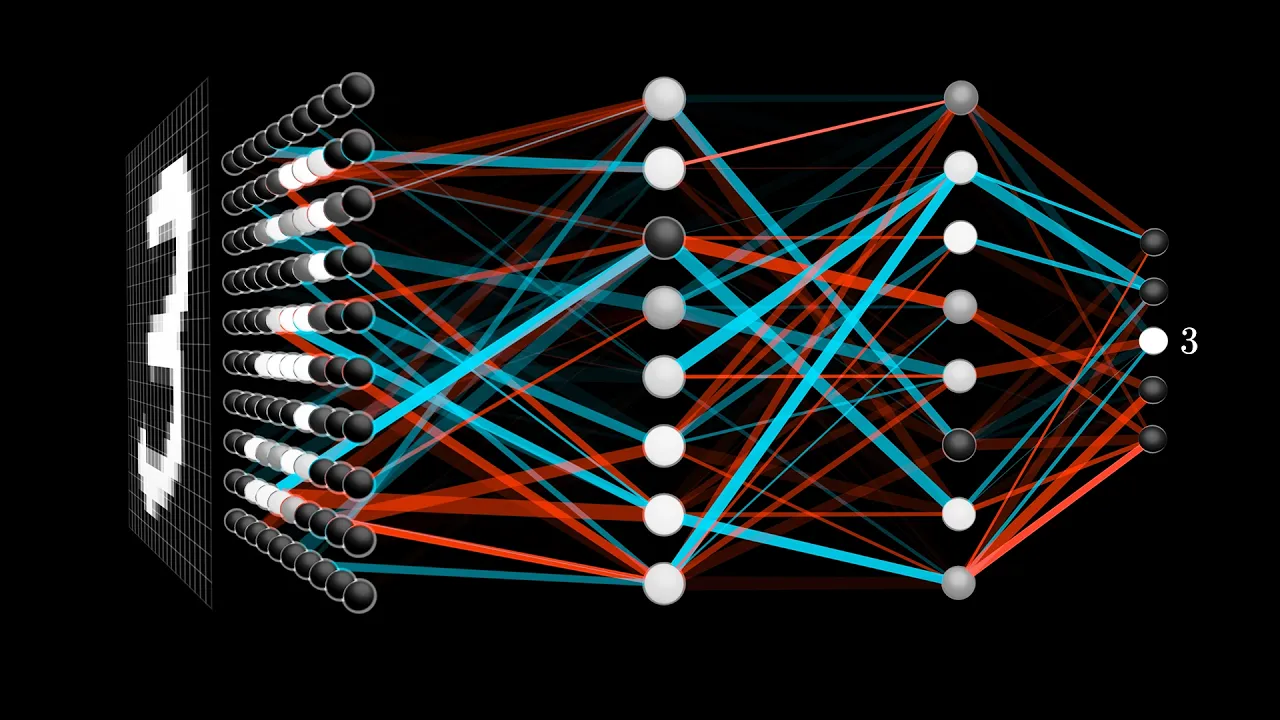
18:41
Neural Networks Explained: Math, Layers, and Learning Fundamentals
@3blue1brown
21.9M views•2017-10-05
Related Study Plans & Knowledge Roadmaps
Structured learning paths in Artificial Intelligence
artificial-intelligence
Aligning LLMs: DPO, TRL & Custom Datasets
01Foundations of Python & Machine Learning
02Transformers and Large Language Models (LLMs)
03Aligning LLMs: SFT and RLHF
+ 3 more learning modules
24h6 modules
Explore Roadmap
artificial-intelligence
Federated Learning: PyTorch, Flower & Privacy
01Python & Machine Learning Foundations
02Deep Learning Basics with PyTorch
03Introduction to Federated Learning
+ 2 more learning modules
35h5 modules
Explore Roadmap
artificial-intelligence
Securing LLMs: Guardrails AI & NeMo Gateway
01Introduction to LLMs, Python, and APIs
02Understanding LLM Vulnerabilities & Threats
03Defending LLMs with Guardrails AI
+ 2 more learning modules
15h5 modules
Explore Roadmap
artificial-intelligence
Building Recommenders: Two-Tower & Vector DBs
01Foundations of Python & Machine Learning Basics
02Introduction to Recommender Systems
03Deep Learning & Representation Learning
+ 3 more learning modules
75h6 modules
Explore Roadmap