Securing LLMs: Guardrails AI & NeMo Gateway
Learning Goal: Build and deploy an enterprise-grade LLM security gateway using Guardrails AI and NeMo Guardrails to defend applications against prompt injections, toxic outputs, and sensitive data exposure.
Prerequisites
- Python Proficiency: Intermediate-level Python knowledge (e.g., class inheritance, asynchronous execution, and standard library environments).
- API Foundations: Basic knowledge of RESTful protocols, HTTP requests, and JSON structures.
- Access Keys: An active OpenAI API key (or local LLM alternatives like Ollama configured on your machine).
Estimated Study Time
- Total Duration: ~15 Hours (including code implementations, model configuration, and deployment testing).
Module 1: LLM API Integration and Client Setup
This module establishes a developer-focused foundation for interacting programmatically with LLM providers. You will move past casual web-based model chat boxes to instantiate program-controlled API clients, manage asynchronous execution loops, handle authentication headers, and build runtime conversational buffers.
Recommended Videos
- Why this video is valuable: This technical walkthrough demonstrates the exact mechanics of the modern OpenAI Python SDK. It skips absolute beginner syntax to focus directly on developer-relevant API patterns: initializing the core client, structuring system/user prompts, and configuring generation hyperparameters (like temperature and token caps) to manage model determinism.

- Why this video is valuable: To build an effective security gateway, you must understand how to construct and parse historical multi-turn conversational payloads. This video demonstrates how to engineer stateful context histories within Python runtimes, which acts as the core message pipeline that our downstream guardrails will intercept.
- Why this video is valuable: This brief overview instills critical developer workflows required before launching enterprise code. It clarifies how to manage local virtual environments (
venv/conda), keep access keys separated from codebases using environment variables, and manage dependencies without namespace collisions.
Knowledge Checkpoint
- Initialize an
OpenAI()client using the Python SDK, passing authentication details securely through environmental variables. - Differentiate between System, Assistant, and User role definitions inside the payload schema.
- Design an active, memory-bounded list structure in Python that records multi-turn conversational loops.
- Control output determinism by programmatically configuring
temperature,max_tokens, and custom termination conditions inside the request payload.
Module 2: Understanding LLM Vulnerabilities & Threats
Before you can construct defensive perimeters, you must understand the attacks used to bypass them. This module covers the attack surface of large language models, including prompt injections, jailbreaks, training data leakage, and insecure plugin calls, structured around the industry-recognized security standards.
Recommended Videos

- Why this video is valuable: Directly from the Open Web Application Security Project (OWASP) team, this presentation walks through the top 10 security vulnerabilities found in LLM deployments. It explains critical risks like LLM01 (Prompt Injection), LLM02 (Insecure Output Handling), and LLM06 (Sensitive Data Disclosure), helping you understand how to prioritize defenses.
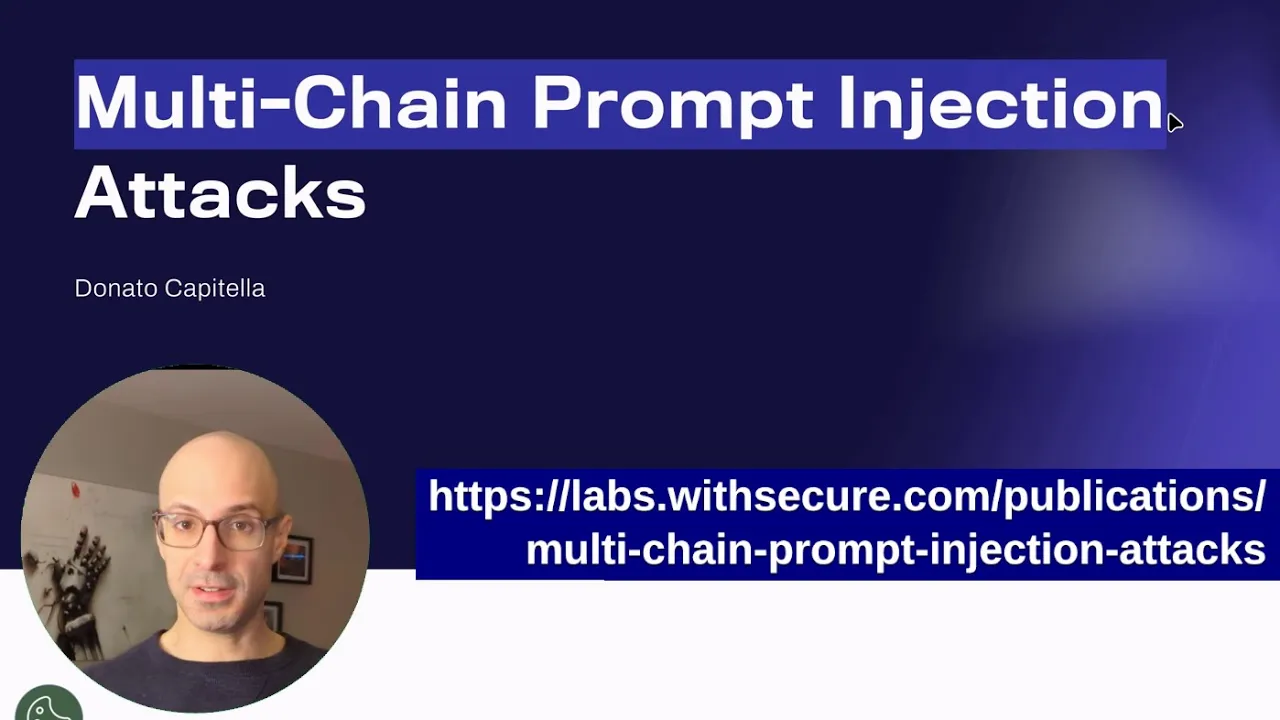
- Why this video is valuable: This video provides a practical security researcher demonstration of how jailbreaks exploit sequential chains. This demonstrates the critical importance of defensive output validation and why we cannot treat LLM outputs as trusted text.
Knowledge Checkpoint
- Explain the mechanics of direct and indirect prompt injection attacks.
- Identify the top three security risks defined in the OWASP LLM Top 10, outlining their root causes.
- Explain why standard system-prompt instructions fail to completely prevent advanced jailbreak payloads.
- Articulate the security principle of "Never Trust LLM Outputs" and how it changes gateway design.
Module 3: Defending LLMs with Guardrails AI
With the vulnerabilities identified, you will now learn how to implement structured, runtime validation using the Guardrails AI framework. This module covers using Pythonic validation engines, building strict Pydantic schemas, and designing automatic healing loops that correct non-conforming responses before they leave the gateway.
Recommended Videos

- Why this video is valuable: This video provides a direct, developer-focused overview of the Guardrails AI framework. It walks through Python implementation steps and details how to enforce runtime boundaries to block toxic or non-conforming model completions.
- Why this video is valuable: Guardrails AI relies heavily on Pydantic schemas to validate structural integrity. This complete, detailed Pydantic tutorial ensures you master type hints, field constraints, custom validators, and runtime error handling.
- Why this video is valuable: This presentation explores the "validation loop" design pattern. It demonstrates how Pydantic-driven agents catch formatting errors and programmatically retry prompts until the LLM returns structured, validated JSON.
Knowledge Checkpoint
- Construct a complex Pydantic validation schema using standard fields, default types, and custom validators.
- Set up a Guardrails AI validation engine that wraps raw client completions and checks them for toxicity or structural alignment.
- Build a programmatic "re-ask" validation loop that automatically prompts the LLM again when validation checks fail.
- Differentiate between gateway-level validation libraries and internal model-alignment processes.
Independent Learning Suggestion: Guardrails AI uses XML-based RAIL (Reliable AI Markup Language) files and down-loadable validators from their community hub (e.g., specific regex parsers or toxic content classifiers). Because these package formats update quickly, be sure to review the Guardrails AI Official Documentation to learn how to write
.railfiles and import validators via theguardrails-aiCLI.
Module 4: Conversational Control with NeMo Guardrails
While Guardrails AI excels at structured schema validations, NVIDIA's NeMo Guardrails is designed to control conversational flow, manage user intent, and prevent models from drifting off-topic. In this module, you will learn to implement NeMo Guardrails, write custom Colang flows, and configure safety rails for user inputs, internal execution, and outbound responses.
Recommended Videos
- Why this video is valuable: This is a comprehensive, developer-focused walkthrough of NeMo Guardrails. It covers the structure of configuration files (
config.ymland.cofiles), detailing how NeMo intercepts queries using vector semantic similarity to map intents and block unauthorized paths.

- Why this video is valuable: This video focuses on managing complex state in NeMo Guardrails. It explains how to store, manipulate, and query run-time variables within Colang using the
$prefix, and how to define non-linear conversation paths based on those variables.

- Why this video is valuable: This video provides an overview of NeMo's modular execution pipeline. It breaks down the system's four primary security layers: processing user queries (input rails), managing conversation flow (dialogue rails), checking external tools (execution rails), and sanitizing responses (output rails).
Knowledge Checkpoint
- Create a standard NeMo Guardrails directory config using a
config.ymland custom.cofiles. - Write a Colang script that classifies user inputs, defines specific response tracks, and prevents off-topic inquiries.
- Implement context variables using the
$syntax inside Colang to track state variables across multiple turns. - Map the four defensive execution steps of NeMo Guardrails (Input, Dialog, Execution, and Output rails) to show where safety checks happen.
Module 5: Building and Deploying the Enterprise Gateway
In this final module, you will bring all these pieces together. You will integrate Guardrails AI and NeMo Guardrails into a high-performance FastAPI web service. You will then package this service into Docker containers and configure deployment patterns to deploy your secure gateway in an enterprise setting.
Recommended Videos
- Why this video is valuable: This video demonstrates how to build high-performance web APIs with FastAPI. It explains why a web-based API is crucial for securing LLMs by abstracting access keys and model configurations away from user-facing clients. It serves as our practical blueprint for constructing the gateway's routing and endpoint logic.
- Why this video is valuable: This walk-through focuses on the architecture of enterprise LLM wrappers. It explains how to build a unified gateway that shields backend models, manages developer authentication, and controls access patterns.
- Why this video is valuable: LiteLLM is a popular routing proxy used to standardize LLM API patterns. This crash course details how to configure proxies using Docker, which helps you understand how to design and containerize our custom FastAPI security gateway.
- Why this video is valuable: This tutorial walks through deploying a model service on a Kubernetes cluster. It explains how to create isolated namespaces, write deploy configs, and manage scaling, which are the same infrastructure patterns needed to run our security gateway at scale.
Knowledge Checkpoint
- Build a robust FastAPI backend featuring dynamic POST routes that accept user prompts, run them through active guardrails, and return clean JSON payloads.
- Implement unified validation pipelines that route incoming client strings through both Guardrails AI and NeMo Guardrails sequentially.
- Write a custom
Dockerfileto containerize your FastAPI application, ensuring all safety models, configuration settings, and Colang code are packaged correctly. - Design a multi-replica Kubernetes Deployment manifest, complete with health probes, resources limits, and isolated namespace configurations.
Independent Learning Suggestion: While these videos cover API development, container proxy configuration, and Kubernetes orchestration, you should research "FastAPI multi-stage builds" and "Kubernetes ingress controllers for LLM traffic management" to optimize how your security gateway handles production load.
Course Map
Key People Index
- Jensen Huang (CEO, NVIDIA): A driving force behind modern GPU-accelerated computing and agent-based software architectures. Under his direction, NVIDIA released the NeMo Guardrails framework and inference microservices (NIMs) to establish safety boundaries for enterprise AI.
- Dario Amodei (CEO, Anthropic): A leading researcher in AI safety. He emphasizes the importance of robust alignment testing and structural guardrails to prevent high-risk behaviors in advanced models.
- Yann LeCun (Chief AI Scientist, Meta): A pioneer in deep learning. He advocates for goal-driven AI systems that use built-in, structural bounds to guide agent behavior rather than relying solely on post-hoc prompt filtering.
Final Self-Assessment
- API Client Execution: I can write a Python script that instantiates an authenticated, asynchronous connection to an LLM provider while managing environment variables securely.
- State Preservation: I can design a stateful message buffer that tracks, appends, and limits conversational history across multiple turns.
- Attack Identification: I can analyze a raw input string and identify potential prompt injections, jailbreaks, or attempts to access system prompts.
- OWASP Top 10 Mitigation: I can map concrete code defenses in Guardrails AI and NeMo Guardrails to mitigate the top five security risks listed in the OWASP LLM Top 10.
- Data Validation: I can build a complex Pydantic validation model using specific type hints, field limits, and custom field validators.
- Self-Correction Loops: I can write code that catches Pydantic validation errors and triggers an automatic, programmatic re-ask loop to fix model outputs.
- Colang Architecture: I can write Colang files that successfully map user intents to managed conversational paths.
- State Preservation in NeMo: I can save, update, and read custom runtime variables within Colang flow structures.
- Pipeline Execution: I can explain the execution order of NeMo Guardrails' four-step validation pipeline (Input -> Dialog -> Execution -> Output).
- FastAPI Gateway Core: I can build a working FastAPI web application that exposes secure endpoints and returns structured JSON responses.
- Container Isolation: I can write a multi-stage
Dockerfileto compile and launch my FastAPI security gateway container. - Enterprise Scale: I can write Kubernetes configuration files to deploy, isolate, and scale my security gateway across a clustered environment.