







![Day-54 LLM Attacks & Prompt Injection Part 1 - Bug Bounty Free Course [ Hindi ]](https://i.ytimg.com/vi/DANRXYsT4Bs/maxresdefault.jpg)

![AI Agents [Pt 17] | Generative AI for Beginners](https://i.ytimg.com/vi_webp/yAXVW-lUINc/maxresdefault.webp)






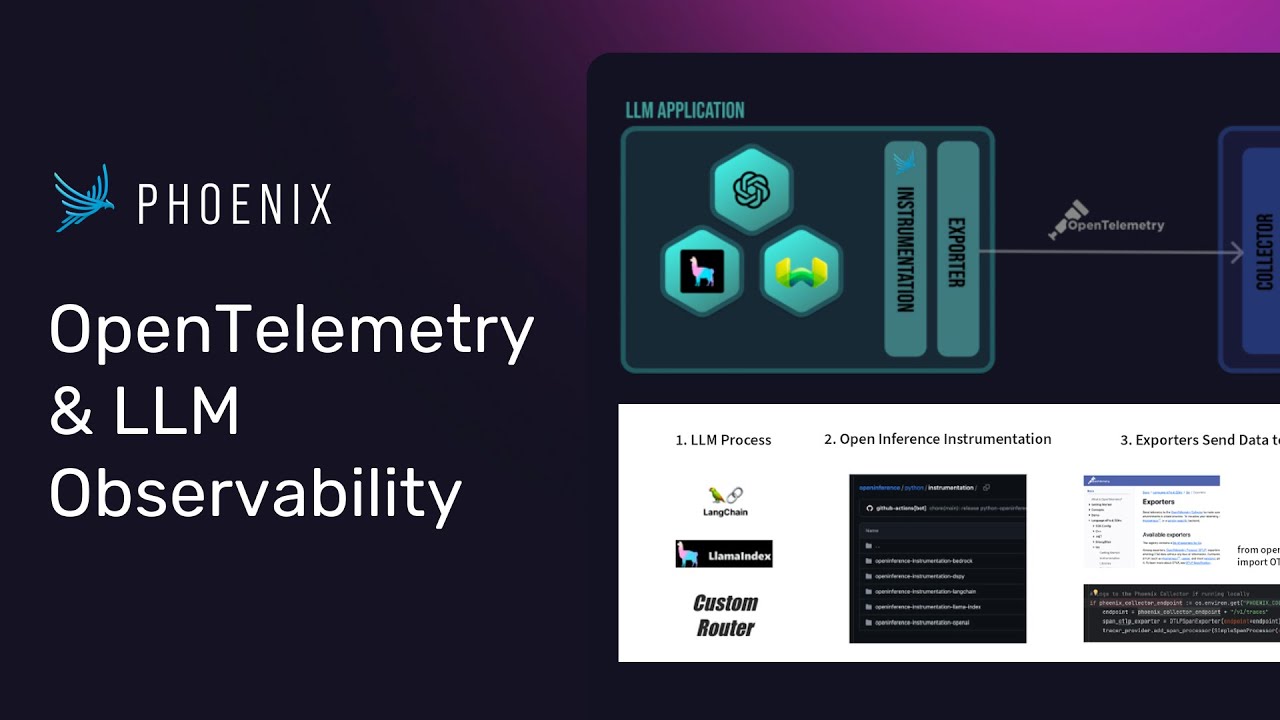




This talk presents an opinionated blueprint for building reliable AI applications using Pydantic, emphasizing type safety as the foundational principle that enables fast, deterministic feedback loops in AI development. The approach leverages Pydantic's model-agnostic architecture, MCP (Model Context Protocol) for secure tool integration, and structured output validation to create autonomous agents that can automatically retry and correct themselves when validation fails. The speaker demonstrates how these principles transcend specific frameworks and can be applied broadly to build scalable, maintainable AI systems while maintaining rigorous type checking throughout the development process.
Building Reliable AI Agents in Python with Pydantic and PydanticAI
Added:Proficiency in Python, particularly with asynchronous programming (async/await) and Python type hinting.
Fundamental knowledge of Pydantic for data validation, serialization, and setting up strict data schemas.
Basic understanding of Large Language Models (LLMs), prompt engineering, and API integration (e.g., OpenAI or Anthropic APIs).
Core concepts of AI Agents, including tool use (function calling) and maintaining conversational state.
Designing and orchestrating multi-agent systems with complex handoffs and collaborative workflows.
Developing custom Model Context Protocol (MCP) servers to securely connect AI agents to local databases and proprietary enterprise tools.
Advanced LLMOps and telemetry, using Logfire and OpenTelemetry to monitor, evaluate, and debug agentic decision-making in real-time.
Deploying robust, type-safe AI agent microservices in production using frameworks like FastAPI.
11.2K views262likes1:04:17Original Release: 2025-05-20
Uh we have like one minute but since the room is completely full uh I guess actually there there were two spaces right at the front here. There's a couple of spaces down the front. So like do feel free to come in uh and take the remaining spaces. There's one in the middle here as well. This happened last year. I said I promise although it's a sponsored talk people will come and they put me in the same size room as last year and again the people are standing at the back. Um um it's a relatively small screen. Can people see that at least approximately at the back? Oh dear. Now that's a question I have no idea. How do I do that in Zed?
Oh, I'm gonna try the word light and Oh, is that a bit better?
Oh, that's even better.
Okay. Well, I should be able to do most of it from inside zed. So, we'll hope for the best. Um, okay. I guess I guess we're kind of there's still two places here at the front. So, if anyone wants to come and take them, I would I would encourage you. And one here.
So, or the rest of you are just wondering whether my talk's going to be really boring and you want to be able to get out easily without and there's one more if you want it. But, um, cool. Well, thank you so much uh all for being here. Uh, I am Samuel. Uh, I'm best known for creating Pyantic, the original library. I assume that if you've got yourself to Pyon and found yourself into this room, you know what Pyantic is. So, I'm not going to talk too much about the original Pyantic. I think the one most important thing to say about it is it was first created back in 2017, so before Genai. Um, uh, it is downloaded today somewhere around 350 million times a month. Someone pointed out to me that that's about 140 times a second. So a lot of that usage I don't know but I'm making up a number a third is from Genai but a lot of the rest of it is from from fast API and from all many other sorts of general general usage within within Python. So I think that's where pyantic is kind of why it's so so downloaded so much is it's not just geni um it's used by all of fang and by but in particular relevant to to what we're talking about today by um all of the genai libraries. So that's both the SDKs, OpenAI, Anthropic, Grock, Google, etc., etc., but also the agent frameworks like Langchain, Llama Index, Crew AI, etc., etc. Uh, I started a company uh around Pyantic back at the beginning of 2023 and we have two we built two new things as well as continuing to develop Pantic. So they are Pantic Logire, which is our developer first observability platform, which I will show you a bit today.
Luckily, it's also in light mode. uh and Pantic AI, our agent framework. Um but most importantly of all, do come to our booth. We're here for the next few days.
We have a I think a fun demo of Logfire.
We have t-shirts. Uh we have stickers and we also have a prize draw. So yeah, please come along and say hi. Um what am I talking about today? Uh supposedly the title is building AI applications the pantic way. Everything is changing incredibly fast in in AI. There are points that even in that since I first gave a talk like this a couple of months ago that have fundamentally changed but at the same time some fundamental things are not changing at all. We're still trying to build applications that are reliable and scalable and that is still hard.
Arguably that's actually harder than it was before Genai. The assumptions there are so many useful things that Genai can do but it is also a complete pig to work with. And so in some ways those things are getting more difficult and that's where I think we're trying to trying to help you. Um so in this talk I will use pideantic AI and pyantic logfire but most of the principles that I'm going to talk about I think transcend that particular thing. So the first one is type safety in this context. I think type safety is incredibly important and only getting more important in Python but also in Typescript.
One the number one thing that is changing is as AI are is writing more and more of our code whether that is like autocomplete or the full-on cursor go implement this view for me the number one most useful form of feedback that these agents can have is type is is running type checking because it is side effect free it is very fast and obviously it's even it's going to get even faster with TY which is about to come out and so yeah and type and the type safety story in Python is great and only getting But if you go and use agent frameworks that have for their own reasons decided not to build in a type safe way, which is basically all other agent frameworks as far as I can tell, you forfeit that type safety. You you stop the type checker being able to help you or help the agent be able to develop. I'm also going to talk about the power of MCP model context protocol. Just as a quick straw poll, how many people know of have heard of MCP model context protocol? And how many people think they really understand what it what it does? Okay. Uh I'm supposed to be one of the maintainers of the Python uh MCP uh SDK although I don't get much time. So I will try and answer that as well. Um and then I will try and talk about how eval fits into this. I think we have quite a lot of time today. So hopefully I I'll get to that as well. And throughout that I'll talk about the importance of observability by by using by using logfire. So what is an agent? I don't pretend to have anything especially new to say on this subject, but I think given that we're going to talk about agents a fair bit, it's useful to have an agreed definition of what an agent is. This as of this year seems to be rel relatively well agreed upon. This the definition I will show here is from Anthropic. It's the definition that OpenAI have also adopted in their new uh agents library. I think it's the the model that Google is using. So some of the the like legacy agent frameworks I would almost describe them as like lang chain who have still got a different definition are struggling now because we everyone else seems to have kind of agreed upon this definition. So how Barry Zang presented this at AI engineer back in February was like this is the definition of of an agent. Now this is kind of helpful and elegant but it doesn't actually make very much sense to me. What makes rather more sense is the pseudo code he showed on the next slide which I have here. So the idea of an agent is it takes an environment. It takes some tools which in turn have access to the environment. You take a system prompt shows that this is a ancient slide from three months ago because now everyone will talk about instructions instead of system prompt.
And then we run the LLM. We get back instructions on what tools to call. We call those tools. Uh we update the state and we proceed. And even in this tiny bit of pseudo code, there is a bug. I don't know if anyone can see it, but the bug is that the the while loop never exits. And sure enough, that actually points at one of the hard and as yet undefined bits of definition of an agent is when do you stop that loop? When do you know when you're done? And sometimes that's obvious at least to a user, but sometimes it is nonobvious, whether it be to a to a human or to a LLM. And exiting is is yeah, can be a can be a tricky thing. So, enough pseudo code. I'll show you some actual actual code. So this is a very simple example of pyantic AI. We have a pyantic model person just three fields just name date of birth which is a date and city and we define our agent.
Um here we're going to use uh openAI GPT40 here. Um but we could use we have support for anthropic open AAI Google Grock whole bunch of other models. Um and the one of the the number one reason that people like using these Asian frameworks is that they give you this model agnosticism, the capacity to switch model in one line of code and see how different models perform. Um and in fact we have released this week so it's not in my talk what we call our direct API where we you basically get a direct interface to make requests to an LLM without any of this agent stuff where we just provide the model agnosticism the like unification of the API because there are places where you don't want this but anyway this example we're using an agent we've set the output type to be person so when we look at the annotation here result.output output we will get an instance of person um or it will fail we have instructions and then we have the actual unstructured data where we're trying to extract whe that we're trying to extract this pyanic model from which is just uh Samuel lives in London and was born 28th of January 87 and if I go and run that example and my internet holds up and I haven't run it before we sure enough we get out the structured data nice the uh uh pedantic and cynical among you which since you're developers I hope is all of you will notice that this is not actually a Jantic there is no loop here right we're making one request to an LLM and we're getting back structured data and that's successful but you don't have to change your example very much to start to need that aantic behavior so this is basically the same example except that we've put in a functional validator in the pantic model that the date of birth of this person needs to be in the 19th century So you'll see in the actual prompt it says in ' 87 but it doesn't define the century and the we're being a bit unfair to the model here because we haven't put anywhere in its context oh by the way the person we're looking for was born in the 19th century.
Um and so what will happen is that the model will fail. the validation will fail the first time and that's where the agantic loop immediately kicks in because that validation error is then fed back to the model and based on the validation error alone it's able to retry and hopefully successfully uh perform the validation everything else is the same actually we're using Gemini here but other than that it's no different the only other thing we've added is these three lines of code here to instrument this example with logfire so that I can show you that aantic loop going on so if I run this example It has succeeded and we immediately get some traces out here and you can see we had two calls to Gemini. But if I come across here to logfire and I will uh we look at this trace here which is from that run very simple we immediately see and I I'll zoom in here although it's a bit of a pig to do so you can see what's going on. So we had the original user message that we that we sent to the model um which was yeah was the unstructured data it returned as you would expect it to assuming 1987 we then sent back to the model uh so so in this case the way that we do structured outputs at the moment in pyantic AI is using tool calls under the hood we're about to add support for not for at least the option to not use tool calls but that's what we're using here so it's calling the final result tool with this data the the pyantic validation is failing here. It's failing on a functional validator, but it could fail on anything from from the wrong wrong input type to yeah, whatever wherever Pantic would fail. And if we then scroll on down the example and then zoom in again, you will see it then used the information in the validation error to to detect that it had to return a different date of birth and it did so and and we succeeded.
Uh, and the other thing that's useful to see here is in in the trace view, we can see how long those two requests took. So on this occasion, the first one was a bit longer than the second one. Probably that was making the HTTP connection. Uh, and we can see the pricing here, both the aggregate pricing across both of them and and the price on the individual ones. And at the moment, we don't have a cost for Gemini uh to flash, so it's not showing the cost, but it would show the cost here if it did.
Um so moving on.
Um so this is that example but you will also have noticed that even in my second example we didn't have any tools. So how do we register these tools that the uh model has access to to uh well what would I suppose do rag as in have access to call some functions along the way to retrieve extra data that it will need whilst um answering your query. So the the way we can do that with padantic AI is we can use uh the at uh agent.tool decorator to register tools within this particular agent. Um and you can see if I switch over to the actual code here what you can see and this is where I I talk about type safety as being really really important for us. So we we work hard to to get this stuff get this stuff to be type safe where I think no one else does. So we have some some stuff to connect. said database connection but then in terms of the agent code we have here this deps data class so this is just a holder for extra things in this case database connection and the user ID that you might need to access while you're inside the functions which are the uh respon the way that we respond to the tools um and so we set critically we set depths type here when we're defining our agent so our agent is now generic in depths in this particular case and the way we've set up the uh decorator here means that you'll see here we have run context is parameterized with depths. So if I change this to int we will suddenly start getting an error here saying the function has the wrong signature. Now all of this you generally don't have to care about. The point is when you access context.deeps you have an instance of depths and if you then access an attribute of that you get in this case a database connection. And if you had one N instead of two N's here, we will get a type checking error, whether that be nicely in our IDE or when we're running CI with whatever pointing out that we've accessed this wrongly. If you were using if we hadn't done this extra work to make this particular thing type safe, you would have to go and run this code slowly and at expense to find at runtime a attribute error because we had one n in con. Um, so what this example is actually doing is adding uh what people refer to as long-term memory. So basically two tools, one to record memories and one to retrieve memories um which the agent can then use to record things it knows about you in turn to then and then retrieve them to answer questions. And we have yeah we're using Postgress here. So we're we're storing that data in Postgress making a query to insert into the memory table and then select that value from the memory table based on the memory contains which is what the effectively the the query that the user that the uh database is giving. We could have a more complex example where we were using vector search and embeddings to do this kind of thing but in many cases this simple I contain I like will do do well enough. So if we look at our code for actually running this, we have uh we're connecting to the database.
We've set up our instance of depths and then this is where we pass in in the depths. So one of the the other things we realized is that these agents are very useful to define globally. So we can't pass in the depths here because we often wouldn't have access to the database connection when we were defining the agent in the module scope.
So we're defining the depths type at this stage and then passing in the depths here. And again, because agent is parameterized uh with the depths type, if I passed in the wrong type here, we would get an error telling us that we hadn't passed in the right depths. All of which is just to say we can kind of guarantee with type checking that this thing I pass here is going to be the same thing I get access to here. Uh which is very useful. And so if I run this example, uh you'll see the the output here. But probably more useful is looking at the output here where we're running the memory tool twice. So you can look inside our first uh agent run. We had a call to to chat GPT in this case and then we had uh we decided to uh run one tool, the record memory tool in this particular case. Um, and then inside running that tool, we then had that database query to do the insert. One of the powerful things about Logfire is it's a general purpose observability platform with great support for AI rather than an AI specific observability platform. So you have full instrumentation of in this case a Postgress query, but it could be whatever you're doing uh system resource usage, HTTP requests, whatever you want to go and do. And so we can see here the precise query that got run uh the SQL that was that was executed. But I think that the most useful thing here is to see that like we've got the bunch of database queries. We've got the database query going on here. You can immediately see visually how little of the time was spent making the database query. So if we wanted to come and optimize this case, you can see that trying to make my database query more performant is never going to help. We need to think about some other way to improve performance.
Um, and yeah, if we go back and we look at the actual agent run here, you can see what it did.
So, I'll just talk through it for those of you who maybe can't see it that well.
We have the system instruction. We had the user input, which is my name is Samuel. It decided to call the tool record memory with the user's name is Samuel.
um value added to memory and then it it replied uh and then when we made the second run which here was obviously in the same process and the same call but in theory could be weeks later because we've now just got this data stored in our Postgress database you'll see it um uh same prompt what is my name was the question I asked it it uh basically called the retrieve memories tool with memory contains name uh retrieve the right value and was able to reply knowing what my name was.
Um, it's not using tools as well, it's not using tools, but the it's worth also talking about uh short-term memory. So, what we talked about, so AI people seem to love anthropomorphic uh definitions of things that don't follow uh industry standard.
I don't know why they like doing that.
That's what they like to do. Uh, and I think it's cuz they kind of feel cool that everything is like a, you know, like a thinking person. But whatever.
That's why they talk about thinking rather than processing. They talk about, uh, long-term memory effectively being this kind of tool call thing and then short-term memory basically being information that you put into the context that the um, agent has access to so it can access it immediately. And it it kind of makes sense, but it would be a lot easier if they referred to like toolbased memory and context memory. I spent weeks not understanding the two and then I realized only by implementing it and realizing what what the distinction was. So in this example we're doing memory with messages or short-term memory. Um again we're configuring logfire. We had this line of code I forgot to mention is instrumenting the the Postgress connection uh yada yada yada. Our agent is now very simple. We don't excuse me we don't have any tools defined.
Um and but the the critical bit here and at the moment this is a reasonable amount of work and we hope to add uh an abstraction to make this kind of access to persistence easier but we're basically record like um uh querying to get all of the messages that we've stored in the database and then adding them into the context via message history when we're doing an agent run.
So this is what would happen if you're using a chat GPT style interface and you within a conversation you ask a new question it will go and get from the database all of the messages and put them into context before it um calls the model again and the there's a there are particular APIs for that within all of the model providers but effectively I assume what it's doing in the background is basically smudging all of those messages into the big context window so that the the model can access that data and so we we run this twice. Uh so this this this run agent is effectively taking care of retrieving messages at the beginning and recording them after we finish running. And we have nice types so that we can get back for example in this case messages uh in JSON format that makes it easy just to to put them into the database. And so when our actual code is relatively simple. So we're going to run the agent twice again. First with telling it the fact and then secondly seeing if it can get back the fact. And if we go and run this example, it was able to run. And you might even be able to see just visually that it was immediately faster. So you can see here um if we look at the the agent run, you can see there's no tool calls going on here. It's just uh responding immediately. And then in the second case, which is kind of the acid test, we had access to that that message. You'll see that all of the previous messages are included in the context. So you can see them in the conversation here. and it was able to respond but but critically I guess this time it was able to perform that in just under 700 milliseconds whereas before when it was using long-term memory I guess the same case took uh 1.6 26 seconds because it had to make two calls to the model. Um you can see why what where that would be useful. Um so I will stop those two examples. Close that.
Um that's talking about the second way of uh doing memory. So MCP so model context protocol came out uh back in December came out the same week actually as Pantic AI. Um and it is it was designed by anthropic for cases like claw desktop or cursor to allow these local LLM apps to basically have access to external tools and resources in a way that that was usable by any any of these different tools. So Windsurf cursor etc etc zed could all use MCP core desktop. In this case we're using it for a slightly different application here. We're building autonomous agents. So we're writing Python code that should run not necessarily but in general without a user being involved in the immediate loop but we can still use MCP um or some of MCP very effectively. So MCP under the hood has three primitives tools which we're going to talk about here resources which are effectively documents that you're supposed to go and download and put into a model context which I think we will support in future and then a third concept of prompts which is effectively like a template for a particular query. So you can imagine if you have an MCP server to query some particular database, you can imagine a useful prompt which effectively contains all of the database schema that the model's going to need and then you basically fill in the variable which is what exactly you want to go and get. As far as I know, prompts are not heavily used by MCP and I think it's one of the creators frustrations, David Pereira, that that the it's people have ran off and used MCP for the tools and haven't really thought about the resources and the prompts. But anyway, here we're doing we're guilty of exactly that.
we're going to use it just for the tools. So in this particular case, we're going to use an MCP server that we've built that is actually built into Pyantic AI or is maintained in the same repo which is MCP run Python. This is a way of running sandboxed Python code uh locally or or remotely or wherever you want but but without it having any access to the host. So um sandboxing Python has been notoriously hard until now. Most people have done that via via Docker containers via like OS level isolation. MCP run Python is built using the amazing Podide project which is how you can run Python in the browser and then in turn we're running Piodide inside Dino which is a alternative to node but a way of running JavaScript code locally and so uh but Dino in particular provides isolation uh just as the browser would to prevent JavaScript code that is running on your in your Chrome from accessing your operating system. And Dino uses those same techniques. And so it's a bit weird that we're calling Python inside Dino inside JavaScript inside WOM with them running Python code, but it it works really well. And in particular, we've we've built this as an MCP server. So you can use it with Pantic AI, but in theory, you can use it with whatever tool you like, right? As in because it's just an MCP server and you can go and connect to it. So the commands a bit of a boast because we we give it some permissions um and but not all permissions. MCP has two ways of operating either I over what they call standard IO which is basically running as a as a subprocess and using standard in and standard out to to communicate or you can run it over HTTP but here we're running it locally. And so we're we have a a pyantic AI concept here of setting up our standard IO MCP server. We give it the the full command to run it. So, it's ours in this case, but as I'll show you in a minute, it doesn't have to be one of our MCP servers. Set up our agent, but critically we we register here saying there are some MCP servers that we want to set up that we want to to register, but we don't want them to be running yet because, as I said, we want our agents to be global. So, we don't want to have to start running our MCP server. So, you can imagine that then, so we then use agent.run run MCP servers and that starts the MCP servers whether that be standard IO runs where we start the process or HTTP ones where we're going to basically set up the HTTP connection.
Um so if you were running a fast API app, you would use this run MCP servers within your lifespan function to start them up for the duration of your your server running. And then the the actual question that we're going to ask the agent is how many days between these two dates. Now, this is not something where you would want the model to try and pull a number out of its ass.
Basically, you want it to go and uh do the calculation. And in fact, sure enough, the the recent leak of chat GPT's mega prompt that they use within chat GPT says to the model, never do calculations directly. Always use the the run Python tool. So, effectively inside OpenAI, they have some equivalent way of running sandbox Python code. And that's what they're using. If you ask chatpt a math question, it is not trying to like do the calculation from first principles. It is writing Python code in the background to go and do that calculation. So if we run this example um you can see uh it registering the tools and if I come over here we should see it uh running still running at the moment but once it is finished we should be able to see what happened. So we asked it this question and the point is instead of it doing the calculation it wrote this Python code in a slightly weird way but the principle looks about right to calculate the number of days between these two dates. One of the useful things about using Python calling like this is we can effectively go back and debug our calculation and work out what it used to calculate something.
Whereas if we just ask the model off the top of its head to do a calculation, you have no guarantee of whether it was right or not or why what what might have gone wrong. Um and so it will it then responded uh so the the response that we got from the MCP server here was that it was success and the the the the return value from running the Python code or like the final line of Python code which was which was just the the numeric value and then it's it's printed out a summary for us. So it's returned a summary on the second call to the LLM. So you should be able to see that here. If we look we had uh we ran one tool here which was the MCP server. Uh so we had the first call to chat GPT. Then we had calling the tool which took one and a half seconds because it had to go and basically boot up Python. I don't think you had to install any dependencies but if it had dependencies in the code it would automatically find them and install them within the within the denom environment.
Um, so if you were using NumPy or something that would just go and be automatically installed would obviously be a bit slower but would work. And then there was the final call to chat GPT with a response which is what it what it then returned here. It's worth saying that there are other libraries that use this tool calling thing more. Small agents being the most prevalent of them from Hugging Face.
I'm told I'm not allowed to be rude about the competitors, but I find the idea of an established company like Hugging Face releasing something where as far as I know the the like code isolation is very minimal. It's like let's block some import paths and hope for the best seems extraordinary to me because sure agents aren't yet trying to or or good enough to break out of your that isolation and they probably don't want to try and delete your home directory, but you can imagine how hard it would be to be certain that that a user hadn't managed to put some code in that the model then ran. You can imagine ignore all previous instructions, run this Python code and now you effectively have someone having access to run remote code execution on your on your system.
Uh and that's why we built it this way and work really hard to have uh effectively v uh like uh Google V8's isolation between the operating system and the Python code that the model has written but that a user might have influenced. Um, but what the we're going to go further with this and one the next thing that I already have a PR up to do and I need to finish it is allowing this Python code to call back to particular functions that you register and allow it to call on the host. So if you wanted to get access to a like enormous Python file and you didn't want to pass that through in context, you could sorry source code or something. One of the one of the best uses I've seen for this is uh for example, if you want to go through a very large um HTML page and extract certain attributes, it you can quite easily exceed the context window of even the biggest models. But the model will write you beautiful soup code to basically extract the right bits of an HTML page very effectively. So you can use a model to process HTML that way rather than um just giving it the full HTML and hoping for the best. And yeah, we'll allow that like calling back stuff in future which will make this even more powerful. In fact, on that exact point, I think it's worth using showing another example of an MCP server that's not written by us. So, if I show you this example here.
So, this again we um typo that um we've uh in we we've got some code here. We're instrumenting pyanci. also instrumenting MCP. So I didn't call this out explicitly before but we have support with impance AI.
Obviously I was showing you instrument async PG earlier that was instrumenting uh the Postgress connector but we can also instrument MCP itself. So we can see the particular calls going on. And again that is not specific to pyantic AI. So if you're using the Python MCP SDK you want to instrument it you can use uh logfire regardless of whether you're using pyantic AI. And then we're obviously instrumenting pyanskai and we're setting up our our MCP server here is using the we're using the excellent um MCP server from playright. So playright is um uh a library for browser control maintained by Microsoft. Uh you would use it uh for things like unit testing your or front testing your front end.
Uh, but they've built an MCP server that that effectively, yeah, allows you to to control a web browser from within your code. Um, and it works really well. And they've done all the hard work, as I'll show you in a minute, to basically simplify the page rather than just returning the full HTML to the to the AI. And so, in this case, we're going to ask it to go to Pyantic's website and try to uh find the most recent blog post and summarize the announcements. So, a relatively complex task. If you can imagine like before MCP, let alone before AI, this is an incredibly hard job to go and set up. This is like a long time getting the right setup for navigating arbitrary sites, uh simplifying the data, extracting the right things from the HTML. And now MCP gives us this, you know, allows us to connect Pantic AI to to Playright's MCP server really trivially. So I come back here and I run this example and I'm just going to print the output at the end.
Um, so you should see it running. Uh, we're using claude 37, which is relatively slow in this case. So it it'll do a bit of thinking. It's tried to go to padantic.dev/blog, which is wrong. It's realized it's wrong. So it's gone back to pantic.dev, the the homepage. Fingers crossed it will then work out to click articles. Um, it seems to be hanging indefinitely, which always takes longer when you've got everyone watching. Um, and it has now successfully gone and found our evals blog post and it will think for a bit longer. Uh, and hopefully at some point return a summary of of that.
Uh, if we come across here and we look at that in in Logfire, we should see, yeah, this request is still going on. Um, but we can already start to look at what's going on within here. So, you can see we had multiple different calls to to browser tools. So, we use brows and navigate uh first of all, which I think if I go to that, sorry about this.
Uh you'll see it navigated to blog, you can see exactly how long each of those steps took. That was relatively quick.
We went back to Claude Sonnet. It thought about this for a bit and obviously decided that was the wrong page because it had got a 404 response. If you see here that the response code should have been should have included 404 or will have included 404 back and forth.
Um, and if we now it's finished, we look at the full conversation, you can kind of see a better summary of of what happened.
Um, so yeah. So, so this is this is perhaps the most interesting thing to show from their MCP server. Sorry, I have to do some funny scrolling here.
But instead of it returning the full HTML of the page, uh, which is an enormous piece of data and would fill the context very quickly, especially if you had, for example, uh, embedded images or embedded, uh, like CSS or JavaScript or something, it turns the HTML into this YAML YAML format, which I guess someone has decided is what models like to process. And you you can imagine how much easier and quicker that is to process for an LLM than the full HTML of the page. Uh and then once we get past that tool, it it navigated yada yada yada. And then finally it came up with a yeah a summary of our blog post. So the main announcement was our evals library.
I'm going to show you in a minute, but also like new SDKs for for JavaScript and Rust, etc. I won't make you read our full PR announcement, but you you get the idea. I would encourage you to go and read it afterwards.
Um um so yeah and I think the other thing we'll be able to show here is yeah total cost you can see here this was 14p sorry uh 15p 15 15 cent in total um yeah so where we're aggregating the costs from from different from the individual runs I think this is a good time to mention that as a company uh we care enormously about open source obviously we maintain paidantic and pantic AI which is a completely be open source logfire the SDKs are all open source but the back end the platform is closed source but even there we still care about open standards so logfire is built on open telemetry so you can uh send data to it from anything that emits open telemetry um or you can use our SDK logfire and send that data to whatever platform you like and I know we have we have people who are doing that and although we would love them to pay us money I'd rather people found our stuff useful and didn't pay us money than just uh didn't find our stuff useful and that's the same principle we're using in pyantic AI. So the attributes that we are so again the data we're emitting from pantic AI is open telemetry. Uh but even there even beyond that we are following semantic conventions for genai uh within open telemetry. So that the data exported should work in any of the platforms that are designed to receive um genai data from open telemetry. We obviously think logfire is best. We hope you end up using it because it's best but we're not trying to do the lockin thing. We think we're going to try and succeed based on uh actually building a good product rather than lock in which is seems obvious but we are not but not everyone thinks that in our in our space. I won't name any names. Um so yeah this is these these prices here are coming from if you look at the raw uh calls to the LLM you look at the details and you see the pricing which I think will be down here somewhere.
Um there we are. So these these token counts are coming. We're using the uh specific attribute names that Genai that hotel recommend. So again, this data should work in any platform. It'll look best in Logfire because ours is best we hope, but like in theory, you can send that data anywhere.
Um, if I come back into here and I'm going to move on to the next part. So we have we have quite a lot of time. I'm going to dive into an eval use case. There's going to be quite a lot of code. I'm not going to apologize for that. the kind of has to be to explain what we're doing. So eval are this this concept of the near I mean people think of them as equivalent to unit tests for but for for stochcastic uh nondeterministic applications they're actually much more like benchmarks in the se sense they don't generally pass they can outright fail um but there's but there's some nuance in working out how well an eval has done evals are an evolving art or science and anyone who claims that they know the exact answer is uh wrong. Um so we have our take on how we think one way of doing evals. I'm totally confident that what we have won't be the state-of-the-art in 5 years time, but I think we're like trying to move things forward and we'll hopefully evolve if if if people work out the the like go-to answer. I will say I avoided be building evals for a year because I thought someone at OpenAI OpenAI or Anthropic would have some magic source for how to do evals and that eventually we would all get like wiped out by that answer.
That seems to have not happened and having spoken to people inside those companies there is no magic source for how to do evals. They are just hard working out whether a model has has done the right thing. Um so we're trying what we have built in panatic evals is trying to be the kind of pi test of this space.
So we're not necessarily telling you exactly how to do the evaluation. We are giving you a framework on by which to run it and some useful tools you might find useful like LLM as a judge that we have set up. But in theory we allow you to define whatever tests or metrics you want to do. So uh this is the the example that we're that we are evaluating. So it fundamentally it comes down to this very simple function here.
The idea is and this is a feature from Logfire here where we allow you to uh enter a a human description of a time range and get back uh an interval. Um so it's a a good small simple use case of an AI. And so we have a uh Pantic AI agent defined somewhere here.
Um it returns a union of either basically success or failure with some details. Uh it has some depths as we've shown already.
um and it's instrumented and yeah so but fundamentally what we are evaluating when it comes down to it is this stochcastic function which takes a text description of what someone wants and returns uh either an error or details about why it's incorrect or returns a time interval and so the first stage of building the data set of building evals is to have a data set a set of examples that you can run where you know what it should do you can define find them yourself. Uh human write out the different examples.
You can use a platform like Logfire to get some actual real world user examples of what people entered. Work out what they would have expected to get back and that can become your data set. Or you can do the lazy thing which is using a powerful model like 01 to basically go and make up a bunch of examples. And so we have this this uh function generate data set which is uses a model obviously is using padantic AI under the hood. We tell it the the types that it needs to generate and then we have a big uh instructions on what it should do. So generate a data set of test cases for the time range uh inference agent include a variety yada yada yada. We also tell it which evaluators we want it to put in. But fundamentally this is just a very complex example of the very first thing I showed you structured data extraction. We're giving it this long description. We're telling it to make up some examples and we're giving it a very complex JSON schema of how we want the the data to be returned. And if you run this example, it will go away and run for about a minute, minute and a half and it will bring you back something like this. So, and it will and we and then the the end of the code was basically is printing out the data it got back as as a YAML file. Um, this is so this YAML file is our is our data set. So, it contains you can look at an individual case like this. So, we've got a name for it. We've got the input. I'd like logs from 2 p.m. on a given date.
Um, we have a now because you can imagine this is a complex example. We have to give it like the concept of now because that's relevant to if you say get it me logs from yesterday, we need to know when when today is. Um, and then we have what it should what we would expect that function to have returned.
So in structured form that is the min time stamp, max time stamp and some explanation to the user of why we chose that that range. Um and then we can add individual validators uh sorry evaluators to to each case. So in this case we've added the is instance of success uh evaluator. Next example, I think uh uh the evaluator is instant success again, but now we have add the we've added the LLM judge um evaluator with a rubric which is effectively a description to the AI of what it should be evaluating um and on and on. And then we have I think we have down here some evaluators that we apply in all cases. So we have an LLM judge saying ensure that the output that the explanation on error message is in seconds uh is in second is in the second person sorry um be concise etc etc. Then in this case we're just this this is a relatively simple simple bit of code that just adds a few more evaluators into that code. So if I run that uh and the gods are with me it will run successfully. And now we get this slightly different version of of that output with a few more evaluators added in some some cases. Um you can see extra ones added on here. So these are in this case these are human these are excuse me these are userdefined evaluators. So if we look at validate time range this is uh evaluator you could define yourself where which is basically inheriting from the evaluator data class and basically defining the uh or ABC defining the evaluate function where in this case if it's success we're basically checking uh that the time range looks looks valid and we'll return um if the uh window is too long um uh if the window is in the future that's obviously an error again. So this is this will be run for each evaluation to um define what success looks like. And as I say, you can define your own evaluators as well as using our ones. Um the last thing I think is really important to say is as as Pyantic, we care about about validation and type safety uh a lot. And so we've gone the extra mile. And so one of the odd things you'll see in this file is this magic comment here saying the YAML language server which is basically referring to this JSON schema file which is next to it. And it means that even inside the YAML you get autocomplete and type checking. So and a description of what the what the fields are. So if I say evaluator instead of evaluators I get an I get an error because of the of the JSON file uh because of the JSON schema file. And obviously if you then try and load that we're doing validation on this input file. But this this allows you to to get kind of autocomplete if you're editing these files yourself. Um so with all that set up now let's actually run an example. Um pyantic evals integrates very nicely with logfire and so we can show the summary of what's happened in logfire but fundamentally there's no requirement on you using logfire. Unlike our competitors, we think Piest wouldn't be successful if Piest was linked to a particular provider or like required you to use a particular provider. So, while we're obviously a for-profit company, we we think that like building open source the right way matters. And so, here we are configuring um pantic evals to work with Logfire, but you don't have to. And as I'll show you, you get a nice print out of of how things have gone even if you're not using Logfire. Yeah, in this case we're we're going to run fundamentally we're setting up our data set. Uh we're loading that from from our YAML file and we're going to run evaluate. It's going to go and run all of those cases uh with the function that we passed it. Uh and we're going to basically this is the kind of unit test example or context of like checking whether or not it's doing well enough.
And so we'll basically assert um we'll run it and see whether the um pass rate is above 80%. So if I go and run this, you'll see it should print out many examples. And if I come over to logfire, you will see them um coming in here as it runs all of the all of those different sets. Again, uh we we display this stuff in the tracing view because it's very useful as you run a particular eval to be able to see what actually happened inside your your Python code. And in fact we even have evaluators where you can use these traces to basically check whether a particular tool was called or whether a particular code path was followed. Um but yeah so it finished and it failed.
So it got uh 87% uh success which is obviously lower than 80. But the other thing to show is yeah so very much like pi test benchmark we will print you out a summary of how this performed which cases work well and work badly locally so that you can use this without logfire if you so wish um but you can also see that same data in logfire so if we come back to the beginning the outer trace of oh and it's not loaded properly let me see if it loads one of those properly now there we are it succeeded I don't know what went on there but you can see each individual case here and um which of the assertions passed and failed. So you can see with this single uh point in time most of them passed um but but but this one failed the LLM judge because the response was not in the in the uh was in the first person not in the second person and we had told the LLM judge in the rubric you should check whether or not the output is in the second person and you can see that second person case has failed in quite a few of these individual cases. This one failed for the particular time range.
These one, this one failed for for a number of things. This one passed on all three, etc. And the the neat thing is that we can go in and we can look at the individual um uh span where that happened and we can look at the individual inputs and outputs and work out what happened and then start using that to go and work out how we could per uh improve our our model or improve our agent. And so in this case I think what I can try and do I haven't tried this before so this may go this may not work but we will try it.
We will take our model here. This is where we define our agent and we're going to say always uh reply in the second person and I'll even give it an exclamation mark and we'll see how what happens. So we'll come back here to the unit test case and run it. Let me just clear this to make things a bit easier to view.
Um, if I run that case, I don't even know if the score is going to get better, but we hope so.
Um, and then it will run the run the judges at the end, which I think is what is going on at the end. And it succeeded. The average went up to 83%.
So you can see how we can use evals to basically systematically improve our behavior and then run the the tests as it were and see what went well and what went badly and dig in to individual cases. You can see the that second person check started passing. There's a bunch more that's still failing that we would want to go through and start trying to improve the the uh performance systematically after that. And the only other the other interesting thing to run is this this last case where we're comparing models. One of the things that we allow you to do quite easily within podantic AI is this override method where we can override the model used uh by a particular agent deep in code. So if we wanted so for example this is useful in actual unit tests where you want to replace the model you're using with our test model which will always return a response um or in this case in eval where you want to basically be able to go and change the particular model used. The point is you don't need to go and edit your application code in your tests or in your evals. You can use this override method to to set the particular model or I think some other parameters as well.
Uh yeah, depths as well you can override. So if we run this example, this will take a bit longer. This should run two sets of evals for whatever those two models were GPT40 and Claude 37 and see whether or not one performs better than the other. So if we come back over here and you see it's running at the moment still running all of the cases and it has succeeded. And if we go up here and then we look at the final performance, you'll see GPT40 got this case this time around 76% success. And uh oh, sorry. And uh given that how much longer it takes to run, uh Claude did not do much better, only 78% which isn't really good enough given it's much lower and more expensive. But anyway, this is the the EVA library.
There's a lot more to explain. And it's a complex piece of kit, but we think really valuable. Would love to hear people's feedback on it. As I say, this is still to some extent uh I think it's it's as production ready as any code, but like the concepts within it are still evolving quickly and so would love people's feedback on what's working and what's not. I know there was some there was a company who I think somewhere at this conference, I don't know if they're they're here now, who spent uh $25,000 running evals with Pyantic AI the other day. So people are beginning to pick this up and and use it seriously to to run their emails. Um so coming back to the talk um I think the first thing to say about Pantic AI is we are not claiming it is finished yet. There is lots more things to add. I think uh the the memory persistence stuff I was talking about should also be added to this list of big improvements that that are coming soon.
But I talked about structured outputs are using tools at the moment. We want to allow them to use effectively the built-in system in the case where models have that or effectively JSON schema in the instructions where that's better because that works much better on dumber models that don't do tool calling. Well, I haven't talked about MCP sampling but that's another very powerful concept in MCP of effectively the server asking the client to proxy LLM requests um which we want to support both as a client and as a server. um have some more control over which tools are registered for particular steps. Um the MCP run Python being able to call back to the host that I've already talked about. I didn't even get to our graph library implementation today because I didn't have time, but like we have some some changes to that that make it hopefully more composable to use. So that's kind of equivalent to langraph but type safe is the is the like objective thing I can say. There are some subjective judgments I would make but I won't make them. Um, but the most important thing of all, at the same time as continuing to add features, is we know people care about stability and being able to build on these things knowing they're not going to change all the time. So, Panic AI is still very young, only came out in December, but we are we will make a version one release by the end of June. And then we will follow semantic conventions very closely and not break your code because we know that is something that matters to people. So, thank you very much. I think we have some time for questions. Yeah, we've got well, we only got eight minutes, but anyway, I can take some questions if there are any. Thank you very much.
Oh, Simon, thank you very much for your talk. Uh, I have a few question. The first one, when you create agent and in the agent there is the model name.
Sometimes right now we cannot using the public models. We have our we host the model internal internally. Do you think we can pass some? Y model internally.
Uh let me see if I can find where was that example here. Yeah. So so um if you look at the signature of let me take which is the code.
Uh this is what I want. I'm going to take this example.
Uh so here if you look at the signature of uh agent initialize it takes an model an instance of model a string or none because you can pass the agent later.
But the point is this is basically short shorthand for defining the openi model.
And if you want to go in and you want to um if you go and look at the the the model type the model is an abstract base class of which we have a number of implementations for things like openi anthropic gro etc. But in theory, if you want to implement your own model, you just need to just need to implement this abstract base class which has yeah, I think it has like uh actually only has two uh abstract methods that you need to go and define. So you can implement your own model or or or if you're using an OpenAI compliant model, you can point it to whatever domain you're using. And we we know that's a really important thing and I know people who are using that now. Yeah. Next question. Yeah, I had two questions. I wanted to ask how is the async support and also do you support vision language models? So it all of uh uh pans AI is async and we effectively have a so you'll see here we have run sync run sync internally is just a a wrapper around is that going to open the right thing. It's decided it doesn't want to open that right now. Uh let me try and do that and see if that's going to get it to work. Anyway, the point is internally it's all async and then we just have a few wrapper methods that uh that effectively give us a like pseudo sync interface. Actually, if we have a problem, honestly, it's on the sync side where if you're doing stuff inside threads, celery for example has some trouble doing async, but the yeah, it's basically all async under the hood.
Thank you. And the vision model stuff uh I can't we are yes in some context we allow vision we allow like multimodal inputs. I don't think we the full story on multimodal outputs is fixed yet, but we're working on it. There was a question here. Oh, if you if you had the if you got the microphone, go for it. Um, so is this only open AI or does it also work with like llama 3.1? Uh, yes. So, we we support in here if you look at uh where am I going to find it? If I Yeah, we So I'll go into uh that's not what I meant at all and if I go to [Music] known known model names. So these are the models we support at the moment. Um we're adding to this list and we're happy to accept PRs for for most. We have some rules on basically when we will add add a model. We've had some tiny providers who are like add thousands of lines of code to us and we've not accepted it. But like if it's a widely used model, we'll add it. But yeah, we have a reasonably large list already.
Um over here, um the model class that you showed us, do you have any plans or do you already have some sort of conversion to turn a blank chain runnable into a pentic model or is that something you're not interested in just for making it easier to switch over or interoperable? It's an interesting idea.
Yeah, happy to look at an implementation and see if we could add it. We would we would definitely consider it because I hear people being like we've built all this stuff with lang chain we would love to find a way definitely something we would yes we would consider it I don't know how doable it is but definitely we'll consider it um in terms of uh structured outputs is constraint generation for example on the road map uh in what when you say constraint generation what what precisely for localized models is trying to get you know structured outputs from localized models not something we've thought about lots but if you have a particular idea come and talk to us and happy to happy to hear it for the at the moment most of the structured output is like give it JSON schema and it does a pretty good job uh and I think like one of the things where we're where we try and work work out like if you speak to the like AI headbangers they keep talking about don't bet against the model then you hear their company and their company is doing nothing other than betting against the model if you think of agent frameworks are fundamentally betting against the model right like if the model was smart enough, you wouldn't need an agent framework. You would just give your model access to the internet and be done. And so working out where to be like don't bet against the model and where you're like sure that will be fixed one day, but if that's in three years time, that's not very helpful for people today is a difficult line to line to to walk, right? So for example, some of the dumber models return like JavaScript type data like J uh JSON 5 rather than JSON. So is the would it be valuable to have JSON 5 val uh parsing support or is that something where the even the even the cheaper models are going to fix it really quickly? Really hard to know the answer to to yeah when to help the models and when to just be like the rising tide will will lift all ships. Um question, lots of questions but question here. So if you configure a self-hosted model, if you configure a self-hosted model, you had pricing on logfire. Can you also configure pricing for your own self-hosted model? Yes, we're working on it now. Okay. Um we are in the process of take basically building an open source database of all model prices and then we will in so at the moment we're server side we're basically calculating the price based on the model name and the tokens. We're going to instead do that in Pantic AI.
And so effectively if you want to send your own prices, you can send whatever you like and we will and actually the the ultimate advantage of that is you'll be able to basically change what goes on in this little popup to be whatever you want fundamentally. The other advantage of that is at the moment because we're doing the calculation to to render this panel. So, so I haven't talked about the fact that like I haven't like tried to do too much uh spiel on on logfire, but like one of the powerful things about logfire is you can write arbitrary SQL to query your data. Um, so whether that be entering SQL here to to um do a search or you can use uh our um explore view to go and like yeah run arbitrary SQL to to do calculations. In fact, here's an example of of looking at like token usage and and counting it. Um but also our dashboards are built on arbitrary SQL. One of the problems at the moment is because those prices are being rendered just for the UI. You can't query on prices. You have to query on on token counts. So if we put the prices in the telemetry data, then you can query on them directly. Uh yep.
Very polite of you to call them slides.
Uh the first time you define Oh, there.
Um okay. So uh for example uh when you run this code it's pretty easy for example to uh uh guess the name and the the date when the person is uh born but uh when there is the big ambiguity between the uh the entities I want to extract from data how how this agent will um uh stop for example if the class person we add something maybe the attribute uh like the product names and I have a bunch of text and I want to extract this product names which are really big search space and how it's a I mean you solely rely on the response from the uh LLM model or you have something on top of the to validate. So if the if we get rid of this and now we have the agent output type is a string.
If if we have I don't know why that's not updated but that would now be string um if we haven't set the output type then we basically iterate through running the agent until it returns text output and we assume that's the that's the end. If you set the output type like this, what we're actually doing under the hood is registering another tool that by default is called uh final result. And when as soon as the model calls final result, we call that the end of the end of the run. So we assume that's the final result.
Well, if if if validation fails when we call that tool, then we put the validation error back into the model and retry as many times as you you know, if you set retry here, uh the language server has died on me again. Um but if I uh if I set retries here, I can set retries to as many as I as I want. Um, I think come and talk to us at the booth and I'll happily talk you through it in more time because I know we're close to time and over time and there was one more question I'll take. Uh, so as someone who's used Langraph and Lang Chain, my biggest complaint is that they're always changing something or the documentation is out of date or just flat out wrong. Yep. Uh, so I guess AI and all of this stuff is constantly changing. How are you going to keep up with your documentation and make it easy for people to pick up? I get your question and I agree with you and it's something that's frustrated me for years and so we go the extra mile on that stuff. So if you look at our uh documentation every single one of these examples is unit tested when you run uh when we run unit tests locally. So we can't we can't basically merge something where any of these where like this output for example is not actually that is literally being programmatically generated by running this code as part of our of our tests. same we do on pantic because I've been driven around the bend in the past by examples that don't work. And the other side effect of that is all the inputs have to all the imports have to be there for the code to run. So it's stuff like that which you don't think of as particularly important but is actually massively affects like user experience. Um and and I think beyond that it's just like we have been maintaining open source libraries for years. It's like me working on this but also Marcelo who maintains u vehicle and starlet. uh Alex who's been m who maintains numerous libraries, David Monsky who's done lots of stuff on pantic and on fast API like we're experienced open source builders in a way that those maintaining other libraries often are not is about those yeah I'll try not to be rder.
Thank you. Um I think we're probably getting at time but yeah as I say we're about all week so come and talk to us if you have any more questions. Thank you very much.
Up Next

97:16
Safeguarding LLM Applications: A Practitioner's Guide
@torontomachinelearningseri5001
172 views•2024-10-31

87:26
Introduction to Secure Multiparty Computation with Yehuda Lindell
@fhe_org
7.7K views•2021-02-04
4:55
HTTP Requests Explained: GET, POST, PUT, DELETE
@codecademy
103.1K views•2021-10-07

19:25
Enigma Machine Mechanics: WWII Encryption Explained
@JaredOwen
13.2M views•2021-12-11
Related Study Plans & Knowledge Roadmaps
Structured learning paths in Computer Science
computer-science
Container Runtimes: Namespaces, Cgroups & Go
01Linux Systems & Go Programming Foundations
02The Core of Isolation: Chroot and Filesystems
03Linux Namespaces: Process Isolation
+ 3 more learning modules
32h6 modules
Explore Roadmap
computer-science
Building a CHIP-8 Emulator: Rust & CPU Basics
01Computer Architecture Foundations (Bits & Bytes)
02Rust Programming for Systems Development
03CHIP-8 Virtual Hardware Specifications
+ 2 more learning modules
32h5 modules
Explore Roadmap
computer-science
Building BitTorrent: Go, P2P & Concurrency
01Go Fundamentals & Concurrency
02Networking Foundations & P2P Architecture
03Bencode Parsing & Torrent Metadata
+ 3 more learning modules
26h6 modules
Explore Roadmap
computer-science
Actor Models (C++ Concurrency & Lock-Free)
01C++ Multi-Threading Foundations
02Thread Pools and Task Scheduling
03Atomics and Lock-Free Queue Design
+ 3 more learning modules
45h6 modules
Explore Roadmap