





![Listrik Dinamis [konsep menentukan arus pada rangkaian tertutup] - Fisika Kls 12](https://i.ytimg.com/vi/w58-AnQ-rlk/sddefault.jpg)




![[數字狂 非官方繁體中文字幕]_Engima 的缺陷 Flaw in the Enigma Code 數字狂](https://i.ytimg.com/vi/Sqpe5vZoKTo/maxresdefault.jpg)


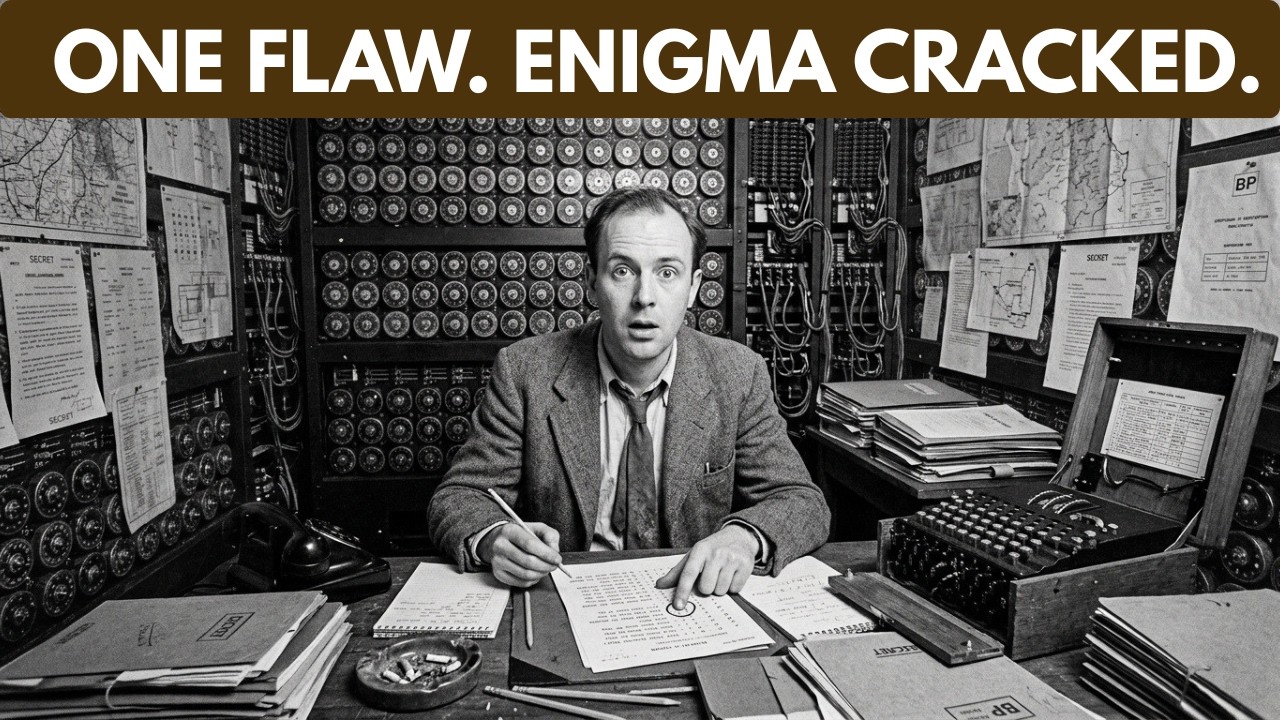

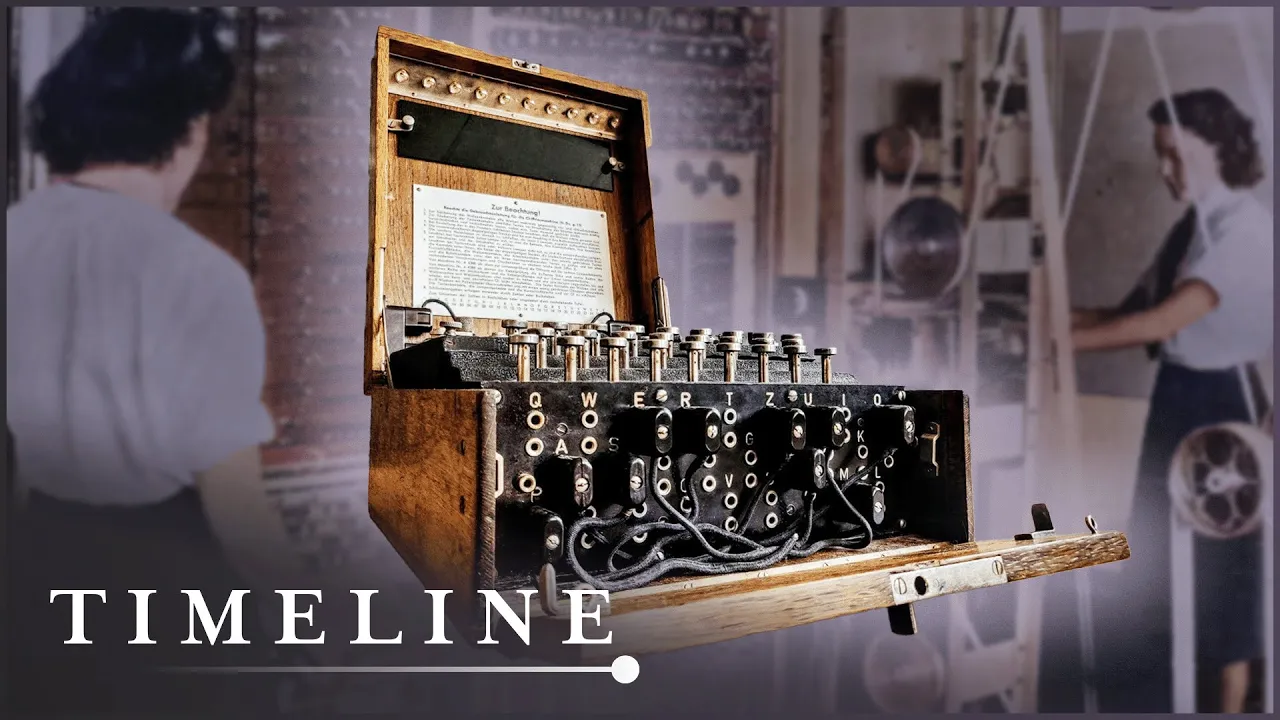




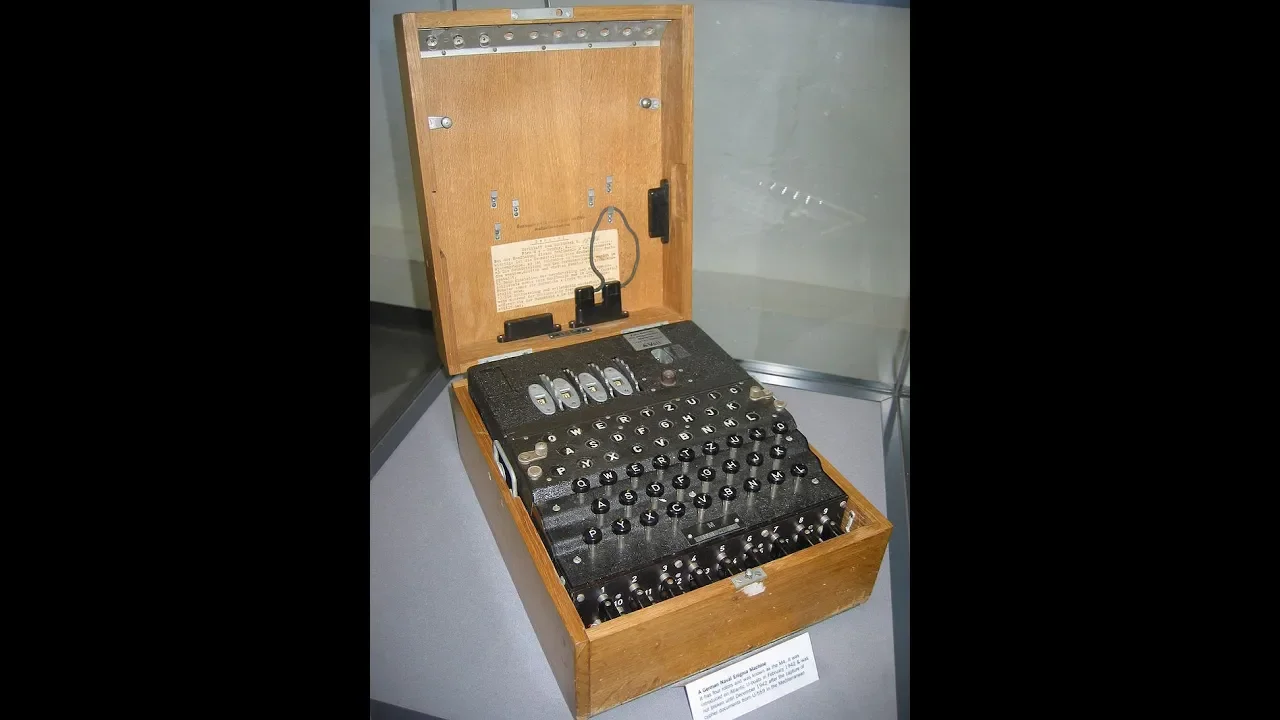
The Enigma machine was an electromechanical cipher device used by Nazi Germany during WWII to encrypt military communications. It worked by routing electrical current through a series of three rotors (each containing scrambled internal wiring), a reflector that redirected the current back through the rotors, and a plugboard that could swap letter pairs. Each key press caused the rotors to rotate, changing the electrical path and ensuring that identical letters were never encrypted the same way twice. This mechanical complexity created an astronomical number of possible configurations (approximately 10^23), making the code extremely difficult to break without knowing the daily settings.
Enigma Machine Mechanics: WWII Encryption Explained
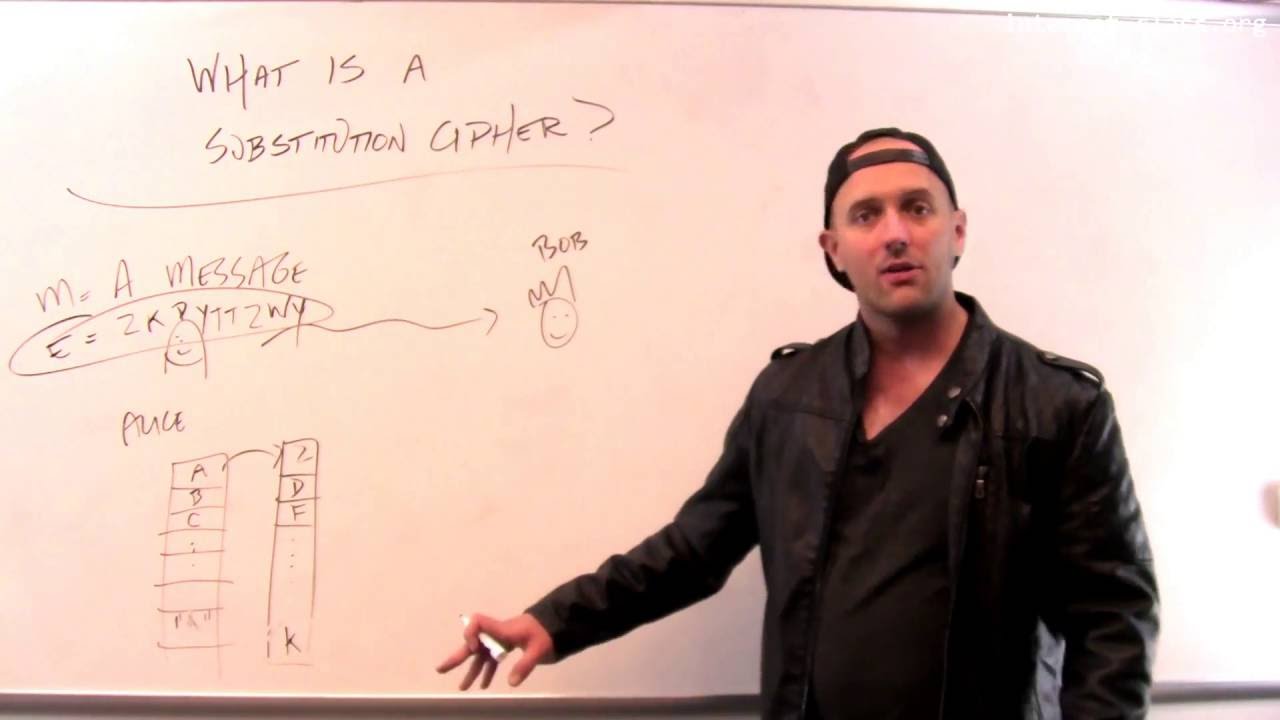
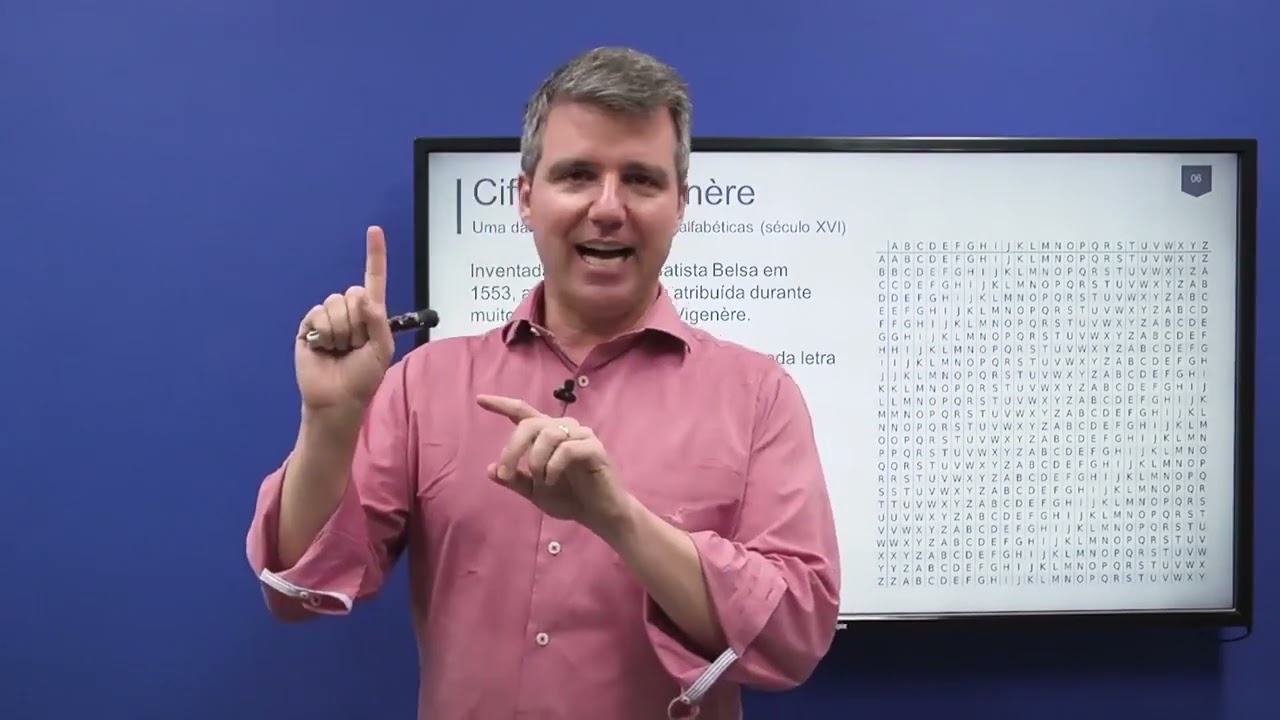
Added:Basic concepts of cryptography, specifically substitution ciphers and the concept of a key.
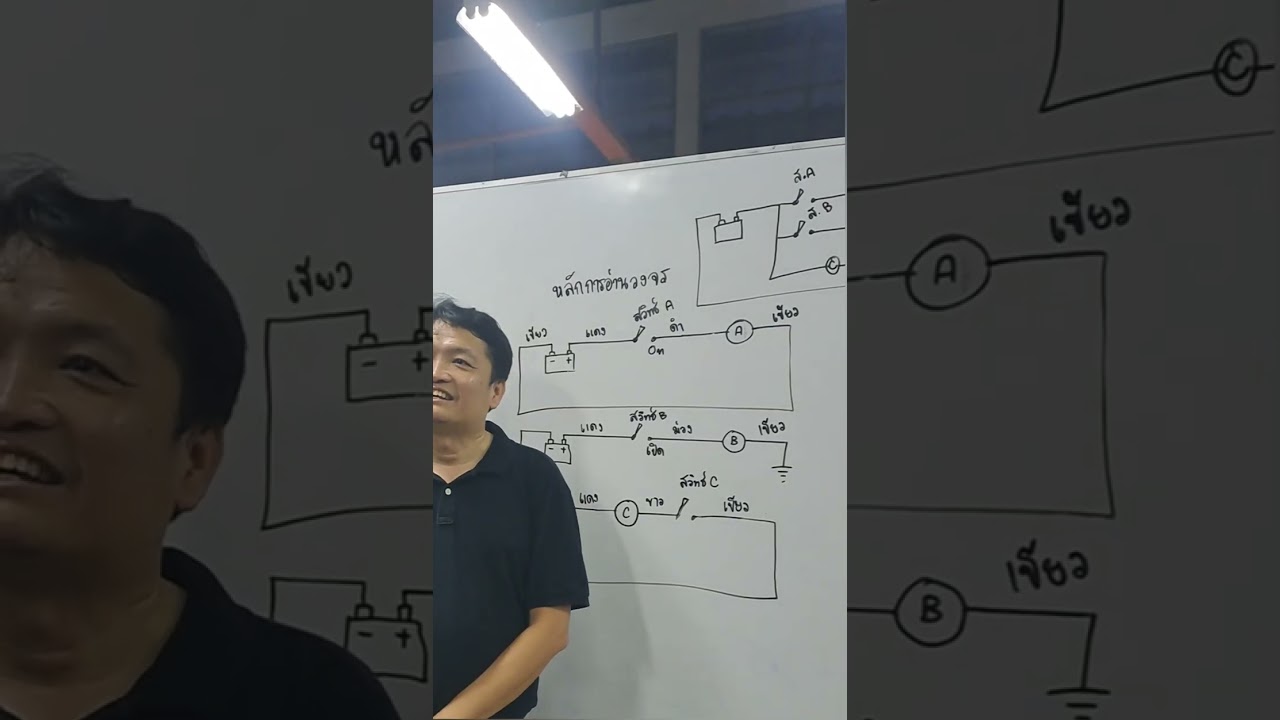
Fundamental principles of electrical circuits, including how closed loops and switches direct electrical current.
Introductory combinatorics and permutations to grasp how multiple moving parts create vast numbers of settings.
The cryptanalysis of the Enigma machine, including the exploits of Marian Rejewski and Alan Turing's Bombe machine.
The inherent cryptographic flaw of the Enigma (that a letter could never encrypt to itself) and how this 'crib' was utilized.
The development of more advanced wartime cipher machines, such as the German Lorenz cipher and the British Typex.
The transition from mechanical/electromechanical encryption to modern digital symmetric cryptography algorithms like AES.
13.2M views267.7Klikes19:25Original Release: 2021-12-11
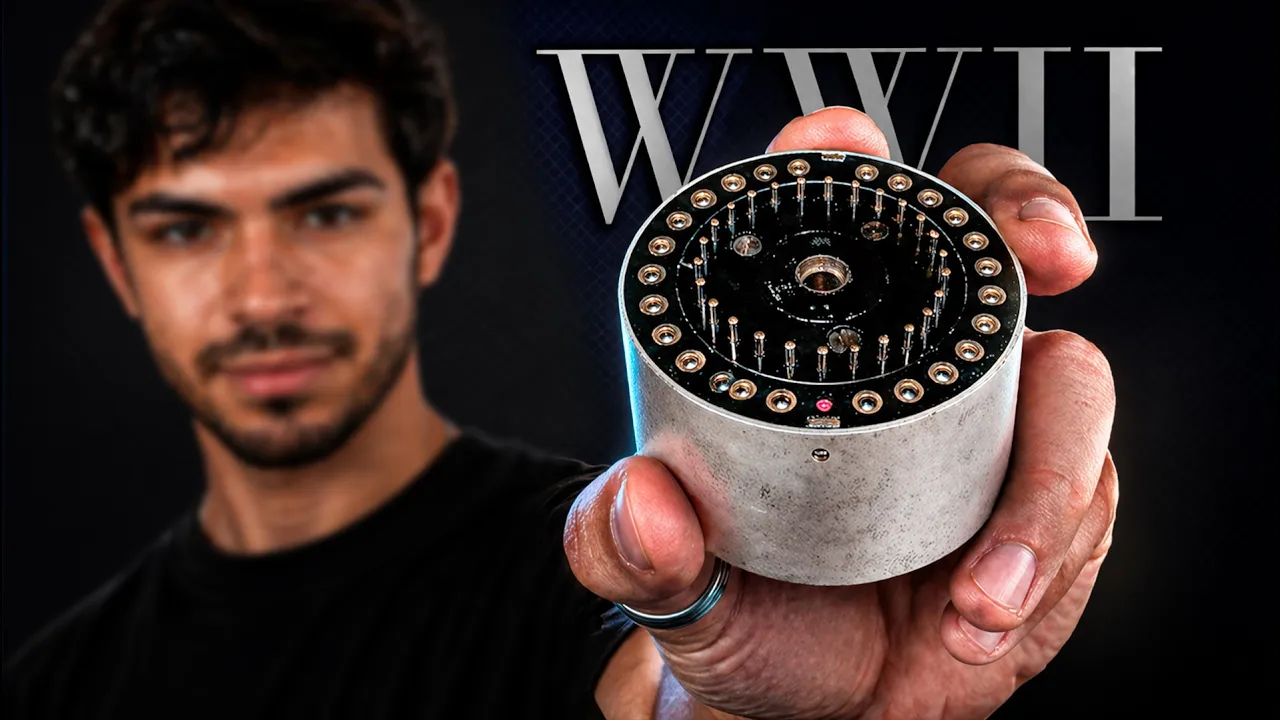
- [Jared] This is the Enigma machine.
It looks like a typewriter but it has a very different purpose.
During World War II it was used to keep messages secret or in other words encrypted.
In this video, we'll look at why the Enigma machine exists, how it was used and then we'll take a look at the inside to see how the mechanism works.
(electricity buzzes) This video is sponsored by Brilliant, a fun and interactive way to learn math and science.
Towards the end of this video we'll take a closer look at their website and app.
While making this video I had a lot of help from enigmamuseum.com.
These guys took a part in actual enigma machine and showed me what's on the inside, behind the panels, all the inside wiring and how each mechanical piece works.
This would have taken a lot longer to 3D model and animate without their help.
So big thanks to enigmamuseum.com and now let's get to some animation.
To really understand the Enigma machine we need to understand something called encryption.
Let's use an example.
Say we have two friends, Alice and Bob.
Alice wants to send a message to Bob however, Alice doesn't want anyone else to be able to read this message such as Eve.
Just as an example we'll keep the message really simple.
Alice will need to scramble the contents of the message.
This is called encryption.
It looks like a bunch of random letters and if Eve gets a hold of it then she won't be able to understand it.
When the message gets to Bob he needs to unscramble the message.
This is called decryption.
Now he can read the original message.
Alice and Bob need to agree on a way to encrypt and decrypt their messages.
A real simple way to do this is called a Caesar cipher.
This involves shifting all the letters in the message three spaces to the right in the alphabet so an H becomes a K, an E becomes an H, an L becomes an O, an L becomes another O, and an O becomes an R.
Now the message looks like gibberish, A bunch of random letters.
When Bob gets the message all he has to do is take each letter and move it back three spaces.
This will give him the original message so he can read it again.
Now Eve in the middle, as long as she doesn't know how the messages were encrypted she won't be able to read any one of them.
During war encryption is extremely important.
Commanding officers need to be able to get messages out to the troops on the battlefield but they don't want the enemy to be able to understand these messages.
Nowadays encryption is performed by computers but this wasn't always the case.
The Enigma machine was used to encrypt and decrypt messages.
You can think of this as a very sophisticated letter scrambler.
It was invented in the early 1900s and then most famously, it was used by the German military in the 1930s and throughout World War II.
This is the keyboard with 26 letters.
And this is the lamp board which also has 26 letters but these letters can light up.
Each time you press a letter on the keyboard, a letter on the lamp board lights up, but it will always be a different letter than the one that was pressed.
There are usually two people involved when the machine is used, one person to type in the letters and another person to write down the letters that appear on the lamp board.
Let's use our example from earlier.
Type in each letter and write down the letters that appear on the lamp board.
Now we have our encrypted message, the scrambled letters that nobody can read.
This message is sent usually by radio using morse code.
The person who receives this message also has their own Enigma machine.
To decrypt the message or unscramble it they type in the letters on the keyboard and write down which letters appear on the lamp board and out comes the original message.
The Enigma machine was used for both encryption and decryption.
The person sending the message needs a machine and the person receiving the message also needs a machine to be able to read it again.
So how does the Enigma machine know which letters to give you?
Maybe you press an A and outcomes an H.
How does it do that?
Well, part of the answer is electricity.
Let me show you a simple example.
We have a battery, some wires, and then something that uses electricity in this case, a light bulb.
This is called a circuit.
It's a closed loop for the electricity to flow.
But if there's a break in the wire, then the light bulb turns off.
If we put a switch in here, now we can easily turn the light bulb on or off.
There has to be a complete path for the electricity to flow.
Now let's add another path, one more switch, and a light bulb.
Now we can turn on two different light bulbs depending on which switch we turn on, there's a different path through the wires.
We could expand this even more, more switches and more light bulbs.
Now, this is predictable.
We know which switch goes to which light bulb, but what if we scramble these wires?
Now the switch for the letter A turns on the letter C light bulb and the C switch turns on the B light bulb.
This idea of scrambling the wires, that's how the Enigma machine works.
Let me show you on the real thing.
The battery is inside in the top right-hand corner of the machine.
The keyboard has 26 keys.
When you press one of them it connects a circuit which will then turn on one of these 26 light bulbs.
The light bulbs will then illuminate the letter that's directly above it on the lamp board.
When you release the key, the circuit is disconnected and the light bulb turns off.
Each key connects a different path which means a different light bulb.
Okay, this is the challenging part of the video understanding the circuit or the path that the electricity follows throughout the Enigma machine.
Maybe pause the video, get your degree in electrical engineering and then let's do this.
The three main parts that we need to understand are the rotors, the keyboard mechanism, and the plugboard.
Let's start up here with the rotors.
This machine has three of them.
This is where the letters get scrambled.
Let's take a look at one of the rotors.
You have the numbers one through 26 for all the letters.
So one is for A, two is for B, three is for C and all the way around until 26 for Z.
On the side you'll see 26 metal contact points.
There are also 26 on the other side too.
When you put two of these rotors together the metal contacts connect, making it possible for electricity to pass through.
On the inside of these three rotors you'll find lots of wires that connects the two sides, but as you can see, it's all scrambled.
So let's go through the pin for the number one.
Follow the wire through and it comes out the pin for the number four.
So in this case an A was changed to a D.
When electricity travels through one rotor it changes the letter once.
But remember, we have three of these rotors and they each have different wirings on the inside.
When electricity travels through all three of them it changes the letter three times.
Then at the end, we have the reflector.
This also has 26 metal contacts.
Inside is more wiring that connects the letters in pairs.
So it goes in as one letter and then comes out as another letter.
To the right of here is the input wheel.
It has 26 wires that go in and connects to the 26 metal contacts.
Let's put this all together.
Electricity flows through one of the 26 wires, let's say the wire for the letter Y.
Then it gets changed to a different letter at all three rotors.
Then it hits the reflector, which again, changes the letter.
And then it goes back through the rotors again which changes the letter three more times.
And it comes back out on a wire that represents a completely different letter.
And if you were counting, this means the letter was changed seven times.
Now, this is just an example of how the letters could get scrambled, but the path can and will change.
Each of these three rotors can rotate to 26 different positions.
When any one of the rotors changes positions this will also change the path of electricity making it very difficult to predict which letters are going to come out.
The 26 wires from the input will travel down the right side of the machine to the plugboard in the very front.
Now the plugboard was yet another way that the letters could be around specifically, you could swap two letters.
So let's say we wanna switch the W and the J.
You could take one of these cables here with plugs at each end and put one of them into the W spot and the other one in the J spot.
On the back side of the plugboard, you can see the individual wires going to the tops of each socket, and then out to the bottom of each socket.
Let's take a closer look.
This is the plugboard socket for the letter O.
If nothing is plugged into it the electricity flows in through the top, then through the shorting bar and then out through the bottom.
This means that the plugboard didn't change the letter.
It came in as the letter O and then it came out as the letter O.
When a plug is inserted, it pushes up the shorting bar so it doesn't connect anymore.
Now the electricity flows in through the top, out through the top pin of the plug, then through the cable and out through the bottom.
On the other side.
What came in as an O now it comes out as an E.
Often times, they would use up to 10 of these cables.
Notice how a few of these letters are still left without a plug.
Let's take a look at the keyboard mechanism.
Each of these keys is connected to a long stem beneath it.
They have springs that push them back up when you release the key.
the last row of keys have the springs connected at the top.
Right next to all of these keys most of the space is taken up.
These are the 26 key switches.
These switches are a little bit more complex than just the on-off switches that we saw earlier.
Let's take a look at just one of the switches.
This one is for the letter P.
The switch has three different copper colored tabs.
The wires are connected back here, and the flow of electricity is controlled from the other end.
When a key is pressed it comes down and hits the rubber end of the middle tab.
What this does is changes where the electricity can flow.
Before a key is pressed the top two tabs are connected, and after the key is pressed, the bottom two tabs are connected.
There are 26 key switches and here's all the wires that are connected to them.
The top tabs are connected to the light bulbs.
The wires go to the left and up to the corresponding 26 light bulbs.
The middle tabs connect to the plugboard.
They go through the wires to the right side of the machine and down to the corresponding letters on the plugboard.
A wire from the battery goes directly into the bottom tabs of each key switch.
So each switch has three different tabs and three different places where they are connected to.
Before a key is pressed the bottom tab isn't connected to anything so the electricity has nowhere to go.
This is true for all 26 key switches.
No circuit, which means all the light bulbs are off.
Now let's say we press the X key.
The battery and the plugboard are now connected.
This completes a circuit but it's not as simple as this circuit we saw earlier.
Let me show you a quick overview of the path of electricity.
Don't worry if you can't keep up quite yet, we're gonna go over each part one by one.
(mellow music) Let's take a closer look at each step.
Electricity flows from the battery to the bottom and then middle tab on the switch for the letter X.
Then it goes directly to the plugboard.
And in this case there's nothing plugged in for the letter X so it comes back out as the letter X, up the side and into the input wheel.
Then through three rotors, the reflector, and then back through the rotors again, changing letters at each step of the way.
What started as the letter X is now the letter K.
Now we come back to the plugboard for the second time.
The letter K is swapped with a C.
So in through the letter K, through the cord, and then out for the letter C.
Then travels from the plugboard back to the middle tab on the letter C key switch.
Remember we started as the letter X but then came back in as the letter C.
Then it goes out the wire of the top tab and up to the letter C light bulb.
Then the current flows through the metal light bulb plate to this tiny wire which connects back to the battery.
This completes our circuit.
As soon as the key is released no more circuit and the light bulb turns off.
So just to recap, once a key is pressed electricity goes from the battery to whichever key switch was pressed.
Then the plugboard, rotors, then back to the plugboard, then the key switch for our new scrambled letter, then the corresponding light bulb and then back to the battery.
The letter has changed seven times at the rotors, and then possibly two more times at the plugboard.
Remember that the letter isn't always changed when it goes to the plugboard.
Okay, the electric circuit was the hard part of the video.
If you made it this far, we're doing good, but there's a little bit more that I wanna show you.
Each time a key is pressed you'll notice that at least one of these three rotors will turn.
Press a key rotor turns, press a key rotor turns.
This means that if you press a key twice you'll get two different letters.
In fact, if you keep pressing the same letter a different light turns on every time.
This is what made Enigma so powerful.
The code was always changing so it was hard to predict which letters were going to come out.
The way these rotor spin is completely mechanical.
No electricity needed for this.
Even if the battery was taken out, pressing one of these keys would still turn the rotor.
On the bottom of the machine is a large metal plate called the actuator bar.
It works like a seesaw or a teeter-totter.
Pressing any of the keys pushes it down on this side, which pushes it up on the other side.
Around the backside is where the magic happens.
This uses a ratchet and pawl mechanism.
This is the ratchet gear.
And this small piece is the pawl.
When the pawl is pushed up it spins the rotor and then comes back down.
You can see how this would spin it in only one direction.
This up and down motion will keep spinning the rotors one slot each time.
The next two rotors work a little different.
Let's take a look at the second one.
Most of the time the pawl can't make contact with the ratchet gear teeth.
It's blocked by an edge around here on the first rotor.
The first rotor has a tiny notch around the side here.
When the rotor spins the notch travels around the edge.
Watch what happens when it comes up again on the other side.
The pawl will fit right into the notch and the second rotor is allowed to spin, but just once.
The next time it will be blocked again and only the first rotor is allowed to spin.
That edge on the first rotor has to go all the way around before the second rotor is allowed to spin again.
This will happen once every 26 key presses.
The same thing with the third rotor.
There's another edge on the second rotor that has to go all the way around before the third one is allowed to spin.
Last but not least we have the three levers on the very back with index wheels at the very end.
They ride along the outside of the rotor gear teeth.
This means that the rotors always stop spinning at the next number.
This is important so that the electrical contacts always line up between the rotors.
Before you use the Enigma machine, it would need to be configured with the right settings.
There are four of these settings to go through.
First is the rotor order.
Each Enigma machine came with a set of five rotors.
Choose three of them and then choose which order to put them in.
Then there's the ring setting for each rotor which is basically the shifting of these number wheels but that also includes the notch on the side.
This means this will change when the leftmost rotors can be advanced to the next number.
Then there's the starting position for each rotor.
You can set this to the tiny windows up here.
And the final setting is the configuration of the plugboard at the very front.
So everyone in the German army had these settings in advance.
They were distributed out by paper so they would know which settings to use on which day of the month.
Even if the opposing side has their own Enigma machine, they won't be able to read the messages unless they know the settings that were in use that day.
Some of the ideas behind the Enigma machine are complex and sometimes difficult to understand.
However, it may come easier to those that increase their ability to do math and science.
brilliant.org is a problem solving website and app that has over 60 courses in mathematics, science and computer science.
The idea here is to learn by doing.
They teach you a concept and then immediately you get to try it out in a fun and engaging way.
You can use Brilliant to help you as a student in school or as a professional or anyone who wants to keep their skills sharp.
There's a wide range of content and they're even adding new courses from time to time.
Instead of just learning a formula and blindly plugging in the numbers, you get to visually see why that formula works.
There's nothing quite so satisfying as when that light bulb goes off in your brain.
I like Brilliant because it shows that learning can and should be fun.
You can sign up for free by going to brilliant.org/jaredowen.
Also the first 200 people will get 20% off their annual premium membership.
(mellow music)
Up Next

17:44
Vigenere Cipher Decryption: How to Find the Unknown Key
@ddxfraxinusdne
331.2K views•2015-03-05

87:26
Introduction to Secure Multiparty Computation with Yehuda Lindell
@fhe_org
7.7K views•2021-02-04

4:55
HTTP Requests Explained: GET, POST, PUT, DELETE
@codecademy
103.1K views•2021-10-07
35:12
How QR Codes Work: The Science and Engineering Behind the Patterns
@veritasium
9.1M views•2024-09-30
Related Study Plans & Knowledge Roadmaps
Structured learning paths in Computer Science
computer-science
Container Runtimes: Namespaces, Cgroups & Go
01Linux Systems & Go Programming Foundations
02The Core of Isolation: Chroot and Filesystems
03Linux Namespaces: Process Isolation
+ 3 more learning modules
32h6 modules
Explore Roadmap
computer-science
Building a CHIP-8 Emulator: Rust & CPU Basics
01Computer Architecture Foundations (Bits & Bytes)
02Rust Programming for Systems Development
03CHIP-8 Virtual Hardware Specifications
+ 2 more learning modules
32h5 modules
Explore Roadmap
computer-science
Building BitTorrent: Go, P2P & Concurrency
01Go Fundamentals & Concurrency
02Networking Foundations & P2P Architecture
03Bencode Parsing & Torrent Metadata
+ 3 more learning modules
26h6 modules
Explore Roadmap
computer-science
Actor Models (C++ Concurrency & Lock-Free)
01C++ Multi-Threading Foundations
02Thread Pools and Task Scheduling
03Atomics and Lock-Free Queue Design
+ 3 more learning modules
45h6 modules
Explore Roadmap