
![[2019.03.12 Lesson4-session1]Neuroanatomy of Cerebral Cortex](https://i.ytimg.com/vi_webp/_nz4-rgzpRM/maxresdefault.webp)
















The mirror neuron system is a brain network that activates both when performing actions and when observing others perform similar actions, enabling us to understand and anticipate the goals and intentions of others by mapping their actions onto our own motor representations; this system is experience-dependent, meaning that expertise in performing an action enhances our ability to understand when others perform it, and it operates across species from monkeys to humans and develops in infants as they gain motor experience.
Understanding the Mirror Neuron System: How We Read Intentions
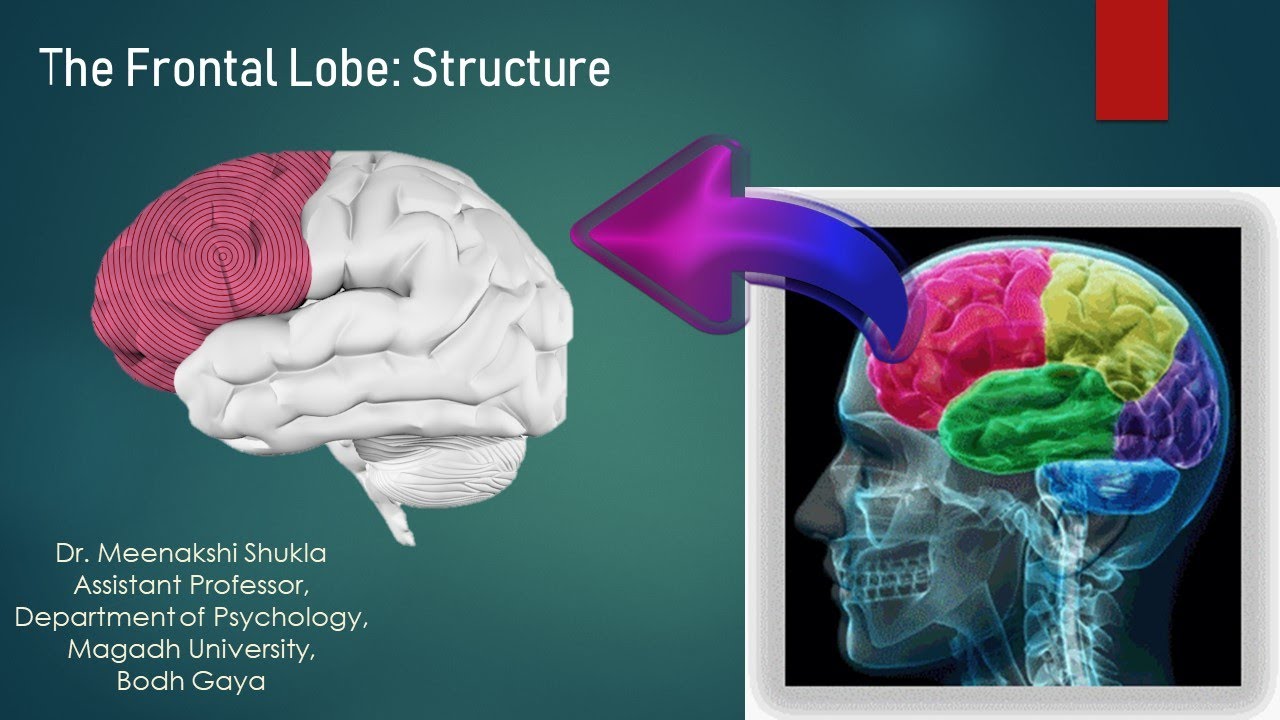
Added:Basic neuroanatomy, particularly the structure and functions of the premotor cortex and the parietal lobe.
The fundamental mechanism of neuronal communication, including action potentials, synapses, and motor pathways.
The cognitive concept of 'Theory of Mind' (ToM), which is the ability to attribute mental states to oneself and others.
The psychological distinction between visual perception (seeing an action) and motor execution (performing an action).
The 'Broken Mirror Hypothesis' and the debate surrounding mirror neuron dysfunction in Autism Spectrum Disorder (ASD).
The role of mirror neurons in empathy, emotional contagion, and the neurological basis of human social connection.
Clinical applications such as Action Observation Therapy (AOT) used in neurorehabilitation for stroke patients.
The evolutionary biology theories linking the mirror neuron system to gestural communication and the origins of language.
106.2K views1Klikes20:33Original Release: 2010-05-27
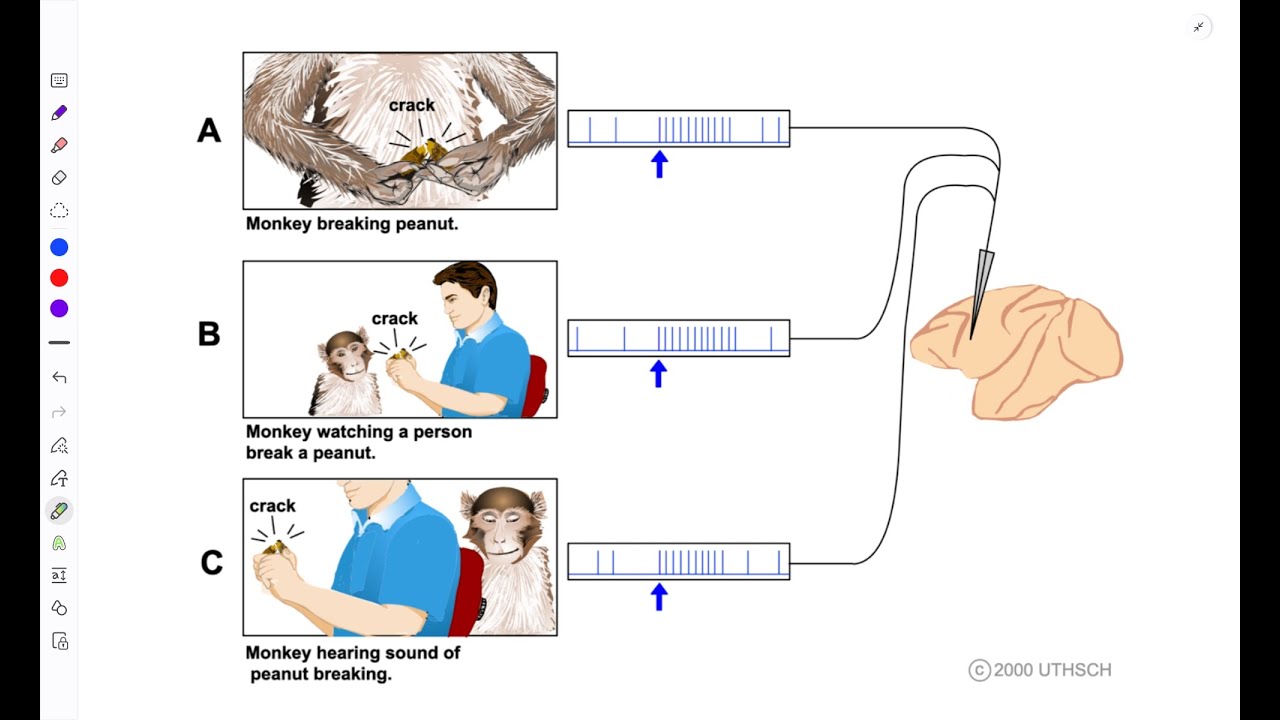
so I'm going to talk about the mirror neuron system it's a bit of a different topic than what we heard uh from the previous speaker uh now the mirror neuron system is a newly uh discovered network of neurons within the brain uh of primates and humans dedicating to understanding the intentions and goals of others so I'm going to walk through sort of the discovery of the mirror neuron system in order to try to communicate how it come that we're able to understand other people now I'm actually going to start discussing the single neurons within the primate brain and the reason why I'm going to do that is to use that as platform for describing And discussing action understanding in humans and babies okay so if you take a look at this picture above me here there are of course many ways in which this can be described um I'm thinking of two primary ways you could say that one of these girls are moving her hand towards the left approaching the cup blue cup yeah but that is not how this scene is particularly described or perceived by people generally most people would say that she's reaching for the cup while the other girl is attending to those actions and this is sort of the type of thing I'm talking about how we're able to make sense of this and attribute intentions and go directedness in other people people now in order to understand this we have to go back to the early '90s and a group of prominent researchers in Parma in Italy now they they were very much interested in investigating the motor cortex of of makok monkeys now the motor cortex is the part of the brain that is involved in processing action or movement so for example if I was confronted with an apple while being hungry the rest of the brain and my Consciousness will say to the motor cortex according to this standard uh Prem mirror neuron theory of motor development or motor processes would order the motor cortex to uh make the hand reach for the apple and put it into the mouth right so the motor cortex would would perform these make sure that we perform these actions now this in itself is not an easy task and it is a task that is well deserving of of many experimental studies and this group inment they were investigating single cells within this motor cortex by inserting uh small and highly sensitive sensors into the brain investigating activation of single neurons now the information was being fed to computer of course they could do fancy analysis of what was going on later on but for this story it's important to realize it was also fed to a speaker so whenever the uh uh monkey was performing a Reach For example the neuron would fire and you would hear that sort of a from the speaker now the legend goes then at one particularly hot summer day one of the Italian researchers was going into the lab where the monkey was living uh with an ice cream now I'm saying this is a legend because this is how I've heard the story and it doesn't actually mean that there was an ice cream or it doesn't mean that it was a hot summer day but regardless an Italian researcher was walking into a lab with a monkey who had these sensors put in to the brain okay now what was so surprising in this context is that whenever the researcher was eating his or her ice cream you heard the sound from a speaker in the background I assume the researcher turned around and looked at the monkey was sitting like this maybe like this I don't know but the point is anyway that the monkey was not performing any action and despite of that these neurons within the motor cortex of its brain was being active and F Ing and this was the start of a sort of a revolution in how we perceive the brain these these this part of the brain that was assumed to be involved primarily in executing actions turned out to also be involved in understanding or firing when perceiving someone else perform a Ty kind of action now there's been tons of studies on this topic and as I said these turns out that all of these neurons in the motor cortex and in associate areas fire when a monkey reaches for something other neurons fire when the monkey puts something in his mouth and also when they perform different kind of communicative acts like lip smacking now some of these neurons about 10 to 20% also fire when they see someone else do the same type of action some neurons fire only at a particular type of action that relates to sort of only during breing um precision grip like this or other neurons fire to larger range of different types of actions now why am I going on about these single neurons within the monkey's brain um it's because I want to move over to humans so having known having discovered that there are the this system that is active both during action execution and action observation uh people turn their focus to adult humans now when you're studying an adult human you can't put a sensor into the brain of normally normal healthy healthy adults so you have to use different techniques in order to investigate if there is such a thing as a Mir neuron system and if you want to investigate what it's all for so one way of doing this is to turning to fmri I skipped the slide there but we'll just have to live with that uh now here on the side you can see a human brain now and three different areas being highlighted with color and this demonstrates what uh which areas of the brain become particularly active in a human when that human is observing hand actions mouth actions and foot actions now these same areas are the ones that become active when uh the person performs these actions themselves so it seems like there is this sort of similar type of system within a human that Maps other people's actions onto their own motor system now I'm going back to the slide I forgot to mention one thing that is very fascinating about these neurons regardless of whether they are in in monkeys or in their humans is that they they don't only encode visual features sort of the the the the the sight of reaching hand or foot kicking or something like that but they actually encode the goal of that action and that is that is the important thing I guess to mention uh and they're to some degree abstract for example in um in the Maco you have the the neurons firing when the monkey puts something in the mouth when they see someone else performing the same action but the same neuron might also fire with with the sound of a peanut being cracked because that is something that is can be Associated to the goal of eating so there's something about this system that helps us understand gos and's intentions when it comes to humans so I'm just jumping back and forth there a bit the same system is turns out to be highly experience dependent now this is a key to understanding why we have this system at all now experience dependency in this context means that when I'm good at performing a certain action I have a strong representation of that action within my own brain and that means I'm able to use that strong inter strong activation in the brain to make sense of other people's actions so knowing something well makes me better able to understand others performing that same action this is an example of this I don't know how well it can be seen these are two sort of U turning moves on the top being performed by a classical Bay dancer and on the bottom it's the same Ty of type of move but in this turn it's a it's a martial arts kick being performed by an expert at capua now they look fairly similar these two actions but they're actually quite different in terms of the motor components that are being involved in in performing them now when you present these two to experts in capera and ballet it turns out that the ballet dancer have a much stronger activation to seeing the ballet move but not to the capier move and the reverse obviously compared to me that don't have a clue about any of these things I have some activation but not at all as high as those that uh are experts in this suggesting to some extent that there is a stronger understanding of other people's actions when you know how to do the action yourself now this has been demonstrated even more directly in other type of studies where uh adults watch someone picking up pieces of oh p with chopsticks moving them from one place to another When You observe someone do that you get a Lo a lot of activation in your brain in the area that will be involved in your own manual actions now the amount of activation yet you get correlates and is related very strongly to the degree of your own experience doing that so someone who has been eating sushi two times a week for example has a lot stronger activation when watching someone else perform shop sticks moves than someone who's only done it once a week for the last year again demonstrating a high experience dependency in the ability to relate to others now these systems also extremely flexible and a very nice study came up a few years ago investigating miror neurons in adults that don't have arms so if you're born without arms how do you make sense of other people's actions manual actions at a very flat rate you could say that well they shouldn't understand anything because they don't have any arms so they shouldn't have anything to understand with you know but it turns out that when if someone without arms watch a manual reach like this they coat it with their legs so the part of their brain that are involved in in moving the legs and the feet become active when they see someone reach assuming again that you you take the function of the action and you represent that within your own motor system who cares there are all these neurons firing you know when you see someone do something and it's it's it's coded by goals and if you don't have arms you do it with the legs but why you know what's the function of this system well there are a few ideas out there some are crazy some are not so crazy I'm going to try to argue for in one particular interpretation of why we have a Mir neuron system or not rather why that's that's probably wrong but what it's for why do what do we use the Mariner system for and in order to explain that I need to go through one more study and it's a study about basketball and I'm get a bit reluctant how to do this because I I have no idea of anything about basketball my brain would not be very active uh in this task but um imagine that you watching a movie of a basketball player dribbling a ball throwing it into the basket basket thanks I meant to look that up so I was thinking we're waking up this morning I have to check that word what is it is is a cage or basket what is it but now I know it's a basket thanks uh right so he throws the ball into the bucket at some point in time this movie freezes and the subjects watching this are asked so what's going up to happen will he be able to put the ball in the basket or not now if you would ask this question to a sports journalist who's dedicated his whole life to watching basketball they actually did this he has to not only see the manual action or the the full body action but he has to see the ball moving towards the basket in order to be able to extrapolate what's going to happen and predict whether the ball will go into the basket or not now the same is true for couch potatoes like myself or I wasn't in the study but other couch potatoes uh watching this would have to see the ball move towards the basket to sort of accurately adjust assume whether the ball would make it or not now when you have expert basketball players watching this they don't need all this information they just need to see this and if you freeze the well assuming that there is a ball here right there is a ball here right now they only need to see the manual action or the manual I'm saying the the action of the body in order to to accurately estimate whether the ball would hit the basket or not so they're able to use information that is within the action that they see to anticipate a future event now that is based on experience and that is what I'm assuming is based on the miror neuron process so what I will try to argue is that the miror neuron system is involved in anticipating other people's actions now in order to go further and and sort of describe what I mean here I'm going to talk about babies now there are two reasons why I do this I'm a baby researcher so it makes it only natural that I will try to sneak babies in here at some point or another now there is also another reason it's it's that it's a good example of what I'm trying to say so it turns out that babies have miror neurons how do we know this well again you can't use the same technique techniques described before you can't put a baby in an F fmri machine for example and you can definitely not record activation of single cells within an infant so what you do is that in this case we have put on a net of electrodes that measuring the electric activity from the brain it's called EG and when you do this on in this case a six-month-old uh you can see the same type of activation occurring when the baby would perform for example a reach and when the baby sees a reach we don't have to go into the technical details about what that is but it's a called me desynchronization it's irrelevant for this context but it's important to know that they actually have a similar type of mirroring uh within their brain and it's also experience dependent so infants who are good at crawling now a bit older infants uh have a stronger activation within their uh motor system when they're see when they see someone crawling than babies who have little experience or no experience crawling so there seems to be the similarity between the adult mirror neuron system and the single mirror neurons of the monkeys but babies don't only have a passive uh activation of of of a mirror neuron system which is a bit vague it turns out that babies like adults actually anticipate what is going to happen next now to back up a bit anti ipation is a central component of everything we do for example if I move my feet forward like this without anticipating this my body feels that when I do knows that when I do this the center of gravity will change and if I don't anticipate that by moving my body backwards before leaning forward with my foot I would just fall flat on the stage okay the same is actually true for this just basically fall on my side so for any type of very simple action the body is always anticipating what is going to happen next the the same is true actually when when you perform simple actions like um uh getting a coup of coffee in the morning think about this in this evening when you're having dinner for example and sort of just passively try to think about what you're watching now what you definitely will do is look at the glass before your hand has arrived and that is an anticipation of your own actions right we always do this and it's actually the same when we watch someone else so if having dinner tonight with someone else just lean back and see what they're watching and you will I can guarantee you what will happen is that their eyes or your eyes would go to their wine glass or coffee glass whatever before the hand their hand arrives there so we always anticipate the goal of others actions and there are many reasons for this one is of course to be stay ahead and be able to have a normal and smooth interaction with others it also help helps us to overcome the internal motor the lag of the inter of the motor system because it takes time for the brain to to calculate stuff so you need to be one step ahead otherwise you would always have to sort of correct yourself when you're uh doing different things and the same thing occurs in babies so in this particular case you see one of these girls eating pieces of banana with a spoon now we present this to a six-month old baby who have experienced putting stuff in their mouth they're actually these these infants are actually looking at the mouth of this person before this food arrives now we know this because we are able to measure where infants are looking with eye tracking technology uh which is just basically a fancy name for a camera recording uh the infant's eyes uh so we can calculate where they're looking but the babies do this but they don't do this if this is an action that they cannot I'm pointing there I'm should point over here because I have a screen there but anyway if we instead present the same age infants or for that matter the same infants with the spoon moving on its own to the mouth not displaying any manual actions uh infants don't anticipate that and if we demonstrate to infants uh a person taking a a comb and combing their hair which is something that six-month olds do not do for very many reasons one of them being lack of hair um they they're not able to anticipate that either so it does demonstrate that there is the same type of experience dependency in infants in infants ability to anticipate the goal of other people's actions now if we do this instead she suddenly takes the spoon and puts it towards the other person six-month olds can't anticipate or 12-month olds in sorry infants have to be 12month old in order to anticipate this and we assume that this has to do with the fact that infants have less experience being fed than putting stuff in their own mouth so we've actually measured this and it turns out that in this particular study 193 days of experience being fed is required for babies to anticipate this action but once they've reached this threshold they look at the mouth of this other person before the spoon arrives now what I'm trying to argue here is that what we're actually tapping here though indirectly is the very same underlying principles that we saw in adults and in the makok monkeys which is the mirror neuron system taking the motor representations that you have and using those to make sense of other people's actions and this would be true for six-month-olds it would be true for 12month olds for adult humans and Ma monkeys in order so the Mir neuron system I'm suggesting help us understand and anticipate the goal of other people's actions allowing us to understand others as ourselves thanks [Applause]
Up Next
16:51
How the Brain Reads Another Person's Mind | Rebecca Saxe
@TED
570.6K views•2009-09-11
21:55
Deciphering Neural Circuits Controlling Anorexia in Mice | Richard Palmiter
@AllenInstitute
2.3K views•2011-10-10
11:35
Heart-Brain Connections: Science of Interoception and Empathy
@TEDx
24.2K views•2018-01-23
13:03
How Exercise Benefits Your Brain: Science Explained
@TED
11.4M views•2018-03-21
Related Study Plans & Knowledge Roadmaps
Structured learning paths in Neuroscience
neuroscience
Appetite Regulation: Brain Circuits & Hormones
01Foundations of Endocrinology and Brain Anatomy
02Introduction to Energy Homeostasis
03Peripheral Signals: Leptin, Ghrelin, and Insulin
+ 2 more learning modules
14h5 modules
Explore Roadmap
neuroscience
Neuroeconomics: Value, Risk & Brain Mechanisms
01Foundations of Neuroscience and Brain Anatomy
02Introduction to Neuroeconomics and Subjective Value
03Dopaminergic Prediction Errors & Reinforcement Learning
+ 3 more learning modules
18h6 modules
Explore Roadmap
neuroscience
Spatial Navigation: Cells, Grids & Brain Maps
01Foundations of Brain Anatomy and Memory
02Place Cells and Head-Direction Cells
03Grid Cells: The Brain's Coordinate System
+ 2 more learning modules
12h5 modules
Explore Roadmap
neuroscience
BCIs: Neural Decoding & Prosthetic Control
01Neuroscience Foundations: How the Brain Signals Intent
02Signal Acquisition: Recording the Brain's Activity
03Neural Decoding: Translating Brain Waves into Data
+ 2 more learning modules
25h5 modules
Explore Roadmap