




























Trauma is not defined by the event itself but by how the body responds to it; when overwhelmed by fear, the primitive survival brain automatically triggers fight-flight or freeze responses that continue long after the danger has passed, causing lasting physical and psychological damage. Effective trauma treatment requires addressing the body's response through methods like EMDR, yoga, and psychedelic-assisted therapy, which help integrate traumatic experiences and restore the connection between mind and body, rather than relying on conventional pharmacological approaches that often prove ineffective.
Bessel van der Kolk on How Trauma Affects the Body and Brain
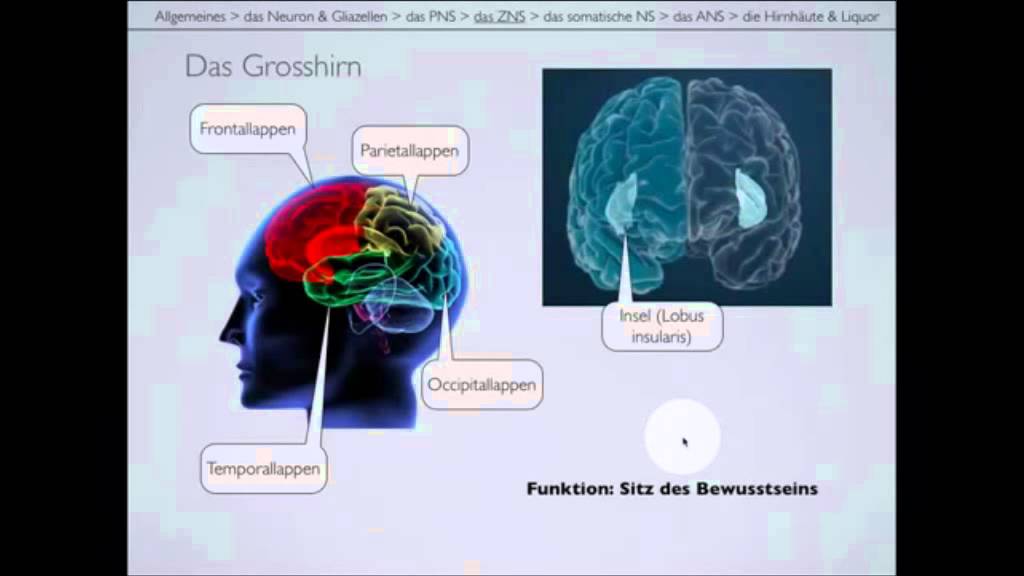
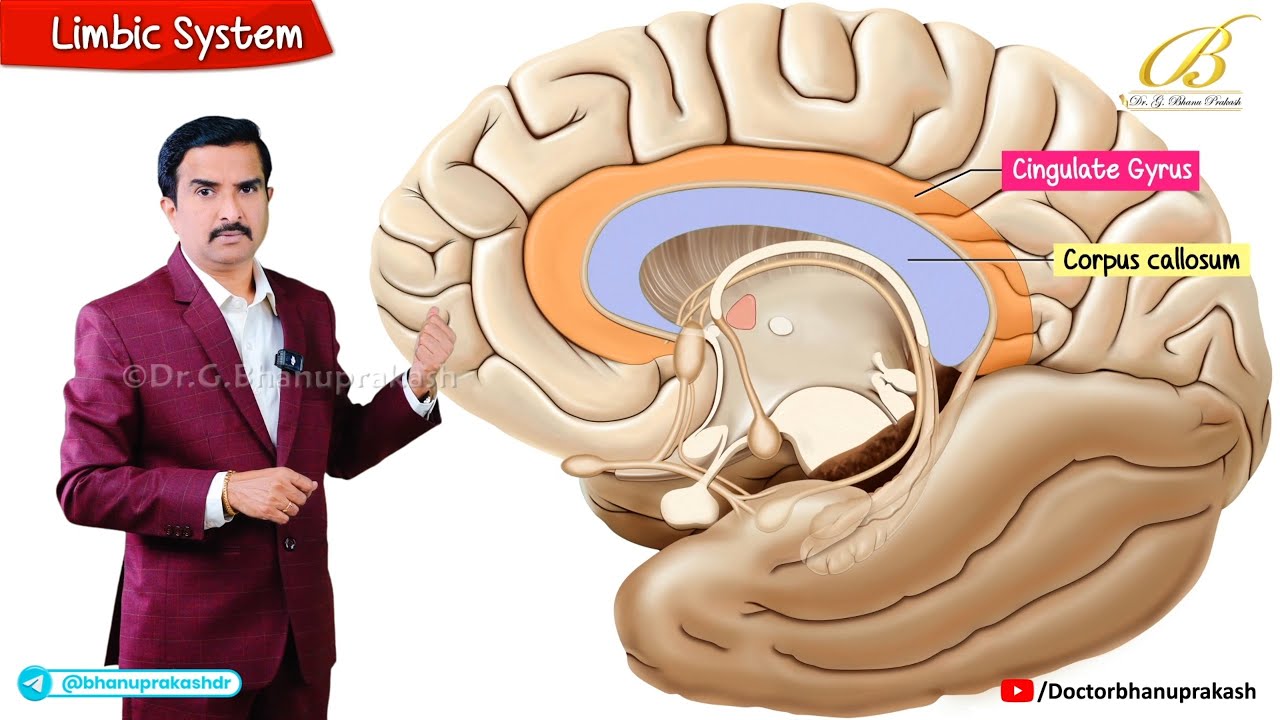
Added:Basic neuroanatomy, particularly the functions of the amygdala, hippocampus, prefrontal cortex, and the autonomic nervous system.
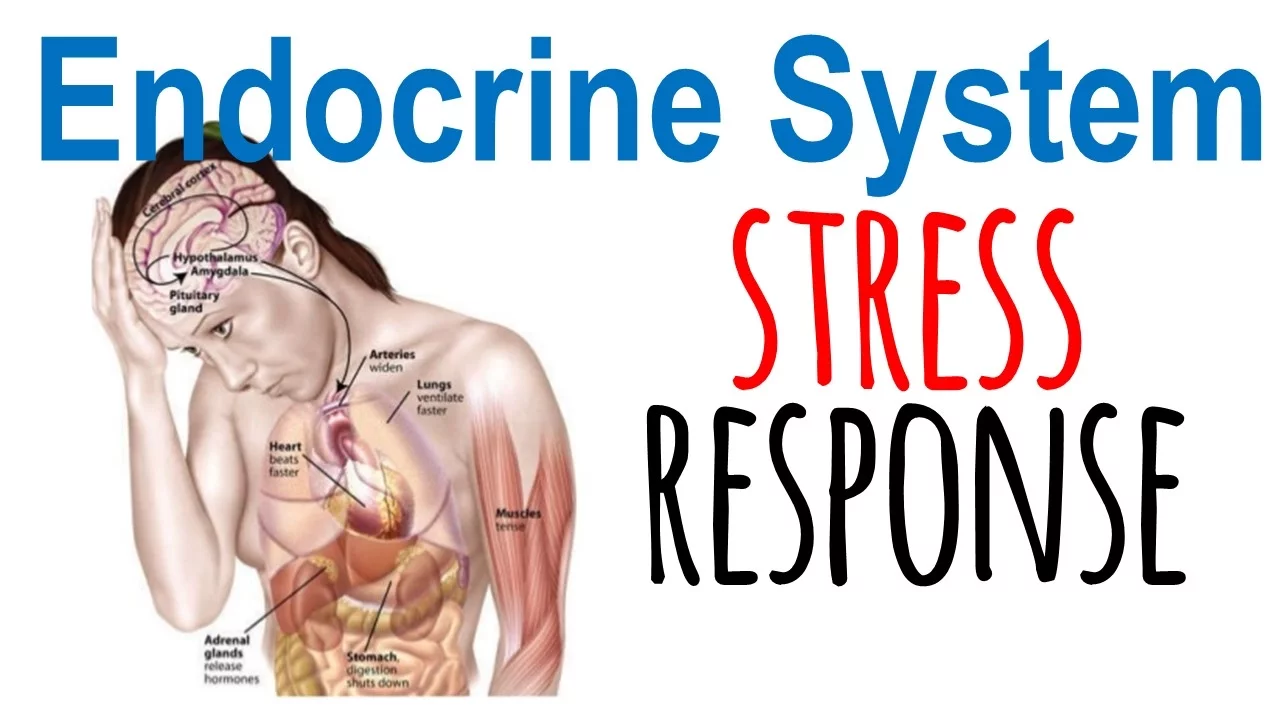
The physiological basis of the stress response, including the fight, flight, or freeze mechanisms.
An introductory understanding of Post-Traumatic Stress Disorder (PTSD) and how trauma is traditionally defined in clinical psychology.
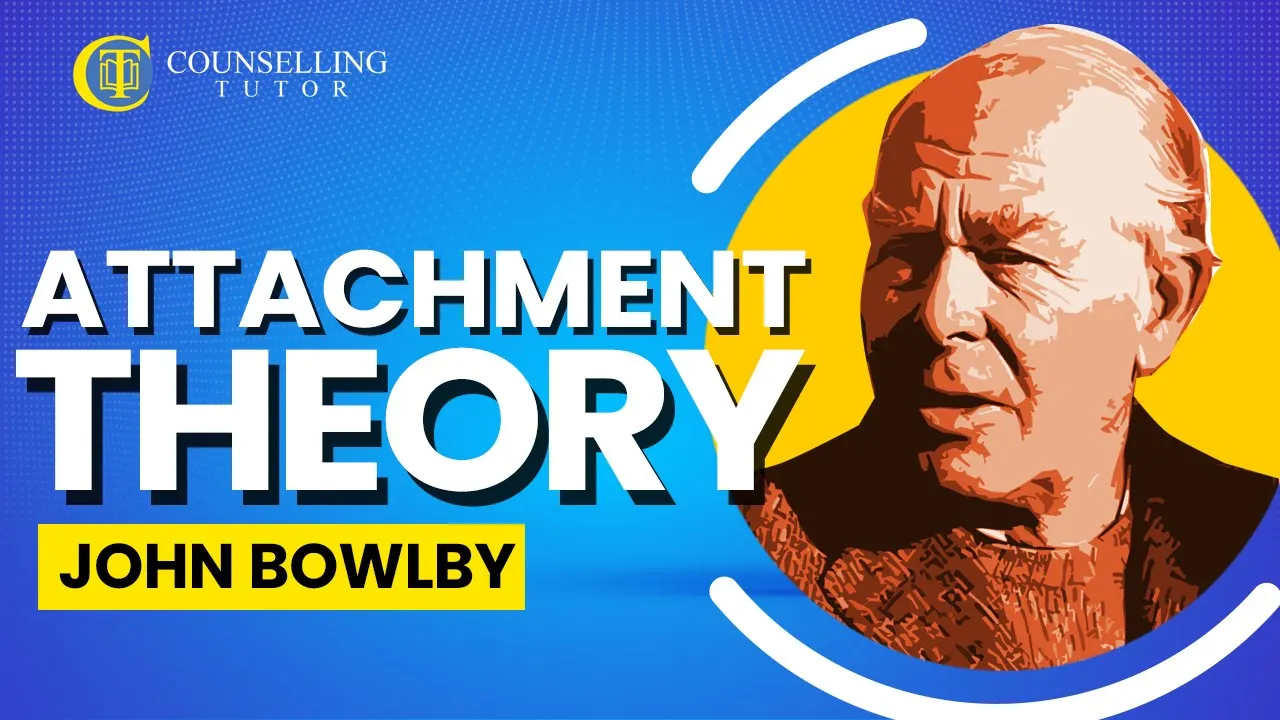
The fundamentals of Attachment Theory and how early developmental experiences shape lifelong emotional regulation.
Somatic therapies and body-oriented healing modalities, such as Somatic Experiencing and Sensorimotor Psychotherapy.
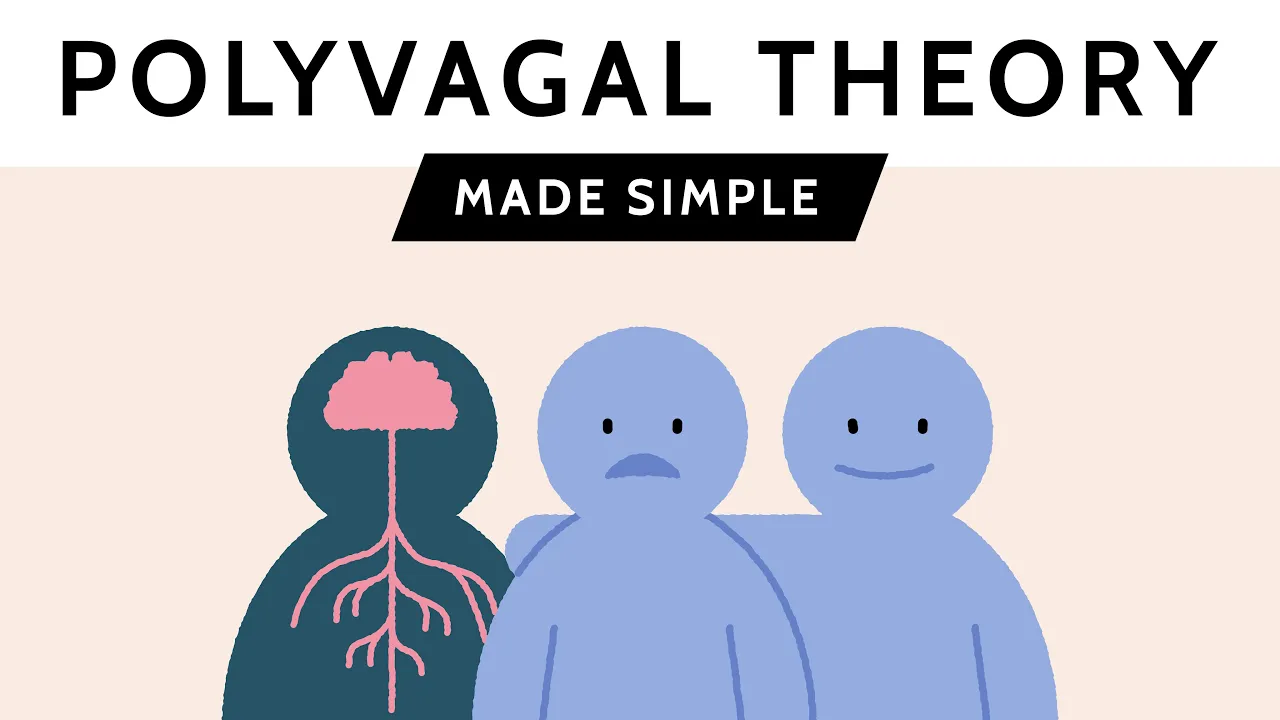
The Polyvagal Theory (Stephen Porges) and its framework for understanding safety, danger, and life-threat responses.
Evidence-based trauma treatments including EMDR (Eye Movement Desensitization and Reprocessing) and Internal Family Systems (IFS).
The concept of intergenerational trauma and the epigenetic transmission of stress across generations.
The clinical application of neuroplasticity in rewiring neural pathways through mindfulness, yoga, and expressive arts.
226.3K views8.9Klikes59:11Original Release: 2025-10-03
- In the preamble to the definition of PTSD, we write, these people have been exposed to an extraordinary event that's outside of normal human experience.
So it turned out that this is not an unusual experience at all.
The trauma is not the event that happens.
The trauma is how you respond to it.
The degree to which when you're traumatized, your body keeps mobilizing itself to fight.
You have all kind of immunological abnormalities, you have endocrine abnormalities, and that really devastates your health, your physical health.
Has a long range, oftentimes the physical problems are longer lasting than the mental problems.
(classical music) One of the largest mitigating factors against getting traumatized is who is there for you at that particular time.
I did the first study on Prozac for PTSD, the first study for Zoloft for PTSD and a number of other conventional drugs.
What we found is it didn't work very well.
Hi, my name is Bessel van der Kolk.
I'm a psychiatrist, neuroscientist.
Your author of the book, "The Body Keeps The Score".
- Chapter 1: Trauma explained - I got interested in trauma on my first day working at the Veterans Administration.
By the very first day that I met Vietnam veterans, I was just blown away.
These were guys who were my age who were clearly smart and competent and had done very good things; flying helicopters and running boats, and doing good stuff in the military.
And they clearly were just a shadow of their former self.
And what particularly intrigued me is that they had nightmares apart what had happened and also that they kept referring back to that dead comrades.
Their heart seemed to be with the people who were no longer around.
And what struck me immediately is they had a very hard time connecting with new people after the war.
What also struck me is how their bodies were clearly affected by trauma.
These were guys who used to be athletic, in other words, who were slumped over and they were uptight and their voices were uptight, and they were sort of passive much of the time.
And then people told 'em something that was disappointing and they went from zero to 10, and blew up and became extremely angry.
And it was just at the time that we were having two small children who were a little bit like that.
You know, there were little babies go from zero to 10, but I know when a baby becomes very upset, within 10 minutes you could sort of hold them and calm them down.
And these soldiers were very much like little babies except the stuff that's supposed to happen to allow you to not overreact to the minor things seemed to have been destroyed or something seemed to have happened to them that made it very hard for them to modulate their responses to the their environment.
And what is also really striking is that they had a hard time being anyway meaningfully involved in the present.
They had a hard time loving their wives and girlfriends.
They had a hard time really connecting with their kids.
So if something seems to have been destroyed by their capacity to engage and possibly even to learn new experiences.
1978 was the year that I first saw veterans.
And that was also the time that my colleagues and, I soon, joined them, started to think about how is what these guys suffer from different from what other people who are in secular textbooks, because clearly they were different and I couldn't find the textbook to describe them.
Around that time that I first started to work for the VA, a group of us started to define what trauma is and started to define what happens to people.
In the preamble to the definition of PTSD, we write, these people have been exposed to an extraordinary event that's outside of normal human experience.
And in retrospect, that shows us how ignorant and narrow minded we were because it turned out that this is not an unusual experience at all.
That one out of five women in America has a history of sexual molestation.
Even a lot of men have history of sexual molestation.
One out of four kids get beaten very hard by their parents.
One out of eight kids see physical fights between their parents.
When we started to work with inner city kids, the amount of trauma that these kids experienced was just on unspeakable.
So somehow we had managed to turn a completely blind eye how what happens in people's environment creates the mind and creates who people become and creates certain forms of pathology.
It was a real wake up call and there was a lot of debate of what a trauma is to this day.
And even sometimes when I define it in the way we officially do, people still don't like what I say.
But basically what the trauma is is something that happens to you that makes you so upset that it overwhelms you, it freaks you out and you cannot, you just stand there or sit there, lie there or whatever, and you are at a loss, what to do.
You feel terrible, helpless, hopeless, and you collapse.
Basically, there's an internal state of, "oh my God".
So it's not somebody being mean to you or nasty to you or it is really bad stuff, but the trauma is not the event that happens.
The trauma is how you respond to it.
Let me give you an example.
As a medical student, I was trained to deal with all kind of very difficult situations.
And I remember vividly during my internship that a kid was brought in a-little child- with third degree burn wounds all over his body.
But I was trained as a medical student about what to do.
So rather than freaking out, I thought, okay, I need to get my IV going, I need my fluids going.
I focused on what to do.
So that exposure to these horribly burn kids was not the trauma for me because I was not paralyzed in my actions because I'd been trained to deal with it.
And of course that happens to policemen, that happens to people in the service, it happens to physicians, nurses, etcetera, is you get trained on what to do and not to get overwhelmed by your feelings, but to actually be able to continue to act and do something.
And when you're traumatized, you just are unable to do anything.
It's a subjective experience.
And what may be traumatic for you may not be traumatic for me, and vice versa, depending on our personality and our training.
An event becomes traumatic if your response is, "oh my God".
And when there is nothing you can think of, you can do to stave off the inevitable where you basically collapse in state of confusion, maybe rage, maybe collapse because you are unable to function in the face of this particular threat.
An event like that may not become a trauma in the long range.
If at the moment that you collapse, other people around you come over and say, oh, I see that you're really in bad shape, let me help you.
Let me take over for you and do things that you cannot do yourself.
And so the greatest protector against the trauma is the people around you whether they're able to protect you and to do what needs to be done or whether the people around you actually make it worse by continuing to do terrible things to you or blaming you for your responses.
Trauma is actually unlike what we first thought, extremely common.
At least one out of eight kids in America witness physical violence between their parents.
A larger number of kids get hit in very nasty ways by their own caregivers.
A very large number of people in general, but women in particular, have sexual experiences that were clearly unwanted and that left them helpless and befuddled, confused and enraged because they had no choice about what they were doing.
These experiences extremely common.
So people usually think about the military when they talk about trauma, but I like to say somewhat outside scientifically, that's for every soldier who gets PTSD in the war zone, there's these 30 children who gets traumatized at home.
The nature of trauma is that an experience enters into your ears, into your skin, into your eyes, into sensations, and it goes down into a very primitive part of your brain that automatically interprets what is going on.
That's not your frontal lobe.
What your frontal lobe, your conscious cognitive self; that is a later issue.
The first thing is a somatic response.
So something happens to you, your survival brain makes the first interpretation and says, is this dangerous or is this safe?
That decision is made for you by that primitive survival brain.
And that's what we learned a lot about when we study trauma is the power of that primitive brain, which occupies a very large part of our brain that really automatically makes decisions for us.
And on the basis of the messages we get from our body, our cognition interprets in a particular way depending on our prior experiences.
But the message come from our hormones and our physiological impulses that have to do with survival.
We are talking about staying alive.
And so when you're being raped or you're being beaten or you see your parents getting killed, your body starts automatically going to a state trying to make yourself survive.
One of the states is going to fight-flight, to get up and to punch people and to become very angry.
And that's oftentimes when people are traumatized, they'll fight-flight responses continue to get activated in response to situations where people, their environment says, hey, hey, cool it, this is not so bad.
But people have these automatic responses or on a more primitive level even, is that people's brain shuts down and they lose track of themselves and they basically make themselves disappear.
Very much like animals can do that also in the wild because they can sort of collapse and play possum as it were.
And playing possum is exactly what happens to people also.
And when you beat a kid enough, that kid starts collapsing and no longer respond to this environment.
And so it is either fight-flight or collapse, none of which have anything to do with cognition.
And doing cognitive therapy with that is really a misunderstanding of what happens with traumatized people.
They have automatic responses and they don't have these responses because they're stupid or because they don't understand what's going on.
Most people actually do understand that their reactions are completely out of whack.
They don't need to be told that, and but because they react in such an extreme way, they feel deeply ashamed about themselves because they say to themselves, I'm a nut cake.
I screamed at people.
I collapsed when I had to stand up for myself.
And so you have these automatic responses that are not a product of your cognitive assessment.
They're product of your animal brain trying to stay alive in the face of something that that part of your brain interprets as a life threat, even though people around you by now go, this is not a life threat at all.
We come into the world being able to do what little babies can do and what can little babies do?
They can breathe, they can sleep, they can suck, they can feel hungry, they can poop, they can pee, they can cry, and that's about it.
And so we call that the housekeeping of the body.
Little babies already can do that.
And little babies, the system would get very activated.
So babies will scream and they'll cry, and they'll look catastrophic, and then the people around them pick them up and soothe them and calm that part of their brain down.
Much of the imprint of trauma is in a very primitive survival part of your brain that's already in place in little babies.
In fact, what the research recently has been showing this little area way, just way this base of your skull, periaqueductal gray, that I like to call the cockroach brain as a part of you that just picks up what's dangerous and what's safe.
And now it turns out that when you're traumatized, that little part of your brain, which is usually very quiet for most of us, continues to just send messages to you when you're traumatized.
And so there's always this sort of message you get from deep down inside of your body of I'm in danger, I'm not safe.
So you're always uptight, always on alert, and you spend much of your energy trying to suppress those feelings of fear in order not to embarrass yourself in order to be able to work with what you do.
And so it's very primitive.
And then on top of that middle of the primitive part of your brain, you develop a limbic system.
And your limbic system basically creates an internal map of the world that tells you what out there is safe, what is dangerous.
So if you say to me, boy, after this interview is over, let's go to the store and plow down the street, and have a nice lager beer.
I go like, wow, that's so cool because I love that bar and I don't love that bar.
So already in my internal mind I have a map of what is safety and what's dangerous, and that map is created by the experiences we have.
And so the brain is a use dependent organ and the brain gets formed on the basis of the experiences that we have, particularly in the first few years of your life.
And so if you're a little kid and you grow up in very safe surroundings and people are delighted to see you, and people say, isn't she cute?
Isn't she wonderful?
You grow up with a sense of, I'm so cute and people love me because that becomes the map of your world.
That's how people respond to you.
And that basically that stays with you for much of the rest of your life.
If you're a little kid and people say to you, as I hear all the time, I wish you hadn't been born.
I try to abort you but I fail, you're just really ruined my life.
You're just have always been pain in the ass.
That becomes your map of the world.
And a little kid doesn't say when you're three years-old or five years old, mom, you're crazy saying that about me because a little kid doesn't have other ways of looking at the world.
So the world that you live in is the only world that is.
And if you're being treated as an difficult, unpleasant person, that becomes your perception of yourself.
I'm fundamentally a bad defective person.
And that, people's cognition does not make that go away.
People can tell you till you're blue in the face, oh, you're wonderful, you're terrific.
I've known a whole bunch of people like that who were very abused and neglected as kids who have become amazing musicians.
Artists, athletes, the world adores them and deep inside they still feel like crap, that they're defective people, because that imprint stays with them.
My colleagues and I started to look at these dramatized soldiers primarily.
We actually went back over what had been written before.
The library at the VA I was working, didn't have a single book about war trauma, war neurosis, any of these things.
But so I went down to the old Harvard Medical Library and I dug up a book that was written in 1941 by a guy by the name of Abram Kardiner who had been working with first World War soldiers.
And he writes about his first World War soldiers back a long time ago.
He writes, "these guys suffer from a physioneurosis.
"Their bodies continue to re-experience the trauma."
And he says, "and the trauma keeps coming back, "keeps revisiting them in the form of nightmares and flashbacks."
They keep reliving what happened back there.
They cannot leave it behind, and the trauma keeps coming back either as images or as behaviors as the people behave again, as if they're getting raped or getting assaulted even though they're not getting raped or getting assaulted.
So what we defined, but people had seen that before us all the way back to well over a hundred years at the core of trauma is that you get stuck and that event keeps coming back in terms of images, behaviors, and physical sensations.
So that became at the core of our definition of PTSD.
The second piece is that having been constantly bombarded with this horrifying stuff makes you preoccupied with how do I go on with my life?
And so you work very hard on avoiding things that make you lose your senses.
And so people avoid and people suppress it and people actually learn to not feel things in their bodies and they stifle internal sensations, eternal feelings.
So that's the second piece is on the one side is this fight-flight keeps going on.
The other thing is you calm yourself down.
You try to suppress yourself, you try not to feel, and so at the end you don't feel very alive.
And the third thing is that you continue to be hyper alert.
You know, you just keep being bombarded, you keep overreacting to all kinds of things in general.
That's the original definition of PTSD, and that is still the definition as you find in the textbook still.
But what we discovered is that the whole impact of trauma is much larger and it also affects the way you feel about yourself, the way you feel about other people, the way you are able to notice yourself, the way you experience yourself.
And it has a lot of self distortions and distortions of your body also.
And then over time we again, rediscovered something because these things always have been noted before, the degree to which when you're traumatized, your body keeps mobilizing itself to fight and that you have all kind of immunological abnormalities, you have endocrine abnormalities and that really devastates your health, your physical health, and the long range, oftentimes the physical problems are longer lasting than the mental problems.
The other thing that we discovered, which is still an area of some controversy in the field, not for me but for my colleagues who are in power, is that trauma affects the mind to the brain very differently depending on the age at which you are.
And so if something terrible happens to me right now, I have a whole well-developed brain and my brain isn't really growing all that much anymore.
So I'll get an imprint of the trauma that is pretty much superimposed on a relatively well-functioning brain.
If you're two, three or four years-old, your mind and your brain is growing.
What various of my research friends have shown is that trauma at different ages affects different ways of wiring the brain and it gets very complex.
As like my friend Marty Teicher has really shown that trauma at age three changes the brain very differently than trauma at age five and trauma age 14, and that the brain keeps growing and evolving.
And so different events have a different imprint of the brain.
That's one aspect.
And the other thing that is terribly important is not only what's happening to you but what's happening to your environment.
And by and large, as I said before, if you are really freaked out as a kid and your parents are there for you and they smile at you and say, I'll take care of it, don't worry about it, honey, I know what to do.
Or you have a doctor who really knows what they're doing, who you can trust, you're going like, okay, I can relax now 'cause even if I can't take care of it, other people can take care of it for me.
One of the largest mitigating factors against getting traumatized is who is there for you at that particular time?
When you feel constantly threatened, of course, you don't trust anybody, but there is a reason to not trust people.
The tradition in mental health is to dismiss people; the reality of people's lives.
For example, it's only in the past few years that people are beginning to talk about the impact of poverty or the impact of racism or the impact of unemployment.
And people have sort of been labeling people, oh, do something wrong with you, let me fix you.
But mental health professionals have been very defective in helping people to really come to terms with what actually has happened to them and what's happening to them right now.
So a good amount of distrust is very well justified and very likely today, if you're a traumatized person, you don't go to a doctor and say, "I was raped when I was four years-old "and that's why I come to be treated."
No, people go, come to be treated because today you blow up at your husband and today you cannot have a safe, satisfactory sexual relationship with your new partner.
And that's why coming into treatment because the body ultimately reacts to certain stimuli, and most people actually are barely aware or not aware at all, that their reactions that they're having right now are actually are rooted in experience that they've had before.
So if you go to a physician or a mental health practitioner who doesn't understand that they're going to try to fix you with drugs or cognitive behavioral treatment to not do these crazy things anymore, it usually doesn't work very well because you need to really develop a deep sense of this what happened to me.
This is what I'm dealing with.
I need to really acknowledge like, oh my God, that was terrible what happened to me, and I need to take care of the wounds that I'm carrying inside of myself.
This issue of self-compassion and really knowing that your reactions are understandable and are rooted in you getting stuck in the past is a terribly important part of beginning to recover from trauma.
And as long as you ignore that, you're just a crazy person who has crazy reactions.
The problem with trauma is that it starts off with something that happens to us or that's done to us, but that's not where it stops because it changes your brain.
And from now that event itself is over, but you continue to react to things as if you're in danger and your brain actually gets changed in a variety of different ways.
And the problem then becomes that you are not able to engage or to learn or to see other people's point of view or to coordinate your feelings with your thinking.
And so yet it becomes an internal issue, how the trauma continues to fester inside of you in a variety of different sensations and perceptions.
Yes, there is something wrong with you, but people don't come to see, oh, see me because of what happened to them.
People go, come to see me because if feel is something really wrong with me, I cannot connect with my kids.
I become angry with all my coworkers.
Nobody can stand being around me because I am so reactive.
Yes, trauma causes that there is something wrong with you, and my job as a psychiatrist and all the colleagues and students I have is to help you to feel safe in your body and to feel like the trauma is over.
And if you don't continue to react to all kind of things now as if somebody is trying to hit you or rape you.
I think the most important thing to know is that there's a difference between trauma and stress.
As I like to say to people, life sucks a good amount of the time.
Now we all have jobs and situations that are really unpleasant, but the moment that the situation is over, it's over.
You go on with your life.
A trauma is happens and when it's over, your body continues to relive it.
And the core issue is that your body does it.
Your endocrine system, your neurohormonal system, the immunological system continues to react as if you're back there.
So there is something about the development of the mind that gets stopped at that point because the trauma cannot be integrated as, oh yeah, that really sucked, but it's over now.
Trauma makes you think that it's still happening right now.
So the big challenge of treating trauma is how do we help people to live in bodies that feel fundamentally safe?
Where something unpleasant happens to you, you don't react as if your life is in danger.
But you go like, oh, how do I solve this?
But when you're traumatized, what's very striking and a whole variety of different brain studies, what you show is that when you show a nontraumatized person something ambiguous and difficult, their cognitive brain tries to figure out what's going on.
Where you saw this same stimulus to people who are traumatized, the emotional brain reacts like, is this dangerous or is this safe?
Your brain goes into, is my life in danger?
And that's an emotional reaction, what lights up in the brain is a very different part of the brain, but then when you have to solve a problem, so you're continuously trying to manage your emotional reactions.
(graphics swooshing) - Chapter 2: Shaping childhood trauma - People have always noticed that people relive their trauma.
But as I said before, usually people are not aware of it.
Kids are not aware of that they're reliving their having been beaten or witnessing domestic violence.
And when they go to school, they react in a very angry and defiant way with their teachers say, oh, "this reminds me about my mom and dad fighting, making me scared."
No, had they have an automatic reaction to adults who started in any way not okay to blow up and become very frightened so they don't make the connection.
And so what happened when we created this diagnosis of PTSD, you know, we weren't very perceptive, you know, we're just beginning to see something for the first time.
And the most obvious thing in which people relive the trauma is in nightmares.
In nightmares, people see it again or they experience the event in their dreams.
That is the most obvious, and we could see it.
It took us a long time to realize that people also are continue to reenact the trauma in their relationships.
That they may relate to their kid the same way they related to people who hurt them as little children, and so they don't make that connection.
But what what allows you to make the connection is when you actually have images of what happened back there, but most people don't have visual images.
Most people have sensory reactions, how they feel suddenly feel uptight, they feel nervous, panicky, anxious, enraged.
They don't know where it's come from after they read books like mine they know at least where it comes from.
Comes from some part of your brain that you actually cannot really know because it's beyond cognition.
So, oh, that's why I'm doing that stuff.
That's sort of helpful to know but most people who are reenacting or replaying the trauma are not aware that they're recreating or replaying the trauma.
So trauma affects the developing brain different from a well-developed brain.
The research is really very, its intriguing about this and that's the degree to which parents hold and modulate kids' traumatic responses.
As I said before, when as a kid you get bitten by a dog, it's really very scary and very nasty.
But if your parents pick you up and say, oh, "I'm so sorry, let's go and take care of it and let's give you a bath and we'll give you some extra special food," that dog bite doesn't become a big issue because the foundation of your safety has not been destroyed.
A study I like to quote actually and teach people about is a study that was done in London right after the second World War because London was being bombed by the Nazis.
The Brits decided let's send the kids in London who were being bombed out to the bucolic English countryside to live with very nice people.
And when the war is over, they'll come back and they won't have seen all these dead people and they had corpses and all the bombing, they'd be much better off.
And so after the war, Anna Freud of all people, Sigmund Freud's daughter and her friend Dorothy Burlingham, did a study of what happened to these kids.
It turned out that the kids who stayed in London with their parents did just fine because the safety of kids is determined by how safe they feel with their parents.
While the kids who went to the countryside like Oliver Sacks who some of your listeners may also be a great fan of like I am, he was shipped to the countryside and in his autobiography Oliver Sacks writes, like one of the two most traumatic events in my life was being shipped off to the countryside, and I was a really scared and upset kid who was primarily preoccupied with but my parents are still alive, but I didn't see them anymore.
But trauma also really taught us is the degree to which we are profoundly interconnected and interdependent people and we are relational creatures.
And as long as our relationships are intact, by and large we're pretty good with trauma.
Who knows that the US Marine Corps and the armed services, they take a bunch of people who are obviously, who sometimes escape their own horrible child environments, had to and join the military and they go into the military and what does the military do for them?
They create a sense of cohesion, a sense of predictability, a sense of safety.
And so through all these exercises they can do in the army, you feel very connected with your group.
And when you go to war with your group, you feel very safe that your buddies are there to protect you and that really protects you against getting traumatized.
And the very first study I did before we knew anything about trauma was the discovery that the PTSD started for many soldiers when they saw their best friend being blown up because they really had the sense of safety and cohesion because they had a friend but then that friend got killed the whole world collapsed and they no longer had the safety that came with the group.
And so what you see with many traumatized people is that they continue to really pull towards reconnecting with people who have had similar experiences.
Because when you say I was raped and I was raped too, you're going like, you know what I'm talking about, you're special.
I can be safe with you.
As opposed to all these people who have no idea what I'm talking about.
The lingering effect of childhood trauma is that you continue to react to mild stressors as if your life is in danger.
You tend to become hyper reactive.
People see your reactions as exaggerated.
Somebody may irritate you in the supermarket, they may yell at this person.
You may develop road rage.
You may have a difficult time putting up with misbehavior from your spouse or your kids, and you have exaggerated emotional responses.
The other thing is, it oftentimes is very hard to negotiate intimate relationships.
Negotiating both of our needs.
Your needs and my needs actually is a very complex phenomenon.
How do we make compromises?
How do we make both of us happy at the same time?
And when you have a childhood trauma that oftentimes becomes very difficult.
Very difficult to say, okay honey, if that's what you need, I wouldn't want to do that, but I'm fine with you if you do that.
And these issues of boundaries and who's responsible for what becomes very hard thing to negotiate, oftentimes.
The big question for me continues to be how do you help kids, in particular, who have been exposed to enormous amount of violence, life threats, people who don't pay attention to them, how do you help these kids get a sense of self, a sense of agency so they can actually make a life for themselves where they can learn, acquire skills, acquire competencies, so they become full-fledged human beings?
What the data show is that the long-term effect of child abuse and neglect, which is rampant in our country, is the biggest public health issue in America.
Let me give you an example.
There is other societies that are much more trauma savvy than we are where it is not the enormous amount of incoming inequality where parents actually are helped to take care of their kids.
Where healthcare is universal, where childcare is universal.
One of these places is Holland, which happens to be my native country, which I left when I was 18 years-old and which has become a very nice place.
So in a culture like that, that really looks at what are the antecedents for getting people to be dysfunctional?
They do all these things to help people to take care of their kids.
And so in the Netherlands right now the incarceration rate is 58 per 100,000 people.
In the US it's 950 per 100,000 people.
So the big issue is a political issue.
How do we rearrange our society to really know about trauma and to really do all the things that are necessary so that people who grow up under extreme adverse conditions can develop a brain and a mind that can help them to become full-fledged members of society instead of so on the edge as drug addicts and disabled people or people who need to go to jail?
That's our big issue, and that's the big challenge that we have.
(graphics swooshing) - Chapter 3: How to treat trauma - I was raised in the mainstream culture as a professor, prestigious institutions and what's mainstream culture, the culture we live in is that when you are feel bad, you take a swig of alcohol or you take a swig of something to make that feeling go away.
I call our medical culture right now a post alcoholic culture where if you feel bad, you take something to make that feeling go away.
And it turned out that that taking something didn't make the feelings go away, but wiggling your fingers in front of people's eyes as you think about the trauma made the trauma go away.
And I go like, wow, this is really interesting.
When I first got to see trauma and got intrigued with it, I looked at the treatments that we have.
And so I did the first study on Prozac for PTSD, the first study for Zoloft for PTSD and a number of other conventional drugs.
What we found is it didn't work very well and we published those data in prestigious medical journals and people said, boy, van der Kolk is a great psychopharmacology researcher, but our results showed that they don't work very well.
Somehow psychiatry never got the message that said, no drugs are not particularly helpful and the VA still spends billions of dollars on drugs that don't work.
They were unable to go through the trajectory that I and most of my colleagues went through like, okay, if it doesn't work, let's see what else can work.
And people over ask me, how can you put up with all this misery that you hear?
And I agree, it's not easy, but one of the things that helps you is to really understand that people do the best they can.
There's somebody who's enraged in response to a minor thing is not becoming enraged because they just are unpleasant, difficult people who don't try.
No, they try. People try to survive.
Every person tries to have the best possible life they can have, and sometimes it goes really wrong.
But for example, when you're a little kid and you don't feel like any anybody's there to help you when you become distressed, you may learn that banging your head against the wall or stabbing yourself or burning yourself or starving yourself may make you feel better.
And so we can discover is that people do all kind of things that seem pretty weird sometimes on the surface to protect themselves.
There was a moments in sort of the history of our field that was particularly poignant in this regard.
Vince Felitti who is the internist who did the ACE study, the Adverse Childhood Experiences study, had a very important experience that he shared with all of us, which makes perfect sense to me.
He had a weight loss program and that's all he did.
He was very proud of his weight loss program.
And then one day a woman came to his office who had lost something like 150 pounds or something in the course of weight loss program and she came back three months later and she had regained almost all of her weight.
He said, I didn't know people could gain so much weight in such a short period, what happened to you?
And she says, you know, Dr. Felitti your weight loss program was terrific, and I became svelte and people's reaction to me completely changed.
So after my last visit to you where you complimented me about how well I was doing, I went back to my office and one of my coworkers said, "boy, you look really hot.
Would you like to go on a date tonight?"
And the moment he said that I started to eat and I haven't stopped eating because what I realized is overweight is overlooked.
And the way I dealt with my childhood sexual abuse is to make myself grossly obese so nobody would have an interest in me in a sexual way.
So that was one of these openings you get to see that some of the behaviors that you may condemn or be upset about actually are behaviors that start off try to take care of yourself.
That actually is also true for drug abuse.
People, you know, people say it's a biological illness, but it's not so simple.
But, you know, if I say to you right now, oh, I have a little needle with some heroin in it, makes you feel good, would you like to try it, you'd say "you're crazy, I'm not gonna take heroin."
But if you are in despair, and you don't know if you're going to make it through the night let's say I have a little drug here that can help you make it through the night, you go like, "please, please give it to me."
That's where drug addiction comes from.
That's also to a large degree our opioid epidemic comes from.
It's also the stuff being made available to people, but, you know, among my colleagues who are, you know, have privileged lives, they don't become drug addicts because they have good lives.
They don't need to cure something in terms of how upset they are but since time immemorial, people take drugs in order to deal with unbearable sensations.
The military had a huge drug problem during the Vietnam War because people take these drugs in order not to feel their pain.
If we really want to take care of drug abuse, we really have to look at social situations and circumstances that make people feel desperate and hopeless.
(graphics swooshing) Very good psychotherapy not to fix people, but helping people to know what they're feeling, find ways in which to cope with those feelings was really quite helpful.
What was very clear is that being in a relationship where people can hear you, where you can talk about how badly you feel, but you can talk about your guilt and where you can start opening up where these feelings come from, how old these feelings are, and how you develop these feelings in response to particular things that happen to you, that was actually quite helpful.
Finding words for your internal experience, which is oftentimes very difficult for traumatized people.
They actually have impairment of being able to know themselves.
Being able to discover who they are and how they got these reactions is very helpful.
(graphics swooshing) And then for me, the opening to a new world came when some people in my clinic started to do something very strange, something called EMDR.
Eye movement desensitization and reprocessing.
A technique where you ask people to call up the memory of what you saw back then, what you heard back then, what you felt back then, but you don't ask people to talk about it 'cause the moment you start talking about something, you get more preoccupied whether the person you're talking to understands you, likes you, is disgusted with you.
So it becomes an interpersonal process.
You ask people to just feel it and notice it.
And then what you do is that you ask people to follow your fingers as you move your fingers from side-to-side in front of their eyes.
And my first reaction with my students and junior colleagues who do it is like, man, stop this crazy nonsense.
This is a crazy method.
And then I got to see some of the results.
I go like, wow, this is interesting. This is different.
And so I did a study funded by NIH funded because people saw me as a very good psychopharmacologist, not a guy who had gone off the deep end doing crazy methods like EMDR and they, everybody expected that we'd find that the drugs are much better than EMDR.
And what we found is that this crazy eye movement desensitization had amazing effects on people being able to let go of what happened to say yes, that's what happened to me.
And it happened a long time ago, it's not happening right now.
That was the first time that I saw a nonconventional technique have a very profound effect.
And that really had a very deep effect on my thinking about treatment of trauma, and of course my colleague said, Bessel has gone off the deep end, the data on EMDR was still better than any data of the treatment outcome that anybody had studied, but people didn't want to go there because it's such crazy method.
So I tried to get money to study what those eye movements do to the brain.
It took us about 15 years to collect money from other sources to finally do that study where we were able to show that you move your eyes from side-to-side, that you actually change brain circuits.
That changes the executive function of the brain, the default mode network of the brain and the salience network of the brain.
So what we discovered with all the other things that happened in neuroscience is that this strange eye movement that sounds so bizarre actually changed the circuitry of the brain to interpret your current reality from a different angle.
But the discovery at this point is that our conventional way of thinking about it is not working, but strange stuff works.
And then a bunch of yoga teachers come to talk to me and say, we do yoga for PTSD.
It seems to help people.
And that made sense to me on some level, maybe if you do yoga, yoga can open up your relationship to your body, to your physical self.
You learn how to breathe calmly.
You can learn to pay attention to yourself.
You get to see how different movements and different postures affect you.
And so you form a deep relationship to your internal sensory system.
Trauma is carried in the sensations in your body and heartbreak and gut wrench and that you have been able to see in the brain is that your connection with your body becomes weaker and weaker so you don't feel your body anymore.
So you don't feel your pain anymore.
Problem is that if you don't feel your pain anymore, you don't feel your pleasure anymore either.
I was reading an extraordinary case report of somebody who lost all sensations in their skin, in their bodies.
And it's a very, very rare thing to happen to people.
And what people discovered is if you cannot have a sensation in your skin, you cannot have a sensation of pleasure.
A sensation of pleasure is carried by the corpuscles in our skin.
So we need to get pleasurable sensations coming from our body to get a sense of pleasure and joy.
And that was really interesting to me also because traumatized people, and that's left out of the definition, have a tremendous problem experiencing pleasure and joy.
And we applied a number of times to study that.
At the end we did get funded to the very first yoga study for PTSD, and what turned out is that the way the data looked to me, yoga at the end was a more effective treatment for PTSD than any of the drugs we had studied.
And we did a number of yoga studies, we published them in respected medical journals, but I've yet to see a psychopharmacology clinic being transformed to to yoga studio even though it's pretty clear that needing to feel safe in your body and to own your body and to feel all the sensation in your body is a critical aspect of healing from PTSD.
(graphics swooshing) The next thing that we studied was theater and movement.
And it turns out that playing different roles in your body helps you to feel that your body can feel differently depending on how you organize your relationship to yourself.
So I live in the Berkshires and we have a great program here called Shakespeare in the Courts where if you're a juvenile delinquent in this country, you have a 50% chance that the judge will condemn you to become a Shakespearean actor.
That's civilization, huh?
And the Shakespeare program is enormously helpful because it helps people to feel their bodies and to feel what it feels like to be a king, and it feels like to be a warrior and it feels what it feels like to be Ophelia and you get to really have a deep experience of yourself in different possibilities.
We learned that, that you can actually put electrodes on your skull and you can harvest your brainwaves and project 'em on a computer screen and then you can program the computer screen so that when you make brainwaves that help you to be calm and focused so the computer game is working.
And if your brain makes waves that don't do that, there's no computer game.
So your brain wants to play the computer game, but the moment you develop brainwaves that are not helpful to you, the screen goes blank so that your brain sort of wants to do the right thing and you can actually train people to make the right brainwaves, and that's another piece of research that they feel very proud of 'cause it's very hard to find funding for it that we really showed that we can change people's brain and brain connections by playing computer games again for your own brain, which is another important project that I'm working on and trying to implement in the various communities.
And also I did a study of foster care children who are extremely outta control kids who have no prognosis to probably ever function very well because they're just too disorganized and too hurt.
And we did very well with neurofeedback to help to calm their brains down and to learn and to be in classrooms and to have friends.
So there's all these things that at this point they're still called alternatives.
That unless we go there, our patients continue get stuck on not getting better.
You have to keep looking.
(graphics swooshing) About 15 years ago, two guys came to talk to me, Rick Dolbin and Michael Mithoefer, and they said, Bessel, so you know a lot about trauma.
What do you think about this idea?
We are thinking about psychedelics.
What do you think about psychedelics for trauma?
And I go like, wow, that you're speaking from my heart because of course I'm a child of the '60s and like everybody else who I know who grew up with me, we dabbled in LSD and psychedelic substances.
I have a number of friends who are very well known scientists actually, and I asked my, have asked all of my friends, did you top acid as a college student also?
And every one of my friends said, "sure did".
And I said, how do you think it has affected your career?
And everyone of my friends says, you know, I think I've become the creative scientist that I am because I took these substances because it allowed me to see that the reality that I was raised in that the reality that I see is a very small part of the overall reality that there is.
Those sort of answers make me feel very curious because one thing that all of us who who know about trauma know is that when you get traumatized, you start living in a very narrow reality.
The reality of the war in Iraq.
The reality of your incest that colors everything you do.
And so you become intellectually and emotionally quite a constricted person because you are always afraid to get hurt and you still feel like I'm about to get hurt again so that becomes your world.
I said to them, wouldn't it be great if you could do psychedelic substances to see if these substances can open up people's minds and to see that the reality that they live in is just a small part of the reality that there is?
And then I said, don't do it.
You're crazy. These drugs are illegal.
I knew a whole bunch of people who did LSD and psilocybin research back when I was young.
It helps to be around a little bit because I saw that revolution back then.
I had Timothy Leary's offices at Harvard for a period of time.
I know what happened to all these guys.
I said to Rick and Michael, "Don't do it.
It will destroy your career.
You'll never get permission."
And they said, "thank you very much for your opinion, we'll try it anyway."
And they try it anyway, and through great challenges and lawsuits, etcetera, they got permission to do a study of MDMA for trauma and it worked out pretty well.
And they got permission to do a second study, again.
Very hard to do, and they did very well.
And then Rick Dolbin was able to collect a large amount of money, largely from Silicon Valley people to do a very large and extremely expensive study of MDMA, also known as ecstasy or molly.
When that happened, they asked me if I wanted to be the principal investigator of one of the sites; the sites in Boston.
And I said, boy, I admire you so much for having been able to get the study off the ground, I would love to see what it does, but the main reason why I want to be involved in the study is to warn people not to get carried away 'cause last time people got carried away and the whole world collapsed.
And this time we need to be extremely careful so that if we find something, we do it very carefully and we don't get the backlash.
We did the study, lots of different sites around the us, one in Israel, one in Canada.
We saw remarkable results. The paper was published.
Nature Medicine, very prestigious medical journal, that shows that the MDMA caused a very, very substantial drop in PTSD.
Probably more than just about anything else we have studied, although I'm not 100% sure of that, but very dramatic.
And then what comes up for me is, yeah, you know the PTSD score is interesting, but what we see in the people we work with is much more profound than just PTSD.
So let me tell you how the study is set up.
People apply to be in a study.
It's a very tough study to be in.
It takes about nine months to do it.
You come in, you get tested up the wazoo.
You go off all your medications.
You do a lot of tests.
You have a number of preparatory sessions, and then finally, after all the preparation, you have a whole day of taking ecstasy while you lie on the bed with the eye shade with two therapists in your room for eight hours.
And then stuff happens, which I'll talk about in a second.
You sort of calm down from the experience, you stay overnight, the next day we interview people again.
We interview people several times in between.
You have your next experience, a month later number essentially in between, and you have your next experience again.
It's not surprising that our control group where people get an inactive substance also do very well because people get very intensive psychotherapy alongside of the drug.
So half people get drug, half people don't get the drug.
But what we see in the people who get the drug is amazing.
What we see is that people are able to go to places they have never felt safe to go to.
This is not a picnic.
People go and see their rape, they see their molestation, they see the horrible things that happened to them, but what MDMA does, it allows people to see themselves with compassion and rather them blaming themselves or getting freaked out.
They go like, oh yeah, that's what happened to me back then.
It was horrible.
But what we see is a profound transformation of the personality, not just PTSD.
And so I was very lucky that the organization asked me to analyze the- what is called the secondary data, which I'm doing right now.
And the secondary data are, wow, they're just manner for my soul.
It's like because it brings the mind back into psychiatry.
After people take MDMA, they're able to talk about themselves, they're able to have compassion for themselves.
They're much better able to say, this is what's going on with me.
And so all these measures we have about self-perception and self-awareness just shoot up and people become owners of their own lives and they're able to say, yes, this what happened to me, but it's over.
And then we look at the whole issue of executive functioning, being able to make plans, being able to attune to other people, being able to feel alive.
Big changes. People could come to life.
And when people are in difficult relationships, they say, honey, that's your problem.
That's not my problem.
And people sometimes leave abusive relationship and they say, I don't need this abusive relationship.
I'm okay. I can take care of myself.
And you see very profound existential transformations in people, and I think that's really at the end holds the promise that people can leave the trauma behind and not say, I'm a veteran who still screwed up.
Yes, I was a veteran back then, I was 18 years-old, but today I'm 23 years-old or 48 years-old or 60; and I'm a plumber, an electrician, a movie maker, whatever.
And that's part of my experience, but it doesn't define who I am anymore.
It's remarkable.
(gentle music) (beep) That’s good.
- [Announcer] Wanna support the channel?
Join the Big Think's Members Community where you get access to videos early, ad free.
Up Next
6:32
ADHD and Anger Management: Building Up Your Impulse Control Brakes
@HowtoADHD
1.1M views•2016-08-19
21:55
Deciphering Neural Circuits Controlling Anorexia in Mice | Richard Palmiter
@AllenInstitute
2.3K views•2011-10-10
53:35
Stanford's Sapolsky on Why Free Will Is an Illusion | Big Think
@bigthink
1M views•2024-05-10
13:03
How Exercise Benefits Your Brain: Science Explained
@TED
11.4M views•2018-03-21
Related Study Plans & Knowledge Roadmaps
Structured learning paths in Neuroscience
neuroscience
Appetite Regulation: Brain Circuits & Hormones
01Foundations of Endocrinology and Brain Anatomy
02Introduction to Energy Homeostasis
03Peripheral Signals: Leptin, Ghrelin, and Insulin
+ 2 more learning modules
14h5 modules
Explore Roadmap
neuroscience
Neuroeconomics: Value, Risk & Brain Mechanisms
01Foundations of Neuroscience and Brain Anatomy
02Introduction to Neuroeconomics and Subjective Value
03Dopaminergic Prediction Errors & Reinforcement Learning
+ 3 more learning modules
18h6 modules
Explore Roadmap
neuroscience
Spatial Navigation: Cells, Grids & Brain Maps
01Foundations of Brain Anatomy and Memory
02Place Cells and Head-Direction Cells
03Grid Cells: The Brain's Coordinate System
+ 2 more learning modules
12h5 modules
Explore Roadmap
neuroscience
BCIs: Neural Decoding & Prosthetic Control
01Neuroscience Foundations: How the Brain Signals Intent
02Signal Acquisition: Recording the Brain's Activity
03Neural Decoding: Translating Brain Waves into Data
+ 2 more learning modules
25h5 modules
Explore Roadmap