

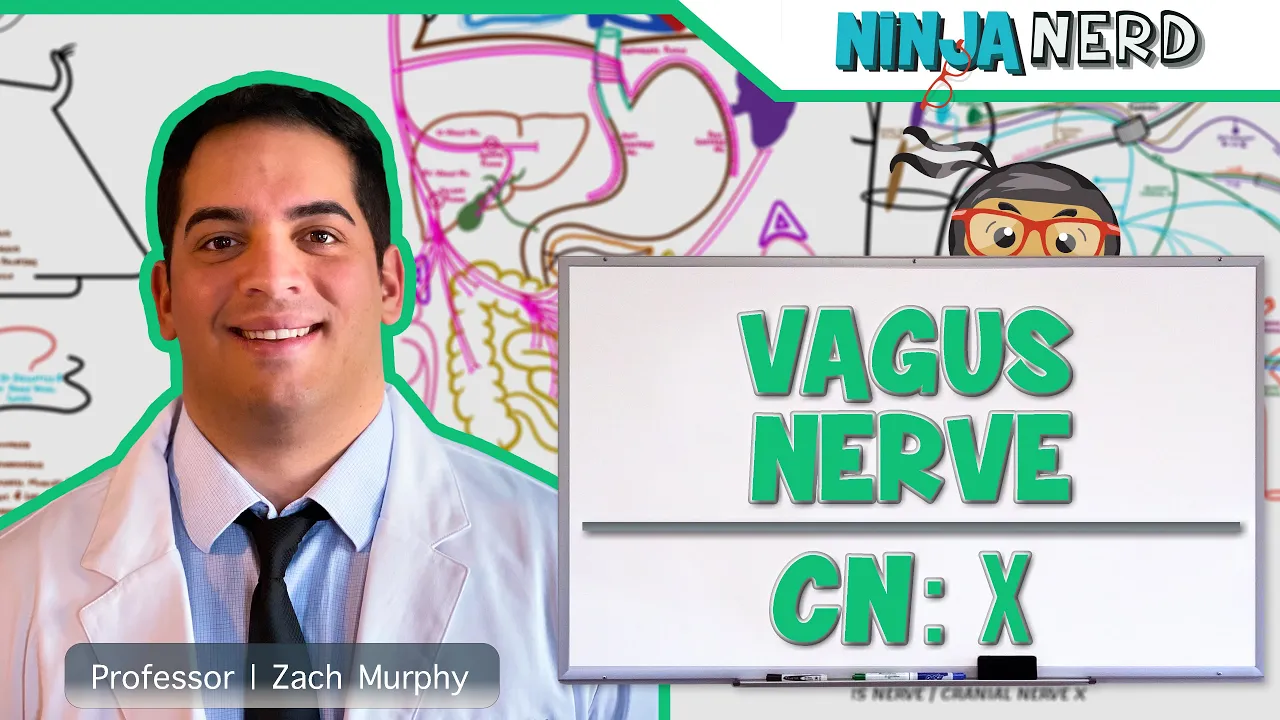








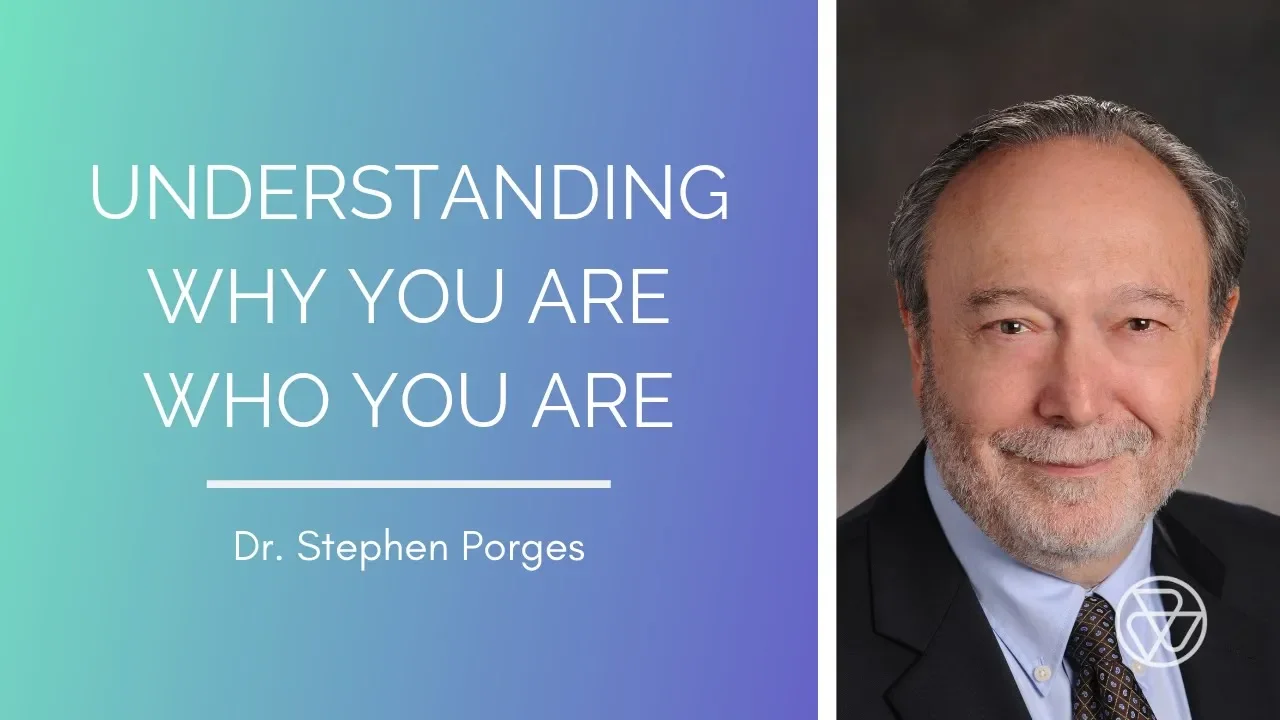










The vagus nerve, the 10th cranial nerve, is the primary regulator of our autonomic nervous system and social engagement; it evolved through embryological migration to connect gut function, heart rate, and facial/head muscles, enabling humans to broadcast and detect others' physiological states through voice intonation and facial expressions. Polyvagal Theory, developed by Dr. Stephen Porges, explains that the vagus nerve has two branches—the dorsal vagus (associated with gut feelings and trauma responses) and the ventral vagus (associated with social engagement and heart-rate regulation)—and that signals of safety are obligatory for the body to feel safe, not just signals of threat removal. This theory reveals that traumatic experiences lock the body into defensive states that impair cognitive function, sensory processing, and healing capacity, while understanding and creating environments that provide signals of safety enables the body to return to optimal functioning and promote well-being.
The Vagus Nerve & Trauma: Dr. Stephen Porges on Polyvagal Theory
Added:The Big Bang Theory I watched that okay so the the role that you played in the role that Sheldon played were faces that were not animated voices that didn't have intonation and all the consequences of that in the social interactions and the other part was that these are bodily feelings that would trigger others but it didn't mean that your own images of what you wanted out of life were different than everyone else's see that's the interesting part even with people who suffer from severe trauma their physiology is disrupted and their bodies aren't safe in the presence of another but it doesn't mean that their visualization their dreams aren't to be held held comfortably welcoming in the arms of another we live in a world that we think that removal of threat is is our goal is our responsibility I'm saying it's important to remove threat but it's not sufficient so think about schools we would metal detectors or want to give guns to teachers it's going to be more triggering to the students because that is not those aren't signals of safety their body doesn't want to be injured so signals of threat are important to be amiliar but signals of safety are uh they're obligatory for our bodies to feel safe and we haven't even thought much in our society or schools or medical environments or prisons yeah after any of our institutions that signals of safety enable people to be more Humane more nicer smarter healthier we basically throw it back at the person say it's your responsibility it's we treat it as intentional as opposed to being reflexive to the signals in the culture that we're living in it's breakdown she's going to break it down for you because you know she knows a thing or two and now she's going to break down a break down she's going to break it down Mi B Alex breakdown is supported by rabbit air rabbit air is an incredible air purifier and for those of us with allergies who didn't know that you cannot live in misery enter the rabbit air into your life look I've had a lot of air purifiers I don't want to brag yes um but living in a place that had forest fire smoke I explored air purifiers I needed an air purifier and I didn't live with forest fire smoke I didn't know that you didn't have to sneeze every morning I didn't know that my kids didn't have to sneeze every morning that literally changed when we entered the world of rabbit air purifiers and I thought air purifiers were disgusting noisy and ugly look how pretty this is the A3 this is the Sleek modern White Rabbit air you can mount these you don't even know it's a piece of art it is so quiet it is such an improvement it is so much better than any of the air pues I've ever had also spring allergies are in full swing right now but rabbit air will guide you through the season it's recommended by allergists and their certified Asthma and Allergy friendly A3 a purifier by The Asthma and Allergy Foundation of America is the scientific solution to reducing Airborne allergens like pollen pet dander mold dust and more there's Advanced six-stage HEPA filtration rabbit airs award-winning purifiers offer tailored options such as germ defense pet allergy or toxin absorber filters so you can have it suit whatever needs you have in your home complete with laser particle sensing wallmount adaptability as I mentioned a convenient mobile app which I love whisper quiet whisper quiet operation rabbit air equips you with everything necessary to combat spring allergies effectively visit rabbit a.com or call their Consultants 247 for expert advice that's r a BB i t a i r.com rabbit [Music] a.com I'm miambi alic I'm Jonathan Cohen and Welcome to our breakdown this is a place where we break things down so you don't have to today we have a very sexy episode for you it's super sexy All the Rage with the kids we're going to break down the Vegas nerve and if my voice just made you feel unsafe it's because your Vegas nerve does doesn't like that frequency M if no one's ever heard of the Vegas nerve tell them why it's the most important part of the body that they may not have ever heard of well uh the Vegas nerve is the 10th cranial nerve and it winds on a beautiful Journey a beautiful Journey from the brain throughout your body to all of the organs that we associate with gut instinct having an open heart and even being able to metabolize food and taking sensory information it's the only nerve that does the kind of dance that it does and we're going to be talking to Dr step pores distinguished University scientist at Indiana University he's the founding director of the traumatic stress research Consortium and he is the dude who created what is called poly vagel Theory which is an understanding of the Vegas nerve and the several branches of the Vegas nerve and how they inovate so many fundamental Parts not only of the body and the Brain but of The Human Experience he's written a book called our poly vagal world he actually wrote it with his son Seth pores a very very distinguished uh documentary filmmaker who you may have heard of and it's how safety and Trauma change us and we're going to talk to Dr pores about what the Vegas nerve actually is what it does can you hack it or not what is it communicating and literally how can understanding this one nerve change our human experience as safe or not we are thrilled to welcome Dr Steven pores to the breakdown break it down hi May uh before we begin you know my wife I know your wife so well and I literally just pulled up my thesis oh because well I'll go ahead and tell you so when I opened up your book and I've I've known who you were I just had not read any of your books so I open up your book and I look at your dedication and I'm thinking well that's interesting he's dedicating this book to sue Carter and I thought I can't wait to figure out why like it didn't put it together and I'm reading and I'm reading and then we get I don't know however many chapters in and then I realized oh my gosh right this is Su Carter's husband and so I pulled up my thesis as part of she was not part of my dissertation committee but it says I wish to thank the incredible Sue Carter both for the use of her laboratory for our oxytocin and vas supress and essays I might cry now as well as for her time spent editing chapters 1 through four through numerous emails and telephone Communications I've been lucky to have one of the world's foremost authorities and hypothalamic secretion supervising my progress and assisting me for which I'm very grateful I think she has the most citations single citations of anyone in my thesis and um it is so lovely to get to talk to you well I'm glad you got to got to meet the better part that's good I'm sure you you have noticed that the the Vegas nerve is having its moment it's having its moment on Tik Tok it's having its moment on the internet and you have been part of the the understanding of the Vegas nerve for decades I'm I'm curious if you can reflect as the the guy who literally came up with the theory that turned out to be very true and Incredibly meaningful what what are people picking up on what is this fascination with the Vegas now there okay we live in in a strange world or maybe it's a simple world we live in a world that orients itself into believing that things are cause and effect so they're actually misinterpreting so much about the Vegas they give it literally decision making abilities they try to hack it they try to pray to it literally and basically all this is a wire you know it's a conduit and if they took the the metaphor of a conduit and saying this is a wire that connects the brain to the organs of the body and it's biral wow then you start getting insights into you know Mind Body brain body issues how stress Works how how feeling good affects how we think you know in a sense if our body feels good and it would lead to a redefinition of terms like anxiety and stress throw it out of the psycholog iCal realm and say look my physiology has shifted to a state of Defense if I'm in the state of Defense I'm not going to be a loving person it's the end of story I'm not going to be smart either and that's very relevant to our contemporary world as we can see behaviors of many once they get angry and upset they're not good problem solvers you said three things if you're Vegas nerve is let's say you know giving these kinds of signals you're not going to be a good problem solver you're not going to be in a a good State of Mind why do you say you won't be smart oh you can't recruit the higher cortical areas for decision-making for executive function you're you're a brain stem preparation literally you're you're a threat you're a defense machine it means you're good at defense but it doesn't mean you're good at problem solving we have tradeoffs so when we are in a sense social loving kind supportive we kind of turn off our defense systems we're not good Fighters at the moment and when we are very involved in objects or intellectual processes same thing we're diverting our resources so it's a resource allocation and the Vegas is kind of our partner between these higher brain structures and our resources the problem is and this is where this whole issue about the Vegas is there's an acknowledgement that something's gone wrong in our periphery and that information is being conveyed affer sensory up from the Vegas to to our more aware brain so we think we can fix it by changing the signals in the Vegas when that's really just uh giving us a portal into the disruptive regulation of the system so it's the way we think that doesn't lead to uh let's say reinvesting and understanding that our nervous system is a dynamically organized uh it's a system it takes input takes output it regulates it's not just oh I don't have enough of this let me stimulate it some more it's like saying let me assure that doesn't have to be used for defense now it will do its job well a lot of the Tik Tock uh memes are about stimulating the Vegas nerve because people believe that stimulating it is going to produce the feeling of not being stressed but what you're saying is you have to produce the feeling of not being stressed and then that will travel the wire in order to get the message where it needs to be um what do you think about you know people talk about humming humming is remarkable it it's actually so if you have a theory the theory is how do you stimulate the area of the brain stem that will produce the calming humming is one of those and actually the whole utilization of the muscles of your face and head are connected in the brain stem to the Vegas the part of the Vegas that does the calming that goes to your heart so we actually hear in people's voices whether their physiology is Cal or not we see in their faces whether they are accessible comfortable in their bodies or not so we project that and we broadcast our physiology so once we understand that we are really the producers of our own States we have different options humming is one of them by the way okay so hum humming is good singing is good singing is good playing wind instruments is very good talking talking extending durations of your phrases so how many interviews have you done now on the podcast how many hund hundreds pushing 200 and I speak too fast in all of them Dr por no not you I don't I don't want to evaluate you I want you to evaluate the people you've had on so there are going to be some people who take who talk in very short phrases take breaths in the middle of sentences oh wait I have a question some people have a speech pattern that makes me very anxious ah and I'm and like my my parents are from the Bronx like we talk fast if you don't like interrupt you don't get heard but sometimes people will speak and it's very like staccato and I can tell that there's anxiety and it makes me want to crawl out of my skin is it cuz my Vegas is mad no no but it affects your Vegas so this is the story here this is what I call uh the social engagement system it's the utilization of all the stried muscles that are linked with the f face and the head and in the area of the brain stem where they are controlled happens to be the what I call the vental Vegas the Vegas of cing of your heart so that enables us to broadcast our own physiological state so these people are broadcasting to you a physiological state of threat now what does your nervous system do with someone who is expressing threat to you you react to it you're human so it's a very natur natural bit but so so you are basically your feelings of hey I'm uncomfortable here you're uncomfortable because the signal is a signal of threat and it's an evolutionary it's wired into you it's not something that you can say oh you know over time I'll get used to it I'll just smile and let it flow off when you start doing that you actually start to dissociate and I probably you probably do that with these [Music] feet taking care of your health is not always easy but you know what it should at least be simple that's why for the past few years I've been drinking my ag1 every day it's just one scoop mixed in water every day once a day makes me feel more energized more nourished more focused each serving of ag1 delivers my daily dose of vitamins minerals pre and probiotics both are important and more it's a powerful healthy habit that's also powerfully simple with ag1 I'm giving my body high quality nutrition and getting essential brain gut and immune health support also every batch of ag1 goes through a rigorous testing process so that you know that it's safe and their ingredients are sourced for absorption potency and nutrient density if I'm running short on time and I can't mix my ag1 before I head out for the day I just grab a travel pack CU each is an individual serving of ag1 that I mix on the go helps ensure that I get my daily nutrients no matter what if there's one product we had to recommend to elevate your health it's ag1 that's why we've partnered with them for so long if you want to take ownership of your health start with ag1 try ag1 and guess what get a free one-year supply of vitamin D3 plus K2 and five free ag1 travel packs with your first purchase exclusively at drink a1.com breakdown that's drink a1.com breakdown check it out mind be breakdown is supported by better help you know I could do a lot in my life with one more hour of the day I really feel like I need more time to prep food more time to meditate without having to squeeze it in and more time with my kids and a lot of us spend our lives wishing we had more time and trying to squeeze everything into the day but the question is if time was unlimited how would you use it do you really know what you want to do with the time in your schedule I found that therapy is very helpful in helping me figure out what matters most to me and being able to plan my day so that I don't feel like I'm running out of time and there's no time left for me and my kids if you're thinking of starting therapy give better help a try it's entirely online and it's designed to be convenient and flexible and suited to your schedule you just fill out a brief questionnaire they'll match you with a licensed therapist and you can switch at any time for no additional charge learn to make time for what makes you happy with betterhelp visit betterhelp.com breakday and get 10% off your first month that's betterhelp hp.com [Music] break you talk about people sending threat basically or or things that are being perceived as Threat by someone else so for my it's that choppy speech pattern what are we human beings maybe us in this podcast or or people more generally what are we sending that we don't realize is threatening to others okay so let's start off by changing the language we're going to get rid of words like uh perceive or and use the word detect and place it at the level of a nervous system detection which does not require our let's say intelligent aware brain acknowledging it so we detect our nervous system detects it and in the detection it carries with it a reflex of physiological shift that we are aware of we are aware of our physiological shift that's what my's describing her nervous system detects this pattern it's an evolutionarily wired into her system she's being bombarded with signals of threat and her nervous systm is saying hey get me out of here this is not comfortable but also there's variability in this meaning I often as a person with a very interesting history I tend to pick up on things that other people don't pick up on I tend to feel threatened when other people don't feel threatened sometimes those kind of voices don't bother other people but they bother me so what what is that well that's really acknowledging that you're human okay so it's not like you're not going I I can praise you and say well you're just remarkably sensitive but then you might say well I'm too sensitive how do I downregulate that we get into this the the part is we can literally map this into what we call one would call Spectrum disorders you know people who are more or less attuned to other people we can talk talk about it as a degree of sociality we can talk about it in terms of how we deal with pets so with pets we talk to them in the same melodic way but the secret I mean you're actually living through perfect examples of this remarkable neural circuit that we have that enables us us as social mammals to calm each other so this has been the go-to way of reducing stress so we so when you when a person is talking that way to you it's not like you say oh stop talking to me with that hostile voice no you would basically if you wanted to come then you say hey let's uh what's going on you know you know like give witnessing them being present this is what good therapists do they don't tell people that they're doing something wrong or they're bad they're saying let me listen to you let me hear what you have to say being present is a very powerful part of a co-regulatory process and what you're really describing is really co-regulation we as a species like to interact but that interaction requires a degree of reciprocity you talk I listen I listen you talk if it's really important you talk and I stop you know so we we go back and forth We Roll reverse and this is kind of something we watch in healthy people where you'll have the sequential give and take and then there'll be a roll reversal where someone will say oh well tell me about how you feel and suddenly uh you know as a relationship so our nervous system literally has these templates the bottom line is yeah you are sensitive but remember if you come from the east coast and you carry with it with you certain trans generational history I wouldn't even use the word trauma uh the the language the use of language the use of body posture to use of proximity is part of the culture and then what you start to study this has really gotten me I've gotten very interested in this is just kind of see where did this all come from you know and the part that we start learning is that many of us are you know my grandparents were the immigrants but they came from a a a and probably your great-grandparents the they came from environments that were less optimal than what you're living my grandparents no my grandparents left Eastern Europe right before the Holocaust so yeah it's real fresh Dr bores yeah yeah well mine well mine were the lucky ones they left uh uh 30 years before but their relatives were all gone and the stories those are the stories I heard as a child so the issue is you start to see their lives in perspective and you start realizing that when you lose loved ones in in this horrible situation are you safe do you feel safe and then what for coming into our this country this country is very pragmatic in ways so how do you create safety there are two channels uh one is basic resources generate wealth the other one is education so you start seeing the Adaptive function of the Immigrant families and how they try to navigate within the US it's it's really remarkable if you think about it as you said it's really fresh now when you reflect on that you say what a remarkable story it's fresh but look look where you are you know and look at this transition that occurred so rapidly so I wonder um if we can kind of take a step back it I think that the Vegas nerve you know especially with its notoriety I mean Valerie what's the statistic how many hashtags of the Vegas nerve was there on Tik Tok or something like 64 million like everybody's talking about it's very sexy Dr pores your your Vagas nerve is really she's grown up so nicely but is this is this what people are kind of treating it as do you I'm going to ask you is this the most important body part that people don't know about okay so it's like saying if I explain to you that there is a Communication cable between your bodly organs and your brain isn't that more important than the cable in terms of a metaphor or an understanding of health and relationship if I said to you when your body is disregulated in a sense violates rules of Health growth and restoration homeostasis it affects how you see the world how you think how you engage others and how you feel would that be important it would be sex that's sexy it's a very sexy idea Jonathan I can see it in your face you're thrilled by this it wasn't that long ago that we didn't think that there was this interconnected relationship um listen let me kind of give you I think what you want okay so when I started to talk about the Vegas uh it was not even in the journals so in you take a book like major conferences and at the NIH Nation suit of Health on stress fit books the Vegas wasn't even mentioned and functionally what the Vegas does it gives permission to the nervous system to react in threat to give to have those stress responses because the Vegas is a basically antistress system but it's not very adaptive to block those uh reactions to protect yourself when you need to so stress is not bad it just has to be appropriate and this led into all this confusing aspect about good stress bad stress and it it's just so confusing because they left the one limb of the nervous system off this beautiful limb that has this ability to inhibit threat reactions the Vegas how did you find it because you don't just kind of become a graduate student say I'm gonna pick one of the nerves and I'm gonna take the Vegas oh oh oh oh you really want to go deep okay because narratives are as you already know people construct narratives and they can be very creative or they can be just very descriptive okay when I started no one really G cared I can use all kinds of adjectives but no one really cared what the neuromechanism was physiology was literally treated as an observable Behavior what were people interested in yeah I started off in when I went to grad school and this is really the world of in 1966 emotion was not a valid research area feelings subjective feelings those were not research areas I basically got literally seduced into this new emerging area called psychophysiology so the notion was that psychological phenomenon could affect physiology and therefore you could you didn't have to literally ask people what was going on you put electrodes on and what I noticed I noticed there was a change in heart rate pattern when people were attending sustained attention mental effort I was very interested in that aspect and there was no explanation of the neural mechanism so I was seeing actually I I'm probably the first person to quantify heart rate variability as an individual difference and as a response variable I published on this in the 60s and you know now it's kind of like HRV all over the place but when I was doing it my colleagues said said heart rate variability you only are seeing that because you're a crappy researcher the heart should not have variability because they had no idea about the neural regulation of the heart so that led me on this journey of an observable I saw the heart rate patterns I saw the rules that changed the heart rate patterns so I asked the next question what are the mechanisms that are doing that then the next question was what are the metrics that I could develop to measure that and and that's that was really the journey and that was the the part that it led to which I think is very important when I started we were in a world of stimulus response and so psychological phenomenon physiological change it's still Sr stimulus response still fitting in the world viiew of what science is about cause and effect but what polyal theory as it developed it says that's not that's not a good model of science it's too Limited basically we have stimulation we have an organism in the middle and then we have a response the characteristics of that organism tell you how that individual is going to respond so it was that intervening variable between the stimulus and response between the cause and effect that determined reactivity and by 1972 that was the focus of my research but it was the focus of my research in a world that said if you don't get reliable changes on everyone you messed up the experimental design not that the organism had individual differences in features and you may remember from graduate school that there are certain data analysis models called analysis of variance analysis of variance treats individual differences as error and fortunately I will say statistical quantitative methods psychometric methods have caught up We Now call that mediation no models or moderation models where the intervening variable determines the relationship between stimulus and response and that's very close to where I am you talk about the notion of HRV which I think a lot of people don't understand and they don't realize why they should care about this as a health metric so it would be awesome to get that explained yeah okay so I think you're absolutely right because it's been literally marketed uh and it been marketed as a easily obtained observable that can be measured through wearables and the issue is yes but you have to be real careful about the metrics that you apply because not all measurements of HRV are equivalent because there are certain components in that heart rate variability pattern that are easily definable neuro regulatory components so we see a respiratory component and that's called respiratory science arthia that component the neural mechanisms of that component are well understood that is that ventral caling Bagel circuit and it was known since 1910 uh by Herring if you ever run across him that he was basically saying when you do your dissection and you're recording off the the vagal nerve you know if you have the cardioinhibitory fibers if it has a respiratory rhythm so it's the functional output of that system gives you respiratory science rth that has been my my journey how do I create a better measure of that because as you develop a better measure you are more do better in terms of prediction of responses the things that people are measuring with wearables um when you look at HRV this is one of those things that you know a lot of people are being told you want a high HRV if you have a low HRV it's a sign of this and I I'll be honest my teenager started wearing a wearable and he sleeps like a baby and he has phenomenally High stable HRV and me his mother has I have really really poor like I was hovering in the teens when I first got my wearable and I was not functioning well I'm still not functioning great but I have been able to see the things that actually can lift this HRV is this an accurate way for people to understand HRV and the Vegas nerve it okay it's not a bad way it's not the best way okay it's like here here's the big divide where basically HRV is measuring heart rate is measuring the variation in B2B changes now the question is embedded in that variation are different neural signals and HRV is a descriptive it's not a neural based metric so you have to go one step further and that's where I was going in the 70s 80s 90s and continued to go there but the rest of the area said oh let's just call HRV and run with this because HRV you can get increased heart rate variability with a rhythmia with at topic beats and you have to be able to distinguish that from the rhythmic patterns of a neural feedback system that is working well and that has been my journey is to get a neurometric interesting part is that all this let's use term hype and and Technology advances in sensors and wearables has not been to improve the ability to extract the neural influence but to in a sense measure the physiological signal the physiological signal is a composite it's the intellect that we can use to break it apart and pull out these different components that is useful most useful I should say how do you get the neural sign well you basically use a signal processing algorithm that is tuned to take out this rhythmic component it's so you have to build that into your algorithms so it's a different algorithm and for decades you know I had developed one I even had a pattern on it it elapsed and over decades people were really trying to say well that's just because you're saying it's better okay and I'm saying well it's theoretically here's the math this is it so I finally this is in 2011 which is to me yesterday um I I had a good grad suent I said we're going to do this study we're going to use with college kids we're going to use partial vagal blockade and see which methodology is best so we can literally talk about what another uh evaluation size of the statistical effect so basically with the method I developed it was four times better than the primary methods out there so it was much stronger better ability it didn't mean that the other measures weren't correlated with it they just were not as specific so finally after let's say four decades I was able to feel ah yes I was Vindicated I had done something right um but the issue is for most people that don't really care they're just saying do I have more heart rate variability and in general the answer is it's not a bad estimate but you can have really aerations in it like aryas and then you may be humming humming I can't use that word here you may be uh thinking that you're doing fine and you really are [Music] vulnerable my be breakdown is supported by Third love hey do you want a bra that's sexy or a bra that's comfortable well guess what thanks to third love you can have both third love was started to take all the frustration ick and G out of bra shopping that's why they make solutions for every bra problem also known as problems their bras make it easy to bring back the support you've been missing get smoothing all the the places you need and they have straps that actually stay put true story designed at their headquarters in San Francisco and made from premium materials they put every style through hours of wear testing on real women including themselves before it's given the stamp of boob approval comfort and support are guaranteed plus whether you're a double a cup or an H Cup their virtual fitting room will help you find your perfect fit fast they even invented half cups no more feeling stuck between two cup sizes that don't fit that was me until I found third love at third love bras can be sexy and comfortable and comfort and support are actually guaranteed plus you can visit their virtual fitting room Find Your Perfect Fit Fast it's time to get your problem solved use code podcast5 for $15 off your first order at thirdlove.com [Music] and now a word from our sponsor betterment let's talk about you and your money you like your free time you like to relax every now and then you like to feel totally chill but your money your money likes to work and betterment is the automated investing and savings app that makes your money hustle while you're catching up on sleep your money's up early earning 11 times the national average in a high yield cash account your money's a multitasker Diversified and expert built portfolios of lowcost ETFs and your money's optimized with automated tax efficient strategies just like the pros use your money is a total Workhorse so you don't have to be because you've got betterman the automated investing and savings app that makes your money hustle visit betterment.com to get started learn more about high yield cash Accounts at betterment.com investing in involves risk performance not guaranteed cash reserves offered through betterment LLC and betterment securities betterment is not a [Music] bank how much of mindset and sort of thought patterns optimism pessimism you know the intellect is playing into this and like is there any way yet to start to measure where people's thoughts are as it relates to their heart rate variability okay so this is actually the types of questions I had in the 70s okay it's like okay what what knowledge what information can I get about a person by putting some electrodes on without having to talk to them like the Muse headset for example or speech anal analytics yeah well I will tell you with uh we are now able to estimate veal control the heart from the intonation of voice I just want you to know that because that's also being regulated by a branch of the Vegas it's also coming from the same area of the brain stem and that really was our evolutionary Heritage as social mammals we were broadcasting in the intonation of our voice our physiological statement and that once you understand that you know exactly what frequencies you should look at in the vocalizations you can build an algorithm uh on that so the part that what you can learn from putting those electrodes on is you basically can answer two questions uh one is the physiological state of the individual meaning is it really supporting homeostatic functions or is it really locked into a state of Defense the second one which I find really interesting is how it dynamically changes so let's say even with posture shifts or exercise does it withdraw that vagal influence and doesn't come back on and I coined a metric that called vagal efficiency and I think that will map into many of the uh let's use term disorders that are labeled dis autonomia uh you know pots or IR Bal syndrome basically where people have autonomic anomalies that when they go to Physicians the Physicians basically say I just don't understand what's causing it you're fine to me the organs are fine but they're really uh not working so I think many of these features of what we call medically unex explained or functional disorders are really reflecting a atypical neural regulation of that end organ so it comes right back to extracting the neuro regulation so now here is the next problem in medicine whenever you go in for an assessment and assessments are evaluation and our bodies react in threat you know when we go into doctor's offices how what measures of neural regulation of any of your organs have you ever had there's no tool the closest thing is HRV and HRV as it's being used doesn't have the specificity but it could and that's really what I'm saying we could develop better metrics of neural regulation and that will map into a lot of the symptom clusters that occur Without End organ damage so just to summarize correct us if I'm way off base here but what I'm hearing for people who are following along is that autonomic issues could sensed by analyzing voice and irregular regulation of body organs could also be sens simply by analyzing voice yeah I think it's a good take-home analyzing voice and face but I will tell you very well attuned trained therapists whatever their discipline know that from the get-go they look at a person's face and they listen to their voice and that's why I ask you about uh the people that you interviewed what were you picking up from them and the point is you're probably picking up an awful lot if you're spending hours in interviewing people you're learning a lot about them you see their face you hear their voices well I think I even would like to take it one step further and also possibly back um it's a little bit esoteric but I am curious your your take on this you know one of the things that Jonathan and I are so interested in and kind of from different perspectives because obviously I'm trained as as a as a neuroscience person and Jonathan is not trained as a neuroscience person but when you talk to people who who are let's say energy workers or people who are healers or in particular let's say people who work in Mind Body syndrome right there's very skilled therapists who work in kind of the Dr Sarno kind of school of of mindbody integration um a lot of cranos sacral therapists who do somatic experiencing we just had Peter LaVine on um so you know this notion that there are people who in many cases don't have formal training but seem to have some sort of intuitive sense of understanding and when Peter LaVine talked to us about it he talked about that there was you know on one side all of the male mathematicians and physicists who were you know talking about thermodynamics and a closed system and you know entropy and that explains sematic experiencing and on the other hand were all of these female healers who did not have any math or physics under their belt but they were understanding people's experience from how they presented themselves what their faces looked like what their body posture was how their voice was people even do this work in babies so I'm wondering if you can talk about both sides of it are there people who are more in tune with picking up these signs of someone else being in safety and are there people who are going to get better care from people who are tuned in into them that way as opposed to a classical Western Doctor Who's going to say I don't know blood works fine must all be in your head well I don't need to answer that because you have already you know the answer on that so uh the part of course of this is and I guess this is what I've done with my life I bridged uh the very traditional very laboratory oriented scientist I learned the language I perform within that uh with the critical behavior and expectancy of aggressive academic I mean I can play that role but I always love to step out I us say what goes on uh before anything after dinner I'll talk about but if you come to visit me in my lab be respectful that my lab can't deal with some of these things so when people talk energy and stuff you know I'm I'm there listening uh but what I do is something different than many of my colleagues I listen to these people and I said can I re can I extract principles and use a different language to explain it and what can I learn from it so the first thing we learn is it doesn't matter what discipline the person is in they can be helpful if they create a safe context or safe environment with their with their patient or with their client the body does the healing this is the first important part and this becomes the separation of our naive Western view of where we think the healing is being done to us and that that's why we take medicines that's why we have manipulations and surgeries now our body is going to be differentially welcoming to any intervention including nutrition based upon the physi physiological State we're in so if we're in a state of threat we're not an efficient metabolizer of useful materials so when you have loving people the the bottom line is the first uh route of interaction is through co-regulation in which there is a social interaction in which our bodies feel safe with one another I love this I mean I love your I love your answer and I also love the openness you know that you have in this Arena because I think it's it's been sort of why your work is able to be applied in all the ways that it was or all the ways that it has been um you know especially because you didn't start out as like I'm going to study trauma and you know I'm going to find out how the Vegas nerve can Prater Willie listen I was p i was pulled into Prater Willie and Prater Willie is also very explainable a lot of the symptoms from a polyal perspective including the weak suck swallow and breathe reflex at Birth or vocalize that's the social engagement system and you can hear it in their voices yet right and their fact that they have auditory hypers sensitivities and exhibit what might be called anxiety it's just a reflection that their autonomic nervous system is locked into a state of threat threat so yeah I mean it's really I would say uh intellectually uh fun uh to move around to start seeing how generalized principles are there all we have to do is literally drop our defenses and start seeing what's going on uh yeah it's been for me this remarkable journey and and I have looked that from pre-term babies I measured I did Research In Obstetrics as well as Dy in autism now it's and I've done animal work because I want to get at the mechanisms no it's it's been kind of fun but I think the point you're getting at though is not many people have that level of flexibility or the ability to enjoy uh challenging the existing knowledge of their disciplines and this is more of something that I've been reflecting on during the past I'd say two years uh I'm trying to figure out in my own trajectory what would I've done differently and what surprises me and a couple things surprise me in retrospect and that is literally the boldness of doing it not the Curiosity but the boldness in the Arenas that I was willing to step into so whenever I walked into a different discipline whether it was anesthesiology or obstetrics or neology I had to learn their vocabulary I didn't expect them to know my work oh I want to take a little bit of a um a a journey just for people who who may not know um so there are there are 12 cranial nerves and you know nerves um when you dissect them they they can vary you know sometimes they kind of basically look like dental floss um or they can be a little bit uh thicker but but basically there's there's 12 of these sets of nerves and they're for lack of a better word under the brain just you know um that's kind of the EAS way well that that's almost insulting to brain brain stem Centric person that is that is very true they're on the dorsal side um of this uh yeah um so so we have these 12 nerves and many people have probably heard of the optic nerve right like that's the nerve that's in charge of seeing right I'm being very um you know I'm kind of oversimplifying here and there's the olfactory nerve people have heard of the olfactory nerve right so there's 12 of these and when you dissect a brain you can see them all they're all distinct structures and some of them group together more around um the the the back of the brain again um but the Vagas nerve is is number 10 and you know these are things that we have to memorize in in uh you know as undergrads and as as grad students and you know you learn there's there's one nerve that um I remember the way I remembered it is it's the one that when I would get full migraines that nerve would get activated and I would feel it from my nose to my uh lip into my teeth and my chin so you know each of the nerves basically it subserves a different part of e either the brain or the body but the Vegas is special and it's special because of really what it touches and how so when you look at all of these different nerves they they don't look distinctively different everything's the same color in the brain pretty much it doesn't look any different but can you tell us you as the person who knows most intimately cranial nerve number 10 tell us what the Vegas nerve where it winds what it touches and what that means okay I'm going to emphasize the other part and really where it starts from so we have to think about uh the Vegas as uh the mallan Vegas as the product of an evolutionary journey and we can see this journey in embryology so in virtually every other Verte virtually every vertebrate uh the vas comes from only one area a dorsal veal nucleus and it's unmated it uh primarily it regulates in humans it's still there it regulates the organs of the gut primarily but it also has some input on the heart but what happens in embryology and in evolution is a subset of the cardioinhibitory uh fibers uh the neurons that slow the heart through the Vegas go for a walk they go for a journey they go for an exploration and the exploration is now ventrally where they meet up with the area of the brain stem that regulates the stried muscle the face and head so it's like this very strange marriage between heart and heart heart and face and this really is the trigger from my perspective of sociality that it's the understanding of the other person State physiological State through voice and face that enables us to come close to another individual without being defensive and also we know that there are people who lack the ability to detect facial uh information basically information and those people have a very very hard time connecting so just and I want you to continue on this journey of the Vegas but I just want to kind of underscore this point that we have this nerve that is literally linked to what we would identify as gut feeling it also is linked to what we would say is our heart right if you think about what it feels like in your heart and it is also dialed in to our ability to see is this person safe or are they not okay we're going to deconstruct what you said because we have two areas of the brain stem from which the Vegas comes from the dorsal and that's goes to the gut in humans that's your gut feeling and that is the one that tends to be affected by trauma so much because the body gets triggered not into a Maman response but into a reptilian shutting down response and reptiles when they're under great threat they don't need to breathe for a couple hours they can just hunker down and wait same then but the ventral Vegas is now the heartfelt vegus and it's really the connection between face and heart now what you start when you start to reach around your face you were touching major areas of the trigeminal and is also so the face even though we think of it as the facial nerve uh controlling it the trial has a lot to it as well especially uh going into the into the Jawbone we all know about the trial from the dentist it's also a very thick nerve the trial and also the trial has interactions in the brain stem with the area that regulates the Vagas of the heart the vental Vagas so we start seeing that the cranial nerves that regulate the muscles of the face and head including those that regulate the middle ear muscles that literally tense our eardrum enable us to listen to uh social communication all that is wired together so you find out like people on Spectrum there's auditory hypers sensitivities their eard drums they're not hearing human voice but they're hearing noise and noise is threat their faces are flat their voices are monotonic their breathing is and their heart rate variability is low you start seeing all these clusters coming together and you start saying well it's not a diagnostic feature of a of a pathology it's a diagnostic feature of an organism in a state of threat and this provides the optimistic perspective of what poly veicle Theory brings to the table it says oh you can have this but optimistically it can be quote retuned or purpose when the body gets signals of safety so I I want to as we're taking this journey with the Vegas we've got gut feelings we've got heart feelings we've got the the ability to understand are you placing me in a in a situation where I'm going to feel safe with you and in addition Pro the the ability to hear someone's tone or to be dialed into what someone sounds like these are all very very old skills that the brain has had to group together and it all happens with the Vegas yeah well I wanted to kind of stop right there and uh remind you what you spent several years doing on on it was it NBC or where it was on uh The Big Bang Theory I watched that okay so the the role that you played and the role that Sheldon played were faces that were not animated voices that didn't have intonation and all the consequences of that in the social interactions and the the other part was that these are bodily feelings that would trigger others but it didn't mean that your own images of what you wanted out of life were different than everyone else's see that's the interesting part even with people who suffer from severe trauma their physiology is disrupted and their bodies aren't safe in the presence of another but it doesn't mean that their visualization their dreams aren't to be held held comfortably welcoming in the arms of another one of the really beautiful things that you talk about and this has been you know since your original poly vagel Theory and is in particular talked about in our poly vagal World which you wrote I should add with your son Seth you bring up a really important point that I think especially for this generation you know of people who are getting information so quickly and they want to know like what's the medical thing I'm supposed to do and can I click on it and give it to me in 15 seconds what you say about the Vegas nerve is that the Vegas is not telling you if you are safe it's telling you if you feel safe and those are two different things can you can you talk a little bit about the difference between being safe and an objective perception of feeling safe yeah I think this is one of the major issues in our society especially for those of us who basically uh uh I would say grew up during the Cold War so the notion of uh planes flying overhead were triggers of threat no in a sense we were scared that we' be bombed even though there was no real reality at least we thought it was a reality okay so the difference is we live in a world that we think that removal of threat is is our goal is our responsibility I'm saying it's important to remove threat but it's not sufficient so think about schools we put metal detectors or want to give guns to teachers is going to be more triggering to the students because that is not those aren't signals of safety so the way of conceptualizing is our body doesn't want to be injured so signals of threat are important to be amiliar but singals of safety are uh they're obligatory for our bodies to feel safe and we haven't even thought much in our society or schools or medical environments or prisons yeah any of our in institutions that signals of safety enable people to be more Humane more nicer smarter healthier we just we basically throw it back at the person say it's your responsibility it's we treat it as intentional as opposed to being reflexive to the signals in the culture that we're living in so I don't mean to compare schools and prisons although it wouldn't be the first time I did so on this podcast listen I I would I would give you another one I I have described being a university Professor for over 50 years as being in confinement uh and the issue is not that it wasn't good not that it wasn't beneficial or wonderful but it was extremely living on intellectual curiosity creativity and exploration so it was extremely frustrating so I think of it as literally being in a prison not necessarily being abused by the actions of the prison selectively but it's an abusive environment schools medical environments our society is functionally an abuse abusive we're all like nodding our heads in agreement over here but I mean one of the neat like one of the really special things about this book in particular I mean you you address each of those things in their own chapters you have a chapter about the workplace you have a chapter about schools you have a chapter about the prison system system and the notion is what kind of behavior are we trying to produce from an institution that inherently is not helping people feel safe even though you can check the boxes and say it's safe there's a metal detector there's walls and no windows right like that's counterintuitive to the actual human experience which you're saying the Vegas is crying out to have that kind of safety yeah yeah well I I even try so we created a not for-profit called The polyal Institute and we're trying to develop educational materials for schools or to create workshops to Essen make schools more quote polyal informed meaning get kids out of states of threat and let them develop likewise in medicine we tried to work in some clinics to literally change the interactual framework of how staff works with clients and we had this want to start with receptionist onward not just Physicians but everyone who engages the the patient tell me tell me how a receptionist can make me feel safe I'm being totally honest like let's just take that the first person you see when you walk into any kind of institution what are the things that make me feel safe what should the reception be doing you I don't have to tell you you by your by the intonation of your voice and the body posture you know what you'd like to see and you're not getting it that's what you're telling me I want someone to be pleasant yeah welcoming let let me use the right words welcoming and accessible and engaging with you that you are now the most important thing in that person's world at that moment and they need to make sure you feel that way as supposed to take a number sit down don't bother me now I mean it's not that different than what you want in a relationship right you want someone a relationship right but the relationship is setting the stage for a healing process and the healing process will not occur in a body that's in a state of threat and what you're telling me is the engagement starts off as threatening and I'm telling you you're absolutely correct and we've been trying to this and I'm trying to figure out what are the right venues for and I finally decided believe it or not it doesn't fit my model of the world is high-end addiction treatment centers because they can afford to invest in these types of relationship ships and I'm trying to build that in a couple of places and then make it scalable so we want to learn our lessons but I try to work in a Medicare a Medicaid no Medicare it was a Medicare Advantage type clinic and which had a lot of people burn out of staff and a lot of churn with people dropping their system and everyone being very frightened and mobilized and was very difficult okay I'm G to I I have so many questions that are like specifically so are poly vagel World Centric but also there's so many other things that this encompasses you know the I I grew up at I grew up in Kaiser like I grew up you know my dad was a public school teacher and so we you know we had Kaiser coverage and um this is not a general statement about Kaiser in general but I will say that I grew up in um you know a very kind of like Factory organized medical system and there was not a lot of choices we had you know there's like not the new thing is like there's not even a receptionist at Kaiser anymore you cannot call and get any information so like my mother still uses Kaiser you you you there is no General number there's no general information if you have general questions it is such a complicated system but what I will say also is that for those of us who were not raised with money or resources that's the best health care that that you get meaning this is also a class system like the Vagas nerve seems to also be preferentially cared for in situations where there are simply more resources yeah let's just stick on that because that's an important point so let's talk about a marginalized segment of the society and ask the question about their vagal regulation their bodies are locked into states of threat they start getting what is often called psychosomatic or psychogenic illnesses cardiovascular obesity gut problems uh it's consequence is in a sense it's not okay I sit back and say uh we could be so informed and we could create much better systems why don't we and we're always confronted with the bottom the answer and people say Well it costs money capitalism but this yes but if this is done right it saves money because people don't go in for medical care if they don't need it they're healthier and actually when ER started it was that whole idea that it would save money because people would be managed better they were just managed in correctly well it's be okay so it's like my interactions with the medical groups are really it's not the Physicians because they feel like they're being killed or stressed out committing suicide all these because they can't even practice medicine it's not even like uh they can't get any of the pleasure of delivering their service they're robbing from them is that interaction you know they sit in front of the computer with electrical records and don't even look at their patients the patients feel disconnected and they feel disconnected and they this is not what they signed up for capitalism I think it all comes down to capitalism um I I I want to touch a little bit more before we get into some of the the implications for trauma which I think are really really you know important to highlight I want to touch one more on the multiple modalities that are impacted by the Vegas nerve so you mentioned literally your ear will tune differently if you don't feel safe so you will be and this is you know this is your old animal brain you are listening again I keep crying I'm very very activated today in our episode Dr P just you are tuning into sounds of the equivalent of the Roar of an animal you're listening for things that resonate at the frequency of predation like that's what our brain like we may think like oh I drive a fancy car and I have an iPhone but we are animals and our Vagas nerve is literally saying if you don't feel safe I'm going to have you listen for the things that your body needs to Listen to If You're Not Safe like the growling of an animal and not the loving voice of a friend what what let's stick with this for a moment because there a lot of consequences language delays uh testing poorly on vocabulary tests auditory processing yeah being viewed as not being very smart and really your body's in a state of protection it's not in a state that can afford to interact so we see these things occurring the body's adjusting but it's not in the way that let's say education and our society wants yeah and that's just one modality right that's sound what about sensitivity to touch to light to emotional input okay so I developed a battery of sensory scales because I was asking that question and I and I Had A Simple Theory which was uh auditory hypers sensitivity was at the root of everything and when you're auditorily hypersensitive you're tactically hypers sensitive and your visual so the empirical data tells you something that's a little different the empirical data says that if I can calm your body and we did this with the safe and sound basically a music that was melodic like a mother's lullabi it's filtered it's computer altered and it's a neural exercise of processing those frequencies and it's really quite effective for auditory hypers sensitivities and so what I wanted to see was what else changed with it okay so what changed with it was visual hypers sensitivity and then I start to figure out well you know hyp visual hypersensitive is pupil dilation what is pupil constriction it's parasympathetic it's col energic so if my sympathetic nervous is on high drive my pupils are dilated and I'm visually hypers sensitive and if my vagus starts going on I calm down the pupil starts to constrict tactial hypersensitivity and what I found was the most interesting was ingestive pains disappeared this problems and selective eating so this becomes what yeah now think about selective eating so you have children they may have had phases of only W to eat I'm the child with phases okay okay so you know what I mean uh Pizza toasted cheese sandwich cheese tacos it's all the same food group it's high fat it's fat salt yeah yeah and your body craves it because it's calming it calms your your gut it calms you down com food it's Comfort it closes off the pyloris stabilizes the release of insulin unless you're at ashkanazi and then you can't process dairy that's a different story not well but you still try you have to eat ice cream remember that's part the well we're vegans so it's like a whole thing wait so selective eating will change with regulation think about why ingestion selective eating is all about ingestion ingestion is linked to the Vegas it's the social engagement system ingested so when we talk like about pre-term babies what's the first question to ask how did they develop their Su swall breed and vocalize when you're dealing with Prader Willie what were the questions and what you find out like with the predor Willie is atypical suck swallow it's there from the get-go now the question is does that is that a characteristic that can be modified or are they locked with it in polyal says this is all a physiological state it can potentially be optimized and that actually was a project that I did want to do with Prater willing which was to use the safe and sound protocol anyway the the bottom line is yeah it touches these sensory systems and affects how we live our life so going back to the book we really say you know our physiological state is that intervening variable that affects everything our sensory experiences and our responses I have a funny question well it's not really funny I think it's a legitimate question and then I do want to move on to trauma um why do women like bad boys why do why do why is it why is there something about a motorcycle I guess it could be why do women like bad girls too why do men like bad boys it doesn't have to be gendered when someone's on a motorcycle and they look like they're not going to return your call why is that attractive because we know that it means like oh they must be up all the other tough people they must have the largest testicles I don't know but my Vagas nerve should be telling me where's the nicest gentlest person that seems like they could hold a job and also meet my needs and maybe I could have an orgasm okay maybe you're talking through your parents' voices so just um and I think that's that's transgenerational voice that comes in and saying take care of my daughter but wait wait but we want to be taken care of you don't want somebody who's going to not return your call but everybody likes that person on the motorcycle not necessarily okay let's say I'll raise the K by myself Dr pores okay so no that's not what I'm saying I'm saying there are phases in which certain experiences are welcom but they're not necessarily phases in which you think about a permanent relationship so the bad boy maybe excitement maybe things that you wouldn't experience in the normal trajectory of that parental voice in the back of your head and say well let me just try this for a couple nights to see what it is or years or decades yeah well I think there's a there's literally a trick that occurs and you know that is I think experience is good but we have to understand our physiological reactions during those experiences so there was a wonderful line in Steinfeld in which uh elain Ela and and and Jerry uh get back together and start building rules about how to spend the nights what was the rule can't sleep over now sleeping over is now our bodies are now safe and that's where the bonding that's where the oxytocin comes safe in each other so they're in the recreational form of love making and experience and not in the bonding form and so the point is that there's nothing wrong with a recreational form it's just not to be tricked into thinking that the recreational form leads to a bonding form okay but I have to ask the next question you come from a very different era than I come from and I come from already a completely different generation than my kids and I wasn't even 30 when I had my first kid do do you know what kids do these days they don't even bother with first second or third base like fourth base is first base now second second base is like moving in together third base is like divorce I don't know what does that mean that people also have shifted I mean this is this is as someone who studied oxytocin this is a legitimate question I'm asking what does it mean when the time frame and the scale on on on which we base connections with other humans is so collapsed like what does that mean like my kid doesn't his Vegas doesn't know if he's safe after one date I promise yeah but I would say the real issue is uh the okay it's the transfer of a play Behavior to an object from people so the development of your kids meaning a lot of gaming on video and a lot of two-dimensional screens as opposed to playing and spending time together so what I'm really saying is the Friendship socialization phase the normal developmental phase of being comfortable safe enough with another person uh doesn't occur in the way that it used to so we violated what our body needs to in a sense be comfortable with another that's why they may accelerate the interaction they say it's no big deal that's what sorry I'm like hung up on this they say it's not it's just like it's not a big deal like you just oh okay so let's say it's not a big deal right uh but the issue is depending upon this is part of what it really wanted to go back to like the Seinfeld episode don't sleep over so it may not be a big deal but then you have orgasm you sleep over the body becomes now coupled so you start getting into this uh and I talked about this in some of my talks you basically uh can't live with the person you can't live without them you're bonded you're physiologically bonded and I basically said that occurs when the social engagement the Friendship is displac with the molecular part so the oxytocin comes in before the social awareness and the features I like this person I like the features of them you know of her or you know you basically it's it's your checklist but it's not your checklist it's your visceral checklist I think we're making a pitch to slow down the dating process but I don't think that everyone who's listening totally follows what the alternative should be no I'm saying they should expand uh getting to know people you know getting to know the features it you know relationship is is look sex is important but trusting a person is probably even more important so and and when you're young you may not distinguish between the two and sometimes danger is attractive right like I mean I'm not a one nightst person but I know some people are some people say that there's something about that that danger that unfamiliarity that is especially titillating is that Vegas regulated as well well if you're okay the involvement of the Vegas is really perhaps the Vegas goes for partial break and allows the exuberance of the sympathetic nervous system without going totally dormant so you know we have to think about what uh okay why do we like going on roller coasters well we some don't I do I do the issue is we can experience jumping out of a 10-story window without getting injured so we can have the exuberance the exploration of those feelings but in a safe enough environment then our body can have all these things so in a way uh relationships or even one night stands the expectancy is not to be physically injured and then so if they're quote safe people then it's experiential without the bonding that is in sense a natural way of occurring so the work on oxytocin is really about or vs they Bond they're they's they're they're stuck to each other for life but in a way human nervous systems Bond too and oxytocin plays a major role in that and the issue is you can be bonded to someone you don't like I I want to follow this thread of immobilization because one of my favorite parts of the book you talk about a green system a yellow system and a red system right that we know when things are a go we know when things are an absolute noo and then there's something in the middle but you describe that there are many situations in our life where there's aspects and it you know it it calls to mind the the beautiful kind of way that the Vegas twists turns and connects there are certain situations that combine elements of all these different phases and sex you described as kind of a green and a red because and you keep using the word immobilization it the first of all there there's a I going use the word receptivity accessibility of sex if sex is going to be pleasant now if it's not going to be pleasant it's it has different words we use for it but if it's a consensual Pleasant interaction bodies become accessible to each other okay now to be accessible the ventral vagus is on doesn't mean it's always totally on it doesn't mean the sympathetics are off the sympathetics give you the sexual arousal now that's I looked like yes well in part maybe for you but not necessarily for uh because the male guess what the male needs hell if I know well the male needs a tremendous amount of vagal control for the erection to occur wait okay I'm trying to act like I'm not 12 years old right now okay that's why many men or let's say young men especially in their initial sexual interactions can't can't do it and they're accused of being scared but really what it's about is that the Vegas isn't there they in a sense their body is interpreting the environment much more as threat performance threat or whatever not as a moment of expression of a pleasure now the interesting other part is once ejaculation occurs for the male the physiological State goes into kind of an immobilization State and that's a state of involving a lot of the dorsal Vegas as well and this is really in a sense when the dorsal Vegas and the social engagement system the heartfelt Vegas are on together we have moments of intimacy so the sexual act is not necessarily the intimacy is is most likely after the sexual act is the feelings of intimacy and and that happens that doesn't happen for all mammals but it in particular happens for primates right and in particular Homo sapiens yeah oh well I I I we have to talk to sue about that you know well like postcoidal cuddling we don't usually think of for Prairie vs you know it's not the first thing I think of I'll have to ask her um so one of the most astounding and significant components of poly vagal theory has been its application to understanding in particular particular certain aspects of trauma and when you were a young student the notion was this is a fight ORF flight system right that we're either in a state of fight or we're in a state of flight and you you know were part of this real Revolution that had tremendous implications in in particular for for victims of sexual assault and what you were able to articulate which is now completely accepted understood and even has been elaborated on which I want to ask you about in a in a few minutes the notion that that freezing is is a third option that the mind and body take that it's not your choices are not always just fight ORF flight some people freeze and that immobilization was not seen as part of this system can you explain what it was like to come up with freeze yeah we're going to create a distinction of different forms of immobilization one with muscle tone which means sympathetics are involved that's freezing and one without muscle tone we'll call that collapse or Syncopy or fainting it could be all these features or defecation or shutting down and and we have to say uh under under life threat what does an organism do well it might just shut down like The Mouse and the jaws of a cat and it has advantages but it can't stay shut down too long long because it needs oxygen so it's a Time limited what about humans do humans totally shut down or not well I didn't know that but I get tremendous amount of information from from the field from the world from the world of trauma they tell me what their experiences have been so poly vagal theory was not deducted or extracted from narratives it was a theory that was described and then the community said this is my narrative and what it did was it changed people's experience in the sense of themselves from thinking that they were one unique and crazy to seeing that their body was trying to do the best it could and starting to honor what the body did for them so we start seeing let me kind of backtrack we have these three resources so think of the lights as resources and that we can mix them and as long as we mix them with the social engagement system life is great we have play as to fight flight when we mobilize and we have intimacy as opposed to shutting down uh when we're in the arms of another now let's take away the primary regulation of ventral Vegas we still have options we can literally use the sympathetics and the dorsal Vegas together and that gives us this immobilization freeze response and let's start thinking about literally a potential uh ontogeny or development of seli let's say the first time a person is you like those words I do it's it's from my my history as a developmental psychologist which is really okay so the issue was to begin with let's say that someone had this really horrible rape incident and they literally collapsed passed out and then they're in an abusive culture and so the next time they froze and then they're really in an really abusive culture until this becomes a common situation let's say in some let's say incest within the family then the person says the nervous system says you know freezing uh shutting down is potentially lethal or dangerous I'll fall get hurt not that that's the level of decision the nervous system is optimizing freeze is metabolically costly what happens if I just dissociate so I see dissociation as this really superb Nuance ad adaptation to a life-threat situation that has the least consequence uh to the physiology and when we start seeing in that way we start seeing this remarkable nervous system that is literally trying to optimize survival one of the additions to this notion of fight flight and freeze you talk about fawning and you talk about appeasement and I think there's even one more that's been added um but can you can you talk about what what those emotional Concepts have anything to do with this how does that work okay okay so I have a colleague friend her name is Rebecca biley and she her she's a specialist dealing with the people have been abducted and one of her patients was uh uh JC dugar uh who was abducted for 19 years as a 11 or 12y old and and she o knows Eliz Elizabeth Smart so the whole Community she knows and they're very angry about Stockholm syndrome the term and about a decade ago they came to me Rebecca and JC came to me and said you gota gotta help us because we don't like the word Stockholm syndrome we're being Jon was being accused of loving the guy she said really you know she had all kinds of words for them but the point was that they needed a different word so I kind of ruminated on it for a while and they kept clearly engaging me finally we wrote a paper last year it's published in the European Journal of trauma or traumatology and it really describes what a peeman is from a neurophysiological level it's hypothetical and the issue is it's a very remarkable nervous system that retains sufficient attributes of a social engagement system in a state of life-threat and chronic fear to convince the a predator that you're on his team and you start to figure this out and say what a remarkable one but I said I have to be real careful because we're in a world where people think all this is intentional so someone who doesn't have the capacity or nervous system to appease it's just not going to work so we have to be we have to honor JC and the people who do that without having that expectation for another and now I'm thinking about this appeasement for my friends who are of let's say of diversity because they are often having life experiences like that as well on a chronic level and I'm very interested in that concept that you know they have remarkable nervous systems to quote fit in but are they really fitting in are they getting all the benefits of the social interaction or are they still under a degree of threat so I'm very interested in that now the word fawning you put up yes I describe appeasement as I'm important to you and fawning as you're important to me meaning to to keep that Bond going I I think faing is asking to be killed that's how I interpret it because you lose the value you you once you fa and I think this is clear from those who appease they their nervous systems understood that they were still of interest and therefore being taken care of when you fall the interest disappears no longer the bad boy you see it's like you're you're basically uh you lose importance now I don't like the word foring and I don't like to and it's not mine to use now I will tell you that I never used the word appeasement until this past year or so and about uh prior to the pandemic I was talking in London and someone asked me a question how would you explain a Peas I said I'll think about that asked me in a years you know and so we actually wrote a paper but we are also writing a paper on foring now the same people and I think the Restriction that they want on the word is fawning is uh has to do with the issue of consent and that is part of what they want articulate that they want to be because they're individuals who have been accused of fawning in these situations and we have to have a great compassion for how these La have been used to people who have been severely injured can we describe what fawning is for someone who doesn't understand it for me again it's oh we're the the use of these terms appeasement to me as I said is a person who is let's say captured and is under life threat and things but is presenting cues of safety and and Trust to the individual who's a predator and is literally being welcomed into that predator's home and there's a degree of trust going on or parent degree it you know it's not deep but it's enough to not get injured now foring from my perspective and I have to say this is me talking and not people who who have other people have used it is fawning is just giving up basically it's like saying take me I'm here that's it I'm not even going to play with you I'm just going to lay back your book also deals with Co in a really special way you talk about vulnerability and you you talk about the differential impact of covid on people who in many cases had complicated trauma histories and you know the first thing I thought was like oh is this because if you have trauma you're not processing the uncertainty and and the anxiety and then I kept reading and no the the notion is that those who have a trauma history are not able to access the the healing like the resources that the body has as you said to heal itself what does that mean what did you learn when you think about covid from that lens what does that tell you about our society in general our society is labeling people without understanding their history so it assumes it takes a world view that if we have a physiological uh characteristic it's ours for life and it doesn't uh acknowledge that there's a lot of retuning or repurposing of our autonomic nervous system this goes back to what I started in the beginning the organism stimulus organismic State response what we learned during and I did research during covid with people uh both who who figuring out who got the disease as well as those who didn't get it and had symptoms uh from the pandemic basically if you have an adversity history you are going to be more likely to have gotten covid on the initial wave of it and but another way of viewing it because when you go deeper into the data that's deep already I mean just that deep enough it's not deep enough but it's deep well yes so adversity history is a pre-existing condition of vulnerability to the illness but here is where it gets really I would say neurop physiologically interesting it's the strong Pathway to outcome is really not from trauma to outcome but trauma through autonomic state to outcome the intervening variable so if you have a trauma history and your autonomic nervous system is retuned to be in a state of threat forget it uh you had depression anxiety even if you weren't infected you had worry the interesting part for me was when I started looking at we did a study we had 2,000 people uh in the first this is spring of 2020 it was a survey uh uh scale online and in that of those 2,00 had had covid and we excluded them from the first paper and we were talking merely about the mental health symptoms of being in a pandemic and that was predicted by their trauma history and their self-report autonomic state but if we looked at those who got the co got covid those 100 none of those were people who had low Aces or low adversity scores none of them so they the people with low adversity didn't get covid in that subset I had but if they had a high uh adversity score 75% got covid so the issue is we confused this so what what became in the medical or Public Health Arena pre-existing conditions was a buzzword you know what it really meant to to the medical community what obesity yeah now again the link between obesity and Trauma is quite high and that was literally discovered by a physici at Kaiser I mean I'm not I'm not trying to be funny but like comfort food right comfort food it's more than that of course but that's the first thing I thought we eat our feelings right and no think think one step we change the regulatory system when we're under life threat we are in a literally a conservation mode so we retain our metabolic strategies changed so we don't need to take food in to get fat that's what Fetti at Kaiser figured out people were gaining weight from in the trauma World they were just gaining weight it was he couldn't believe it well and then you add you add food deserts you add the socioeconomic pressure you add the lack of access to healthy Whole Foods you add companies that give you toys with the food that is going to cause you cardiovascular disease and then they will have the clown visit you in the hospital so you need to invite Rob lusc have you met Rob okay you need to invite him because he will get you really worked up but he took he's a endocrinologist at UCSF um but what he did he took he got a a degree in law so he could fight the food industry he so he's extremely serious about all this I I want to ask about um a book that was brought to Jonathan and my attention um by George banano it's called the end of trauma and you know I'm in to paraphrase and it already kind of makes it catch in my throat you know the notion is that like we're more resilient than we think and all everybody's saying that they're traumatized and we're really fine and we didn't get here from you know being so delicate you know and I'm really like a I'm a I'm a Bessel vanderock person like I'm a like the body keeps the score I swear every part of my body keeps the score um but I wonder you know you kind of accidentally have become you know this incredibly important figure in the world of trauma for so many of us what's your response to that what do you really think is happening when the body's processing trauma okay so what I say is we're traumatized species that's what I start off with and that's really what he's saying yeah we're a traumatized species we're flexible adaptive but we're traumatized species the question really is is can we use our big brain to create a structure to enable us to share our gifts which is that of sociality and co-regulation so can we claim our evolutionary Heritage which is a totally different question he's really saying you'll survive and it's like fine we we survive but I'm really a person who's on this planet thinking about optimizing the experience of being here and people aren't going to be clicking on trauma is not real the way they're clicking on your Vegas nerve well the I think what again it's my my son Seth who's really a brilliant communicator and he gave his father the greatest gift the son can give his father I can't have to say that to his brother his brother is the neuroscientist so this is this is kind of the paradoxical thing and he studies the Vegas as well but uh amongst other things but Seth did something for me that was so important and that is to take literally take my words and put them into his words to in a sense make it accessible so Seth is a communicator he's an orator he's a filmmaker and he was able to take something that I you know I'm a scientist at heart and I gravitate towards complexity even though I can spit out a couple sentences here and there he just he deconstructs whatever I'm saying so if he were here with me he'd basically say I'll take it from here Dad so so talk a little bit about why you wrote this book with Seth with your son who also is a documentary filmmaker and a really really fascinating Communicator otherwise oh he's amazing um you need to see Class Action Park which is on Max uh then you'll get a sense of who he is and his creativity and he's has a film coming out on Netflix so I did it with Seth because he he volunteered as a dad I mean let me tell you how the what I call the razor's Edge or the typ rope that we walk as dads I I would never ask him to do it you know it's like I I am here for him uh he doesn't have to be here for me that was that's in a sense the oath I took for my kids and that is that's my role and he wanted to do it and the fact that he wanted to do it I mean it was just wonderful and so well it also makes it really enjoyable you're you're a very playful writer and so I really enjoyed the the times in the book book where you would indicate which was his voice or which was your voice it was it was it's a very enjoyable read um before we let you go um Peter LaVine referred to you as um his brother from another mother and I have to ask you do you even like this guy oh yeah oh yeah I would say you you've mentioned two of my brothers uh uh Peter and Bessel and I what I often say is this is their day job this is my hobby and so both of them are remarkable people who basically brought me actually there's a third person Pat Ogden I don't know if you know of her uh there three people who brought me into the world of trauma welcomed me into their world with I mean I being welcome welcome with parody and insight and love and it's been a remarkable journey I really yes they're they're both of them I view as my brothers from different mothers uh and it's see I've known Peter from The Late 197 when these ideas were percolating in this very strange guy used to call me up and ask me things and would would fly out come to wherever I was living and that brought me into the West Coast world of esselin and other things and I thought roling I thought this were really kind of interesting for a guy that lived in a laboratory yeah Bessel you know Bessel really uh trauma is Bessel put a spotlight a headlight on it it and it wasn't easy it was really costly to him in terms of an academic career and that part I find really interesting so always like we have dinner I say Bessel know you you've done things I couldn't do and he looks at me he says of course Steve you would have done the same thing I said no I said I'm there's a degree of being pragmatic I'm concerned about my family and I realized that my role in life was to leverage what I had so as a scientist as a as s an accepted scientist I can leverage my credentials the work I've done to venture into these areas that none of my colleagues would so I'm really pretty much out there in terms of the this clinical world because most of my colleagues don't literally know enough about it because they're not interested enough to be literally mentored so Peter and Bessel were my mentors well it's it's really it's so phenomenal to get to speak to you um and you know it's really rounding out this whole field for us in such a beautiful way um before we let you go if you had to leave us with what what can we do to increase our sense of safety in our society what what would your top three things be well I'd say the top one is understand that our evolutionary Heritage is to mitigate threat through co-regulation with another trusted individual so it's like I'm going to use the metaphor feels safe enough to be held in the arms of another and either another human being and that doesn't work for you I'll pointing back to my cat who's sleeping on my chair you know but the point we really know is that those who don't feel safe enough to be in the prox physical proximity of another often will get a social mamal so they'll use their dog cat or horse they'll tell you what they're doing they're feeling safe enough with another so the the take-home is that we don't need to hack the Vegas with electrical stimulator or even humming is not bad but we don't need to do that we need to be in the presence of others that we trust and when we learn from the world of trauma the people who have survive trauma teach us about what it is to be human they by teaching us what they've lost and they've lost the ability to feel safe enough with another and that is penetrating it's not that they don't want to be in the arms of another their bodies don't feel safe enough to be in the arms of another and once you understand that you want understand how to interact and I've had these kind of amazing interactions at meetings where people will come up to me and say you know I'm aces of eight or whatever they wanted basically saying really horrible history and I'll look at them and say you you're looking you're looking good would you like a hug and they'll see me as an accessible male and I will give them a hug and I'll get emails back that say things like this you're the first male that allowed to hug me in 20 years and so what that taught me was there's literally an AR type that's locked into our minds about who is safe enough and if I play that role for others you know is what a privileged role to play now we all have our own weaknesses but it's also the fact that my presence to them will can be has a therapeutic component to it as well Steven pores it's been such a pleasure to talk to you the book that you wrote with Seth pores our poly vagal world how safety and Trauma change us um really such a pleasure to talk to you and please send our best to your whole family and in particular to the person who's in my thesis more than I am I will I will she's wanting to make sure I said hello for [Music] her here's my question is my voice communicating that I am safe you mean is your voice communicating to other people that you're safe or is your voice communicating that you feel safe cuz that's two different things no it's the same thing no because someone's voice could be like I'm safe but then when you hear their voice you're like no you're not you may feel safe for yourself but I don't feel safe around not the words I'm saying the tone of my voice is it's very comfor when I speak like this am I safe when I speak like this sometimes I feel like my voice is coddle a little bit in my throat is that because I'm not safe in those moments it is caught right now I think Dr porges gave me a lot more credit for many things than I deserve he was basically giving me a PhD in Clinical Psychology it's because you just like to remind everyone that you have a Doctrine no he was I was just like oh do I how do you know if you feel safe and he's like well mayam I think you know if you feel safe you're like no that's why we have you here if I knew when I felt safe I would have made all the bad decisions I've made I also like I wanted to ask him so many silly questions like like Dr fores does my cutout turtleneck make you feel safe Dr VES does my pointy chin make you feel safe Dr poror just does the fact that I sound like Harvey firestein make you feel safe your motorcycle question was pretty good I like that I really liked him I really really lik this person because he's love all of the fields that he has a hand in because I think to me it's like he's the perfect example of what I think the medical field needs more of just conceptually like people who are open to speaking different languages or what did he say is like if you know if after dinner we could talk about energy work but like if you come into my lab like we speak the language that we speak in my lab you know but his book talks literally about politicians who use a a tone tone that is designed to scare you that is part of what this book is this book is taking the poly vagal Theory and applying it to all the Practical situations that we encounter as we talked about schools prisons you know uh medical facilities work but he talks a lot about what does it mean that we live in a culture where many politicians on both sides of whatever middle there used to be use fear to to make you vote one way or another the notion that there are external cues that can happen in a hospital setting that can happen in the interaction between a nurse or a receptionist that is priming the body to be able to heal or not and that we don't have access to our ability to heal until we feel safe and that that is not a factor considered in our medical approach like you could do the exact same thing feel safe and have one type of outcome and then not feel safe do the exact procedure and have a different type of outcome that is a massive massive variation the best example that I can think of is birth it always comes back to the way that humans literally enter the world outside of their mother's womb because traditionally historically Midwifery woman tooman support was the way that women learned about their bodies and learned to push a baby out and I know people like but people died yes people died but this is we can't collapse all points into one when when birth was westernized when birth was placed into the category of a sickness an ailment that is to be managed and it was moved from Midwifery centers into a hospital setting what happens Bright Lights big city and birth becomes the subject you become you become the subject of a medical system telling you how to birth your baby and of course there are certain things we're so grateful for and like C-sections are Lifesavers like I'm not saying that they're not but what birthing centers have started to do in the last 20 years more generally and what midwives have known for thousands of years is that women give birth when they feel safe most effec effectively efficiently and safely for the mother and the child this is a great example so what do birthing Centers do they make it feel like home they tell your Vegas nerve bring your candle bring smells that you like if you need a sip of water take a sip of water we're going to lower the lights because mammals usually give birth in the middle of the night because that's when it's safest and no one sees that you're pushing and they're not going to steal your baby as it leaves your body so they make it feel safe and when you feel safe your body opens up and releases the baby why do I know this because I did it and when you feel anxious guess the Guess What part of you tightens up people you're tushy and your uterus and your cervix and when you have a tight cervix you know what doesn't happen the baby won't come out what other examples do we have other than babies well really any surgical procedure you know and and obviously in the name of hygiene there are certain things we need to do in hospital settings but like you know when you see kids in the hospital like God forbid when you see kids in the hospital what do they let kids do bring a a lovey let them be in their PJs let them hear things that make them happy let them feel good why is it different for adults I want to be in my PJs if I have to be in the hospital and you know who gets to do that rich people rich people who payy to go to fancy recovery centers get to wear whatever the [ __ ] pajamas they want when they're healing and everybody else has to be in that robe with their tushy out and that doesn't feel safe doesn't feel safe to have your tissy out also the lights in hospitals are extreme you can't sleep because of all the noise and the beeping and people just coming in and out H look I'm not a hospital um designer or administrator there's obviously natural or or there's a lot of reasons why things are the way they are people have to be monitored but even the lighting even the level of noise that happens could easily be mitigated and to know that the body will heal differently under those different conditions is so important and not tracked or or understood by our current system I mean I love that he said that Dr step por just said it the body heals itself it's not the stimulation you're giving the Vegas nerve it's not the ing like that's not what you need to click on like what is it what does it mean to feel safe who are safe people trust your gut trust your heart don't get on that motorcycle with that bad boy or girl I know those girls their motorcycle boots shaved heads just UND like the underside shaved also what he said about not being able to metabolize the nutrition that you may be getting if you don't feel safe that your body is actually not going to do the work no matter what stimuli or what resources it's given if you can't actually utilize the resources that that's the first stumbling block I mean I thought about friends of mine with IBS I thought about friends of mine with crohn's disease also you know which obviously Crohn's is you know that is a it's genetic and there are things that we know but but in terms of how we treat things like Crohn's how we treat things like IBS how we treat even colitis you know there are there are certain ways that the body also needs to have support to be able to heal and those people were dismissed as crazy they were told it's all in your head oh you're just stressed out figure it out right that's the body saying like I need help when he was talking about all the different modalities that are impacted and how all of those things fall under a general umbrella of a lack of kind of like physiological safety that's fascinating to me think of all the things that impacts you know auditory you know perception learning touch memory and you know sport Athletics I mean it might even impact how you hold Art Supply you know like if you you may not like clay right you may not like the activities that your classmates are doing and nobody will know why and you'll just be called weird you've been called weird but it's really that you didn't feel safe we'd like to know about it I think that might be a lot of people's experience and there's a whole variety of reasons you know people are like well of course I should have felt safe my family had this type of house or my parents had this type of job but you know why we feel safe or not uh is quite a subjective experience I'm also wondering about people who are like I'm fine I feel safe but have you ever met those people and everything about their body language and their voice indicates like I don't think you feel safe and they don't know highly defended people I'm thinking of someone in particular who I knew who was such a defended person I don't mean defensive just defended like you couldn't get close you could like if you ask something deep nope everything's fine and like it was a it was always like that and when I think about what this person 's home life was like is terrifying it's terrifying but that was that you know that's a coping mechanism that some people adopt right I'm fine everything's fine it's a survival strategy um maybe someday you and your son will write a book that would be awesome although I think I'll be doing the writing and he'll be doing the playing video games that's a part of writing a book right well we've now had on two of the brothers from another mother vessel Vandercook we're coming for you can just eat my oranges and wait for that one I don't feel safe when you eat your oranges what's the need underneath that feeling I don't know from our breakdown to the one we hope you never have we'll see you next time it's breakdown she's going to break it down for you she's got a neuroscience PhD or two and now she's going to break down a break down she's going to break it down
Up Next
Bessel van der Kolk on How Trauma Affects the Body and Brain
@bigthink
226.3K views•2025-10-03
Deciphering Neural Circuits Controlling Anorexia in Mice | Richard Palmiter
@AllenInstitute
2.3K views•2011-10-10

Vagus Nerve (CN X): Anatomy, Nuclei & Functions Explained
@Alilamedicalmedia
305.2K views•2022-10-31
How Exercise Benefits Your Brain: Science Explained
@TED
11.4M views•2018-03-21
Related Study Plans & Knowledge Roadmaps
Structured learning paths in Neuroscience