Chemical Senses: Olfaction, Gustation & Flavor
Learning Goal: Understand the neurobiology of the chemical senses, tracing sensory transduction in olfaction and gustation from peripheral receptors to cortical areas, and exploring how they integrate to construct flavor.
- Estimated Total Study Time: 9 Hours
- Prerequisites: Basic cellular biology (membrane potentials, ion channels, and GPCR cascades) and general neuroanatomy.
Module 1: Introduction to Sensory Transduction
This module establishes the foundational principles of how external physical and chemical stimuli are converted into electrical signals by the nervous system. You will explore the common mechanisms of chemoreception, laying the ground rules for the highly specialized pathways of taste and smell.
Recommended Videos

Why this video: This university-level lecture provides an excellent academic introduction to the chemical senses. It frames olfaction and gustation as systems that share the common task of environmental chemical detection while highlighting their vastly different anatomical layouts and physiological thresholds. It serves as the perfect bridge from general sensory biology to the specialized sensory structures covered later.
![Anuj Pachhel - Spinal Nerve 1 [Prerequisite]](https://i.ytimg.com/vi/ukFeInkEp1s/hqdefault.jpg)
Why this video: To understand transduction, you must grasp how peripheral receptor endings feed information back to the central nervous system. This video delivers a concise, high-yield explanation of peripheral receptors and their structural role in translating external stimuli into action potentials bound for the spinal cord and brainstem.
![AP Psychology Unit 1 Review [Everything You NEED to Know]](https://i.ytimg.com/vi_webp/4yvfd8aoUBc/maxresdefault.webp)
Why this video: This review establishes the critical cognitive distinction between sensation (the physical detection of chemicals by receptors) and perception (the cognitive interpretation of those signals in the brain). It explains sensory thresholds and the basic mechanics of sensory transduction, ensuring you have a solid conceptual framework before diving into the biophysics of taste and smell.
Knowledge Checkpoint
- Explain the biophysical difference between sensory sensation and cognitive perception.
- Define "sensory transduction" and describe how a chemical stimulus alters a cell's resting membrane potential.
- Contrast the general sensitivity thresholds of gustatory receptors (typically high concentrations) with olfactory receptors (extremely low concentrations).
Module 2: Gustation: Receptors and Taste Transduction
In this module, you will explore the anatomy of the tongue, the cellular composition of taste buds, and the molecular pathways responsible for the five basic tastes (sweet, salty, sour, bitter, and umami).
Recommended Videos

Why this video: This high-quality histology video provides an overview of oral anatomy. It details the four types of lingual papillae (filiform, fungiform, foliate, and circumvallate), explaining how their connective tissue structures house the cellular microenvironments of taste buds.

Why this video: This lesson covers the functional layout of taste buds across the tongue's surface. It clarifies that taste cells are localized within taste buds (concentrated in specific papillae) and introduces how individual taste buds host specialized cells tuned to each of the five basic chemical classes.

Why this video: This video bridges anatomy and molecular biophysics. It outlines how taste transduction varies by quality: salty and sour tastes rely on direct ion influx through membrane channels, whereas sweet, bitter, and umami tastes are mediated by metabotropic G-protein coupled receptors (GPCRs).
Molecular Biophysics Gap Notice
While the video pool introduces metabotropic (GPCR) vs. ionotropic taste transduction, it lacks a highly granular, biophysical animation detailing downstream secondary-messenger cascades.
Independent Study Prompt: Independently research the G-protein subunit gustducin, and diagram the PLCβ2 (Phospholipase C beta 2) pathway. Understand how this cascade triggers IP3-mediated calcium release from the endoplasmic reticulum, ultimately opening the TRPM5 channel to depolarize the taste cell and release ATP as a neurotransmitter. Additionally, research the OTOP1 proton channel's role as the definitive sour taste receptor.
Knowledge Checkpoint
- Name the four types of lingual papillae and identify which type lacks functional taste buds (serving a purely mechanical role instead).
- Detail the electrochemical mechanism of salty taste transduction, explaining how sodium ions () directly depolarize the taste cell.
- Differentiate the molecular receptors for Sweet (T1R2 + T1R3 heterodimer), Umami (T1R1 + T1R3 heterodimer), and Bitter (T2R monomeric GPCRs).
Module 3: Olfaction: Odor Detection in the Nose
This module covers the physiology of smell. You will trace how airborne volatile compounds are converted into neural signals within the olfactory epithelium, examine the biochemistry of olfactory receptor neurons (ORNs), and study the combinatorial coding schemes that allow the brain to distinguish thousands of distinct scents.
Recommended Videos

Why this video: This classic Khan Academy video delivers a clear step-by-step model of olfactory transduction. It demonstrates how odorants bind to G-protein coupled receptors on olfactory sensory cilia, initiating an intracellular cascade that opens ion channels to cause depolarization and action potential generation.
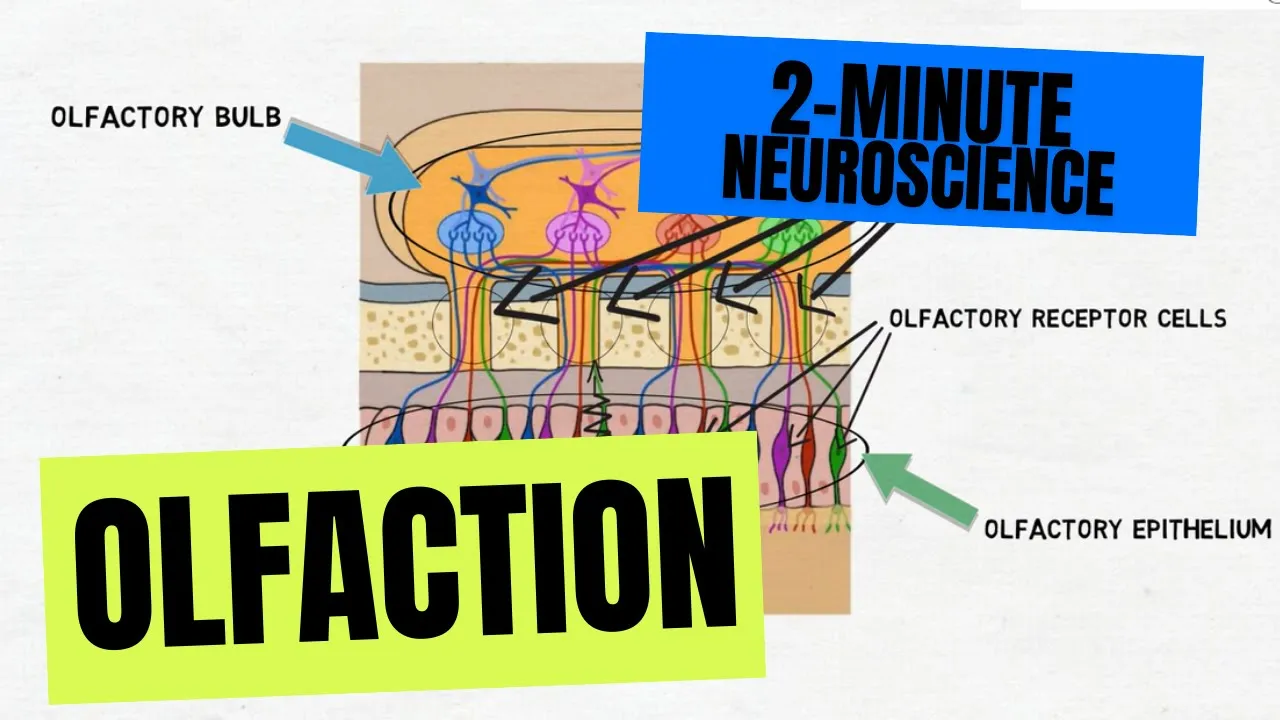
Why this video: This high-speed, illustrated guide maps the basic anatomy of olfaction, from odorants stimulating cilia on olfactory receptor cells in the nasal cavity, up through the cribriform plate, and into the synapses of the olfactory bulb.
Why this video: This video dives deep into the biochemistry of the G-protein cascade. It details how the binding of an odorant causes the protein to swap GDP for GTP, activating adenylyl cyclase III to convert ATP into cAMP. This cAMP then opens cyclic nucleotide-gated (CNG) channels, initiating depolarization.
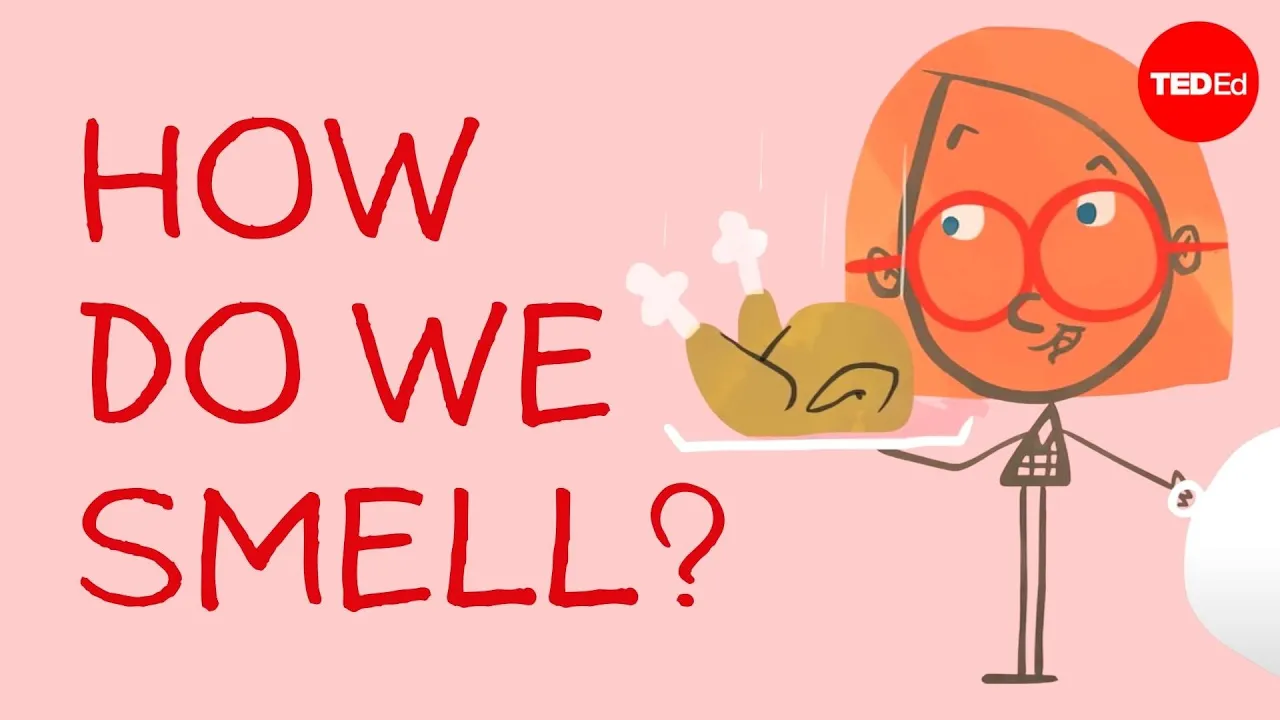
Why this video: This brief animation introduces "combinatorial coding." It illustrates how a limited set of receptor neurons can recognize an infinite array of distinct odors, as each odor molecule activates a unique, overlapping combination of receptors.
Knowledge Checkpoint
- Detail the complete biochemical cascade of olfactory transduction: identify the G-protein (), the effector enzyme (adenylyl cyclase III), the second messenger (cAMP), and the primary open channel (CNG channel).
- Explain the role of the calcium-activated chloride () channel in olfactory transduction, noting why chloride leaving the cell causes further depolarization.
- Define combinatorial coding and explain how ~350 olfactory receptor types allow humans to detect thousands of unique odorant profiles.
Module 4: Neural Pathways: From Receptors to the Cortex
This module traces the central projection pathways of the chemical senses. You will follow gustatory signals through the cranial nerves to the brainstem and thalamus, culminating in the primary gustatory cortex (insula). In parallel, you will trace olfactory signals as they bypass the thalamus to project directly to the piriform cortex and limbic system.
Recommended Videos

Why this video: This real-brain dissection video provides a clear, physical view of the olfactory structures. You will see the olfactory bulb, olfactory tract, and their locations relative to the cribriform plate and temporal lobe structures, anchoring your theoretical understanding in physical neuroanatomy.
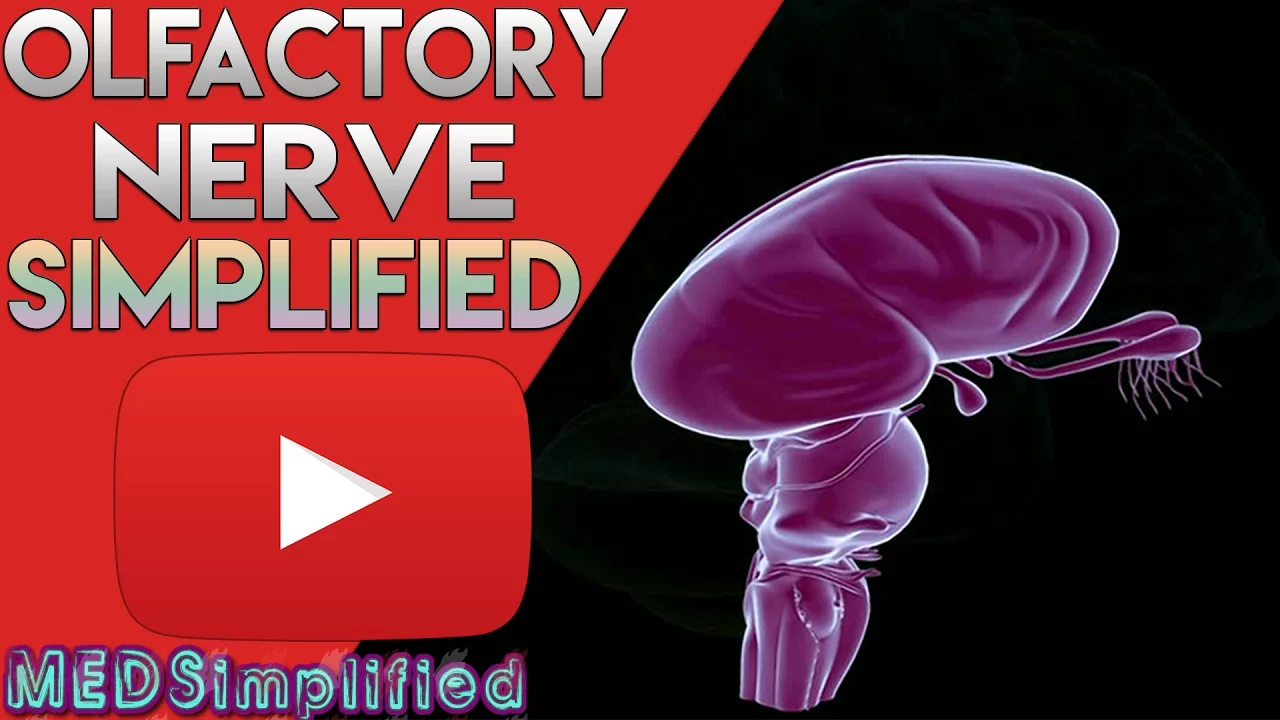
Why this video: This systematic mapping video traces olfactory signals from the nasal mucosa, through the cribriform plate, into the glomeruli of the olfactory bulb, and along the olfactory tract to the brain's primary olfactory areas.

Why this video: This neuroanatomy lecture maps Cranial Nerve VII (Facial Nerve), which carries taste signals from the anterior two-thirds of the tongue. Dr. Najeeb outlines its fibers, central nuclei, and clinical pathways, providing a masterclass on the cranial nerves involved in gustation.
Why this video: This clinical demonstration covers the remaining gustatory nerves: Cranial Nerve IX (Glossopharyngeal, posterior third of tongue) and Cranial Nerve X (Vagus, epiglottis). It shows how these nerves are clinically assessed, reinforcing their sensory pathways.
Knowledge Checkpoint
- Trace the three cranial nerves carrying taste information from the mouth to the nucleus of the solitary tract (NST) in the medulla.
- Map the path of taste signals from the NST, through the ventral posteromedial (VPM) nucleus of the thalamus, to the primary gustatory cortex (insula).
- Explain why the olfactory pathway is unique among sensory systems in its direct projection to the primary olfactory cortex (piriform cortex) without a mandatory thalamic relay.
- Describe the anatomical structure of an olfactory bulb glomerulus and explain which cells synapse within it.
Module 5: Multisensory Integration & Flavor Construction
This module covers flavor integration, showing how the brain constructs a unified perception of flavor from taste, retronasal olfaction, and trigeminal inputs (texture, temperature, and spiciness).
Recommended Videos
Why this video: This compilation introduces the concept of neurogastronomy. It illustrates how flavor is constructed by the brain rather than the tongue alone, showing how visual, olfactory, and gustatory cues are integrated to create our perception of food.

Why this video: This clip explains the difference between orthonasal olfaction (sniffing external scents) and retronasal olfaction (scents traveling from the back of the mouth to the nasal cavity during chewing). This retronasal pathway is key to how the brain constructs flavor.

Why this video: While focused on mental health, this Yale lecture discusses how the orbitofrontal cortex (OFC) and ventromedial prefrontal cortex represent and regulate internal states, emotions, and reward value, which are key to processing flavor and food appeal.
Why this video: This clip highlights the orbitofrontal cortex's role as an integration center. Located just above the eyes, the OFC acts as a central hub that combines sensory inputs with emotional and cognitive context to guide decision-making.
Multisensory Integration Gap Notice
Because high-level sensory integration is a complex topic, online video coverage of the detailed neuroscience behind it is somewhat limited.
Independent Study Prompt: Explore academic journals (such as Nature Neuroscience or Chemical Senses) to research the role of bimodal and multimodal neurons in the orbitofrontal cortex (OFC). Learn how these neurons fire only when specific combinations of taste and retronasal smell are presented together. Additionally, research how the trigeminal nerve (CN V) detects temperature, texture (mechanoreception), and chemical irritation (such as capsaicin via TRPV1 channels, or cooling via TRPM8 channels), and how these inputs project to the primary somatosensory cortex and the OFC to complete the experience of flavor.
Knowledge Checkpoint
- Differentiate between orthonasal and retronasal olfaction, explaining why the latter is key to flavor construction.
- Identify the cranial nerve responsible for carrying somatosensory information (texture, temperature, and carbonation) from the tongue to the brain.
- Explain the role of the orbitofrontal cortex (OFC) in processing food reward value and flavor integration.
Course Map
Key People Index
- Linda Buck & Richard Axel: Discovered the large multigene family of G-protein coupled receptors responsible for odor detection, receiving the 2004 Nobel Prize in Physiology or Medicine (referenced in Module 3 / Video 82).
- Dr. Chris Thompson: Associate Professor of Biology and Neuroscience, creator of the foundational chemistry-of-sensation lectures used in Module 1.
- Dr. Najeeb: Neuroanatomist who provides the detailed structural mapping of Cranial Nerve VII used in Module 4.
- Gordon Shepherd: The Yale neuroscientist who coined the term "Neurogastronomy" to describe the brain's construction of flavor through multisensory integration (concept explored in Module 5).
Final Self-Assessment
Test your understanding of the complete chemical senses curriculum with this comprehensive self-assessment:
- Draw and label the molecular pathways of the 5 basic tastes, distinguishing ionotropic ( and channels) from metabotropic (GPCR heterodimers and monomeric receptors) mechanisms.
- Explain how a mutation blocking the TRPM5 channel would affect sweet, bitter, and umami tastes versus salty and sour tastes.
- Trace an odorant molecule from the nasal cavity through the G-protein pathway (), detailing the ion movements that cause depolarization.
- Explain how the olfactory system uses chloride () efflux as a depolarizing current, contrasting this with standard neuronal depolarization.
- Map the complete physical path of an olfactory receptor neuron axon as it passes through the cribriform plate to synapse in a specific olfactory bulb glomerulus.
- Trace the path of taste signals from the anterior two-thirds of the tongue, the posterior third, and the epiglottis to their target in the brainstem.
- Detail the path of taste signals from the nucleus of the solitary tract (NST) to the primary gustatory cortex in the insula.
- Explain why a cold or respiratory infection that blocks the nasal passages impairs the ability to appreciate the flavor of food, referencing retronasal olfaction.
- Describe how the trigeminal nerve (CN V) contributes to the perception of minty cooling (via TRPM8) and spicy heat (via TRPV1).
- Explain how the orbitofrontal cortex (OFC) integrates taste, smell, and touch inputs to construct a unified perception of flavor.