






















Research indicates that trusting your gut is beneficial in specific situations: when you're an expert in a field with predictable patterns (like chess or firefighting), when making personal decisions where satisfaction matters more than accuracy, and when facing high-stakes emergencies; however, for complex decisions requiring analysis (like stock market investments), relying solely on intuition without logical evaluation is less reliable.
The Science of Intuition: When to Trust Your Gut
Added:Dual-Process Theory: Understanding the distinction between System 1 (fast, automatic, emotional) and System 2 (slow, deliberative, logical) cognitive processing as popularized by Daniel Kahneman.
Cognitive Heuristics and Biases: Familiarity with common mental shortcuts (heuristics) and how they can lead to systematic errors in human judgment.
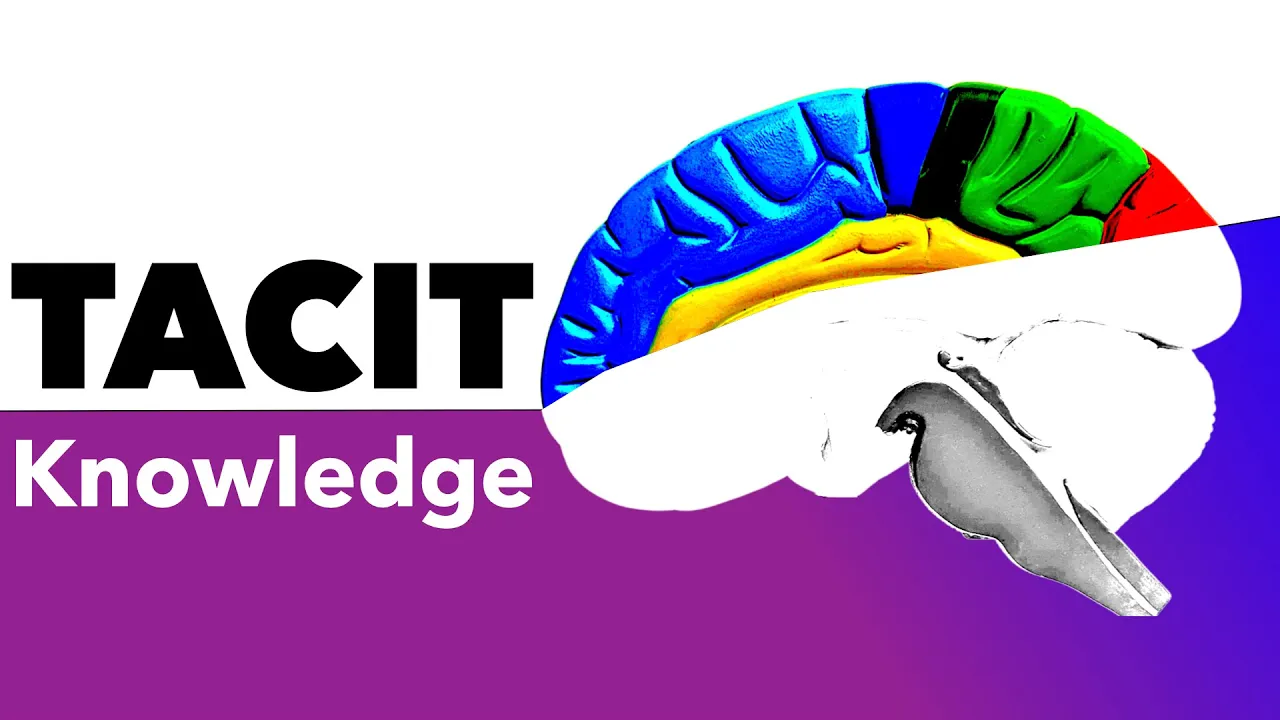
The Role of Tacit Knowledge: Understanding how subconscious pattern recognition is developed through experience and deliberate practice without explicit articulation.
Basic Neurobiology of Decision-Making: A foundational awareness of how the brain processes emotional signals, specifically involving the amygdala and the prefrontal cortex.
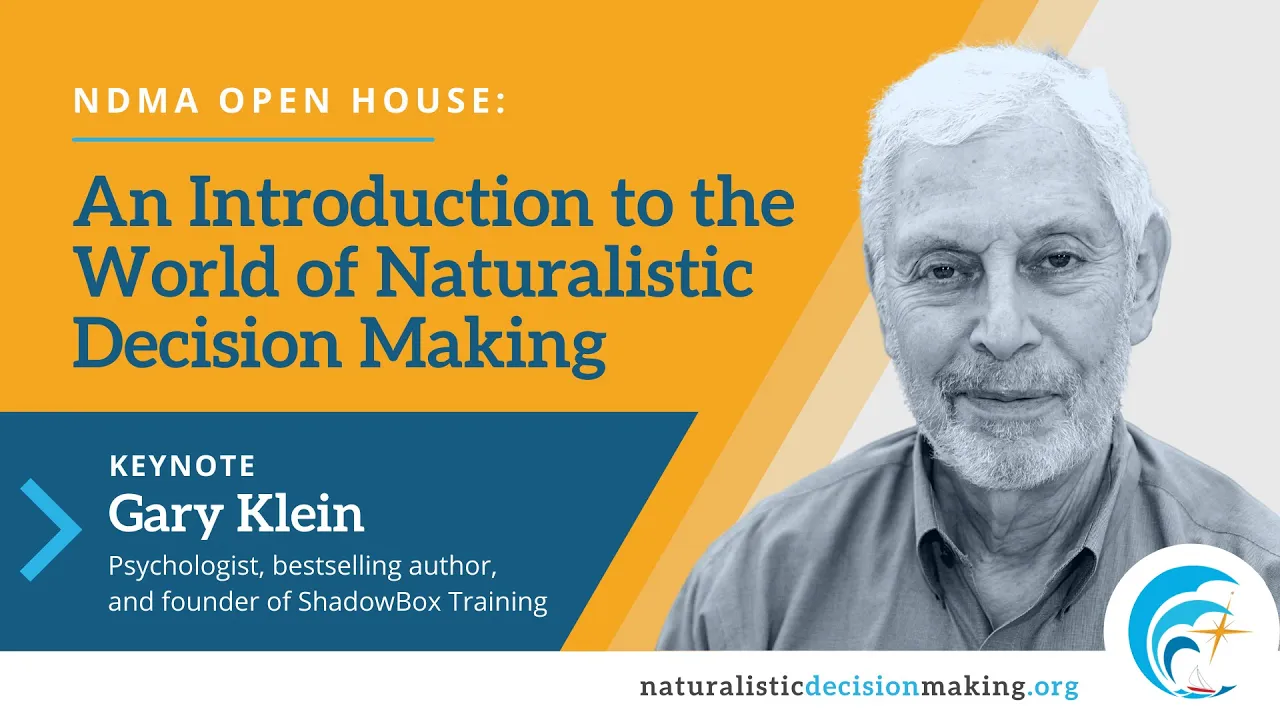
Naturalistic Decision Making (NDM): Exploring Gary Klein's Recognition-Primed Decision (RPD) model to see how experts make rapid decisions in high-stakes, real-world environments.
The Somatic Marker Hypothesis: Investigating Antonio Damasio's neurological theory on how bodily emotions and gut feelings influence rational decision-making.
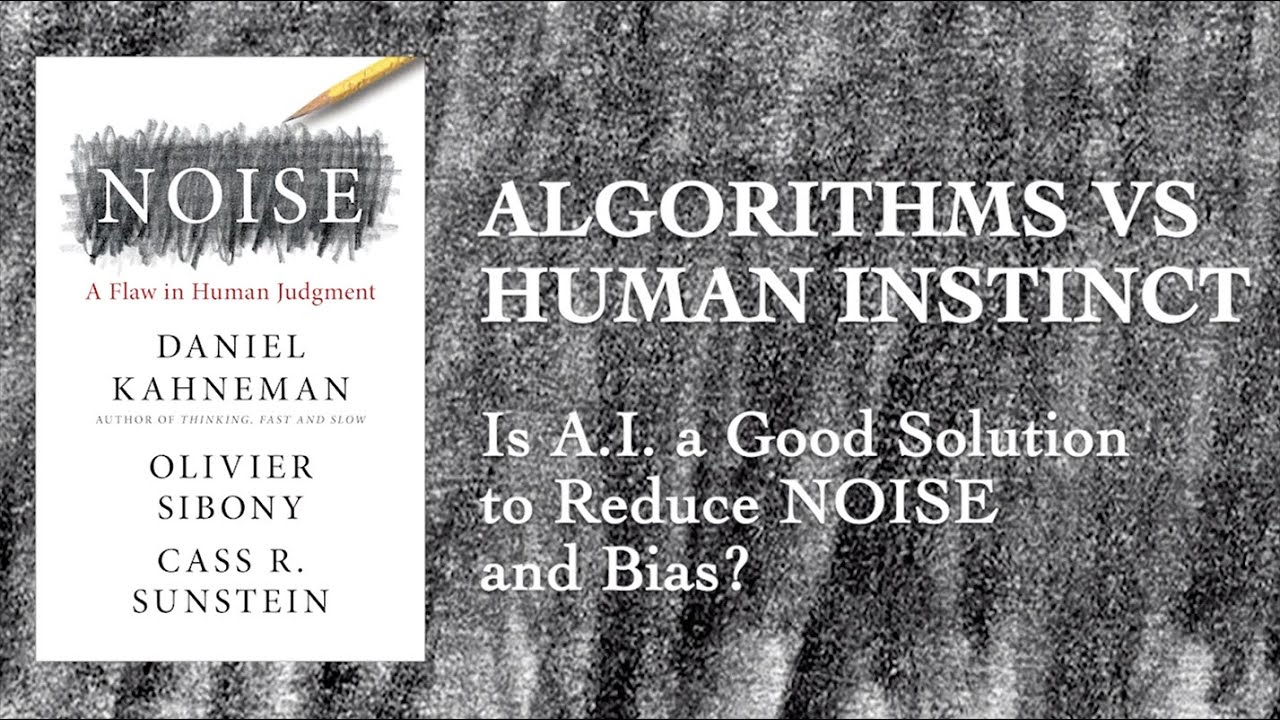
Algorithmic vs. Human Judgment: Examining the ongoing debate and empirical research surrounding when statistical prediction models outperform expert human intuition.
Cognitive Debiasing Techniques: Learning structured analytical methods designed to counteract intuitive errors in high-level strategic planning and financial forecasting.
186.1K views7.7Klikes5:10Original Release: 2018-11-08
[ ♪INTRO ] Sometimes you know exactly what you need to do, and you don’t need to think about it.
Like, maybe you’ve heard the urban legend of a firefighter putting out a fire in a kitchen with his crew.
Suddenly, he got the sense that they all needed to evacuate.
Right after getting out, the kitchen floor collapsed, because the fire was actually coming from the basement underneath the kitchen.
Without the firefighter’s instinct, his crew could have easily died.
Stories like this celebrate gut decisions: someone deciding quickly and confidently without knowing exactly why.
They’re often based on what psychologists call your intuition, and they’re not always reliable.
But after decades of research, scientists can point to times where you might want to listen to them.
Many researchers who study gut intuition think of your decisions as the result of two ways of thinking, which they call System 1 and System 2.
Apparently, they weren’t feeling too creative that day.
These systems aren’t biological things you might find in the brain, but they are a useful model for how people make choices.
System 1 is what you might think of as your gut intuition.
It’s the part of your mind that runs automatically and gives you default responses to choices, usually based on association or recognition memory.
For example, if you see someone walking a dog that looks like yours, your first reaction might be to go pet it.
Because that’s just what you do with cute, floppy-eared pups.
System 2 checks your gut intuition, and it usually takes some conscious effort.
It’s the system that says, “Hold up.
You’ve never met this dog before, so let’s take a moment to think about how this could go wrong.
Like, maybe it might bite you.” In a lot of cases — like voting, or picking a college — System 2 can help you get your best answer, but that doesn’t mean you should always ignore your gut.
For example, if you’re an expert in something — say, chess — your intuition for that activity is probably more accurate and worth listening to.
You’ve spent a long time practicing, so you’ve basically built up a huge library of memories for your intuition to draw on.
That means you could make faster, still-accurate decisions without thinking through all the logical possibilities.
Then again, not all experience leads to this kind of expert intuition.
Psychologists think you need an environment with some kind of regularity that you can learn through practice and feedback.
It doesn’t have to be completely predictable, but the uncertainty needs to follow patterns, like in chess or poker.
This is why firefighters and clinical nurses often have more accurate gut feelings, while stock market enthusiasts don’t.
Even if these people have a lot of experience, the stock market is just too complex, and the feedback is too vague to really train their intuition.
Another situation where you might want to go with your gut is maybe more surprising.
According to some research, if a decision only matters to you, going with your gut might also make you more satisfied with your result.
In a 2018 study in the journal Emotion, 90 people were asked to decide between two DVD players.
They were told to either make a rational analysis, or go with a gut feeling.
And those who did the latter said they thought the choice reflected their true, inner self more.
Follow-up studies showed the same effect, and also found that going with their guts made people more certain, and more likely to share their choice with their friends.
This effect has been shown in other papers, too.
So if you want to be happier about a decision, or pick something that feels more genuine, maybe trusting your intuition is a decent idea.
Now, you might be thinking, “But Brit!
I make all of my decisions with pure logic, so I don’t need to trust my gut.” Well, the truth is, you might be missing out on a helpful resource in general — not just in these specific kinds of situations.
In a 2004 Brain & Cognition study, researchers demonstrated this by having 43 people train their gut responses in a simple card game.
Players had to keep drawing from four decks.
Some were bad decks that looked good.
In other words, if you kept drawing from them, they would give consistent payouts, but would have an occasional huge loss that more than wiped out the wins.
Other decks were good, but looked bad.
The regular payouts were smaller, but the losses weren't as devastating.
Most people would take 40 to 50 draws to figure out what was going on and switch to drawing from the good decks.
But before then, their stress response would kick in for the bad decks.
An electrode on their hand measured that they were sweating more on average before drawing from bad decks, even before they could figure out that they were bad.
So even though their logical mind hadn't caught up yet, some part of their brain was making the association.
It turns out this is a really useful skill, too.
The same card game was given to people who had damage in a part of their brain called the orbitofrontal cortex.
It’s at the very front of your brain right above your eyes, and is associated with integrating emotions into your plans and choices.
This group never showed a stress response before seeing the card, and would keep picking from the bad decks.
Sometimes, they could even report which decks were which, but still went with the bad ones.
Even beyond card games, this loss of gut feeling can be pretty impairing.
These kind of patients usually do well on things like intelligence tests, but without gut feeling, they often make less-than-ideal choices in their daily lives.
There are definitely situations where it makes sense to get logic involved, but overall, it’s often not a bad idea to listen to your gut feelings throughout the day.
That’s especially true if you’re an expert or looking for a little extra satisfaction.
And if a firefighter suddenly tells you to leave a building, it’s probably a good idea to trust their intuition, too.
Thanks for watching this episode of SciShow Psych!
If you’d like to be among the first to see videos like this, or you want to keep learning about the things that make people tick, you can go to youtube.com/scishowpsych and subscribe.
[ ♪ INTRO ]
Up Next

74:58
Ego Development & Cultural Psychology | Lecture 8 (PSYC 2344)
@UHInstruction
3K views•2009-01-17

68:32
Cognitive Skills for Differentiated Instruction | Teacher PD
@BrainWareLearning
631 views•2017-12-17

9:55
Thinking, Fast and Slow: Daniel Kahneman Animated Book Summary
@FightMediocrity
2.3M views•2015-06-05

6:40
The Nocebo Effect: How Beliefs Can Cause Real Harm
@CGPGrey
10.4M views•2013-12-23
Related Study Plans & Knowledge Roadmaps
Structured learning paths in Psychology
psychology
Neuroscience of Creativity: Networks & Training
01Foundations of Creative Cognition
02The Cognitive Neuroscience of Insight & Fixation
03The Triple Network Model of Creativity
+ 1 more learning modules
15h4 modules
Explore Roadmap
psychology
Imposter Syndrome: Etiology & CBT Framework
01Defining the Imposter Phenomenon
02Socio-Developmental Etiologies
03CBT Fundamentals & Thought Distortions
+ 2 more learning modules
15h5 modules
Explore Roadmap
psychology
Adult ADHD: Executive Dysfunction & Scaffolding
01Neurobiology of the ADHD Brain
02The Core Triad of Executive Deficits
03Executive Dysfunction and Emotional Regulation
+ 2 more learning modules
12h5 modules
Explore Roadmap
psychology
Loneliness: Evolution, Neurobiology & CBT
01Evolutionary Origins of Human Connection and Loneliness
02The Neurobiology and Physiology of Chronic Loneliness
03Maladaptive Social Cognition: The Psychological Loop
+ 2 more learning modules
12h5 modules
Explore Roadmap