
















The gustatory (taste) and olfactory (smell) systems detect chemical stimuli through specialized receptors; taste receptors on the tongue detect five basic qualities (sweet, salty, sour, bitter, umami, and fat) through different transduction mechanisms involving ion channels and G-protein coupled receptors, while olfactory receptors in the nasal epithelium detect thousands of odorants through combinatorial coding where each odorant activates a unique pattern of glomeruli in the olfactory bulb, with both systems rapidly projecting to limbic structures like the amygdala and hypothalamus for emotional and behavioral responses.
Neuroscience of Taste and Smell: Gustation and Olfaction
Added:Basic principles of sensory transduction, specifically how physical or chemical stimuli are converted into electrical signals by the nervous system.
Fundamentals of neuroanatomy, including the basic structure of the brain, the cerebral cortex, the thalamus, and the limbic system.
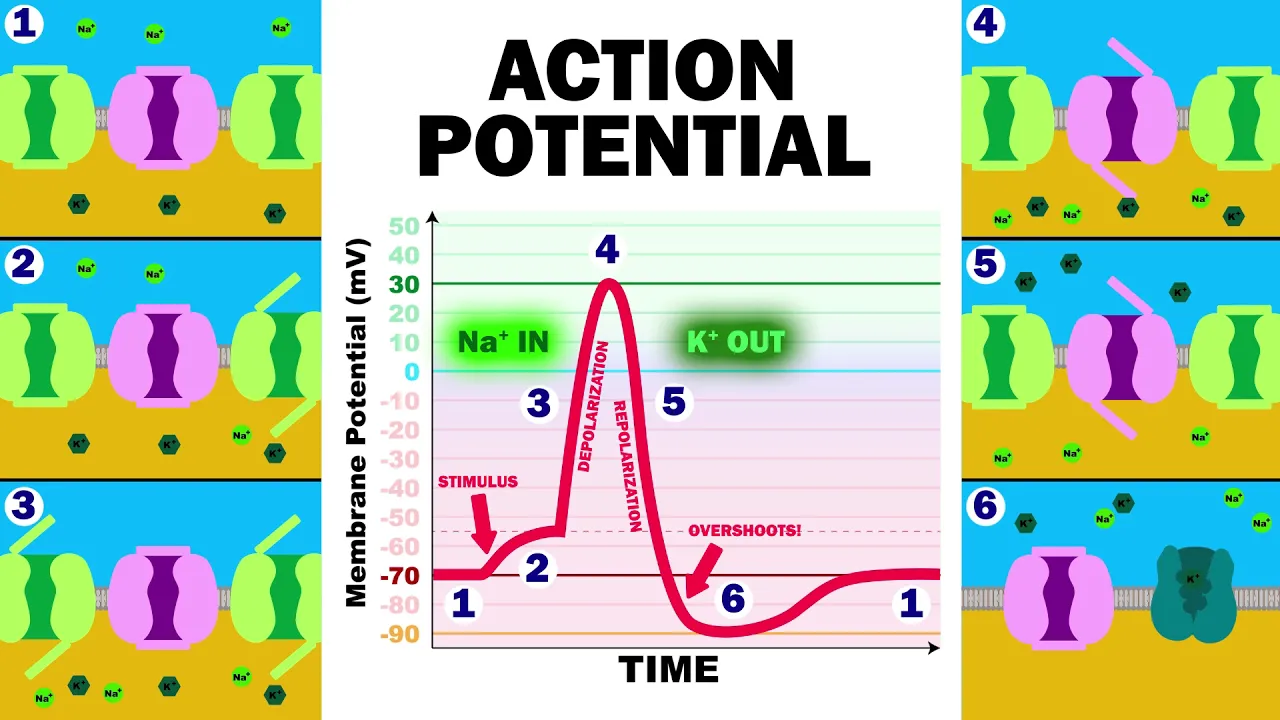
The mechanics of action potentials and synaptic transmission, which are essential for understanding how sensory signals travel along neural pathways.
General cell biology concepts of membrane receptors, specifically G-protein coupled receptors (GPCRs) and ion channels.
The concept of multisensory integration, particularly how taste, smell, and trigeminal somatosensation (texture and temperature) combine in the brain to create the complex perception of flavor.
Clinical disorders of the chemical senses, such as anosmia (loss of smell) and ageusia (loss of taste), and their early association with neurodegenerative diseases like Parkinson's and Alzheimer's.
The neurobiology of memory and emotion tied to olfaction, exploring how olfactory pathways interact directly with the amygdala and hippocampus.
Emerging fields of neurogastronomy and sensory marketing, which apply the neuroscience of taste and smell to food science, culinary arts, and consumer behavior.
292 views8likes54:31Original Release: 2023-05-28
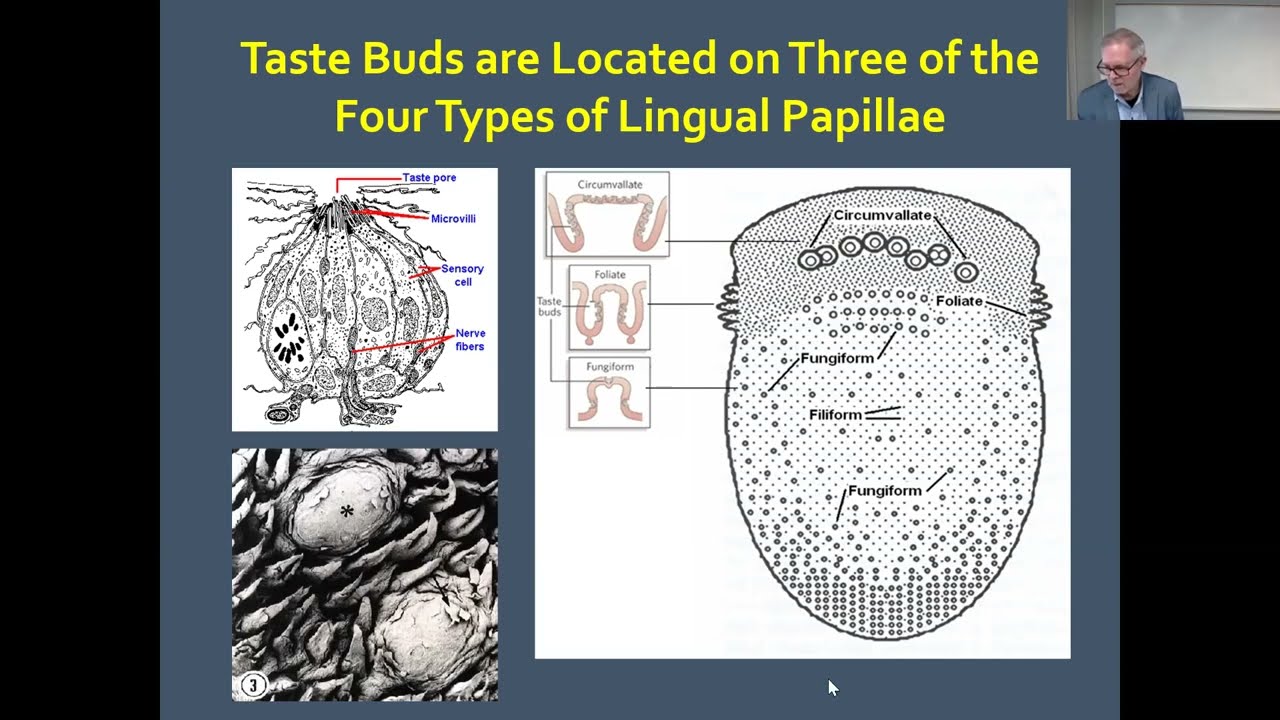
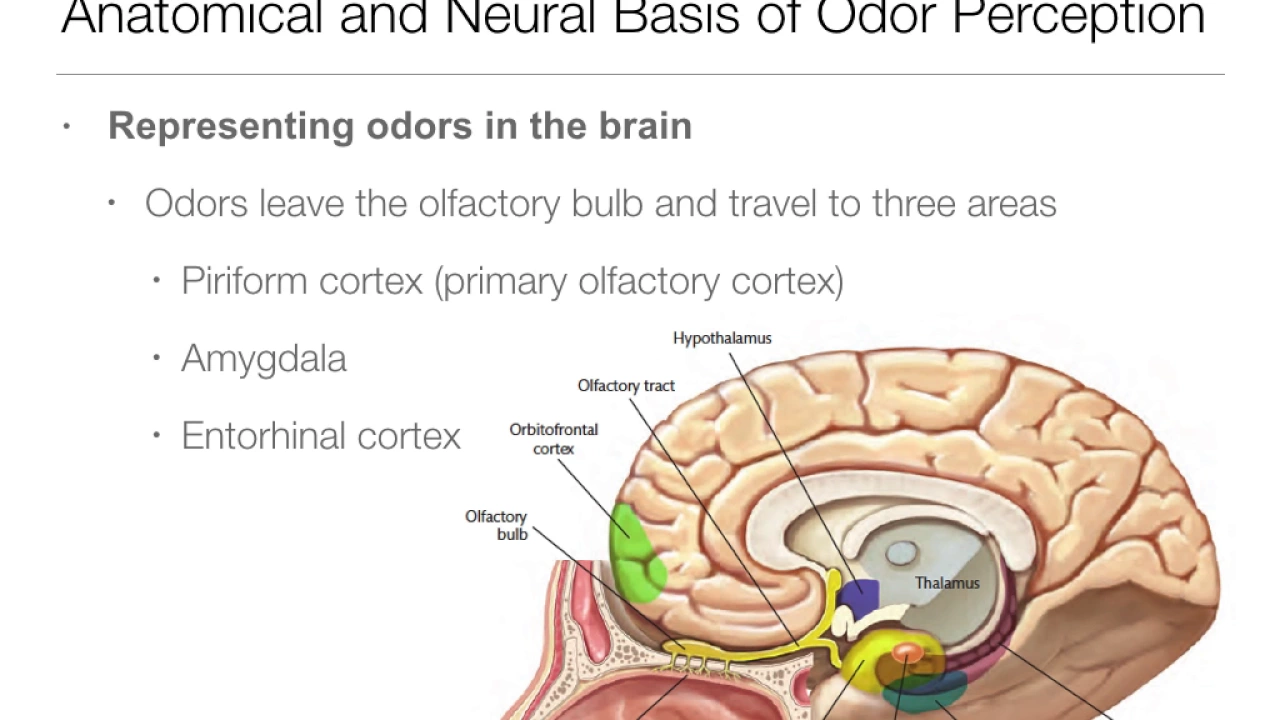
hey everybody hope you're having a good week and Welcome to our lecture on gustation and olfaction uh so for this first part we're going to cover gustation and I'll try to go through it as quickly as possible and in part two we'll cover the olfaction so one thing that I think is really important here is to give you a quick compare and contrast between these systems and the ones we've already talked about so for gustation and olfaction they differ from the physical energy that we've seen other systems respond to in that they respond to chemical stimuli and one thing that's kind of similar between them but not exactly the same is that we've we've seen this sort of topographic map where we can look at the type of input in the visual and auditorium's meta sensory system but for the gustatorial factory system we're kind of still trying to understand that mapping it's not a perfect science yet and then lastly if we look at the pathways we actually see a pretty similar anatomical Organization for the visual auditory and some other sensory system as we go from the organ to the brain but in the gustatorial factory systems because maybe these are involved in things like smelling food and detecting predators and remembering tastes or maybe because they're so close to the brain they very quickly Branch off into other parts of the brain like into the limbic system that's involved in emotional processing or into other areas of the brain all right so starting right into gustation the first thing that we need to understand for gustation is just the taste receptors and just like with these other systems you need to know the process of production so when we're talking about gustation we're talking about the detection of chemicals that we consume and the way that we tend to think of this is in terms of flavor but the thing that you should know is that this concept of flavor is really our perception and actually you've probably heard this before but if you haven't that this perception ends up being a combination of gustation and olfaction so the things that we perceive as flavor are really this complicated mixture of multi-sensory information amazingly we have about 10 000 different taste buds on our tongue and these are spread um across the tongue but they're also on the hard and soft palate and in the pharynx and the layering so these go all the way back into our throat and the way that these taste buds work is that there are these papillae which are small bumps on the top and side of the tongue and so you can you can see those here and all of these actually contain the taste buds but they also contain sensors for touch and temperature and so if you look at each of these different papillae they actually have kind of a common structure where there's a bit of a channel and inside of the channel are the actual physical taste buds okay so one thing that becomes important for when we're talking about the different taste buds and the taste sensations is the anatomy this is always going to be important for us and this also relates back to some of the um pathway function so you need to know this for our taste receptors there are kind of three different areas on the top the first of these is the fungiform papillae and so these are on the anterior or front part of the tongue and each of the different taste pores here can contain up to eight different taste buds inside of it and these are also a really key location for touch pressure and temperature which you all know the front of the tongue tends to be more sensitive for these things and then a little bit further back we have these foliate papillae the folio papillae are on the sides of the tongue and they're arranged into kind of eight rows if you will and these represent about 1300 of the 10 000 taste buds so a smaller amount but these line both sides of the tongue and then the last thing that we have are these circumvalid papillae and so these make this V shape right here on the back of the tongue and there's only about 250 different so our taste buds are really these uh trenches and each of them has 20 to 50 receptor cells inside of it so these cells kind of like a few of the others we've looked at have these little hair-like protrusions uh called cilia and these are actually the things that will make contact with the saliva through a little hole called A Taste pour of its inside of the taste bud now another thing that's really different about our taste system is that you know of course these are cells that are connected to the nervous system but they are exposed to a ton of toxins and acids and bases and all kinds of things because all of this stuff goes through our mouth and so these taste buds only have a lifespan of about 10 days which means that they have to regenerate constantly and they have a high rate of turnover and this is very different than any other so there are at least six different qualities of taste and one of the things that I want to point out before we go through these qualities of taste is that this image here represents something that that's kind of a common myth which is that people feel that one part of the tongue is responsible for one taste now there's some truth to this but there's also a component of this that's inherently false so we have to ask this question in two different ways the first is is one part of the tongue solely responsible for one quality of taste as in is this front part of the tongue here the only place where we can taste sweet and if we ask the question that way then the answer is no that's completely false but if we ask a question the other way and we say is the front of the tongue more sensitive to sweet or too salty then the answer is yes there are sensitivity zones and that's kind of where this myth comes from so if you've ever done that experiment you've said well of course I can taste sour on the front tip of my tongue then that is true but there are sensitivity zones so the first quality of taste is we is named Umami and this actually detects monosodium glutamate or MSG which you've probably heard of as being this this thing that's often put into foods that are highly processed but this is really an essential amino acid that's found in most foods that are packed with protein like Meats the next taste is a sweet taste and of course we developed this to detect various fruits and edible plants because they'll share this quality so there's an evolutionary approach here where we've we've developed sensors to detect things that are important the third of the more important taste is salty and so salty we're looking for sodium and we need that to function our brains use that of course in the action potential in our bodies use this in trying to maintain homeostasis so salt is very important to us and we have a receptor for that and sour and bitter are two qualities that we taste and in fact when we're trying to make things palatable we often now use these flavors but originally they were designed or originally we evolved with these receptors that Were Meant to help us detect things in the environment that we were supposed to stay away from like fruits that weren't ripe yet or poisonous things and that's really important although that comes along with a learning component where you discriminate which of these things may still be edible over time then the last quality which is not pictured in in the other photo is fat and this was probably the last to be discovered because we weren't able to figure out exactly how we were detecting fat we could tell that animals and experiments if you deprive them of fat they would seek out more high fat foods and things like this and so what we found out now is that our saliva is actually the key to this receptor so our tongue doesn't detect fat itself but it detects this um chemical called lingual lipase and this chemical is what is created by the mixture of our saliva and fat and that's what we detect so you don't need to to know this diagram here but one thing that I want to point out is it's just a really nice summary as we go through to give you a little bit of an idea of what receptors that we know and and don't know for detecting all these different things and this summary comes from a paper that I found and I think it's just a really nice quick representation of of the different receptors that we're going to be talking about so one really important question we could ask is what is the point of having different taste receptors and one of the things that's suggested by some of the research is that we use these taste receptors in order to help us find the most appropriate food sources at any given time so one of the interesting things that we see is that animals will actually use this so if we increase the cost of a meal as we go from left to right here and we look at the number of meals that animals will take of any given kind of of food and we see is that animals of course try really really hard to not change the the total amount that they'll take in so that the total amount of food that they consume is pretty much the same even though you can make it harder and make the animals work harder but as they work harder they begin to switch the way that they take in their meals and they'll start actually taking in less and less protein and they switch over to taking in more carbohydrates similar to something that you might think of in a marathon runner when you have to exert a lot of effort then carbohydrates become a better source of energy and so there's this thought that this becomes important for balancing out energy another thing that we should look at here is what happens when food becomes scarce and actually there something similar happens animals will try when the rate of encounters go down uh to around 10 percent to keep the same total amount of food and yet again we start to see this switch when food becomes scarce towards carbohydrates things that are more complex energies and away from protein so this is thought to help us find a balance and keep the right amount of food in our diet all right so let's get to the specific transduction one of the things that's most important for you to know one thing that's important for me to point out is that transduction in the taste system is not incredibly well understood one of the ones we understand the best is a salty taste because we've been able to tell that we have receptors on certain taste buds that respond to really any salt and so because all the salts have a pretty similar composition where they have a cation such as sodium and an anion such as chloride right sodium chloride is the chemical formula for table salt but we can also have any other set of combinations we could for instance have potassium chloride and that would also be a salt so these taste receptors seem to respond just like the sodium channels we have in other neurons except that they're a little bit more liberal in what they'll take in and so really any salt is able to depolarize them and this causes the you know the salt will come in and cause a depolarization of The Taste cell and then of course much like all of the other systems we've looked at this is going to cause a receptor potential so it's going to cause a change in neurotransmitter release that eventually leads to more action potentials getting into the primary gustatory cortex and the gustatory system so one thing that we know about the receptor for sour taste is that the receptor itself seems to be activated by hydrogen atoms and we don't exactly know what this pathway is but we think that the receptors are responding to things like organic acids that make up sour tastings um as well as other anions that might make them up but we don't as I said know the entire signaling of this pathway so there seems to be some sort of conversion here much like it's happening with fat from the components that make up the sour tasting and the the common link seems to be that they they must get to these these hydrogen atoms that we're talking about in order to finally trigger the receptor bitter taste can detect all kinds of different molecules and really what's common to all of these is that it's the same thing that's common to poisonous plants which is that they have alkaloids so the bitter receptor is actually a g protein coupled receptor and so when we say this what we really mean is that this is a metabotropic receptor which you should remember from chapter two means that we're going to have some sort of molecule that binds and when that molecule binds it's going to activate and release this G protein which can eventually cause other channels in the cell to open and in this case there's a very specific G protein called Gus ducting that you should know the steps of the each of these Pathways where we do know the the pieces of it and so this G protein got stuck in is going to be the thing that triggers this intracellular Cascade that will open up channels and increase intracellular calcium and then the second component of this is that these open a trip Channel called trip M5 and this trip M5 channel is what eventually causes the depolarization and the receptor potential as far as the neurotransmitter for these they actually release ATP as their neurotransmitter now arguably the two most important tastes that we have are the sweet taste and the Umami taste sweet is going to get us to all those things we really really love and they have a really high energy content this is why we all would prefer to go after a Snickers you know over many other Foods if we had our chance so the sweet taste they use something similar to the bitter taste they use this G protein gustuction except that they have a very specific two-part channel that they use to release this so This two-part Channel involves this trip receptor two and this trip 1 receptor type 3 working together at the exact same time so we need both of them to be activated in order to get the release of get stocked in and what happens here is is sort of the same process we end up with the release of ATP and this is what gives us our receptor potential and causes more action potentials the interesting thing is that the Umami also has this two-part receptor complex and instead of just using one G protein it uses two it uses gustuction and transducin so similarly we have these two proteins but instead we have a trip 1 receptor one and a trip one receptor three and it's actually just the switch of the receptor one and two that gives us this specificity so we we have a slightly different pairing and we also have a different G protein couples Cascade that allows us to respond to each of these differently the major thing that binds here is pretty straightforward because we know that we have neurons that already respond to the neurotransmitter glutamate and so what we get to get the Umami taste is a breakdown of that monosodium glutamate into glutamate that can bind to these cells and start this whole process and just like the other systems we've looked at this releases ATP and starts this whole signal in Cascade all right so the second important piece you've been asked to know for each of these systems what is the anatomy of the taste system so let's go through this so the first step in this pathway for case signal and getting all the way to the brain is that we have our taste receptors of course detecting their input of interest and this could be salty or sweet or Umami and then these taste receptors on different portions of the tongue that are detecting the tastes are going to release ATP as a neurotransmitter so just like in every other system that we've looked at the next stop after we have these receptor potentials we've released the ATP is going to be on a set of bipolar neurons and as you remember from pretty much every other system these are these neurons that look like they have arms branching out in each Direction and one interesting thing here that you're going to see is that the information coming from these bipolar neurons actually can take one of three different paths the first path is through the seventh cranial nerve or the facial nerve the other is through the ninth cranial nerve or the glossopharyngeal nerve and the last pathway is from the vagus nerve or the 10th cranial nerve each of these Pathways has slightly different bit of information so if you take a look back at the last slide for a second what you'll recognize is that the seventh cranial nerve has information coming from the anterior or that front part of the tongue where we have most of our taste receptors the ninth cranial nerve ends up getting information from the back of the tongue which includes that circumvaluate papillae and then also the sides of the tongue and then the tenth cranial nerve is actually getting information from the very back of the throat remember we talked about taste receptors going all the way back into the pharynx and the larynx and so this is where that information can pass despite having three different pathways the information that we're seeing here ends up converging again and so all three of these cranial nerves that are carrying information about taste end up converging in a part of the brain stem called the nucleus of the solitary tract and then that information pretty much like our other sensory systems is passed on to the thalamus to the ventral posterior medial Thalamus to be specific before heading onward into the primary and secondary gustatory cortex one really important thing to say about the the information that's passing through into the kind of primary and secondary gustatory cortex is we're getting all kinds of information from the tongue so this is taste but this pathway is also responsible for some things that kind of look like the somatosensory components of the tongue so how hot or cold something is whether the tongue is experiencing mechanical changes or whether something is causing the tongue to be in pain and so there's really a wide variety of things that this pathway can respond to but the other thing is if you're if you've been paying attention closely and this Harkens back all the way to that first slide that the taste system differs because we very immediately take this information and we pass it on to other places in the brain these places that are involved in in emotion and telling us is that thing good or is it bad and so the the two places that this information passes to very very quickly are one the lateral hypothalamus and if you remember us talking about deep brain stimulation one of the things that I often mention when we talk about deep brain stimulation or electrical stimulation of the brain rather is that the lateral hypothalamus is kind of one of the first places where we we saw some very cool functionalism because you stimulate this area and it causes animals to start voraciously eating at least if you hit the right part of it and so the lateral hypothalamus here it makes sense we we have information going into this area that's involved in feeding and also um it's it's involved in some bit of emotional processing or even maybe the value of things and then we also have information coming into the amygdala which people like to think of in sort of a stereotypical way as a fear Center but really it's involved in also looking at things that are both positive or rewarding and negative or aversive and so we have all this information coming in about how good or bad something is and and that it in turn can drive whether we seek that out in the future it can help form memories about these things and can give some information about maybe even how much we're eating based on the value of it so there's a lot of information processing that's split out very quickly now I've told you the entire time that we know a whole lot less about the taste system and especially in terms of exactly what constitutes the map but the cool thing is that if we go and look at fmri studies then we're able to tell that there there is in fact some kind of a mapping there is this topography or a map happening here and I I don't need to really say much more than to just point out to you that if you look at the different possible tastes that we can see here if you look at Bitter or salty or sour or Umami or sweet you can see that we have these really consistent clusters here of what parts of the primary gustatory cortex are responding to those and much like we've seen in other systems this Topography is pretty close between different individuals and in that there's you know the sour taste is always going to be processed kind of near the front part of the brain and the sweet part is kind of going to be processed near the back part of the brain um there of course the the smaller areas may not line up perfectly across people because of this idea we've gone back to over and over and over again which is that all of these sensory systems are a mixture of maybe slightly different changes that occur during a development but also learning right so there's a kind of a nature and a nurture component to these so the thing that we're going to end on a little bit here is you know I've been saying this whole time we don't really know exactly how the gustatory cortex is organized but there's a few different ideas uh for what the organization might look like and I think that you know a challenge that I'm going to give all of you is to think about which of these you think might be more likely so one of the possibilities is that the the neurons in the gustatory cortex might be kind of broadly tuned so they don't respond to any sort of taste and they don't really have a visible topography right this is this is the simplest possible thing that we could ask for in terms of organization but that fmri study we looked at doesn't really support that so I'm going to take that one and I'm going to throw it out the window for you but the remaining bits of these um I want you to think about a little bit so one possibility is that we do have specific neurons that respond to taste but that maybe we don't have a specific kind of map or topography so how does that match with the fmri study think about that for a second and then another possibility is that we have these taste specific neurons and that we have some sort of a segregated topography meaning that one kind of taste has its own defined area with its defined borders and nothing else crosses into that area this is a possibility what do you think is this the most likely a third realistic possibility is that we have neurons in the gustatory cortex that are responding to specific kind of tastes but they have a complex topography there's some interesting advantages to this one if you think about it where uh maybe we have regions that overlap a little bit is this something that could have some benefits for understanding complex tastes is this maybe a reason why the fmri studies are or are not consistent across individuals what would the benefit of this be and then the final possibility is actually that the neurons are broadly tuned but that there is still some sort of topography where maybe there's mappings but it's a little bit complex and what this would suggest in a way if if to point out something that may not be immediately obvious to all of you is that that would mean that the neurons in the gustatory cortex because we're talking all the way up in the brain now that these could be responding to the input from many different taste receptors right we could have a taste receptor for sweet and salty and other things converging and we could have a neuron that responds to just the right blend of salty and sweet to give us an idea of what that might be like in one kind of food and it might also respond in a different setup to bitter and sweet and so when things are bittersweet we might have a different area or neuron that responds to kind of that complicated mixture so these are all things to think about and you know what the cool thing is there's no real answer here but it's a this is this is exactly what I'm trying to get all of you to do in this class is to start thinking critically and looking at the evidence that we have because Beyond this class that's what's going to be the most important so think about those things all right here we go with part two we're talking gustation in Old faction and this time we're going to be talking specifically about olfactioned now if you've been sitting here and you just got done with part one and you're moving on to part two take a quick break go take a walk walk around your house go do something you're probably sitting at a computer all day long right now so get up stretch do something 10 jumping jacks gotta break this up a little bit don't watch these things back to back I'm giving you the chance to go take a break make some lunch do something go watch some Netflix I don't care but try not to just cram all these at once your learning is going to be better if you space it out a little bit all right this is what we think of olfaction our nose it's naughty little kids that's what my kids look like half the time they always they're always sick they always have colds they always have something it makes me pretty glad that we're away from everybody else right now so the olfactory system is the formal name for our sense of smell and there are some other things involved here and this is why we call these things systems right we're not really talking necessarily about the sense per se but when we looked at gustation we were also talking about our ability to to use the tongue to detect you know temperature and all kinds of other things and so these are all kind of part of the gustatory system it's usually a set of responsibilities and it's not just one piece of the system the thing that we detect in our olfactory system are odorants so this is some sort of stimulus that activates the olfactory system pretty straightforward you've probably heard of odorants before or at least an odor one thing that is really interesting about the odors that we pick up is that these things that come into the nose tend to be lipid soluble and so the the way you can think of this is oils and if you really think about all kinds of perfumes and candles and and and anything else like that that we use you know if you if you look at those they tend to be oil based sometimes alcohol with a little bit of oil so that they can spray on and dry but it's a mixture of those things and the different chemicals that make up an odor are actually what we're detecting when we detect some kind of an odorant we're detecting this complicated mixture of all of these different things coming so let's just talk about old faction as a broad topic for a second so for humans this is our second strongest sense and really the only other thing that we devote more to is vision there are a couple of major reasons for this the first is that olfaction is incredibly important for the process of seeking and finding food so we're able to seek and find food using our sense of smell and only when we've already found food does taste take over and so as as humans we're pretty much everything is available at the drop of a hat um that isn't really as much of a thing anymore we care a lot more about taste and so it may seem a little less important because we just want things to taste good but when we're out hunting and looking for food then the our sense of smell provides a whole lot of information perhaps more important to us now is that this can provide information about other people and there are a lot of subtle bits of smell that help you to tell if somebody is sick or unhealthy they tend to have kind of some bad odors that we associate with me you know maybe bacteria or somebody has some BO all of these things are important and they're also things that we still use even though it's been kind of impossible to identify you know things like sex pheromones that you know might drive people together we do use that information to get some ideas of of who the people are around us and we can identify them and we can also make some decisions about them using our sense of smell and then for many other mammals this is used to find Predators but for us we still use this for harmful things in the environment if there are any kinds of toxins if something you know smells really bad it is you know decaying or or rotten we still use this to help avoid things and so if you put all these together then smell ends up becoming a really really important sense for us so you've probably heard of drug sniffing dogs but we don't have too many drug sniffing humans working on the police force um what what do you think the reason for this is well there's there's been this idea over time that some animals just have a much better sense of smell and this is something that actually our very own John McGann here at Rutgers decided to put to the test because he could not find the information the the science that supported this claim and it turns out the reason why you can't find that is because it's not true there's a very important difference between humans and the way that they interact with their environment and the way that other mammals interact with their environment and it turns out that if you compare humans to mice or to dogs that there are certain things that any one of these animals might do a little bit better but for many of the chemicals that they tested it turned out to be the case that the animal that could detect the chemical the best at the lowest concentrations were the humans so one thing that this tells us is that there can be some differences in the olfactory system um across different species and and so that's one really important finding but the other thing that came out of all of this is that We Now understand the major difference in a way that dogs interact with smells and humans might interact with smells makes all the difference in whether or not they're going to detect the smell better so what is that well the major difference is that most other mammals still walk on all four legs and that means their noses are closer to the ground and that means that animals like dogs spend a lot of time just walking their nose along scent trails and so not only do they have more practice than us there's a learning component here but they're also just closer to the substrate closer to the thing whether it's a road or a part of a car or or a part of the floor that has the smell on it and it turns out and you can imagine a bunch of silly people doing this but if you take a bunch of human beings and you blindfold them and you ask them to follow a scent Trail through somebody's kitchen or through a laboratory space or through whatever else they can do it they can follow the scent Trail just as well as any other animal so what we take away from this is that humans actually have a really impeccable sense of smell all right so let's talk about the structure of the olfactory system for a second and why that structure is beneficial for the way that we smell so the cells these olfactory cells that give us information about what's going on in our environment are up in a place inside of the nose called the olfactory epithelium olfactory epithelium and the olfactory epithelium is way way way way way way the hell up at the top of your nose now this might seem a little bit weird the nose extends all the way out into the face and that means we could have our olfactory receptors at really any point in the system so why have we put them way up at the top of the nose well it turns out that this is on purpose this olfactory epithelium is a patch of mucous membrane that's at the top of the nasal cavity and air will pass through and hit the olfactory epithelium but it does so only under certain circumstances so when we're breathing normally air will flow through the nose and it's going to want to go back kind of into the throat and into the lungs now only when we really take kind of strong active sniffs which we do all the time regularly without you even realizing it you're you're sniffing and smelling things a little bit now but only these purposeful Snips will take a small fraction of the air up and it turns out that it's only about 10 percent because the rest of the air the large majority of the air is still kind of taking this path of least resistance so only about 10 percent of the air can reach up to that olfactory epithelium and the big advantage of having the air get up there is that this is only a sample of what's going on this just gives us a little taste of what's in that error right at the level of this olfactory epithelium so the olfactory receptors work pretty much like a lot of the other systems that we've seen where we have a set of receptors that are connected to bipolar neurons just like pretty much all the other sensory systems and the Soma of these cells or the cell body of these cells lies in this mucous layer this olfactory epithelium and very similar to our taste cells because these neurons are exposed to all kinds of different toxins in the environment right we if we're if it's getting into our mouth it's pretty much getting into our nose and so these neurons are one of the few sets of neurons in the body that are constantly regenerating they undergo this process called neurogenesis and that's simply because like the taste receptors they are exposed over and over and over again to chemicals that's their job is to sniff these chemicals and to determine what they are so like many of the different cells we've looked at we have these cilia or kind of hair-like extensions on the olfactory cells and these are embedded in the layer of mucus or this mucous membrane and what happens is that odors actually have to penetrate into this mucous layer in order to be able to activate the different receptors on our olfactory cells and this is where the the idea that those odorants need to be lipid soluble becomes really important because the odors that best penetrate this layer are going to be lipid soluble and then what ends up happening is that there is a small opening between where these olfactory neurons are and the Brain because if you look at where everything is happening here choose a bit of a better color if you if you look at this connection the olfactory bulb is pretty much nested right at the base of the brain and so we have all of these these cilia and the neurons are attached to that are sensing all these chemicals coming in and then they pass through the cribiform plate which is a bone at the base of the brain and the top of the nose that the information passes through so unlike a lot of other sensory systems that have to do some traveling the olfactory system immediately can get its information right to the brain in terms of the olfactory system the there's a lot of different odorants that can activate it but actually the transduction is really really simple for all the different receptors every single one of them doesn't matter what the chemical is the process is exactly the same so when an odorant binds to The receptors we've got our odorant coming in here then we end up with one of these G protein Cascades and so in the case we're talking about here the G protein that matters is actually one called Gulf okay and the reason that it's called Gulf is that it's the G protein for the olfactory system G protein olfaction golf now unlike the many different signaling Cascades we've talked about once we activate a g protein in The Taste system or in other cases there can be a few different intracellular Cascades and I actually I'm going to tell you you don't need to understand or know any of the others because there can be two or three or four different sets of kind of chemical reactions that happen within the cells but in the case of olfaction you should know this because this process is the same for all of these neurons so it's very consistent where the G protein activates an enzyme you can see that enzyme here called adenylyl cyclase okay so anytime you have an A's in in a name right as in the cyclase here it's usually an enzyme and when we have activation of this Dental cyclase then the cells are going to start increasing the production of cyclic amp and this increase in the cyclic amp is what ends up causing these sodium channels to open and of course as you all know when we have sodium enter the cell then we end up creating depolarization the other thing that happens in the olfactory system is that there's actually an incredible number of free nerve endings so you've gotten through some out of sensation at this point so you should be sitting there thinking oh man what were those free nerve endings what were those free nerve endings come on people the free nerve endings are these little dendrites and their job is to sense things that are painful or that cause inflammation and so our face and our nose are filled with these things and with good reason because if we have anything especially things coming into the nose like noxious chemicals right there are chemicals that can come into your nose and can immediately cause pain and inflammation one of the easiest ones actually is carbon dioxide there are free intervenings that react only to carbon dioxide so the nose is filled with these so that we can protect that system and actually our face is filled with them so that we can protect that system as well and you can you can see uh in this picture here we start out with this ganglion for the trigeminal nerve and if you just look at how quickly this branches off into so many different directions then we we pretty much have these free nerve endings everywhere but a large chunk of them come right up into the nose all right so let's talk about the flow of information for the olfactory system just for a second the olfactory system is one where information gets to the brain incredibly quickly because the olfactory bulb that you can see here is just a hop skip and a jump from the odorants coming in so what happens is that odorants are going to come in and they're going to bind to a specific classical olfactory receptor in the olfactory epithelium and then the axons of these neurons are going to come up and they're going to target cells that are in the olfactory bulb called mitral cells so the information is pretty much a direct route what ends up happening and you can see this kind of by the color coding here is that neurons these Sensory neurons all the red ones here might respond to the same class of odoron and they're distributed kind of randomly across the olfactory epithelium but they end up grouping together in the olfactory bulb so why is this important well it turns out that each of these groupings and each one of the groupings coming together would be called one glomerulus the pleural is glomeruli and they receive input from only one of at least 339 different receptor types in the olfactory system that we know this is kind of interesting so we have this spread of olfactory receptors and yet they end up grouping up to recognize one different input and this becomes really important for this mapping in the olfactory system so it turns out that in this system kind of like in The Taste system but maybe even better understood we know that there is a chemotopic map so there's a map that represents the type of chemicals with the like chemicals being grouped and what we believe happens what we believe to happen is that a certain type of chemical is going to activate one pattern of glomerically and you can kind of see here if we look at this methyl valerate you can see a set of hot spots that are activated here and then if we activate this ethylbutyrate which is a little bit different but has some relationship to the methyl valyrate we have some of these glomerally that are activated and we also pick up some new features too and this becomes really important so we actually have kind of a new cluster up here and the really cool thing here is that if you present a mixture of these two you don't see either of the maps perfectly you end up seeing that Perfect Blend of the two sets of glomeruly being activated so this ends up showing us that there's a bit of calculation going and the idea which your book actually does an incredible job of illustrating not always the case but in this case they do they do such a great job of this is that when we're trying to decode odors in the world if you just think about the total number of chemicals that we might need to detect right it's certainly more than the approximately 340 different receptor subclasses but if we take one odorant and we can break it down into sort of a meaningful sum of its parts if you take something like the smell of an orange then there might be some sort of an acid component or something like that that our nose can detect and so if we if we put all of these components together then what we can have is something that you might think of as like a combinatorial system or a multiplex kind of system so if you think of all of these different odor molecules here as having some sort of a way that they can bind to a receptor we can have kind of broad classes of receptors where there are many different odorants that will activate this particular receptor but only this one odorant will activate the unique combination of receptors one and three and so with the illustration here the reason why it's so beautiful is it just shows you this the combinatorial nature of this because with only four different receptor subtypes were able to take in information about one two three four five six seven eight different odorants and potentially more just using this sort of combinatorial strategy this gives us a really powerful tool for decoding that kind of information and so this is what the map actually begins to look like there are major groups here where certain glomerially will be activated and these group up into related sets of chemicals as well so if we look at these um carboxylic acids then we have these in one segment and if we look at these aromatic hydrocarbons we activate another section of the olfactory bulb and so there are a whole lot of different types of chemicals but there can be some that are very similar in chemical structure and they tend to activate nearby groups of glomeruly and then we we can still use this combinatorial process where if we have something that ends up being um a mixture of some sort of an ester and an alcohol then we can actually activate the combination of two different patterns at the same time so it's a really beautiful way of representing the chemical structure of the world using a very small number of receptors so the last thing in talking about kind of both the pathway of the olfactory system and a little bit about the function simultaneously these last two elements I've told you to to know for all our sensory systems is that you now know information gets into the olfactory bulb so into the brain fairly immediately and if you think back to the very first slide when we were talking about gustation when we compare and contrast the gustatorial factory system with the others we talk about this branching right these two systems get into the brain very quickly and then they Branch off to multiple other targets so the first set of targets ends up making a lot of sense and that is that information goes to the piriform cortex and this is considered to be the primary olfactory cortex and from here it goes on into what would be um considered kind of the secondary cortex for olfaction the orbital frontal cortex now in the case here the orbital frontal cortex is really more of a poly sensory area it's it's kind of a higher order cortical structure so the information is being mixed in with other information from other senses very very quickly but that that's not too different than what we see in our other senses so not a perfect stereotypical pathway here but very close to it the difference comes in all of the other branches so this piriform cortex also has really strong connections to the hypothalamus is one at least of the ones that I would like to highlight and we already talked about the hypothalamus when we were talking about gustation because it's such an important area for feeding and what that means is that the information from the gustatory system about taste is very quickly meeting our information about smell so these two come together and in and they come together in an area that's involved in in modifying feeding Behavior whether it's driving it um or or holding it back and also similar to the gustatory system we have this information from the olfactory bulb coming in to the amygdala now one interesting thing you might notice here if you were really paying attention when talking about gustation or if you thought during your walk to to walk off part one is that the information from the olfactory bulb is going directly to the amygdala and the information from the gustatory system takes a stop along the way in that nucleus of the solitary tract so the reason why this is interesting is is it's a difference between the two systems and the difference kind of makes sense because we use the olfactory system for more than just feeding we use this to identify predators and all kinds of other things we should either seek out or avoid in our environment and so we start to use the olfactory bulb inputs to the amygdala to start forming these emotional memories in response to Smells the in this is very much the same as we're using the information coming into the hypothalamus to help guide feeding behavior in the future right so there are different streams of information and if you think about these different streams then this last set of projections is probably going to make the most sense in putting it all together and that's that we have inputs to the olfactory bulb that directly go into a part of the brain called the anterional cortex and the reason this area is important is because it is the primary input to the hippocampus so we've talked about the hippocampus just very briefly but we're going to get into it a whole lot more when we talk about learning and memory because it's considered to be a seat for the transition of memories from short-term memories into long-term memory so we we need this to be able to store new memories and if you put all this together then we have a system that's very quickly able to give some information about the value of of a smell as it relates to food or as it relates to some sort of an emotional response where we can drive ourselves towards something that's good like maybe a food we want to seek out or away from something that's not good like a bad odor or a toxin and then we're also very quickly able to use that information to form memories so this is one really kind of interesting and cool feature of the olfactory systems flow is it breaks off into all of these parallel paths at exactly the same time
Up Next
1:59
How Smell Works: Olfaction Explained in 2 Minutes | Neuroscience
@neurochallenged
303.7K views•2018-01-31
21:55
Deciphering Neural Circuits Controlling Anorexia in Mice | Richard Palmiter
@AllenInstitute
2.3K views•2011-10-10

4:10
Vagus Nerve (CN X): Anatomy, Nuclei & Functions Explained
@Alilamedicalmedia
305.2K views•2022-10-31
13:03
How Exercise Benefits Your Brain: Science Explained
@TED
11.4M views•2018-03-21
Related Study Plans & Knowledge Roadmaps
Structured learning paths in Neuroscience
neuroscience
Appetite Regulation: Brain Circuits & Hormones
01Foundations of Endocrinology and Brain Anatomy
02Introduction to Energy Homeostasis
03Peripheral Signals: Leptin, Ghrelin, and Insulin
+ 2 more learning modules
14h5 modules
Explore Roadmap
neuroscience
Neuroeconomics: Value, Risk & Brain Mechanisms
01Foundations of Neuroscience and Brain Anatomy
02Introduction to Neuroeconomics and Subjective Value
03Dopaminergic Prediction Errors & Reinforcement Learning
+ 3 more learning modules
18h6 modules
Explore Roadmap
neuroscience
Spatial Navigation: Cells, Grids & Brain Maps
01Foundations of Brain Anatomy and Memory
02Place Cells and Head-Direction Cells
03Grid Cells: The Brain's Coordinate System
+ 2 more learning modules
12h5 modules
Explore Roadmap
neuroscience
BCIs: Neural Decoding & Prosthetic Control
01Neuroscience Foundations: How the Brain Signals Intent
02Signal Acquisition: Recording the Brain's Activity
03Neural Decoding: Translating Brain Waves into Data
+ 2 more learning modules
25h5 modules
Explore Roadmap