






![청소년상담사 2급 《2022년 1교시 필수》 최신기출문제 [51-100번] 김덕희 교수](https://i.ytimg.com/vi/IFEmiyMuOwM/maxresdefault.jpg)

















The prefrontal cortex, a newly evolved brain region responsible for high-order cognitive functions and emotional regulation, plays a central role in mental disorders through distinct circuit dysfunctions: disinhibition disorders like ADHD and bipolar mania involve dysfunction of the right hemisphere prefrontal cortex; depression involves hyperactivity in Brodmann's area 25 of the medial prefrontal cortex; schizophrenia involves dysfunction of the dorsolateral prefrontal cortex with altered projections to the basal ganglia; and Alzheimer's disease involves widespread degeneration of prefrontal circuits. Understanding these neurobiological mechanisms helps reduce stigma associated with mental illness by revealing that these conditions stem from biological dysfunctions rather than personal failings.
Prefrontal Cortex Neurobiology: Mental Disorder Circuits | Yale Neurology
Added:- [Amy] Hello, I am Doctor Amy Arnsten, a professor in neuroscience at Yale Medical School.
By watching this lecture, you will learn about the essential biological role of the prefrontal cortex in neuropsychiatric disorders, information that is often not taught in medical schools or residences.
My hope is that in learning about the neurobiological basis of these disorders, it will help to reduce the stigma associated with mental illness.
This presentation has been made with the help of my colleagues, Veronica Galvin and Doctor Helen Mayberg, who is from the Mount Sinai School of Medicine.
Please see our disclosures at the end of this presentation if you are interested.
Neuroscience research has begun to reveal the neurobiology of mental illness.
This work spans genetics, to molecular biology, to even brain Network imaging of patients.
Most mental disorders involve impaired functioning of the prefrontal cortex, and I've shown that here colored in blue and red.
This is a newly evolved brain region that subserves high order cognitive functions and the regulation of emotion.
This presentation will provide a brief overview of prefrontal cortical anatomy, physiology and function, and how it dysfunctions in mental disorders.
There are very large number of disorders whose etiology involves dysfunction of prefrontal cortex.
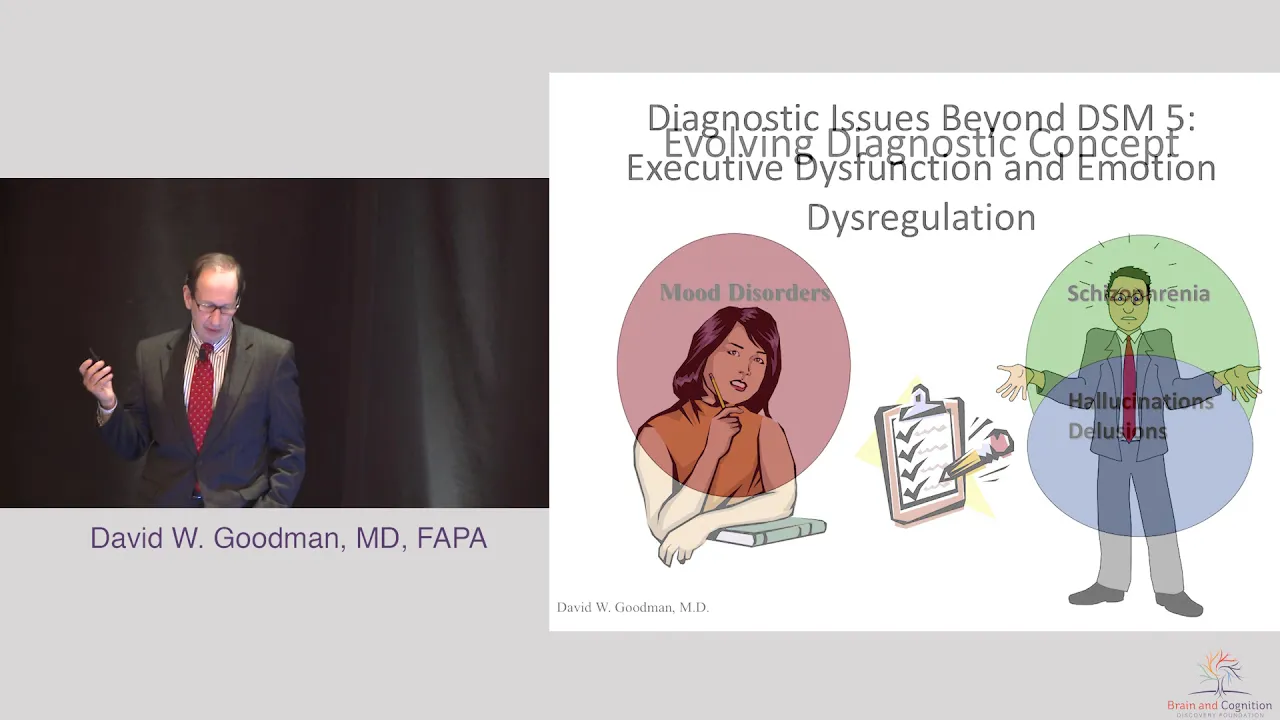
This presentation will just focus on three, schizophrenia, a profound disorder of thought, major depressive disorder, and bipolar disorder, also known as manic depression, both being disorders of mood, and finally, Alzheimer's disease, a dementia associated with degeneration of the entire association cortex, including profound loss of prefrontal circuits.
We will discuss each of these later in the lecture, but first, let me share the overall outline for this lecture.
We will cover six general topics.
First, we will talk about the basics, the definition, evolution and development of the prefrontal cortex.
Next we will discuss the high order functions of the prefrontal cortex, as they are so far-reaching and really fascinating.
Then we'll learn about the topographical organization of the prefrontal cortex with the lateral circuits mediating cognition and the medial circuits governing emotion, as this will help us understand about their roles in cognitive versus emotional disorders.
I will then teach you about the physiology of the prefrontal cortex because it's remarkable that we can understand the cellular basis of thought.
I will then show you how very sensitive prefrontal circuits are to our state of arousal, for example to stress exposure, as this work helps us to understand why we can lose our higher order abilities when we are exhausted, or when we feel stressed and out of control.
We will then have the background to understand the basics of disorders of prefrontal cortex.
We will first talk about disorders where disinhibition is a key symptom, for example, Attention Deficit Hyperactivity Disorder, more commonly known as ADHD, and the manic phase of bipolar disorder.
Well, we will see that both of these often involve dysfunction of the right hemisphere of prefrontal cortex, which is specialized for inhibiting inappropriate actions.
We will then talk about the important role of medial prefrontal circuits in depression including new treatments based on understanding these circuits.
We will then talk about how the dorsolateral prefrontal cortex is altered in schizophrenia, including its projections to caudate in the basal ganglia.
And finally, we'll talk about how the entire prefrontal cortex degenerates in Alzheimer's disease.
Let's begin with some basics, the definition, evolution and development of the prefrontal cortex.
What is the prefrontal cortex?
It's defined as the cortex rostral to the motor and premotor cortices in the frontal lobe.
A reminder that the term rostral means towards the nose.
More informally, the prefrontal cortex is the cortex that sits behind our forehead.
Anatomists often define the prefrontal cortex as the cortex receiving projections from the medio-dorsal thalamic nucleus, including the cortical layers that have a substantial layer IV.
Layer IV is the layer that receives inputs from the thalamus.
However, the width of layer IV can vary widely from different prefrontal sub regions.
Most importantly, the prefrontal cortex greatly expands in brain evolution.
As you can see, it is very small in rodents, which can be a challenge for rodent models of mental illness, but it becomes very large in Old World monkeys, and especially large in humans, where it makes up an enormous amount of who we are.
The prefrontal cortex develops very slowly, especially compared to primary, sensory and motor areas.
This is a study I'm showing you here from the National Institutes of Health showing how cortical gray matter changes from age five to age 20 years old.
As you can see, there are very large numbers of connections in the first years of life and thus there is thicker gray matter, shown here in warmer colors, especially around age five.
As we grow older, the incorrect connections are pruned away.
This happens very quickly in the sensory and motor cortices, which reached their mature state at a young age, but the prefrontal cortex does not reach its mature state until 20 to 30 years of age, with the process occurring earlier in females than males.
We can see this more clearly in graphic form, where the prefrontal cortex continues to change into the third decade while the primary visual cortex develops earlier.
Also, notice how the prefrontal cortex is much thicker than the visual cortex, because it has so many more connections.
Also note the steep changes in gray matter and prefrontal cortex during adolescence, which is a common age of onset for many mental disorders, for example, in schizophrenia.
So developmental changes in circuits may confer vulnerability during this time.
Now let's look at the fascinating functions observed by the prefrontal cortex.
Prefrontal circuits have the remarkable ability to generate mental representations.
In other words, they can represent information without any sensory stimulation.
This ability to think about something that isn't actually happening is the foundation of abstract thought.
This fundamental ability is the building block for many cognitive functions.
It allows us abstract reasoning and working memory, which is often called our mental sketchpad, and it allows us to have language as words are symbolic representations of information.
These abilities also allow us high order flexible decision-making, where decisions can be based on stored information or projections about the future, and can be rapidly altered based on a changing environment.
The prefrontal cortex provides top-down regulation of thought and attention of our actions and our emotions, something we often call executive functioning.
Some examples of executive functions include planning for the future, organizing and multitasking, impulse control, and the ability to concentrate and gate out distractions.
The prefrontal cortex also allows us appropriate social behavior, including having a moral conscience and having empathy for others, and it allows us something called metacognition, which is thinking about thinking.
For example, I must remember to remember where I parked.
These abilities also allow us to monitor our own thinking and performance looking for errors, including reality testing, for example, "Is this really happening right now, "or is it just a very vivid memory?"
something that can get confused in PTSD, Post-Traumatic Stress Disorder.
Metacognition allows us to understand how someone else may be thinking from their perspective, and to have insight and judgment about ourselves and others.
These metacognitive functions can be especially vulnerable in mental disorders, including insight about needing treatment, a great challenge in this field, and part of why understanding the neurobiology can be so helpful to our perspective.
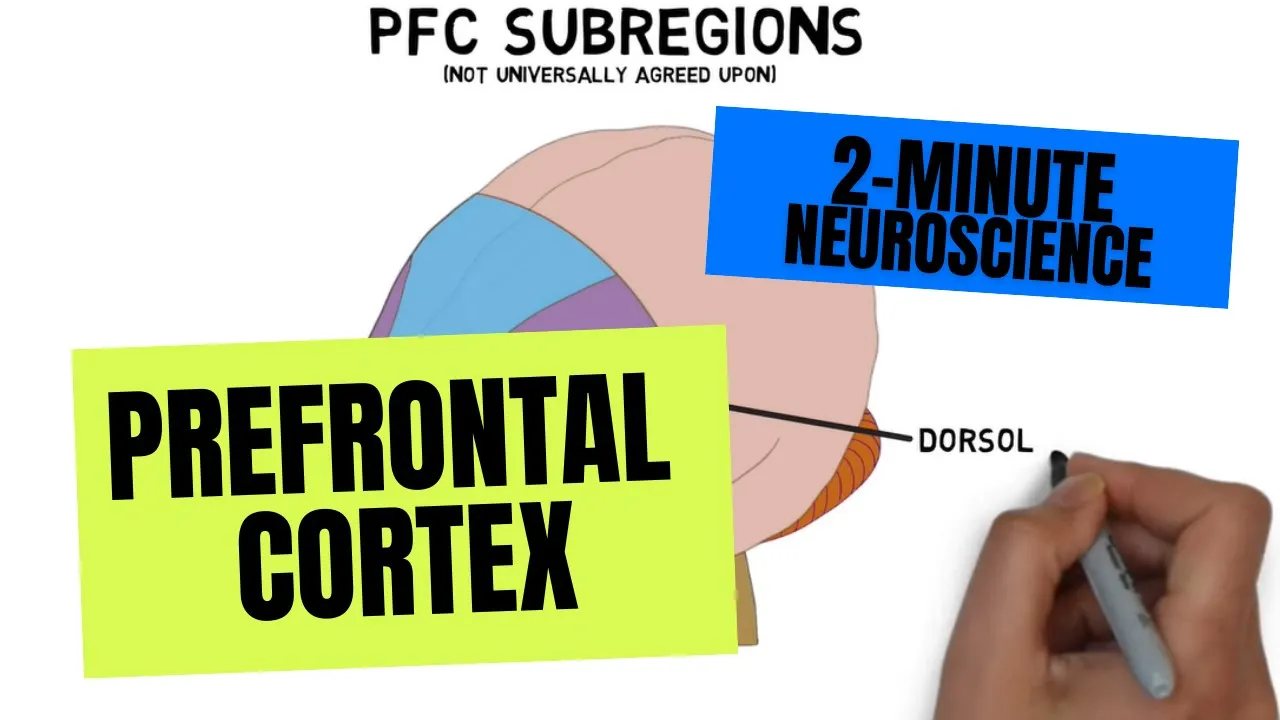
To help us understand the neurobiology of mental illness, let's look at the topographic organization of the prefrontal cortex.
First, the dorsal and lateral aspects of the prefrontal cortex represent and regulate our external world.
The dorsolateral prefrontal cortex generates our mental sketchpad, and can flexibly regulate our attention and actions so that they are appropriate to the task at hand.
Some of the functions of the dorsolateral prefrontal cortex are working memory, abstract reasoning, top-down regulation of attention and action, planning and organization, and insight and judgment.
Brain imaging data suggests that these abilities are topographically organized such that progressively more abstract functions occur more rostraly.
So we have simpler representations more caudally, for example, just remembering a position in space and representations of representations as we go more rostrally.
For example, our metacognitive abilities such as insight and moral conscience are concentrated in the frontal pole.
The anatomical inputs to the dorsolateral prefrontal cortex give us a sense of what it does.
It receives highly processed information about the world around us from the association cortices, for example, from visual cortices, about where and what things are, and from auditory cortices about sounds, and where and what they are.
And the prefrontal cortex then can project back to the same areas to regulate sensory inputs and attention, and to influence motor output.
It also projects to subcortical nuclei.
For example, prefrontal projections to the thalamus are thought to be important for attentional gating, and the prefrontal projections to the caudate and subthalamic nuclei, which are part of the basal ganglia, can regulate unconscious habits.
There are also massive connections to the cerebellum by way of the pons, that may play a large role in the regulation of thought, and prefrontal projections to the brainstem arousal systems that may play an important role in motivation.
And the prefrontal cortex is intimately connected with the hippocampus for encoding and recalling long-term memories.
For example, when we recall a memory and replay it on our mental stage.
In contrast to the dorsolateral prefrontal cortex, the orbital and ventromedial prefrontal cortex represent and regulate our internal state, for example, emotion, including flexible representations of reward and punishment.
The ventral medial prefrontal cortex is shown on the medial surface of the brain, while the orbital prefrontal is shown on the ventral surface.
It's called orbital, by the way, because it sits above the orbits of our eyes.
The orbital cortex receives information about taste and smell, and puts them together to create a sensation of flavor, as well as flexibly altering the desirability of a food.
For example, activating a lot to the first bite of chocolate, but actually turning off when we have eat too much chocolate and now it is disgusting, if indeed there is such a thing as too much chocolate.
The orbital and venture medial prefrontal cortex also receive so-called limbic inputs.
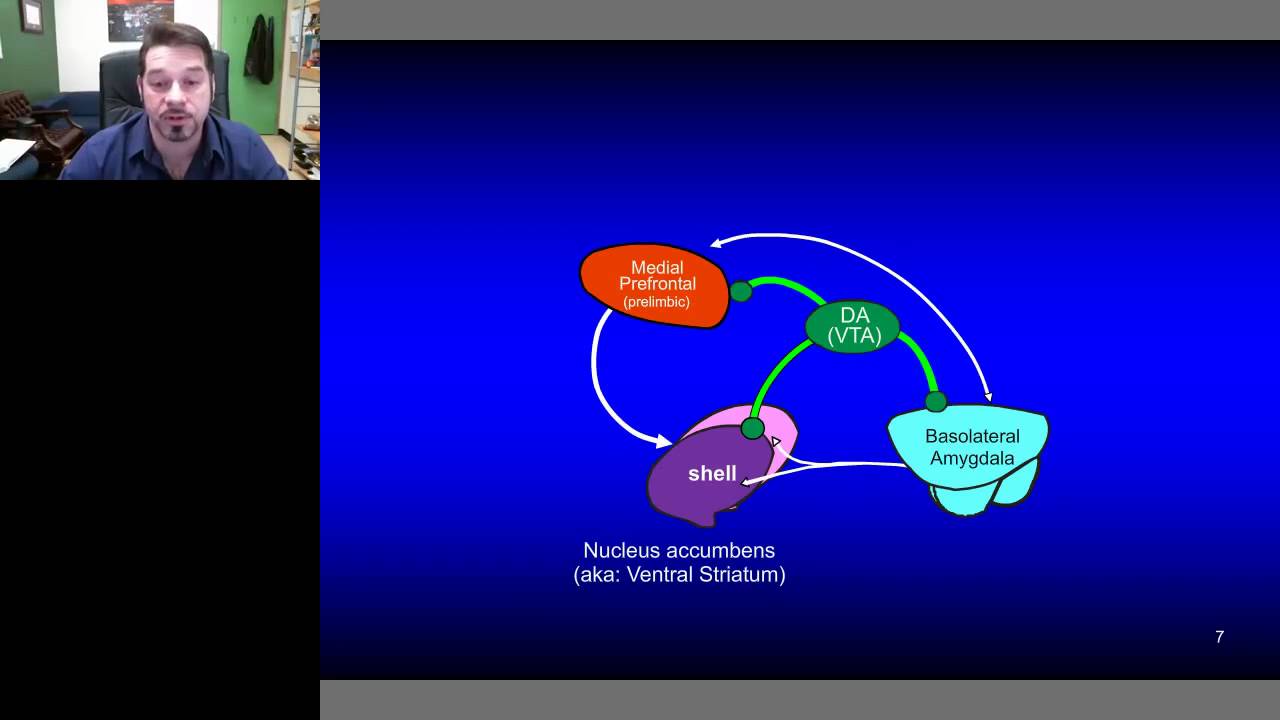
For example, from the amygdala and the nucleus accumbens, which perform primitive evaluations of stimulus value, and as well as emotional associations and habits.
The medial prefrontal cortex receives pain information.
These circuits are the emotional suffering aspects of the pain response, which become overactive in chronic pain.
The medial prefrontal cortex has many outputs back onto the limbic system for autonomic control of the viscera, and regulation of our emotional state.
These are especially prominent from Brodmann's area 25 an area we will see again when we look at the role of prefrontal cortex in depression.
And, of course, there are many connections between the dorsolateral prefrontal and the ventromedial or orbital aspects of prefrontal, for example, for emotions to influence our actions, and for top-down regulation of our emotional state.
Interestingly, in humans, some functions of prefrontal cortex are specialized to one hemisphere.
For right-handed individuals, the left hemisphere has been associated with language production and other generative functions.
For example, Broca's area, shown here with the sunburst, is very important for the production of language, and it is close to the motor strip that physically controls our larynx, lips, and tongue.
Areas beyond this region appear to contribute to language as well, but Broca's area is a major focus.
Interestingly, lesions to the left hemisphere are often associated with depression, suggesting that this hemisphere plays a cheerleader role under normal conditions.
In contrast, the right hemisphere is specialized for inhibiting inappropriate thoughts, actions and emotions.
Lesions to the right hemisphere, or experimental manipulation, which weaken its function, impair impulse control and can induce inappropriate social behaviors.
We will come back to the importance of prefrontal lateralization when we discuss bipolar disorder later in this lecture.
But first let's talk about prefrontal physiology, as it tells us the cellular basis for how the brain creates thought.
We'll start by talking about the microcircuits that generate mental representations of visual space.
A great deal has been learned about the cellular basis of higher cognition from recordings of prefrontal cortical neurons in animals as they perform a working memory task.
Many of the neurons recorded are so-called pyramidal cells because their cell bodies are shaped like pyramids.
The firing of these neurons is recorded from a nearby electrode as the subject performs a working memory task.
Here's an example of a working memory task that is commonly used in this research.
The subjects fixates on a central point on a computer screen, and as they do this, a queue is briefly flashed at one of these eight locations for just half a second.
This is called the queue period.
The queue then disappears and now the subject must remember that location over the delay period, which can last many seconds.
The fixation point then goes off and the subject can then move its eyes to the remembered location for a favorite juice reward.
The next trial then begins with a queue in a new location and the contents of working memory must be updated with this new information.
Recordings from the dorsolateral prefrontal cortex have found delay cells, neurons that are able to maintain their firing across the delay period when the queue is no longer present.
This delay-related firing is shown here highlight in yellow and shows that the neuron is increasing its firing during the delay period on every trial when the cue had been at the cell's favorite spatial location.
In other words, delay cells have what we call a preferred direction.
They fire to the memory of one location but not for others, and they are able to maintain firing across the delay period, even in the presence of distractors.
Delay cells are able to main firing across the delay period without any sensory stimulation due to a process called recurrent excitation, where neighboring cells with the same preferred direction excite each other to keep information in mind.
This is the neurobiological basis for thought.
A close up view of the synapses where the neurons communicate shows that these pyramidal cells excite each other through glutamate, NMDA receptor synapses which are on dendritic spines.
These spines also express potassium channels that can be opened by high levels of calcium cyclic AMP signaling.
When potassium channels are opened by high levels of calcium cyclic AMP signaling, they rapidly reduce the strength of the synaptic connections, which reduces neuronal firing.
The arousal systems, such as norepinephrine and dopamine, take advantage of this mechanism to coordinate our cognitive state with our state of arousal.
As you may have experienced yourself, arousal has an inverted U influence on prefrontal conductivity and function, where either too little arousal when we're fatigued, or too much arousal when we're stressed, weakens our prefrontal abilities.
At the extremes of this inverted U, we are unconscious, for example, in deep sleep, and possibly with traumatic stress.
This may be related to the absence of prefrontal synaptic connections under these conditions.
Under optimal levels of arousal, prefrontal cortex provides top-down regulation of thought, action and emotion, and we are capable of mindful responses.
However, with uncontrollable stress, high levels of catecholamine release impair dorsolateral prefrontal function and strengthen more primitive circuits, switching the brain from a reflective to a more reflexive state, where we are governed by unconscious habitual emotions and actions.
Many mental illnesses are caused, or worsened, by stress exposure, which likely involve stress-induced prefrontal dysfunction.
Now let's see how this information relates to mental disorders that involve prefrontal dysfunction.
Let's start with disinhibited disorders, ADHD, and bipolar mania.
As we learned before, the right hemisphere is specialized for inhibiting inappropriate thoughts, actions and emotions.
Interestingly, the right prefrontal cortex is smaller or develops more slowly in many patients with ADHD, which may help to explain why they have impaired impulse control and are more vulnerable to a distracting stimuli.
The right prefrontal cortex is very underactive during the manic phase of bipolar disorder, but it returns to normal when the patient becomes euthymic, in other words, when they've returned to a normal mood state.
This helps us really see a potential causal relationship between right prefrontal dysfunction and a manic state.
Now, let's look at an example of a medial prefrontal disorder, major depressive disorder.
The symptoms of depression often include persistent sadness, hopelessness, loss of interest, anxiety and mental anguish, and even mental paralysis, similar to what we often see in Parkinson's disease.
And imaging studies have shown evidence of altered medial prefrontal function in major depression.
Depressive symptoms in depression, and in bipolar disorder, are associated with elevated activity in Brodmann's area 25, which is also called the subgenual cingulate cortex.
These are the circuits we discussed before that subserve mental suffering.
Brodmann's area 25 is underactive in bipolar mania when mood is unnaturally elevated.
Interestingly, all effective treatments for depression, medications, psychotherapy, even a placebo effect, if that placebo works, reduce the activity of Brodmann's area 25.
Intriguingly, this subgenual prefrontal area has exceptionally high levels of serotonin uptake sites, which are what are blocked by SSRI medications.
So this brain area may be a key site for these antidepressant actions.
For those who are not helped by medication, in other words, they have intractable depression, deep brain stimulation to turn off Brodmann's area 25 is in experimental use.
And this shows an electrode aimed at this area that can electrically shut off the activity of this region.
Now let's turn to an example of a disorder of the dorsolateral prefrontal cortex, schizophrenia.
The symptoms of schizophrenia include hallucinations, delusions, thought disorder, cognitive impairment and flat affect.
Thought disorder and cognitive impairment involve dysfunction of the dorsolateral prefrontal cortex, and alterations in prefrontal function may also contribute to delusions and hallucinations.
In healthy subjects, the dorsolateral prefrontal cortex activates as they perform a working memory task, including a working memory task similar to what I showed you before.
Basic research suggests that this activation arises from dorsolateral prefrontal neurons exciting each other through connections on dendritic spines to keep information in mind, the information we've reviewed before.
In patients with schizophrenia, there are many signs of dorsolateral prefrontal dysfunction.
The dorsolateral prefrontal cortex is underactive as patients try to perform a working memory task.
And neuropathological studies show that Layer III in particular, of dorsolateral prefrontal cortex, lose their dendritic spines.
These changes likely contribute to symptoms such as type disorder.
Schizophrenia also involves elevated dopamine signaling in the caudate.
Imaging studies have shown that patients with schizophrenia have increased dopamine release in the caudate nucleus in the basal ganglia.
This may magnify psychotic symptoms through actions at dopamine D2 receptors.
Let's look at how this might happen and the circuit basis for it.
This is a potential mechanism through the indirect pathway of the basal ganglia.
The striatum can excite or inhibit cortical inputs by way of the direct and indirect pathways.
What I'm showing here, for example, is the cortical inputs to the striatum, which is the putamen for the motor circuits, and the caudate for the cognitive circuits.
If we think about the motor pathway, these circuits are involved, for example, as we play Chopin on the piano, where the direct pathway has us actively press the C key with our pinky while the indirect pathway then has us stop pressing the C key, so that we can go on to the next note.
Dopamine D2 receptor stimulation inhibits the activity of the indirect pathway, so there is not too much inhibition.
This is why dopamine depletion in Parkinson's disease leads to loss of movement, as there is not enough dopamine to quiet the indirect pathway.
The caudate is thought to perform a parallel function for cognitive inputs from the cortex, so the indirect pathway would be inhibiting inappropriate thoughts.
Excessive dopamine release in schizophrenia and excessive domain stimulation of D2 receptors would stop the indirect pathway from inhibiting these errors, and it would magnify cortical errors and contribute to delusional thinking and hallucinations.
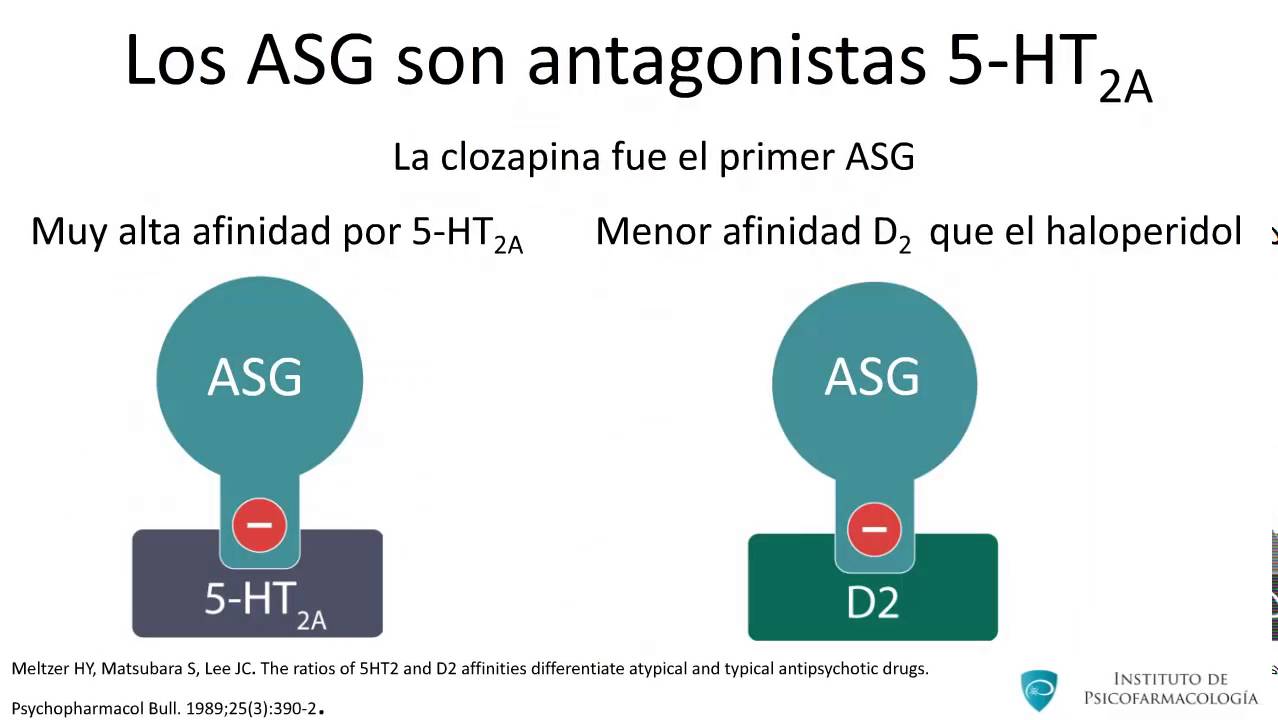
Antipsychotic medications all block D2 receptors, and it is quite possible that many of their therapeutic actions involve this pathway allowing the indirect pathway to inhibit inappropriate thoughts and reduce delusional thinking and hallucinations.
The psychotic symptoms are reduced, but it is important that the cortical errors remain, and this is a realm for future research.
Finally, let us end with a discussion of Alzheimer's disease where both medial and lateral circuits in the prefrontal cortex degenerate.
The symptoms of Alzheimer's disease usually begin as impairments in recent memory, and then proceed to other intellectual domains, leading to profound dementia.
The pathological markers of Alzheimer's disease are neurofibrillary tangles, which are composed of phosphorylated tau, these accumulate inside of pyramidal cells and kill them, and then the other hallmark signs are amyloid plaques, which accumulate outside of cells and capture neurites.
Cortical tau pathology, those tangles, begins in medial temporal cortex, specifically the entorhinal cortex, and then spreads to the association cortices.
When it spreads to the prefrontal cortex, it's associated with symptoms such as impairments in abstract reasoning, impaired recall, disorganization, language deficits, loss of insight, and personality changes, such as increased aggression, or hypersexuality.
It is these personality changes which often require a person to be in a nursing home, as it can be difficult for an elderly caregiver to take care of someone who is very aggressive.
Current research is trying to understand what causes degeneration of the aging association cortex, so that we can develop new treatments to protect the cortex and lessen the incidence of this terrible disease.
So in summary, the prefrontal cortex observes our highest order cognitive abilities and the regulation of emotion.
Loss of these abilities is common in mental disorders, and it's an important area for future research.
We hope this information has been helpful to you, and thank you for your attention.
Up Next
Neuromodulation for Memory: DBS, Closed-Loop, and 40Hz Gamma
@UMNIEM
48.4K views•2023-07-26
Deciphering Neural Circuits Controlling Anorexia in Mice | Richard Palmiter
@AllenInstitute
2.3K views•2011-10-10

Vagus Nerve (CN X): Anatomy, Nuclei & Functions Explained
@Alilamedicalmedia
305.2K views•2022-10-31

How Exercise Benefits Your Brain: Science Explained
@TED
11.4M views•2018-03-21
Related Study Plans & Knowledge Roadmaps
Structured learning paths in Neuroscience