













![Understanding Sensation [AP Psychology Unit 1Topic 6]](https://i.ytimg.com/vi/5ZM2JetHI3s/hqdefault.jpg)












The olfactory system detects smells through specialized receptors in the olfactory epithelium, which are located in the nasal cavity and separated from the brain by the cribriform plate; odor molecules bind to G protein-coupled receptors on olfactory sensory neurons, triggering a cascade that opens ion channels and generates action potentials, which converge at glomeruli in the olfactory bulb before being processed by mitral/tufted cells that project to the brain.
Olfaction Anatomy and Function | MCAT Biology | Khan Academy
Added:Basic neuronal anatomy and the mechanism of action potentials, including depolarization and signal propagation.
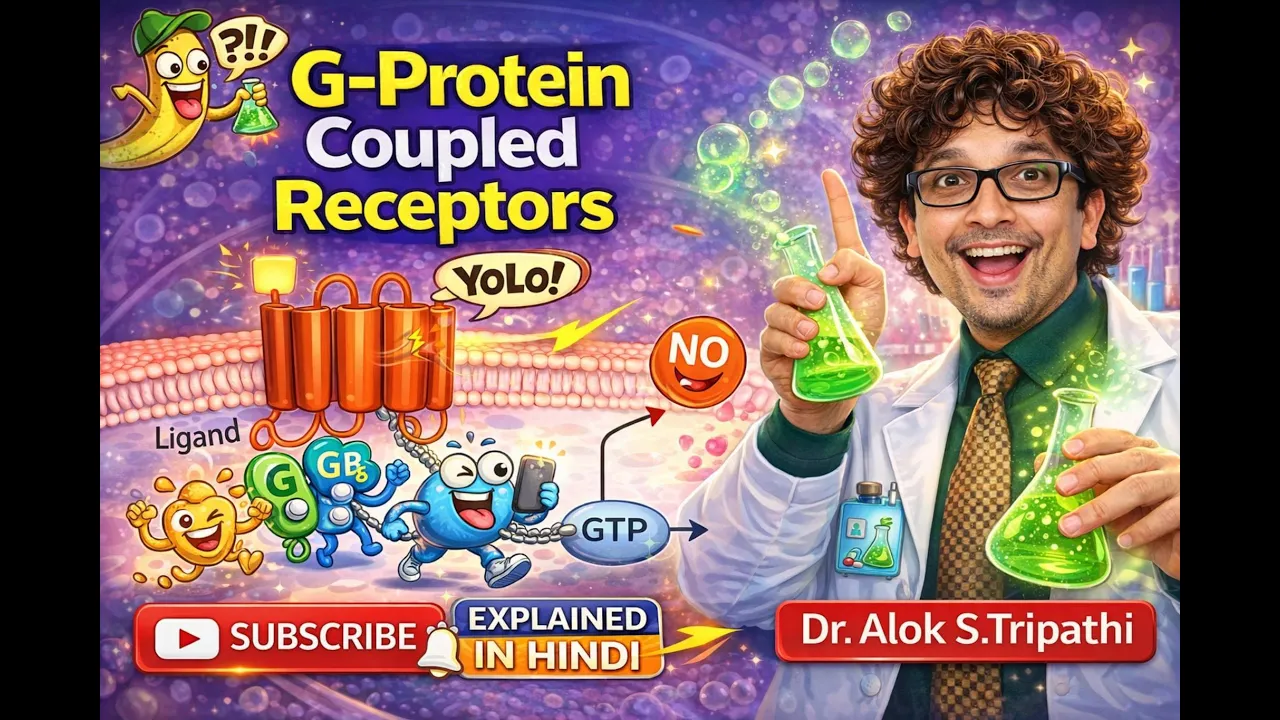
The structure and function of G-protein coupled receptors (GPCRs) and intracellular secondary messenger cascades.
An introductory understanding of the central nervous system divisions, particularly sensory (afferent) pathways.
The general classification of sensory receptors, specifically the role of chemoreceptors in detecting chemical stimuli.
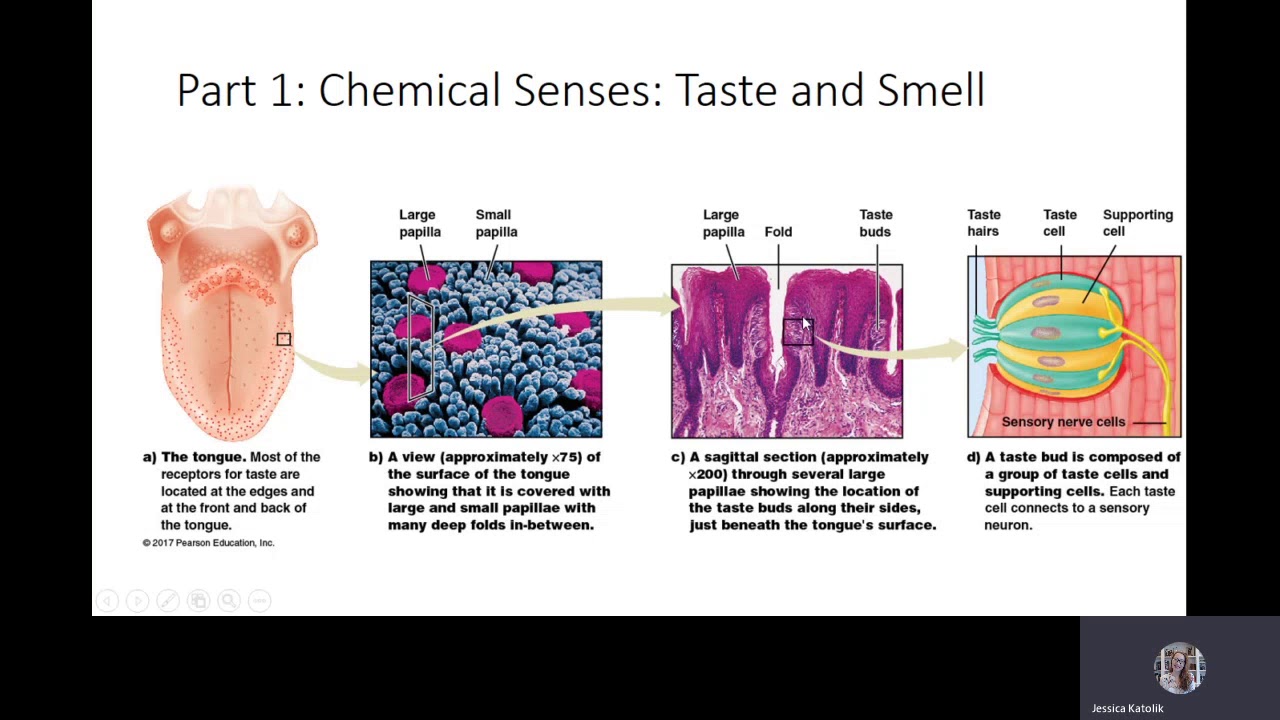
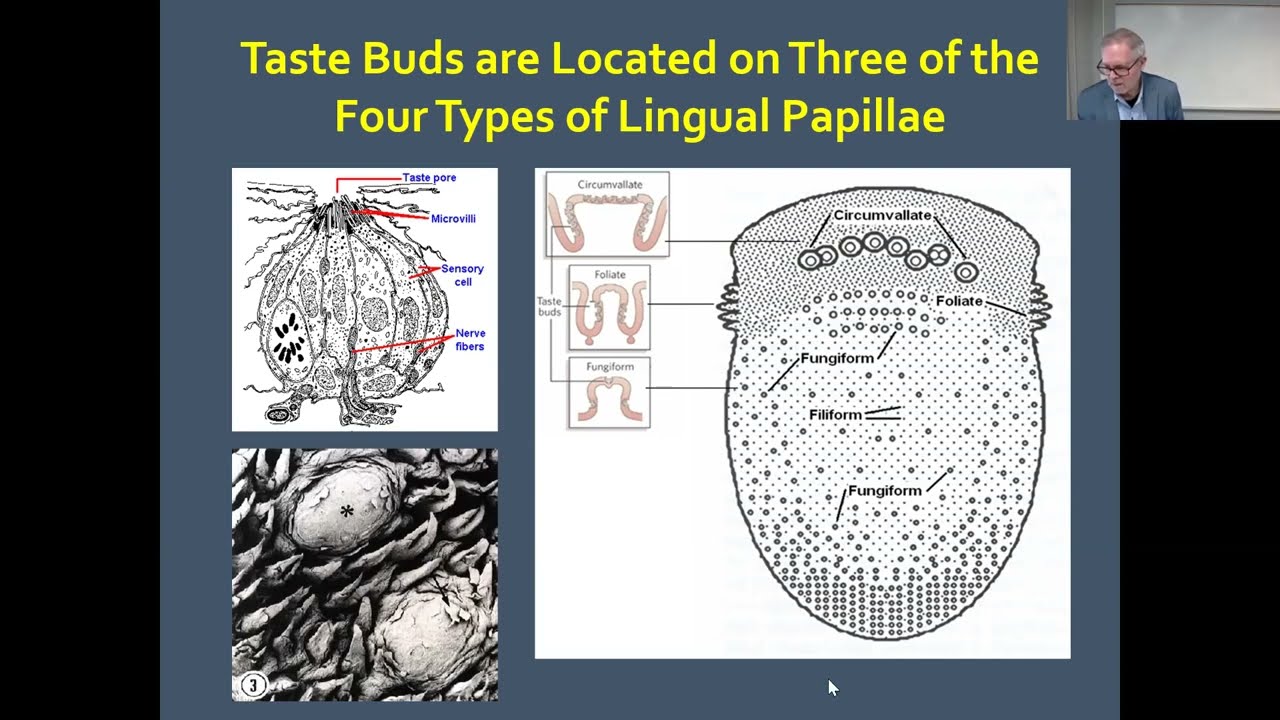
The anatomy and physiology of gustation (taste) and how chemical senses integrate in the brain to perceive flavor.
The unique neural pathway of olfaction to the limbic system (amygdala and hippocampus) and its direct link to emotion and memory.
The structure and function of the accessory olfactory system, including the vomeronasal organ and the role of pheromones.
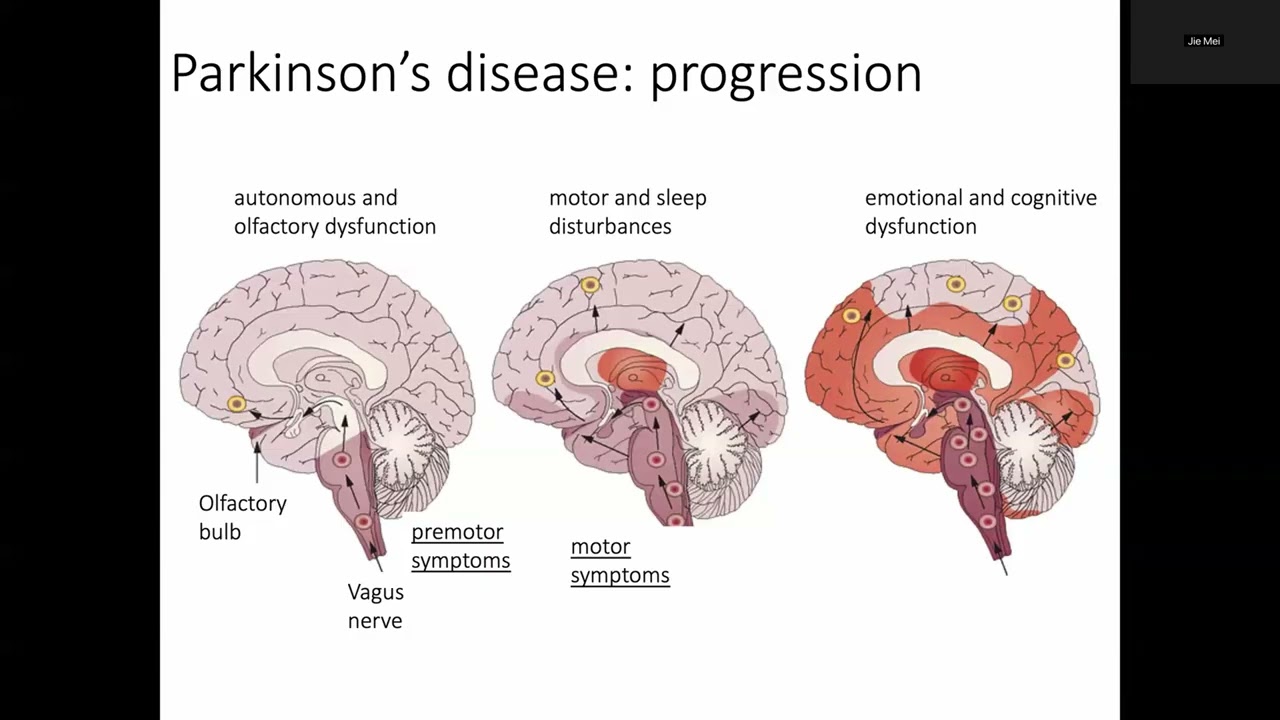
Clinical pathologies of the olfactory system, such as anosmia, and how olfactory dysfunction serves as an early marker for neurodegenerative diseases like Parkinson's.
Comparative analysis of sensory processing, contrasting how olfaction bypasses the thalamus unlike vision, audition, and somatosensation.
419.2K views2.9Klikes12:46Original Release: 2013-10-25
Voiceover: You probably notice that whenever you have a cold your nose gets all stuffy and when your nose gets all stuffy with a bunch of stuff you're not able to taste things very well.
So let's imagine that you're trying to eat a strawberry.
So you're eating the strawberry.
Normally it tastes really good and it goes in your mouth and as you're chewing the strawberry you're breaking down different cellular components and these cellular components release little molecules and these little molecules will travel through the back of your throat and some of them will actually come into your nose.
And as you're chewing the strawberry you're actually smelling little molecules that are being released.
You're actually using your sense of smell in conjunction with your sense of taste with your ability to taste the strawberry.
And so if you knock out your sense of smell which is what happens when you have a cold.
If your sense of smell is knocked out you're relying only on your sense of taste.
And when you only rely on your sense of taste you're not able to taste things as well.
Things don't taste as rich.
So you can actually try this.
Next time you're eating something just go ahead and close your nose and see if whatever it is you're eating tastes differently after you're no longer smelling anything.
So hopefully this goes to show a little bit about why our sense of smell is important.
Now we can definitely live without our sense of smell, but it does greatly enrich our everyday lives.
Smell is also known as olfaction.
Sometimes our sense of smell can be called our olfactory sense and we'll talk a little bit about how this word comes into play and a little bit of the anatomy later on.
Let's go ahead and go into the anatomy of our olfactory system really quickly.
If I again draw a profile of someone.
Here's the nose, here's the mouth, and here's the chin.
There is a nostril and this nostril basically is an opening to allow air and various odor molecules to come into the nose.
There is actually a region that you can't see.
This region is known as your olfactory epithelium.
This region is the olfactory epithelium.
Olfactory epithelium. So again, olfactory olfaction.
Separating this olfactory epithelium from the brain because the brain actually sits up here.
So we've got a little bit of the brain and it sits up here.
So separating the brain from the olfactory epithelium in this nasal passage over here is a piece of bone known as the cribriform plate.
So this little piece of bone is known as the cribriform plate.
And sitting right above the cribriform plate is actually a little extension from the brain.
So there's actually an extension that comes from the brain and it sits right above the cribriform plate.
I'm drawing it here in purple and it looks like a little bulb and this is actually known as the olfactory bulb.
So olfactory bulb.
So again, olfaction, olfactory bulb, and the olfactory bulb is basically a bundle of nerves so it's actually one of the cranial nerves that exits the brain and so this bundle of nerves sends little projections through the cribriform plate into the olfactory epithelium.
So this projection of nerves breaks off and branches off and there are thousands and thousands of cells sending little connections into the olfactory epithelium.
So I'm only drawing a few of them over here, but there are thousands of these cells sending little connections into the olfactory epithelium and at the very end of each one of these little cells are receptors and each receptor is sensitive to one particular molecule.
It's actually sensitive to one particular type of molecule.
So for example let's imagine that we have a benzene ring and most things that have benzene rings are known as aromatic compounds and normally you can actually smell aromatic compounds.
So a molecule has a benzene ring it usually has some sort of scent and that scent is picked up via the olfactory bulb and these little extensions that come into the olfactory epithelium.
So we have a little benzene ring, A little odor molecule and it travels into the nose.
It will actually bind to a small receptor on one of these nerve endings.
So what I'm going to do next is zoom in into this region over here.
I just want to look at the olfactory bulb and in particular I want to be able to look at each one of these little olfactory sensory neurons and their little projections that bind to various molecules in the environment.
So what I'm going to do now is zoom into that little part that I highlighted earlier.
And so we're just going to look at the olfactory bulb so let me just label this olfactory bulb.
And as I mentioned before the olfactory bulb was separated from the nasal passage by something known as a cribriform plate.
The cribriform plate is basically just bone and there are a bunch of little holes in the cribriform plate that basically allow the cells, these olfactory sensory cells to send projections to the olfactory bulb.
So let's imagine that there's an olfactory sensory cell and it sends a little projection into the olfactory bulb.
And so it sends a little projection and this cell is situated inside the olfactory epithelium and there are all kinds of other epithelial cells over here so I could just kind of draw those in.
So there are all kinds of epithelial cells that basically secrete mucus and all kinds of things and these olfactory epithelial cells are situated in between the rest of the epithelial cells.
And there are thousands of different types of epithelial cells and each type has a particular receptor.
So let's say that this particular olfactory sensory cell is responsible, has a little receptor and this little receptor is sensitive to benzene rings.
So as we have a benzene molecule enter the nose through the nostrils it enters the nasal passage and eventually will bounce into this receptor and when it binds to this receptor it will actually trigger a cascade of events that causes this cell to fire.
This cell will fire an action potential and the action potential will actually end up here in the olfactory bulb and what we have is we actually have a whole bunch of olfactory sensory cells that are sensitive to the same molecule.
So we have another one over here and it will actually synapse to the same place.
So we got another olfactory sensory cell and this also is sensitive to this benzene molecule.
So the benzene molecule comes in and activates a whole bunch of cells that have benzene receptors and all the cells that are sensitive to benzene will all fire an action potential to one particular location in the olfactory bulb and this particular location is known as a glomerulus. So glomerulus.
And the glomerulus is basically we can think of it as a designation point for various sensory olfactory cells that are sensitive to the same molecule.
So we could think of this glomerulus as a benzene glomerulus because all the cells that are sensitive to benzene will synapse over here.
And what actually happens is they will synapse onto another cell type.
So there is another cell and this is known as a mitral, so mitral or as a tufted cell.
Tufted cell and this mitral/tufted cell will actually project to the brain.
So the reason we have this type of organization is because it's a lot easier for one cell to send a projection to the brain then it would be for thousands of these cells to send a projection to the brain.
So just to kind of go into this in a little bit more detail so what we can also have are other cell types.
Let's imagine that there's this blue cell over here.
And let's imagine that this blue cell is sensitive to 2 benzene rings that are connected to one another.
So if we have 2 benzene rings that are connected to one another they will bind onto a receptor on this blue olfactory sensory cell and this blue cell will go through the cribriform plate and synapse in the olfactory bulb, but it will synapse at a different location as will other blue cells sensitive to double benzene rings and they will synapse onto a double benzene glomerulus and so on and so this double benzene glomerulus has a different mitral/tufted cell that will send a projection to the brain.
So this is the general organization of various cells in the olfactory epithelium and the general idea here is that we have hundreds of various cells that are hypersensitive to one particular molecule and these hundreds of cells will all send all their projections to one glomerulus and that one glomerulus will have several mitral/tufted cells that will then go to the brain.
So now what I want to go into is I just want to look at this part right here.
So I want to look at how a molecule will bind to a receptor and how it triggers an action potential.
So let's imagine that we have this molecule of benzene over here.
So it will enter the nasal passage and it will bounce around until it binds to a particular receptor.
So what we have is a particular receptor that is in the membrane of an olfactory sensory cell.
So this benzene molecule will come in and it will bind right here.
It will bind and when it binds it will actually cause this receptor which is known as a G protein-coupled receptor and it's called a G protein-coupled receptor because there's actually a protein inside that is known as a G protein which it is coupled to.
It's coupled, sorry ie. The G-protein is coupled to the receptor and when the molecule of benzene binds it will actually cause disassociation here.
The G protein will break away and it will cause a cascade of events inside the cell.
So this inside one of the sensory olfactory cells that we were talking about earlier.
And so one of the effects that this G protein will have is it will actually bind to an ion channel.
So it will bind to an ion channel and the ion channel will basically allow positive ions from outside the cell to flow inside and this will cause the cell to depolarize and fire an action potential that eventually will go through the cribriform plate and then synapse to a mitral/tufted cell and that mitral/tufted cell will send a synapse to the brain.
So let's just go over everything that we talked about really quickly.
We have an odor molecule which is a benzene ring, in this example, will bind to a GPCR.
So this GPCR is a particular odor receptor and the G protein.
So the G protein-coupled receptor, the G protein will actually break away.
The G protein breaks away and activates various things inside the cell and one of those things is an ion channel gets activated.
That causes the cell to depolarize and fire an action potential and the action potential will go through the cribriform plate and into the glomerulus and it will activate a mitral/tufted cell which will then enter the brain and then your brain is able to perceive that odor through this pathway over here.
Up Next
7:52
Olfactory System 3D Model: The Science of Smell in Minecraft
@Oakley3rd
179 views•2015-07-01

50:12
Bacterial Communication: Quorum Sensing and Biofilm Formation Explained
@JHUAAP
12.6K views•2011-06-28
5:10
Mendelian Genetics: Alleles, Genotypes & Punnett Squares
@khanacademymedicine
648.4K views•2014-06-16
7:08
Bacteriophages: Earth's Deadliest Killers and Future Antibiotics
@kurzgesagt
34.6M views•2018-05-13
Related Study Plans & Knowledge Roadmaps
Structured learning paths in Biology
biology
RNAi: Biogenesis, RISC & Gene Silencing
01Molecular Biology Foundations: DNA to Protein
02Introduction to RNA Interference (RNAi)
03Molecular Biogenesis of miRNA and siRNA
+ 2 more learning modules
10h5 modules
Explore Roadmap
biology
Mycorrhizae: Signaling, Biophysics & Ecology
01Foundations of Mycorrhizal Symbiosis
02Molecular Signaling and Root Colonization
03Biophysics and Bioenergetics of Nutrient Exchange
+ 1 more learning modules
11h4 modules
Explore Roadmap
biology
Circadian Clocks: TTFL, SCN & Periphery
01Foundations of Molecular Biology & Gene Expression
02Introduction to Chronobiology and Actograms
03The Core TTFL: Molecular Architecture of the Clock
+ 3 more learning modules
14h6 modules
Explore Roadmap
biology
Population Genetics: Math, Drift & Selection
01Genetic & Probability Foundations
02The Hardy-Weinberg Principle and Baseline Models
03Mathematical Modeling of Natural Selection
+ 3 more learning modules
18h6 modules
Explore Roadmap