Analyzing Animal Venoms: Genetics & Pharma
Learning Goal: Examine the evolutionary genetics and molecular pharmacology of animal venoms, focusing on toxin gene recruitment, the biochemical targeting of ion channels and coagulation cascades, and the development of venom-derived therapeutics.
- Prerequisites: Basic knowledge of cellular biology, genetics (transcription and translation), and physiology.
- Estimated Study Time: 18 Hours
Module 1: Molecular Biology & Physiology Foundations
This module establishes the physiological and cellular foundations required to study venoms. You will explore cell membrane structure, the kinetics of membrane receptors, the mechanics of resting membrane potentials, and the generation of action potentials through selectively permeable ion channels.
Why this video: Dr. Najeeb provides an intensive, highly visual breakdown of the plasma membrane, its lipid bilayer chemistry, and how cell-surface receptor proteins sense environmental cues and signal across cellular boundaries.
Knowledge Checkpoint:
- Diagram the structure of a phospholipid bilayer, labeling hydrophobic and hydrophilic regions.
- Explain how cell surface receptors undergo conformational changes upon ligand binding to transmit intracellular signals.

Why this video: This tutorial categorizes integral membrane receptors (ion-channel-linked, G-protein coupled, and enzyme-linked), detailing their distinct kinetic behaviors and cellular roles.
Knowledge Checkpoint:
- Contrast G-Protein Coupled Receptors (GPCRs) with ligand-gated ion channels.
- Describe how ligand binding physically opens ion channel pores.
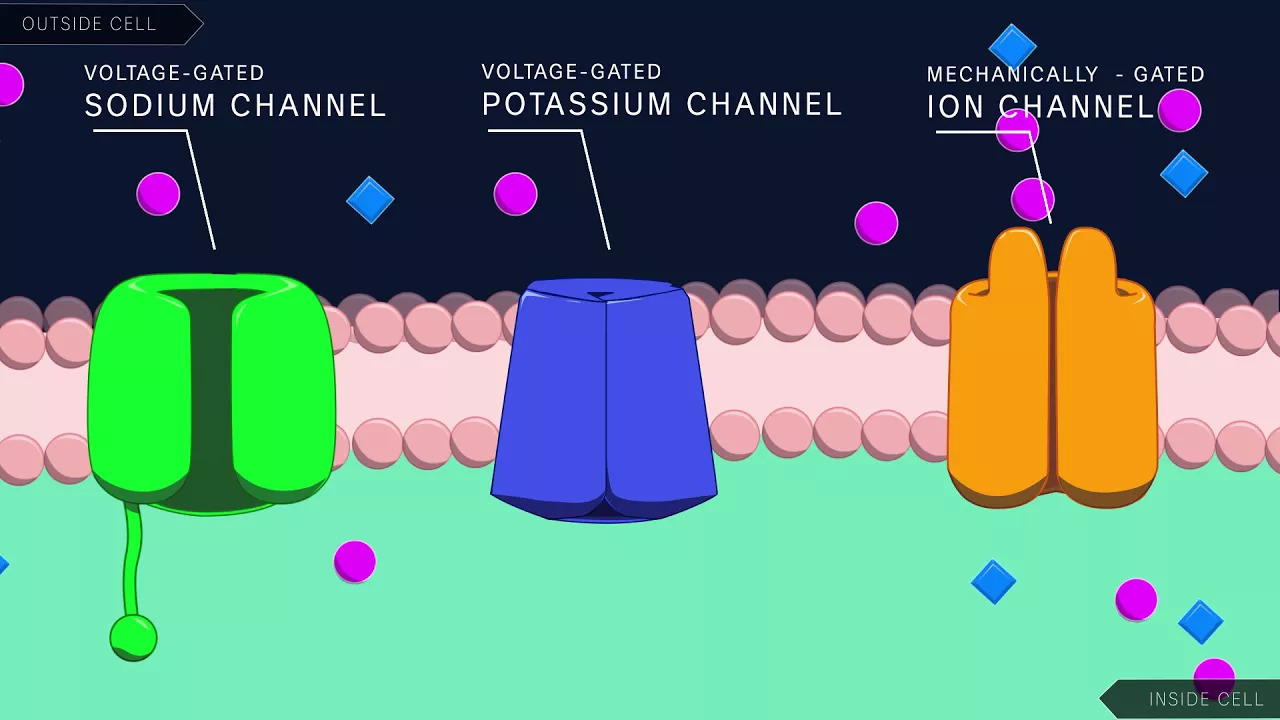
Why this video: This animation models the behavior of selective voltage-gated sodium () and potassium () channels, illustrating how electrochemical gradients govern resting potentials and action potential propagation.
Knowledge Checkpoint:
- Define resting membrane potential and describe the baseline distribution of and ions.
- Map the activation/inactivation states of voltage-gated sodium channels during depolarization.
Why this video: Osmosis presents a structured overview of autocrine, paracrine, and endocrine signaling pathways, illustrating how ligand-receptor interactions coordinate physiological functions.
Knowledge Checkpoint:
- Differentiate between autocrine, paracrine, and endocrine signaling.
- Describe the classic cascade: receptor activation second messenger release cellular response.
Module 2: Venom Evolution & Toxin Gene Recruitment
This module covers evolutionary genetics. You will examine how non-toxic, physiological proteins undergo duplication, escape purifying selection, and undergo neofunctionalization to become highly specialized toxins expressed within oral venom glands.
Why this video: This video introduces the concept of neofunctionalization—the process where duplicated genes are free to accumulate mutations and evolve entirely new biological roles while the original copy preserves vital physiological functions.
Knowledge Checkpoint:
- Define neofunctionalization in evolutionary genetics.
- Explain how gene duplication creates the redundancy needed for molecular innovation.

Why this video: An academic lecture focused on the micro-evolutionary mechanisms driving the expression of snake venom genes, exploring how duplication events lead to the expansion of highly diverse toxin families.
Knowledge Checkpoint:
- Describe how physiological proteins are recruited into secretory venom glands.
- Explain how snake genomes maintain multiple duplicate copies (transcripts) for a single toxin family.
Why this video: Although brief, Carl Zimmer outlines how a pancreatic bacterial-killing gene duplicated and evolved to express lethal, modified proteins in the oral cavities of ancestral snakes.
Knowledge Checkpoint:
- Detail the physical path of gene recruitment from an organ (e.g., pancreas) to oral secretory glands.

Why this video: This segment of a Stanford genetics lecture clarifies the molecular mechanisms of duplication, highlighting how redundant gene copies accumulate structural mutations without impacting organism survival.
Knowledge Checkpoint:
- Explain why a duplicated gene copy is shielded from negative selection pressures.
Coverage Note & Independent Study Recommendation: The current video pool covers the concept of neofunctionalization well, but lacks intermediate-level visual animations of venom-gland-specific transcription factor changes. Independent Study Search Query:
venom gene duplication neofunctionalization evolutionary biologyto research how mutations in promoter regions drive tissue-specific expression shifts.
Module 3: Neurotoxins & Ion Channel Pharmacology
This module covers neuropharmacology. You will analyze how diverse peptide neurotoxins physically bind to, block, or keep open specific voltage-gated ion channels, disrupting signaling in the peripheral and central nervous systems.

Why this video: An in-depth research presentation on peptide neurotoxins (such as protoxin-2 from spiders) and how they target the voltage-sensing domains of sodium channels ().
Knowledge Checkpoint:
- Explain the difference between pore-blocking toxins and voltage-sensor-gating modifiers.
- Describe how neurotoxins are used in pharmacology to map the architecture of ion channels.

Why this video: A comprehensive review of conotoxins, outlining how cone snails deploy complex cocktails of peptides to target different points of the neuromuscular junction simultaneously.
Knowledge Checkpoint:
- Define the pharmacological advantage of deploying a multi-target peptide cocktail.
- Identify the main molecular classes of conotoxins (-, -, -conotoxins).

Why this video: Dr. Baldomero Olivera explains the evolutionary logic of "cabal" targeting systems in conotoxins, where complementary toxins act in concert to cause instant paralysis.
Knowledge Checkpoint:
- Explain how combining a potassium channel blocker with a sodium channel activator produces a synergetic "lightning cabal" effect.

Why this video: Outlines the exact binding kinetics of tetrodotoxin (TTX), illustrating how it binds to "site 1" of voltage-gated sodium channels to block sodium entry and stop action potentials.
Knowledge Checkpoint:
- Describe the localization of "site 1" in the channel.
- State why blocking channels stops muscle contraction and breathing.
Coverage Note & Independent Study Recommendation: This video pool does not contain molecular modeling of Three-Finger Toxins (3FTxs) binding to nicotinic acetylcholine receptors (). Independent Study Search Query:
how neurotoxins bind ion channels molecular mechanismto study structural dynamics of alpha-neurotoxins docking on .
Module 4: Hemotoxins & Coagulation Cascades
This module examines blood pharmacology, looking at how enzymes in hemotoxic venom target the human coagulation cascade. You will study how these toxins can either cause rapid thrombosis (blood clotting) or destroy clotting factors to cause severe bleeding.

Why this video: This video details the coagulation cascade, tracking the extrinsic, intrinsic, and common pathways that lead to fibrin clot formation.
Knowledge Checkpoint:
- Diagram the clotting cascade, noting how Factor X activation leads to thrombin generation.
- Identify the role of Factor VIIa and Tissue Factor in initiating the extrinsic pathway.

Why this video: Friede categorizes the four major family groups of snake venom proteins: metalloproteinases (SVMPs), serine proteinases (SVSPs), phospholipases (), and three-finger toxins, defining their enzymatic activity.
Knowledge Checkpoint:
- List the four major families of snake venom proteins.
- Distinguish between the enzymatic targets of metalloproteinases and serine proteinases.
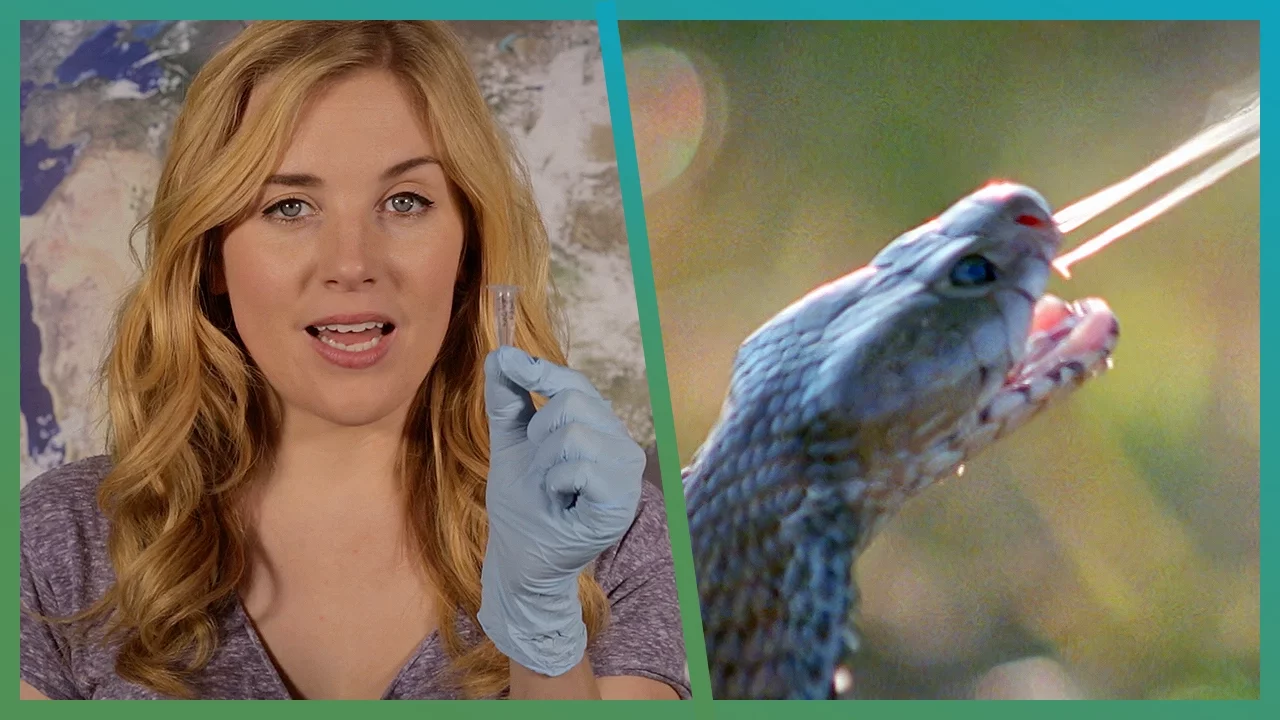
Why this video: Demonstrates the biochemical effects of saw-scaled viper venom on human blood, illustrating how procoagulant enzymes trigger rapid clotting, leading to "consumptive coagulopathy."
Knowledge Checkpoint:
- Explain how a toxin can trigger blood clotting but ultimately cause severe bleeding (consumptive coagulopathy).
- Describe the visual differences between normal clot formation and venom-induced clotting.

Why this video: This video details the cytolytic and hemotoxic effects of cottonmouth venom, demonstrating how its enzymes digest the extracellular matrix and destroy vascular integrity.
Knowledge Checkpoint:
- Describe how cytolytic enzymes disrupt capillaries and cause localized swelling.
- Identify the role of tissue necrosis in hemotoxic envenomation.
Coverage Note & Independent Study Recommendation: The video pool focuses mainly on the physiological effects of clotting rather than the molecular structures of SVMPs and enzymes. Independent Study Search Query:
snake venom metalloproteinases and phospholipases biochemistryto research how SVMPs cleave basement membrane proteins (like collagen IV) to cause blood vessel leakage.
Module 5: Venomics, Proteomics & Drug Discovery
This module covers the modern "venomics" pipeline. You will explore how researchers use transcriptomics, proteomics, mass spectrometry, and high-throughput screening to isolate toxic peptides and design safe, effective medications.

Why this video: This lecture outlines the venomics workflow, explaining how integrating transcriptomics and proteomics allows researchers to study venom composition without needing large, hard-to-collect venom samples.
Knowledge Checkpoint:
- Define the steps of the modern venomics pipeline.
- Explain how transcriptomics (analyzing venom gland RNA) supports proteomic mass spectrometry.
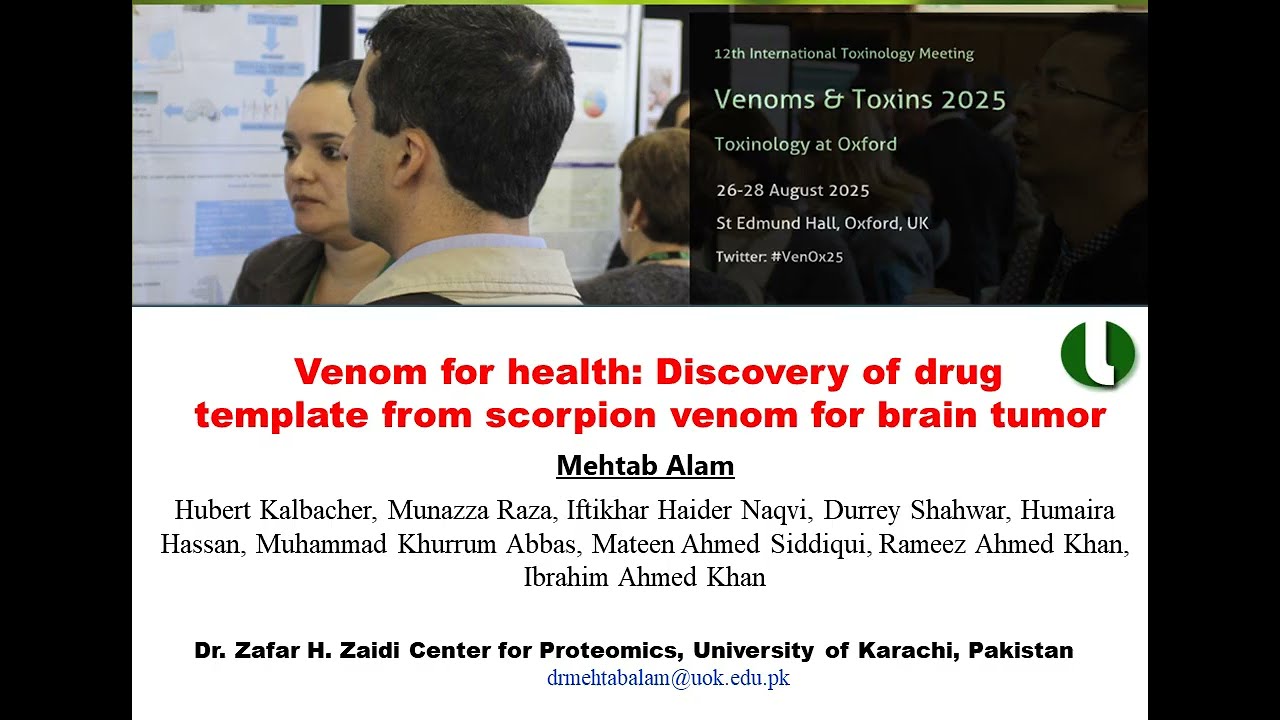
Why this video: A technical flash talk that walks through step-by-step drug discovery: extracting scorpion venom, purifying peptides, mass spectrometry, and structure-activity testing to find therapeutic candidates.
Knowledge Checkpoint:
- Outline the process of isolating single peptide fractions from crude, complex venoms.
- Describe why peptide scaffolds (like those in scorpion venom) make good templates for drug design.
Why this video: Ph.D. biologist Christie Wilcox analyzes why toxins are highly valuable for drug discovery, showing how researchers modify venom peptides to lower their toxicity while preserving their medical benefits.
Knowledge Checkpoint:
- Explain why the high target selectivity of venom peptides is beneficial for drug design.
- Describe the chemical modifications needed to turn a peptide toxin into an oral medication.

Why this video: A short look at the history of Captopril—the first blockbuster ACE-inhibitor developed from the venom of the Brazilian lancehead viper (Bothrops jararaca).
Knowledge Checkpoint:
- Explain the physiological pathway targeted by Captopril (ACE inhibition) to lower blood pressure.
Coverage Note & Independent Study Recommendation: Detailed steps of high-throughput screening assays are not fully covered in these videos. Independent Study Search Query:
venomics transcriptomics proteomics mass spectrometry lectureandvenom peptide drug discovery pipeline explanationto study the integration of liquid chromatography-mass spectrometry (LC-MS/MS) with bio-activity screening.
Course Map
Key People Index
- Dr. Baldomero Olivera (University of Utah): A pioneer in conotoxin research who discovered how cone snail venom peptides target specific receptors, leading to the development of the chronic pain drug Prialt.
- Dr. Christie Wilcox (Ph.D., Molecular Biologist): Researcher and author who specializes in venom biochemistry and the evolutionary pathways utilized to turn toxins into therapeutics.
- Tim Friede (Antivenom Researcher): Known for self-immunization studies, working with global research teams to analyze how human antibodies bind and neutralize major snake venom protein families.
- Carl Zimmer (Yale University / NYT Science Writer): A prominent science communicator who has written extensively on the genetic history of gene duplication and toxin recruitment.
Final Self-Assessment
- Explain how a cell maintains its resting membrane potential using the sodium-potassium pump.
- Describe the genomic process of neofunctionalization following a gene duplication event.
- Explain the difference between pore-blocking neurotoxins and voltage-sensor-gating modifiers.
- Describe the binding site and structural mechanism of tetrodotoxin (TTX) on channels.
- Draw the blood clotting cascade, showing how the intrinsic and extrinsic pathways converge to form a fibrin mesh.
- Define "consumptive coagulopathy" and describe the biochemical feedback loops that trigger it.
- List the four major protein families found in snake venoms.
- Explain why combining transcriptome data with mass spectrometry proteomics is essential for mapping new venoms.
- Describe how researchers modify natural venom peptides to improve their stability and reduce toxicity for medical use.
- Detail the physiological mechanism of Captopril and name the snake species that inspired its discovery.