Mycorrhizae: Signaling, Biophysics & Ecology
Learning Goal: Analyze the symbiotic mechanics of mycorrhizal networks, focusing on molecular signaling during colonization, the biophysics of nutrient exchange at the arbuscular interface, and ecological resource sharing between plants.
- Prerequisites: Undergraduate-level introductory plant biology, biochemistry, and basic thermodynamics.
- Estimated Study Time: 11 hours
Module 1: Foundations of Mycorrhizal Symbiosis
This module establishes the core morphological and anatomical distinctions between plants and fungi. You will explore how fungal hyphae differ fundamentally from plant roots, examine the anatomical structure of the root-cortex interface, and learn the taxonomic and structural boundaries between ectomycorrhizae and endomycorrhizae (arbuscular mycorrhizae).
Recommended Videos

- Why this video: Renowned mycologist Nicholas P. Money clarifies three key biological differences between hyphae and roots: tip growth coupled with enzymatic digestion, cell wall biochemistry (chitin versus cellulose), and cellular diameter limitations. This distinction is vital for understanding why fungal networks can exploit sub-micron soil pores that remain inaccessible to plant roots.
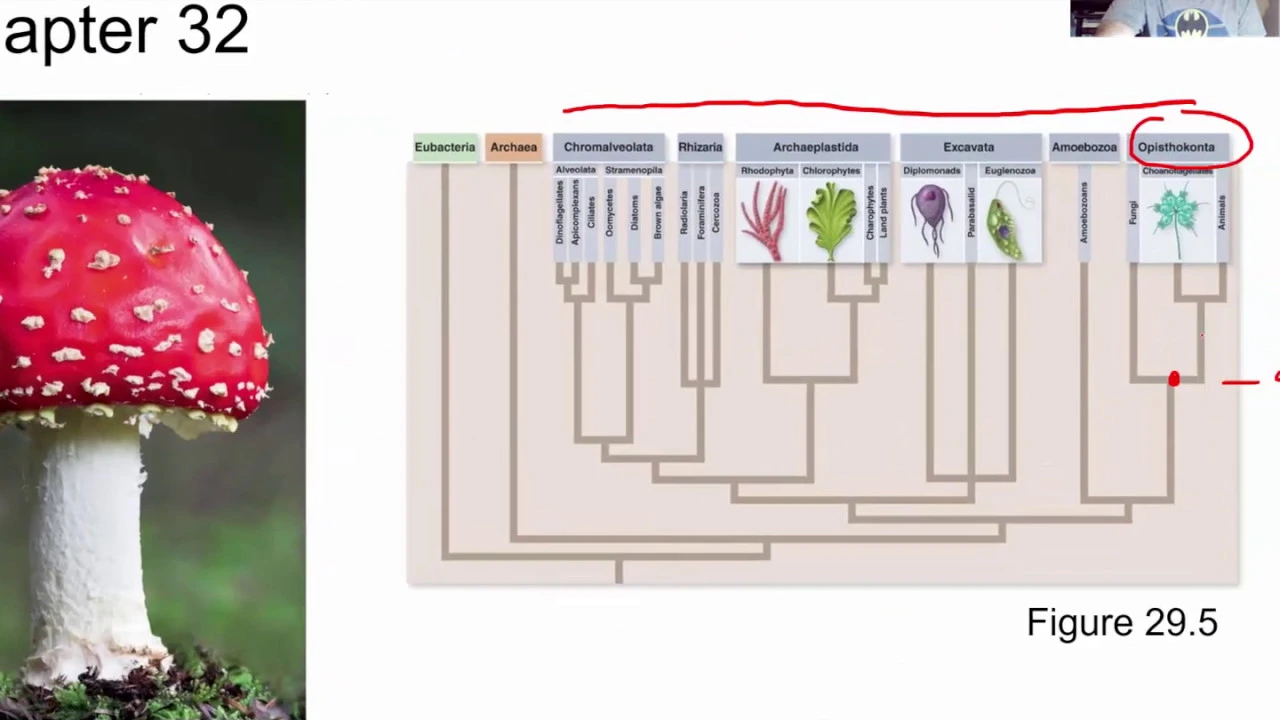
- Why this video: This lecture segment outlines the taxonomic classification of mycorrhizal partners. It contrasts ectomycorrhizal fungi (mostly Basidiomycota and Ascomycota) with endomycorrhizal fungi (exclusively Glomeromycota), demonstrating how their anatomical pathways of root colonization differ.

- Why this video: A clear morphological breakdown of fungal hyphae. It introduces the differences between septate and aseptate (coenocytic) hyphae, which is fundamental to understanding cytoplasmic streaming and pressure-driven mass flow of resources within Glomeromycota networks.
Knowledge Checkpoint
- Explain how the chitinous cell wall of fungal hyphae alters mechanical properties compared to the cellulose-based plant root cell wall.
- Contrast the physical barrier colonization strategies of ectomycorrhizal fungi (Hartig net/mantle) with endomycorrhizal fungi (intracellular arbuscules).
- Define coenocytic hyphae and explain how the lack of cross-walls (septa) in Glomeromycota supports rapid internal resource transport.
Module 2: Molecular Signaling and Root Colonization
This module covers the chemical dialogue that occurs prior to physical contact. You will examine the synthesis and exudation of strigolactones, the detection of fungal Myc factors (lipo-chitooligosaccharides, or Myc-LCOs), the biochemical role of the negative regulator SMAX1, and the generation of intracellular calcium spiking during the initiation of the Common Symbiosis Pathway (CSP).
Recommended Videos

- Why this video: Dr. Paszkowski provides high-level academic insight into the genetic and molecular regulation of arbuscular mycorrhizal symbiosis. She highlights how SMAX1 acts as a negative regulator (suppressor) of colonization, working as a classical hormonal double-negative feedback loop.
- Why this video: This short video reviews the chemical structure and biological function of strigolactones. You will learn how these carotenoid-derived terpenoid lactones serve dual roles as internal plant developmental hormones and external rhizosphere signaling molecules that trigger fungal spore germination.

- Why this video: This video examines the Common Symbiosis Pathway (CSP) shared between nitrogen-fixing rhizobia and mycorrhizal fungi. Sharon Long explains how symbiotic factors trigger nuclear-localized calcium spiking in root hairs, a biological process identical to the signaling cascade activated by fungal Myc-LCOs.

- Why this video: This video outlines the three phases of colonisation: spore germination, chemotropic migration of hyphae toward root exudates, and the cellular penetration of cortical cells to establish nutrient exchange interfaces.
Curriculum Gap: Molecular Signaling Details
⚠️ Curriculum Note: Standard public video catalogs have limited step-by-step animations detailing the assembly of the plant-derived Pre-Penetration Apparatus (PPA). To master this concept, read scientific reviews on how the plant nucleus migrates across the cell to orchestrate a trans-vacuolar column of cytoplasm. This PPA structure pre-figures the path of the entering hypha, ensuring it remains topologically external to the host cell cytoplasm.
Knowledge Checkpoint
- Explain how strigolactones are synthesized in the host plant and how they alter fungal bioenergetics upon excretion.
- Detail the double-negative feedback loop of SMAX1/SMDK signaling during initial mycorrhizal suppression.
- Contrast the cell-tip calcium influx with the nuclear-envelope calcium spiking triggered during the Common Symbiosis Pathway (CSP).
- Sketch the temporal assembly of the Pre-Penetration Apparatus (PPA), noting the positioning of the nucleus, microtubules, and endoplasmic reticulum.
Module 3: Biophysics and Bioenergetics of Nutrient Exchange
This module covers the physical processes of nutrient transfer across the specialized periarbuscular membrane (PAM). You will analyze how plant and fungal H+-ATPases generate the proton electrochemical gradients that drive active transport, study the transport proteins involved in phosphorus and nitrogen uptake, and evaluate recent findings on host-to-fungus lipid transfer.
Recommended Videos
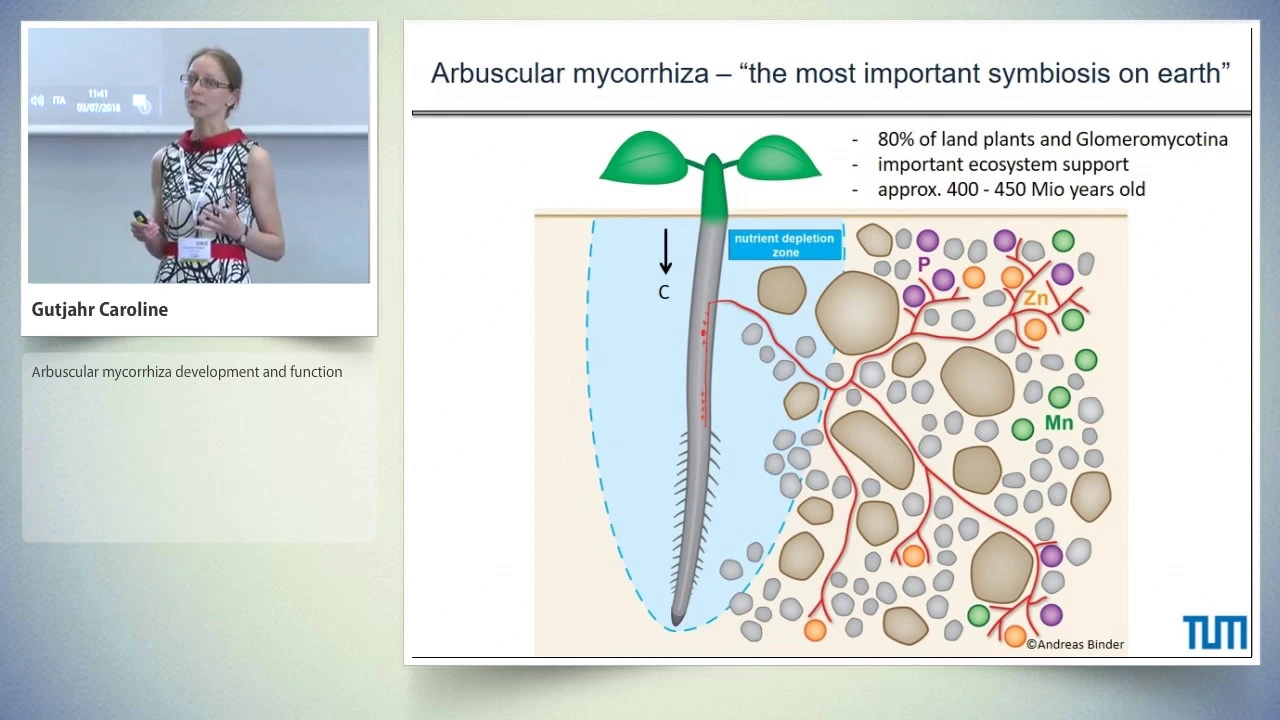
- Why this video: This video challenges traditional textbook models of carbon transfer. It presents biochemical evidence showing that arbuscular mycorrhizal fungi are fatty acid auxotrophs; plants transfer synthesized lipids (via RAM2 and STR/STR2 transporters) alongside hexose sugars to meet fungal carbon requirements.

- Why this video: This video introduces the genetic and transcriptional control plants exert over colonization. It explains how plants use specific phosphate transporters expressed exclusively in the periarbuscular membrane to regulate colonization levels based on internal phosphorus status.

- Why this video: This video reviews the molecular mechanisms of P-type primary active transport. It explains how ATP hydrolysis drives conformational changes to move ions against steep concentration gradients.

- Why this video: This segment demonstrates how plant membrane-bound H+-ATPases pump protons (H+) into extracellular spaces. This creates an acidic microenvironment and a proton-motive force, which is the same biophysical mechanism used to drive secondary active symport at the arbuscular interface.
Curriculum Gap: Proton-Motive Force at the PAM
⚠️ Curriculum Note: The specific alignment of plant and fungal ATPases within the periarbuscular space is underrepresented in basic biological animations. To understand this, visualize the periarbuscular space as an acidic compartment (pH ~5.0 to 5.5). The plant H+-ATPase pumps protons from the plant cytoplasm into the periarbuscular space, maintaining a proton gradient. This gradient drives the plant-side secondary active symporters (such as the high-affinity phosphate transporter PT4), which couple the import of orthophosphate () with the downstream flow of protons ().
PLANT CYTOPLASM PERIARBUSCULAR SPACE FUNGAL CYTOPLASM [ Low H+ / Negative ] [ pH ~ 5.0 ] [ Low H+ / Negative ] | | | H+-ATPase ---> [Pumps H+] --------> | | | | | PT4 Symporter <--- [H+] + Pi <-----| | | | | | | <--- [Pumps H+] <--- H+-ATPase (Fungal)
Knowledge Checkpoint
- Explain how the plant cell membrane invaginates to form the periarbuscular membrane (PAM) without rupturing the host tonoplast or plasma membrane.
- Write out the thermodynamic equations or describe the electrochemical conditions required to drive the symport of phosphate () against its concentration gradient using H+-ATPases.
- Detail the biological evidence proving that plants transfer palmitic acid (lipids) directly to AM fungi, rather than just simple hexose sugars.
Module 4: Common Mycorrhizal Networks and Forest Ecology
This module scales up from cellular interfaces to forest-wide networks. You will examine the biocomplexity of Common Mycorrhizal Networks (CMNs), study carbon and nitrogen source-sink dynamics, analyze volatile and soluble plant-to-plant defense signaling, and evaluate the ecological role of "Mother Trees" in forest regeneration.
Recommended Videos
- Why this video: Dr. Suzanne Simard introduces the "Wood Wide Web." She details her peer-reviewed isotopic tracing experiments ( and ) that proved carbon moves bi-directionally between Douglas fir and Paper birch through shared ectomycorrhizal networks, driven by source-sink gradients.
- Why this video: An educational animation showing how mycorrhizal networks connect forest understories. It illustrates resource transfer, kin selection, and how defense signals (like jasmonic acid pathways) are transmitted through fungal pathways to prime neighboring seedling defenses.
- Why this video: Dr. Christine Jones discusses the biochemical signals sent through common mycorrhizal networks. She covers how a plant under insect herbivory transmits warning signals to neighboring plants, triggering the pre-emptive synthesis of defensive compounds.

- Why this video: This feature-length presentation offers a deep dive into forest ecology. It covers the structural topology of CMNs, demonstrating how older, highly-connected "Mother Trees" act as key network hubs that sustain younger seedlings.
Knowledge Checkpoint
- Explain how source-sink thermodynamics dictate the direction of carbon flow between two plants connected to a single CMN.
- Detail the biochemical pathways activated in a "receiver" plant when a "donor" plant under herbivore attack sends defense signals through a shared fungal network.
- Define "kin recognition" within a CMN and explain how it alters resource allocation from parent trees to conspecific versus heterospecific seedlings.
Course Map
Key People Index
- Dr. Suzanne Simard (University of British Columbia)
- Context: Pioneer of the "Wood Wide Web" concept. Her research demonstrated bidirectional carbon transfer between plant species using stable isotopes, showing how older, well-connected trees act as central hubs in forest ecosystems.
- Dr. Uta Paszkowski (University of Cambridge)
- Context: Lead molecular biologist studying the genetic mechanisms of arbuscular mycorrhizal colonization. Her work identified key components of the signaling pathway, including the role of SMAX1 as a negative regulator.
- Dr. Christine Jones (Soil Ecologist)
- Context: Soil biochemist focusing on the liquid carbon pathway. Her research shows how diverse plant mixtures use common mycorrhizal networks to build stable soil organic carbon and transfer organic nutrients.
- Dr. Nicholas P. Money (Miami University)
- Context: Mycologist specializing in fungal biophysics. His work on tip growth and hyphal mechanics clarifies how fungi generate pressure and navigate microscopic soil spaces.
Final Self-Assessment
Complete this self-assessment to verify your mastery of mycorrhizal signaling, biophysics, and ecology.
- Structural Distinction: Can you contrast fungal hyphae and plant roots regarding cell wall composition, nutrient absorption mechanics, and physical diameter?
- Morphological Classification: Can you explain the structural differences between ectomycorrhizal (Hartig net, mantle) and arbuscular mycorrhizal (periarbuscular membrane, arbuscules) associations?
- Pre-Symbiotic Signaling: Can you outline the molecular pathway from the plant's excretion of strigolactones to the fungal secretion of Myc-LCOs?
- Symbiosis Regulation: Can you describe the roles of SMAX1 and the karrikin-signaling complex in regulating mycorrhizal colonisation?
- Intracellular Transduction: Can you explain how calcium spiking is generated in the host plant cell's nuclear region during the Common Symbiosis Pathway (CSP)?
- Physical Host Remodeling: Can you diagram the assembly of the Pre-Penetration Apparatus (PPA) and explain its role in directing hyphal growth through host cells?
- Arbuscular Biophysics: Can you explain how plant H+-ATPases and fungal H+-ATPases generate the electrochemical gradient within the periarbuscular space?
- Nutrient Symport: Can you explain the biophysical mechanism of plant orthophosphate () absorption via PAM-localized high-affinity phosphate transporters (e.g., PT4)?
- Carbon Transfer Paradigm: Can you summarize the biochemical pathway of lipid transfer (specifically palmitic acid via RAM2 and STR1/2) from plants to mycorrhizal fungi?
- Ecosystem Dynamics: Can you explain how resource allocation is governed by source-sink thermodynamics within a Common Mycorrhizal Network (CMN)?
- Systemic Signaling: Can you detail how plant-to-plant warning signals are transmitted through mycorrhizal hyphae to trigger defenses in neighboring plants?