
![[Hormon Tumbuhan] Kuliah Tamu Bersama Pakar FISIOLOGI TUMBUHAN--Prof. Bernhard Grimm - Germany](https://i.ytimg.com/vi/tw7mUKIqTPs/sddefault.jpg?sqp=-oaymwEmCIAFEOAD8quKqQMa8AEB-AH-CYAC0AWKAgwIABABGGUgSChIMA8=&rs=AOn4CLAxC_5hHYWSp5AJ5qQ-i4nOk9lLDA)










The D14L/KAI2 signaling pathway serves as a master regulator that integrates plant phosphate nutrition status with arbuscular mycorrhizal symbiosis, where high phosphate conditions stabilize the negative regulator SMAX1 to suppress symbiosis, while low phosphate conditions activate the pathway to promote fungal colonization and nutrient exchange.
Plant Symbiosis Signaling: Phosphate Nutrition & Arbuscular Mycorrhiza
Added:The basic biology of Arbuscular Mycorrhizal (AM) fungi and their mutualistic symbiotic relationship with plant roots.
The physiological importance of phosphorus (phosphate) as a limiting macronutrient in plant growth and development.
Fundamental concepts of plant signaling pathways, particularly receptor-ligand interactions and intracellular signal transduction.
Basic root anatomy, including the tissue layers (epidermis, cortex, endodermis) involved in microbial colonization.
The specific biochemical mechanisms of the D14L/KAI2 receptor family and their role in perceiving karrikins and other signaling molecules.
Agricultural applications of symbiotic signaling to enhance crop nutrient-use efficiency and reduce reliance on chemical phosphate fertilizers.
The evolutionary conservation and divergence of plant-fungal symbiotic signaling pathways across different plant lineages.
Genetic engineering approaches (such as CRISPR-Cas9) to optimize root system architecture and mycorrhizal colonization in cereal crops like rice.
368 views5likes57:46Original Release: 2025-12-08
I am delighted to uh introduce our final speaker Uta Pashkowski who leads the serial symbiosis group at the department of plant sciences at the University of Cambridge. She trained originally in plant pathology at the University of Cologne before receiving her PhD from Ethazeric in biotechnology. And then she she then spent time at the University of Basil and Sententa in San Diego as a postoc where she deepened her expertise um in plant biology and symbiosis. So since starting her independent career at the University of Lassan um she has moved to the University of Cambridge where she or Cambridge University where she now leads a worldrenowned research team focused on plant micro symbiosis and nutrient acquisition. We are delighted to add to the numerous distinctions UTA has received for her work the emboss sponsored keynote speaker for this meeting and we're honored to have such a dynamic um speaker help us cap off an excellent few days of plant biology.
>> [applause] >> Wow, what a wonderful set of three days.
Um, thank you for for putting it together, being amazing hosts, and thank you all for um hanging in here until the last uh very last speaker um has completed and closed this this meeting.
Um dynamic dynamic on the dance floor perhaps as well. Very good to see a meeting where dancing is still possible.
Okay. Now, um let's get on with it. So, as is tradition for the uh Embo keynote lectures, um I first give a little bit of acknowledgement to um Embo. So, I would like to mention that this keynote lecture is supported um with funding [snorts] from EMBBO. And Embo stands for the European Molecular Biology Organization. We have about 2,000 members. About 10% are from outside Europe. So the vast majority is uh from the European um continent. [snorts] And we admit approximately 60 new members um every year. Now I haven't done my homework. I need to see how I'm moving this forward. Yeah, good. And I'd like to draw your attention also to the multitude of different programs that Embo is supporting. So from post-doal fellowships to um grants that uh facilitate scientific exchange courses, workshops and then also uh young group uh um leaders kind of meetings to facilitate getting your lap off the ground. And in addition, of course, we're all familiar with uh the Embo also hosts a number of journals including um the Embo journal, Embo reports, uh molecular systems biology and so on and so forth. And uh they also support preprints and [clears throat] have created the review commons uh which is a platform for peer review of preprints.
So so much for Embo. Thank you Embo for supporting this lecture and I'd like to now move on to the science. So um I've changed the title slightly and to give you like a slightly more broader insight into one area of our research where we studying the integration of a buscular microisal sumba uses with plant phosphate nutrition and we predominantly work in cereals. So rice is our main uh model plant species. But what we're looking at here now I need to see the pointer is it where is nope. Where is the pointer? Is it the big one?
Oh, it's just a a separate one. Okay, good. Thank you. Zero. So um so what I'm showing here on this first slide is the key structure um to the simuza. So you've had already a beautiful introduction earlier this morning from uh um Lena and also from Evan. And here is one of the slides that I keep showing for decades in the tone of the meeting.
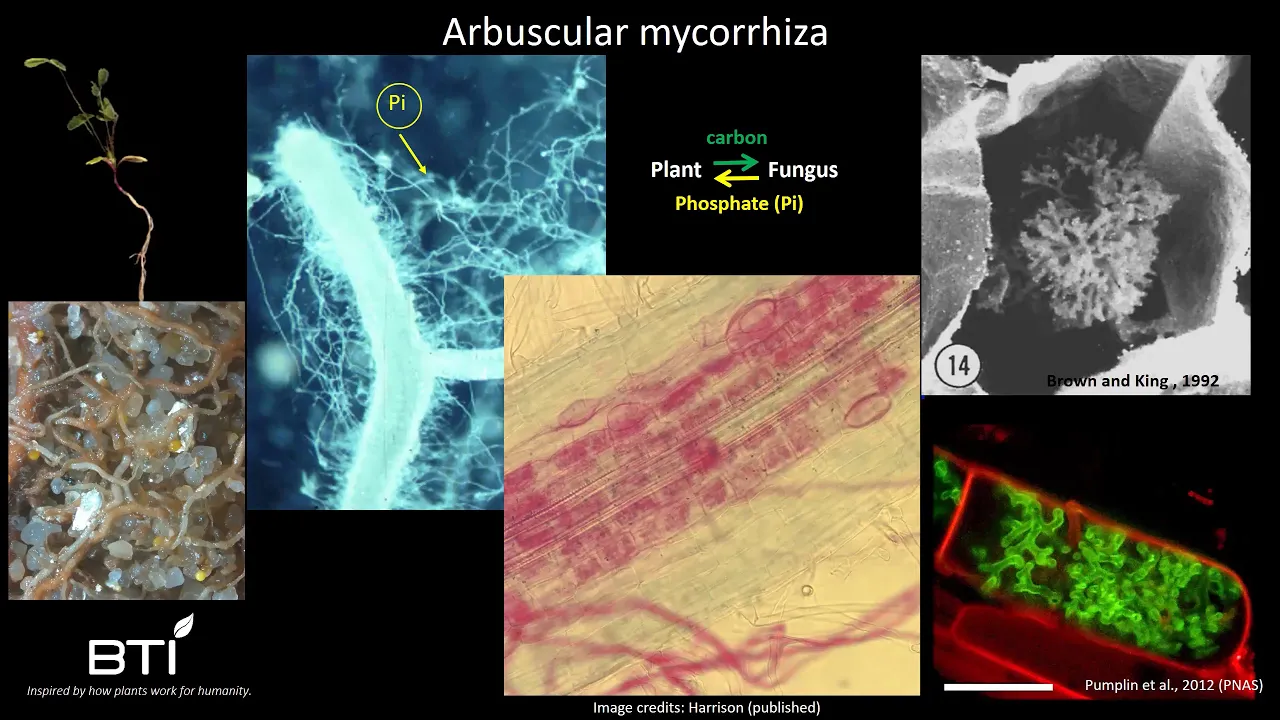
So this is a a picture from the 80s but it very beautifully shows these treelike structures that ironically the fungus forms inside um the plant cell inside plant cortex uh uh root cortex cells.
You see here the the plant cell wall. So this um absolutely sophisticated and fascinating structure is approximately 50 micron by 1050 micron in height and width. So it's microscopically small. It is here where um eventually the mutilism manifests. So the outcome of the symbiosis is indeed uh uh mutually beneficial. And we're putting our finger on where it happens here at these structures where the fungus is um nourished by the plant with organic carbon. The fungus is an obligate biotroof. It lacks fatty acid synthes.
So it's entirely dependent on the plant for uh the supply of fatty acids to complete its life cycle. Um at the same time the fungus is enhancing uh the mineral nutrition of the plant. It also provides water. But actually the effect is most pronounced uh for phosphate. And the the benefit that plants have with regard to phosphate nutrition is uh burning down to this incredible increase of surface area um contributed by the fungalium for mineral in particular phosphate acquisition. So what we in fact have is a conduit for minerals and water from these uh fungal hy through the fungal body all the way into the fungal structures inside the root and out of the albas to the plant. So this is an incredibly effective route of nutrient uptake. Here we're looking at the summary of several years of radio tracer um data that Eva Jakobson in Denmark has compiled and he was interested to actually quantify what is the percent contribution of the hyper pathway to overall phosphate uh nutrition of the plant and he used over the years a set of really really phoggenetically distant angioperms and in all cases we see this massive dominance of the symbiotic pathway over the direct pathway with between 70 and uh eventually almost all um 100% of the uh phosphate uptake being uh provided by that um hyo root. So um and given that we're looking at a really huge diversity of plant species here, if we extrapolate this to the fact that more than 80% of all land plant species engage in this interaction and uh across all of the um uh terrestrial ecosystems, we get an appreciation for what intense working horses these uh fungi are because in the majority of these cases, we would now be quite confident to assume assume that the uh phosphate acquisition of these plant of the plants in these ecosystems is actually mediated via association with these uh microisal fungi. So that we quite fairly can conclude symbiotic plant nutrition is the default uh strategy in nature and it is driving ecosystem productivity. So hugely important and um if we now want to stretch across from natural ecosystems to agroecosystems we see that also here the sim uses does make a significant difference. We're looking at beautiful work from Royosaurus that he conducted in Mexican median input swap subtropical fields. We have wild type maze plants next to isogenic mutant uh uh plants that lack one only one gene rendering the uh mutant unable to engage in the symbiosis. You can make out with the naked eye that these plants are less happy than uh the wild type on the left wild type on the left hand side and uh remarkably uh this is also translated ultimately in a difference of 30% in uh yield. So if you're able uh to engage with a vascular microisop fungi you have a 30% yield increase. So it does have a significant potential through data like this which are increasing in the literature for sustainable crop nutrition. So now if we um uh uh look across these multiple fascinating aspects of microismbiosis from this incredible level of intimacy and compatibility when our schools form all the way to a relevance in agro ecosystems.
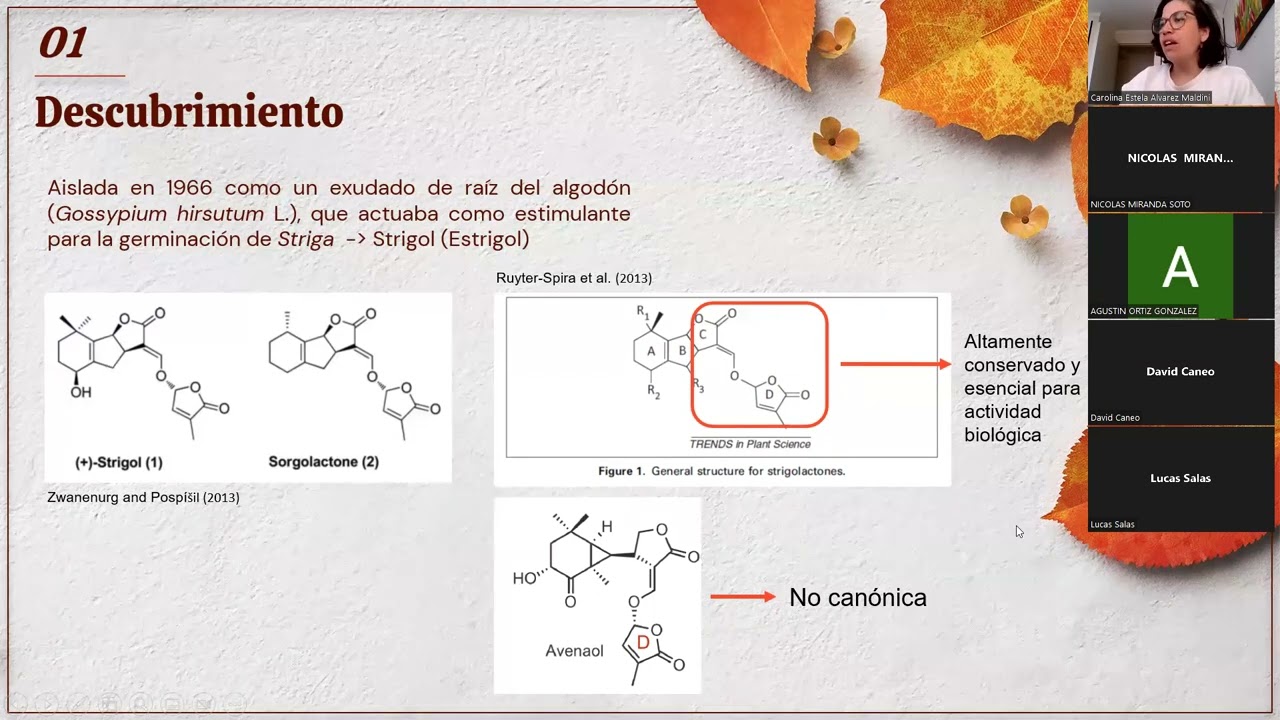
um we can say there's no way that we know enough about this symbiosis to understand the beauty of biology behind it but also to perhaps make better use of it in agricultural settings. So we've learned a lot and we saw some beautiful reflections of uh insights that um have been gained this morning. Um but at the same time there are uh uh challenges or have been challenges that um we would love to master to get a better a better a deeper understanding of the processes that ultimately underpin development and also functioning of the symbiosis and the big challenge uh to study for example if you're really interested in this avasculated cell stage we cannot easily focus on studying that stage because the development of the simus is a highly dynamic and b absolutely non-synchronous which is illustrated here. So on the left hand side you see a sort of summary of the different um developmental stages starting from a molecular cross talk um in the ryosphere. here um noteworthy is um striolactone as a an exodate component uh plant hormone from roots that activates the fungus for symbiosis and also navigates the fungus towards um the root. The fungus at the same time is um releasing a whole cocktail of differentectors proteins and also small molecules and also kitenine oligosaccharides. It is that molecular cross talk that then reprograms both uh u partners for that anticipated um association. We then have um uh surface contact formation of the fungus with the root. Um a hyphel swelling is produced a hyphopodium and then the fungus colonizes the root tissue predominantly the outer root cell layers the epidermis the the cortex. It does not breach the endodermis. will never colonize the steel and also not the the meristematic tissue. And then as it arrives in the cortex, it uh will start to consecutively produce these um arbascals by um invagination of uh uh cortex the cortex plasma membrane and through iterative dichotoous branching.
I think somebody is requested on the phone. [laughter] um through this reiterative dichotoous branching we build this beautiful treel like structures that I showed you before that remain continuously surrounded by a plantder derived membrane the so-called perabuscular membrane as you can appreciate here and of course this arbuscal development is accompanied by a monumental change in cell architecture and uh foremost uh really is to be mentioned this massive increase in in membrane uh material material that is produced to envelope the fungus and despite this incredible investment from both partners to build these structures they have a very short time uh lifespan so they uh they form and collapse within the course of just a few days but it is here as I said where we looking at the heart of mutilism it is that birectional nutrient exchange that defines the mutilistic outcome and as the fungus is well nourished it then produces this fatty acid storage um structures, visicles and also grows out into the soil um to form this far reaching mcelium which is also where uh new fungal spores would form. And here on the right hand side you now can see that all of these uh stages that I just introduced you to really do occur at the same time eventually in the same uh tissue. So to understand what happens at a specific stage at a specific state of uh the cells that eventually engage with the fungus. We definitely uh have struggled in the past but now uh see the opportunity through um spatial transcrytoics where we do get eventually the cellular resolution or hope to get the cellular resolution of this uh uh complex interaction and across different stages on the whole tissue level and we decided to um work with the resolve bio uh bioscience platform. So they use uh multiplex single molecule fluorescent in zto hybridization. So this is if you wished um the early generation of spatial transcrytoic platforms we had only a 100 probes to design. So we predominantly focused on call it a proof of concept having markers for symbiosis markers for cell types and a few fungal genes as well. and Tanya decided to use a longitudinal section so as to capture eventually uh different stages of the um interaction and that worked really well in this beautiful section here. So you can see um young growing arbers, mature arbers and then also collapsing arbers.
We have hyi and we have visicles. The stain here is dappy for nuclei and vit a glutin for kitin. And you can see you can also appreciate how um the the fungal nuclei distribution eventually looks like. We don't see fungal nuclei in small branches of the albascu. We see a lot um in visicles and we can also appreciate that they are tiny in comparison uh with for example here a plant uh nucleus. So now let me introduce you to just we have a ton of data but I just picked um very few and some of you may have had a chance to to talk to Gabriel at at the poster already. Um so I would just uh um make sure everybody takes home our highlights here. So um we're looking here now at the first uh set of probes of of genes.
So basically we have a constitcutively expressed elongation factor um gene from the fungus um that very nicely allows to track fungal structures. You can see here the um the hy the visicles. You if you were to just look at that channel, you would see um the presence very nicely in the um uh arbosclls. And then we focus here on the key uh transporters uh that are uh uh uh ultimately um those transporters that define uh the the the birectional uh cost and benefit. we have the uh symbiotic phosphate transporter 11 we have the nitrate transporter and we have uh one of the ABC halfs size fatty acid efflux transporters so mineral uptake and organic carbon efflux and one of the key questions that also resolve that uh was can we actually detect transcripts of two different organisms in the same cell space and the answer is clearly yes you see in turqu here the elong the fungal elongation factor and you see um then uh evidence of all of the other um uh plant transporters. So um so we can confirm through this method what we knew from the literature before namely that these uh transporters are all uh arboscll specifically expressed but please also note this absolutely roaring um amount of of or abundance of PT11 um transcript and here we do a quantification and please note that the y-axis is in is is almost an order of magnitude different to the other um uh transporters and so phosphate it comes back to phosphate over and over again as really the sort of massive uh um currency of abuscal microisal symbiosis. So now the fungus is pretty untractable genetically we have no transformation system and we know near to nothing or flat and square we know nothing about spatial expression patterns in the fungus. And here I'm just giving you one example case of um some of those fungal genes. So here we have again our just duppy and wga stained section. So this is another section here now and here we're looking at um a kynise that has been published in the literature to be required for arboscll development and so we included it amongst the probe set and what what I would like to draw your attention to here is that there is an amazing completely unexpected um overlay of where we see that transcript signal of that transcript relative to the nuclei. So um for that particular gene there is that spatial correlation between fungal nuclei and transcript which is not the case for other uh fungal genes. It's a bit hard to see here, but they um adopt uh sort of distinct patterns, some being more, excuse me, expressed in the um hyi all have some presence in in arbuscles and then this this sort of amazing um uh uh accumulation of this this kynise transcript in um the visicos. So um we definitely would want to know more about the fungus and uh we can and this brings me to my um actually also uh second lab.
So I have a second lab at Rican Yokohama and there we are focusing on the fungal site and Akihiro Yamazaki is the deputy team leader um in Japan and we are now on route to so this is a little bit of a future perspective of trying to get to the bottom of uh fungal uh transcriptional activity in a spatial context. And um we would love to cover both as symbiotic and symbiotic stages.
Uh we are currently mining either our own or or literature uh available uh balk RNA seek data. We have a lot for the symbiotic state less so but some uh for asymbiosis and we've also uh recently succeeded um uh together with the team of Kosugimoto and here Akira Iaza is in the in the audience. So this is a fantastic team um with uh working with KO on single nuclear RNA seek from different plant tissue and here's just an example case uh from tomato we also have macansia where we have been able for the first time to actually get single nuke fungal clusters. So this is going to be very insightful. Um we are hoping to to do as symbiotic single nuke RNA sec rather soon. So watch this space. This is going to be really really exciting. And then we will select probes uh up to 500 we can select for a murfish based spatial transcrytoic focusing on the fungus. So I'm really really curious to see what we will find there. Okay back to our um uh symbiotic route. So I think one of the most exciting findings that we have made was uh is is shown here. Um and was that not all arbosclls seem to orasculated cells uh seem to express these typical um uh markers for the symbiotic uh nutrient exchange. And you can see that sort of very easily we have these two um aroscus here that show little to no signal. These are again this is our phosphate transporter. Um and then the rest of these genes they all have something to do with fatty acid nourishment of the fungus or here again also the nitrate transporter. So you can see that there is uh not much happening in these uh two obusculated cells. So first first thought of course is this is an artifact. Um but then um as we looked through our different propes that we we had um we found that indeed these two arbers show signal for other transcripts like here it's the sweet and also the the nope gene and uh so it's not an artifact and uh these these uh fungus uh sorry these albas seem to indeed be just active in a different way and looking across our different sections um that we have we found that there is a huge heterogeneity eventually to be found in the um uh abundance of the the different uh transcripts um in the abuscalated uh cells. So that would be consistent with nonuniform functioning um of these morphologically similar arbascus. This is completely new. We've always stained typically um uh uh with with WGA and you you would not have anticipated that if you have aroscus especially like here along a cell file having such diversity eventually of of the pattern. So this would be con also consistent with the idea of having local tissue environments regulating eventually um the transcriptional activity of um the plant and also the fungus. So um uh having said that of course one of the caveat of what we are doing here with spatial transcrytoics is that we get a snapshot right. So this is a static state when you at at at when at when you or you introduce the static nature when you just um uh prepare the tissue at at whatever um uh weeks post inoculation.
So what we need what we're lacking from this but what we need is the temporal solution and ideally we will be able to uh conduct non-invasive time-lapse imaging to really follow what happens what are the the spatial temporal dynamics of the proteins in the arusculated cell as the arbuscal unfolds and also collapses. So Jen Macgalli is the cell biologist in the lab and she has developed this really nifty um device which she called am slide. So where you basically grow the plants in this uh small side compartment the roots would extend into this foot here and you can do live imaging as the plant grows.
So we inoculate upon planting and Jen has produced a whole set of different slides for different type um of of microscopes and it works really beautifully. Yeah. So here she did a every 24hour um [snorts] shot of uh of an area where our skills are um developing developing. So that gives a little bit of an idea of what is eventually possible with that. You can also ignore microvisisal uh simba uses and just use this device for any root um cell biology real time and Jen published this last year and um yeah it's working by now quite well in a number of different labs. So Jen focused on um in initially on three different periascular membrane intrinsic proteins. We have once again the uh uh Simba specific phosphate transporter. These two halfs size ABCG um fatty acid flux transporters and then uh scum is a protein um that is that we use as a marker for the periabuscular membrane.
we know that it actually accompanies alvascular development and collapse in the um across all stages in the avascular in the feriovascular membrane.
So um uh in the first place just uh looking at um this this sort of resolution that we can get if we do now non-invasive imaging and we have a double uh reporter line here for the periabascular membrane the markers gump and then we have our symbiotic phosphate transporter and we go through different stages here of arbascal life. So at the trunk stage when the when the fungus is poking its hifa into the um cortex cell we see that there is a clear scump signal but actually PT11 cannot be detected. When we go to the young um arbers we see scump at the trunk at the coarse branches but PT11 actually only coming up at the fine branches. Jen also did the intensity plots through the trunk only um the scump membrane marker through the fine branches. Then you oops you see um the uh presence of of PT11 coming up which is then very pronounced as we go into the fully unfolded um arbascals and um so this is known from the literature beautiful work from Maria Harrison um here in upstate New York uh showed long time ago that these kind of symbios symbiosis specific phosphate transporters do uh localize to the perabuscular fine branch um domain. So this was confirmatory but then Jen also made this remarkable observation which is coming back to our arusal individuality. So here we have a fully unfolded arbuskll and here as well here we see PT11 wonderfully present as I showed you on the on the previous slide.
However, in that tarbuscul although it is equally well unfolded, we do not find um much PT11 in the periabuscular membrane. So once again uh we see that there is a difference between individual arbascals.
Now with regard to protein uh transporter abundances on the periascular membrane and um and that would furthermore enhance that hypothesis that eventually the local context does actually play a role in regulating or fine-tuning the regulation of these nutrient transporters. So now um having this device at hand and being of course also interested in addressing uh the cost benefit type of uh aspect of the nutrient exchange, it's been long-standing um uh hypothesis in the uh in the community that uh the terms of trade are reciprocal. So you would expect that they are completely co-regulated. And here we're now um looking at a triple reporter. So we have again our membrane marker uh the phosphate transporter and now the fatty acid carbon efflux uh transporters and Jen came equipped with a mattress and a sleeping ve and took every two hours uh uh images for 54 hours and here now I mean for us this was a historic moment because it's the first time that we can actually really follow the albos from birth um to death um and you can see that here very nicely in that central um cell where the albuskill is flowering and then eventually very quickly um also collapsing. So this now opens the door to a hell of a lot of different um research research questions. One of the first things um that Jen uh determined was the lifespan. So in rise risophagus irregularis uh has uh two to four days arboscll lifespan. But actually super interesting I find is that our skills are never static. So it's not that they develop and sit there and pump in both directions. It is actually that these transporters um are to be found on the perabascular membrane only during the phase of fifth expansion. So um we can then in addition of course tease apart uh the the uh spatial temporal details uh looking at individual frames. And one of the interesting observations that uh Jen made was that actually the uh uh carbon efflu precedes um the phosphate uptake transporter on the perry um avascular membrane. And so that would point to um distinct spatial temporal expression patterns and not really a strict um co-veulation of these um transporters.
But as I said the absence of a static state suggests that symbiotic phosphate uptake and fatty acid flux is coupled to hy expansion which is um I think uh really really really neat. So this brings me to the summary of this part.
So basically what I would like you to take home from this uh section is that um yeah the symbiotic nutrient exchange is linked to dynamic arboscll growth and it is locally regulated.
So now I would um like to switch to um the the second part which is dealing more with call it systemic regulation of um a vascular microisal symbiosis and I'm I'm continuing here on the uh note that Evan uh started uh namely that we know for a very long time so this is from the late60s that there is an inverse correlation between um the phosphate fertilization of the plants and the um level of colonization. So meaning that the plant quite precisely monitors its nutritional status and when it's wellnourished it would not engage or it would reduce the engagement with the fungus.
So um we would love to know how this is eventually brought about. What are the mechanisms that regulate this high phosphate um suppression? And I hope I'll be able to shed a little bit of light on that in the remaining um 10-15 minutes. So it started off with a mutant that we identified in rice that had um absolutely showed absolutely no interaction with um the avascar microis of fungus. Um you see here the picture that you already know. The wild type shows all of these different fungal structures and the mutant completely fails to engage with the fungus. Um such a phenotype would be could be explained by two different processes. So either the mutant is unable to um activate the fungus in an essential way. So the mutant would be unable to speak to the fungus or alternatively unable to receive the fungus. So is it is it deaf or is it mute? And that could be answered when we looked at um uh the the transcriptto of wild type and mutant uh roots to fungal exodates. And we defined a diagnostic uh transcriptional signature in the wild type that was literally absent in the mutant and that is consistent with the muting mutant having lost susceptibility to am fungi.
Now um the gene was eventually cloned.
was a many year-long odyssey and it's a long time ago and it uh corresponds to uh dwarf 14 like um a pretty boring name but that's what we had to stick to from the literature and it actually corresponds to the kakin uh receptor. So the gen gene is very well characterized in a rabidopsis um and also in some other plants but predominantly in arabidopsis. So it is the receptor of caraken uh which is a smoke constituent that firefalling plants require for the initiation of seed germination. So in arabidopsis it is famously called kakin insensitive too.
Um what is what is interesting to note is that it is the evolutionarily older paralogue to the D14 um the striolactone um receptor. So this is the D14 like is the gene that we cloned. It was a bit of a surprise at the time and Jong Min Choy in the lab um uh picked up from the knowledge that was generated in a rabidopsis where we knew that um the receptor D14 likes Kai2 would interact with an Fbox protein D3 in rice Mox 2 in raidopsis which would lead to the ubiquitination of a negative regulator one and uh sending it to the proteosome 26s proteosome dupressing then this developmental programs such as for example seed germination. So Jong Bin was able to confirm that these the same uh receptor complex component are also required for symbiosis as you see here.
So we're looking at different fungal structures in the root total hyphopoldia intraadical hy and arbascals and we can see that the D3 uh largely reproduces the D14 like phenotype. Um and when we then look at the mutation of the smox one of the negative regulator we see the colonization shooting up higher than uh wild type. So the removal of smox one leads to that increased colonization consistent with smox one operating as a negative regulator of symbiosis. And if you then bring smox one into the background of D3 you find that the D3 mutant phenotype is suppressed. So, smax one operates downstream of D3 and D14 like as previously shown in a rubidopsis in development. So, we're dealing here with um a classical hormonal double negative um regulation and these data suggested that the point of activating the D14 like receptor is to ultimately get rid of smok. So that would imply that if we uh when we see this low colonization in D14 like in D3 that should be attributable to a stabilization of smarks one and that is indeed the case. So you can see here that we have a very uh nice stabilization of uh smarks smarks one in both of these uh mutants. But please also note that we actually do not detect smox one at all um in the wild type and um that would indicate that this pathway is just continuously on in the wild type and that really changes our uh perspective at at what to expect in terms of uh um uh signaling to underpin conditioning plans for the symbiosis. We always think about you need activation, you need activation, you will need activation at one point, but what these data actually suggest is that perhaps um having the the pathway constitutively on um and uh uh eventually having a possibility through stabilization of smax one to block it might have been an evolutionary context. what has happened to evolve a pathway that allows to block colonization when conditions are less favorable. Okay, John went ahead and then wanted to know um transcriptionally what are the consequences of smax one removal and she found evidence for call it striolactone signature. So basically the entire biosynthetic pathway of striolactone was induced when SMAX one was mutated and we collaborated with Harob Balommeister to then measure uh abundance of striolactone. And if I can draw your attention here to to the uh amount of 40 deoxy or a bankco in the D3 mutant um compared to the double mutant with smax one you can see and appreciate that there is a massive uh enhancement of indeed striactone production and that showed back then for the first time that there's a cross talk between the D14 like signaling and the striolactone biosynthesis. The other signature that John main found was a symbiosis signaling uh signature. So just as a sort of rough guide, this is basically a summary of what we believe is happening when it comes to fungal recognition at the plasma membrane. secondary messenger being produced that leads ultimately to calcium spiking in the nucleus and then this calcium signature is deciphered by a specific kynise a calcium and calm modulin independent protein kynise that then drives um phosphorilation of uh relevant transcription factors uh to open the the door for um the fungus. So most of these uh components were transcriptionally induced in um the smax one mutant which would uh point to um the smax one or the d14 like signaling pathway being upstream of the common symbiosis signaling pathway and that is indeed the case. So we introduced a constitutively expressed autoactive version of this kynise um in the D14 like mutant background and could indeed bring uh colonization back. So as a matter of fact uh D14 like does operate signaling does operate upstream of symbiosis um signaling. So that leaves us with this model here where we um uh now find under favorable conditions that some unknown indogenous liant is produced. So that is our favored hypothesis on the basis of this western blot that I showed you before. D14 like being activated recruits the other components of the receptor comp uh complex which leads to degradation of uh the negative regulator liberating critical transcription factors for striolactone biosynthesis and the common symbiosis signaling pathway. So basically calling the fungus with striolactone and opening the doors for for the fungus at the same time. And when we genetically remove uh smax one from the system, we see this overshooting of colonization relative to the wild type under unfavorable conditions. Now D14 like would not be um activated because most likely the indogenous liant is not produced. Smax one is stabilized and we do not get colonization. So the big question now is unfavorable conditions. Does that actually um uh eventually um uh is is uh the high phosphate uh suppression perhaps one of those um unfavorable conditions? And that now brings Thomas into the game. He's a current posttock in the lab um who used or produced together with uh Zander Jones um a raometric smackswan derron uh sensor. So you would have a constitutive strong promoter driving just the domain of the negative regulator that is known to be required for interaction with the receptor and um uh produce a translational fusion with uh red fluorescent protein and then you have that ribosomal skipping uh sequence that eventually would lead to uh the RNA being read by the ribosome. the ribosome drops off, comes on again and reads the rest um of the RNA so that you indeed get ratometric um uh levels of the one and the other um fluorescent protein if both are uh um stable at equal measures.
So this allows us to really follow not expression of smox1 but stability um of smox one and the control for that is a deletion variant uh which has four amino acids deleted in that domain which prevents the interaction with uh the receptor. Thomas introduced these constructs into protolast and as expected we see um the nuclear uh uh YFP signal. So this is NLS here tagged. So the nuclear YFP signal um little or nothing for the RFP. However, in the stabilized version, we now see a strong stabilization of Smax one in the nucleus. So the construct work and many thanks to Zander Jones for for helping us um uh develop this. And then Thomas went ahead and did stable transformation. And now [snorts] we I mean he's still in the process of characterizing these transgenic plants.
But I'm introducing just some patterns that he has observed. So on the one hand um uh what you're looking at here is uh uh just a a latter a large lateral root of rice and in terms of the the signal the hotter the um uh more stable the protein. And you can easily with a naked eye make out that there is a gradient.
Um and when we do a cross-section optical cross check section we see that there is in addition um to the epical basil um uh direction also a proximal distal um gradient of smack stability.
Smax is very stable in the endodmis uh wherever we looked. But then he also noticed some really interesting other patterns like smox one really is uh strongly stabilized in lateral root primordia. We we're trying to zoom in.
We don't know yet at the moment what comes first but hopefully we'll be able to give an answer to that shortly. But we see from very early stages on that Smax one becomes sterilized. However, when the lateral root then grows out um smarks one is destabilized. So this is all um very interesting. um but now we of course want to know um in how farm max one become stabilized when we add high phosphate fertilization to the plant. So these are now data where Thomas um quantified the nuclear signals of um uh smarks one fluoresence in uh whole plants and he looked at all three uh different root types which um in the end is not not particularly relevant here. So we have crown roots, large laterals, fine laterals. The plants were grown at low phosphate or at high phosphate. And we have the wild type domain or this once again the stabilized uh mutant domain. And um what you can easily see when you just change the uh phosphate levels that under high phosphate uh smacks indeed uh becomes more stabilized. You also can appreciate the stabilization that occurs when this four amino acids are uh deleted. But then what we also note is that there is a further stabilization here in the lateral roots um even in that deletion construct which probably means that there is another pathway regulating smox one stability um in response to um increased phosphate. So now we know smox one is to some extent uh regulated by or stabilized by high phosphate. So if we turn that around now um and say okay fine if we grow plants under high phosphate where we see colonization is suppressed in the mutant smarks one mutant do we see higher colonization because now we have removed sman from the system and the answer is yes. Um so in the first place here we have again we have um wild type plants under low and high phosphate and you can see the wild type uh um is strongly uh suppressed in engaging with the fungus at high phosphate. However in the case of the sman mutant um we see while we still see some suppression we also see that there is still considerable colonization um occurring. So we have now introduced Maxwan crisper constructs into a variety of choponica and indica um rice lines and I'm just showing um a few here. So we went into Eerie 64 and then Bongen.
Bongsen is a is a very interesting indica variety is one of the most highly benefiting rice lines from colonization.
So it grows call it double as big when it uh when it is grown together with the fungus. We're here now having only high phosphate conditions and we're comparing the wild type and the respective smacks one just one al but we have many um and so you can see that actually that relaxation of high phosphate suppression comes back in any of the uh rice cultivars that we so far have laid our hands on. So that means now that yes indeed unfavorable conditions uh to some extent uh really uh correspond to high phosphate uh um conditions and SMAX one at least in part but to a considerable part um explains this high phosphate um suppression and that's really it's it's really a moment to appreciate the elegance of how nature has wired this whole system because we have now one signaling pathway um that integrates ates phosphate nutrition nutritional status of the plant with calling for help through striolactone production and secretion and at the same time opening the doors for um microisop fungi to um engage with and that brings me to the end of um the presentation. So I was I hope I I was able to uh convince you that we have multiple levels of control plant control of the engagement and then probably with regard to the functioning also the fine-tuning um of the similar uses we have the D14 like signaling pathway that conditions plants for in this case rise for simba uses and then we don't know yet what the controlling uh components are for this uh uh sort tissue specific fine-tuning of birectional nutrient uh transport but this will be uh future areas of our research. This is the >> [sighs] >> um dream team. So I was talking um to you about the work that Thomas and uh and and Gabia as as present members and uh Jen present members in the lab have done and we've had fantastic uh former alumni in the lab. Uh nothing of this would be possible without our um wonderful collaborations. Emma Wington at the National Institute of Agricultural Bot does all of our rice transformation. Zander, huge thank you for the uh um uh the uh raometric sensor harvester striact measurements KO Akira Ayako for the single nuke um collaboration and yeah thank you to our funders and I'm happy to take questions.
questions for Uta.
That was so cool. Thank you so much. Um I have two questions that might be related or might not be. Um the first one is why do the arbusculars collapse?
Is that do we do we know and is that maybe part of the sort of fungal benefit? And then do we know anything about the communication between cells or between our vusculars and neighboring cells? So do you think that the um difference in timing that you're seeing is just the developmental time frame or could they actually be signaling to one another?
>> Yeah. So with regard to the first question, why do they collapse? So this is why I was sort of emphasizing this idea of um the nutrient transporters are only the key nutrient transporters are only ever present on the parabascular membrane as long as the hy branch or elongate at one point there's no more space right so the the fungus develops develops develops and then collapses and it usually collapses at about when it reaches the the cell the bounded boundaries of the cell lumen. So I think there there might be some form of regulation of of monitoring. The fungus is still by the plant still expanding still delivering still I can take up more of the uh desired nutrients and once this is no longer happening probably the the the plant pushes the fungus out. We have some trap data that would indicate where we could really uh dissect individual stages of the arboscll development. Again, this was on on Gabri's poster. So, taking a late aroscope promoter um which is active from mature to the collapse stage, you see this massive induction of hydraytic enzymes from the plant. Um a defense response and it's interesting there's a complete switch. This is off during the first bit. As the arbascal develops, the defense response is off. As it as it kicks over, defense response comes on.
So again, cause and consequence, we don't know.
But it it might well be that the the plant has a major control again at that level. Um the second question so to say within the fungus or within the plant.
[laughter] So yeah so the fungus is a sincium. So it's which is uh one of the also f another fascinating aspect. So if you look at these spatial transcrytoics uh data and you see now for example one of one of these transcripts really localizes at the around the nuclei. So that would tell us that there's some sort of micro domain within that uh fungal um sensitium that is different from other areas where other transcripts are to be found. But uh communication within the fungus or specially really specific expression of any fungal transcript at any particular state is a big conundrum because the nuclei on the top are zipping through this through the cytoplasm. So in terms of cellto cell communication in the plant. So there are some um genes that uh again Maria Harrison had identified that sort of almost labeled the cell file that is going to be colonized. So that precedes the fungal uh colonization. So for sure there is um communication occurring.
Which form this might take who knows?
Yeah. Thank you. Good questions.
That was fascinating. Thank you. It might be a little similar to to Becky's question, but I was fascinated by the the localization of the plant transporters on the on the microisal membrane. I was wondering if you looked into were there like motifs or patterns between the plant transporters that localized there.
Uh so you mean zooming in further to um pervascular membrane subdomains and see if they're uh wholly overlap. Is that a question?
>> I think I think what I'm asking is what makes the plant transporters localized there?
>> Yeah. Um trafficking [laughter] but um yeah so we know relatively little about how that is again controlled. So Mavia has done most work um in that realm and uh she defined that um the promoter activity. So this really fine-tuned windows of promoter activity in the course of of uh the ABA skill development is is important to drive the expression of the transcript and then likely the translation right away into the right developmental window because during that developmental window sort of everything is channeled towards that is a that is a membrane intrinsic protein towards um this this growing beast.
So um lots to discover there. We know very little about how that could be regulated and she has um I mean in in uh support of that uh statement. So she has used uh transporters that normally would not localize to the periovascular membrane other phosphate transporters and drive them under this PG11 homologous promoter. And sure enough also that transporter goes straight to the periovascular membrane.
Yeah.
>> Thank you. It's just amazing talk. Every single story was just wow. Um but I have a very simple question. Uh do you have any thought about the um carin like ligan for the coming from the avascular micro?
>> I wish [laughter] I wish we would um >> but you can profile something upon induction of the >> Yeah. So, so, uh, when, so this was a a project that Giles initiated, um, to in in Cambridge to eventually hunt, um, the the KL as it's called, the kite to liant. Um, and so far we don't have, um, any any news and now Giles is thinking of other matters. So I'm not quite sure that we would continue this because I think um I mean it will be difficult to to get to the um uh to that molecule in the in the first place and what we've done uh alternatively in in my lab. So I've um collaborated with Shina Hagihara and uh other colleagues at the uh chemistry compass of Riken and Waco and we've done a chemical genomic screen.
>> I see.
>> And identified molecules that bind, initiate signaling and enhance colonization, but we're not sure about specificity yet. So Oh, that's hopefully. Yeah.
>> Thank you.
We'll take uh one more question in the back there. Thanks.
>> Hi, thank you. Uh that was a really amazing talk. I have maybe a basic question. So, does all this happen below the Casparian strip on the route?
>> Can you speak up a little bit? So does all this happen like below the Casparian strip on the route >> or is it possible for these arbuscular or these arbosclls to like recolonize a region that has been previously colonized and collapsed or >> I think it would be we don't know is the short answer. Um and rice has an exodermis as well and a scarenatic um scarenoma. So a heavily fortified uh cell layer um in the outer um layers of the root know so um one after the other.
Uh so either the fungus is tickling the plant to loosen this up so that he can come through. Uh what we got the endodermis we don't need to breach the endodermis. So this can sit there quietly. This is fine. But the exodermis and the sclorenma in rice would be uh quite an obstacle if you had to to get through. So um it would be a wonderful project now that we have um these these different markers u to create the respective lines use the AM slide and follow this all in real time that we can. So we should do things like that.
We don't know if the fungus has a preferred zone because whenever we look we see that it's already sort of everywhere. No. So even if it starts to to uh colonize it you would see it in different parts of the wood. So I'm not quite sure uh what we are expecting.
Most likely um we have to get through the these outer cell layers before uh they are subinized liignified whatever the current understanding um is should be talking to Shan. Yeah.
>> All right. Let's uh thank UT one more time for a beautiful talk. Thank you.
>> [applause]
Up Next

125:26
Biological Classification: Protista & Fungi | NEET Biology 2025-26
@NEETEnglish
13.5K views•2024-06-26
50:12
Bacterial Communication: Quorum Sensing and Biofilm Formation Explained
@JHUAAP
12.6K views•2011-06-28

5:35
Enteric Nervous System Explained: The Gut's Brain | Neurobiology Lecture
@alumniu6029
438 views•2018-09-12

7:08
Bacteriophages: Earth's Deadliest Killers and Future Antibiotics
@kurzgesagt
34.6M views•2018-05-13
Related Study Plans & Knowledge Roadmaps
Structured learning paths in Biology
biology
RNAi: Biogenesis, RISC & Gene Silencing
01Molecular Biology Foundations: DNA to Protein
02Introduction to RNA Interference (RNAi)
03Molecular Biogenesis of miRNA and siRNA
+ 2 more learning modules
10h5 modules
Explore Roadmap
biology
Mycorrhizae: Signaling, Biophysics & Ecology
01Foundations of Mycorrhizal Symbiosis
02Molecular Signaling and Root Colonization
03Biophysics and Bioenergetics of Nutrient Exchange
+ 1 more learning modules
11h4 modules
Explore Roadmap
biology
Circadian Clocks: TTFL, SCN & Periphery
01Foundations of Molecular Biology & Gene Expression
02Introduction to Chronobiology and Actograms
03The Core TTFL: Molecular Architecture of the Clock
+ 3 more learning modules
14h6 modules
Explore Roadmap
biology
Population Genetics: Math, Drift & Selection
01Genetic & Probability Foundations
02The Hardy-Weinberg Principle and Baseline Models
03Mathematical Modeling of Natural Selection
+ 3 more learning modules
18h6 modules
Explore Roadmap