Circadian Clocks: TTFL, SCN & Periphery
Learning Goal: Deconstruct the molecular architecture of the mammalian circadian clock, focusing on the transcriptional-translational feedback loops of master regulators, suprachiasmatic nucleus (SCN) entrainment, and peripheral clock coordination.
Prerequisites
- Basic high school biology (concepts of DNA, RNA, and proteins).
- No prior chronobiology experience required; foundational concepts are built progressively.
Estimated Study Time
- Total Time: ~14 Hours (includes active video viewing, reading, and structural self-assessments).
Module 1: Introduction to Chronobiology and Actograms
This module introduces the historical and evolutionary frameworks of biological rhythms. Before diving into complex molecular machinery, you will learn to observe and analyze circadian behavior at the organismal level. You will master the reading of actograms, understand free-running rhythms in the absence of environmental cues, and explore how genetic chronotypes influence human behavior.
Recommended Videos
Actogram Fundamentals

- Why this video is valuable: This high-school biology stream breaks down the complex graphical layout of actograms. It covers the dual-plot format, how to identify active vs. subjective sleep phases, and how to spot phase-shifts and free-running rhythms.
- Knowledge Checkpoint:
- Interpret a double-plotted actogram and identify the onset of activity.
- Calculate the free-running period () of an organism housed in constant darkness (DD) versus constant light (LL).
- Explain how a phase delay or phase advance visually presents on an actogram.
Chronobiology: Human Sleep and Circadian Disorders
- Why this video is valuable: This video contextualizes why biological clocks matter by examining human sleep disorders that arise when endogenous periods fall out of sync with the 24-hour astronomical cycle, transitioning abstract biology into human physiology.
- Knowledge Checkpoint:
- Distinguish between circadian, ultradian, and infradian rhythms with real-world examples.
- Define "endogenous rhythmicity" and explain how it differs from simple reactions to environmental stimuli.
- Identify clinical features of Delayed Sleep Phase Syndrome (DSPS) and Advanced Sleep Phase Syndrome (ASPS).
Know Your Chronotype. It'll Change Your Life.

- Why this video is valuable: It connects abstract chronobiology to individual human variance, explaining how genetic predispositions shape morningness ("larks") or eveningness ("owls").
- Knowledge Checkpoint:
- Explain the concept of a "chronotype" as an evolutionary adaptation.
- Identify how peak cognitive and physical performance windows differ across distinct chronotypes.
Module 2: Foundations of Molecular Biology & Gene Expression
To deconstruct the clock's feedback loops, we must first establish a firm footing in eukaryotic molecular biology. This module covers the Central Dogma, the mechanics of transcription factors binding to DNA promoters, and the cell's targeted waste disposal system: the ubiquitin-proteasome pathway.
Recommended Videos
The Central Dogma of Biology: DNA to RNA to Protein

- Why this video is valuable: A highly detailed 3D animation that visually communicates how double-stranded DNA is transcribed into mRNA, processed, and subsequently translated into functional proteins by ribosomal complexes.
- Knowledge Checkpoint:
- Detail the spatial compartmentalization of transcription (nucleus) versus translation (cytoplasm) in eukaryotes.
- Describe how RNA Polymerase uses DNA as a template to generate a single-stranded mRNA molecule.
Transcription Factors

- Why this video is valuable: An in-depth lecture outlining how regulatory proteins recognize and bind specific DNA sequences. This is essential for understanding how clock proteins regulate target gene promoters via E-box domains.
- Knowledge Checkpoint:
- Describe the primary structural domains of a typical transcription factor (DNA-binding domain vs. activation/repression domain).
- Explain how transcription factors recruit RNA polymerase II to a gene's promoter region to modulate transcription rates.
Ubiquitination Explained: How Cells Tag Proteins for Degradation

- Why this video is valuable: The circadian clock relies on precise protein degradation to keep time. This biochemistry lecture details the E1, E2, and E3 enzymatic cascade that tags proteins with ubiquitin for targeted clearance.
- Knowledge Checkpoint:
- Outline the sequential roles of E1 (ubiquitin-activating), E2 (ubiquitin-conjugating), and E3 (ubiquitin-ligase) enzymes.
- Explain how polyubiquitination targets proteins specifically to the 26S proteasome for degradation.
Module 3: The Core TTFL: Molecular Architecture of the Clock
This module addresses the central core of the mammalian circadian clock: the primary Transcriptional-Translational Feedback Loop (TTFL). You will study how the positive arm transcription factors (CLOCK and BMAL1) activate the negative arm repressor genes (Period and Cryptochrome), generating self-sustaining molecular oscillations.
   [ CLOCK ] : [ BMAL1 ] (Heterodimer)
              │
              ▼ Bind to E-box DNA
      [ Per ] & [ Cry ] Genes
              │
              ▼ Transcription & Translation
      [ PER ] : [ CRY ] Complexes (Accumulate in Cytoplasm)
              │
              ▼ Translocate to Nucleus
              └─────────► Inhibits [ CLOCK ]:[ BMAL1 ]
Recommended Videos
Joseph Takahashi: Clock Genes, Cells, and Circuits

- Why this video is valuable: Presented by Dr. Joseph Takahashi—the neurobiologist who cloned the mammalian Clock gene—this video provides an authoritative, direct explanation of how CLOCK and BMAL1 drive the daily transcription of Per and Cry, and how the resulting proteins feed back to inhibit them.
- Knowledge Checkpoint:
- Identify the positive arm components (CLOCK, BMAL1) and negative arm components (PER1-3, CRY1-2) of the mammalian core TTFL.
- Describe the temporal shift (delay) between the transcription of Per/Cry mRNA and the accumulation of nuclear PER/CRY proteins.
Circadian Rhythms: How Living Cells Track Time
- Why this video is valuable: A beautifully designed scientific animation explaining the molecular kinetics of the TTFL. It illustrates how the physical assembly of these proteins creates an intracellular 24-hour oscillation.
- Knowledge Checkpoint:
- Explain why a simple negative feedback loop requires a time delay to prevent it from reaching a steady state rather than oscillating.
- Describe the physical steps of the PER/CRY complex entering the nucleus to interact with CLOCK/BMAL1.
What Makes the Circadian Clock Tick?
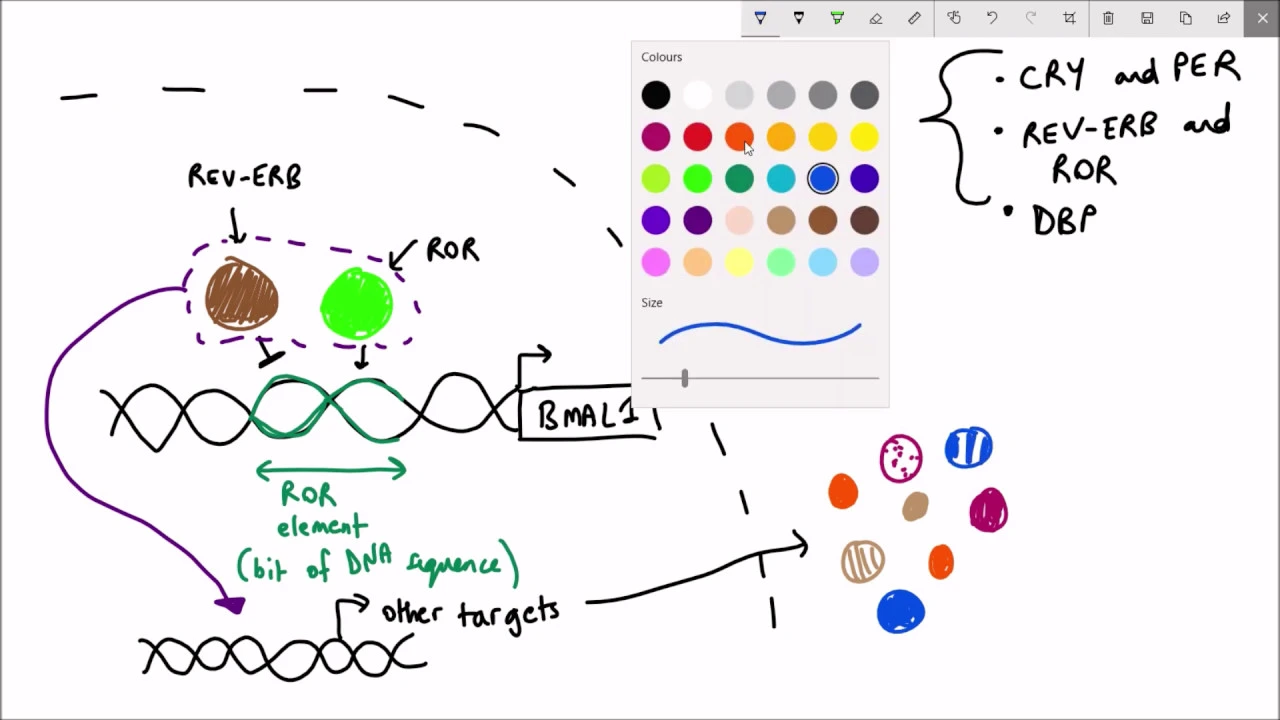
- Why this video is valuable: This video clearly walks through the timeline of protein synthesis, dimerization, nuclear import, and degradation, laying down a solid step-by-step foundation of the feedback loop.
- Knowledge Checkpoint:
- Define the E-box promoter element () and its role in clock gene activation.
- Summarize the cyclic transitions that happen within a single cell over a standard 24-hour day.
Gap Alert & Independent Study Guide
Molecular Detail Gaps: The provided video pool lacks coverage of the specific biochemistry of PAS domain-mediated CLOCK:BMAL1 dimerization and the biophysical structural interactions during E-box binding.
Recommended Independent Search Queries:
- "CLOCK BMAL1 heterodimerization PAS domains structural biology"
- "E-box binding affinity crystal structure CLOCK BMAL1"
Module 4: Molecular Fine-Tuning: Secondary Loops & Post-Translational Control
An unassisted feedback loop would run inaccurately, quickly losing its 24-hour cycle length. This module explores how post-translational modifications (specifically phosphorylation and ubiquitination) and the secondary stabilizing transcriptional loop (REV-ERB/ROR) regulate the speed, stability, and amplitude of the circadian system.
Recommended Videos
Genetics of Circadian Rhythms: Post-Translational Controls
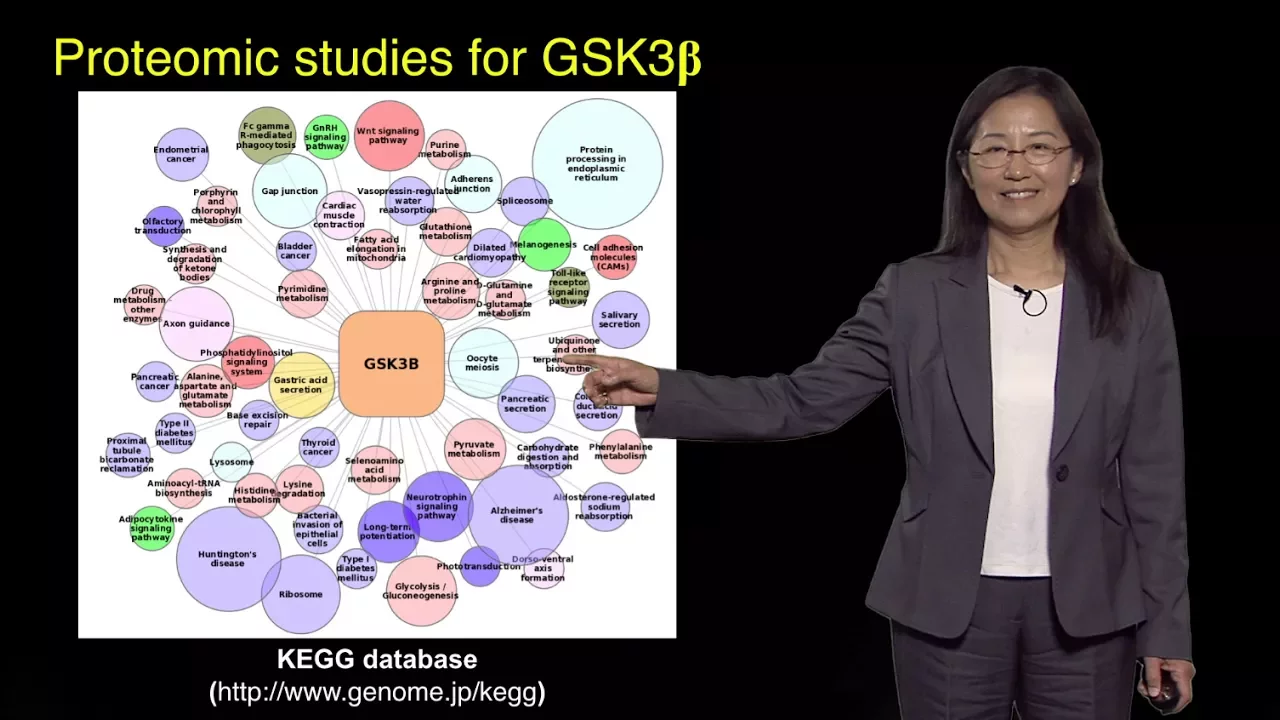
- Why this video is valuable: Dr. Ying-Hui Fu explores the human genetics of circadian sleep variants. She explains how mutations in kinases (such as Casein Kinase 1) alter clock protein phosphorylation, directly causing human sleep disorders like Familial Advanced Sleep Phase Syndrome (FASPS).
- Knowledge Checkpoint:
- Explain how phosphorylation acts as a molecular "fuse" that dictates when PER and CRY are targeted for proteasomal degradation.
- Describe the clinical phenotype of individuals with mutations in Dec2 or mutations that prevent proper PER phosphorylation.
Post-Translational Modifications

- Why this video is valuable: A clear, foundational lecture detailing how cellular enzymes append chemical groups to translated proteins. This is key to understanding the biochemical cycles that run the clock.
- Knowledge Checkpoint:
- Compare the biochemical effects of phosphorylation (adding phosphate groups) to ubiquitination (adding ubiquitin polypeptides) on a target protein.
- Explain how enzymatic modifications can rapidly alter a transcription factor's nuclear localization and DNA-binding affinity.
Gap Alert & Independent Study Guide
Molecular Detail Gaps: The video pool does not cover the specific molecular details of Casein Kinase 1 epsilon/delta (CK1/) phosphorylation of PER, the role of the F-box proteins FBXL3 and FBXL21 in CRY degradation, or the REV-ERB/ROR nuclear receptor secondary loop that controls Bmal1 transcription.
Recommended Independent Search Queries:
- "Casein Kinase 1 phosphorylation of PER proteins period length"
- "FBXL3 and FBXL21 CRY1 CRY2 degradation mechanism"
- "REV-ERB ROR secondary feedback loop Bmal1 regulation"
Module 5: The SCN: Master Pacemaker and Light Entrainment
To keep pace with the real world, our internal clocks must be entrained (reset) daily by environmental cues, primarily light. This module covers the neurobiology of the Suprachiasmatic Nucleus (SCN)—the brain's master pacemaker—and the signaling pathway that translates physical photons into genetic transcription.
[ Photon of Light ] │ ▼ Activates [ Melanopsin (OPN4) ] in ipRGCs (Retina) │ ▼ Action Potentials via [ Retinohypothalamic Tract (RHT) ] │ ▼ Synaptic Release into SCN [ Glutamate & PACAP ] │ ▼ Intracellular Cascade [ Ca2+ & cAMP Influx ] ──► [ CREB Phosphorylation ] ──► [ Per1/Per2 Transcription ]
Recommended Videos
Mammalian Molecular Entrainment to Light and Networks
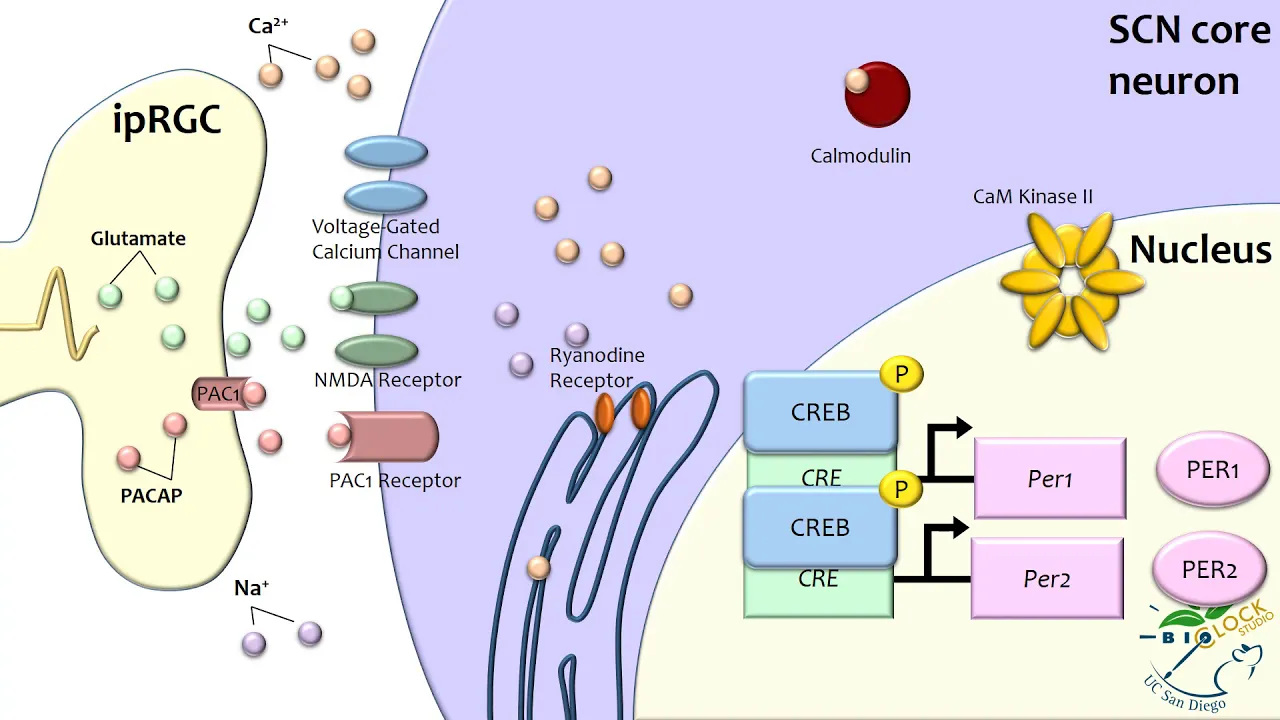
- Why this video is valuable: This video provides an overview of how the mammalian brain syncs to the solar cycle. It tracks the pathway from light striking the eye to the activation of intracellular signaling in the SCN.
- Knowledge Checkpoint:
- Name the specialized retinal cells responsible for detecting entraining light, and identify the light-sensitive pigment they express.
- Summarize how a physical stimulus (light) leads to changes in clock gene transcription inside SCN neurons.
Light, Sleep, and Circadian Interactions
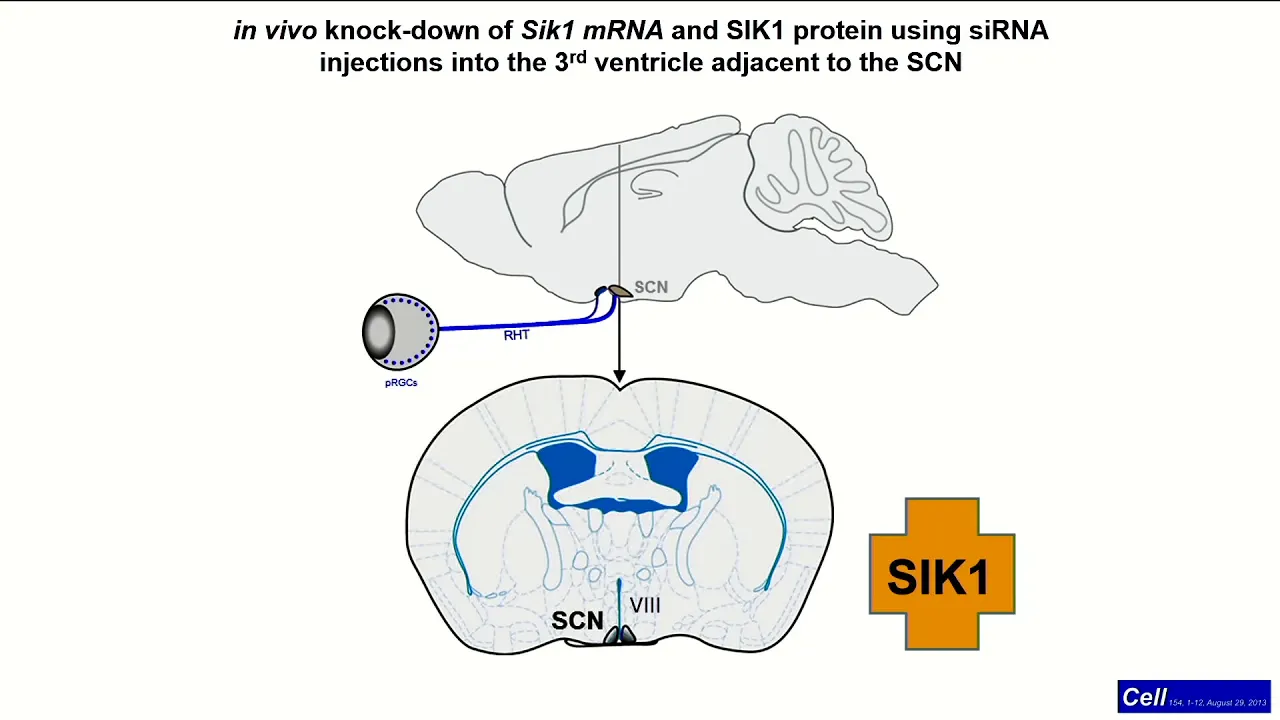
- Why this video is valuable: Presented by Professor Russell Foster (discoverer of ipRGCs), this lecture explores the biology of non-visual photoreception. It outlines the signaling pathways through which blue light regulates our physiology.
- Knowledge Checkpoint:
- Contrast classical visual photoreception (rods and cones) with circadian photoreception (intrinsically photosensitive Retinal Ganglion Cells - ipRGCs).
- Describe the spectral sensitivity of melanopsin (peak wavelength response ~480nm).
Essentials: How Your Brain Functions & Interprets the World
- Why this video is valuable: Dr. David Berson, an expert in retinal neurophysiology, explains the direct hard-wiring of the retinohypothalamic tract and how it projects directly to the master SCN pacemaker.
- Knowledge Checkpoint:
- Trace the anatomical pathway of the Retinohypothalamic Tract (RHT) from the retina to the hypothalamus.
- Explain why the SCN is uniquely positioned to receive rapid input about light levels.
Gap Alert & Independent Study Guide
Molecular Detail Gaps: The video pool contains general pathways but lacks a molecular deep dive into the synaptic neurobiology within SCN cells. This includes Glutamate and PACAP release, subsequent calcium influx, and CREB phosphorylation binding to CRE sites on Per1 and Per2 promoters.
Recommended Independent Search Queries:
- "Glutamate PACAP signaling retinohypothalamic tract SCN"
- "NMDA receptor calcium influx SCN neuron light entrainment"
- "CREB phosphorylation CRE promoter elements Per1 Per2 transcription"
Module 6: Peripheral Clocks and Systemic Synchronization
Every organ in your body has its own cellular clock. While the SCN acts as the master conductor, peripheral clocks (in tissues like the liver, pancreas, and heart) must coordinate their timing. This module explores how the SCN synchronizes these tissues through neural, hormonal, and feeding-related signals, and the health consequences that occur when these systems fall out of sync.
                  [ SCN (Master Pacemaker) ]
                         /          \
                        /            \  Neural & Autonomic Signals
                       /              \
                      ▼                ▼
         [ Adrenal Cortex ]        [ Eating Patterns ]
                │                           │
                ▼ Cortisol                  ▼ Nutrient Sensing
         [ Systemic Phase Reset ]  [ Peripheral Organ Clocks ]
                │                           │
                └───────────┬───────────────┘
                            ▼
               Synchronized Homeostasis
Recommended Videos
How to Sync Your Central Clock to Your Peripheral Clocks
- Why this video is valuable: This video explains how peripheral organs (such as the liver, gut, and adipose tissue) synchronize their clocks using different cues. It explains how light sets the central clock, while food intake acts as the primary setter for metabolic organs.
- Knowledge Checkpoint:
- Contrast "photic zeitgebers" (light resetting the SCN) with "non-photic zeitgebers" (food resetting metabolic organs).
- Describe the physiological consequences of eating late at night when metabolic organs are expecting rest.
Metabolomics of Human Clocks, Sleep, and Food Timing

- Why this video is valuable: Professor Debra Skene reviews clinical research tracking metabolic profiles in humans under shifted sleep and meal schedules. This provides clear proof of central-peripheral desynchronization.
- Knowledge Checkpoint:
- Explain how shifting meal times by 5 hours affects peripheral metabolic rhythms without changing central SCN markers like melatonin.
- Define "circadian desynchrony" and list two biomarkers used to track it in clinical research.
The Insane Benefits of Intermittent Fasting
- Why this video is valuable: Dr. Satchin Panda, a leading pioneer in Time-Restricted Feeding (TRF), discusses how aligning food intake with natural circadian cycles improves metabolic health by giving peripheral clock systems clean periods of activity and recovery.
- Knowledge Checkpoint:
- Describe how Time-Restricted Feeding (TRF) helps keep peripheral tissue gene expression aligned.
- Detail how insulin sensitivity and digestive efficiency vary across a standard 24-hour cycle.
Course Map
This flowchart maps out the modules of the curriculum, showing how the foundations of chronobiology and molecular biology converge to build your understanding of core loop systems and whole-body synchronization.
Key People Index
- Dr. Joseph Takahashi: Cloned the mammalian Clock gene, establishing the genetic basis of mammalian biological clocks.
- Dr. Russell Foster: Discovered intrinsically photosensitive retinal ganglion cells (ipRGCs) and the pigment melanopsin, revolutionizing our understanding of circadian entrainment.
- Dr. David Berson: Mapped the retinal projections of the Retinohypothalamic Tract (RHT), proving how the eye directly connects to the master pacemaker.
- Dr. Ying-Hui Fu: Discovered key mutations in human clock genes and kinases, linking molecular mutations directly to human sleep syndromes.
- Dr. Satchin Panda: Pioneered the field of Time-Restricted Feeding (TRF), showing how food serves as a primary environmental cue for peripheral clocks.
Final Self-Assessment
Review the checklist below to verify you have fully mastered the material in this curriculum:
- Actogram Analysis: Can read a double-plotted actogram, locate free-running periods, and calculate drift rates in constant conditions.
- Transcription Factor Binding: Can explain how CLOCK and BMAL1 physically bind to E-box elements to drive gene expression.
- Core TTFL Mechanics: Can diagram the primary mammalian loop, identifying the positive regulators (CLOCK, BMAL1) and negative feedback proteins (PER, CRY).
- Post-Translational Timing: Can describe how phosphorylation by Casein Kinase 1 regulates PER protein stability, setting the speed of the molecular clock.
- The Secondary Loop: Can outline how REV-ERB and ROR regulate the expression of Bmal1 to stabilize the central clock mechanism.
- SCN Photoreception: Can explain how blue light triggers melanopsin in ipRGCs, independent of rod and cone photoreceptor cells.
- SCN Synaptic Transduction: Can describe how glutamate and PACAP signals from the RHT trigger calcium influx and CREB phosphorylation to reset the clock.
- Peripheral Entrainment: Can explain why SCN-driven melatonin and cortisol signals act differently than feeding schedules on metabolic tissues like the liver.
- Circadian Desynchrony: Can explain why shifted meal times combined with artificial light exposure disrupt metabolic homeostasis, and how this relates to diabetes risk.