



























Time-restricted eating (TRE) aligns food consumption with the body's circadian rhythms, which are daily biological clocks present in every cell that regulate metabolism, immune function, and recovery processes. Research shows that restricting eating to a consistent 8-10 hour window during daytime hours can improve metabolic health, blood glucose regulation, blood pressure, and sleep quality without necessarily reducing calorie intake. The benefits occur because TRE optimizes digestion, nutrient absorption, and metabolic processes by ensuring food is consumed when the body's circadian clock is primed for nutrient processing, rather than during periods when the body is in a fasting state.
Intermittent Fasting, Circadian Health & Time-Restricted Eating | Satchin Panda, PhD
Added:Basic understanding of circadian rhythms and the suprachiasmatic nucleus (SCN) as the master biological clock in humans.
Fundamentals of human metabolism, specifically how the body transitions between the fed (absorptive) state and the fasted (post-absorptive) state.
The endocrine system's role in energy regulation, particularly the functions of key hormones like insulin, glucagon, ghrelin, and cortisol.
The cellular concept of autophagy, which is the body's process of clearing out damaged cells and regenerating newer, healthier cells.
The science of chrononutrition, specifically how peripheral clocks in metabolic organs (like the liver, gut, and adipose tissue) synchronize with food intake.
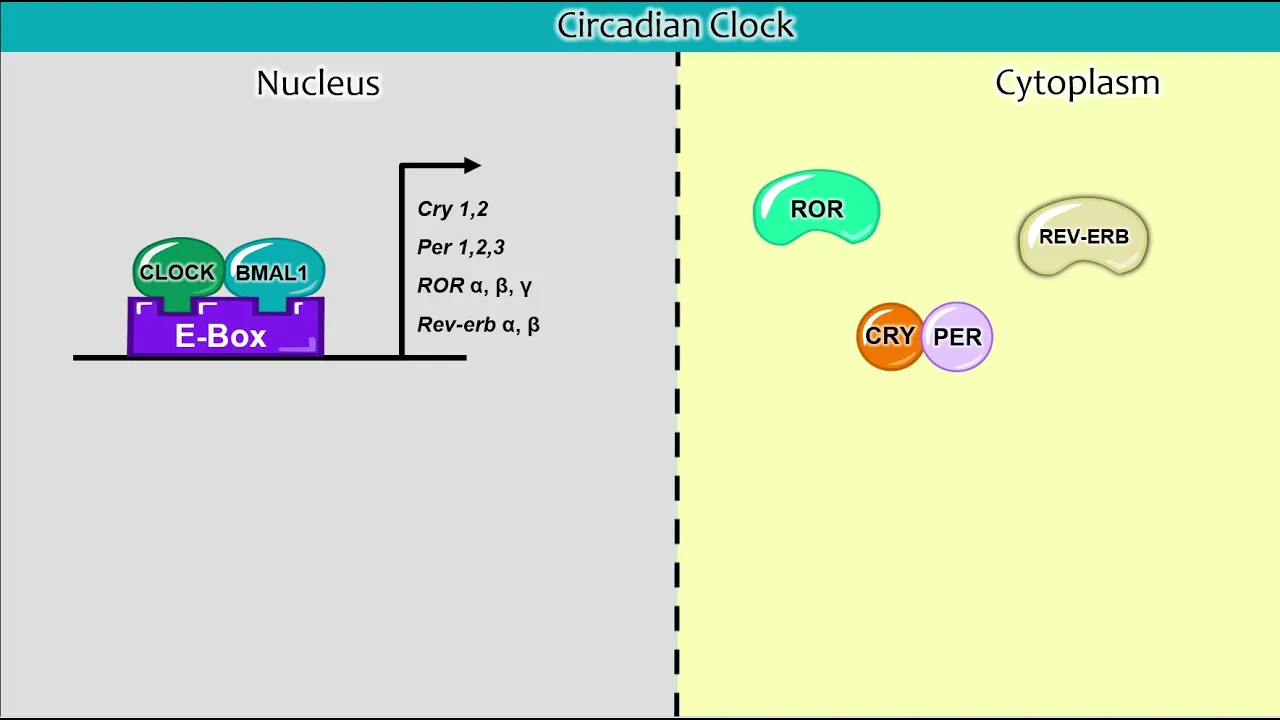
The molecular biology of clock genes (such as CLOCK, BMAL1, PER, and CRY) and how nutritional inputs regulate their genetic transcription cycles.
Clinical applications and therapeutic protocols of Time-Restricted Eating (TRE) for managing metabolic syndrome, insulin resistance, and cardiovascular health.
The systemic impacts of circadian disruption, including the physiological consequences of shift work, chronic sleep deprivation, and social jetlag on longevity.
26.6K views661likes2:25:53Original Release: 2023-04-05
Whenever there is a eight hours or nine hours time restricting people are inadvertently reducing calorie intake sometimes by 20 for people who are feeling low energy uh fatigued who are looking to lose weight and improve their body composition how can fasting or time restricted eating potentially help them yeah so if timer setting is actually based on the principles of circadian rhythms so that means circadian rhythms are daily timetable of that are present in every cell in every organ on our body and also in brain so that means we have pre-programmed to do certain things at certain time and if we be on time with our circadian clock then our physical emotional and intellectual performance will reach that to speak level and the reason is circadian rhythms actually fine tune our immune system so that we are resilient to infections and we can also recover much faster from infection the circadian rhythms also time every day that week our liver can and our metabolism can detoxify many genome biotics that we eat that can affect multiple organ systems and also our brain because brain also has to detoxify itself and then it also Tunes our muscles and conductive tissues in a way that every day we make a lot of injuries to our muscles and connective tissues so it's it's a constant cycle of injury and recovery and circadian rhythms kind of optimize that recovery process so that we are fit the next day so similarly they also the circadian rhythms also are tuned that every day all the intracellular damage that we make for example DNA gets damaged then it's mutations and they have to be repaired the proteins are misfolded so they are folded back properly so there are enzymes work properly so that's why paying attention to circadian rhythm and being on time on certain stuff that we are programmed to do will actually improve overall health because it it clocks are present in every cell so it will improve our brain health our gut health our Liver Health all this health so now the question is what are the things that we are supposed to do when you think about circadian rhythms there are there is one thing that pops to our brain because this is the thing that strongly affects all of us and we will let that sleep wake cycle every day we are programmed to sleep at night and when we sleep our brain is just not going and kind of sleeping and not doing anything because that's the time when repair Rejuvenation and resetting is happening in the brain so similarly if we think a little bit carefully most people will realize that they can go overnight without feeling hungry and during day time maybe it was the letter in the day people start to feel hungry so that means our circadian clock has also programmed us to eat within certain time during the daytime or during our wakeful time so over the last 20 years that's the biggest thing in circadian rhythm that we figured out that when we eat is actually programmed by the circadian clock end of here on time with eating so then we can improve you can sustain nurture our security under them so that's how the concept of time restricted reading came uh which means that we have to if we restrict all our calorie containing food and beverages to certain time consistent time during our wakeful hours of course then that can have an impact on circadian clock it will not show our circadian club and that will lead to overall health benefit even those who are not were already fit and they want to just improve their health then they can also improve that another question is how long should we eat when should it be and we can go into the detail I love this I mean a lot of people talk about um time restricted eating well I guess before I asked the question that I was going to ask what's the difference between time restricted eating and intermittent fasting well intermittent fasting is a very broad term because if you'll go back to the old literature on nutrition suppose that we take everything that we know about nutrition it boils down to three things the quality quantity and timing of Food Matters and quality quantity and timing yes um and we can go in great length about quality and you have already talked to many of your podcast guess about quality of nutrition it goes from Fiverr protein and what kind of carbohydrates fat Etc and that matters and then the quantity when it comes to quantity we also know that we should not over it first thing and second those who want to lose some weight or if even improve their health or overweight or obese then reducing calorie health and for a long time people had done this scientists had done these experiments very carefully in laboratory animals where they reduce calorie intake to by 20 to 40 percent below what is required um and that calorie restriction led to long lifespan in lavatory condition so that led to the idea that yeah once in a while it should actually reduce calorie content sorry chronically you should reduce calorie it's not easy to count calories and every day do that so then people came up with alternate way to achieve similar approach so that led to this idea that you can fast one day or two days in a week or even alternate day fasting or even you can fast for five or six days within a month or two months so all of this led to the broad term that's called intermittent fasting because you are not fasting regularly you're kind of fasting intermittently and when we publish time restricted feeding or time restricting the NSL experiments were actually done without reducing calories in mice because we wanted to see what is the impact of just changing timing but not changing the quality or quantity of food what happens to mice and fruit flies and in those cases what we found was even mice that are fed a very high calorie diet we call it obesogenic because this diet high fat and high sucrose diet make mice and also humans obese even when this mice were eating obesogenic diet within eight to nine hours um they didn't get wet and in fact if we take obese mice and put them on this same isocaloric diet within eight to nine hours lost to it so that's how we describe time rotating which at least in animal models does not involve reducing calorie on any given day but somehow people thought that okay so since we are going the animals and humans are fasting for or not eating for 14 hours to 16 hours let's call it also intermittent fasting and since this is the this is something that most people can kind of relate and do that on a regular basis it became very popular and now intermittent fasting typically refers to some form of Timeless routing but if you go back to Scientific literature intermittent fasting typically refers to fasting for one or two days in a week alternate day fasting or periodic fasting but for all practical purpose in this modern existing world I think people refer to time restricting as intermittent fasting all right so intermittent fasting is really sort of like the colloquial non-specific way that people refer to Myriad different yeah um food restriction uh paradigms yeah time restricted eating is like the the specific form of it that you study in your lab yeah and intermittent fasting also makes a kind of conveys the misses that yeah once in a while you should fast and it doesn't say whether it should be daily or whether your fasting should be consistent so for example um you know if I if I eat only between say 8 AM and 4 pm today and then tomorrow if I hit between four eight pm and 4 AM um in for most people they'll think that yes I'm doing intermittent fasting or time receiving but it's actually not right because when we eat signals or circadian clock that hey this is the timing kill digestion starts and all that stuff and the clock also predates next day you're supposed to eat at the same time so it's ready but if you're not if you're not eating at that time then you're kind of missing the benefit of the clock so that's why what we said time restorating is a form of eating where you eat within a consistent window of time so if you're eating say between eight and four try to be as consistent as possible hence it's not that to the minute but if it is within an hour or half an hour then that's pretty good the reason is um since it's linked to the concept of circadian rhythm you can kind of link to what happens when Daylight Saving Time Changes so we know it's only one hour change in time but it kind of throws us off for at least two or three days so because our brain is tuned to when we should be waking up when we should be going to bed and then when you abruptly change the timing by one hour then our brain is trying to catch up so that's why it's very easy to connect that right after the daylight saving time changes for at least one or two days we are not at our Peak Performance we feel groggy we feel kind of sleepy or so just imagine if it affects your brain so much then changing your breakfast time particularly from one day to another is also affecting our digestive system our metabolic organs but since we don't feel that we don't connect it but actually it does affect us wow so it's just one hour really is all it takes yeah so it the rule of thumb is you our clock takes one day to readjust to a one hour change in sleep time or time zone or eating time oh interesting yeah so if you switch time zones and you like if I fly from here which is where we are is LA to New York and that's a three hour time difference I can expect that it will take approximately three days yeah to adjust to that schedule to come back to your Peak Performance wow means we we kind of try to drink a lot of coffee and think that we are at the Peak Performance with we can um function but actually uh you might have experienced that uh that after three or four days after you have good night and sleep then you don't need that much caffeine and you feel more energetic and and that difference can be for some people that doesn't matter much but for some people just imagine athletes or somebody who is going to going to be going to play in a Chess Championship for those people it's a big difference so in fact many Atlas that try to fly way in advance to compete and so that they can adjust to the new timing or even some others that know what time the competition will be so they try to practice at the same time same time if they're in the same time Journal kind of adopt their clock so this because for them even few milliseconds makes a breaks a carrier so you're right yeah so that's why to be a top Peak Performance we should be on time to one o'clock next time I get hired to speak at an event in Europe I'm gonna let them know that I need to fly in eight days earlier yes or you can time your talk to very early morning or at night the least preferred option yeah um super super interesting okay what when you were talking about the mice yeah and the and the calories um them being on ISO caloric diets and the mice that were um restricted to a certain feeding window didn't seem to gain weight is it how does that work because we know that calories right energy balance is uh is pivotal when it comes to you know weight loss or gain yeah um as I said there is clock in every organ so starting from let's start from digestive tissue like our gut and the intestine and there is a very strong rhythm in our gut which is also linked to our pancreas because pancreas makes all the enzymes to break down what we eat and to digest so that means there is a peak time when a gut can digest food and intestine can absorb those nutrient and they're also got microbiome those are present throughout our intestine and digestive tract um so what we have in subsequent studies when we look at look back at gut microbiome what we realized is the gut microbiome also changes with time restricted eating or feeding I'll be using time receiving for humans feeding for animals for obvious reasons and um what happens in animals at least um at the fiber that's supposed to be digested high up in the intestine actually gets digested lower in the intestine and that's why when it's get digested the sugar is not absorbed because some excess sugar gets excreted in Mouse Poop because there are not enough that the mechanism to observe that sugar from fiber or complex carbohydrate is present in the upper part of the intestine it's not in the lower part and by the time it gets digested because of the change in gut microbiome that changes the second thing that also happens that's linked to the liver is time rotating changes how cholesterol is metabolized cholesterol gets broken down to bile acid and that bile gets into the intestine to absorb fat and then get it back into the body but they got microbiome changes in a way that it redecorates this bile acids and these bile acids cannot absorb cannot be re-absorbed that efficiently so these bile acids and some of the fat they get the mice Pupa that so and that way what we think is all of the mice are eating ISO caloric diet the body is not absorbing all the nutrient that they're eating because of changes in gut microbiome liver and maybe pancreas and the second thing is when mice go through long 14 to 16 hours fasting and we also humans go through that fasting now in the first few hours of the fasting we use glycogen as the stored carbohydrate and then when we run a little bit low on carbohydrate then the fact issues and also liver start to break down some of the fat and this fat breakdown is securely regulated and also depends on fasting so when mice fast for a long time and humans maybe because we haven't done those very systematic study um what we see is mice can burn that extra fat so instead of storing them because it needs they need a long fasting to trigger the pathways or the mechanisms or the genes that burn fat so that happens and we also know that these mice have slightly high oxygen consumption so that means we take oxygen to to oxidize our fuel and so that means they're actually burning more fuel so we see that signature in two places one the white adipose tissue or the bad fat um that improves its actually size or content decreases and then the brown adipose tissue or the good fat and humans also have some brown adipose tissue they get more mitochondria and they there is a signature that gene expression signature or genetic genomic changes that happen that suggests that these mice actually lose little bit extra heat so literally born fat so at least there's a sum of the mechanisms that we know are happening so that's why all the eating ISO caloric diet they're not storing that they're not absorbing all of it first thing and second when they're storing during this long fasting they are also Burning It Off so next day when they start eating they have already burnt some of the fat that they at the previous day that is fascinating so it actually at least in mice see eating at at the at sub-optimal time seems to make um fat and carbohydrate essentially less or I'm sorry more bioavailable than eating during the optimal time yeah so um yeah so you can say bioavailable but actually it's getting metabolized or getting oxidized and burnt off during the fasting time so now eating at the same time so um right after they start eating within 15 minutes or so the body's metabolism changes so that they the body actually stops burning fat and starts storing fat storing carbohydrate and that happens um for most of the day sorry for mice buys it at night time so as long as they're eating they're storing some fat and burning little bit of simple sugar and then storing also some sugar as carbohydrate as glycogen then after the fasting Begins for the first few hours there burning that glycogen and then slowly they'll start to metabolize the fat so yes bioavailability is slightly reduced because of the microbiome change and then even what is observed and stored that store is also depleted every night or every day when they mice go through fasting yeah and so it so it it kind of it's not at odds with like with energy balance it's affecting the it's it's in a way affecting the calories in yeah side of the equation and also calories out and also calories out yeah fascinating so we still have to see uh what happens in humans because humans store more glycogen so it takes long time for humans to burn up that glycogen than mice too um so I think in humans if they eat ISO caloric diet like the regular when they're not doing time restricting we have to see whether they will lose weight or they will maintain that weight or they will change the way their body composition is whether they will convert some of the white adipose tissue to healthy adipose tissue so all those experiments are yet to be done because these are again doing controlled human studies is very difficult and the very few places in the world where people can be brought into the love and they can be fed every day this ISO caloric diet either with an assault interval or a long interval so we have to wait for those experiments and this is probably very expensive experiments to do very expensive to do and also there are very few volunteers who are ready to do that I can imagine so what is then the what the the existing of the existing human clinical data like what what is the what is the research tend to show yeah so the first thing is when people eat because if everybody is eating within eight to ten hours then there is no benefit they will get by changing timing and um so initially we met an app called my security and clock app which is still available for anyone to download so it's a research app um we asked 156 people who are not shipped workers because we know people who work day and night shift they might have different eating schedule um so we asked regular folks like you and I who have a day job or who are staying at home Homemakers um to a log when they eat or drink something they didn't have to say what it is person size nothing so we reduce the burden of vlogging and uh they have to log it for two or three weeks because this is very important because if I just look at my eating habit for one day it might be very different from what I habitually do so for example I this morning I got I woke up very early because I was jet lagged and then by seven I had my breakfast 7 15. and by the time I go drive back to San Diego I don't know what will be when will I have my last mail but it may be eight or nine at night but on other days my schedule is very different when I'm not traveling I try to eat between say eight and six pm so it is 10 hours so if somebody is taking a snap sort of me today then I may come up as somebody who eats from 7am till nine PM or 10 p.m and whereas um my habituality in time is very different and also sometimes in the weekend it probably so that's why we collected data for three weeks and what we found was [Music] um and then what we do we take all these time points of when people it or drawing something that has calorie when I say calorie more than five kilocal and then we asked what is the likelihood that the body expects food um on any given day so you kind of take a statistic saying okay so what is it 95 percentile interval of this time window then we find that nearly 50 percent of adults eat for 14 hours 45 minutes or longer okay so uh here is some nuances so for example suppose say I'm meeting from 8 AM to 6 PM one day tomorrow I eat from 9am to 7pm day after tomorrow it's 7am to say 5 PM so every day I'm eating for 10 hours but that 10 hours is Shifting and our body is kind of after four or five days it's thinking that okay so maybe Sachin is going to eat between 7am and 7 PM so although I'm eating every day within 10 hours since I Am shifting that my body is actually expecting a 12 hours window in which I'm likely to eat got it so that's why um you'll see once in a while people publish some paper saying oh we looked at people's one day food diary and we don't see that people who eat within 10 hours they are healthier than people who eat within as within 16 hours it's a little bit premature and incorrect to make that conclusion because in those cases we're not looking at day-to-day variation in eating time so just like I said one hour change in daylight saving time can put you off track so if you're taking your math exam calculus the day after the daylight saving time changes your score may be a little bit worse than if it was taken before the daylight saving time so similarly these things you have some implications so you really do have to study for few days for a few days people that are that are eating on a fairly consistent schedule yeah so um that way we get a much better picture and at the same time I must say that even in mice and also in humans the quality and quantity of nutrition matters yeah although I told you all the story about high fat diet we also had mice on normal cha we call it normal cha because it's very healthy it has enough fiber good amount of protein and good amount of fat and mice are supposed to be stay healthy they don't get obese or diabetic that easily and these mice now if we think about mice that it high fat diet but within eight to ten hours um they're protected from many disease but if you look at overall adiposity or obesity that's slightly overweight the admites that it normal child so that means if this mice now give up that high fat diet and eat normal child within short period they will be even healthier so that's why I always say that yes timing does matter but nutrition quality also matters and then we'll come to nutrition quantity because there are also new experiments from jotakahasi's Lab from UT Southwestern um and that came out that essentially shook up all the calorie restriction field because what was that study so I told you that calorie restriction or reducing calories every single day extends lifespan and everybody agrees with that um but the way those experiments are done is interesting mice are nocturnal so they are supposed to eat at night time and then when these calorie restriction studies are done what they do is they put the mice on adlibitum feeding the control mice so that means they can eat whatever they want whenever they want and then they go back and weigh how much they it and suppose say the mice at five gram of food then they take out 20 percent they reduce the calorie by twenty percent or 40 percent and then give that diet to the calorie restricted fed mice so now we are giving three grams if it is 40 reduction of 4 grams if it is 20 reduction and um in those days of course the calorie restriction field is very old very mature and it goes back to even days or years when people didn't think there was a circadian rhythm in in mice or humans so they didn't pay our tense under timing it was pretty obvious and there is no fault so they would come and give the food either in the morning or late afternoon uh to this mice and they assume that these mice were taking their own time to eat this but actually they were eating all that food within two to three hours so that means this calorie restricted fed mice if they animal technician concert 8 am in the morning is giving food then by 11 or noon this mice were done eating so they were eating is a maximum four hours and fasting for 20 hours and of course we know that calorie restricts an extent slidespan so jotakahasi's in 2017 kind of carefully looked at calorie restriction studies and found that no actually this is my sighting they are kind of doing a Time restricting of Their Own and by that time other people had figured out that time restricted feeding does so much benefits this mice may actually even live longer um so then the question became the calorie restricted mice living longer because of eating everything within four hours or actually reducing calories so then it is um very carefully controlled study which has never been done before now he has two groups of mice one group it's one over here they want this healthy diet and suppose they had five done so he reduced that calories and he gave around four he tried to give three and a half I think he was trying 20 calorie reduction um then it divided that food to 10 or 12 equal part and then get that tiny food in every 90 minutes wow throughout 24 hours so now there is no so they are not consolidating food they are doing calorie restriction without time risk they're just they're using the same amount of food there's eating it it's like snacking little snacking throughout 24 hours and then these mice lived 10 percent longer than mice that it at Liberty okay so calorie reduction can increase your lifespan by 10 percent or at least Mouse lies one by ten percent now the next question was really cool because he gave that reduced calorie diet within a 12 hours window during day time a two hours window during day time because both 12 women's mice even if they're given this tiny amount of food they will eat that right away and within two hours it's all gone and what I found was um yes now this mice are leaving ten percent extra so that means calorie reduction gives you 10 percent Median extents on a median lifespan and then calorie reduction anything that we didn't say two hours or 12 hours during day time gives you another 10 percent wow okay now the caveat is okay mice are nocturnal they're actually supposed to eat at night time not during date so here is the thing you reduce calorie and even if you're eating at the wrong time it still gives you additional benefit wow what is the I think at the right time so the next group was two groups are the food was given during night time when the mice are supposed to eat either in 12 hours or two hours and those mice now live 35 percent longer oh my God so the bottom line is if you reduce calorie and align it to the right time on time then you can even extend the benefit for benefit of reduced calorie um so this is with reduced calorie wow so what about normal job if you just ate the healthy diet you are not reducing calories but you're eating standard diet and this is an experiment that was done in NIH National Institute of Health by my dear friend and uh really great scientist Rapha di Cabo and actually jota kahasi I won't say he is my dear friend he's actually my my role model because I learned a lot from Joe and um and Rafa and a kind of contemporaries wow that's incredible so what Rafa did he um he did have somewhat similar experiment he said well instead of giving all five grams means I know that adlibitum fed my eyes eat five grams of food and let them eat whenever they want but I would ask my live technician to come and give that five tons of food at the same time every day and we know that if the mice were not given food every day they're kind of hungry overnight and then they will eat that five grams any measured that mice ate that five grams of food in 10 to 12 hours so now this mice are eating the same number of calories but they're also fasting for 12 to 14 hours every day what he found was these mice that did not reduce calorie but ate within a short period of time and meant 10 12 to 14 hours up overnight fasting they live longer than mice that it or leave it randomly and they were also healthier he rougher does very careful work he went back and after every Mouse died he would have a team of researchers who take out every single organ and look at whether they had any sign of cancer or what happened what is the cause of death and they've determine the cause of death in every Mouse and what they found was this mice not only lived longer they were also healthier because steroids delayed incidence of cancer and other stuff wow and these were eucaloric diets these are ISO caloric diets wow yeah so that's uh again another piece of evidence so that's why I say reducing calorie and eating it at the right time or not reducing calories whatever even if you're eating healthy diet eating that on time at the right time um or even if mice are at least eating really crappy um high fat High sucrose diet and eating Within These the right time in every instance um mice could improve their health and if we go back to other literature so for example there are also Mouse literature sowing ketogenic diet increased lifespan if you look carefully into those papers read carefully you asked did they give the ketogenic diet left it in their cares or they were carefully giving the ketogenic diet every day because ketogenic diet is very difficult to handle it's very liquidy sticky you can't leave it in the case mice will make a big mess out of it so in fact in many ketogenic diet study in mice I'm not sure whether in all but in many ketogenic diet study they also give the food every day at the same time and mice typically eat that ketogenic diet within few hours so now the question is whether what fraction of the benefit of ketogenic diet that we read in the literature in research is due to diet alone versus this my sitting all that food within few hours and then going through at least 12 to 16 hours of fasting so what is then the the applicability and relevance to humans is it that you know controlling how much it's like we live in an obesogenic food environment and so for people who are unable to really moderate the quality or quantity of food that they're eating we still have this third variable that is perhaps easier to control and modulate for Better Health which is the timing and and frequency with which we yeah most likely I mean um we should not forget that the quality and quantity there are a lot of people we always say that yes uh 60 percent of people in the US are overweight or obese whatever the 40 percent what are they doing yeah so those 40 percent uh like you for example we are paying attention to Quality and quantity yeah because we try not to overrate and if we over it one day then next day we're like okay so maybe I should reduce today or maybe spend more time in the gym or do something so yeah we are paying attention to that and also quality means and sure you're not eating a burger every day no maybe once in a while but you're also paying attention so quality and quantity are important and people a lot of people can pay attention to that but at the end of the day if you ask me I can't say for sure how many calories I have consumed since morning or what is the proportion of fiber protein and carbohydrate that I have consumed yeah um so then if I just pay attention to time then there are many benefits so let's I'll just dial back and put this into big perspective so now even I agree that there are three foundations of hell that everybody should pay attention to that sleep physical activity and nutrition when it comes to sleep the recommendation is one should be in bed for eight hours most adults I'm not saying young children and teenagers they have to more even more yeah and um so that we can get seven and a half hours of sleep we know that a lot of people who don't get seven and a half hours of sleep but there are very few clinical studies to see what is the impact of extending that sleep because people who are habitually sleeping less they're sleeping less because they have too much commitment or long commute or taking care of some somebody else or have a stressful job so it's very difficult for a lot of people to extend their sleep then second when it comes to exercise of course we know that an average adult in the U.S takes somewhere between three thousand to five thousand steps of course one may argue that why should you stick to 10 000 steps or fifteen thousand steps but the bottom line is this is a rough measure of physical activity yeah and in the U.S we typically walk from the living room to the garage oh that's so sad whereas in other countries they walk from the home to the next bus stop or Trend stuff oh God so so again physical activity is very difficult to increase and resistance training another step only people who have time and resource to join a gym or have so in those ways a lot of people are restricted they although they know they cannot extend sleep they cannot improve physical activity and so that's why everybody wants to focus on food because in every few hours we eat yeah and as I said since quality and quantity of nutrition are not easy to track for many people I'm not saying not for all then timing becomes a very easy straightforward thing to follow yeah because our life actually revolves around time we plan our day every single day keeping in mind what time we should wake up what time is my first apartment one is what am I going to call my mom what am I going to see my friends and so it becomes easier to think that okay so just like that I'll just put this into calendar and actually this is already put into calendar but I buy a body clock that's already instructed that okay so after waking up wait for at least one or two hours before you first eat and then eight for eight to ten hours because although you finish eating your digestive system is still working so that's why eight to ten hours is kind of a ideal but first many it may not be feasible even if they can go 10 to 12 that may be okay so now if we look at the data like if we look at so we just finished one study where we asked firefighters who are doing 24-hour shift and for them they cannot sleep longer they cannot even sleep throughout the night when they're on the job wow it's a 24-hour shift yeah it's a nearly 70 plus percent of full-time firefighters in the US were 24 hours proof and shout out to Firefighters oh yeah that's life job that's a very tough job um actually in our lab when we did the study our study coordinator and staff scientist was leading the study Emily Manoogian who is awesome see did this beautiful study but just she wanted to be in the literally to be in the shoes of the firefighters so she went to this busiest fire station in San Diego and she said okay so just for one day that's 24 hours a report to the fire station just like everybody the all the fire firemen do and I'll leave their life so so in San Diego the shift goes from 8 AM to 8am so that means you have to be put around 7 30 a.m wow it's reported and then she was assigned a bed to nap if she wants to and that was assigned also a specific engine and a seat and so every time that engine was called to action then she had to run just like other firefighters and put on her shoes and put on a vest and helmet and run sit in that wallet and she has to do exactly like other firefighters so that she should not be the bottleneck and the engine has had to leave right away so and that night say God she was called into 10 calls that doesn't mean that she was working up 10 times she was actually working on a more number of times because every time a 911 call comes the siren goes everybody wakes up and then they want to see whose engine is called because there are three or four engines in the fire station only if your engine is called then you have to run otherwise you can go back to sleep but just imagine if yeah and not only you're waking up and you have to wake up and look to see whether your engine is called you have to be attentive and she did that and then next step morning after eight o'clock shift she came back and she said well I don't know all these guys do it I mean every day wait why do they have 24 hour shifts though that like well uh is there like a reason for that yeah so that's a good question the thing is um you know when you go on a call some calls can take two or three hours and then uh if and every time there is a shift change then the firefighters were finishing this shift they also have to update about the engine and everything to the next shift and if you do that in every 12 hours then you're essentially taking away to roughly two hours okay just for updating and passing on the button uh and if they're on a call then again uh that delays so maybe I guess that's the reason but we have to call we have to ask the firefighters that seems sub-optimal yeah we got to get a firefighter on here well actually there are some there are some firefighters who stay on 48 or 72 hours shift wow um because unfortunately what is happening is many cities for example San Francisco and many cities are so expensive that firefighters and many many shift worker who can whose service we need they cannot afford to live in the city so that's why they commute and when they are commuting 50 60 miles each way then it becomes sub-optimal for them to commute every day so rather they would do they'll come to the fire station and live there for three days or two days and then go back it's so odd that so many of society's most valued professions uh entail such brutal hours and like such inhumane work you know work conditions like I think about I don't know anything about the firefighting universe but I know that like medical doctors you know that like when in a training to go into medicine it's like crazy shifts being under slept like the brain is not performing optimally under those conditions yeah so um when we think about um our daily life actually without shipped workers the modern society cannot survive starting from when you wake up until you go back to sleep or even throughout your sleep there are people working to make our life uh to make the society move so for example uh when you wake up and go to the bakery and get this fresh muffin or press croissant uh the chef the baker I actually woke up pretty early and we might have come to the account to bake that at three or four o'clock in the morning you're right and uh when you go out uh if you're taking public if somebody is taking public transport and going to cast the train or the bus that driver actually came few hours before um you sort of even when you're checking in in the morning even if I have a six o'clock flight I go and I typically ask so when does your shift start they will say that okay so they usually come in around four o'clock and then if you go to if you if you're watching your morning news just imagine the newscaster and then the whole team they actually wake up somewhere between two and three in the morning can I come there so a modern society cannot survive without shipped workers wow so that's why when we did this study we actually called this study as healthy Heroes because shift workers are truly the heroes I was going to call them the guardian of the galaxy well Hollywood will come up to me yeah so he called it healthy Heroes well they are the heroes of society yeah God bless shift workers yeah so um I even forgot how I got into this but how I got into this discussion but we are talking about 10 hours so in this study we actually asked them to log every food that they ate so they took a picture um they described something and um it was using this my cicadian clock app and firefighters do have a sense of humor so once in a while you would see somebody logging um having a having a blast with my friends that's all is written and then we go back to the food picture and we realize that this guy is eating a hamburger fries and beer and then the next one we see they'll take a picture and tag don't judge me so we get all kinds of pictures so they were very truthful in saying what the Lord and another thing that there we also realized that firefighters have a very strong sense of Brotherhood and Sisterhood they have strong bond because and know that everybody is going through the same stress and they need to have this social support system or Brotherhood and Sisterhood at work because we often forget that people who are actually having a regular job we spend typically more number of wakeful hours at work than with our family and they realize it very quickly so they make sure that that wakeful hours they are spending at work is good by maintaining good relationship with their co-workers so then when this um heard about this study and participated they realized that they study results will be one disseminated to all their brothers and sisters so then they had this extra responsibility they felt that they have to be true to the study protocol whatever we asked them and which is really interesting because if you go back to clinicaltrial.gov which tracks all clinical trials that are done almost most of the world not all at least all the clinical trials in the US are registered there then you will find nearly 435 000 clinical trials but what is interesting is most clinical trials exclude shipped workers because um we know that shift work screws up our circadian rhythm circadian rhythm screws up all organ systems so they may not respond favorably to drugs so that's why they are often excluded from drug trials and then for lifestyle intervention whether it's exercise or nutrition they're also excluded because the now that okay shift workers may not show up for their Clinic visit may not be able to follow the protocol so the number one or one of the top exclusive criteria in most clinical trial is shift work we're a shift workers account for 20 percent at least 20 percent of the workforce interesting so a lot of the a lot of the research that we have on I mean any number of in any number of fields and areas are not necessarily applicable to 20 of the population yeah it's and 30 percent is an underestimate because for example your doordash delivery guys or the food delivery guys or Uber driver lib drivers they are not considered as card carrying shift workers hmm and then there are some jobs where it's actually a regular job but people do a lot of overtime so daytime security guards that they prefer to do some night time over time because they get extra paid and they're not necessarily counted as shipped workers so if we count then the actual number of people who live the life of a shift worker may be pretty high and just imagine the all the high school and college students they'll live the life of a shift workers oh yeah yeah so um so that's one thing that they're excluded then you ask okay so how many studies are actually done on shift workers to figure out what's wrong with them or to improve this it's less than a thousand okay so we go from 435 000 to less than a thousand then you ask how many interventions are to improve with the intention to improve their health and that's less than 100 hmm so in that way once you do a study on shift worker then that result is more likely to be followed by shift work community and nios National Institute of occupational health and safety they are also likely to pay attention to it because it's specific to that it's very specific so as far shift workers paid too much attention and they were very um good in logging and what we found was when they ate within 10 hours without paying attention they actually improve their diet quality and also reduced a little bit of calorie intake so they reduced specifically alcohol intake and for shift workers alcohol is a big problem because that's under so much of stress that they often drink excess caffeine and sometimes to relieve stress they also consume alcohol which again exacerbates that trauma and other depression anxiety-like Behavior so that's why there is active interest in reducing alcohol intake among shipped workers and we are pleased to see that they actually significantly reduced the alcohol intake which translates to I think half a drink per day or something on an average it's over a lot of people so this is one example where you're trying to reduce your eating interval and fixing it to 10 hours or 11 hours but inadvertently you may reduce alcohol intake you may reduce even dessert and all these junk food we eat late at night so in that way what we think in many human studies and we are also seeing that Whenever there is a eight hours or nine hours time restricting uh people are inadvertently reducing calorie intake sometimes by 20 percent and why this is exciting is um you know National Institute of Health which also funds A lot of my research and I'm extremely grateful because NIH is an IH fund comes from honest taxpayers money right so when you're doing research we actually it's not government money I think up okay so this is taxpayers taxpayers money well that's one area where I'm happy to see my taxes go yeah yeah I mean I always say I always think that okay so we are really privileged in the society because we when so every time I go to a grocery store I look at the checkout counter cloud and I realize okay so he's a taxpayer and I am actually using doing research with my with their money happy to give it to you Sachin so um um I'm going yeah so many uh studies now that are and done we are seeing this calorie reduction and why this is exciting is NIH few years ago they had tried to do calorie reduction study where they really screened very meticulously to make sure that they are recruiting people who are more likely to reduce their calorie because you know if you if you recruit somebody who is already eating a lot and has five or six drinks a week that person is not going to reduce calorie and stick to it for two years so they recruited very carefully and they did this study called calorie 2 because it was for two years and it was also the second big study like that and there are nearly 110 115 people who were supposed to reduce calorie by 25 percent and keep the calories low for two years and it's not a easy study because they have to be monitored regularly and there are a lot of millions of dollars went into that study and they figured out that even there is highly selected group of people who are more likely to stay healthy they could not achieve 25 percent calorie reduction actually ended up achieving somewhere between 12 to 20 percent calorie reduction so then the question is wow you've put so much effort into counting calorie counseling and all that stuff and you achieved say 12 to 15 percent of course that is over two years I must say that it was over two years and if you can just tell people try to eat within eight to ten hours and if they achieve the same calorie reduction and that'll be exciting that'd be amazing because the cost of intervention now goes down and uh it also becomes easier because you know calorie 2 was done on population who were English speaker and there are many constituents in our population who don't speak English who cannot understand that fluently and also there are a lot of nutrition information that are not available as easily in other languages right so that's why at least many nih-funded researchers and also many philanthropists and leaders in the field are super excited about time restorating not necessarily because of the Circadian rhythm but has a mean to reduce caloric intake and maybe improve nutrition quality by reducing alcohol or reducing junk food late night junk food eating so um that's why when you see time restricting studies coming out these days and if you pay attention you'll often see that these many studies achieve somewhere between five to twenty percent calorie reduction and then people start to wonder hey is the benefit due to calorie drugs reduction or timing and that's where also there are some really good studies done one is from again my friend Courtney Petersons he's a young rising star in um who is well-trained in nutritions is actually she has a degree in actually physics or math but then and she did this very careful study where she invited participants to eat all their food in front of a camera so that's you can watch them like big sister watching every meal wow or they had to come to the clinic and then eat in front of her wins not in front of her in front of the study team and there to maintain their body weight so that means there is no significant change in calories so that they would gain weight or lose weight and in that study of course it's difficult to do so only eight or ten people um when these people reduce the eating window to six hours that was also little extreme because we cannot expect people to stick to six hours over many many weeks but again this is in clinic studies uh what she found was although these people did not change where it did not reduce body weight there's a significant Improvement in a blood glucose regulation that's important so that you know when it comes to health yeah most of us can relate our health to three fundamental parameters how is your blood sugar as a blood cholesterol and blood pressure and what she found was within this very short period of time few weeks people maintain their body weight but they improve their better cell function pancreas function so insulin became more effective hmm and they also reduce their blood pressure and both systolic and diastolic blood pressure reduced wow and many other Studies have also shown that people who are unhealthy and who habitually eat for very long window of time when they reduce that window to 8 to 10 hours they do see benefits in blood sugar blood pressure and in many studies blood cholesterol without changing food quality or quantity because we're not giving them any advice on food quality or quantity or measuring that in I I so in courtness research there's no change in quality quantity of food so the quality and quantity were maintained it was adjusted so that the maintain that body well but in other studies where they're asked to eat within a certain period of time people lose weight because they're reducing some calories and inadvertently they may be improving nutrition quality but the end result when it comes to what is the end result of Health then people see Improvement in blood sugar blood pressure and in many cases blood cholesterol particularly the cholesterol takes long time more than three months they do see another exciting thing about time ratio eating that people often forget is we would stick to lifestyle habits that actually make us more feel more energetic uh feel better about ourselves and in many cases of time restricting studies particularly when it is so between 8 to 10 hours I'm not talking about four hours time restricting or six hours because that can give people headache and nausea so those have been reported but eight to ten hours these people report better sleep and it's not that they're sleeping for long number of hours the sleep is better quality in one study we found every every day every morning when they walk up through the my second clock app they had to say how they slept if they slept well as smiley face if this left better than a grumpy face and if it is grumpy face then we ask was it difficulty following a sleeve fragmented sleep or you felt like you had insufficient sleep what we saw was within this 12 weeks intervention we saw 28 of time they improve their sleep so that sleep self-perceived sleep quality improved by 28 percent wow um but when we go back and look at their sleep record because we also put a slip tracking device on their wrist we don't see that they are actually increasing their sleep time but um and you you and I might have we always experienced that sometimes we sleep the same seven hours we feel great the next day and sometimes we don't and it seems that people who eat very close to their bedtime they're the ones who are likely to have bad quality sleep interesting and this is something interesting that we have been seeing consistently that Timeless rating improves sleep we don't know the mechanism we don't know why so a lot of people ask me well I'm healthy weight should I be doing Timeless rating I don't have any blood cholesterol blood sugar blood pressure problem and then I asked do you want to fill more energetic in the morning do you want to feel like you slept better and if so then this is also another reason why you should do it but it's also hard to go to sleep when you're hungry yeah so there are two different types of hunger so for example if you're if somebody is habitually eating very close to bedtime and if that person wants to change habit then it will become difficult for the first one or two weeks and we warn them that look when you start you will feel hungry if you're finishing dinner three to four hours or two to three hours before bedtime if it was not your habit because your brain has been trained of a long many many years to feel hungry at that time God but it'll take two weeks or so to retrain your brand so that you don't feel hungry and that's exactly what people experience once they know that this is going to get better so it's essentially like food withdrawal interpret as hunger yeah which feels like I mean for all intents and purposes it is hunger but it's not that you're necessarily hungry for calories yeah yeah you're just your body wants what it what it is expecting yeah and also another thing is we this will be interesting to see whether whether the hunger circuit is uh is kind of at a different threshold so that even if you you're little bit low energy it's like saying okay so you got to go and eat that big meal whereas um during time restrating maybe we are retraining the hunger circuit because um recently we published a paper where we looked at what is the impact of time Distributing and different tissues and brain regions in Mouse and the biggest chance that we see is in hypothalamus so this is the the bottom of the brain at the base of the brain that actually controls many things are fluid balance our hunger satiety a lot of things it's like the most primordial part of the most primordial part of the brand which is conserved in many species and um in fact if if somebody's hypothalamus is screwed up particularly you know people with um or many kinds of brain tumor particularly kids they can actually get cured if the surgery is done properly but if that is in hypothalamus and they buy some events when these sergeants are doing this operations um of course many times they're very careful but sometimes they can damage some part of hypothalamus to have access to the tumor and what we're saying is some if there is some damage to this hunger satiety Center or some of these centers that control our fluid level and other stuff then those people have lifelong problem with Hunger satiety so so coming back to this Mao study what we find is there's a huge change among all the brain regions hypothalamus has the biggest change in the number of genes that are turned on or off in response to time restricting so that's why we think that the after few days of time restorating our brain may be rewiring itself or reprogramming hours hunger satiety and other brain function to cope up or to better optimize for this Fascinating People love to compare time restricted eating with calorie restriction but going back to the studies that you that you referenced does it seem to be the case that it's just more difficult in an ad libitum feeding environment stretched out over the course of the 16 hours that your average person is awake to moderate their consumption there seems to be the signal that it's easier to achieve the same degree of calorie restriction but by just thinking about the timing of your food yeah yeah so it's it's possible that um by without counting calories if you count time you may be able to reduce calories and this happens a lot means I have um again another scientific hero of mine is Ron Evans we say Alaska Award winner and is considered the god of nuclear hormone deceptors so there are this 50 or so master regulator of transcription so these are the proteins that control a lot of our genes relevant to metabolism reproductive function brain function and in fact when I was starting at Salk he had this very influential paper showing all the nuclear hormone receptors this master regulator servant expression or function they go up and down in a rhythmic fashion in different cells and different organs and then he was almost prophetic almost 15 years ago saying metabolism is circadian and circadian is metabolism so the biggest role of circadian rhythm is to control metabolism so that we are programmed to eat at certain time and break down detoxify at other time and looking back what Ron said at that time I was thinking is more than metabolism it's about behavior and all that stuff but now I think yeah Ron was right I know it's so interesting well yeah I mean I'm sure some people really uh like it's it's practical for them and they enjoy tracking and counting calories and all and all that but it is really comforting to know that for others for whom that is maybe less easy or intuitive that thinking purely about the timing of their of their meal consumption might achieve the same goal yeah but um again going back to people who are actually counting calories um just like I said the mouse experiment these mice were given the same reduced calorie oh yeah but if they're eating at the wrong time they're not getting the best out of there all this effort to reduce calorie count calories like the longevity like all the longevity diet and Longevity benefits and the and the impact on blood pressure and blood glucose and cholesterol all of that so just imagine like if you're eating healthy food that's fine just compare it with your best friend if your best friend comes and knocks on your door at two o'clock in the morning every single day I don't think that person would be your best friend anymore no yeah just like a visitor at the wrong time is your enemy I could call the police yeah similarly healthy food at the wrong time is junk so that's why healthy food should be also on time healthy food at the wrong time is chunk okay so what are the best times then like when is the most optimal time to eat for if you're a human yeah so looking to optimize Health yeah so this is where um you know we have to think about the whole circuit 24 hours Rhythm and and how it operates and how it'll have impact on overall health and this is where again you know I'm speaking on behalf of many scientists who have worked in this area and also for example at Salk which is an awesome place to do science the nice thing is we have many colleagues who work on different aspects of nutrition in this sense for example my colleague Ruben Shaw who heads the cancer center at Salk his work on ampk which is amp kinase which is the target of this drug metformin and we know that we have to increase the Boost the function of ambikinus to stay healthy live longer and his insight into ampk played into also my work on time restricting because amp kinase function actually oscillates and it's tied to circadian rhythm he and Ron have unsured that and then my other colleague Mark money um who is again a National Academy Science member and he had shown that some of the hunger hormone for example glucagon um they have a strong circadian function so for example this hunger hormone glucagon if you expose mice to this hormone by injecting little bit of extra then that will trigger a hunger program [Music] um and they would this mice should break down more glucose to cope up glycos and to cope up with the hunger signal but if you inject the same hunger hormone throughout the day at different time then when the mouse is not expecting this hunger hormone although the mouse is hungry he won't saw the same metabolic effect so all of this kind of got into our research and same thing in stock we have very small number of pi so we can talk to each other and can and similarly I have Terri sanosuke who works on the brand and he was also another scientific hero because he's one of the very few people who are on the National Academy of Science engineering and medicine and he was also prophetic few years ago almost 15 20 years ago saying that well the sleep and circadian rhythm optimization will have the huge impact on health and he hypothesize certain things and then we we kind of over the last few years we have combined this and also the research from the field of melatonin and we'll get to that and um so if we put all of this together and then my previous research on light that's still going on then I think we need six simple steps okay okay so let's start with step number one is your day actually begins from the time he went to bed last time last night [Music] because what time and we all agree that if I go to bed at two o'clock tonight tomorrow is screwed so yeah so your day actually Begins the time you go to bed so that's why try to go to bed at a consistent time and stick to it because going to bed at a consistent time also tells your circadian clock that this is the time you're going to build and all these other functions that happens at night time will continue at the right time so try to go to bed at consistent time and be in bed for eight hours so that you get seven to seven and a half hours of restorative sleep how much leeway would you say we have there because I try to go to bed between around 10 30 and 11 o'clock at night yeah that's fine yeah yeah that's fine because you know um um the body also has some leeway and the clock has a little bit of layer as you know when we go to bed and when we're sleeping there are throughout our slave different things happen at a almost like a concert Orchestra like in the first few hours a growth hormone levels will Peak and the growth hormones will signal the rest of the body that hey this guy is asleep it's time to repair um and then after a few hours or uh brain will detoxify itself so there is this glimpatic system um that was discovered only in last few years and that is essentially the garbage trucks taking all the toxin from our brain and draining that our synaptic functions are plasticity and then the learning and memory function that will also improve during sleep so that's why this is very important that we sleep properly and if we don't sleep then what happens is we know that the next day we feel cranky what is the definition of crankiness the thing is we are not processing correctly the information that is coming in and maybe you are not even listening or sensing the information that's presented to us we are not processing that internally in our brain properly and we are not reacting uh in terms of deciding what to say how much to say what don't you used to say oh yeah all that stuff and if you think of decision making essentially what is happening is we are not um for saving and processing information to arrive at a decision and when you think about decision the biggest decision we make almost everybody makes throughout the day is what to eat how much rate when to eat with home to it when to stop eating it's certainly one of the most one of the more important decisions we make yeah yeah so in that way if you don't sleep properly then the next day we are more likely to eat unhealthy food because we cannot make decision even though we know that healthy food is good we cannot make good decisions and it's a lot something like if I recall correctly about like 400 to 500 additional calories yeah yeah so if we don't sleep properly then we we consume that extra calories uh so that's number one and one wait what if we so you mentioned all these wonderful things that happen like uh the the spike in growth hormone um which uh you know according to my to my knowledge it that happens earlier in the night yeah that happens earlier if we delay sleep if we're if we typically so for me for example if I'm going to bed right now between 10 30 and 11 o'clock at night and on a Friday night I go out and I end up going to sleep at one in the morning do I does that growth hormone Spike and all the other things that that happen at the beginning of sleep do those still happen or do did I have do I miss out on those so this growth hormone release is circadian regular so that means when something is regulated that means the clock is expecting you to sleep at that time and if you sleep at that time then you'll get the reward it's almost like if you're on time you'll get this reward and if you're not on time then so so that's why so even if you get the same duration of sleep if I go to bed at like one in the morning and then you know on the on Saturday morning I I sleep in until we'll say like 10 a.m or something or or 9 A.M I'm still getting the same duration of sleep but I'm I'm really short changing you're start changing many things because the things that are uh clock regulator because there was a time for you to get the benefit if you yeah went to bed at the same time the benefit will be reduced so it's almost like that so and you'll also feel that suppose say your habitual sleep time is from say 11 till 6 or 7 in the morning and then the night when you go to bed at one or two Your Sleep Quality and the second half of your sleep because in the second half you're essentially sleeping when you're supposed to be awake right so your clock was ready to wake you up but because of the Sleep debt or the tiredness you are sleeping you may not get good quality of sleep and we know that I mean sometimes I also when I have jet lag I might sleep extra about that extra sleep is not the same quality I mean wake up for an hour or so 15 minutes and then I would go back to sleep and I mean run sleep and all that happened so wow this is um and again anything when we say when we talk about hormones that Spike at night time when you're in our sleep these are not easy experiments to do even in mice so we are talking about experiments that are possible maybe in three to four places in the US and for those experiments you need to have healthy volunteers who are willing to go and sleep there and not only sleep they are actually hooked up to a catheter and then somebody outside the room is kind of literally draining your blood in every 20 to 30 minutes of one hour and checking which hormones are spiking how's your blood glucose how is your so these labs are really instrumental and critical in giving us all this Insight that we know having said that when we say like the example that you said Gabe it's difficult to do those experiments so that's why many of the things that we say sometimes a kind of interpretation saying yeah we know that that's clock regulated it's also fasting regulated for example if you fast for one day and you go to sleep your growth hormone will actually begin to rise even before you you go to sleep and you'll have overall the growth hormone remains High throughout the first half of the sleep so you'll even get extra boost of growth hormone and that experiment was done in 80s and we still use that to interpret many effects of fasting benefit of fasting on growth hormone on the stuff so unfortunately the Circadian research is particularly in humans is extremely expensive because you have to sample things in every 20 minutes to 30 minutes or one hour and some of the stuff that we say is based on experiments that are done like two three decades ago or sometimes 10 years ago and sometimes it's based on eight or ten people and but these are difficult experiments oh yeah of course it's interesting what you say about growth hormone and fasting I remember writing about that in my first book genius Foods there's a it shoots up I think after 24 hours of fasting something like two thousand percent yeah it starts up a lot even during day time when we are not supposed to have growth hormone it slowly Rises and then by bedtime it so you know so now we we have gone through one yeah and it's really good that we have all this discussion because you're changing my life by the way this is this is fascinating I'm gonna be such uh I'm gonna I'm gonna be a sleep Nazi after this on schedule like a German train okay we'll see yeah 10 30 at night here we go okay so yeah we're up to number two number two is um after waking up uh wait for at least one or two hours before your first meal because this is the time when our night hormones are going down that day hormones are going up and I called it this the changing of the guards and this is the time when even if you eat your body is not prepared to digest food properly and absorb that glucose properly and this goes back to I told you about melatonin and we always think melatonin is this night hormone that puts us to sleep and all that stuff and that's right and melatonin is produced by pineal gland and in fact melatonin and almost every hormone in our body has a circadian rhythm or diurnal rhythm but most of the hormones are affected by other stuff so for example our hunger hormone although it has circadian rhythm if we feel more hungry it will have in fact just like we talked about growth hormone although it Peaks at night if we are fasting then it will rise more but melatonin is a very interesting hormone it rises only at night time and is affected by only light so if there is too much light then light goes through a retina and effects melatonin it reduces melatonin production um so people have done these experiments again with healthy volunteers who went to live in the lab for 14-15 days and these researchers in the one that I looked up was actually from Kenichi honma's lab and Dr honma is considered a big leader in circadian rhythm because he started researching circadian rhythm in model organisms and also in humans starting from 80s so and uh so hanma sensei did this experiment where the people came and then he was collecting um plasma I'm not sure whether plasma or saliva melatonin samples every one hour and what a beautiful assured um of course I must say that there are many other researchers who have done these experiments I'm just giving this example yeah um what I found was yes around two to three hours before these people went to bed the Melatonin began to rise and we know that that happens but after they wake up even if there there is bright light it took almost two to four hours in some cases four hours by at least two hours for the Melatonin levels to drop and come back to Baseline and why this is important is um over now 15 years ago there was a very interesting discovery from studying human genetics again this is um another good friend of mine Richa suction at Harvard Medical School Richa was looking at what causes people to become obese and diabetic and um as he was looking at thousands of people who heard that genome information available and she did this genome-wide Association studies or G was and to her utter surprise she found that there is a mutation in this protein called melatonin receptor B for Simplicity when people had that mutation then they're more likely to be diabetic and obese and it didn't make sense because melatonin was link to sleep and then people's knee-jerk reaction was oh yeah we know that people would sleep less or they may have obesity or diabetes um but in the subsequent years other researchers and also um Richa in collaboration with other people um many researchers now have at least one mechanism why this happens although it's a hormone every hormone needs is and hormones are like keys and there has to be a lock to open so we call these locks as hormone receptors and melatonin can unlock or has two receptors melatonin receptor A or B and this hormone receptor um was also present in the pancreas we think that okay if melatonin is a sleep hormone the targets or receptors should be only in the brain which is not true Pleasant everywhere almost everywhere but um it was in the pancreas and then um there are now quite a few theories how melatonin might affect blood sugar regulation but one theory that is uh most people agree on it's not that universally everybody because that's what happens in science it never is is melatonin binds to this receptor and then tells the pancreas to sleep metabolically of course that means depends it's telling okay so now is the night time I don't think this guy is going to get up in the night and eat food so it's time for you to go and repair yourself so you should not expect any glucose so even if glucose comes uh since you'll be sleeping don't produce enough insulin that's almost the Layman explanation of what happens and then this mutation actually makes this receptor more sensitive to melatonin so even tiny bit of melatonin can activate this receptor and say hey go to sleep now wow so so that means um throughout the day suppose a melatonin is pretty low almost undetectable quantity or you can say that and then say three hours after before our bedtime melatonin begins to rise we call it the dim light melatonin onset because people who do these experiments they know that melatonin can be suppressed by light so if you if I want to know your melatonin natural melatonin Rhythm then I would bring you to lab ask you to be in dim light from 6 PM onwards you'll have only Candlelight sounds romantic actually so you have where are we going with this well then he'll sleep because dim light will make you sleep so usually they have five to ten locks of light so it's equivalent to having five candles in your bedroom or something like that so so in that line that light is not enough to suppress your melatonin if it is programmed to turn on by the clock so that's probably because we evolved with campfires where we've had them for some time and so if a campfire not sometimes actually out of 200 000 years of our human history only in the last 150 years we have electrical lighting crazy only 100 years actually because before that it was so expensive to have electrical lighting that only very few people could afford it so wow only in the last 100 120 years we have electrical lighting so anyway so you um do dim light so it's not that it's romantic because you'll be hooked up either to a bloodline oh God somebody will come and swab your saliva and take that out in every one hour or half an hour and then what people have seen some people out there probably into that not my thing yeah but people have seen this three hours of us at three hours before your bedtime your melatonin will become detectable like it will rise at least 10 percent 20 percent so now when that melatonin begins to rise it's also telling your pancreas that slow down if you eat food now and this person is not likely to eat food so don't produce insulin so those people were normal who don't have this allele for them it may be okay to eat even three hours before bedtime and they will have normal glucose response but for people who have this mutation is so sensitive that even tiny rice and melatonin can engage and with the lock of the receptor and tell the pancakes no no you got to slow down now this person is most likely to sleep soon wow and for them those who have this mutation they actually have to be even more careful because if they eat um close to their bedtime their glucose will go even more so it's like every evening people with this mutation have they develop it's like full-blown type 2 diabetes yeah so every evening actually there used to be a term called evening diabetes because this is not new phenomena people had seen this phenomena for a long time and if you look at um Endocrinology textbook which actually means this is the revised Edition but if you go back to even original Edition um people kneel that if a healthy person comes to the lab comes to a clinic and you do this glucose tolerance test where you drink a bunch of sugary drink and then almost 70 grams of sugar or so and then for the next two to three hours they measure your blood glucose level you may be healthy in the morning but if you go in the evening with the same 12 hours fast before they may find you diabetic because your blood sugar will remain high and will not come down that easily so there is a term called evening diabetes you can be okay to consume lot of sugar in the morning or first half of the day your pancreas is working pumping really good amount of insulin but in the evening close to your bedtime this might happen actually another um close friend of mine Frank Sierra who is also at Harvard and Mata garoulette who is at spend they collaborated and they tested this by taking people and mess and genotyping them for melatonin receptor and they found that those who had this mutation are more likely to have this insulin resistance or kind of pre-diabetes or diabetes like phenotype if they add too late at night so that was in the evening but This research has not extended to morning if you get up early in the morning and right after getting up if you have a cup of tea or coffee with a couple of teaspoon of sugar because you know one gram of one teaspoon of sugar is five gram of sugar and if you take all of my blood you'll find five grams of sugar because my blood sugar level should be 100 milligram per 100 milliliter and this is something that I wrote in this my second book the Circadian diabetes cured um the 100 milligram we always think how does it relate to my total blood sugar so the number to remember is 100 milligram per 100 milliliter or one deciliters and typically I would have five liters of blood so that's five grams of sugar so when I'm adding one teaspoon of sugar that's five grams of sugar and if insulin is not at all produced and I'm just lying sedentary in doing nothing theoretically my blood sugar level will just double wow with that teaspoon of sugar of course it doesn't happen because um pancreas kicks in or a muscle absorption sugar so my point is if you wake up in the morning you have this melatonin still in our system for at least one or two hours that's enough to reduce our insulin production and then second we are programmed to have a peak cortisol the stress hormone cortisol level right when we wake up and in fact when we wake up we kind of run or we are stressed hey this email or text or whatever it is so in fact our cortisol Peak actually reaches from most modern humans maybe 30 41 hour after we wake up after one hour and we know that cortisol is really bad for glucose metabolism so that's why we have two things we have High melatonin means relatively High it is not really big but it's still going down and we have a cortisol Peak both of which are not good for glucose regulation so that's why we say that yeah it may be good to avoid food for one to two hours before waking up because by that time your system your melatonin is low your pancreas is pumped up your digestive system is also good to digest food and your cortisol levels on the decline so that may not be any harm so that's the rule number two rule number two if you have to eat yeah would it uh make sense then to choose something that's uh perhaps lower in glycemic index and load like protein protein fiber fat or we don't know because you know when you say um we don't typically drink only protein because if you look at most of the protein drinks um they are rich in protein I agree but there is always some carb to make it palatable right um so in that way uh it'll be interesting to put a continuous glucose monitor yeah and then drink the same protein drink immediately after waking up versus maybe two hours after and then see what happens people should do that I mean if you're you guys listening I'm sure some people in the audience are you know are are wearing these things right because yeah they're popular Okay so we've gotten to oh wait just real quick yeah um before we get to three you mentioned that light how does light affect this this morning melatonin like what is the optimal um light exposure upon waking to optimize your your circadian rhythm yeah so light actually suppresses some melatonin level so um you can use it to your advantage um and uh you know almost 20 now 20 years ago we discovered the light receptor melanopsin um and the reason why it is called melanopsin and we have melatonin is because melanovsin and melatonin are also present in frog's skin frog skin yeah and uh melatonin because it turns the melanosomes of frog's skin so that's why it's called melatonin [Music] melanoxin is because it's an option or light receptor that was originally discovered to be present in frog melanosomes it was by Iggy provencio who is again my scientific hero because he introduced me to the science of melanopsin so in frogs um melanovsen senses bright sunlight and essentially adds through melatonin to um disperse the pigment so that the frog skin becomes darker so now so the same thing happens not the same thing but similar connection exists between melanopsin and melatonin in humans and in rodents so that is when melanovsen is activated mostly like by Blue Light then it can tell the pineal gland through an indirect neural connection that okay now it's time to stop melatonin production so now if we go back to what kind of light and what intensity what we know is daylight or sunlight is the richest source of blue light so the bottom line is if you're waking up the first thing you can do is just open the curtain and open the window because that's the best way you can get some daylight into your room and if you're going to the bathroom then if you want to get really full blast of good light then if you have blue LEDs in your bathroom and you crank it up all the way if you should have it dimmer because you don't want that blue light at night time when you're working so that's another way to get really good light and you know I have I always also I have some interest in architecture so I go to different interesting buildings and one of the case study homes so you know the guest story home CSH usually they are called CSH 20 21 22. so there are case study homes in Southern California one is they're actually quite a few in LA what are these kind of these are like architectural these are these are the homes that are built after the World War II and they were designed to be low cost and um kind of have a lot of light coming through the house by Glass Wall or glass door and the idea was to invite to um people returning from war to come to California and settle down here because hey this is low cost housing and we know that you guys fought in all these terrible places and you most likely uh like to be in the nature because and here we are kind of building all these houses with a lot of glass so there are famous case study homes in in Cali in California in L.A there are quite a few custody homes that are also uh popular in the Hollywood um there are one or two examples I'll show you afterwards yeah interesting so the bottom line is the one custody home where the bathroom has a kind of a glass wall but it's not transparent glass it's kind of foggy glass so that's I think the best example I have seen where these architects in 50s and 60s they wanted to make sure that when somebody is taking bath they should also get daylight I think if you're building your next dream home maybe you can think of a light tunnel coming into the house yeah or maybe to your bathroom of course you don't want on the side but if you have a skylight built into your bathroom that's smart that'll be really cool I don't spend a ton of time in the bathroom in the um because I'm not like a day shower I shower at night but that it's really comforting to know that this light can permeate glass yeah blue light can Vermeer glass um so it's just it's opening the windows would you say also it's smart to put the lights on in the house yeah in the daytime yeah so that's why um and if you want to go for a walk how much time like is it 15 to 20 minutes is enough that bright light sometimes I mean I feel like it's just like 30 seconds of like opening you know it wakes me up yeah it wakes you up yeah and um the process begins yeah and people have also shown that 30 seconds of um pulses so 30 seconds you open the window or curtain and then you know you went to the bathroom and you connect up the light and that's another one or two minutes or five minutes and then you're coming back to the kitchen and if your kitchen has a big window yeah and you're opening the windows so all these things actually add up great to know yeah but if you if you have for example something outside you want to go check your um Garden uh what are the plant or bird feeder or if you want to take the dog for a walk or you want to scoop out all the cat poop and throw it outside all of that that's uh that's my life true story um I I my morning routine involves I will often walk to a close by coffee shop yeah specifically because I'm I'm familiar with your research and it you know I know how important it is and I also get my steps in and I support the local economy and stuff yeah so great yeah so the next time when you're walking just tagged the Barista and also the baker because they started that day those shifts when you are still sleeping yes I know extra tips for them I wouldn't be able to do it yeah I mean yeah very grateful very grateful yeah so so that's why this these two steps for example um you know we have gone through two and then let's talk to the about the next one so that's the um yeah try to eat your breakfast at a consistent time um because just like light resets a Master Clock which is in the hypothalamus we call the call it the suprachiasmatic nucleus um so light is a very strong in trainer of the Master Clock and um I talk actually more extensively about this resetting process in the first book the Circadian code people should definitely pick that up it's wonderful and then uh food is the in training queue for the rest of the body food is telling yes um you are expecting for the brand was expecting food and I'm here so light and trains the brain food and trains the body and actually food entrance the body and also big chunk of the brain also because you know the hunger satiety Center for example it responds to food the fruit balance Center it also responds to food so many brand centers actually respond to food um um so that's why maintaining a consistent breakfast time or your first meal people say oh I skip breakfast all right no nobody skips actually breakfast because breakfast literally means breaking your fast you're right so your first meal of the day so try to be consistent with that with that and then when people say breakfast keeping is bad for you what actually happens is those who Skip in this literature the scientific literature or clinical literature they're essentially asking people do you skip breakfast and someone will say yeah I skip I don't skip um sometimes I skip so essentially what they're doing is sometimes they're eating breakfast sometimes they're not eating breakfast which is almost like giving their body the signal that today they're in LA tomorrow they're in New York and tomorrow they're in Paris and they're coming back so the metabolism is always in constant jet lag and that might be contributing to all the adverse effect of what we say breakfast skipping uh interesting and that's not carefully monitored bins in many of the scientific literature they will not say whether this person what was defined as breakfast because most people will think that eating something solid is breakfast and most people don't consider that even coffee with cream and sugar is the same kind of signal for our metabolism because you know when you're drinking that coffee it's not just sitting in your stomach and turning on some light in your brain it is absorbed yeah the liver is processing it and then sending that caffeine to brain and bran the brain is binding to its receptor I'm doing all that stuff and if you have cream and sugar again all have to be digested the whole village wakes up all these jeans they turn on and they're like okay we've got to process this so you're breaking your you're breaking your fast you're well you're you're eating breakfast with that coffee essentially yeah yeah so that is breaking your fast to some extent wow so um that's why we have to take all this breakfast skipping literature with a boulder of salt and ask carefully like what is the method what was asked what was defined as food what are these people are skipping breakfast every single day so for example if you say that the food that you eat within two hours of waking up is breakfast and some people will say well I eat at 10 o'clock four hours after waking up and the researcher might think that that's skipping breakfast but in my opinion that's not it's just you are delaying your first meal and your consistent yeah so that's something that we have to keep in mind so be consistent and ideally one to two hours after waking up at least wait for one to two hours at least one to two hours yeah but some people can wait for three hours or four hours we haven't seen much this is a field where we don't know whether somebody or the same person who for example the ideal experiment would be you take a bunch of people who will wake up wait for six hours say yeah and they're waking up at uh say 6 am maybe give them a little bit of black coffee or no calories another eight at noon so that will be they are breaking their fast and then they'll eat for eight hours eight pm and suppose that they're going to bed at 11 because we don't want that bedtime to interfere with all that stuff and then they do that for eight weeks or ten weeks and then it was the same people to okay so we wake up at six am you're doing the same routine now eat your breakfast at 6 30.
and then eight for ten eight hours and then see what happens so that experiment has not been done but at least what we know from melatonin and ins and cortisol and all that stuff it's safe to say that it should delay your first meal by at least one to two hours after waking up but it doesn't seem like there would be if we're diurnal creatures meant to eat during the day why would there be a benefit to delaying it six hours yeah so uh we don't know that um because I'll get to that because what is interesting is um if you take people who have and isolate them inside a house there are no timing clue what time it is outside kind of mess them up a little bit so that they have not it's like take a person put a blindfold spin them and then they don't have any idea which direction they're starting similarly you just send them to Vegas yeah exactly so these volunteers are actually put into a room where there is no window and no sense of time because you cannot take your phone and there is no TV or live TV or anything so then you ask them are you feeling hungry are you feeling hungry in every hour and they're actually eating small meals or something what researchers found was they're more hungry towards the second half of the day interesting so it was usually late afternoon evening the question is why while we designed that way because you know our ancestors they didn't have the refrigerator to go walk off in the morning and you get something so they had to go through a long fasting period throughout the night and most likely that night was really cold so they also had to burn some extra fat to go through that Court um and I do many weird things and one more thing I did was I was carrying a temperature logger with me not touching my skin but in my jacket pocket and I did that for a year so always the temperature logger was next to me when I was sleeping I I just just leave it next to it and these loggers are usually sent in containers to make sure that if you're sending some perishable or something electronics that is more sensitive to hot and cold you want to make sure that during shipment this it's okay so okay I'll hold it and I went around the world during my my usual travel and all that stuff what I found was really interesting when I was in the US and you know I live in San Diego that is not much temperature fluctuation between winter and mince there is some but at that time my house had air conditioning now I stopped the air conditioning but what I found was when I was in the US I was exposed to a very narrow temperature fluctuations say between 19 to 22 degrees Centigrade you can do the conversion the only time my temperature actually fluctuated a lot was when I was walking from parking lot to my office my office to parking lot right because then I also realized that I'm such an indoor person and I I those days I'd never went for walking or running in the yeah in the wild or outside so that was kind of interesting but then pretty representative though like 93 of our time is spent indoors these days but when I was in Europe Europe doesn't have air conditioning in many of the hotels and the offices and even laughs and not as controlled as in the US um and in Europe I would experience a 5 to 10 degree Centigrade fluctuation between day and night and it was a nice circadian kind of fluctuation wow okay and then when I was in Africa that was like 10 to 15 degree Centigrade fluctuation very strong fluctuation and same thing in India um so so that's the interesting thing that we are actually exposed we are kind of in a constant temperature environment and our ancestors used to experience that very cold night long period of fasting and even if they woke up in the morning it was not that the fruits and vegetables were just waiting there right outside the door that would go and hunt or pick up some berries and all that stuff so that's why maybe you are programmed to actually feel hungry in the evening and uh you know there is all these comments and people always say yes they said that you should eat like a King breakfast like a king and all that stuff but then if we look at our physiology it's kind of interesting that and it's also a dichotomy that they still don't understand and I must ask people who do more endocrinology and nutrition because a pancreas is more sensitive to us the first half of the day and why we are feeling more hungry towards the second half of the day and the answer may be we are more likely to get up and eat something that's readily available and what is readily available berries nuts fruits and vegetables and what is common among all of them they have on an average somewhere between 80 to 90 percent of calories from carbohydrate and in old days fire was very expensive it was not easy to light a fire throughout the day so the only time you'd light a fire if you're smart and our ancestors were very smart that they would light the fire in the end of the day in the evening because the smoke from the fire would repel all the mosquitoes and insects and then once the fire is up then whatever they have um capture means if if they had some meat they would bake that or you know if you go to Africa and many other countries there are tubers or lentils those have to be cooked cannot consume them so those have to be cooked in fire and what is common among all of them is they have high protein and complex carb and sometimes even high fat in the evening in the evening so that might make sense why we are programmed to feel more hungry in the evening to have a big meal which is not rich in carbohydrate but rich in protein and fat so that we could go through that long cold night which actually doesn't happen in the US but at least wow and then the next day um the cycle continues that's so interesting I wonder if it also has to do with the fact that like typically you know the diurnal cortisol pattern it's like where liberating our like stored fuels during the day primarily yeah you know like all the stored sugar all the stored fat like our bodies are primed to use what we have stored during the day yeah and also at night like uh it's like why would we be hungry during the day but also isn't it isn't the GI tract like revved up during the days yes really you know special system everything is really revved off and it actually slows down maybe two couple of hours before our bedtime it slows down um but anyway so the idea is yes we should start eating and then eat everything within eight to ten hours maximum 12.
the reason is even if we finish our food all the mouth finish day eating chewing part uh the food remains in our stomach for four to five hours because that's the time it takes for the digestive enzymes and the acid to kind of break down the food into tiny particles because our intestine just cannot extract food bits of from bits of chicken and so it's more helpful maybe that it's slow later on yeah slower later on so then uh so that's why although we finish eating it's our stomach is still working for next four to five hours at least wow that's interesting so that's why um if we eat if we finish our meal um three to two to three hours before bedtime that's good so now we went through three only okay so let's yeah let's hit four four just move the mic a little bit closer too yeah okay so um number four is um uh daylight but at least we have covered part of it um so then the question is how much light we should get because as you said we spend 93 percent of our time indoor and a lot of people actually don't have access to window and it's very clear that you know you go to a typical office Place workplace um the people who are high up in the pecking order they get the window office right but there are very few managers who get the window office and then everybody else is in the middle of the floor right and then if you think about um women who had a baby so there are 1.6 million people babies born um when they're going through uh postpartum period um they're also sleep deprived and if they are taking days off to spend bond with the baby they're also most likely to be indoor and they may not get that much light then there are people who cannot move the elderly or who have different conditions they cannot go out there they also indoor they get stuck so that's why it's very important to think about that that light has another property light actually increases our alertness and mood and it's very clear that um people who live in the Nordic countries they figure this out that there is winter Blues so they a very mindful of light is they feel depressed and know that they have to expose to light and even in I have seen next to Geneva airport there are even light ing salons where you go and pay to wow get exposed to super bright light so the bottom line is then how much light you should get the rule of thumb most scientists agree if you don't have access to fancy calculators to figure out is uh try to be outdoor for 30 to 60 minutes because even on a cloudy day in London you still get five thousand to ten thousand Lux of light flight so on a sunny day it's okay to wear your sunglasses because your eyes are still getting more than enough more than what is needed but if you're driving actually inside a car the light level is five to ten thousand locks inside the car it's almost like a cloudy day and if you're wearing sunglasses then you are still reducing and this is again being a nerd I wore a light sensor on my wrist for several years actually I love that what I found was I get I used to get exposed to less than one hour of bright light when I'm I was in San Diego since I work at Salk Institute it's an awesome Institute here they um you know Jonah Salk who is the inventor of polio vaccine he realized that your the brain has to be nurtured inside a healthy building and even in those days 60s 50s or 60s he figured out that light has a huge impact on brand so the Institute is built in a way that there are glass walls and literally means in 50s and 60s nobody was making glass walls but there were walls are glass and he also has in the rule book for the for the Institute that we cannot just go and block that glass wall I know my I have blinds in my office lines and I don't get light and uh so still I'm saying that living in San Diego and working at Salt Constitution which is built to bring light into the workplace I didn't realize that I was blocking all the lights Wow since then I have stopped wearing sunglasses because in most cases since when I'm driving if there is sunrise or Sunset kind of time when I would get Blinder than I wear them okay so we have to be outside for 30 to 60 minutes and if somebody's depressed then it's even more helpful another thing that Dr hanma figured out in that experiment was when people are exposed to Bright Light during day time for some reason that I don't understand yet the nighttime melatonin levels go up so that means we know that sometimes when you go to the beach or when you're hiking all day you come back and they feel more sleepy that night yes maybe physical exertion but you know when I when we go to the beach we're just lying there there's no exertion this may explain why some people who stay outdoor they actually have better sleep at night so even during day time if you have a patio or place where you can't be outdoor be there I wonder if people sleep better when they're on vacation for this reason yeah maybe that is another reason so this is another reason why you should be exposed to more light it improves your alertness and then it increases your melatonin level at night helps you sleep better you know if we think about it 85 percent of people at some point in their life experience depression and at any given time five to ten percent of people in the US are going through depression so light is kind of an anti-depressant is plentiful and free outside you don't have to go take an appointment with a shrink anyways that appointment will keep you waiting for four to six weeks anyways maybe when you're waiting for that yeah make sure that you go just step outside for 30 to 60 minutes and that can improve mood wow so it's like being on time with the sun yeah this run is there he's telling okay come I'm giving you this drug antidepression just come outside it's amazing it's like a form of medicine yeah and also melatonin which you you haven't yet touched on yeah is uh it's not just involved in sleep right I mean it's an it's a it's an antioxidant it's involved in like cancer protection yeah there's other roles all these other side hustles yeah we're still uh trying to figure out um the Melatonin field because you know with the discovery of malarian receptor and all this polymorphisms and everything it actually makes it more exciting to go back to that field and explore it more so crazy okay so now we have gone through four right yes okay up to five number five is we should not forget exercise and in fact there is circadian clock Even in our exercise tissue the musculoskeletal system has clocks and one of the big thing is a muscle clock is really interesting it is programmed a muscles are programmed to have best muscle tone late afternoon and also when we go do exercise we typically warm up so that means what increasing the body temperature by some activity and our body temperature reaches around its peak in the evening late afternoon [Music] so in that way we have much better muscle tone we're more flexible because of temperature and so that's why it's much better to go do exercise in the evening so this is for people athletes who want to maximize their athletic performance in fact many of the sports records are broken in late afternoon evening and then our cognitive performance is awesome better and the light is is better than late at night so people have seen that even in um in sports which requires means when you're an endurance athlete you just start to run you just have to make sure that you're running on the track that's it yeah but if you're playing say in the NBA or NFL or baseball whatever it is it needs both cognitive Performance and Physical performance and motor coordination and all that stuff all that stuff come together late in the afternoon and um this is again we don't know a lot about it there are just phenomenological observation I'm really grateful to Clara U and Joe Shai the big philanthropist they own um one and be a team I wouldn't say but what is really important is they wanted to figure this out more and figure out how to improve big performance and um for everyone if you think about the reason why I'm bringing up musculoskeletal system and muscle is we also know that anyone who does exercise one thing that's inevitably happen at one point or other is some injury yeah so either you'll Sprint something or break something or you're tendon or ligament will get weaker or even people will say that yes they ran all years and then by 60s or 70s they are not running anymore because of injury and if you think about what is the cost of societal and economic cost of injury and I was completely an hour about this and it came up only when Clara kind of made us to think about it and realize that the total cost of musculoskeletal system injury and Recovery rehab in the US is close to a trillion dollar wow that's almost two to three times more than what we spend on cancer which is definitely I'm not saying that we should not spend that but this is something that's overlooked and we know that just like athletes are always worried about injury everybody else is it's not that we are spending a trillion dollars to cure to make athletes um or from better it's everybody yeah almost everybody at the age of 60 or 70 has some injury so many people are going through back injury and then so many hip replacement knee replacement all of that injury and um Clara and Joe actually funded this ushai Human Performance Alliance across six different institutes to study uh the science of performance when we say performance it's we also know that muscle affects our brain so it's physical intellectual and emotional performance at every stage of our life so I'm really grateful for Clara and Joe to have this which runs across Stanford's Salk UCSD Harvard University of Oregon and Kansas and through this we are now bringing together uh scientists working in many different fields bioengineering female athletes and basic science like ours modelers like mathematical modelers and Medicine learning Ai and region rehab but during this process I also learned that our musculoskeletal system even our bones have a circadian clock and that Tunes how much a bond is degraded every day and how much of new bone is formed same thing goes on in the ligament tendon are the extracellular metrics the glue that keeps things together it actually has to recycle and the muscle um function so that's how we can go back to the Circadian rhythm that if we improve circadian function not only improve our performance we can also optimize how our bone is remodeled our joints are remodeled so that we can stay healthy for long time so this is for you might think that okay so people who are physically fit and trying to build their own athletic performance they should do exercise in the late afternoon but again what is another exciting thing that came out of carolinska Institute in Sweden um by my uh new close friend Julian girat who is a leader in exercise physiology and also in chronic disease her team led by Anna crook they did a very simple experiment that took patients with type 2 diabetes we always tell people with type 2 diabetes move more eat less and then the question is if they move more in the morning will they get best benefit or if they move more in the afternoon all they get best man so these people were hooked up to a continuous glucose monitor and they were given the same high intensity interval training to do in the morning for few days and then the kind of there was a washout period and then they did the same ex same exercise in the late afternoon evening or vice versa what is exciting and surprising and shocking to know was the same people when they did exercise in late afternoon the blood glucose level improved significantly that means that 24 hours for 24 hours they have blood glucose level was lower than when they were not doing exercise at all when they did exercise in the morning they didn't get any benefit not only that for some people the blood sugar level actually increased wow so it so exercise at the wrong time can be I'm not saying that always can be not effective not give you the right answer so that's why even for exercise you have to be on time with the circadian clock wow and what about I mean so what about for like you know fit Fitness people listening to this might be saying to themselves well if you're pressed for time any time is it's yeah it's better to exercise than to not exercise yeah would you agree with that yeah I totally agree with that so that's why I said that if you're waking up in the morning and uh if you want to go put it on in the morning you're getting light you're getting exercise and you know sometimes I use that to bit my jet lag because yeah it also increases your cortisol level and it kind of you stay awake at least for the first half of the meeting exercise in the morning can help yeah so that's what I I do like I when I'm um and I do for many other reasons like if I'm in a nice city of course late in the evening or afternoon I'm meeting with my host or friends and I'm kind of stuck in it a restaurant sometimes so I don't get to see the city so the best time to see the city is actually in the morning so I I go run stop in many places take selfie take pictures and you know the whole cities to myself because there are very few people and I love that so that's another reason too that's so funny do you have an Instagram you post them on like uh okay so another thing that we understand is um muscle uses a lot of glucose without any help from insulin so that's called insulin independent um use by muscle use of glucose by muscle and towards the late afternoon our insulin production is actually reduced means the pancreas is kind of tired you can say and there is a clock dependent reduction in insulin release it's not only melatonin melatonin come few hours later but so maybe this is the reason why um we are designed to be more active in the late afternoon and then um I have another so this is this this is the reason why I say whatever I'm saying here comes from many different people's research one is Horacio di Iglesia de la Iglesia who is at University of Washington UW we went and put activated trackers on people who have no access to electricity so these are in a tobas in Argentina and I looked at the activity record to see hey let's say how Adobe is active because we are comparing activity levels of tobas with Seattle high school student for a project um what is interesting was the tobas are active throughout the day but towards the late afternoon right before evening there was a big spike in activity like why does that happen and then he said well it makes sense because when you don't have electricity it's really scary to be outside um even in in some parts of LA it's carried away even with light yeah of course you're driving but imagine if you don't have it you would drive ride your bicycle or run out here right yeah it means once I was mince it didn't hit me that strongly until I was in um in a in outside Nairobi in Masai Mara and now you've uh go and stay in these camps and they always tell you that yes don't go outside at night and we'll come and if you have to go then call some guard will come with um they'll take you out take you to go from one uh 10 to another or something like that but I remember once I kind of got lost just Before Sunset um because there's buses and I kind of lost track of my direction and I realized for the first time I felt that primal fear that that is maybe a lion somewhere or a cheetah something or you know hyenas and I have to find my way as quickly as possible before it becomes dark and I remember trying to run or trying to find my way much faster means I'm more active and like my stress level is going up and I just wanted to come back and of course I made it but that's what used to happen for our ancestors for 200 000 years minus 150. whatever it is night hasn't been utterly terrifying for only the past 150 years yeah you go back 150 years ago pass Sundown the world is terrifying yeah that's I mean that's hilarious to think about but even today like you end up yeah in a you know anywhere where there's like you know no light you end up like camping or in a forest environment just imagine like your car breaks down anywhere on the side of the road at night yeah and you are without your modern conveniences from moment yeah it's terrifying now I guess we also have to keep in mind Vince you and I both are males and being male has some privilege in the sense that we are less likely to be likely to be we're less fearful of night than women I'm pretty afraid of night no I'm not well yeah but yes no I see what you're saying yeah I mean they they have to feel more safe and you know for example in UCSD or Salk I see um there are many um students female students female students support stocks or trainees uh there was a time when um they had to call the security saying that hey can somebody walk with them to their car hmm so in that way we also think that yes evening time as we laid out this way it was very fearful and people had to run back and maybe that's why we are designed to be more active late in the afternoon just Before Sunset to run back and then during that process we are also kind of using up all the glucose that we got from The Ripe berries or whatever we ate or whatever we gather and not only that the effect of that physical activity on insulin sorry on insulin mediated glucose absorption or insulin independent can stay for a few minutes even after the exercise even for an hour or so maybe for insulin mediator response so that's why we are now finishing the fifth one be on time about exercise late afternoon early evening is much better than morning and particularly those who have trouble with blood sugar regulation it may be better to have that evening walk or evening run if you can do or get on the treadmill or just go around the block um or take your okay no sorry dog or cat yeah I've tried um she's not into it okay so we're up to number six the last one yeah okay so now the evening rolls in and uh the role of circadian clock is to um again to cool down our body and increase melatonin level and one thing that happens after we eat is thermic effect of food right so when we eat a core body temperature goes up and you discuss this with some podcast guest in the past I guess um yeah we talk about like the thermic effect feeding yeah yeah so that means um when we eat particularly a big meal you know core body temperature will go up because there are a lot of blood circulation to the gut to digest absorb nutrition particularly a high protein meal yeah and you know as you discussed yeah ancestors also were baking and cooking and all that stuff and whether they were cooking lentils or yeah or grilling some meat is all high protein towards the end of the day hmm uh so now there is this contradiction that for sleep we need our core body temperature to cool down and we have this postprandial thermic effect of food so then how do we manage these two so that means that we should finish eating two to three hours before bedtime so we started with when we should start eating and now we're talking about giving another two to three hours before bedtime and you can think of okay so this is the time when we have to finish digesting for the digestive enzymes the digestive hormones are finishing their job of the day the night hormones are beginning to start their work the Melatonin levels should begin to rise so this is again another time of the day when there is changing of the guards so um then the second thing is for that melatonin levels to rise we have to reduce dim down our light and get into this candlelight dinner sorry evening so romantic yeah so this is the time when you should also dim down your light and if you can't or if you want to pay money maybe wear those glasses the funky blue filtering glasses do you wear those no not yet no no because I dim down my light yeah as much as possible so do I yeah I keep my lights I'm very cognizant of like the the lighting in my house at night yeah um and I don't oh you know I watch TV sometimes before bed yeah um but so be mindful of the light that you allow to enter your eyes in the evening yeah so you know all of these again your day starts from going to bed what time you go to bed so now to make this um you can say that now there are only six five or six key things and if you combine say walking in the afternoon with daylight exposure then you're down to five so um that's what we are also seeing in many of our studies that if we tell people there's five things Even in our time-restrial eating studies because we know that if they don't sleep well at night they're not going to control the Earth to eat right so that's why we ask them hey try to be more mindful about when you sleep and then we also train them that yeah wait for one or two hours after waking up because if you have to compress your eating time to eight to ten hours it's good to trim something in the front end and trim something in the back end so that it's not giving you too much stress yeah um so they find it easy so we have now taken all these five four or five measure things and we just started a new uh Simple app called on time health and this is now we are hoping that um this is entirely based on all these studies on slave circadian rhythm what time should be the peak time for exercise and uh hopefully this will make it simple for people to kind of get aware about their own circadian rhythm and follow a simple habit we don't expect that every day they can do all five things and you and I know that sometimes we do exercise and sometimes we know that okay so the state looks feels really bad let's go out and yeah so even if people do two or three things out of this at least then no the toolbox yeah tools yeah every day doesn't have to be perfect no so wait you said there's your develop you have an app yeah so this is uh on time Health on time Health yeah it's available so it's now available from this month we kind of started we better tested for a long time and then we say Okay so let's see because we had the my second clock app that is only that we use for research purpose there are now 12 different research going on and the thing is for every research we customize the app so that means um for a cancer we actually have a study on cancer to see whether time receiving Optimum circadian timing will help for prehab because many people who go through cancer therapy it's not easy so sometimes they have to even lose weight or they have to get mentally prepared they have to get into better sleep habit because one big thing that people have seen again and again is people who sleep regularly and maintain a good sleep they have a much better chance much better prognosis and breast cancer than those who don't sleep regularly so similarly now with time restraining at least the mouse studies are showing that time restricted rating can slow down the growth of tumor prevent tumor implantation even and human studies epidemiology Studies have shown that women who go through at least 13 hours of fasting every day they have low risk for breast cancer and particularly those who had breast cancer once we know that those who had breast cancer there is a high chance of recurrence to get the cancer again so those who go through 13 hours of First or more and they have less chance of that little apps happening so wow so since we do all this uh we take that my circadian clock up and then we tweak it slightly for different patient groups because we're giving them different sets of instructions different sets of blogs and trading materials so since it's always in a flux okay so we need another one that people can just take and use it simply so that's why I came up with this amazing and the idea is very simple to be on time with your circadian clock so that and at the same time when you do all these habits at the right time you're also training your security and clock hey if you like that video you need to check out this one here and I'll see you there so the message that got out to the world was well women shouldn't fast and it was like this whole part of the conversation of fasting was left out and at the root of that is we are hormonally different
Up Next

8:16
Surrogacy Ethics Debate: Dave Rubin's Family Choice Analyzed
@CanonPress
60.7K views•2022-03-24

48:47
Graphic Medicine: Comics for Collaborative Healthcare Communication
@nationalpatientadvocate
189 views•2023-12-04

10:28
Neuroanatomy: Central and Peripheral Nervous System Divisions Explained
@AKLECTURES
136.2K views•2014-09-20
3:05
Stages of Labor and Vaginal Birth | Childbirth Animation
@nucleusmedicalmedia
52.1M views•2017-08-18
Related Study Plans & Knowledge Roadmaps
Structured learning paths in Medicine
medicine
Abnormal LFTs: Diagnostic Workup & Pathology
01Liver Anatomy and Basic Physiology
02Introduction to Liver Function Tests (LFTs)
03Hepatocellular vs. Cholestatic Patterns
+ 3 more learning modules
12h6 modules
Explore Roadmap
medicine
Analyzing Blood Smears: RBC, WBC & Platelets
01Introduction to Blood Components & Smear Preparation
02Normal Morphology of Blood Cells
03Erythrocyte Pathologies & Morphological Variants
+ 2 more learning modules
12h5 modules
Explore Roadmap
medicine
Mechanical Ventilation: Waveforms & Alarms
01Anatomy and Physiology of Breathing
02Introduction to Mechanical Ventilation & Core Modes
03Ventilator Settings and Waveform Interpretation
+ 2 more learning modules
12h5 modules
Explore Roadmap
medicine
Neuro Exam: Localization & Stroke Syndromes
01Foundations of Neuroanatomy and Vascular Supply
02The Neurological Examination: Step-by-Step
03Principles of Neurological Localization
+ 3 more learning modules
18h6 modules
Explore Roadmap