
![⭐ASMR Bienvenido a la Clínica del Sueño [Sub] Capítulo 1, En la Recepción (Soft Spoken)](https://i.ytimg.com/vi/8ihZRYRMEPU/maxresdefault.jpg)


















![🧠👀Cuánta CAFEÍNA debes tomar (y a Qué HORA) para *Maximizar sus Beneficios*⚠️[Lo estás haciendo Mal]](https://i.ytimg.com/vi_webp/O4CnRSTS0zA/maxresdefault.webp)

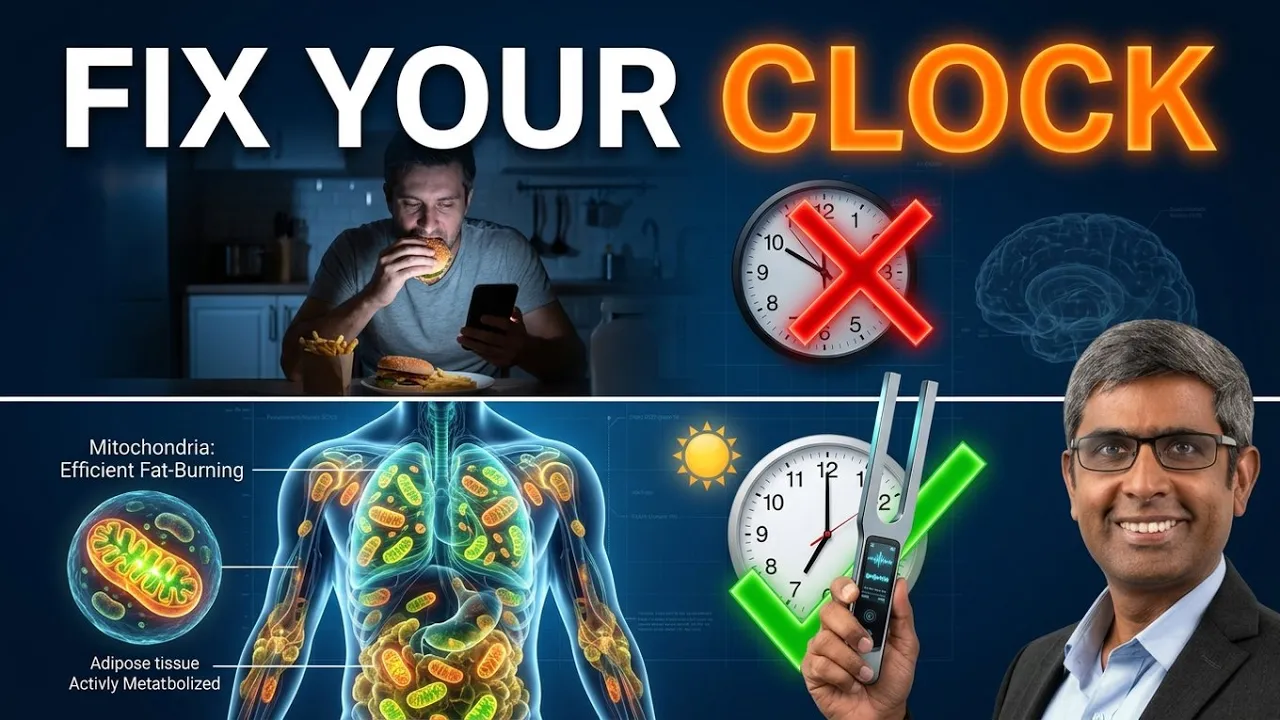




The human body contains both a central circadian clock in the brain (suprachiasmatic nucleus) and peripheral clocks in nearly every organ; bright light exposure synchronizes the central clock while proper meal timing helps sync peripheral clocks throughout the body, and disrupting this synchronization through irregular meals or night shifts can lead to metabolic problems including obesity and cardiovascular issues.
Syncing Circadian Clocks: Light vs. Meal Timing and Health
Added:Understanding the basic definition of circadian rhythms and the 24-hour sleep-wake cycle in humans.
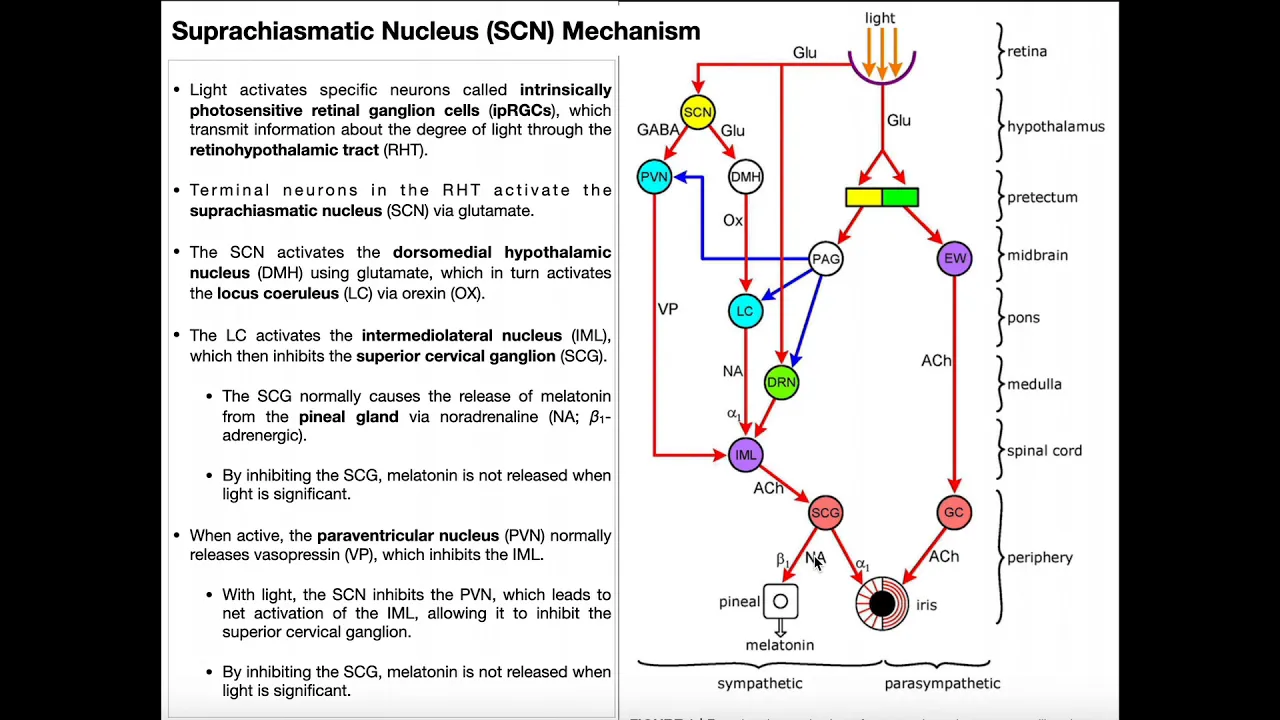
Knowledge of the Suprachiasmatic Nucleus (SCN) as the master pacemaker in the brain and its sensitivity to light.
Basic understanding of human metabolism, including the roles of insulin, glucose regulation, and energy storage.
An introduction to the concept of peripheral clocks, which are autonomous cellular timekeepers found in peripheral tissues and organs like the liver, gut, and pancreas.
Advanced study of Chronobiology, specifically how circadian misalignment (such as from shift work or jet lag) contributes to metabolic syndrome and Type 2 Diabetes.
Practical application of Time-Restricted Eating (TRE) protocols to optimize metabolic health and weight management.
Exploring the field of Chronopharmacology, which studies how the timing of medication administration can be synchronized with internal clocks for maximum efficacy.
Designing and implementing a personalized circadian hygiene protocol involving specific light-exposure habits and consistent feeding windows.
190.4K views3.1Klikes5:28Original Release: 2020-02-10
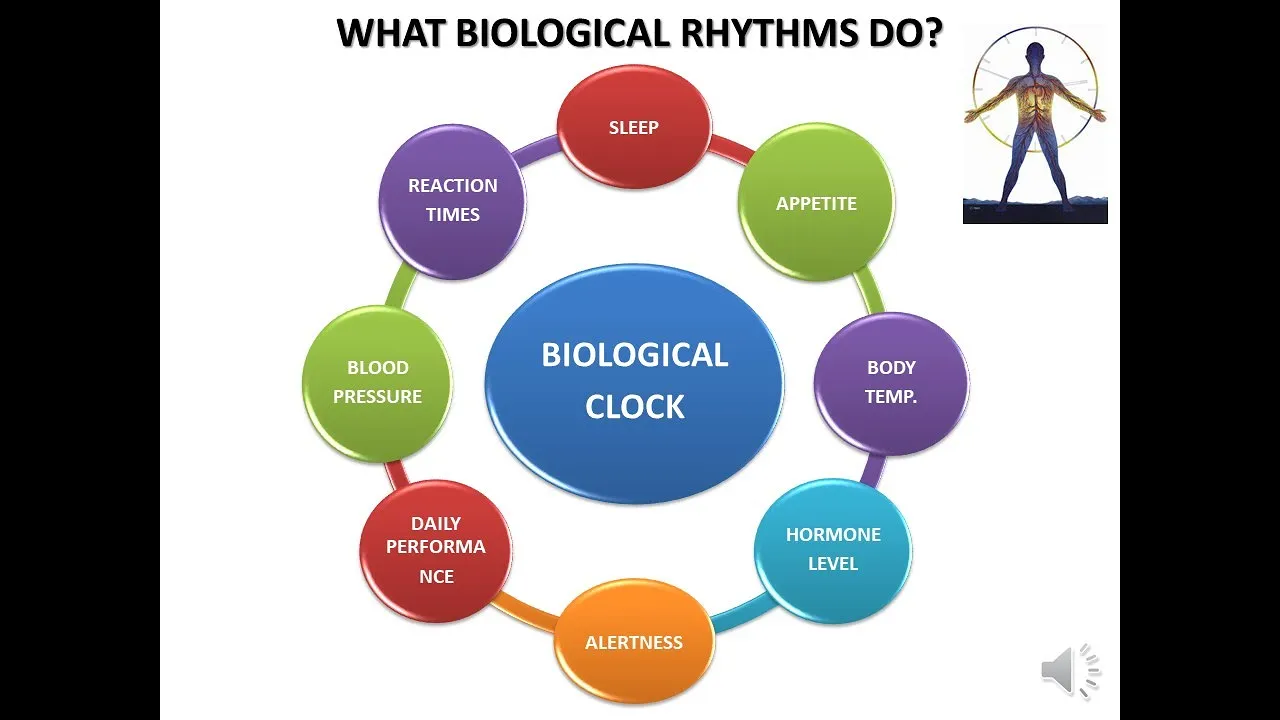
[Music] [Music] one of the most important breakthroughs in recent years has been the discovery of peripheral clocks we've known about that central clock they so-called super Kea somatic nucleus for decades it's this it's in the middle of your brain right above where your optic nerves cross allowing it to respond to night and day now we know there are semi autonomous clocks in nearly every organ in our body our heart runs on a clock our lungs Ronna clock our kidneys run on a clock up to 80 percent of the genes in our liver are expressed in a circadian rhythm our entire digestive tract does to the rate at which our stomach empties the secretion of digestive enzymes and the expression of transporters in our intestinal lining for absorbing sugar and fat halt cycle around the clock so too does the ability of our body fat to stop up extra calories the way we know these cycles are driven by local clocks rather than being controlled by our brain so you can take surgical biopsies of fat put them in a petri dish and still watch them wear them away all this clock talk is not just biological curiosity our health may depend on keeping all these clocks in sync you think about it like a a child playing on a swing imagine you're pushing but you become distracted by other goings-on in the playground and stop paying attention to your timing so you forget to push or push too early push too late what happens how to sync the swinging becomes erratic slows or even stops right that's what happens when we travel accustomed multiple time zones or have to work the night shift the pusher in this case are the light cues falling on our eyes are our circadian rhythm is meant to get a bright light push every morning at dawn but if the Sun rises in a different time or or we're supposed to bright light in the middle of the night this can push our cycle out of sync and leave us feeling out of sorts right that's an example of a mismatch between the external environment in our central clog problems can also arrive from a misalignment between the central clock in our brain and all the other organ clocks throughout our body an extreme illustration of this is a remarkable set of experiments suggesting even our poop can get jetlag our microbiome seems to have its own circadian rhythm even though they're down where the Sun don't shine as a daily oscillation both bacterial abundance and activity in our colon interesting but who cares check this out if you put people on a plane and fly them halfway around the world then feed their poop to mice they grow fatter than mice fed pre-flight feces though may have just been bad airline food or something the researchers suggest the fattening floor was a consequence of circadian misalignment and indeed several lines of evidence now implicates chrono disruption that the state in which our central and peripheral Kalakh diverge out of sync as playing a role in conditions ranging from premature aging and cancer to mood disorders and obesity bright light exposures the synchronizing swing pusher for our central clock well what drives our internal organ clocks that aren't exposed to daylight food intake that's why the timing of our meals may be so important removing all external timing cues by you know locking people away under constant dim light researchers show you could effectively decouple central from peripheral rhythms just by shifting mealtimes they took blood draws every hour and even took biopsies of their fat every six hours to demonstrate the resulting metabolic disarray just as morning light can help sync your central clock and your brain morning meals can help sync your peripheral clocks throughout the rest of your body breakfast skipping disrupts the normal expression rhythm of these clock genes themselves which coincides with the adverse metabolic effects thankfully they can be reversed take a group of habitual breakfast skippers and have them eat three meals at 8 a.m. 1 p.m. 6 p.m. and their cholesterol triglycerides improves compared to taking meals 5 hours later at 1 p.m. 6 and 11 p.m.
see there's a circadian rhythm to cholesterol synthesis in the body 2o which is also strongly influenced by food intake as evidenced by the 95 percent drop in cholesterol production in response to a single day of fasting that's why just a few hours in meal time and can result in a 20-point drop in LDL cholesterol thanks to eating earlier meals [Music] you
Up Next

145:53
Intermittent Fasting, Circadian Health & Time-Restricted Eating | Satchin Panda, PhD
@maxlugavere
26.6K views•2023-04-05

48:47
Graphic Medicine: Comics for Collaborative Healthcare Communication
@nationalpatientadvocate
189 views•2023-12-04

10:28
Neuroanatomy: Central and Peripheral Nervous System Divisions Explained
@AKLECTURES
136.2K views•2014-09-20
3:05
Stages of Labor and Vaginal Birth | Childbirth Animation
@nucleusmedicalmedia
52.1M views•2017-08-18
Related Study Plans & Knowledge Roadmaps
Structured learning paths in Medicine
medicine
Abnormal LFTs: Diagnostic Workup & Pathology
01Liver Anatomy and Basic Physiology
02Introduction to Liver Function Tests (LFTs)
03Hepatocellular vs. Cholestatic Patterns
+ 3 more learning modules
12h6 modules
Explore Roadmap
medicine
Analyzing Blood Smears: RBC, WBC & Platelets
01Introduction to Blood Components & Smear Preparation
02Normal Morphology of Blood Cells
03Erythrocyte Pathologies & Morphological Variants
+ 2 more learning modules
12h5 modules
Explore Roadmap
medicine
Mechanical Ventilation: Waveforms & Alarms
01Anatomy and Physiology of Breathing
02Introduction to Mechanical Ventilation & Core Modes
03Ventilator Settings and Waveform Interpretation
+ 2 more learning modules
12h5 modules
Explore Roadmap
medicine
Neuro Exam: Localization & Stroke Syndromes
01Foundations of Neuroanatomy and Vascular Supply
02The Neurological Examination: Step-by-Step
03Principles of Neurological Localization
+ 3 more learning modules
18h6 modules
Explore Roadmap