
















![🧠👀Cuánta CAFEÍNA debes tomar (y a Qué HORA) para *Maximizar sus Beneficios*⚠️[Lo estás haciendo Mal]](https://i.ytimg.com/vi_webp/O4CnRSTS0zA/maxresdefault.webp)



Circadian rhythm regulation involves complex post-translational modifications of the PER2 protein, where phosphorylation by casein kinase 1 delta (CK1δ) at serine 662 and surrounding residues controls period length, while O-GlcNAcylation competes with phosphorylation to modulate circadian timing; mutations in CK1δ or PER2 phosphorylation sites cause advanced sleep phase syndrome, and high glucose conditions promote O-GlcNAcylation, blocking phosphorylation and accelerating the circadian clock.
Genetics of Circadian Rhythms: PER2 Phosphorylation
Added:The core transcription-translation feedback loop (TTFL) governing circadian rhythms, including the roles of CLOCK, BMAL1, PER, and CRY proteins.
The biochemical principles of post-translational modifications, specifically phosphorylation and glycosylation (O-GlcNAcylation), and how they affect protein stability and function.
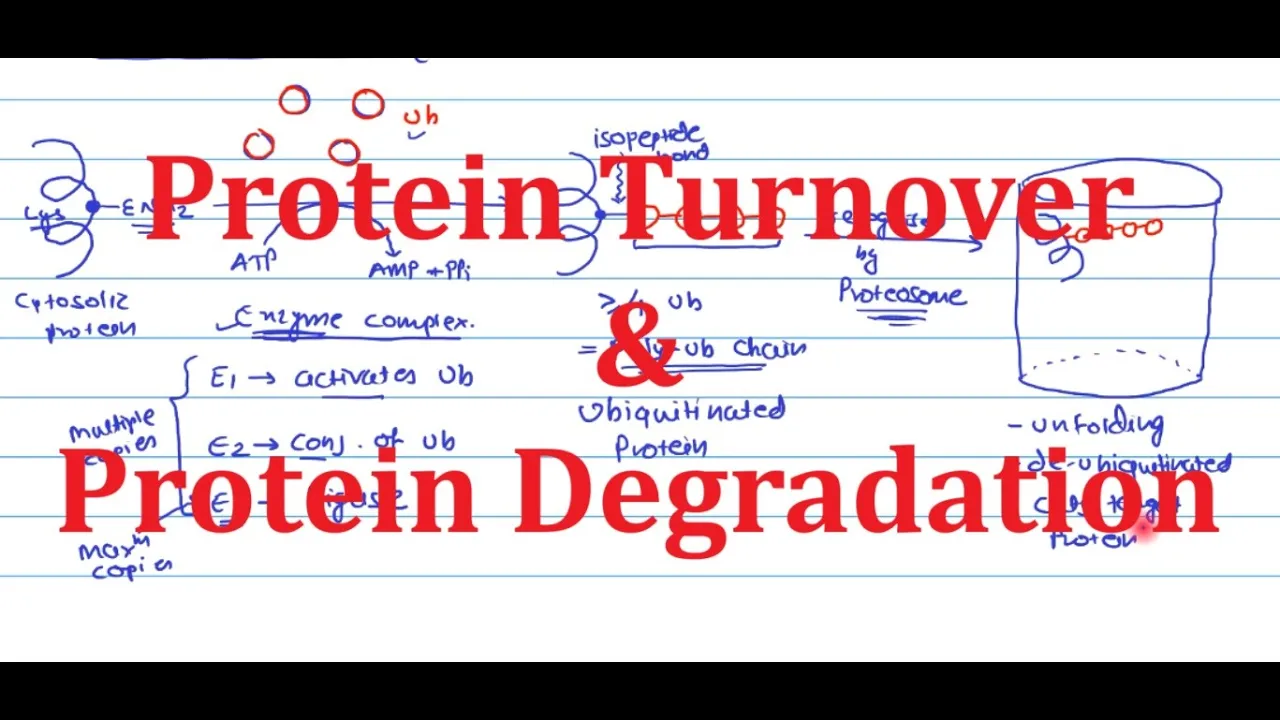
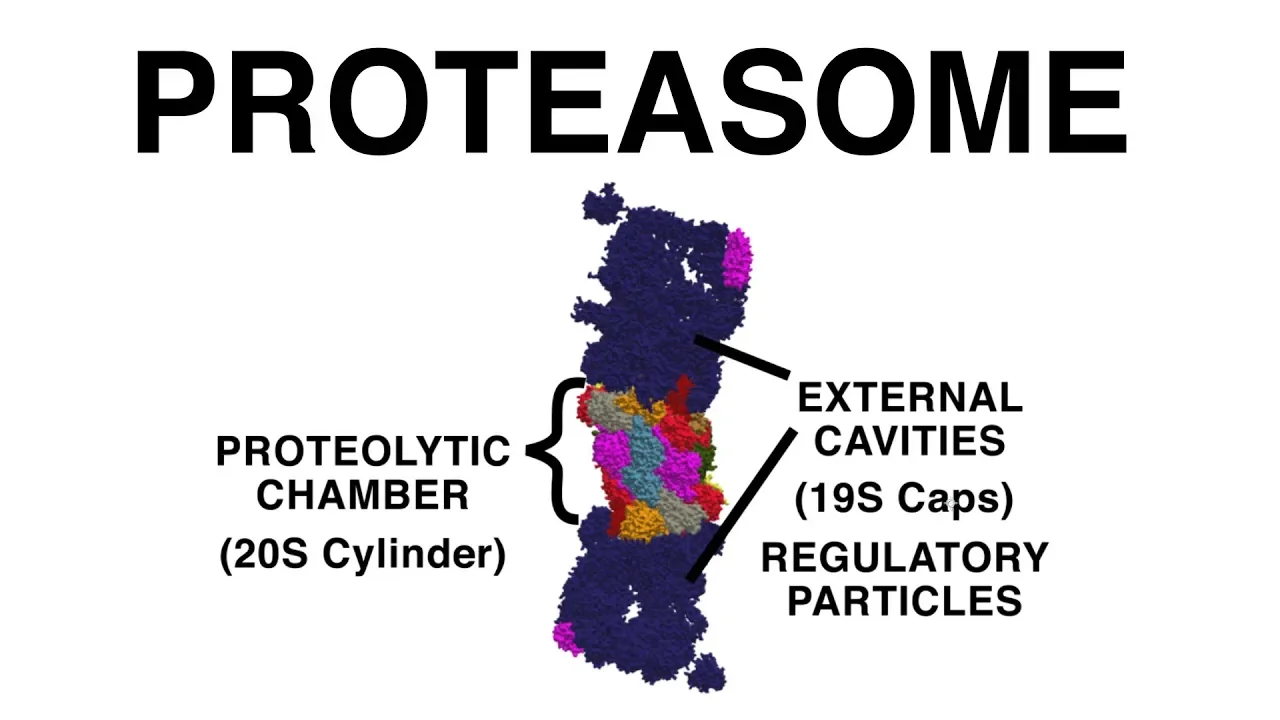
The mechanisms of protein degradation, particularly the ubiquitin-proteasome system and how it regulates cellular protein half-life.
Basic genetics of sleep, including the concept of heritability in sleep duration, timing, and chronotypes.
Pathophysiological consequences of PER2 mutations, such as Familial Advanced Sleep Phase Syndrome (FASPS) in humans.
The metabolic-circadian connection: How nutrient sensing via O-GlcNAcylation bridges metabolic homeostasis and clock regulation.
Chronopharmacology and therapeutic targeting of post-translational modifiers (kinases and transferases) to treat sleep-wake disorders and jet lag.
The coordination between the master pacemaker (Suprachiasmatic Nucleus) and peripheral molecular clocks in regulating systemic physiology.
2.7K views43likes24:22Original Release: 2017-11-20
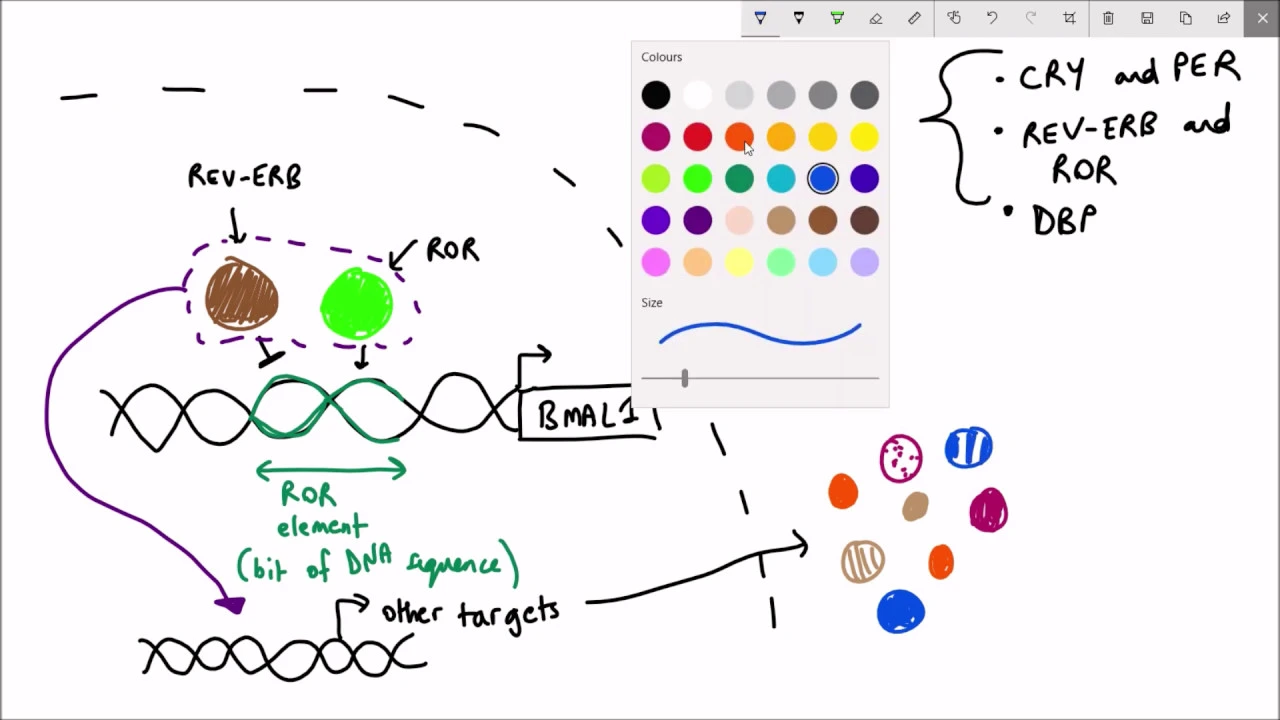
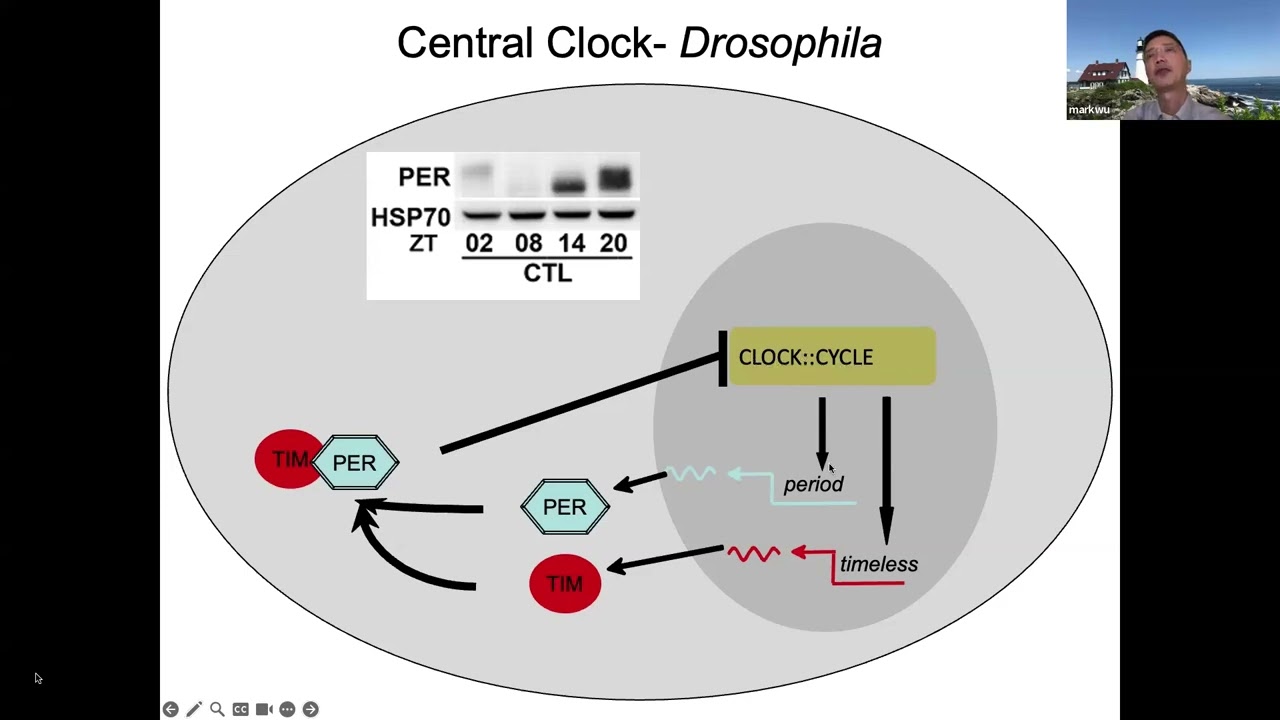
hello I'm in Wavell from the Department of Neurology at University of California San Francisco today I'm going to tell you two examples of the mutations that we have found for humans who have advanced sleep phase syndrome I will also show you how by studying these mutations we can actually learn a great deal about the molecular mechanisms of human sleep behavior regulation before I start I want to first briefly remind you the core molecular clock for the mammalian system there are two major transcription factors cloud and they form dimers and bite to the promoter of claw control genes and person cries are the most well studied control genes the protein levels of person cries are tightly regulated and the first is regulated by choosing management Delta another important kinase for circadian regulation is the GSK free beta horse and cries can form dimer and then come back to suppress the transcription activation of classic therefore forming a feedback transcriptional fee bellow the first example I want to tell you is a mutation we found for this family that Louis told you in the first part of this talk the mutation carriers in this family they all show about two hours phase advance the mutation was found in the gene encoding for kissing kinase 1 Delta and the mutation changed the amino acids at44 form of throning to elleny and this mutation makes the chasing 10s 1 as a reduced enzyme activity here you can see with the gray bars represent normal kissing kinase 1 activity and the white bars represent the mutant using kinase 1 as you see with five different substrates the mutant designs showed reduced activity compared to normal enzyme now for the mice that will generate it to carry the specific human mutation this mice have a period length shorter than a control mice and this is as we expected because we expect the phase advanced animals should have a shorter period now if we removed the endogenous CK 1 Delta gene from the mutant trans gene then the period is even shorter now interestingly when we made Drosophila with this specific human mutation we found that the flies carry mutant human CK 1 Delta their period is longer and it's longer than not only in the wild-type flies but also for the flies that carry wild-type humans CK 1 Delta genes so what this told us is that despite the fact that individual components of the molecular clock is highly conserved between mammalian system and Drosophila it is likely that there will be differences in the regulatory mechanism between this two different systems now one interesting feature for this particular family is Louie mentioned is that all the Malaysian carriers for this family not only have a sleep behavior trait they also all have asthma and migrant headache so our hypothesis for this is that we know the kindnesses can have up to hundreds of different substrates so if a mutation is occurred on a kinase it is possible that the mutation can affect more than one substrate therefore lead to multiple phenotypes now because CT one Delta is very important for circadian regulations so we decided to carry out proteomic study for cj1 Delta and also 40 K 1 epsilon while we were doing this proteomic study we decided to also address another question from premium studies people have shown that using kinase one their activities remain the same throughout the day so we wonder can these kinases and phosphorylate different substrates at the different times of the day therefore serving as part of their regular regulatory function and indeed our results show that C k1 Delta C Q 1 epsilon can phosphorylate different substrate at different times of the day now from the proteomic study we identify a novel gene called pH P 2 here and pH b2 also plays important role in circadian clock regulation p HB 2 can suppress clock control genes expression in a manner that is independent from email and clock interestingly p HB choose protein level is regulated by C K 1 epsilon but messenger RNA level of pH b2 is regulated by C k1 Delta now the second mutation I want to show you is for this particular family that movie also shows you we call it Kindred 2174 and this is the very first family that we collected the mutation carriers in this family also have four hours phase advance behavior trait now this is a very large family so we were able to use this family and used a traditional Human Genetics method to messaging to the telomere region on a long arm of chromosome 2 we then used a standard positional cloning methods to find a mutation in period 2 genes and turns out the mutation was found in the amino acid position 662 it changes from serine supplies in now when we exam the amino acid sequence in this series 62 region we found that the amino acid sequence in this region is highly conserved among different pers from human and mice in addition we found that there are four serine residues immediately c-terminal to this series 62 the first serum here and interestingly they all follow this exact serum xx serum ot and serine X X Syria motif is a consensus sequence for choosing 10 aids one activity so we carried out a series of biochemical studies and what we found is that the first theory of this 5 serum region can be phosphorylated by a priming training and when this occurred then the following four series can be phosphorylated by chasing kinase one Delta now in the mouse model that we made to carry this specific virtual serine 660 to the glycine mutations the mutant transgenic mice has a period shorter than the wild-type mice as we expected and this is also in agreement with the human subjects as a shorter period length now if we remove the endogenous / - allele from this mice then the period became even shorter now interestingly when we generate the mouse model that changes the serine to an aspartic acid to mimic the constitutive forceful searing condition at this specific site then a transgenic mice have a longer period than the wild-type life now again if we remove the endogenous virtual allele from Assyrian to aspartic acid museum transgenic mice their period became longer so what we have here is that with this flag searing region the first serum is phosphorylated by a priming Chinese and then C k1 Delta then phosphorylate the four additional series and when this happens then the animal will have a longer period which we can think of it at a slower clock because it takes longer to finish the cycle now if the first serine is blocked it cannot be phosphorylated therefore none of them is phosphorylated then the animal will have a shorter period and we can think of this as a faster clock now when we look at the activity recording for our serine to glycine mutant transgenic mice we found that four hours before we turn the light off the animal starts to become active the activity turn now in four hours before the light on the activity starts to widen this is very similar to human subjects with four hours phase advance so this mouse model actually recapitulate human phenotype very well so we show that this syrian to glycine mutation who make the / to protein become hypo phosphorylated but how does a hypo phosphorylated / - then lead to an advanced sleep phase behavior trait or there were three obvious possibilities first is that the mutation could affect / - protein stability second is that the mutation will affect produce nuclear translocation timing or mechanisms third is that the mutation could affect per tooth repressor activity therefore change the transcription regulation and we exempt each of these possibilities in our results show that the major effect for this mutation is changing produce repress activity now here you can see that a wild-type per to messenger RNA peak us here with peak and the SG / - message RNA actually Peaks earlier than the wild-type / - messenger RNA in the SD / - messenger RNA peak later than the wild-type agree with at the SG has a shorter period length in advanced sleep behavior trade now not only that the SG / - messenger RNA peak lower than the wild-type virtual message or RNA in the peak for SD / - is higher than normal type / - and this is true not only for the mouse endogenous / - messenger RNA also for human / - transgene messenger RNA so what this result told us is that the SG / - is a stronger repressor than the wild-type protein and the SD / - is a weaker repressor than the wild-type / - protein so we knew that her2 protein is regulated by choosing kinase 1 Delta so we wonder whether we could use our mouse model to study genetic interaction between C Q and Delta and purchase and this one is just show you that the copy number of CK 1 Delta actually does not affect Mouse P relate with the heterozygous CK 1 Delta knockout mice with only one copy of the normal gene and CK 1 Delta wild-type trans gene with four to five copy of normal gene their period remains the same with wild-type mice again for the Syrian uprising / - the Nutan transgene the period is shorter than the wild-type mice but if we cross this SG mutant transgenic mice with the CK one Delta heterozygous knockout mice their period became longer now if we cross the SG mutant transgenic mice with a CK 1 Delta wild-type trans gene then the period became shorter so what is result told us is that anchor2 protein in addition to this phosphorylation site by C k1 Delta around 662 there are other securement Delta phosphorylation sites or / - and this other side when they are phosphorylated it can lead to a shorter period length so we proposed this model to explain all of our data together we think that Purdue has multiple phosphorylation sites by choosing a niche one Delta and one of these sites is along here in 62 and when this site is phosphorylated it can lead to increased Persian messenger RNA and proteins and lead to a longer period length now when these other sites are phosphorylated it can lead to increased / - degradation therefore lower per - protein level this then lead to a shorter period in under normal conditions these different pathways have to maintain a delicate balance in order for the animals to have a stable normal fuel and so all these results really point out the importance of proto phosphorylation in setting the speed of the clock in fact this is true not only for proto protein but also for other clock proteins as well so then this can raise another question which is are other post translational modifications also important for regulating circadian clock so as I showed you earlier we did a proteomic study for C k1 Delta and GSK 3 beta is another important kinase for circadian regulation so we also did a per diem ecstatic for GSK 3 beta in this proteomic study we found more than 400 potential GSK 3 beta substrate and this more than 400 proteins can be mapped unto many biological pathways including some of them previously shown and others are novel biological pathways for GSK 3 beta along with more than 400 proteins we decided to follow up on one particular protein which is all broken and transfer race or ogt ensured OGG and OTA which is organized they are responsible for the old brokenness post translational modification for proteins interestingly a GSK 3 beta phosphorylation can significantly increase our GPS activity here with the phosphorylation my GSK pre-beta significantly increase the activity Oh blue comet modification also occurs on serine and threonine so the first question we asked was does Oh broken insulation also play a role in regulating circadian clock we first used any mutual system to see if o clock methylation can affect circadian Pureland we add OTA inhibitor to the cell we found that the pyramid becomes longer now if we add OTT inhibitor to the cell then the period we can shorter we also confirm this in vivo with OTT conditional knockout mice we found that there period is shorter than a control mice for the Drosophila the ogv knockdown a period is shorter tho GA anata the period is longer than the wild-type flies so all this different systems suggest that under higher Ochlockonee situation condition it can lead to a longer pure land and the lower oak growth in isolation level leads to a shorter period length we then found that at least two of the core clock components are modified by oak grove net class protein one is modified by the o clock med it actually reduced its transcription activity but the per tool protein when it's modified by a group med it actually further enhance its repressor activity now with / - luciferase activity as in death we see that class and be more can turn on / - promoter in the presence of OG t the transcription activity is significantly suppressed now wild-type virtual protein is a repressor for class and be more activity if the presence of OGG the producer repressor activity is further enhanced as I told you earlier the pro - asked to G mutant is a stronger repressor than the wild-type protein however when we add Oct to the reaction with mutant / - protein it did not affect the transcription activity this then gave us an idea that maybe Ochlockonee modifications plays a role on the syrian 6 6 to 5 we use a cultural system together with Western blot to show that when fertile protein is Ochlockonee modified it actually blocks the phosphorylation of serine 662 sides and also if the Syrian 62 add virtual is phosphorylated the pursue protein does not get ogre clear modified as well as the purdue protein that is not phosphorylated at clearing 62 so together this result suggests that there is an interplay between all closely methylation and phosphorylation at / - series 662 we also used mass spectrometry to map all the o´clock enactment modification sites focusing on the syrian 650 - region and we found meaning or growth land modification size marked in red here including the syrian 62 serine 668 and series 6 7 one now OTT and Oda are responsible for approximate modification of the protein and all croakin isolation is dependent on its substrate qdb brokenness UDP Brooklyn is derived from nutrients including roukoz amino acids and nucleic acids through a hex of the main biosynthetic pathways now all protein isolation can regulate succeeding rhythm so we then wondered well can glucose level modulate circadian clock so we did this simple experiment here on the local coast concentration we found that the syrian 662 region of the pro 2 can be phosphorylated as long as c k1 Delta is present regardless of OTG or GA is there or not however under high glucose concentration the phosphorylation in this region is blocked as long as OD g + o GA is there regardless of C k1 Delta is there or not in summary we found that in this series sixty-two regions there are five Syrians in a row when the first Syrian is phosphorylated by priming Chinese therefore the four additional sheet Syrians are phosphorylated by ck1 Delta this can lead to a longer period length for animals under high glucose concentration the old broken isolation can take over and block the phosphorylation for this region therefore lead to a shorter periods and a faster clock and we call this clock sugar rush so we have so far collected more than 90 advanced sleep phase families and we are continuing to use these families to identify genes and mutations responsible for this behavior trade when we find genes and mutations we study their protein functions at the same time we also generate Mouse and fly models to help us understand the molecular mechanism with this parallel approach we hope to gain a better understanding of human circadian and sleep mechanisms a better understanding of this regulatory mechanism will be able to come up with a better therapeutic intervention for sleep related disorders I want to acknowledge my long-term collaborators Luis Petacchi and Chris Jones and also all the people who contributed to this work
Up Next
6:29
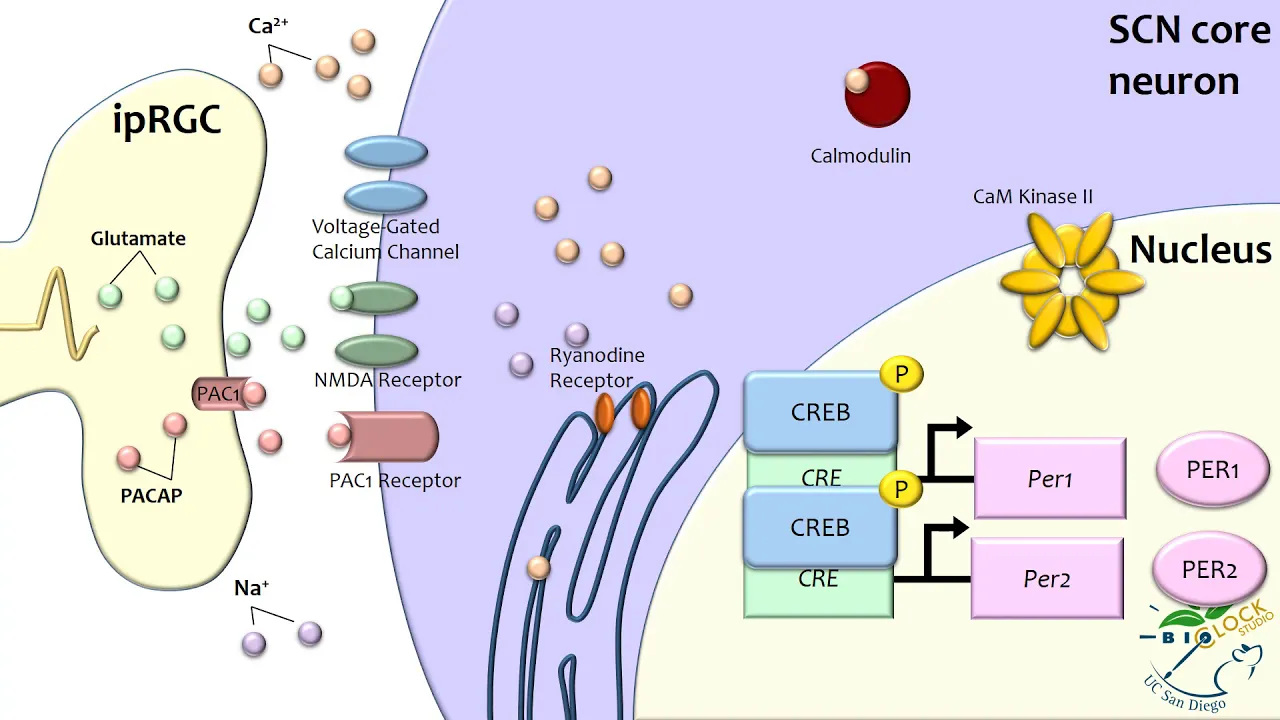
Molecular Entrainment to Light in the Suprachiasmatic Nucleus
@BioClockStudio
18.9K views•2018-05-07
50:12
Bacterial Communication: Quorum Sensing and Biofilm Formation Explained
@JHUAAP
12.6K views•2011-06-28

42:45
MicroRNAs: Gene Regulation Explained by David Bartel | iBiology
@scicommlab
233.1K views•2014-03-24

7:08
Bacteriophages: Earth's Deadliest Killers and Future Antibiotics
@kurzgesagt
34.6M views•2018-05-13
Related Study Plans & Knowledge Roadmaps
Structured learning paths in Biology
biology
RNAi: Biogenesis, RISC & Gene Silencing
01Molecular Biology Foundations: DNA to Protein
02Introduction to RNA Interference (RNAi)
03Molecular Biogenesis of miRNA and siRNA
+ 2 more learning modules
10h5 modules
Explore Roadmap
biology
Mycorrhizae: Signaling, Biophysics & Ecology
01Foundations of Mycorrhizal Symbiosis
02Molecular Signaling and Root Colonization
03Biophysics and Bioenergetics of Nutrient Exchange
+ 1 more learning modules
11h4 modules
Explore Roadmap
biology
Circadian Clocks: TTFL, SCN & Periphery
01Foundations of Molecular Biology & Gene Expression
02Introduction to Chronobiology and Actograms
03The Core TTFL: Molecular Architecture of the Clock
+ 3 more learning modules
14h6 modules
Explore Roadmap
biology
Population Genetics: Math, Drift & Selection
01Genetic & Probability Foundations
02The Hardy-Weinberg Principle and Baseline Models
03Mathematical Modeling of Natural Selection
+ 3 more learning modules
18h6 modules
Explore Roadmap