RNAi: Biogenesis, RISC & Gene Silencing
Learning Goal: Deconstruct the molecular mechanisms of RNA interference (RNAi), focusing on microRNA (miRNA) and small interfering RNA (siRNA) biogenesis, RISC complex assembly, target mRNA degradation, and clinical applications in therapeutic gene silencing.
- Prerequisites: Basic knowledge of cellular biology, genetics, and organic chemistry.
- Estimated Total Study Time: 10 hours
Module 1: Molecular Biology Foundations: DNA to Protein
This foundational module reviews the molecular framework governing genetic expression. To fully understand post-transcriptional gene silencing, you must first master the standard pathways of the central dogma: transcription of DNA into messenger RNA (mRNA) and the subsequent translation of mRNA into functional proteins by the ribosome.
Recommended Videos

Why this video: This clean, accurate 3D animation from the Cold Spring Harbor DNA Learning Center visualizes how genetic information flows within a cell. It provides an essential baseline by showing raw mRNA transcription in the nucleus and its transport to the cytoplasm, which sets the physical stage for the RNAi machinery.
Why this video: This animation breaks down transcription factors, RNA polymerase action, and ribosome translation kinetics step-by-step. By examining how tRNA anticodons read mRNA codons, you will gain a clearer picture of what the RNAi machinery aims to block or destroy.
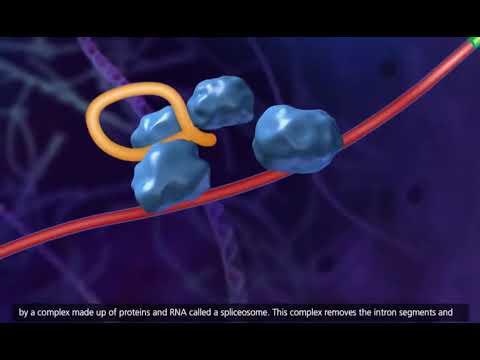
Why this video: This deep-dive animation walks through the mechanics of transcription (initiation, elongation, termination) and translation. Observing the physical structures of mRNA and the ribosome will help you understand the spatial constraints involved when regulatory complexes target translation.
Module 1 Knowledge Checkpoint
- Diagram the flow of genetic information from the nucleus to the cytoplasm.
- Explain the structural difference between RNA polymerases and ribosomes during gene expression.
- Define the roles of introns and exons during post-transcriptional pre-mRNA splicing.
Module 2: Introduction to RNA Interference (RNAi)
This module introduces RNA interference (RNAi)—a highly conserved gene-regulatory mechanism. You will trace its accidental discovery during plant pigmentation experiments (co-suppression), analyze the Nobel-winning work of Andrew Fire and Craig Mello in C. elegans, and establish the baseline structural differences between endogenous microRNAs (miRNAs) and exogenous small interfering RNAs (siRNAs).
Recommended Videos
Why this video: This animated explainer delivers an intuitive overview of the RNAi pathway. It acts as an engaging introduction to the concept of double-stranded RNA (dsRNA) trigger molecules, the "Dicer" enzyme, and how cells naturally use this mechanism as an immune defense against viral threats.

Why this video: Hearing directly from Fire and Mello provides valuable historical and scientific context. They discuss their breakthrough 1998 discovery that double-stranded RNA—not single-stranded sense or antisense molecules—is the key driver of sequence-specific gene silencing.
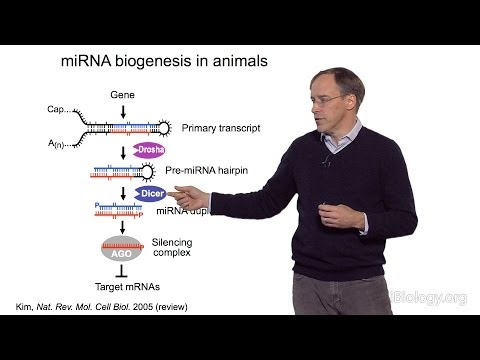
Why this video: Led by a pioneer in microRNA research, this lecture introduces miRNAs: non-coding regulatory RNAs ~22 nucleotides long. Dr. Bartel explains their hair-pin genomic origins and how they post-transcriptionally tune eukaryotic gene expression.
Module 2 Knowledge Checkpoint
- Summarize the experimental design of Fire and Mello's C. elegans study and explain why dsRNA was uniquely effective.
- Contrast endogenous miRNAs with exogenous siRNAs regarding their cellular origin, genomic encoding, and typical degree of target complementarity.
- Explain how the evolutionary origin of RNAi serves as an ancient defense mechanism against genomic parasites and RNA viruses.
Module 3: Molecular Biogenesis of miRNA and siRNA
In this module, you will trace the detailed biochemical pathways that process transcripts into functional, short double-stranded RNA molecules. You will study nuclear transcription, cleavage by the microprocessor complex (Drosha/DGCR8), export through nuclear pores, and final cytoplasmic dicing.
[pri-miRNA] (Nucleus) │ ▼ (Drosha / DGCR8) [pre-miRNA] │ ▼ (Exportin-5 / Ran-GTP) [pre-miRNA] (Cytoplasm) │ ▼ (Dicer / TRBP) [miRNA/miRNA* duplex]
Recommended Videos
Why this video: This Oxford University Press animation provides a clear side-by-side comparison of miRNA and siRNA biogenesis. It visually highlights the nuclear steps (pri-miRNA to pre-miRNA) and cytoplasmic steps (pre-miRNA/dsRNA cleavage by Dicer) that yield final ~21-23 nucleotide duplexes.
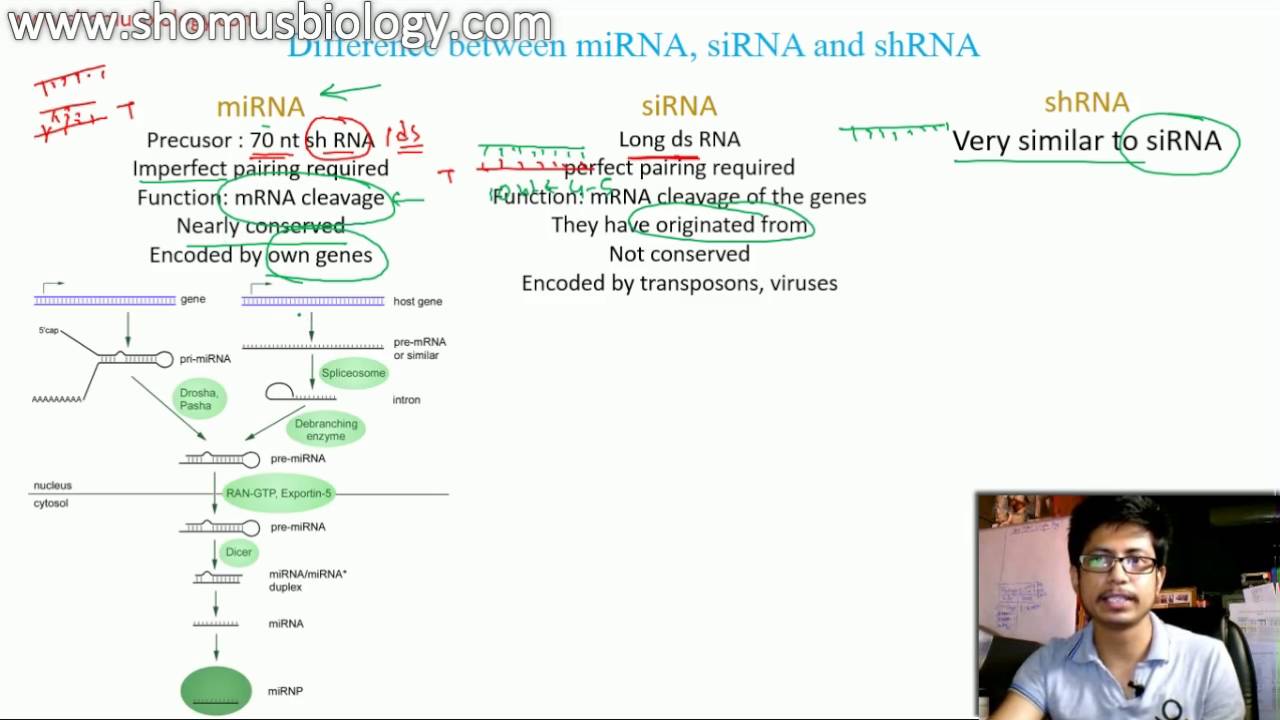
Why this video: This lecture focuses on the molecular machinery of biogenesis. It breaks down the roles of Drosha and Pasha (DGCR8) in the microprocessor complex, nuclear export via Exportin-5, and the processing differences when dealing with short hairpin RNAs (shRNAs).
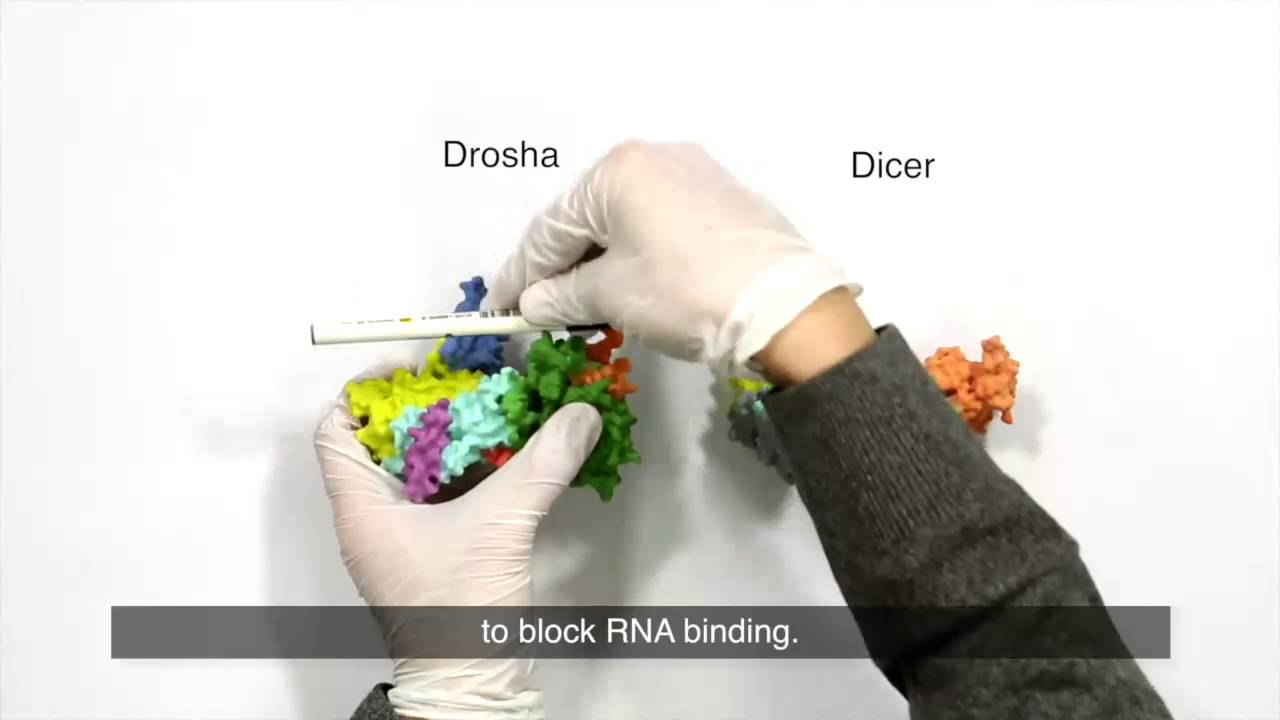
Why this video: For a deep biochemical perspective, this video abstract details the crystal structure of DROSHA. It explains how DROSHA acts as a ruler to measure and cut pri-miRNA, providing a precise look at the molecular structural biology of the microprocessor complex.
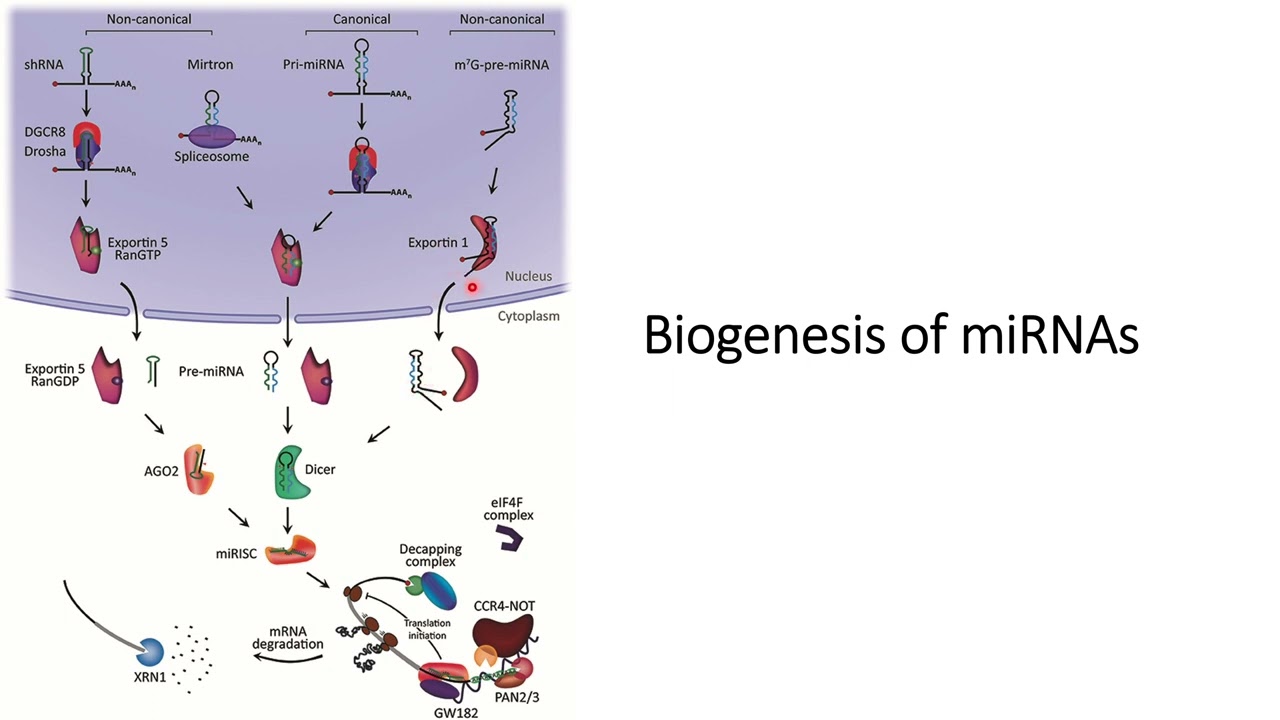
Why this video: This quick tutorial focuses on the canonical and non-canonical (mirtron) pathways of miRNA biogenesis. It highlights how intronic sequences can bypass Drosha processing, expanding your understanding of small RNA processing pathways.
Module 3 Knowledge Checkpoint
- Detail the physical domains of DROSHA and how it measures 11 base pairs from the single-stranded/double-stranded RNA junction of pri-miRNA.
- Describe the energy-dependent export of pre-miRNA through the nuclear pore complex via Exportin-5 and Ran-GTP.
- Compare how Dicer acts on endogenous hairpin pre-miRNAs versus long, linear, exogenous double-stranded RNAs.
Module 4: RISC Complex Assembly and mRNA Degradation
At the heart of RNAi is the RNA-induced silencing complex (RISC). In this module, you will analyze how duplex RNAs load into the Argonaute protein (primarily Ago2 in humans), how thermodynamics dictate guide strand selection, and the mechanical differences between precise mRNA slicing and translation inhibition.
Recommended Videos
Why this video: This comprehensive masterclass explores Argonaute (Ago) biochemistry. It details the protein's domains (PAZ, MID, PIWI), guide strand thermodynamic selection rules, passenger strand ejection, and how the RISC complex locates complementary target sequences on mRNAs.
Why this video: This detailed blackboard lecture explains how the RISC complex initiates RNA interference. It explores chaperone-mediated duplex loading and how the guide strand's 5' end anchors into the MID domain of Argonaute to initiate scanning.
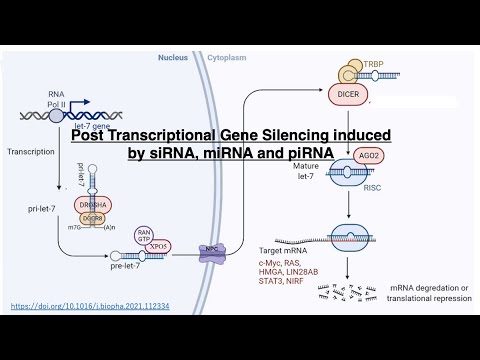
Why this video: This technical video explains how heat shock proteins (Hsp70/Hsp90) use ATP to open Argonaute, allowing the bulky double-stranded RNA to load before passenger strand removal.
Module 4 Knowledge Checkpoint
- Define the thermodynamic asymmetry rule and explain how the thermodynamic stability of the duplex's 5' ends determines which strand becomes the guide strand and which is discarded as the passenger strand.
- Detail the functions of the PAZ domain (binding the 3' end of the guide RNA) and the MID domain (anchoring the 5' phosphate).
- Contrast target slicing (mediated by the PIWI domain's RNase H-like catalytic triad in Ago2) with miRNA-mediated translation repression and deadenylation.
Module 5: RNAi Therapeutics and Clinical Applications
Translating RNAi into human medicine requires overcoming major drug-delivery challenges. This module explores how chemical modifications (like 2'-O-methyl and phosphorothioate linkages) protect siRNAs from nucleases, and how delivery systems like lipid nanoparticles (LNPs) and GalNAc (N-acetylgalactosamine) conjugates enable targeted delivery to hepatocytes.
   [GalNAc Ligand]
         │  (Tethers to)
         ▼
   [Engineered siRNA] ──(Injected)──► [Binds ASGPR on Hepatocyte] ──► [Endocytosis]
Recommended Videos
Why this video: In this presentation from the Oligonucleotide Therapeutics Society, Alnylam scientist Dr. Mano Manoharan details the development of GalNAc-siRNA conjugates. It is a masterclass in conjugate design, receptor-mediated endocytosis via ASGPR, and endosomal escape mechanisms.
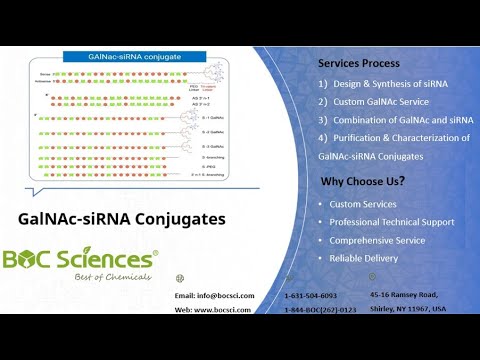
Why this video: This concise, high-yield overview focuses on GalNAc-siRNA conjugates. It illustrates how trivalent GalNAc ligands target the asialoglycoprotein receptor (ASGPR) on hepatocytes, demonstrating why the liver is the primary target for current RNAi therapies.
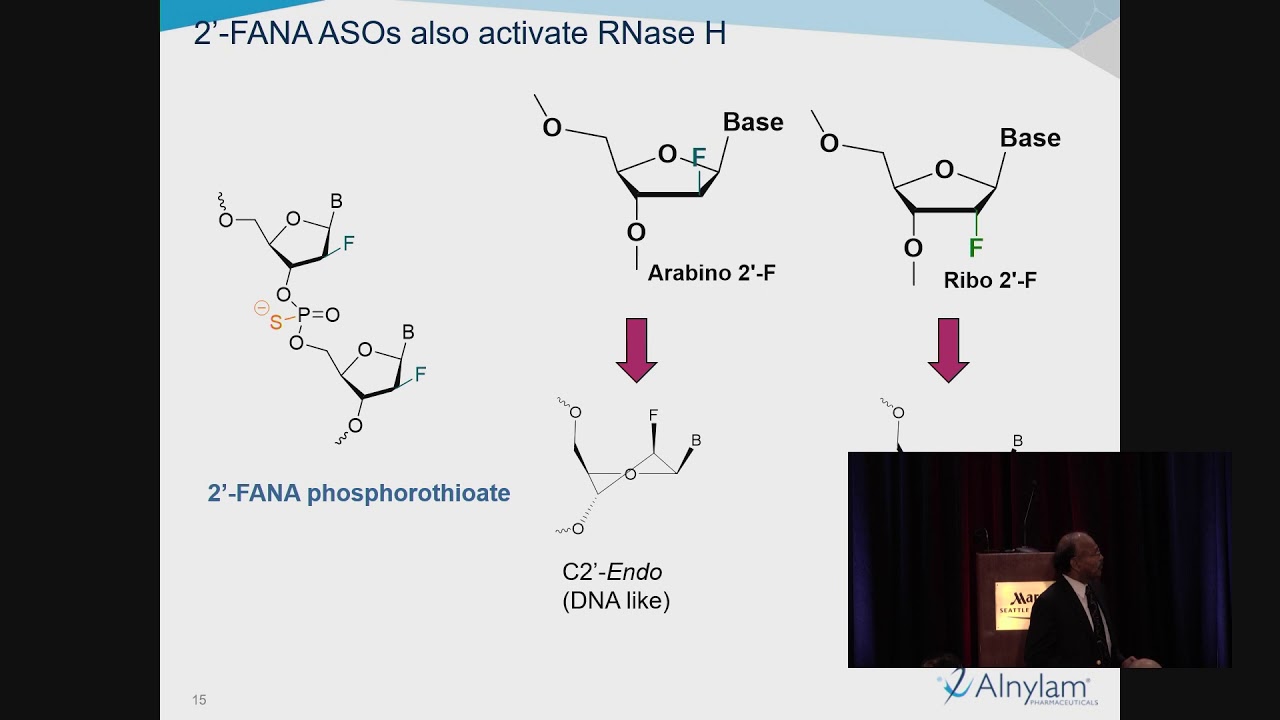
Why this video: This short video highlights how chemical changes make oligonucleotides viable as drugs. It shows how the trivalent GalNAc ligand binds to the ASGPR receptor on liver cells, followed by rapid internalization of the therapeutic payload.
Why this video: This industry-focused video explores the manufacturing challenges and regulatory journeys of approved RNAi therapeutics, such as Patisiran (Onpattro) and Givlaari. It offers great context on what it takes to scale up sterile manufacturing for these complex genetic drugs.
Module 5 Knowledge Checkpoint
- Explain how phosphorothioate (PS) linkages and 2'-fluoro (2'-F) or 2'-O-methyl (2'-OMe) ribose modifications protect siRNAs from cellular nucleases without disrupting RISC activity.
- Explain why the asialoglycoprotein receptor (ASGPR) on hepatocytes is an ideal target for GalNAc-conjugated siRNAs, including its recycling rate.
- Describe the lipid nanoparticle (LNP) formulation of Patisiran and how its ionizable lipids facilitate endosomal escape after cellular uptake.
Course Map
This flowchart shows the recommended learning order and dependencies across the five modules:
Key People Index
| Researcher | Key Contributions | Context / Relevance |
|---|---|---|
| Andrew Fire | Co-discovered RNA interference using C. elegans models. | Awarded the 2006 Nobel Prize in Physiology or Medicine; proved dsRNA is the triggering agent of RNAi. |
| Craig Mello | Co-discovered RNA interference using C. elegans models. | Awarded the 2006 Nobel Prize in Physiology or Medicine alongside Andrew Fire; identified key genes like rde-1. |
| David Bartel | Discovered and characterized hundreds of microRNAs; defined seed-region matching mechanics. | HHMI Investigator / MIT Professor; a leading authority on evolutionary biology and miRNA targeting kinetics. |
| Mano Manoharan | Pioneer in the chemical design of oligonucleotide therapeutics. | Distinguished Research Fellow at Alnylam; led the development of LNP and GalNAc platform technologies. |
Final Self-Assessment
Review this list after completing the curriculum to test your understanding of RNAi:
- I can trace the path of genetic information from a DNA template to a mature protein, detailing transcription and translation.
- I can describe the 1998 experiment by Fire and Mello that proved double-stranded RNA drives sequence-specific gene silencing.
- I can explain the structural difference between primary microRNA (pri-miRNA) and pre-microRNA (pre-miRNA).
- I can identify the specific cleavage locations and roles of Drosha (nuclear microprocessor) and Dicer (cytoplasmic endonuclease).
- I can explain how Exportin-5 utilizes a Ran-GTP gradient to transport pre-miRNA into the cytoplasm.
- I can explain the thermodynamic asymmetry rule and how it dictates guide strand selection over passenger strand degradation.
- I can name the three main domains of Argonaute-2 (Ago2) (PAZ, MID, PIWI) and outline their molecular functions during RISC assembly.
- I can describe how the seed region (nucleotides 2-7 of the guide strand) pairs with target mRNA to mediate silencing.
- I can explain how GalNAc conjugates target the ASGPR receptor on hepatocytes to deliver siRNAs directly to the liver.
- I can explain why chemical modifications (such as 2'-O-methyl and phosphorothioate backbones) are necessary to make RNAi molecules viable as therapeutics.