


![Endocytose/ Exocytose/ Membranfluss (Stofftransport durch die Biomembran) - [Biologie, Oberstufe]](https://i.ytimg.com/vi/8YAp558E8O0/sddefault.jpg)







![[2017 카오스 봄 강연] 물질에서 생명으로…탄수화물의 비밀 / YTN 사이언스](https://i.ytimg.com/vi/r_cf41RIAaM/hqdefault.jpg)



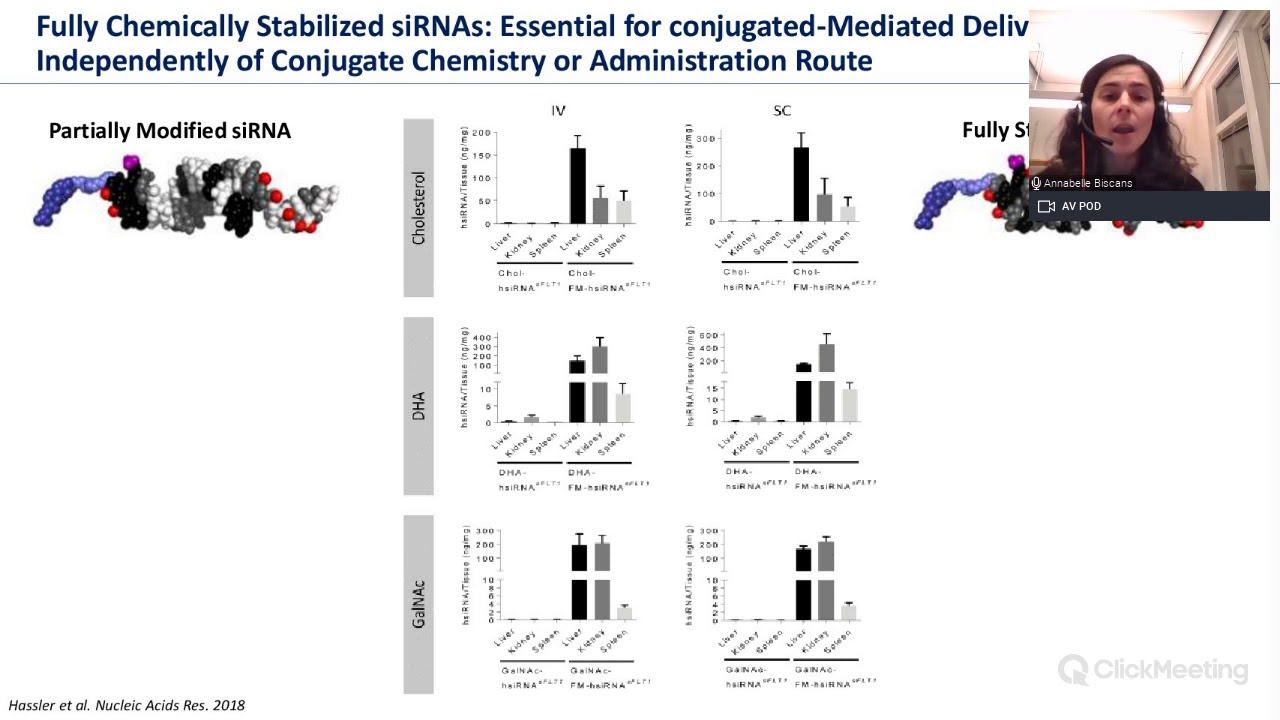


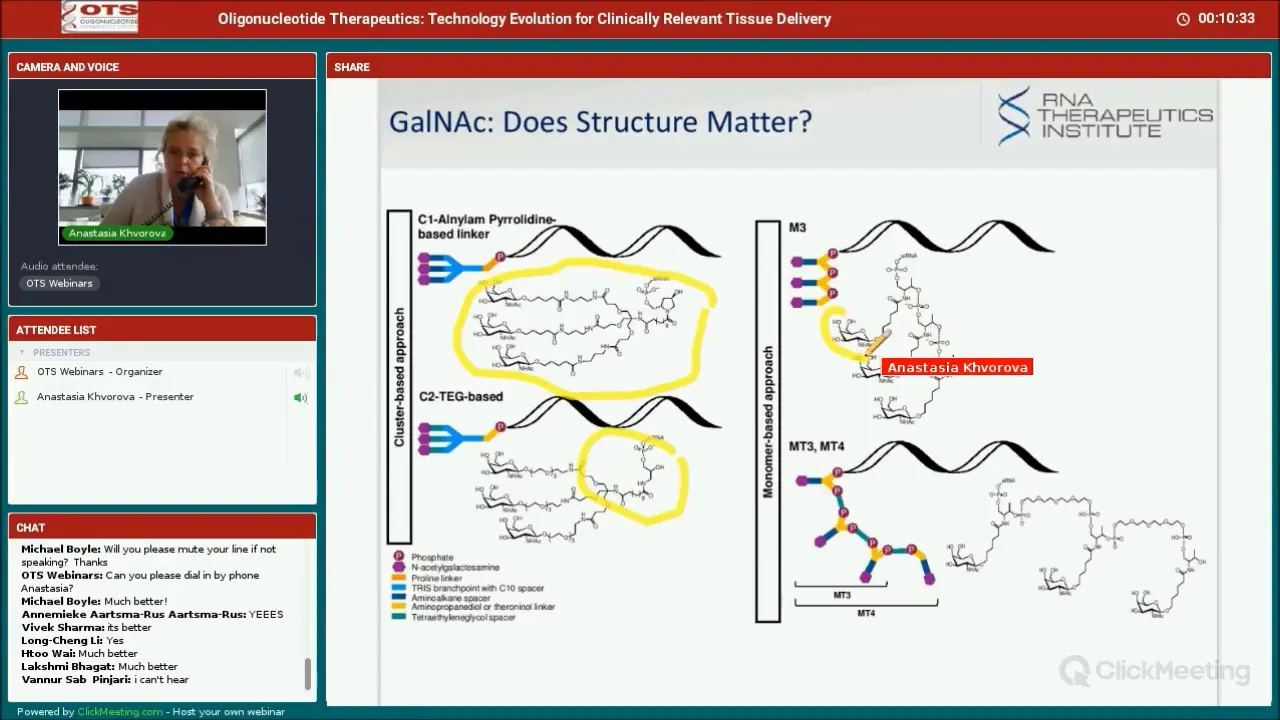




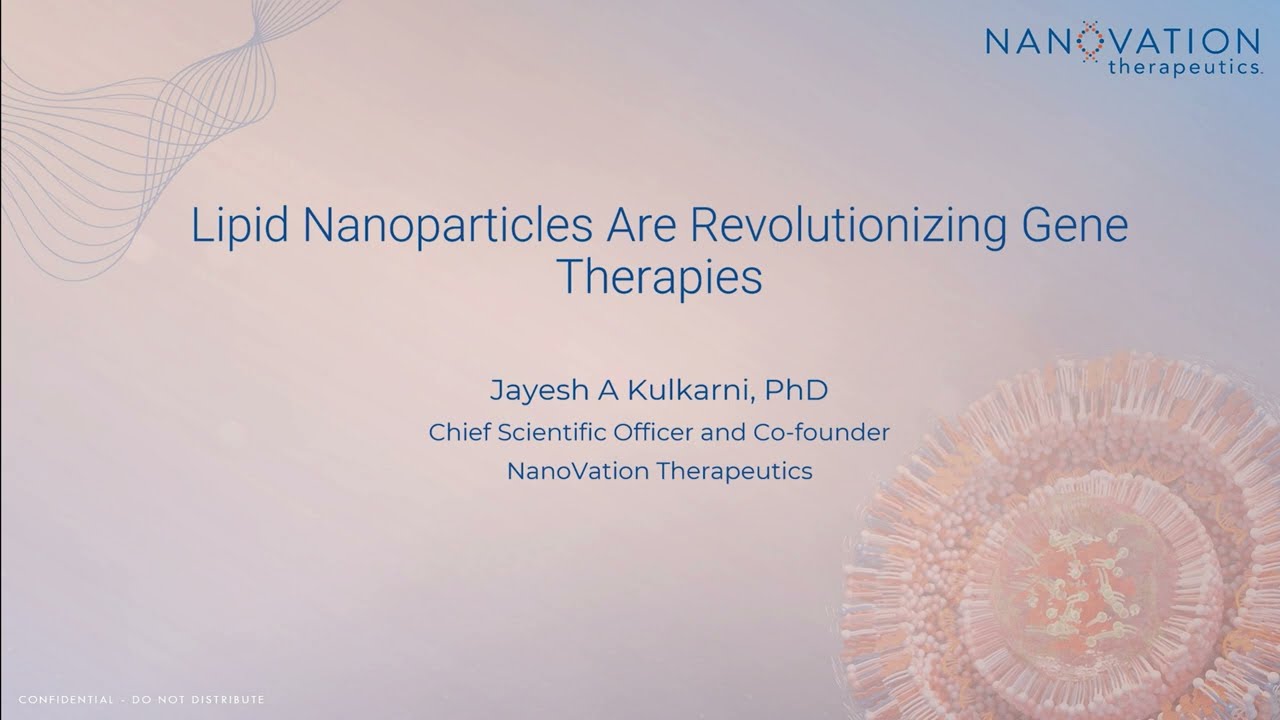
GalNAc (N-acetylgalactosamine) conjugates represent a revolutionary delivery platform for oligonucleotide therapeutics, enabling efficient liver targeting by attaching trivalent GalNAc ligands to siRNA molecules. This technology leverages the asialoglycoprotein receptor expressed on liver hepatocytes, allowing subcutaneous administration of naked oligonucleotides with exceptional liver-to-kidney ratio (>30). The conjugates incorporate strategic chemical modifications including 2'-O-methyl, 2'-fluoro, phosphorothioate, and glycol nucleic acid linkages to achieve metabolic stability and optimal Argonaute binding. This platform has enabled four FDA-approved drugs (givosiran, lumasiran, inclisiran, vutrisiran) and achieved unprecedented therapeutic outcomes, including durable gene silencing at picomolar concentrations and once-every-six-month dosing regimens, demonstrating how targeted delivery systems can transform nucleic acid therapeutics from experimental concepts into life-changing treatments for previously incurable diseases.
GalNAc Conjugates in Nucleic Acid Therapeutics | RNAi Delivery
Added:everyone um good morning good afternoon wherever you are and welcome to the OTS webinar Series today we are very excited um to feature uh Dr Manor manaharan for our talk today uh of course he's a recognized expert in many things one of which being dancing another one being his t-shirts collection uh but today he's here to talk about the world of gal that conjugate Therapeutics um so um as I may I may have mentioned or maybe I I got too excited about the dancing and the t-shirts uh but he is also our 2019 OTF Lifetime Achievement Award winner uh he's a senior vice president scientific Advisory Board member and distinguished research resources at Alabama Pharmacy difficult he was actually the first chemist that was hired there and so his team has pioneered the discovery and development and chemical modifications that make RNA interference-based human Therapeutics possible and led to the first rnai therapeutic approved by the FDA in 2018.
he has a distinguished career worldwide as a chemist in areas of oligonucleotide chemical modifications conjugation chemistry and delivery platforms and his research group was demonstrated for the first time the human therapeutic applications of the gal that conjugated illuminum nucleotides while he was at Allen Island and so this is of course revolutionized nucleic acid-based therapeutic and we're very excited to hear about that today so I will before I pass the mic over to uh mantle I will remind you you can use the Q a function to ask questions and so at the end of the talk Ronald will help to moderate the question session so please feel free to ask there if you need anything you have any questions you can also reach us through the chat alright so go ahead now take it away thank you very much I hope you are valuable to see my slide and be able to hear me okay I want to thank Erin and uh Ronald and Jerry and they enter alnail on board for giving this opportunity to me and al-nailam to share our work um in this OTS webinar uh OTS webinar connects me with uh all the youngsters in the field around the world and I want to thank all of them and before I forget I want to thank all my colleagues at al-nailam and our collaborators at al-nailam collaborators of al-nailam who made this story possible today and more importantly the patients and their families who participated in the various clinical programs I was told that several hundred people have registered around the world for this OTS webinar in that spirit I want to share this phrase meaning we all come from the same Village and we are all related and we have gathered here in the interest of human Therapeutics just like what hippocrites said wherever the art of medicine is allowed there is also a love of humanity since I'm a chemist I want to share this picture with you which I came across a couple of months ago in India although I was born in India I never had a chance to see this picture until February of this year this is a picture or a painting of n Buddha which was found in ajanta caves and according to history this is nearly two thousand years old and this is the UNESCO world heritage site the reason why I want to share this is to just how much amazing to appreciate the chemistry event behind this painting and the what are all the ingredients which then namely the pigments which were used 2000 years ago in drawing this picture of n Buddha and you can see the beautiful face and the lotus flower he's carrying and so on it also shows the chemistry has been existence several thousand years ago and that's what keeps us going today also one other thing which I would like to point out is there is a GRC golden research conference coming up on the chemical biology of nucleosides and nucleic acids towards human Therapeutics the end of June which we are organizing and that is in the beautiful Salva Regina University in Newport Rhode Island and the registration is getting fold and if you want to attend please do so and please submit your abstracts and as a person who walked through most of this oligonucleotide and nucleic acid Therapeutics I want to share also on exciting review what me and the professor Martin Negi of Vanderbilt have put together and which is published last month in nucleic acid reception and this talks about all the 18 oligonucleotide and nucleus drugs including yesterday's reticence compounds splice modulators atomers immority vaccines and this was as of 2022 in 2023 as a two days ago the compound ALS compound from ionis Biogen was approved and that's also shown here that office then and congratulations to the team because this is a great help to ALS patients and this reminds me to celebrate our success yesterday of a c16 conjugate which went into CNS SAR name to silence app Gene which has a c16 side chain as the ligarde and also has the final phosphonic and when this was administered in the Sierra space in particularly it's able to go into all areas within the Sienna space and the announced yesterday that it is it will be able to control Alzheimer's disease as well as cerebral amylite angiopathy in the party single ascending dose they have shown the Top Line phase one data yesterday and it is very positive and very encouraging and we are showing a long-term duration and a very high level of knockdown showing the success of first rlai product potential RSI product in the CNS program for a devastating disease like Alzheimer's disease with this new new stories I want to point out point of modifications which have been used in the approved 19 compounds those are shown here those are about 10 chemical modifications if you leave out the DNA RNA and natural phosphodiester reminding chemical modifications are only seven modifications and this is irrespective of the word what went on in the past 40 years close to thousand chemical modifications only these seven modifications have entered and been successful in clinical trials this is also includes two chemical Delivery Systems one is the Olympic nanoparticles showing with the Saras and the lipid nanoparticles with the mrnas through here and the second one delivery platform being the download platform which is built in our libraries and these have been again shown in this review in this first part what I would like to share is the introduction and the chemistry and applications of RNA Therapeutics Triumph of government conjugates and where are we going with gallon of conjugates when we started back in 2002 as my friend and Mentor John Murphy pointed out the sound that challenge was just figuring out how to get rnai into the body here it is and John and we decided to use our earlier Publications lipidic nucleic acids may be conjugated lipids to balance the hydrophilic properties of oligonucleotides and we use cluster of a conjugate with our friends at combok we demonstrated that the systemic administration of sirnas is possible and we demonstrated in Mouse the first gene silencing due to rnai the cluster of conjugate enabled binding to LDL HDL and albumin as shown here in this block separation line whereas the free molecule doesn't bind to any of these three carriers so we were able to demonstrate a for B silencing which enabled rnai demonstration possible we also avoid and they all bind to various extents to this LDL HDL and argument and that provides the broad biodistribution for this lipidic nucleic acids this led into earlier efforts at Al nylon going into more than 25 targets in five different organs lung liver CNS and various species but after a lot of struggle they decided to focus the delivery into River and with that what we have today is our essay rnas are picomolar Inhibitors in vitro and we can demonstrate the ec50 to be 100 nanogram per gram of the tissue and this hundred nanogram per gram of the tissue translates to one nanogram of the drug in 10 gram of the risk missionary and we have also shown the durable mechanism of action once every three months once every six months of administration and with the hope that we will be able to demonstrate even once a year with installation and here you see the mechanism of rnai where the slicer organ are two in a natural mechanism mimics what's going on in nature so this catalytic mechanism is able to show this duration of action here's the structure of human organ R2 as shown by lemur Joshua Tor at Cold Spring Harbor here you can see the fight time antisense strand binding with domain three prime minister strand binding the past domain to the catalytic PV domain and here I put this cartoon because limo affectionately describes this ordinar as a duck structure you can see the duck here with this focus on the liver we have done three important things namely chemical modifications of the nucleotides and using the liquid narrow particles as Erin said we were able to show the first success of rnai using the on patrol using the lipid nanoparticle platform and this is administered intravenously and these lipid nanoparticles also work by a receptor ligand mechanism here the ligand being the apoe endogenous which binds to the Silicon nanoparticles which transfix into LDL receptor expressed abundantly in the liver hepatocytes on the other hand we can take the Galaxy we can take the double-stranded molecule and take the sense and attach to a trivalent garlic and make them as a single chemical entity and administer them subcutaneously and because the galaxy has the receptor yes glycoprotein receptor expressed abundantly in the liver hepatocytes it's taken a very efficiently and this enables four products approved give Larry and give Larry for acute hepatic phosphoria the end of 2019 and absulum the following year primary hyperox value to control the oxalate from problem and this is the first compound which was approved for even the Pediatric population the third one is the liquid which controls the hypercholesterolemia or global population and I'm going to in following on patrol to control the TTR of my lidoses all these compounds are safe and what's very efficiently and they are in available for the first time to cure this incurable diseases it controls the titular mylitosis and this DTR myelinosis it is the genetic problem which causes is this due to the mutation in DTR Gene which is only 120 amino acids and which exist this protein as a determined structure but when there is a mutation happens genetically for other reasons this can lead into folded monomers which lead into amyloid fiber formation fibers can cause peripheral problems autonomics function problems or cardiac problems cardiomyopathy and so on and so forth and this is a problem which is prevalent around the globe and this is if it is not treated the median survival is about five to ten years and this is shows the various devastating situations of the patient affected by DTR hyalidosis shown here the Black Walls show the two Primal Metals these are the DNA and everything else is an unmodified RNA modification and we are using an ionizable Olympic density tree and it has a pka of 6.4 for this nitrogen when assembled as a particle and this has a bilayer stabilizers cholesterol and dspc a pharmacokinetic modifier Tech DMZ and this population functions as the Trojan Horse and when it's administered pixel cable e directs into ldlr in the liver hepatocytes internalizes in the endosomes the PKS 6.4 leaps into protonation because the pH is 5 and this causes the destabilization in the bilayer structure changing into hexagonal phase efficient release of Sir names to the successful Enzo militi release and it causes the release of on patrol and this freedom is realized for these molecules and the success story of on patrol was described in the Apollo clinical trance results by the knockdown of the DTR and also Nas plus seven score and the gratifying notification when I met with Professor Julian Gilmore of the royal free hospital was he was able to mention to us in fact a devotee is meeting in 2019 he was telling after giving his talk that so far I was just maintaining my patience through their last years of life only now I am able to give their life back when this gratitude from the patients as well as the clinicians is the reward of on patrol on this Limited nanoparticles Therapeutics it enabled helping the people with the GTR mylitosis but it also enables mRNA vaccines we are able to have a life back almost normal situation because of the success of the sleeping nanoparticles as the nobility says when the world is in trouble chemistry comes to its rescue and this rescue came in the form of living nanoparticles let me move on to now the Denmark story in the gun Act which we started working back in 1998 and then which we shown this what finally published in 2014 in the sir name we are attaching trivalent development to the same string and this localizes into liver hepatocytes very efficiently I want to express my mentor in this area Professor Jack Van Boone of Leiden because I had a lot of discussions with him based on his theory of work in 90s but still Weber call and Martin Bishop and based on that at Isis they took a colic acid scaffold try to attach three galactose sugars designed by by friend Mohan and this one was sent the synthesis collaboration was done by George just of Miguel or Martin in our team enabled the early humanization and this was our Venture into Thai language and used using this approach they made their first proposal at all Island when we were trying to make the Merc One deal back in 2003 here you can see this handsome Jacqueline boom standing here and most of the little nanoparticles my leaders at an island John actually came in they are all interested in this conjugates they wanted to bring back the conjugates and we explored the these molecules and this revolutionized polygonucleotide Therapeutics so the gamut binds to we know is still a black Cooperative Interceptor which is abundantly expressed in liver hepatocytes because it has to do the cleaning mechanism of dead proteins which has a sciatic acid cap and then that was removed it exposes the galactosis and these are taken by this looking acelodecoprotein receptors and ghosts and internalizes so we decided to use the same mechanism we designed this and here the pkpd is governed by the totally by the galact and we achieved the legal to kidney ratio of greater than 30 at the atomical kinetic doses it shows short plasma Half-Life long tissue Half-Life and long formica dinner effects but compared to the lipid nanoparticles they are growing a conjugate into the body into the lymph nodes after succubus Administration rather unencapsulated a naked molecule so to provide the metabolic stability we need a lot of chemistry we need lot of chemistry but we need to also make this complex molecule and this was enabled by my fellow nylon chemists both at the monomer stage in building this trivalent conjugate and also in oligomerization done with my friend Klaus and Gordon under the leadership of Rajiv as shown here we made few milligrams to few kilogram quantities of the trivalent building blocks now it is made in several hundred kilogram quantities leading into tens and tens and thousands of molecules oligonucleotide strands around the world and these molecules as they mentioned bind and activated by Argonaut as the slicer I pointed out this is the five Prime end of the phosphate and this is the entire structure the structure by then the micro RNA 28 mimic and that shows the binding interactions of the various amino acids with the galactic on how these molecules work when we introduce the chemical modifications like two Primal metals and two prime florals and phosphorothyroids that the terminal ends it provides the metabolic stability needed for this galactic conjugates so now you can see the black two metals and the green two prime flannels and the orange phosphorylates introduced provide the metabolic stability for the trivalent gallon act and you don't need any stabilization because of our proprietary hydroxyproline Linker takes care of the stability of the three prime end but to improve the importancy of the adjacent strand the introduce a non-hydrolyzable phosphate mimic a vinyl phosphonate and that enables the antisense Strand shown at the bottom to bind to the mid domain favorably to mitigate any possible of Target effects to improve the specificity we bring yeah modified nucleic acid modification glycolon nucleic acids with a sharp inter-nucleotide liquids and this short internucleotide linkage at the position seven binds very effectively to the ordinary in the king region which goes around the position six to eight and it binds very effectively and this short internucleotidal length discourages binding by mrnas unrelated mrnas working in the seed region through thermodynamic binding so we are causing the thermodynamic destabilization through the glycol nucleic acid finally we have two versions of this five-time marfolino and five Prime extended Marcelino which will block the phosphorylation of the same Strand and stop any of struggle effects due to the same strand and this Marcelino functions also enables to understand the mechanistic function of the antisense Strand because we can block the antisense activity by placing this module you know here all this results have been summarized in our accounts of chemical research review again summarized with in collaboration with the professor Martin energy of Vanderbilt here you can see the E minus phosphorate overlapping with the natural phosphate into the mid domain and making the favorable interactions with the arginines and license but favorable interactions and these kind of things with this inline and phosphorate which has been shown by our Crystal structures from us and also from ions more interestingly we have to know where to place the two prime florals where to place the two Primal Metals For example at the position two of The anticipant Strand to Prime Pluto is tolerated but not the two Primal method that is because in the two prime plural modifications it is very well tolerated as shown here it says spatial there is no spatial interactions on the other hand when we place the whole method there is a steady Clash so in this day when we are making these modifications we have to walk through and optimize the sequence as well as the chemical modifications appropriately as I mentioned in the Kink region where the positions six seven and eight binds here is the Kink as shown by The Argonaut and in this link very effectively the short interfaustic distance provided by the DNA with the short internucleotide distance of 5.5 angstroms bind nicely with the thermodynam destabilization this effect has been described in a recent review published in RNA along with my colleague Mark Schlegel and again Professor Martin Italy this is a key slide which shows where we got that one nanogram and 100 nanogram quantities which I mentioned when we administer a governor conjugate the pharmacology is dependent on the risk pharmacokinetics you can see here in the blue line the Sharp plasma Half-Life after the administration just drops and it the conjugate predominantly distributes to the liver with the long live and Half-Life which you can see here going up to 42 days and it is moving and when this drops it has an inverse relationship to risk loading and that's what you see here in this green line and you can see here you see this hundred nanogram per gram those levels but I mentioned earlier and this translates to one nanogram per gram of the risk in loading and the silencing follows this purple line so this is the gist of what we have learned from the pharmacokinetic pharmacodynamic properties of this government conjugates having known that and having known how to modulate this we followed this up with another compound ambutra the most important compound for controlling uh rnai activity came from our Laboratories and this is also enables controlling TTR mylitosis now I should like to point out and Patrol is also being submitted for cardiomyopathy approval and ammutra is undergoing study for Beyond poly neuropathy or potential cardiomyopathy treatment also here I show the success of the ambulatory different chemistry showing the again how this chemical modification and optimization is very important here I am showing that our failed compound Revolution after a 500 milligram Administration it shows okay 80 knocked down but it requires a lot of compound and the it comes back quickly to bring down back the TTR levels on the other hand the single dose 50 milligram dose effectively knocks down and goes up to like close to 300 days and this shows the nice translation in humans as proven by the approval of and Patrol by the chemical modifications enable clinical success the next application of gamma conjugates is controlling the acute hepatic particular by controlling the Gene and our synthase one the Iranian synthesis one molecule causes the deposit of aminoleic acid and phosphobilinogen which collects as kind of dirt in the healing pathway and when they accumulate it causes acute attacks mainly in the female there's no Treatment available before divorce rank they are shutting down a lot synthase one and able to cure acute hepatic particularly as shown here by this lady who got the treatment that divorce ran is life-changing I never thought I would be pain-free without proper understanding of this particular disease King George was thought he had some kind of Madness another example of the success of Ghana conjugates is controlling pH one which leads into the absolute problem both in the liver and also in the kidney in the normal function calculate is oxidized in the dioxylate and the glyoxylate is converted by alanine glyoxylate Amino transplaced into glycine when the AGT feels the glyoxylate is converted into oxalate and this happening in the liver and it damages the liver and also damages the kidney causing the kidney stones so the only cue possible is the double replacement of both the liver and kidney where axelumeral fixes or shuts down the glycolate oxidase I'm able to help both the Pediatric population and the adult population from this devastating oxalate the next one is the for a global disease or controlling hypercholesterolemia by shutting down this is canine Gene and this is potentially the first millions of people Global Harmony PCS canine piglets LDL receptor which is needed to control LDL cholesterol metabolism so when we have silencing pcsk9 we are able to recuperate LDL receptor levels and this causes the reduction of allele cholesterol as you can see once every six months dosing brings 284 milligram dose in 60 percent reduction in cholesterol and this has been tested more than 10 000 patients around the world and this is being evaluated for controlling twenty thousand cardiovascular patients in the next three years in UK based on an agreement between Novartis who wants this compound now and the UK government now the metabolic disease on this implications in the cardiovascular disease has been shown by this compound in glycerin another metabolic complication is hypertension and to control hypertension alylum has Alm AGT and if hypertension is not controlled it can lead into stroke heart attack Arceus fluorescence and kidney failure the most important result from ale and ADT are called The Village run is shown here it can reduce the serum AGT by more than 90 percent for six months and more impressively the systolic blood pressure is greater than 20 millimeters Mercury is reduced and also the consistent blood pressure reduction both in the day and night is shown here in this part also change in the grass biomarkers so they have a potential cue for hypertension in the form of syllabus the man and the two clinical studies are ongoing and hopefully we will be able to report this this year having looked at this cardiovascular programs due to the hyperchief and blood pressure and also high glucose numbers or diabetes we have decided to take this government platform into Germany platform here what we are showing here is connecting to sirnas through a Linker through the sense plans but having only one government for both Saras one is a RNA targets hpdl3 which reduces hydrogenic lipids so both the the cholesterol levels as well as the glyceride levels and as I mentioned the angiotensinogen is in the other arm to control the blood pressure and here is a result of this Gemini construct what is shown in the block lines is a mixture of two constructs separately two snrnas and what is shown in the yellow is the Gemini construct you can see this beautiful overlap of the black and yellow limes I am silencing both targets and this single while control two genes involved in the metabolic pathways and potentially will be helpful for cardiovascular patients I never approached another application of the online conjugates is in the form of reversal because yesterday rnas are very important and long duration is achieved sometimes we need an antidote to control the antisense strand of the snrness and this is provided in the form of a reversal so we administer the complementary strand after when the silencing magnitude is ongoing and that is what the function of the reverse layer here you can see without the diversity of the silencing function is going prolonged duration once we administered the reversia the gene is brought back to its normal levels at the desired level the best application of this is to control the blood pressure medicine we wanted so that we don't get this low blood pressure conditions the reversive for the island AGT is shown here by after the administration of the university and we are bringing back the AGT levels to a reasonable healthy levels by the administration of distribution as shown by this non-human primate studies now in the next few minutes I will quickly go through some of the other recent applications and this is to answer the question what have you done for us lately and I am stealing a quote from Professor Craig Mallow and here said I'm still turning over Stones hoping to find something new because as Kevin Costner said in the Field of Dreams if you build it they will come namely this chemical modification should be useful someday so in this context I want to point out we have evaluated criminal phosphoids as a single modifications at the terminal ends and which will published this last year and I'm going to Simply summarize that the RP isomer provides stability as well as optimized mid-domain binding to anteced student but if I demand whereas the spsm provides greater stability and Optimum pass domain binding at the three prime end as shown here in the structure I ask you to refer into the last year publication in nucleic acid solution and because we encountered a problem of Dell neck modification due to the cleavage of the data glycosidase linkage we wanted to stabilize this beta glycosidase linkage in a greediness to improve the long duration even further they brought a lot of chemical modifications changing the oxygen into nitrogen sulfur urea and carbon linkages and shown compared to the oxygen linkage this novel chemical modifications maintain the glycosidase stability as measured and shown here but this improved metabolic stability when we did this essay our study did not translate into improved duration of action teaching us that nature is always Superior to mankind and here we showed that the liver levels of even the handicapped oxygen is equivalent to other modifications the reason being one the Galant is taken up quickly within 15 minutes on the calcium binding in the aciloglycoprotein receptor in the carbohydrate recognition domain is Con is governed by the front end not by the rear end here so we have studied this learning pointing out the anomary linkage metabolic stability is not detrimental to efficient crystalline glycoprotein receptor binding and second thing anomeric linkage metabolic stability it doesn't contribute to duration of rnai activity so this is a kind of structure activity relationship in The Intercept time I want to go into the final summary what we have learned and there we are to work as a community which we have summarized last year in collaboration with Professor Dharma and Professor Corey will other ligands replicate the success of General there are some promise from lipophilic molecules as I mentioned the c16 and some promise from in the dreams but can we identify other ligands so that we can go and explore every other tissue and related to the Galaxy story I want to some just to summarize few other questions be honest to enhance the importancy can we achieve world drug delivery for this conjugates and for polygonucleotide Therapeutics can be clearly a new weekly succeed in the same space and also for the other tissues and whether we can approach the oncology problem or whether we can achieve controlling kidney diseases using olive nucleotides and whether we can get a mRNA based medicine not a vaccine in the real feature these are the questions which we came across and we are making progress as we are seeing all the efforts going on in the field but there is a solution for all these questions that solution is chemists and scientists back to the bench as suggested by John Paul Bearer back in 1993.
with that I want to thank all my colleagues again and thank you very much for your patience hopefully I have left few minutes to answer your questions thank you very much thank you very much that was an excellent overview of the the I would say the last Decades of uh go Mark research so I think there are quite a few questions in the in the chat so uh let's start with these I think the very first question I think is mentioned quite a few times within the chat is is also mentioned on your last slide so you asked the question so I will ask it to you so uh can Enzo Escape be harnessed to enhance direct potency so so any chance if we enhance that if you can improve that that will improve the the delivery apart and the potency yeah what are you talking about that interesting problem um because they have shown in a very nice paper published by Chris Brown from our Laboratories that and the phonology peptides and attached together the game release and this shows two things to us namely reagents capable of reaching where these molecules are can cause this effective release that is one thing the second thing those peptides also peptide conjugated together it also shown that where these molecules are hiding and where they are creating the long time duration what we observed sitting in the so sometimes I think that actually they are gifted that these molecules are able to live longer sitting in the endosomes and slowly releasing for the six months and if you can slightly increase it even more we can reduce the dose so we can balance out but the bringing back the enzymolytic peptide story I think there is a possibility that the appropriate safe reagents we can achieve that and I'm sure has been you might have heard several times our friends keep them they always talks about it he simply hopes that he can solve this problem thanks uh let's go for a few short questions so there are many questions in the chat I would go to uh try to go through as many as possible so a short answer if possible so I think the first one you already answered partly but it might be interesting to know so in a question from Su Yutan um and your opinion what would be the next Target or organ or tissue uh after liver using ligand sisters gulnark so what is the next tissue we are very optimistic about the CNS space and we are also there are a lot of evidence not only from us from other sources that muscle can be reached and we you know so in the interest of time I will just stop there thank you uh earthquake that's a question are there any chemistries or modifications that are hard to deliver with garlic compared to others for example pmo or PNA oh we have shown that the PNA chemistry can be delivered using galnak that very nicely and the PNA can be used for example as a reverse layer and similarly pmo has also been used um [Music] uh question from sanyang will there be a concern about the CMC of Germany platform in the future uh be we have I think we are overcome that we have we know how to make long sense strands and we are able to address that very nicely so this has been shown in multiple chimney molecules okay help the CMC because you're changing your two while problem into a one mile product is there any information about the distribution of government as irna in other cell types in other liver cell types such as Cooper cells not really not really it's mainly in the you know whatever you have reaction as you know they know people who want that to go into Google cells have made simultaneous conjugates of both you know manners Underground so a question about the golnick itself so there are many variations of garlic factors are they all equal and what matters in design well they have shown based on the first principles of their distances known from the crystal structure what is the optimum distance needed between the three Ligon groups and also between the Linker and this we have made that we have shown that that is one factor the second factor is the ability when the molecules come together how they are recognized by the two domains so we have evaluated and published quite a bit on this so I refer them to our Publications okay uh it appears that there is loaded antisense strength concentrations are variable what's the typical concentration of risk-loaded antisense trends as I mentioned you know that's one nanogram per gram yeah and then I have a question from uh um so how do you calculate the ec50 of Sr translating into one nanogram per gram of risk okay again in the interest of time I I don't want to go through that it has been described in our 2018 papers two papers one is done faster as the first order second one is effectively shown that calculation showing 200 molecules okay nice so we refer to the to the publication so question from Shen young uh hi Mano thanks for your great contribution to these fields I have two questions so question one what is the unique function of the hydroxy propylene Pro polynomial bring to gomark as irony uh is it for uh IP considerations or other reasons so that was questioning one okay as a holiday chemist I was looking for basically a molecule which has a primary hydroxyl and a secondary electron cell and a nitrogen group where I can attach a ligand so that's why we chose this molecule back in 2003.
and this molecule being derived from Proline is very cheap and clearly pure material coming from the natural sources and soon after that this realize because of the structure it also provides stability against excellent places so all these great things come in this one form of this small molecule so they love that molecule and they moved forward okay and then the second question is by only changing the go Mark Linker chemistry could it increase the potency and duration of golmaal as irony we've shown that you know the not optimized linkers and changing the valency of course from trivalent to Bible enter monobality can you know compromise The Binding Affinity same thing with the Linker designs also okay question from Nova how does golmaal perform in liver cancer right now we will know uh we will not smooth and we will be it has a lot of Promise possible there okay Escape a question regarding the pkpd correlation of gamma Kuni Goods what is known about the location of Sri Rana in the liver or hepatocytes mediating the extremely long knockdown so why is an exam so uh yeah so good this is the game um described in our uh Chris Brown nucleic acids research paper is showing in the endosomalytic compartments because just like in the case of lnps when we send this endosomalytic peptides they are released from the endosomes then you don't see any more balancing activity so we have kind of narrowed down okay uh I think you mentioned it before but are there any improvements uh for uptake to the muscle muscle yeah they are evaluating again the fifth 16 and like others they are also evaluating the peptides and antibodies and all other ligands so please wait and see okay in general what size of an RNA strength is ideal to escape the endogenous risk activity from degrading RNA directs that are not part of the SI RNA drug family well they we have you know people have tried various lengths it's more from the recognition from the argument is needed rather than about the degradation profile and you know there is a double yesiras are being used and we are using a 2123 mark so as long as chemistry is modified this is uh they all work effectively good uh let's go for one last question um from uh Bijou thanks for sharing your knowledge on nucleic acid directs how about the nucleus digestion of these nucleic acid drugs uh or all nucleic acid drugs required to be protected by LNP to direct to the Target itself not not necessarily once you have the appropriate chemical modifications they don't need the lmps yeah cool um the enzymes can work on the chemically modified molecules yeah so thanks a lot for uh for joining uh in this webinar we still uh I'm sorry that we could not answer uh all the questions within the chat I try to summarize them a bit uh to cover most of the the questions on the on different topics so um I'm pretty sure that if you have questions when you have questions from Marlo that you can just uh reach out um so once again thank you very much for this very inspiring uh webinar um if you want to look back the webinar will be placed on the OTS website I think within 24 hours from now and then I have one last announcement um so the OTS started a mentor program and we are looking for uh both mentors and mentees for that you have to be a member of the OTs how to become a member of the OTS is on the website and the good thing is when you're a member of the OTS you get a discount on the registration cost so in principle uh it is for free if you uh if you go to the annual meeting in Barcelona this year um so all the information about the mentor program can be found on the uh on the website and with this I would like to thank uh once again I would like to thank mono forgiveness excellent presentation I would like to thank Aaron for uh for joining me as a co-host and the next webinar will be in two weeks um so we rescheduled the webinar so it was First supposed to be on May 4 but we rescheduled it to May 11th uh and then another step we'll talk about her research so yeah once again thank you very much for joining and uh see you in two weeks Ronald thank you you can send the questions to my email or you know LinkedIn I'll try to answer them thank you thank you thank you uh for your time
Up Next
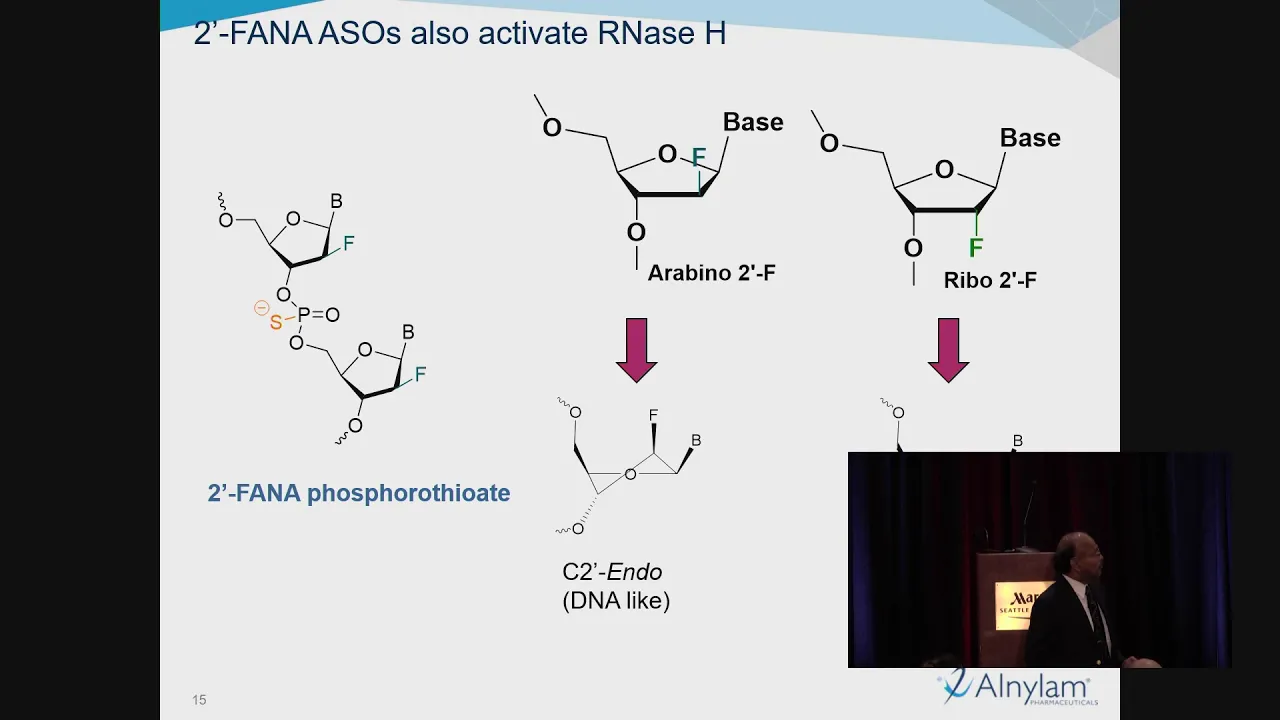
Oligonucleotide Therapeutics 101: Chemistry & Drug Delivery
@oligotherapeutics
12.4K views•2018-10-31
Quantitative Real-Time PCR (qPCR): Principle, Method & Data Analysis
@animatedbiologywitharpan
129.2K views•2023-09-06
Microbial Degradation of Plastics: Biodegradation Pathways & Sustainability
@majeedhammad
2.9K views•2021-04-11

CRISPR and Genetic Engineering: How Gene Editing Works and Why It Matters
@kurzgesagt
30.5M views•2016-08-10
Related Study Plans & Knowledge Roadmaps
Structured learning paths in Biotechnology