Optimizing CFPS: E. coli Extract & Yield
Learning Goal: Designing and optimizing an Escherichia coli-based cell-free protein synthesis (CFPS) system for on-demand protein production, including crude extract preparation, reaction mixture formulation, plasmid template design, and fluorescence-based yield quantification.
Prerequisites
- Basic undergraduate-level understanding of biochemistry or molecular biology.
- Familiarity with general laboratory safety and sterile micro-pipetting techniques.
Estimated Total Study Time
- 19 Hours (includes lectures, analysis of video protocols, self-directed search exercises, and virtual troubleshooting).
Module 1: Fundamentals of Molecular Biology and Translation
This module provides a solid biochemical foundation by reviewing the central dogma of molecular biology within prokaryotic systems. Understanding how E. coli replicates, transcribes DNA into messenger RNA (mRNA), and utilizes ribosomes to translate codons into polypeptide chains is crucial before attempting to replicate these processes outside of the living cell.
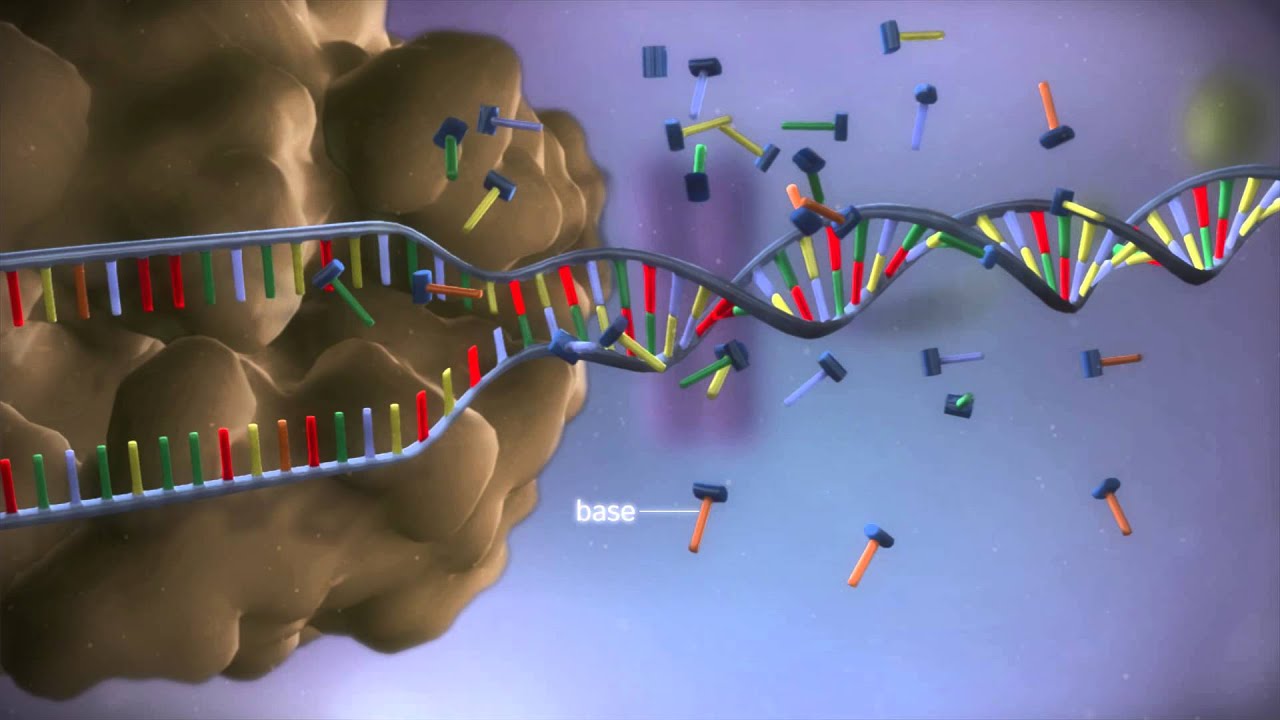
Why this video is valuable: This short, high-fidelity 3D molecular animation provides an intuitive visual context for the physical interactions between RNA polymerase, DNA, messenger RNA, tRNAs, and the ribosomal subunits during transcription and translation. Observing these spatial relationships makes it easier to conceptualize how cell-free reactions operate when cell membranes are removed.
- Describe the path of mRNA as it transitions from the transcription site on DNA to docking with a ribosome.
- Identify the structural changes the ribosome undergoes as tRNAs transition through the E, P, and A binding sites.

Why this video is valuable: This video breaks down the biochemical stages of gene expression with clear explanations of promoters, transcription factors, RNA polymerase, genetic redundancy, and the enzymatic assembly of polypeptide chains. It bridges the gap between basic genetics and structural biochemistry.
- Explain the fundamental differences in transcription and translation initiation between eukaryotes and prokaryotes (specifically E. coli).
- Differentiate between the functions of the large and small subunits of the ribosome.
Why this video is valuable: An advanced, rigorous academic lecture from MIT detailing the stoichiometry and thermodynamics of protein synthesis. It explores ribosome composition (~66% RNA and 34% protein by mass), codon-anticodon recognition, peptidyl transferase kinetics, and the energetic cost of peptide bond formation.
- Explain how the ribosome functions fundamentally as a ribozyme during peptide bond catalysis.
- Calculate the minimum number of high-energy phosphate bonds (from ATP/GTP hydrolysis) required to append a single amino acid to a growing polypeptide chain.
Module 2: Introduction to Cell-Free Protein Synthesis (CFPS)
This module introduces cell-free systems, highlighting how they bypass cell-viability constraints. It compares traditional in vivo expression platforms with in vitro transcription-translation (TXTL) systems, exploring their historical context and modern applications.
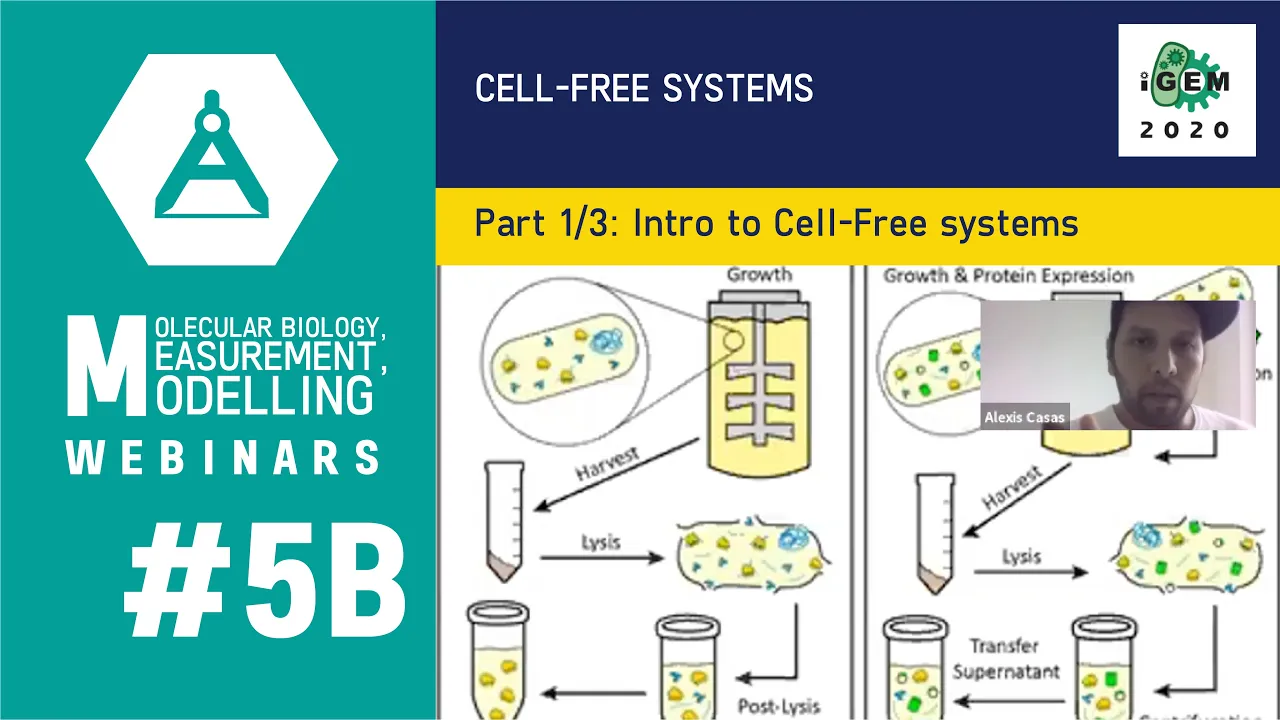
Why this video is valuable: This introductory video compares in vivo and in vitro protein synthesis. It explains how breaking open grown cells to isolate active transcriptional and translational machinery allows researchers to express proteins in a test tube without cell wall barriers.
- List three primary advantages of cell-free protein synthesis over traditional in vivo fermentation.
- Explain why cell-free systems can express proteins that are otherwise highly toxic to living host cells.
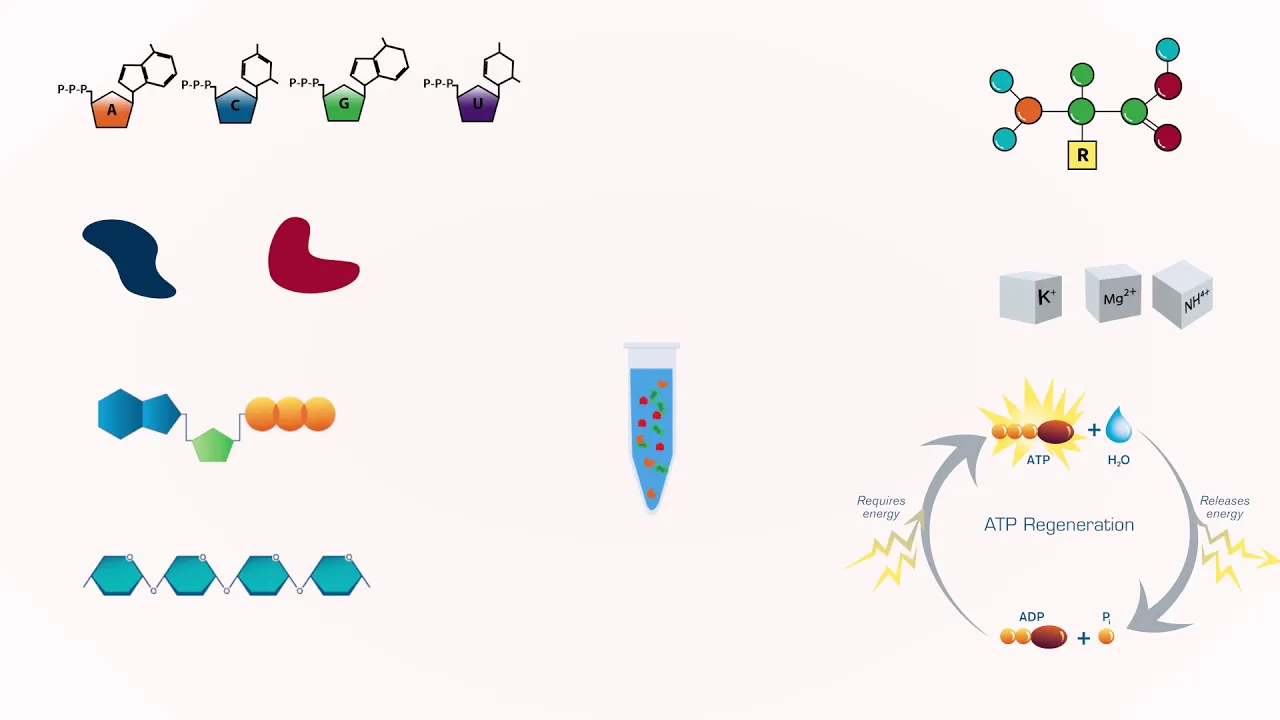
Why this video is valuable: This video explains the components of a typical cell-free protein synthesis reaction, including how crude lysates are prepared, the essential external additives required (nucleotides, amino acids, cofactors, energy systems), and how reactions can be completed within hours.
- Identify the core exogenous components that must be added to a crude cell extract to initiate transcription and translation.
- Explain how the absence of cellular genomic DNA allows the protein synthesis machinery to be directed toward a single exogenous plasmid template.
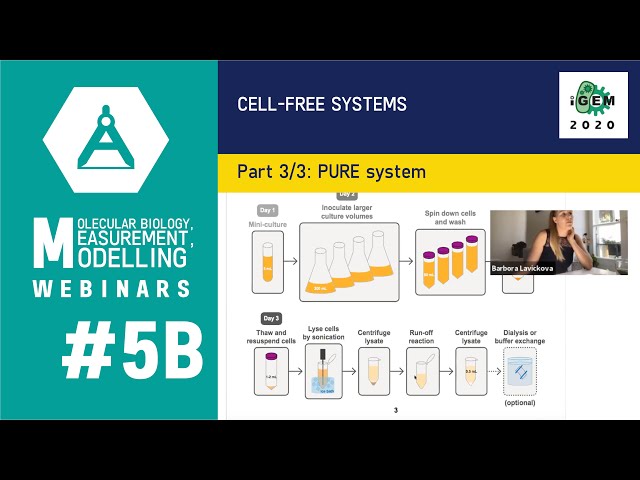
Why this video is valuable: This video contrasts crude cell lysate systems with defined reconstituted translation systems, specifically focusing on the PURE (Protein synthesis Using Recombinant Elements) platform. It details how the PURE system uses 36 purified enzymes, ribosomes, and energy components to synthesize proteins.
- Contrast a crude E. coli lysate system with a reconstituted PURE system in terms of composition, protein yield, cost, and downstream purification.
- Explain how the absence of endogenous nucleases and proteases in the PURE system affects template stability and target protein purity.
Module 3: Preparing E. coli Crude Lysate (The Extract)
Preparing highly active S30 cell extract is a critical step in setting up an efficient E. coli-based CFPS system. This module covers the cell harvesting process, mechanical lysis options, and the post-lysis run-off reaction and dialysis steps required to clear endogenous template DNA and restore translational activity.
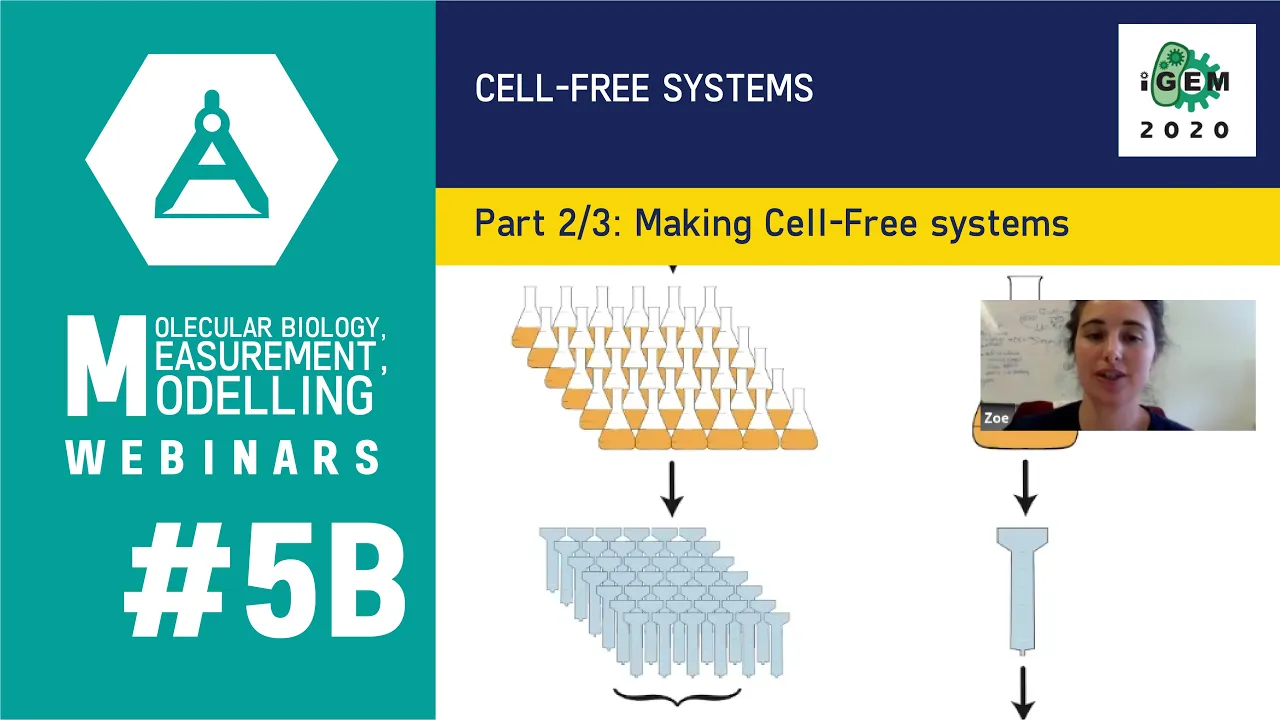
Why this video is valuable: This video provides a complete overview of the wet-lab workflow for making cell-free lysates. It walks through growing the culture, washing the cells, mechanical lysis, and preparation of the final cell-free (CF) master mix.
- Explain why cells must be harvested in their mid-to-late exponential growth phase to maximize translation activity.
- State the function of the high-speed centrifugation step (typically , hence "S30") following cell lysis.

Why this video is valuable: A highly visual protocol snippet showing the delicate handling required when harvesting and processing the cell pellet. It highlights how maintaining low temperatures is essential to protect the activity of the translation machinery.
- Explain why the cell pellet must be kept on ice and processed in cold containers.
- Name the safety and contamination risks associated with handling cell pellets during spatula harvesting.
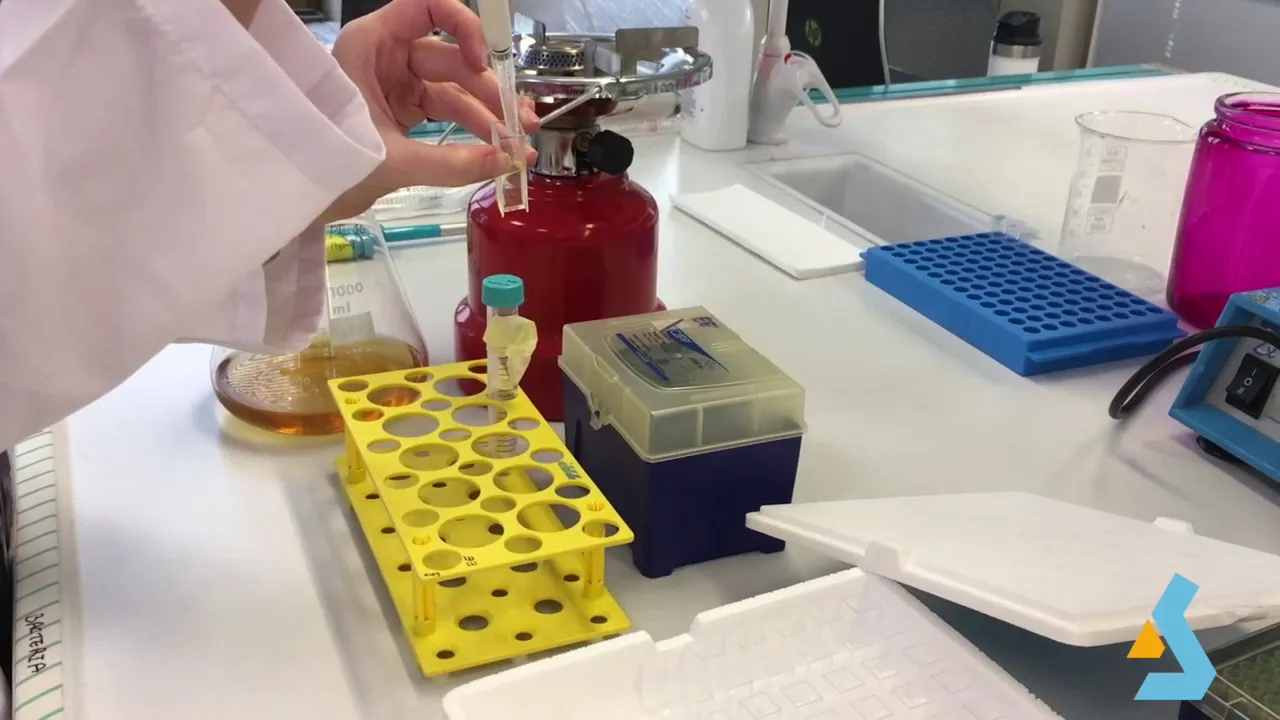
Why this video is valuable: This short, practical video demonstrates probe sonication, a widely used method for lysing cells on a laboratory scale. It shows how the probe is positioned and emphasizes keeping the sample on ice to prevent overheating.
- Describe how probe sonication uses ultrasonic sound waves and cavitation to break open bacterial cell walls.
- Explain why sonication must be performed in short pulses (e.g., 10 seconds on, 10 seconds off) rather than a continuous run.

Why this video is valuable: This segment explains high-pressure homogenization, an alternative mechanical lysis method commonly used for larger volumes. It contrasts the shear force of homogenization with the acoustic cavitation of sonication.
- Compare high-pressure homogenization and sonication in terms of scale, efficiency, temperature control, and reproducibility.
- Explain how sudden pressure drops disrupt the outer and inner membranes of E. coli.
S30 Extract Protocol Gaps & Troubleshooting
While available video tutorials cover the basics of cell lysis, they often lack detailed instructions on the run-off reaction and dialysis stages. These are critical for optimizing S30 lysate activity.
1. The Run-Off Reaction (Endogenous Template Clearence)
Following cell lysis and initial centrifugation, the crude extract contains host genomic DNA and endogenous mRNAs. If left unprocessed, the translation machinery will translate these host templates instead of your target plasmid, leading to low yields of your protein.
- Protocol: Incubate the S30 supernatant at for 60 to 90 minutes with gentle shaking.
- Mechanism: This incubation allows endogenous nucleases to degrade host mRNA and genomic DNA, while ribosomes finish translating existing transcripts and release from the mRNA (a process called "run-off").
- Troubleshooting: Under-incubation leaves host mRNA behind, resulting in high background noise and low target yields. Over-incubation can damage fragile ribosomal proteins and translation factors, reducing overall synthesis capacity.
2. Dialysis and Buffer Exchange
The run-off reaction releases amino acids, tRNA fragments, and small molecular byproducts into the lysate, which can inhibit subsequent reactions.
- Protocol: Load the incubated extract into a dialysis cassette (typically with a 10 kDa molecular weight cut-off [MWCO]) and dialyse against a 100-fold volume of fresh S30 buffer (containing Tris-acetate, magnesium acetate, potassium acetate, and DTT) at for several hours, with at least one buffer change.
- Mechanism: Dialysis removes unwanted small molecules while retaining ribosomes (), enzymes, and essential initiation/elongation factors.
Module 4: Plasmid Architecture and Reaction Buffer Formulation
Designing highly active expression templates and optimizing the small-molecule reaction buffer are key steps in engineering an efficient CFPS system. This module focuses on plasmid design for T7-driven transcription, and explores how to formulate and balance the salts and energy regeneration pathways in the reaction buffer.
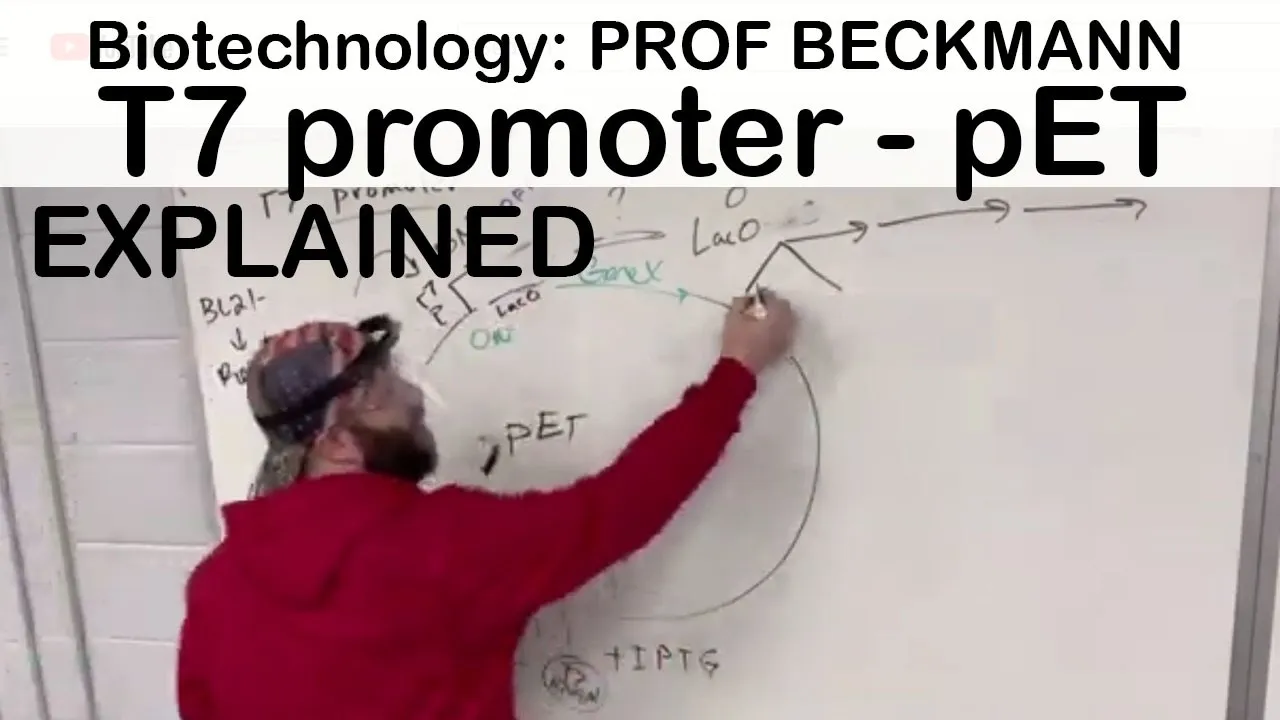
Why this video is valuable: An in-depth explanation of the T7 promoter system, its regulatory controls, and how the T7 RNA polymerase works. This system is widely used in cell-free reactions to drive high-level transcription.
- Sketch the sequence layout of a standard T7 expression cassette, including the T7 promoter, lac operator, Ribosome Binding Site (RBS), multiple cloning site (MCS), and T7 terminator.
- Explain why the T7 promoter is preferred over endogenous E. coli promoters (like -driven promoters) in cell-free systems.

Why this video is valuable: This tutorial demonstrates how to use the ApE (A Plasmid Editor) software to design templates specifically for cell-free expression. It covers sequence annotations and shows how to prepare both plasmid and linear DNA templates.
- Explain how plasmid purity and topology (circular supercoiled vs. linearized) affect transcription rates in cell-free systems.
- Describe how to design protective terminal sequences on linear DNA templates to prevent degradation by exonucleases present in crude lysates.

Why this video is valuable: This lecture discusses the design differences between cloning vectors and expression vectors. It details how transcription and translation initiation signals (such as the Shine-Dalgarno sequence/RBS) are optimized to achieve high yields.
- Define the consensus sequence of the prokaryotic Ribosome Binding Site (Shine-Dalgarno sequence) and specify its distance from the start codon ().
- Explain how secondary structures in the mRNA transcript, particularly near the RBS, can block ribosome assembly and reduce translation efficiency.
Chemical Optimization Gaps & Technical Notes
1. Magnesium and Potassium Ion Optimization
In cell-free systems, magnesium () and potassium () ions are critical cofactors. Because different lysate preparations can have varying baseline ion levels, you must optimize these concentrations for each new batch of extract.
- Magnesium (): Typically added as magnesium acetate across a range of to . stabilizes DNA-RNA hybrids, neutralizes the charge on the nucleic acid backbone, and is essential for ribosome assembly. Too little prevents translation, while too much can cause non-specific template binding or precipitation.
- Potassium (): Typically added as potassium acetate across a range of to . maintains osmotic balance and helps stabilize active conformations of enzymes and ribosomes.
2. Energy Regeneration Systems
Cell-free protein synthesis is highly energy-intensive. To sustain protein expression over several hours, the system must continuously regenerate ATP and GTP from ADP and GDP.
   Energy Source (e.g., PEP, 3-PGA, Creatine Phosphate)
                         │
                         ▼ (Kinase Enzyme)
                   ADP ──┼──► ATP
                         │
                         ▼
                Translation Machinery
- Phosphoenolpyruvate (PEP): A classic, fast-acting energy source that uses pyruvate kinase to transfer a phosphate group to ADP, regenerating ATP. However, this reaction releases inorganic phosphate (), which can bind free magnesium ions, causing them to precipitate and limiting the reaction lifetime.
- 3-Phosphoglycerate (3-PGA): A slower, more stable energy source. It regenerates ATP through the glycolytic pathway, producing less inorganic phosphate and extending reaction lifetimes.
- Creatine Phosphate (CP): Often used in combination with creatine kinase (CK) in eukaryotic and some prokaryotic systems.
Module 5: Executing CFPS and Quantifying Protein Yield
This final module focuses on setting up a cell-free reaction, using Green Fluorescent Protein (GFP) as a reporter, and measuring absolute protein yield. It covers microplate setup, setting up detection parameters on a microplate reader, and constructing a calibration curve.
Why this video is valuable: This video details how to measure fluorescence in microplates. It explains why choosing the right plate design (clear-bottom, black-walled plates) is essential to minimize well-to-well crosstalk and background noise.
- Explain why black-walled, clear-bottom microplates are used instead of standard clear plates for fluorescence assays.
- Define the term "optical crosstalk" and describe how it can distort data from adjacent wells.

Why this video is valuable: A practical guide showing how to set up and configure plate reader software (Gen5) for fluorescence assays. It covers setting excitation/emission wavelengths, managing optical gain, and structuring plate maps.
- Specify the typical excitation and emission wavelengths used for measuring Green Fluorescent Protein (GFP).
- Explain how adjusting the instrument gain or sensitivity affects the dynamic range of your measurements.
Why this video is valuable: An advanced, detailed walkthrough showing how to program a high-end plate reader for kinetic fluorescence measurements. This setup is useful for tracking protein expression in real time during the cell-free reaction.
- Set up a kinetic read cycle to monitor fluorescence changes over a multi-hour cell-free reaction.
- Explain why shaking or temperature control within the plate reader chamber is important for consistent protein folding and maturation.
Quantitative Analysis Protocols
1. Constructing a GFP Calibration Curve
Raw Relative Fluorescence Units (RFUs) cannot be compared directly between different microplate readers because of variations in optical paths, detectors, and software settings. To calculate absolute protein yields, you must construct a calibration curve using a purified GFP standard of known concentration.
RFU (Relative Fluorescence Units)
▲
│ / <- Linear Regression (y = mx + c)
│ /
│ /
│ /
│ /
│ /
└──┴────────────────────────► Concentration of GFP (µg/mL)
- Prepare Standards: Prepare a serial dilution of purified recombinant GFP (e.g., from to ) in the same buffer used for your cell-free reactions.
- Measure Fluorescence: Aliquot these standards into your microplate in triplicate and measure their fluorescence alongside your active cell-free reaction samples.
- Generate Curve: Plot the average RFU values against the known GFP concentrations. Use linear regression to find the slope () and y-intercept () from the equation:
- Calculate Yield: Convert the RFU values from your experimental cell-free reactions into absolute concentrations ( or ) using your calibration curve.
Course Map
Key People Index
- Francis Crick: Proposed the Central Dogma of Molecular Biology in 1958, establishing the foundational flow of genetic information: DNA RNA Protein.
- Venkatraman "Venki" Ramakrishnan: Shared the 2009 Nobel Prize in Chemistry for his work determining the atomic structure of the ribosomal subunit, helping to clarify the mechanisms behind translation initiation and peptide bond catalysis.
- Michael Jewett: A leading researcher in cell-free biotechnology who has developed high-yield, robust E. coli cell-free translation systems, helping to establish CFPS as a versatile tool for synthetic biology and medicine.
Final Self-Assessment
To complete this course, verify your understanding by checking off each of the following practical and conceptual requirements:
- Explain the molecular events that occur during transcription initiation and elongation driven by T7 RNA Polymerase.
- Diagram the ribosomal ribosomal subunits and explain how codons are translated during polypeptide chain synthesis.
- Detail the S30 extract preparation process, including the specific functions of cell harvesting, mechanical lysis, the run-off reaction, and dialysis.
- Explain how a run-off reaction reduces background expression from endogenous host DNA and mRNA templates.
- List the essential components of a T7-driven plasmid template designed for high-yield cell-free expression.
- Describe how secondary mRNA structures near the ribosome binding site (RBS) can affect translation rates.
- Explain the roles of magnesium () and potassium () ions in cell-free reactions, and describe how to optimize their concentrations.
- Compare the energy regeneration pathways of Phosphoenolpyruvate (PEP) and 3-Phosphoglycerate (3-PGA) in terms of reaction lifetime and phosphate byproduct accumulation.
- Choose appropriate microplate specifications (such as black-walled, clear-bottom plates) to minimize optical crosstalk during fluorescence measurements.
- Describe the steps required to construct a GFP calibration curve and use it to convert relative fluorescence units (RFUs) into absolute protein concentrations ().