

















The T7 promoter system in pET plasmids uses a two-step regulatory mechanism where IPTG induces the lac repressor to release from the T7 RNA polymerase gene, which then produces T7 RNA polymerase that activates the target gene; this design creates a 'double-off' state that prevents leaky expression compared to direct lac promoter systems.
T7 Promoter in pET Plasmids Explained | Protein Expression
Added:The central dogma of molecular biology, specifically the mechanisms of bacterial transcription and translation.
The structure and function of plasmid vectors, including essential components like the origin of replication, antibiotic resistance markers, and multiple cloning sites (MCS).
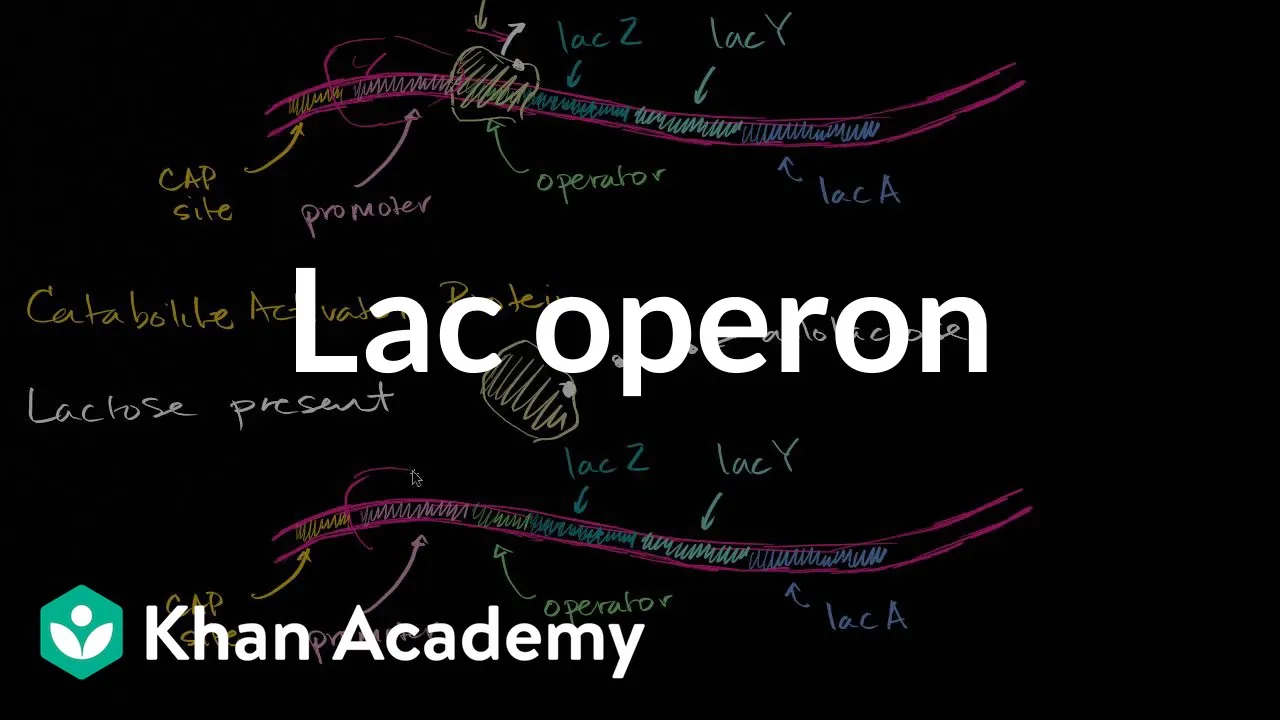
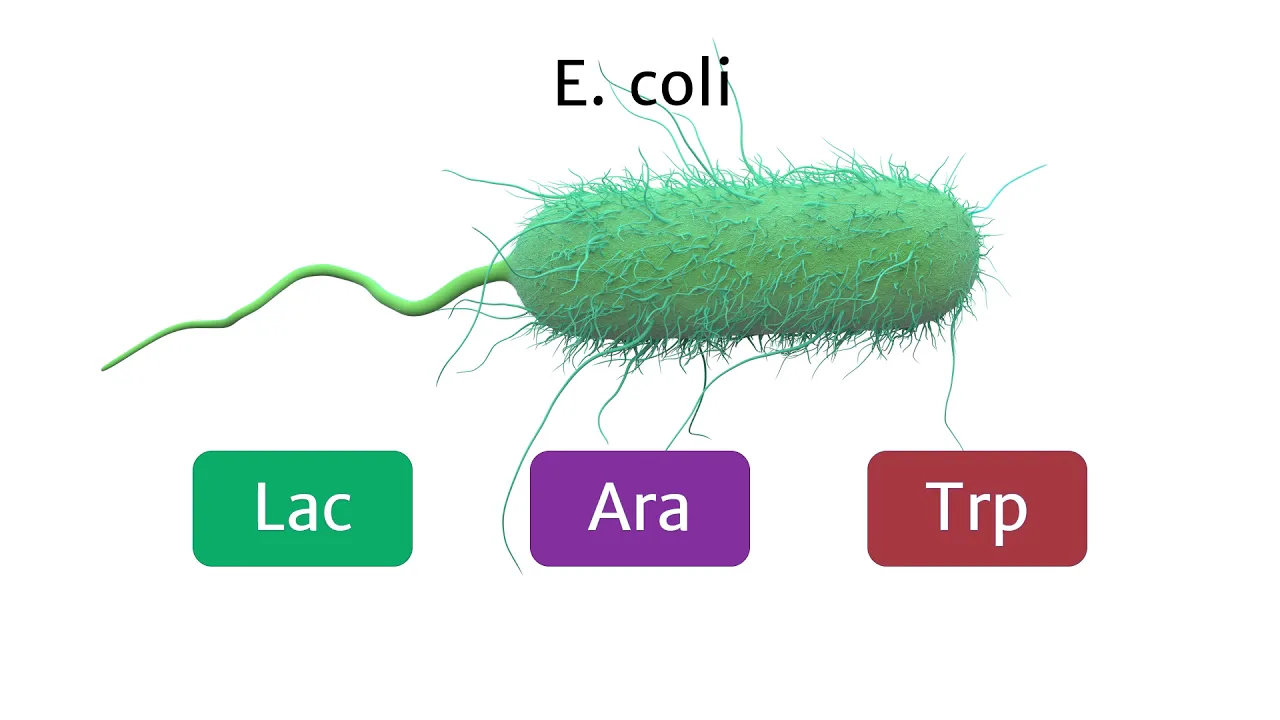
The regulation of the Escherichia coli lac operon, including the roles of the lac repressor, operator, and lactose/allolactose inducers.
The general concept of recombinant DNA technology and how a gene of interest is inserted into an expression vector.
Selection of specialized E. coli expression host strains, such as BL21(DE3), which carry the lysogenic DE3 bacteriophage encoding T7 RNA polymerase.
Strategies to control 'leaky' basal expression of target proteins (especially toxic ones), such as using pLysS/pLysE plasmids to express T7 lysozyme, or adding glucose to the growth medium.
Downstream applications of recombinant protein production, including cell lysis, solubility testing, and purification techniques such as IMAC (Immobilized Metal Affinity Chromatography) using His-tags.
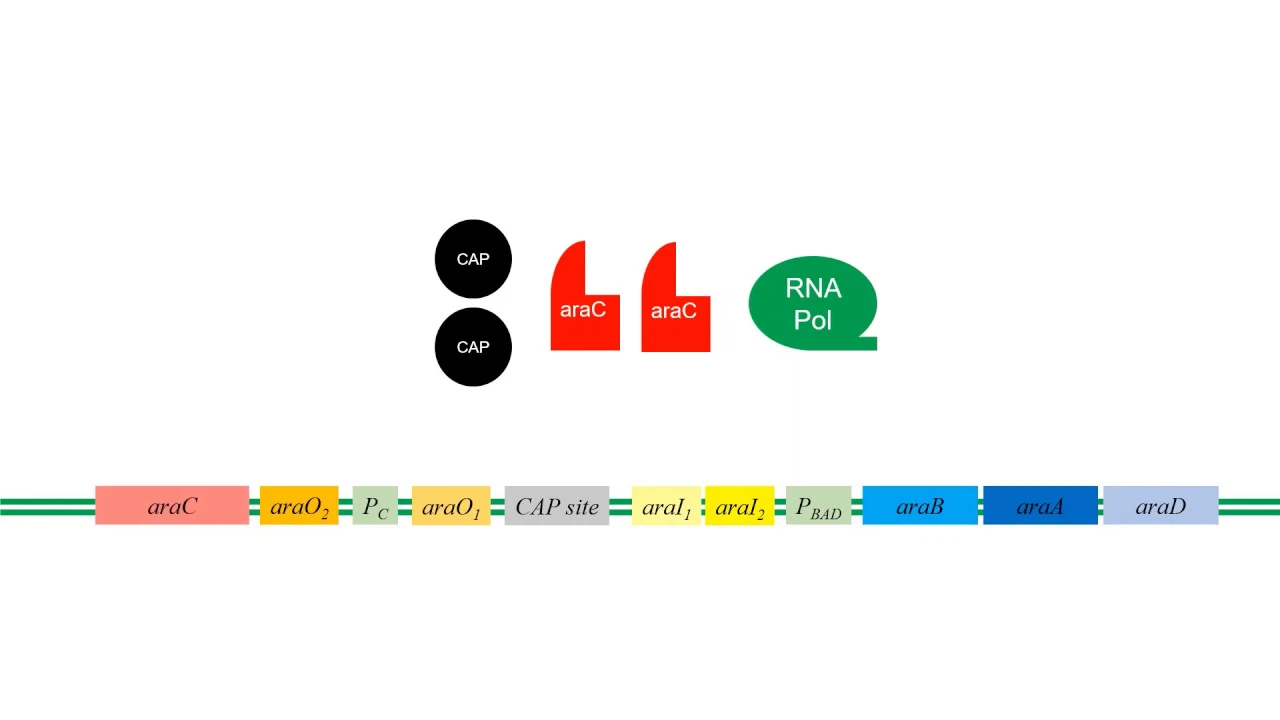
Alternative expression systems and promoters in E. coli (e.g., the araBAD system induced by L-arabinose) and when to transition to eukaryotic expression hosts like yeast or mammalian cells.
14.9K views298likes17:54Original Release: 2021-03-05
okay um let me just explain this in detail because one somebody did have a question about this the t7 promoter system i think it's worth me drawing it out in in detail um my first point is if you had a question about like a pet plasmid and the t7 promoter and how it works what would be your first source to get that information if you didn't have me yeah you just google it and usually what you'd find is the first thing you'll find is that the uh the pet manual so in one of your assignments i attached long ago one of the reading assignments was actually the p-bad manual and the idea is to get familiar with actually like reading the manuals that come with these plasmids because they tell you a lot like that's the best place to get the accurate information so uh if you wanted to answer this yourself you would just look at that manual and it's pretty easy to find sort of like the description of this but it's worth me drawing out because it is actually kind of confusing um and it took me a little bit to understand it as well so it's worth explaining um okay so so what is t7 t7 is a virus okay and viruses replicate their own genomes with their own polymerases so there's a t7 rna polymerase which is going to express so this is a gene that codes for a protein t7 rna poly so the function of this protein is to express genes from the t7 virus so in previous lectures we talked about how some rna polymerases can be very specific and they can have special regulatory features that only allow them to bind certain promoters and then they only turn on certain genes so t7 rna polymerase is one of these special polymerases it's very very highly specific it's only going to bind to what do you think it's going to bind to yeah the t7 promoter so in front of like t7 virus genes is going to be a t7 provider and the t7 rna polymerase binds to the t7 promoter okay so this should all hopefully make sense um now let's talk about how pet plasmids are organized within the context of that knowledge so in a pet plasmid which are recommended protein expression plasmids with various selectable markers and inducible expression the way that the inducible expression or the regulation is organized is they have a t7 promoter okay and they have a lac operator so the lac operator is the region that what binds to it nope what binds the lac operator region the protein what's the protein called black l is the repressor and it binds the lac operator so if it's bound it's off and then usually you clone your tnx right here okay so how do you turn this on how do you turn it on well you can only turn it on in special cells okay so the pet plasmas only work in special cells some of the special cells are vl21 cells or rosetta cells which are a derivative of bl-21 in the bl-21 chromosome there's an insertion so if this is the e coli chromosome there are a few insertions that make this system work um there is a lac operator which is actually a promoter in front of the t7 rna poll that's one insertion and then the other insertion is a lac-l-gene somewhere else so what happens in these cells black l gets made binds the lac operator here and here oh i should have drawn it with the same color okay so the t7 rna polymerase is off and gene x is off okay so then now how do you turn the system on yes very good you add iptg iptg is going to bind to lack l proteins now they fall off they fall off there's no more repressor there's no more repressor here but the gene is still off still not on there's no more repressor this one there's no more repressor but now this one is on okay so this one makes g7 rna paul and now this comes in and turns this on there must be some other piece up here but this is in general like how it works when you add iptg you're not actually directly turning on your gene in a plasmid you add ipcg and you're turning on the t7 rna polymerase then the t7 rna polymerase turns on your gene so it's kind of like there's like multiple levels of layers there um it's worth drawing out because it's it's kind of counter-intuitive how they do it and these puzzles are so common that you'll you'll work with them does that make sense to everybody it is kind of confusing but it's pretty simple it doesn't so down there so basically you're just saying a situation in which the t7 rna polymerase can either be outside the operon the lac operon or it can be inserted t7 has nothing to do with lac operon the two different things so what i'm saying is there's an insertion of the t7 rna polymerase onto the chromosome but they've engineered that with a lac operator in front of it so there's two like engineered circuits one is this one one is this one and they're both engineered with a repressor with the lac repressor um but essentially again it's weird this one is rigged so that when you add iptg the repressor falls off and then it turns up which means there must be some also like constitutive some constitutive like on or enhance or something up here so that when this falls off it turns on this one when the when the lock l falls off it's not it's not on yet it's not on until the t7 rna polymerase gets made and then comes here and turns it on maybe i've just completely botched the explanation because i don't know what this is if it's confusing for me it's awesome i can tell it's very confusing so i was just asking that because in my notes uh it says the t7 is inserted into the black opera on b via transposon insertion that would mean then that if that's true they have to lack operon the lacco is it is upstream that's the repressor what's what's up here in lac operon and then they would have inserted this so what i drew is still the same as that but that makes sense what you're saying okay well what's to the actually i have a picture in the operons lecture i see this is the lac promoter so that means this is the black promoter and the lac o is just a repressor site so even if if this thing falls off then the lag promoter can turn it on and it runs so then in this case this one doesn't have the lac promoter it's got the t7 promoter which is not just a free running on it can only turn on when it's bound by the enhancer so the key difference here that makes this really confusing is the lac promoter is constitutive on plus upstream it has a repressor whereas the t7 promoter t7 is constitutive off and it needs the rna poly or you could call it an enhance you could call it an enhancer or a transcription factor but it needs the rna paul the special one to turn on did i break through at all it is really confusing yeah so it's a situation where you need something to be removed to turn on versus needing something to be added to turn on yes exactly do you want to try to explain the end or move on okay you got it that's that's good very good you summarize it better than what i could say the key point to remember um and i i will not ask you stuff about t7 on the task i won't um it's kind of like be this is kind of like graduate level knowledge graduate student level knowledge um but the key thing to remember is when you add iptg you're not actually turning on your gene you're turning on the t7 rna polymerase which then turns on your gene that's pretty easy to understand i'm sure how would you use it how would you use it why would you instead of what's the other option instead of what oh okay why would i use that's a good that's a very good question let's let's push that so let me draw out the two options and then we could discuss why one would be better than the other very good question so in one case you have the t7 promoter upstream the lac operator upstream your or downstream or upstream genex on a plasma this is the path the other alternative would be would be the lac promoter with the black operator repressor in front of your gx so how are these two going to be different and why would you want one versus the other one major reason is usually like um something we call like leakiness leakiness would be like if you clone in some gene and some rna polymerases are like running through it and it's it's not expressing robustly like it's not like completely on but maybe it's like flickering and you're getting like a little bit leakiness could be a huge issue if you're trying to work with things that are toxic to the cell you want to express a protein but expressing it causes the cells to get sick for example you would not want that to be leaky you would not want it to turn on until you were like ready to turn it on and ready to like harvest so one major issue that people are always trying to kind of like fix is the leakiness making control circuits really really tight in a sense that when you know it's off it is off and when you turn it on it does get turned on that people are always working on trying to like improve that so in this case you have black l bound and it's off but the lac promoter because it's constitutively on constitute constitution on because it's constitutively on it's a little bit leaky that's that one this one my korean this one's like a double this one's like a double off yeah it's it is it's like a it's like uh yeah like a kid's kid's medicine bottle thing it's like a double off it's like even harder to like turn on so in this one you also have the the lac l repressor and it's off but because the native state of the t7 rna polymerase or the t7 promoter the t7 promoter its native state is constitutively off you have like a double off so this is going to be a tighter off than this one this one will be more leaky that's why they would use it does that kind of help yeah but this is i really mean it this is like graduate student level knowledge so we're in advanced waters here good question very good question okay do we have any questions on recombinant protein expression lectures didn't you have another one elijah if not that's okay or any questions on the paper oh god i think that's hard i think that's a really hard one okay so wait what's the question how they got the 36 more reverse what 96 like how they made those oh god this means i should have read the paper before i reread it before i came out i probably skipped ahead because it was really confusing um i'm trying to find their methods i'm gonna shut this off
Up Next

57:42
Cloning & Expression Vectors Explained | Recombinant Protein Tech
@iit
18.3K views•2011-09-27
14:12
Quantitative Real-Time PCR (qPCR): Principle, Method & Data Analysis
@animatedbiologywitharpan
129.2K views•2023-09-06
23:33
Microbial Degradation of Plastics: Biodegradation Pathways & Sustainability
@majeedhammad
2.9K views•2021-04-11
16:04
CRISPR and Genetic Engineering: How Gene Editing Works and Why It Matters
@kurzgesagt
30.5M views•2016-08-10
Related Study Plans & Knowledge Roadmaps
Structured learning paths in Biotechnology
biotechnology
AAV Production: Transfection, Prep & qPCR
01Introduction to Gene Therapy and AAV Biology
02Mammalian Cell Culture: Suspension HEK293 Cells
03Upstream Bioprocessing: Triple-Transfection Optimization
+ 2 more learning modules
18h5 modules
Explore Roadmap
biotechnology
Building Gut-on-a-Chip: PDMS, Cells & TEER
01Foundations of Microfluidics and Gut Anatomy
02Cleanroom Fabrication & PDMS Soft Lithography
03Epithelial Cell Culture and On-Chip Seeding
+ 2 more learning modules
26h5 modules
Explore Roadmap
biotechnology
Optimizing CFPS: E. coli Extract & Yield
01Fundamentals of Molecular Biology and Translation
02Introduction to Cell-Free Protein Synthesis (CFPS)
03Preparing E. coli Crude Lysate (The Extract)
+ 2 more learning modules
19h5 modules
Explore Roadmap
biotechnology
Haematococcus PBR: Design, Stress & Astaxanthin
01Biology and Life Cycle of Haematococcus pluvialis
02Bench-Scale Photobioreactor (PBR) Design and Engineering
03Culture Media Formulation and Inoculation
+ 2 more learning modules
15h5 modules
Explore Roadmap